

If AI is a simulation of human intelligence, who does it simulate and does it have a gender? Read on to know does the artificial intelligence have
Via Charles Tiayon


 Your new post is loading...
 Your new post is loading...
Your new post is loading...
 Scoop.it!
If AI is a simulation of human intelligence, who does it simulate and does it have a gender? Read on to know does the artificial intelligence have Via Charles Tiayon 
Scoop.it!

Charles Tiayon's curator insight,
December 15, 2019 11:39 AM
What pronoun do you use to identify yourself? He? She? They? Something altogether different? It’s a question increasingly asked as acceptance of a spectrum of gender and sexual identities grows. Some languages, like Chinese and Persian, don’t assign nouns a gender or already have a gender-neutral form for people built in. But in languages whose grammar is traditionally based on exclusively male or female options, the answer to this question can still require an explanation. So how do you talk about being queer or non-binary or gender nonconforming in grammatically gendered languages? In many ways, in fact. In recent years, LGBTQ activists and linguists around the world have championed more inclusive language, both by creating entirely new non-binary terms and by retooling already existing words and grammar constructions. It’s not always easy. For some people, it can be hard, scary or simply tiresome to keep explaining why they need more inclusive language. And it can be dangerous: Just in the United States, hate crimes against the LGBTQ community have been rising the last three years, according to the FBI. LGBTQ community members protest in Bangalore in December against a bill passed by India's Parliament for the protection of transgender people, which the trans community has criticized for not being comprehensive enough. (Jagadeesh Nv/EPA-EFE/REX/Shutterstock) So for the next time you ask or are asked around the world, here’s a look at some possible answers in seven languages: AD 1. English: ‘They’ as singular and gender-neutralEnglish grammar doesn’t distinguish between genders except in assigning a masculine or feminine singular pronoun. In 2019 the Merriam-Webster dictionary added “they” as the pronoun to use for a “single person whose gender identity is nonbinary.” Two years prior, in 2017, “they” as a gender-neutral form was added to the Associated Press Stylebook, the gold standard of sorts for journalists. The Washington Post, meanwhile, made the style guide change in 2015. Critics of the change have argued that “they” as both singular and plural can be confusing and muddy a sentence’s syntax. Shakespeare and Jane Austen, among many other famed English writers, didn’t think so. They used singular “they” and “their,” as was the standard in English until Victorian-era grammarians shifted course and imposed “he” above all. A pin worn by Nic Sakurai, the first person to receive a D.C. gender-neutral ID, at their office on June, 29, 2017, in College Park, Md. (Bill O'Leary/The Washington Post) 2. Spanish: Alternative inclusive case endings such as ‘x’ or ‘@’ and ‘e’Spanish has feminine and masculine cases added to all nouns. Even the word for “the” differs if the noun is male (el) or female (la). Nonetheless, some Spanish speakers say it doesn’t have to be that way. AD In the United States, it’s now common to use “x” or "@” to create a gender-neutral noun: that’s why you may have seen “latinx,” or “latin@,” instead of the binary of Latino (male) and Latina (female). The popularized use of this form, however, has angered some Spanish speakers, who see it as a token term imposed on Spanish by American English speakers rather than an inclusive move from within. Enter teens in Argentina, who, as The Post’s Samantha Schmidt reported, are leading the charge to eliminate gender in their language. “In classrooms and daily conversations, young people are changing the way they speak and write — replacing the masculine “o” or the feminine “a” with the gender-neutral “e” in certain words — to change what they see as a deeply gendered culture,” Schmidt wrote. “Their efforts are at the center of a global debate over gender, amid the growing visibility of non-binary identities and a wave of feminist movements worldwide.” AD The movement made headlines in Argentina last year, after a young activist, Natalia Mira, used the gender-inclusive language during an interview and was attacked by the male journalist on the live broadcast. In 2018, Natalia Mira, then 17, was scolded by a journalist after she used gender-neutral words while speaking in Spanish during an interview. (A24) Spanish is a language spoken widely around the world, so there’s also no set standard, as different dialects and communities have their own preferences. Another form to know is “elle” as a gender-neutral pronoun alongside ella (she) and él (he). A banner displayed during the National Gathering of Women in Argentina uses the gender-neutral form of the word “bienvenidos” — meaning “welcome” — with an “e” replacing the “o.” The gender-neutral version of the word “secundarias,” or “high schoolers,” is displayed during the gathering. (Anita Pouchard Serra/For the Washington Post) 3. Arabic: The dual as neutral and gender-bending the binaryArabic is another grammatically gendered language, with each verb, noun and adjective always assigned either a male or female case. The male is the default in plurals, even if it’s just one male in an otherwise female group. Modern standard Arabic, based on Koranic classical Arabic, additionally has a dual option for nouns and verbs that doesn’t imply a specific gender. Some people therefore use the dual of they and you — “huma” (هما) and “intuma” (انتما) — as a gender-neutral alternative. Colloquial Arabic spoken today has largely done away with the dual, so this form can sound very formal to those not in the know. AD Others play around with the language in different ways, such as interchanging masculine and feminine pronouns or a speaker choosing to subvert the male case’s patriarchal dominance and default to the female form. Arabic has many dialects, each with its own distinct grammar constructions and words, so different communities have developed their own colloquial codes. In some Tunisian dialects, for example, it’s already common to use the feminine pronoun for everyone. For queer and feminist communities in the Middle East, the fight to gain acceptance in society has come in tandem with another conversation: how to define words like gay, bisexual and transgender in Arabic. Some people default to a transliteration of the English words in LGBTQ, others prefer the phrase “mujtama’a al meem” (مجتمع الميم) — or the meem community — a reference to the m-sounding Arabic letter that starts off these terms when translated into Arabic. After years of efforts led by activists in Lebanon, the word “mithly” (مثلي) and “mithliya” (مثلية) for gay is now standard for many media (replacing the previous term, which translated as “deviant” or “pervert”). Lebanese drag queen Anissa Krana, at a friend’s home in Beirut before the city's Grand Ball drag competition. (Natalie Naccache/For The Washington Post) Public awareness and tolerance of this inclusive language remains extremely low in Arabic-speaking countries. To change that, Arabic speakers describe their efforts as part of a broader move to de-Westernize and reorient the discussion around gender and sexuality. Rather than just replicating words from English, they are working to cultivate and normalize the language needed to talk about these topics from within Arabic’s rich lexicon and history, such as drawing from poetry depicting same-sex relations in Medieval times. This work is also being championed by feminist groups, such as Wiki Gender, a collaborative platform creating a dictionary of gender-inclusive Arabic. Lebanese women protest the patriarchy in front of the government palace in Beirut in December. The banner reads in Arabic, "Down with the patriarchal and masculine order" and "We are against rape and sexual harassment." (Nabil Mounzer/EPA-EFE/REX/Shutterstock) 4. Hebrew: New gender-neutral endings for verbs and nounsHebrew, like Arabic, assigns a gender to verbs, nouns, and adjectives based on the noun. LGBTQ and feminist activists in Hebrew have similarly championed inverting the gender divides, such as defaulting to a feminine plural or using a “mixed” gender, sometimes male and sometimes female for the same person. AD Among Hebrew speakers in Israel and other Jewish communities, there are also now several ways to grammatically eliminate the binary and express a verb or noun in gender-neutral ways. The Nonbinary Hebrew Project, for example, has systemically built a third-gender in Hebrew, in part by drawing on non-binary and queer references in Jewish texts like the Talmud and Torah. As the group argues: The male Rabbis writing the Mishna, a third-century book of Jewish commentary, recognized several gender categories, so modern-day Hebrew speakers surely can, too. In Israel, a related approach is to put both the male and female cases on nouns and verbs, sometimes with a period in between, so that all are fluidly included. For example, “I write” — “kotev” (כותב) in the masculine and “kotevet” (כותבת) in the feminine — alternatively could be כותב.ת in this form. Gay couples prepare for a mass same-sex wedding — which the state does not recognize — in Tel Aviv on June 4, 2019. (Oded Balilty/AP) A Jewish summer camp in the United States devised another construction to include campers who are trans or non-binary: along with “chanich” (חניך), male camper, and “chanichah” (חניכה), female camper, they now have “chanichol” (חניכול), a camper with an unspecified gender. In addition to this new “ol” singular ending, they created a new plural ending: “imot,” which combines the “im” at the end of masculine plural nouns and the “ot” at the end of feminine ones. AD Despite the many alternatives circulating, the Academy of the Hebrew Language has declined to consider them. 5. German: Prioritizing gender-neutral termsGerman’s notoriously complicated syntax includes male, female and neutral grammatical genders. The neutral has usually not applied for people, with some notable exceptions. That’s changing. In January 2019, Hanover became the first German city to mandate that all official communication, such as emails, fliers and forms, use gender-neutral nouns. Instead of using the word for a male voter (wähler) and a female voter (wählerin), for example, the municipality would instead use words that don’t convey one gender or another, like voting person (wählende). This was in keeping with previous moves by other German institutions, like the federal justice ministry, which in 2014 mandated that all state bodies use gender-neutral formulations in their paperwork, the Guardian reported. AD Languages are rich and lively, so there are naturally other options around. As Germany’s DW explained, “Traditionally, gender differentiation in German is signified by the suffixes “r” or “rn” for men (singular and plural), and “in” or “innen” for women (singular and plural) … Current attempts to shorten the space devoted to accepted forms of differentiation have included the introduction of an uppercase “I” sandwiched in compound nouns addressing both males and females at once. An asterisk, known as the “gender star” has also been added to include citizens who do not consider themselves either." As with other countries, the Association for German Language has rejected these alternative forms. 6. French: Asterisks to make gender-neutral nouns A woman walks down a rainbow-colored flight of steps in Nantes, western France, on Dec. 3, 2019. (Loic Venance/Afp Via Getty Images) French also assigns a gender of male or female to all nouns referring to an individual; references to a group of people are by default defined by male pronouns unless the group is made up entirely of females. French’s storied linguistic gatekeeper, the Académie Française, is very fine with this. Others are not. AD “For years, a campaign led mostly by French feminists has sought to democratize this most subtle of romance languages by pushing back against the gender rules that have confounded Anglophone students for centuries,” The Post’s James McAuley reported in 2017. “ … Certain linguistic constructions, critics argue, efface women from being seen in various personal and professional capacities.” The idea is instead to use asterisks to combine case endings and create a more inclusive gender-neutral plural — like “ami•e•s” for friends — a first step that neither privileges the male as a norm nor excludes females and a gender spectrum from the syntax. Every action has a reaction, though, and in 2017 France’s government banned the use of inclusive, gender-neutral language in official documents. 7. Swedish: ‘Hen’ as singular and gender-neutral Dozens of people view a presentation on Swedish fathers taken by Swedish photographer Johan Bavman at the Swedish Embassy in Washington on Sept. 5, 2019. (Marvin Joseph/The Washington Post) In 2015, Sweden added to the country’s official dictionary the word “hen” — a gender-neutral pronoun that linguists had pushed as an alternative to the male pronoun “han” and female “hon.” As The Post’s Rick Noack reported then, “Five years ago, barely anyone in Sweden was aware of the word. … According to experts, the ‘hen’-revolution in Sweden has two primary origins: LGBT groups have promoted the pronoun as a way to raise awareness for their cause. However, support for the idea has also come from a more unexpected side: Nurseries, kindergartens and preschools such as Egalia increasingly argue that the pronoun’s usage allows children to grow up without feeling the impact of gender biases.” Rick Noack contributed from Berlin.
Scoop.it!
In recent months, a sense has emerged that the tide might finally be starting to turn in the gender debate: Things that most everyone believes to be true, but that no one has been allowed to say, are now increasingly being said by writers, lawmakers, and litigants. Certainly, the battle is still far from over. CNN is referring to women as “individuals with a cervix.” Last month, J.K. Rowling was trolled yet again for stating ordinary views about men and women (though thankfully, the media is no longer getting away with defaming her). And best-selling children’s author Gillian Phillip has been sacked by her publisher, Working Partners, because she added the hashtag #IStandWithJKRowling to her Twitter bio. But at least now, in mid-2020, these acts attract growing criticism. We are no longer in 2018, when the most militant gender activists could still pretend that they spoke for the entire LGBT community, with the “debate,” such as it then was, consisting mostly of endless mobbing campaigns against so-called “TERFs.” One reason it has taken time to …
Scoop.it!

World Rugby is considering banning transwomen from playing women’s rugby because of significant safety concerns that have emerged following recent research Via John Beech
Scoop.it!
Activists and advocates on the ground are giving Black Trans women the support they so desperately need. Via Rachel Gnagniko
Scoop.it!
From
www

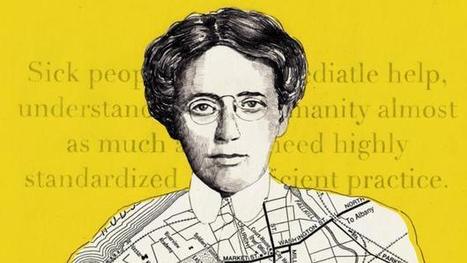
At the turn of the last century, many remained sceptical of both germ theory and preventative medicine. One public health official fought to change that – and saved thousands of lives. Via Peter Mellow
Scoop.it!
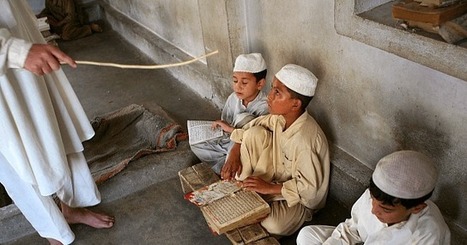
Police say the problem of sexual abuse of children by clerics is pervasive and the scores of police reports they have received are just the tip of the iceberg.
Scoop.it!
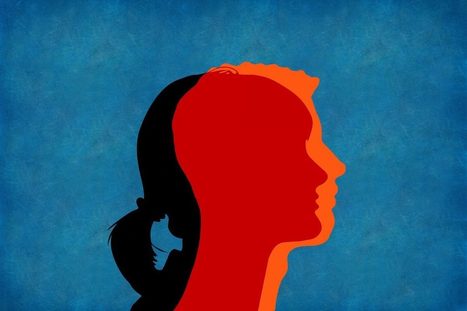
An international team of scientists studying lifespans of wild mammals have found that, just like humans, females tend to live significantly longer than their male counterparts. Via Susan Myburgh
Scoop.it!
|

|
Rescooped by
Dennis Swender
from Contemporary Learning Spaces
March 22, 2020 6:54 AM
|
Scoop.it!

Some of the latest findings about open-plan offices suggest that staff satisfaction and privacy decrease, people become less friendly and women feel watched and appraised on appearance.
|
|
Rescooped by
Dennis Swender
from Voices in the Feminine - Digital Delights
March 18, 2020 3:37 PM
|
Scoop.it!

Virginia Woolf summed it up beautifully:
“A woman must have money and a room of her own if she is to write fiction.”
Today I would say that to write, a woman must have a space of her own and wifi.
This curation is about education, eLearning, Instructional Design, Marketing, Love, Social Change. Life in general.
Views, values, perspectives written by women who are no longer shackled by obedient silence but play an important contribution to web culture.
|
|
Rescooped by
Dennis Swender
from Ethical Issues In Technology
February 15, 2020 1:10 PM
|
Scoop.it!

A deletion battle over a black female chemist’s biography has put Wikipedia’s gender gap in the spotlight
|
|
Scooped by
Dennis Swender
December 12, 2019 2:59 PM
|
Scoop.it!

Alex Frandsen, a Northeastern University senior, is gratified by the attention to his research, which suggests men running for president are covered more favorably than women. But he is also concerned by the reactions to data that he cautions are the preliminary result of an ongoing survey.
|
|
Rescooped by
Dennis Swender
from Metaglossia: The Translation World
September 3, 2020 2:15 AM
|
Scoop.it!
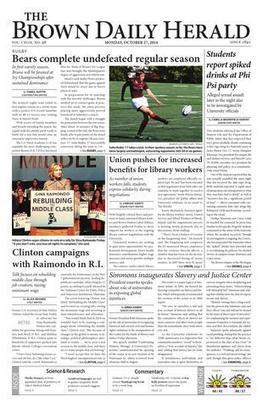
Countries where citizens speak gendered languages — in which nouns are masculine or feminine — display a higher rate of gender inequality than countries with languages that do not ascribe gender to nouns, said Jennifer Prewitt-Freilino, the only full-time psychology professor at the Rhode Island School of Design.
She presented her research about the relationship between language and gender inequality at a lecture hosted by Brown’s Department of Cognitive, Linguistic and Psychological Sciences Friday in Metcalf 305.
Though women are now overtaking men in areas like college enrollment, many inequalities still exist between men and women, Prewitt-Freilino said.
“In no country is there even equal pay,” she said. “Women are paid about 16 percent less than men.”
But the amount of inequality “is not uniform across cultures,” she added, citing language as a possible contributing factor in such differences in equality.
Language is “usually seen as not that important, but research over the last decade has suggested that how we speak also influences how we think,” she said.
Prewitt-Freilino hypothesized that “countries that speak predominantly gendered language should evidence less gender equality relative to countries with natural gender and genderless language countries.” Gendered languages are those with masculine and feminine words, such as Spanish. Natural gender languages are those in which most nouns are not gendered, but pronouns like “he” or “she” are gendered, such as in English. Genderless languages are those in which both nouns and pronouns are not gendered.
Prewitt-Freilino took data from 134 countries, of which 111 had primary languages that fit into one of the three categories. She identified 26 genderless, 12 natural gender and 73 gendered language countries and then looked at the Global Gender Gap index, a measurement of national gender gap, for each of the countries. The GGG index “benchmarks national gender gaps of 136 countries on economic, political, education- and health-based criteria,” according to its website. Each country is given a score between zero — denoting absolute inequality — and one, for absolute equality.
Prewitt-Freilino found that the average scores for countries with genderless, natural gender and gendered languages were 0.68, 0.74 and 0.67, respectively.
The data supported her hypothesis that gendered languages have the most inequality, she said.
Since countries with similar languages often have other common links, Prewitt-Freilino looked at human development, religious tradition, geographic location and system of government as covariates that might affect the data. She then examined the data after accounting for these covariates, and found the average scores for countries with genderless, natural gender and gendered languages to be 0.70, 0.72 and 0.67, respectively: Gendered language countries still had the highest average inequality.
Prewitt-Freilino said previous studies found the same phenomenon that she noted.
In one study she cited, German-speaking and Spanish-speaking participants were asked to describe qualities of a key, a word that is masculine in German and feminine in Spanish. The German speakers often used words like “hard, heavy, jagged and metal” to describe the key, whereas Spanish speakers often used words like “golden, intricate, little and shiny” to describe the key.
In another study she cited, children were asked to write a story in response to a prompt with one of the three pronouns: “When a kid goes to school, (he/they/he or she) often feels excited on the first day.” The researchers found that only 12 percent and 18 percent wrote about female characters when given “he” or “they,” respectively. But 42 percent wrote about female characters when “he or she” was used in the prompt. Prewitt-Freilino suggested that this may be because people do not think about writing a female character unless “she” is explicitly mentioned.
Though she has identified an initial correlation, Prewitt-Freilino continues her work on gender differences in language use and perception, studying how the way men and women describe success and failure affects what others think of them.
She hypothesized that “women would view a candidate more positively when they shared success (by using “we”) and took personal responsibility for a failure (by using “I”) whereas men would view a candidate more positively when they took credit for success and (deflected) blame for loss.”
Prewitt-Freilino then conducted a new study, in which participants were asked to read a quotation from a student government candidate. The quote described a fundraising goal, where the candidate either failed or succeeded and used either “I” or “we” when discussing the fundraiser. She found that women liked “we” more if the candidate succeeded, whereas men valued personal success more and tended to not support the candidates who said, “I failed.”
She concluded the lecture by describing how subtle language differences can shape thought processes, which can affect social interaction.
“Not only is language a source for conveying current systems of hierarchy, but (it) might also be a way of reproducing them,” she said.
Xuan Zhao GS, who attended the lecture, said she enjoyed the lecture, as it was interesting to think about how language influences gender equity.
She expressed surprise to learn that some school kids have a male-dominant bias, as evidenced by one of the studies mentioned.
|
|
Rescooped by
Dennis Swender
from Digital Delights - Digital Tribes
September 3, 2020 2:14 AM
|
Scoop.it!
Gender stereotypes are not always obvious. They start to follow us from the our earliest days in the toy store and continues to influence us when choosin
|
|
Rescooped by
Dennis Swender
from iGeneration - Humane Use of Technology in an AI world (Pedagogy & Digital Innovation)
August 9, 2020 10:41 PM
|
Scoop.it!
Choose Station
Sign In
Sign Up
Subjects Grades StandardsFor Students
|
|
Rescooped by
Dennis Swender
from Foreverkush.com
May 28, 2020 9:00 PM
|
Scoop.it!

A new survey from GLAAD and Procter & Gamble underscores the importance of visibility.

|
|
Rescooped by
Dennis Swender
from Metaglossia: The Translation World
May 27, 2020 7:17 AM
|
Scoop.it!

When hurtful and exclusionary words come from authorities in pagan, pword, and magical circles, that diminishes our communities and supports an unwelcoming atmosphere for marginalized people. It can be hard to know how to avoid such harm, so here are some tips on why, when, and how to use gender neutral language.
Words have power.
Words can heal or hurt, illuminate or confuse, include or exclude.
We all make mistakes, but when language is used repeatedly in the same way, even after harm, confusion, and exclusion are explained, it is no longer a mistake. The harm becomes deliberate.
When hurtful and exclusionary words come from authorities in pagan, pword, and magical circles, that diminishes our communities. No matter where it happens, be it blogging, books, videos, vlogging, pod casting, teaching, presenting, organizing, leading ritual, etc., exclusionary language supports an unwelcoming atmosphere. This is true whether you are talking about ableist language, racially charged language, heavily gendered language, or any other word or language use which creates harm for marginalized people.
Yes, Going Gender Neutral Can be Hard and Uncomfortable
Sometimes the most worthwhile things we can do are difficult and uncomfortable. For most native English speakers, especially those born in the 20th century, shifting to gender neutral terms can be confusing, awkward, difficult, contrary to instinct, and often just feels completely wrong. If you feel that way, you are anything but alone. Yet, if we don’t work to change our language, it will never be inclusive.
I am nonbinary, and was aware of that even as a small child, decades before I ever heard the term “nonbinary”. As a teen I saw the lack of a practical gender neutral pronoun as a glaring hole in the English language, but I was trained to use the English language in a certain way, and that way was reinforced by all of my life experiences. I railed against the idea of male-as-default by alternating male and female pronouns when the true gender was unknown, but for the most part I still used gendered terms, like everyone else.
It has been a process to switch entirely to gender neutral terms. I started concertedly working on changing my language use about the time I started blogging on Patheos, and now, some seven months later, it is starting to become natural. I no longer need to think about every instance, as I have been consistent enough to break down my old habits and build new ones. If you are so inclined, you can look back over my articles, and see how at the beginning I was still using some gendered terms, but over time I have all but eliminated my usage of gendered terms when there is any alternative.
Gender neutral language is counter to what is taught in most schools. Image by PDPics via Pixabay.
Using gender neutral language as default is only difficult because it is counter to what we were taught in English classes growing up. Formative training and indoctrination can be incredibly stubborn, as it tends to become part of the foundation of how we view and interact with the world. When you deliberately change formative training, you are breaking down your foundations and building them anew. That’s not easy, but it allows you to rebuild in a form you can truly be proud of, rather than something which was handed to you as-is and may not truly suit your purposes.
As an added benefit, the more people who use gender neutral language, the more we hear and read other people using such language, the easier it becomes for more people to adapt their language. This happens all the time, through the adoption and loss of slang terms and colloquialisms, and in overall linguistic drift. Language is fluid, and changes as the needs and culture of the people using the language changes. If you make the effort to change your language use now, you will make it easier for others to change their language use in the future.
When to Use Gendered Language
It is appropriate to use gendered language when you intend to refer specifically to a gender. For example, if you are talking about a particular god or goddess, female deities, or male deities, it is appropriate to use gendered terms. Same if you are talking about a particular human, woman, or man. If there is any doubt whatsoever about what gender your language could apply or refer to, then gender neutral is the inclusive way to go.
I am vehemently against the idea that male is default for gender neutral language. This has been standard in the English language for a very long time, and it is a result of patriarchal culture. Male is default because in that cultural context male is seen as superior. If you were to use female words, and the person in question turns out to be male, you have just insulted that man. If they turn out to be female and you refer to her as male, you either threw her a bone by implying she might be male, or erased her entirely, which is an inconsequential thing in patriarchal culture. If you are nonbinary, you know beyond a shadow of a doubt that you are being excluded and erased.
Since male as default is harmful to all genders, exclusionary, and inaccurate, male terms should only be used when male gender is not in doubt. For the same reason, female terms should also only be used when female gender is not in doubt. If you care about including nonbinary people, even using phrases like “he or she” or “he/she” (which I have used extensively in the past) should be avoided, because they exclude nonbinary genders.
Use male and female gendered words only when you specifically want to refer solely to male or female genders. That is the message you send when you use those words, so be deliberate about it. In the English language there are gender neutral alternatives for almost any word you could want to use. The fantastic thing about gender neutral terms is that they refer to any gender, not just nonbinary, so no one is excluded.
Simply changing your word use solves a lot of exclusion issues. Image by Gerd Altmann via Pixabay.
Common Terms in Pword and Magical Circles
Here are some common terms which I use instead of gendered terms, along with some tips on when and how to use them.
They/Them
When referring to undetermined individuals, deities, entities, spirits, or groups, use they, them, themselves, etc. The grammar for they/them is plural, just like “you”, whether you are referring to an individual or a group. This group of words – the pronouns – are your workhorse of gender neutral language.
People/Person, Human/Humans, Individual, Someone
Rather than referring to “men” or “mankind”, use “people” or “humans” or “individual”. We are not all men, but we are all people and human.
Elder, Adult, Youth, Minor, Child
Rather than using “man”, “woman”, “boy”, or “girl”, refer to age groups by their gender neutral equivalent.
Deity/Deities
I have seen writers excuse the use of “god” by calling it a gender neutral term. It is not, for the same reason that “he” is not gender neutral. It is a gendered word, and that gender is male. Those who genuinely perceive “god” as a gender neutral term are in the minority, and it is a fallacy to pretend otherwise.
Luckily for us, English has an established, genuinely gender neutral synonym for “god”, and that word is “deity”. Not all deities are male or female, and even fewer are male, so use “deity” unless you are specifically talking about gods or goddesses. It is rude to misgender, and if you default to “god”, you are doing exactly that to a whole host of deities. Granted, most will not particularly care, but that doesn’t change the fact that it’s rude. Not every transgender person cares about being misgendered either, but that doesn’t mean misgendering is OK.
Priestx
This is a tough one, but it is the best alternative I have come across for priest/priestess. There is a smattering of gender neutral clergy titles in the English language, but most of them are heavily associated with Christianity. There are some individuals in pword circles who use titles like “reverend”, but it is far from common. Since many people who serve in such a role would find it incredibly uncomfortable to be referred to by titles they consider Christian, I don’t recommend using those words for default.
I like the term “priestx” just fine when it is written, but when it is spoken it has a tendency to sound like “priestess”. I’m still looking for a better alternative which is not so easily confused with a gendered term when spoken, but I don’t think one exists at this time. If you have ideas, I’d love to hear them.
We are all in this together, and our language should reflect that. Image by Joseph Redfield Nino via Pixabay.
Blessed People/ Lovely People/ Wonderful People
Instead of saying “ladies and gentlemen”, use one of these phrases or something similar that is inclusive of nonbinary people.
Mx.
Mx. is an honorific, and the gender neutral equivalent to Mr., Mrs., Miss, and Ms. This issue doesn’t seem to come up very frequently in pword and magical circles, but if you do feel the need to use an honorific and are unsure of gender, this is the one to use. Sir should be avoided unless you are referring to someone who has a formal title of “Sir”, or are referring to someone of military rank. The civilian honorific version of “Sir” is masculine.
Partner/Spouse/Significant Other
Use one of these terms instead of “husband”, “wife”, “girlfriend”, or “boyfriend” unless you are referring to a specific person who identifies with a gendered term. This is important not just to include people of diverse genders, but to include people of diverse sexualities. Using “partner(s)” can even apply to poly relationships, making your language more inclusive of diverse types of relationships.
Artificial or Synthetic
Please, do not use “man-made”, as that term implies that men alone are the source of all things created by humans.
Parent
Please use “parent” unless you are very specifically referring to a particular gender. Using terms like “mother” or “father” can exclude transgender and nonbinary parents, so this is particularly important when organizing events and publicly speaking.
If you are speaking or writing specifically about motherhood or fatherhood, please also use other descriptive language to explicitly include mothers and fathers who are not biologically of the typical sex, or who do not identify with masculine or feminine parenthood. All parents are valid, important, and deserve to be a part of our rituals, rites, and practices.
Sibling, Child, Offspring
Children can be transgender or nonbinary. That was my experience, and I am far from alone in that. Please don’t pigeonhole unknown children into male and female boxes. Transgender and nonbinary children get more than enough of that from society in general.
Nibling
This is a word of relatively recent creation, and is a gender neutral version of “niece” or “nephew”. Not everyone’s niblings are male or female.
Additional Gender Neutral Terms to Keep in Mind
Leader
Officiator
Acolyte
Novice
Querant
Student
Guardian
Healer
Herbalist
Cook/Chef
Maker
Artist
Witch
Mage
Sorcerer
Hermit
Officer
Keep at it, and gender neutral language use will become natural. Image by Gerd Altmann via Pixabay.
Practice, Keep an Open Mind, and Look for New Terms
There are a lot of holes in the English language, and from time to time it is likely that you will happen across a word you want to use which is gendered, but are unable to find a gender neutral equivalent. If you must use a gendered term, use additional descriptive language to ensure that inclusivity is explicit. Next time the word comes up, check online for a gender neutral version. Someone may have created a new word, like nibling, to fill a void where there was no existing gender neutral option.
If you are new to gender neutral language as default, not only is it possible you will mess up now and again, it is extremely likely and to be expected. When you do mess up, just use the neutral terms next time.
To help you change your linguistic habits, I strongly recommend practicing. Try to use gender neutral language at all times, and in all interactions. If you mess up with people who do identify as male or female, or with an animal, they are likely to not even notice, but that time you spend practicing will help to reinforce your goal and create new habits.
If you are not good at code switching, and try to use gender neutral language only for formal writing or presentation (vs all the time), it is likely that gender neutral will never come naturally and you will never develop new habits. If you are good at code switching, framing it that way might be a good way to approach your use of gender neutral language, as it can cue to your brain that you are using different linguistic rules.
If you are a writer, do a read-through specifically to edit your work for instances where you used gendered terms. In the beginning it is likely you will have missed at least a few. If you are consistent about editing to gender neutral terms, it will build the habit and make it easier to use those terms in the first place. Despite having used gendered language almost exclusively just a year ago, it is now natural for me to use gender neutral language in my writing.
For verbal practice, there are a lot of other options. Write speeches and make sure they use gender neutral language. Practice in front of a mirror, or in your head. If you enjoy role playing games, create a character which is nonbinary. This will give you practice using gender neutral pronouns.
Remember, words have power. If you use your words wisely and deliberately, you can help to shape stronger, more inclusive communities that will enrich and uplift all of us.
|
|
Rescooped by
Dennis Swender
from Word News
May 3, 2020 3:02 PM
|
Scoop.it!

The study provides evidence of a positive association between later age at last pregnancy and late-life cognition. (Photo/iStock)
Anew study has found that women have better brainpower after menopause if they had their last baby after age 35, used hormonal contraceptives for more than 10 years or began their menstrual cycle before turning 13.
This is the first study to investigate the association between age at last pregnancy, which can be a marker of a later surge of pregnancy-related hormones, and cognitive function in later life, said Roksana Karim, lead author of the study and assistant professor of clinical preventive medicine at the Keck School of Medicine of USC.
“Based on the findings, we would certainly not recommend that women wait until they’re 35 to close their family, but the study provides strong evidence that there is a positive association between later age at last pregnancy and late-life cognition.”
Postmenopausal women who had their last pregnancy after 35 had better verbal memory. Those who had their first pregnancy when they were 24 or older had significantly better executive function, which includes attention control, working memory, reasoning and problem solving.
The main hormones at play are estrogen and progesterone. In animal studies, estrogen has a beneficial impact on brain chemistry, function and structure; progesterone is linked with growth and development of brain tissue, Karim said.
The study, published this month in the Journal of the American Geriatrics Society, includes 830 women who, on average, were 60 years old. The data was adjusted for age, race and ethnicity, income and education.
Participants were given a series of tests that included assessments of verbal memory (remembering a list of words or retelling a story after some distraction), psychomotor speed, attention and concentration, planning, visual perception and memory.
Previous research has shown that many women experience brainpower and memory declines in their postmenopausal years. An outpouring of estrogen and progesterone, especially in later life, appears to be beneficial, Karim said.
Pregnancy, the pill and more hormones
The study found that other reproductive events were also important to later life cognition. More time between first and last period — longer reproductive life — proved valuable for executive function.
“Starting your period early means you have higher levels of the female sex hormone being produced by the ovaries,” Karim said. “Girls are receiving the optimal levels early, so it’s possible that their brain structures are better developed compared to those who are exposed to estrogen levels associated with menstrual cycles at a later age.”
Use of the pill or other hormonal contraceptives for at least 10 years was beneficial for verbal memory and critical thinking ability.
“Oral contraceptives maintain and sustain a stable level of sex hormones in our blood stream,” Karim said. “Stable is good.”
Women who didn’t carry their pregnancy to term and those who gave birth to two children had better overall cognitive ability, verbal memory and executive function when compared to women who had only one full-term pregnancy.
“The finding that even incomplete pregnancies are beneficial was novel and surprising,” said Wendy Mack, the study’s senior author and professor of preventive medicine at the Keck School of Medicine. “In general, our findings are intriguing and are supported by other clinical studies and animal studies.”
In humans, however, previous studies have shown that “pregnancy brain” exists, meaning researchers found that pregnant women have poorer verbal memory, word fluency and word-list learning when compared to non-pregnant women.
“The issue is the human studies haven’t followed women for the long term,” Mack said. “They just looked at women during pregnancy. We are not sure if we can expect to detect a positive estrogen effect at that point, as the many bodily changes and psycho-social stressors during pregnancy also can impact women’s cognitive and emotional functions.”
The research was supported by the National Institutes of Health and included data from two clinical trials: Women’s Isoflavone Soy Health and Early vs. Late Intervention Trial of Estradiol.
More stories about: Contraception, Pediatrics
|
|
Scooped by
Dennis Swender
April 6, 2020 1:25 PM
|
Scoop.it!

Apple’s credit card is being investigated by financial regulators after customers accused its lending algorithms of discriminating against women. The row started after software developer David Heinemeier Hansson noted that his wife was offered 20 times less credit than him, despite her having a better credit score. Apple has yet to comment.
|
|
Rescooped by
Dennis Swender
from Cultural Geography
March 29, 2020 2:12 PM
|
Scoop.it!

You don't have to give up delicious foods from other cultures to avoid appropriation. But here's how you can get that deliciousness without ordering up a side of oppression.

The fact that this article is written is indicative of the cultural tensions, landmines, and pitfalls that exist today. People want to experience other cultures, but are afraid that their very participation could be perceived as offensive or inappropriate.
Questions to Ponder: What makes a using/participating in a cultural activity that is NOT from your culture, offensive or inappropriate?
|
|
Scooped by
Dennis Swender
March 25, 2020 5:45 AM
|
Scoop.it!

In honor of International Women's Day, we're celebrating the women who've had a huge impact on the feminist movement.
|
|
Scooped by
Dennis Swender
March 20, 2020 8:04 PM
|
Scoop.it!

This hidden threat to marketing programs has serious implications for business leaders in 2020.
|
|
Scooped by
Dennis Swender
February 18, 2020 2:47 AM
|
Scoop.it!
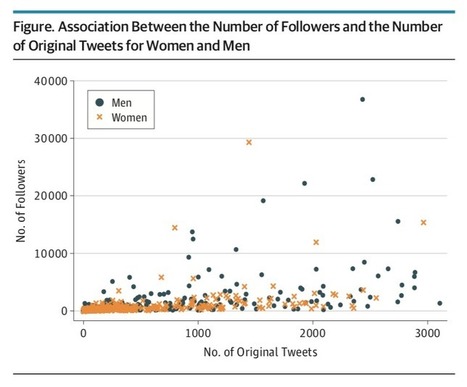
Female academics have about half the followers of men on Twitter and wield otherwise diminished influence there, according to a new study. The analysis pertains to medicine, but women across fields say the findings ring true.
|
|
Scooped by
Dennis Swender
February 15, 2020 12:13 PM
|
Scoop.it!
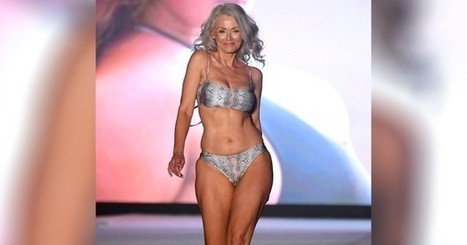
Sports Illustrated has introduced its next slate of finalist models for its upcoming swimsuit issue, and a plus-sized model, a 56-year-old








Artificial Intelligence is using advances to help medical professionals detect and treat cancers; emergency responders predict and prepare for impending natural disasters; police identify criminals and safely disarm bombs; organisations improve products, services and processes and school children receive tailored help from virtual teachers suited to their learning style. Through the use of robots and software agents, the machine may even perform these tasks alone or as a team member collaborating with humans. If we are going to build machines that play roles that simulate human reasoning, behaviour and activities, as a society we should ensure that those machines benefit all members of society, regardless of their age, gender, religion or status in society, rather than replicate human biases, perpetuate disparities or widen the gap between the haves and have nots.
If AI is a simulation of human intelligence, who does it simulate and does it have a gender? Whether you view gender as socially constructed by one’s environment and culture, a biologically determined factor as in the essentialist perspective, or adhere to the theory of individual differences, gender plays a role in who we are.
All too often it affects how we are perceived and what we can do. That can vary from opportunities to pursue a certain career to whether our car navigation system recognises or ignores our voice commands.
In my area of AI research, female avatars are most commonly used to play virtual assistants and companions. This perpetuates a perspective that helping roles are best performed by women.
These characters are friendly and empathic, but also submissive and there are no negative consequences for users who ignore them or even verbally abusive them. But more often AI represents males.
I recall earlier this year at a Digital Health conference in Melbourne a medical specialist confessing that 25 years ago when he was a rural GP he misdiagnosed a female patient which nearly cost her life because he had never seen that condition in a female.
The dataset he was operating from, his experience, was biased. Similarly, the bias within AI is due to the inherent bias in our world.
It exists in the expertise we capture in knowledge based systems, in the datasets from which we develop predictive models and the software and hardware designed for and tested by (mostly) men who naturally operate from their own experiences and needs. To make matters worse, because the AI is doing the task, the bias becomes more hidden, particularly in methods like deep learning that are difficult for humans to interpret or understand.
In order for AI technology to meet the needs of both men and women, both genders should be the target of innovation ns, involved in the design of these systems and represented in datasets and evaluations. For example, we need to avoid unconscious bias in deciding what features to include or exclude in the training of predictive models. But how can we deliver inclusive solutions given current gender gaps?
Globally, women are underrepresented in Engineering and Information Technology classrooms and workplaces, with representation around 30% in India and significantly lower in other countries ; resulting in products and technology mostly designed with men in mind.
In AI research, that percentage is closer to 10%, as I observed in 2018 at the joint-AI conference held in Stockholm with thousands of delegates, where I and another lady had the rare experience of walking straight into a toilet cubicle following the keynote speeches and watched with some amusement the long and winding queue emanating from the men’s bathroom.
Governments, universities, industry and wider society need to work together to develop ethical frameworks that harness the benefits of AI without ignoring concerns such as cognitive degeneration, threats to autonomy, accountability, privacy, security, discrimination, societal implications and economic impacts.
Five key principles found across existing frameworks mandate that AI technology should benefit the common good (beneficence); do no harm (non-maleficence); maintain human agency (autonomy); promote diversity and fairness (justice) and to ensure accountability, responsibility and transparency (explicability) with respect to the other principles.
Particularly relevant to the gender question, the principle of justice aims to eliminate discrimination, minimise data bias and promote shared benefits.
So back to our question. Does AI represent or favour a particular gender? Yes, currently it mirrors our world dominated by data, decisions and designs for and by males.
Explainable AI, AI that can explain its goals, beliefs, reasoning and knowledge boundaries, provides a fresh opportunity to make this bias transparent.
To bring the female voice to AI is another key solution that can be achieved through initiatives such as the women in STEM programs at Macquarie University situated in Sydney, Australia. With commitment to follow ethical principles, together we can build AI that exposes bias and does not discriminate based on gender; in so doing artificial intelligence can transform human intelligence and our society.
(The author is Professor, Department of Computing Faculty of Science and Engineering, Macquarie University. Views expressed here are personal.)