ED 262 mylineONLINE: Gender, Sexism, & Sexual Orientations
1.0K views | +0 today
ED 262 mylineONLINE:  Gender, Sexism, & Sexual Orientations
View related curated articles on Flipboard / Sexual Orientation at http://flip.it/De4AV_
Curated by Dennis Swender
Your new post is loading...
Rescooped by Dennis Swender from Women's Economic Empowerment, Gender Equality, Women in Politics, Indigenous Women and Children
February 27, 2021 2:48 AM
Scoop.it!

Development Channel » The Status of Women and Girls in Iraq and Afghanistan

Development Channel » The Status of Women and Girls in Iraq and Afghanistan | ED 262 mylineONLINE:  Gender, Sexism, & Sexual Orientations | Scoop.it
This post is by Catherine Powell, fellow for CFR’s Women and Foreign Policy Program; and Amelia Wolf, research associate for CFR’s Center for Preventive Action and International Institutions and Global Governance Program.

The recent increase in attacks by the self-proclaimed Islamic State (IS)—known until recently as the Islamic State of Iraq and Syria (ISIS)—and the group’s claims to territory in northern Iraq have spurred observers to draw comparisons between the current crisis in Iraq and the Taliban insurgency in Afghanistan. In Iraq, the IS has begun to impose Sharia law in areas under its control, forcing boys and girls to be separated at school, requiring women to wear the niqab in public, and banning music. There have been reports that the IS has forced women to marry or have sex with militants, ordered families to hand over their daughters, and distributed leaflets promoting the rape of women. In addition, a Saudi-based cleric recently issued a fatwa allowing militants to rape women in towns claimed by the group. All this has caused fear and concern that the drawdown of U.S. troops in Afghanistan by the end of 2016 will result in a similar unraveling and a revival of extremism in the country—which would undermine the primary intent of a decade of U.S. intervention.

Whether or not the crisis in Iraq compares directly to Afghanistan—given the historical, cultural, geographic, ethnic, and political differences between the two countries—it certainly provides a cautionary tale for U.S. policy toward Afghanistan. In particular, just as gender equality is threatened by the rise of IS in Iraq, the gains made by Afghan women and girls over the course of the U.S. presence in the country would be greatly imperiled by a resurgence of the Taliban if the Afghan National Security Forces (ANSF) are not strong enough to step in as U.S. troops withdraw.

Prior to the overthrow of the Taliban, women and girls were banned from schools; segregated in many aspects of public life, including the workplace; and prevented from leaving their homes without a male guardian. In 2001, virtually no girls were enrolled in school, and women rarely participated in the formal economy and or held leadership positions. Now, more than ten years later, women have made great strides in education, health, political participation, economic empowerment, and social engagement. Approximately 40 percent of children enrolled in schools are girls and maternal mortality has fallen from 1,600 to 327 deaths per 100,000 births. Additionally, women hold three out of twenty-five cabinet seats and 120 judicial positions. Backsliding on this progress would undermine security, stability, and development, as gender equality and stability are correlated.

Even if U.S. troops stay in Afghanistan beyond President Barack Obama’s December 2016 deadline for complete withdrawal, U.S. public opinion and funding for an ongoing U.S. military presence much beyond that date is unlikely to change, given the other potential demands on the U.S. military and constraints on resources. Obama’s recent announcement that U.S. military involvement will come to an end before he leaves office reflects this political reality as well as his desire for a legacy of pulling the United States out of two wars and refocusing U.S. counterterrorism efforts on new fronts in the Middle East and North Africa. While policymakers and media have focused on the continued presence of U.S. troops, severe cuts to U.S. funding of the ANSF are in the works and pose a great threat to the rights of women and girls going forward. U.S. policymakers should utilize the leverage they currently have in Afghanistan to strengthen the ANSF’s own ability to prevent the country from a fate similar to that of Iraq.

The 2003 U.S. invasion of Iraq was a fool’s errand from the beginning–particularly since a focus on Afghanistan instead would have better served U.S. interests in the region. However, once the United States toppled Saddam Hussein, it had a responsibility to assist the country with an orderly transition to a society in which human rights and security are guaranteed. Part of the current problem in Iraq is the fact that the United States withdrew before adequately training Iraqi forces. To avoid a similar erosion of security and backtracking on gender equality in Afghanistan, Washington should follow the recommendations outlined in a recent CFR report, Women and Girls in the Afghanistan Transition:

Support the ANSF’s ability to maintain security and enhance the environment for the participation of women and girls in public life.
Double funding to support women’s integration into the ANSF.
Invest in women’s rights and leadership–including in rural areas–as this will support sustainable development for the country as a whole.
Maintain and expand girls’ education in Afghanistan.

In comparing the Afghanistan and Iraq, it is important to remember the crucial differences between the two countries. For example, gains made by women and girls since 2001 have been widely supported by a majority of Afghans, including men. This has not been the case is Iraq. In addition, sectarian divisions that lie at the heart of the resurging violence in Iraq do not exist to the same extent in Afghanistan. Lastly, while Iraqi Prime Minister Nouri al-Maliki refused to an agreement for a U.S. residual force in Iraq, the runoff candidates in Afghanistan—Abdullah Abdullah and Ashraf Ghani Ahmadzai—have both agreed to sign the bilateral security agreement to ensure a U.S. presence in the country. A security agreement is essential to ongoing cooperation between the two countries to achieve shared policy goals, including promoting the participation of women and girls in public life.

Via KRII-KROTOASA RESEARCH-INTENSIVE INSTITUTE
No comment yet.
Rescooped by Dennis Swender from Women's Economic Empowerment, Gender Equality, Women in Politics, Indigenous Women and Children
February 27, 2021 2:47 AM
Scoop.it!

Development Channel » Hillary Clinton: Glass Ceilings, Sticky Floors, and Broken Ladders to Equal Opportunity

Development Channel » Hillary Clinton:  Glass Ceilings, Sticky Floors, and Broken Ladders to Equal Opportunity | ED 262 mylineONLINE:  Gender, Sexism, & Sexual Orientations | Scoop.it
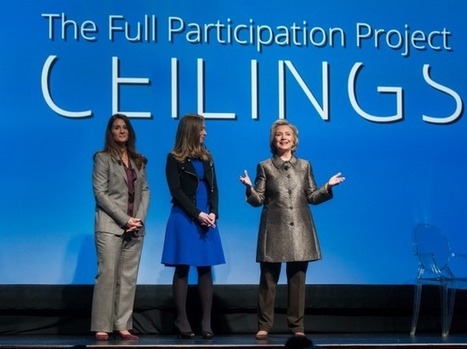
On International Women’s Day this past Monday, I attended the release of the Clinton Foundation’s No Ceilings: The Full Participation Report, which Hillary Clinton launched alongside Melinda Gates and Chelsea Clinton. Building off the momentum generated at the UN Fourth World Conference on Women in Beijing in 1995, the No Ceilings report uses data collected over the last twenty years to note both the gains and gaps in women and girls’ participation globally.

This September marks the twentieth anniversary of the Beijing Conference, a landmark moment where world leaders, in effect, embraced then-First Lady Hillary Clinton’s statement at the Conference that “women’s rights are human rights.” Clinton and her family’s foundation have continued to push for women’s rights and empowerment. Full disclosure: having attended the Beijing Conference and been moved by Clinton’s speech there, I later had an opportunity to work on the Secretary of State’s Policy Planning Staff under her leadership and Policy Planning’s first woman director, Anne-Marie Slaughter.

The No Ceilings report highlights the progress women and girls have made, for example, in increased access to primary education, an overall drop in maternal mortality, and the growing recognition of the importance of women to peace and security. At the same time, it underscores the gaps that persist for women and girls, including the life expectancy of women in poor and marginalized areas, low rate of attainment in secondary education, the continuing epidemic of violence against women, overall stagnation in women’s workforce participation, and women’s exclusion from peace and security processes.

The report’s emphasis on data—and, indeed, Secretary Clinton’s focus on gender data as a way to address these issues—measures the progress of women and girls internationally and invites policymakers, academics, and activists to take stock of the women’s rights movement. Where is the movement now, and where should it head next?

Since the Beijing Conference, there has been a major push for the inclusion of women in international matters, including peace and security discussions, and this drive has elicited a promising response. Though there is still work to be done—as Ambassador Melanne Verveer noted at Monday’s event, only 4 percent of peacekeeping forces are female—policy developments such as UN Security Council Resolution 1325 on Women, Peace, and Security (and various countries’ national action plans implementing Resolution 1325) show the broad acceptance of the idea that women and women’s rights are critical to the peace and security dialogue. Yet the question remains: has the security paradigm actually changed, or are women simply inserting themselves in a male-dominated regime and culture? To what extent are women transforming the paradigm to pave the way for stemming conflicts, countering violent extremism, and establishing more sustainable peace?

And if a major goal of the women’s rights movement, at least since the Beijing Conference, has been to open up opportunities for women’s leadership—not only in peace and security matters, but in other sectors as well—what is the movement’s main objective now? Much has been said about breaking a final glass ceiling: electing a woman president. As Liberian President Ellen Johnson Sirleaf said at the No Ceilings event, “That glass ceiling is broken—by me.” However, what about the sticky floors and broken ladders to opportunity that women and girls around the globe still face? Will placing more women into positions of power help them?

Via KRII-KROTOASA RESEARCH-INTENSIVE INSTITUTE
No comment yet.
Rescooped by Dennis Swender from Fashion & technology
February 19, 2021 3:30 PM
Scoop.it!

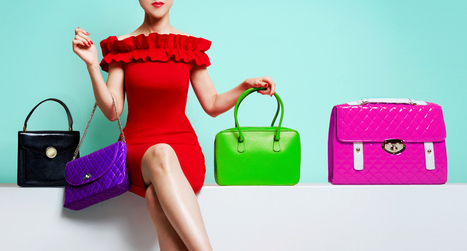
“People are surprised that I work in tech - having an amazing handbag collection is confusing apparently..”

“People are surprised that I work in tech - having an amazing handbag collection is confusing apparently..” | ED 262 mylineONLINE:  Gender, Sexism, & Sexual Orientations | Scoop.it

One of our 'women in tech' April Forsyth explains how she found her way to the domain name industry - and why it's ok to love fashion and tech


Via Beeyond
No comment yet.
Rescooped by Dennis Swender from Gender and Crime
February 1, 2021 12:33 AM
Scoop.it!

Sorry, Pelosi: Eliminating official use of ‘mother’ isn’t inclusive — it’s waging war on women

Sorry, Pelosi: Eliminating official use of ‘mother’ isn’t inclusive — it’s waging war on women | ED 262 mylineONLINE:  Gender, Sexism, & Sexual Orientations | Scoop.it
One of the first acts of our new House of Representatives might be to cancel Mom. On Sunday, Speaker Nancy Pelosi’s Democratic majority proposed to eliminate “father, mother, son, daughter, brother…

Via Rob Duke
No comment yet.
Rescooped by Dennis Swender from Scriveners' Trappings
January 13, 2021 2:37 PM
Scoop.it!

Glasgow Women's Library

Glasgow Women's Library | ED 262 mylineONLINE:  Gender, Sexism, & Sexual Orientations | Scoop.it

Description by The Scout Report


"UK readers are likely aware of the award-winning Glasgow Women's Library, and readers around the world may delight in this opportunity to become acquainted. The library champions women's achievements and contributions, and also seeks to dismantle gender inequalities that continue to persist. The library's LGBTQ Collections Online Resource draws on this mission by highlighting some key resources from the physical Lesbian Archive in an accessible, online format. This online resource is composed of several collections: Early Lesbian and Gay Publications, Feminism and Lesbian Politics, We Recuit!: Campaigns and Organisations, The Personal is Political: Lesbian Life, and LGBTQ Life in Scotland. These collections feature various media, including art and clothing, but a bulk of the materials are publications, pamphlets, and other snippets of literary work. For additional information readers may want to explore the Bibliography page, which lists other materials used in developing the LGBTQ Collections Online Resource. Additionally, readers on Twitter can stay up-to-date with new additions to the Lesbian Archive by following the hashtag #gwllesbianarchive."


Via Jim Lerman
No comment yet.
Rescooped by Dennis Swender from Physical and Mental Health - Exercise, Fitness and Activity
January 3, 2021 12:53 AM
Scoop.it!

Some people can eat anything and not gain a pound. How metabolism affects the calories you burn each day.

It’s not really a matter of slow vs. fast, and there are things you can do to nudge into lower or higher gear.


Via Peter Mellow
No comment yet.
Suggested by Aditya K
December 18, 2020 8:09 AM
Scoop.it!

30 Sexual Orientation Types To Choose Yours

30 Sexual Orientation Types To Choose Yours | ED 262 mylineONLINE:  Gender, Sexism, & Sexual Orientations | Scoop.it
This article lists the various types of sexuality or the categories in which sexualism is divided along with their definitions. This Feeding Trends article let you know of your sexual category. Read along with the article and get your sex definitions right.
No comment yet.
Rescooped by Dennis Swender from Women and Gender Studies
December 12, 2020 11:38 PM
Scoop.it!

Comparing Gender and Media Equality across the Globe, GEM 

https://www.gu.se/en/research/comparing-gender-and-media-equality


a research project led by the University of Gothenberg which has culminated in an open acess book

Comparing Gender and Media Across the Globe: A cross-national study of the qualities, causes and consequences of gender equality in and through the news media

it covers the  nature, causes and consequences of gender inequality

it also provides free access to several major datasets:

 (Global Media Monitoring Project, GMMP, The Global Report on the Status of Women in the News Media, IWMF, and Women in Media in Europe, The European Institute for Gender Equality, EIGE) as well as a selection of other key context variables – measures of gender equality in society, women’s political representation, and economic development. The data set also includes the GEM-index, which is a composite index measuring the level of gender equality in news media content in different countries


Via heather dawson
No comment yet.
Rescooped by Dennis Swender from Papers
December 12, 2020 6:15 AM
Scoop.it!

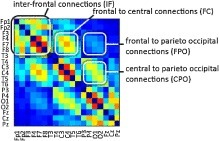
Arithmetic success and gender-based characterization of brain connectivity across EEG bands

Arithmetic success and gender-based characterization of brain connectivity across EEG bands | ED 262 mylineONLINE:  Gender, Sexism, & Sexual Orientations | Scoop.it

Sait Demir, İlker Türker

Biomedical Signal Processing and Control
Volume 64, February 2021, 102222

• Functional brain networks employing coherence method is conducted in a comparative manner across EEG bands.

• Female brain is more connected under rest condition, while male brain boosts connectivity under arithmetic workload.

• Unsuccessful brains yield more assortative behavior based on beta band networks.

• Arithmetically successful brains yield greater connectivity under rest condition for most EEG bands.

• Theta band better diagnoses gender-based differences, while gamma band better discriminates success-based connectivity.

Read the full article at: www.sciencedirect.com


Via Complexity Digest
No comment yet.
Rescooped by Dennis Swender from The Student Voice
November 20, 2020 3:01 AM
Scoop.it!

Sexual abuse at English and Welsh universities 'a public scandal' – study

Sexual abuse at English and Welsh universities 'a public scandal' – study | ED 262 mylineONLINE:  Gender, Sexism, & Sexual Orientations | Scoop.it
About 50,000 cases of abuse or harassment take place every year, report finds

Via Peter Mellow
No comment yet.
Scooped by Dennis Swender
September 9, 2020 12:59 AM
Scoop.it!

Will equal rights widen gender inequality?

Will equal rights widen gender inequality? | ED 262 mylineONLINE:  Gender, Sexism, & Sexual Orientations | Scoop.it
Unequal inheritance rights will not just keep women poor, but also increase their dependence on men leading to unequal economic and social outcomes for both households and economy...
No comment yet.
Rescooped by Dennis Swender from #ILoveGay
September 3, 2020 2:18 AM
Scoop.it!

Grace and love carried me through my coming out as a gay priest

Grace and love carried me through my coming out as a gay priest | ED 262 mylineONLINE:  Gender, Sexism, & Sexual Orientations | Scoop.it

I met the face of an unconditionally loving God in the gaze of my own mother, to whom I came out to as a young priest.  


Via Matt Skallerud
No comment yet.
Rescooped by Dennis Swender from Metaglossia: The Translation World
September 3, 2020 2:16 AM
Scoop.it!

Does artificial intelligence have a gender? - education

Does artificial intelligence have a gender? - education | ED 262 mylineONLINE:  Gender, Sexism, & Sexual Orientations | Scoop.it
If AI is a simulation of human intelligence, who does it simulate and does it have a gender? Read on to know does the artificial intelligence have

Via Charles Tiayon
Charles Tiayon's curator insight, December 25, 2019 8:48 PM

Artificial Intelligence is using advances to help medical professionals detect and treat cancers; emergency responders predict and prepare for impending natural disasters; police identify criminals and safely disarm bombs; organisations improve products, services and processes and school children receive tailored help from virtual teachers suited to their learning style. Through the use of robots and software agents, the machine may even perform these tasks alone or as a team member collaborating with humans. If we are going to build machines that play roles that simulate human reasoning, behaviour and activities, as a society we should ensure that those machines benefit all members of society, regardless of their age, gender, religion or status in society, rather than replicate human biases, perpetuate disparities or widen the gap between the haves and have nots.

If AI is a simulation of human intelligence, who does it simulate and does it have a gender? Whether you view gender as socially constructed by one’s environment and culture, a biologically determined factor as in the essentialist perspective, or adhere to the theory of individual differences, gender plays a role in who we are.

All too often it affects how we are perceived and what we can do. That can vary from opportunities to pursue a certain career to whether our car navigation system recognises or ignores our voice commands.

In my area of AI research, female avatars are most commonly used to play virtual assistants and companions. This perpetuates a perspective that helping roles are best performed by women.

These characters are friendly and empathic, but also submissive and there are no negative consequences for users who ignore them or even verbally abusive them. But more often AI represents males.

I recall earlier this year at a Digital Health conference in Melbourne a medical specialist confessing that 25 years ago when he was a rural GP he misdiagnosed a female patient which nearly cost her life because he had never seen that condition in a female.

The dataset he was operating from, his experience, was biased. Similarly, the bias within AI is due to the inherent bias in our world.

It exists in the expertise we capture in knowledge based systems, in the datasets from which we develop predictive models and the software and hardware designed for and tested by (mostly) men who naturally operate from their own experiences and needs. To make matters worse, because the AI is doing the task, the bias becomes more hidden, particularly in methods like deep learning that are difficult for humans to interpret or understand.

In order for AI technology to meet the needs of both men and women, both genders should be the target of innovation ns, involved in the design of these systems and represented in datasets and evaluations. For example, we need to avoid unconscious bias in deciding what features to include or exclude in the training of predictive models. But how can we deliver inclusive solutions given current gender gaps?

Globally, women are underrepresented in Engineering and Information Technology classrooms and workplaces, with representation around 30% in India and significantly lower in other countries ; resulting in products and technology mostly designed with men in mind.

In AI research, that percentage is closer to 10%, as I observed in 2018 at the joint-AI conference held in Stockholm with thousands of delegates, where I and another lady had the rare experience of walking straight into a toilet cubicle following the keynote speeches and watched with some amusement the long and winding queue emanating from the men’s bathroom.

Governments, universities, industry and wider society need to work together to develop ethical frameworks that harness the benefits of AI without ignoring concerns such as cognitive degeneration, threats to autonomy, accountability, privacy, security, discrimination, societal implications and economic impacts.

Five key principles found across existing frameworks mandate that AI technology should benefit the common good (beneficence); do no harm (non-maleficence); maintain human agency (autonomy); promote diversity and fairness (justice) and to ensure accountability, responsibility and transparency (explicability) with respect to the other principles.

Particularly relevant to the gender question, the principle of justice aims to eliminate discrimination, minimise data bias and promote shared benefits.

So back to our question. Does AI represent or favour a particular gender? Yes, currently it mirrors our world dominated by data, decisions and designs for and by males.

Explainable AI, AI that can explain its goals, beliefs, reasoning and knowledge boundaries, provides a fresh opportunity to make this bias transparent.

To bring the female voice to AI is another key solution that can be achieved through initiatives such as the women in STEM programs at Macquarie University situated in Sydney, Australia. With commitment to follow ethical principles, together we can build AI that exposes bias and does not discriminate based on gender; in so doing artificial intelligence can transform human intelligence and our society.

(The author is Professor, Department of Computing Faculty of Science and Engineering, Macquarie University. Views expressed here are personal.)

Rescooped by Dennis Swender from Women's Economic Empowerment, Gender Equality, Women in Politics, Indigenous Women and Children
February 27, 2021 2:48 AM
Scoop.it!

▶ Luke Ablett Q&A #6 – Inspiration to become a gender equality advocate - YouTube

Luke Ablett talks about his inspiration to become a gender equality advocate.

Via KRII-KROTOASA RESEARCH-INTENSIVE INSTITUTE
No comment yet.
Scooped by Dennis Swender
February 21, 2021 5:13 PM
Scoop.it!

Men Wear Suits, Women Wear Bikinis: Image Generating Algorithms Learn Biases ‘Automatically’ | by Dave Gershgorn | Jan, 2021 | OneZero

Men Wear Suits, Women Wear Bikinis: Image Generating Algorithms Learn Biases ‘Automatically’ | by Dave Gershgorn | Jan, 2021 | OneZero | ED 262 mylineONLINE:  Gender, Sexism, & Sexual Orientations | Scoop.it
OneZero’s General Intelligence is a roundup of the most important artificial intelligence and facial recognition news of the week. Bias in artificial intelligence is notoriously problematic. Facial…
No comment yet.
Rescooped by Dennis Swender from Metaglossia: The Translation World
February 19, 2021 3:08 PM
Scoop.it!

Why using gender-neutral language risks excluding one minority group to include another

Why using gender-neutral language risks excluding one minority group to include another | ED 262 mylineONLINE:  Gender, Sexism, & Sexual Orientations | Scoop.it
The hospital at which I’ll be giving birth in a few months’ time currently allows partners to accompany pregnant women to three events: the first scan, the second scan and the birth itself. To lower the risk of coronavirus transmission, partners are also required to wait outside the maternity unit before the appointment. Arriving at my first scan, husband in tow, the receptionist took one look at the pair of us and, despite the fact I wasn’t yet showing, knew exactly who to boot out into the cold. “You, out!” she said, pointing at the male, who meekly sloped off to wait in the car park. I thought of that moment recently, when the Brighton and Sussex University Hospitals NHS Trust became the first in the UK to officially adopt gender-inclusive language in its perinatal services. This means avoiding feminine pronouns where applicable, referring to the “birthing person” (formerly known as “mother”), and removing the word “breast”, recommending instead the terms “chest-feeding” and “human milk”. This change will be applied to the language used in official NHS literature. Yet, even in uber-progressive Brighton, I think it highly unlikely that a significant number of health professionals will actually start using the term “chest-feeding” (along with “breastfeeding”) when speaking to patients, given its clunkiness, and given that, at least in my experience, people who work in maternity services can often be rather candid about biological reality. No one bothered to ask my husband if he might be the “birthing person” when he showed up at our maternity unit, and rightly so. After all, the number of people who will benefit from this move is truly tiny: specifically, we are concerned here with trans or non-binary people, who are biologically female, and able to bear a child following any surgical or hormonal interventions undergone as part of sex reassignment, and decide to do so, and care about squabbles over vocabulary. The NHS does not currently keep a record of how many trans people give birth every year in the UK, but in Australia the figure is in the dozens. Unfortunately, there is another group – and a much larger one – who might be alienated by efforts to make medical vocabulary more trans-inclusive and therefore also (if inadvertently) more obscure. The 2011 census records that 1.3 per cent of the population of England and Wales cannot speak English well, and 0.3 per cent cannot speak English at all, and the majority of these people are women. The problem is particularly acute among British Muslims, with almost a quarter of Muslim women reporting that they either do not speak English or do not speak it well. My hospital happens to cover an area with a large Muslim population, and it’s not uncommon to see women in the maternity unit struggling to make themselves understood by staff. The problem has been made worse during the pandemic, as friends and relatives have been banned from waiting rooms and so cannot act as translators. There are phone translation services available, but – as I witnessed from the other side, when I was (briefly) a medical student – they’re not always straightforward to use. And even if some leaflets might be translated into other languages, the posters and signs on the wall are all in English. [see also: Why should CNN tweet about “individuals with a cervix”?] I was told by one midwife that the first maternity appointment – which includes crucial assessments of health, genetic background and risk of domestic violence – typically takes twice as long for those patients who struggle with English. Now try adding terms such as “chest-feeding” and “birthing person” to the official forms. Or, rather than ask that “women” present themselves for a smear test, NHS letters and poster campaigns might use gender-neutral language and direct the appeal instead to “individuals with a cervix”, the phrase used by the American Cancer Society. This kind of language is feted as “more inclusive”, but the question we should be asking is, inclusive of whom? Attendance at cervical screenings is at a ten-year low, and late diagnosis hugely increases mortality risk. But, unfortunately, less than 50 per cent of UK women know where the cervix is, and those who do are disproportionately likely to have more educational qualifications and be native English speakers. The costs of confusing public health messaging are suffered more by some groups than by others, but this can all too easily be forgotten by progressive elites in the rush to signal inclusiveness. The psychologist Rob Henderson has coined the term “luxury beliefs” to describe, as he puts it, “ideas and opinions that confer status on the rich at very little cost, while taking a toll on the lower class”. For instance, a member of the bourgeoisie can elevate his status by proposing to “defund the police” with little fear of negative consequences for himself if this policy were ever enacted, since those most affected by crime are poor people who can’t afford to move away from dangerous areas. Similarly, rich people in the modern West can experiment with alternative relationship arrangements, such as having multiple partners, in the knowledge they can always fall back on their financial and social capital if it doesn’t work out. But not everyone has the luxury of rewriting relationship norms. A poor woman with several children by several different men, for example, is placed in an intolerably precarious situation if she finds herself suddenly single. For the rich, luxury beliefs are about gain with little pain. The elaborate dance involved in avoiding using words such as “mother” and “breast” offers those at the cutting edge of political discourse the opportunity to demonstrate their status at no cost to themselves. That does not, however, mean there is no cost to be borne by anyone else. [see also: Judith Butler on the culture wars, JK Rowling and living in “anti-intellectual times”]

Via Charles Tiayon
No comment yet.
Rescooped by Dennis Swender from The Student Voice
January 27, 2021 9:01 AM
Scoop.it!

Does Australia's sex education curriculum need to include more on sex positivity, LGBTQI+ relationships and intimacy?

Does Australia's sex education curriculum need to include more on sex positivity, LGBTQI+ relationships and intimacy? | ED 262 mylineONLINE:  Gender, Sexism, & Sexual Orientations | Scoop.it
A national survey indicates nearly half of all Year 10-12s have had sex, but experts say sex ed in Australia is a "mixed bag". Is our curriculum too focused on "bugs and babies and bodies"?

Via Peter Mellow
No comment yet.
Rescooped by Dennis Swender from Anat Lechner's My 2 Cents
January 13, 2021 12:43 PM
Scoop.it!

The World's 100 Most Powerful Women 2020

The World's 100 Most Powerful Women 2020 | ED 262 mylineONLINE:  Gender, Sexism, & Sexual Orientations | Scoop.it
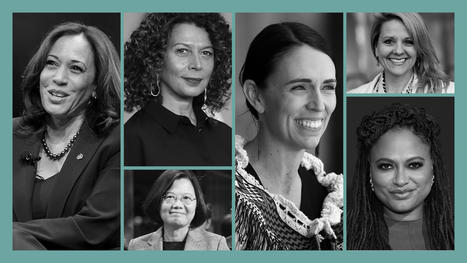
From fighting the pandemic to reengineering American politics, the influential women on The World's 100 Most Powerful Women list—including New Zealand Prime Minister Jacinda Ardern, vice-president elect Kamala Harris and voting rights advocate Stacey Abrams—are making history.

Via Anat Lechner PhD
No comment yet.
Scooped by Dennis Swender
December 18, 2020 8:14 AM
Scoop.it!

Why Should You Know About Meninism On International Girl Child Day?

Why Should You Know About Meninism On International Girl Child Day? | ED 262 mylineONLINE:  Gender, Sexism, & Sexual Orientations | Scoop.it
Are you a Feminist? If Yes.. then answer my 5 questions about privileges you get being a Woman over a Man. Read why movies like “ki and kaa” only exist on screen and not in real life. Find out why we are missing “International Boy Child Day” and why exactly we should not miss it. Does Sexism exist in Men too? Feeding Trends finds out in this article.
No comment yet.
Rescooped by Dennis Swender from SEO Optimizer
December 17, 2020 1:08 PM
Scoop.it!

9 Holy Places In India Where Entry Of Women Was Or Is Prohibited

9 Holy Places In India Where Entry Of Women Was Or Is Prohibited | ED 262 mylineONLINE:  Gender, Sexism, & Sexual Orientations | Scoop.it
Women in India have seen discrimination on basis of sex in the name of religion too. There are 9 holy places in India where women entry was or is prohibited. Feeding Trends article written by Sana Ummeed throws light on the name of places where women are not allowed or women entry is banned or women entry is prohibited. Lord Ayyapa Temple, Haji Ali Dargah, Lord Karthikey Temple, Shreeanabhaswamy Temple, Jain temple, Nizamuddin Aulia Dargah, Jama Masjid Delhi, Idgah Masjid Shillong, have been involved in this.

Via Aditya K
No comment yet.
Rescooped by Dennis Swender from Women and Gender Studies
December 12, 2020 11:38 PM
Scoop.it!

Archive-It - South Asian Gender and Sexuality Web Archive

Archive-It - South Asian Gender and Sexuality Web Archive | ED 262 mylineONLINE:  Gender, Sexism, & Sexual Orientations | Scoop.it
A New web Archive from the Ivy Plus Libraries Confederation

it currently includes 74 web archived resources covering lgbt plus activism in South Asia and its diaspora. these are valuable for grass roots discussion of gay and transgender rights , pride and cultural events and responses to government policy which may not be reported elsewhere


Via heather dawson
No comment yet.
Rescooped by Dennis Swender from Into the Driver's Seat
November 22, 2020 1:22 PM
Scoop.it!

11 Female Teachers Who Changed the World by @RichardJARogers

11 Female Teachers Who Changed the World by @RichardJARogers | ED 262 mylineONLINE:  Gender, Sexism, & Sexual Orientations | Scoop.it
Women perform a large number of essential and unique roles in society. That fact is undeniable. From authors and actresses to CEOs and engineers: Women prove time and time again that they can perfo…

Via ICTmagic, Jim Lerman
No comment yet.
Rescooped by Dennis Swender from Anthropometry and Kinanthropometry
November 2, 2020 9:07 PM
Scoop.it!

Selling plus-size clothing isn’t only about pleasing shoppers 

Selling plus-size clothing isn’t only about pleasing shoppers  | ED 262 mylineONLINE:  Gender, Sexism, & Sexual Orientations | Scoop.it
An increasing number of brands are extending size ranges. It’s an improvement for plus-size consumers – but are companies’ motivations always in the right place?

Via Peter Mellow
No comment yet.
Rescooped by Dennis Swender from #ILoveGay
September 3, 2020 2:19 AM
Scoop.it!

With same-sex marriage vow renewals, Palm Springs Methodist church affirms support for all members

With same-sex marriage vow renewals, Palm Springs Methodist church affirms support for all members | ED 262 mylineONLINE:  Gender, Sexism, & Sexual Orientations | Scoop.it

The ceremony included one marriage and 19 vow renewals. It came as the United Methodist Church implemented stricter LGBTQ rules.


Via Matt Skallerud
No comment yet.
Rescooped by Dennis Swender from Metaglossia: The Translation World
September 3, 2020 2:16 AM
Scoop.it!

Matters of the Brain: Why Men and Women Are So Different

Matters of the Brain: Why Men and Women Are So Different | ED 262 mylineONLINE:  Gender, Sexism, & Sexual Orientations | Scoop.it

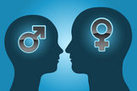
Here are the sex differences in the brain that are backed by science.

A prevalent understanding, particularly in the 1980s, was that boys and girls are born cognitively the same. It was the way parents and society treated them that made them different.

Since then, a preponderance of research has called this belief into question. The majority of today's psychologists agree that some of the differences exhibited by male and female brains are innate.

"We do socialize our boys and girls differently, but the contribution of biology is not zero," said Diane Halpern, a professor of psychology at Claremont McKenna College in California, who has been studying cognitive gender differences for 25 years. Halpern was a keynote speaker at the British Psychological Society Annual Conference here last Thursday (April 19).


Via Charles Tiayon
No comment yet.