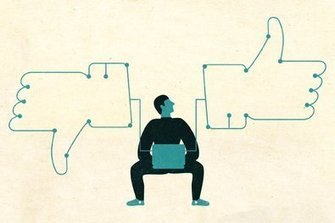
"It’s hard to disconnect from work. Increasing global competition and digital devices enable, or perhaps more accurately, compel, 24/7 connectivity, creating an environment in which we log hours far beyond the point of diminishing returns. The result is a costly epidemic of burnout. The condition is global, but it seems as if America has a particularly exceptional case of it.
A 2016 report produced by the consulting group Deloitte found that one of the most pressing concerns for employers is the “overwhelmed employee.” Deloitte’s research shows that workers check their cellphones nearly 50 times per day, and rarely, if ever, do they take breaks. In fact, the vast majority of Americans work not only through lunch, but through nights and weekends, too. In an aptly titled paper, Americans Work Too Long (And Too Often at Strange Times), economists from the University of Texas at Austin and the Paris School of Economics found that 27 percent of Americans regularly work between 10 p.m. and 6 a.m., and 29 percent regularly work on weekends. Another study, conducted in 2014 by the global forecasting group Oxford Economics, showed that, on average, American workers leave 5.7 vacations days unused at the end of every year. Add all of this up, as the research firm Gallup did in August of 2014, and you’ll find that the typical American workweek is 47 hours, not 40. Gallup also reports that 18 percent of Americans consistently clock over 60 hours of weekly work."
Bull's newsletter on "Student Voice" affirms what Jonathan Kozol writes in "The Shame of the Nation (2005, p. 12)":
...I have almost always found that children are a great deal more reliable in telling us what actually goes on in public school than many of the adult experts who develop policies that shape their destinies. Unlike these powerful grown-ups, children have no ideologies to reinforce, no superstructure of political opinion to promote, no civic equanimity or image to defend, no personal reputation to secure. They may err sometimes about the minuscule particulars but on the big things children rarely have much reason to mislead us. They are, in this respect, pure witnesses, and we will hear their testimony in these pages.
La voz de nuestros estudiantes importa en Educación.
"Student voice matters in education today. Listening to those voices and, even more, entrusting students with decisions about the nature of their learning communities, has tremendous benefits. I am not just referring to future benefits in terms of test score results and measurable academic gains. I am also looking at the benefits of creating more equitable and humane learning communities for today. We see this happening in promising ways, but what if we saw it even more? What if we found ways to persistently engage students in tackling some of education’s greatest challenges and pursuing some of its greatest opportunities? What if the students had more room to imagine the possibilities and to pursue them?"
"Parents should worry less about the amount of time their children spend using smartphones, computers and playing video games because screen time is actually beneficial, the University of Oxford has concluded ..."
Since Margaret Thatcher, the role of academia has been to service the status quo, not challenge it in the name of justice, tradition, imagination, human welfare, the free play of the mind or alternative visions of the future. We will not change this simply by increasing state funding of the humanities as opposed to slashing it to nothing. We will change it by insisting that a critical reflection on human values and principles should be central to everything that goes on in universities, not just to the study of Rembrandt or Rimbaud.
Money presents an interesting dilemma between preserving status quo primordialism (demographic values) and promoting more risk-taking modernization and egalitarian ideas.
A good portion of learners today are taking course content primarily online. In fact, in the United States, there are some states that mandate grade school students take some portion of their studies in an virtual environment.
In other words, elearning is more than here to stay – it is practically required!
Taking an online course is different than a classroom setting. Learners are often left to their own devices when it comes to learning retention. For courses that require successful passing of a final exam, it becomes even more critical that students find ways to solidify the course content.
Learn about Dr. Martin Luther King Jr., an American civil rights leader and National hero. Share the stories of his vision and commitment by using activities and printables that detail his life.
Media Literacy can be used effectively as a pedagogical approach for teaching core content across the K-12 curriculum, thus meeting the needs of both teachers and students by promoting critical thinking, communication, and technology skills. This article focuses on the work of Project Look Sharp at Ithaca College, a media literacy initiative working primarily with
Via Monica S Mcfeeters
Many large players are interested in digital literacy: libraries, companies, faculty, journalists, even governments. This could lead us to see digital literacy as an institutionally friendly force, even a conserving one. What I'd like to argue is that digital literacy is ultimately destabilizing, even insurgent. (I have given several talks around the world about this…
More than sixty-two years after the United States Supreme Court’s unanimous decision in Brown v. Board of Education, the nation is still wrestling with how
Digital learning or online education is an example of a technology that can bridge the gap between scientific discoveries and their popularization. It would be impossible for a formal education system, based only on the face-to-face interaction between student and teacher, to keep apace with the breath-taking advances of science and technology. Distance education offers a way to tailor education to present and future technology. The rapid spread of its popularity in almost every country offers hope for new patterns of institutional education. We are in favor of this kind of education, though we have some criticisms of the lines along which it is developing. Distance or online education requires a careful approach, since there is no guarantee that an innovating process will produce new results. Even revolutionary systems can produce extreme conservatives, thus reinforcing the development-oriented mentality.
Online education or other virtual educational technologies may be of valuable assistance in educating people for the second quarter of the twenty-first century, but it could also turn into a system which widens the gulf between us and Utopia. The present author has frequently criticized distance education techniques that consist in generating information in order to produce trained manpower. What the world really needs is educated people, capable of understanding the contemporary driving forces in the world, and who can adapt to them and transform them. The trained person produced by distance education will soon see his or her instruction become obsolete, whereas an educated person will develop or create new abilities when necessary. Education is a learning combination of cognitive and affective and social skills. We need to develop cognitive and metacognitive competences at the same time that we learn self-responsibility and self-control, compassion, team work, learning to care, learning to share and learning to carry out learning.
Miguel A. Escotet nos hace un regalo este 2017 con este artículo y sus reflexiones sobre el presente y el futuro de la Educación.
Una Educación que ahora mismo no responde a las verdaderas necesidades del planeta. Que ahora mismo se rige por la clase social de quién la recibe, que no es capaz de enseñar los avances del conocimiento, orientada a la especialización...
La Educación Digital puede ser una oportunidad pero también existen riesgos...
La revolución educativa está por llegar porque estamos obligados a "aprender siempre" y hay que cambiar algunas cosas...
A recent study found that an “uncontrollable need” to use smartphones is on the rise among young people. Out of 3000 adults surveyed, 19% of those aged 18–29 showed signs of “moderate to severe…
’m using the term “information literacy” here to describe assisting our students developing critical thinking skills to evaluate both web and content in other media forms. I’ve seen the term used to describe broader skills, too. Let me know if you think I’m off-based with my definition. So, using that definition, here is a beginning Best list, and I hope readers will contribute more:
Source: Wikimedia CommonsAs Super Bowl 50 approaches, fans of the Carolina Panthers and the Denver Broncos — and football fans in general — are scrambling to find reasonably priced seats at Levi’s Stadium in Santa Clara, California. At last check, the average list price of a ticket to the February 7 event was a whopping […]
American Denial is the story of Swedish researcher Gunnar Myrdal, whose landmark 1944 study, An American Dilemma, probed deep into America's racial psyche.
In 2013, the Program for the International Assessment of Adult Competencies (PIAAC) released the first-ever global data on how the U.S. population aged 16 to 65 compared to other countries in terms of skills in literacy and reading, numeracy, and problem-solving in technology-rich environments (PS-TRE). The PIAAC then broke down the data by specific age group, including Millennials, or those born after 1980 that were between the ages of 16-34 at the time of the assessment (2012).
Overall, revealed the data, despite having the highest levels of educational attainment of any previous American generation, Millennials, on average, demonstrate relatively weak skills in all skill sets researched compared to their international peers.
Also, the data revealed that while it is true, on average, that the more years of education one completes the more skills one acquires, far too many are graduating high school and completing postsecondary education without receiving the right skills needed to enter a competitive, global workforce that is becoming more and more technology-based.
Overall, revealed the data, despite having the highest levels of educational attainment of any previous American generation, Millennials, on average, demonstrate relatively weak skills in all skill sets researched compared to their international peers.
Sixteen years ago, the first charter schools opened in Kansas City with the promise of ending a student exodus from the city’s public schools. But state data recently obtained by The Star show that mission has failed, leaving hundreds of students to spiral between district and charter schools in a public education system still losing children.
Via Monica S Mcfeeters
This is not an editorial about compliance with equal opportunity legislation. It is about the true nature and value of human diversity. No matter whether it is a group of simple cells or a complex collection of people, what is vital to current and future health is its diversity. We have known about the importance of leveraging diversity since Darwin published his Origin of Species in 1859. Here’s a key finding from his disruptive manifesto, “It is not the strongest of the species that survive, nor the most intelligent, but the one most responsive to change.”
How many times have you seen a student tackling several things at one time? They’re chatting, texting, researching, updating Facebook, Tweeting, and snapping photos. It makes you tired just watching them do it all, sometimes. Enter the hotly-debated sport of multitasking, a hallmark of modern digital life.
"Both sides claim the West Bank as legitimately belonging to them. Over time, and especially as Israeli politics has shifted rightward, the settler movement has become an institutionalized part of Israeli society. Support comes in the form of building permits, public investment, and even incentives for Israelis to move into the West Bank. While peace talks remain frozen, the settlements continue to grow, making any possibility of a Palestinian state in the West Bank faint."
The settlements started out has a religious spreading. However, that has dramatically changed over time due to economic reasons. Not only that the amount of government support for the people living in these lands are incredible, even in an outpost that is deemed illegal. The country occasionally goes into illegal areas and tear down houses to show a tough face on them. The government and its people theorized that more will come home and that the populations in the settlements will grow to half a million. The international community and Israeli must come up with a strategy before it gets to the point of no turning back.
This video gives some in depth background on how Israel and Palestine are severely intermingled. It goes into the history of the creation of Israel and it talks extensively about the West Bank region and who lives there and who controls what parts. The region is very intertwined and more Israelis are moving into the region and how it would become more and more difficult to separate the region into two states.
This shows how important clear and distinct boarders are for different countries. In this case, that is important because Palstine feels their land is justing getting taken, while Israel argues they are returning to their homeland. Either way, the rest of the world believes what Israel is doing is illegal and Palestine should have it's own autonomy as a state, in a two-state system.
To get content containing either thought or leadership enter:
To get content containing both thought and leadership enter:
To get content containing the expression thought leadership enter:
You can enter several keywords and you can refine them whenever you want. Our suggestion engine uses more signals but entering a few keywords here will rapidly give you great content to curate.


 Your new post is loading...