


People who are in better aerobic shape are less likely to be hospitalized due to COVID-19, according to a new study published by researchers at Henry Ford Health System.
Via Peter Mellow

 Your new post is loading...
 Scoop.it! People who are in better aerobic shape are less likely to be hospitalized due to COVID-19, according to a new study published by researchers at Henry Ford Health System. Via Peter Mellow 
No comment yet.
Sign up to comment
Scoop.it!

President Donald Trump on Monday announced dozens of new additions to a list of “American heroes” that will be honored in a national garden.
Trump announced the creation of a National Garden of American Heroes last year. At the time, he named 31 people he said were heroes, including explorer Daniel Boone, abolitionist Frederick Douglass, and pilot Amelia Earhart.
“I am announcing the creation of a new monument to the giants of our past,” Trump said at the time, describing the public area as “a vast outdoor park” with statues.
In a Jan. 18 executive order building on his proposal last year, Trump said a task force dedicated to plan for the construction of the garden finished its first phase and is prepared to move forward.
They include astronaut Neil Armstrong, singer-songwriter Woody Guthrie, Supreme Court Justice Ruth Bader Ginsburg, and Jeopardy host Alex Trebek. Via ThePlanetaryArchives/BlackHorseMedia - San Francisco
Scoop.it!

“Injustice anywhere is a threat to justice everywhere. We are caught in an inescapable network of mutuality, tied in a single garment of destiny. Whatever affects one directly affects all indirectly…”“We know through painful experience that freedom is never voluntarily given by the oppressor; it must be demanded by the oppressed.”- Excerpts from Why We Can’t Wait (1964) by Dr. Martin Luther King, Jr.
Scoop.it!

The case of Jalen Brown illustrates how confusing the largely unwritten school rules for online expression can be. Via Peter Mellow
Scoop.it!

Instead of spending hours writing out comments or correcting student errors, the rubrics themselves are designed backwards from the end goal: persuasive, eloquent use of language and argument. With the specific criteria spelled out clearly on the rubrics, I only have to check the category it falls into under each standard (Publishable, Revisable, and Redo) and leave a quick note as to what the student can do to revise and strengthen that criterion if not yet Publishable. Via Jim Lerman
Scoop.it!

From the coronavirus pandemic to racial justice protests to a closely fought U.S. presidential election, the events of 2020 upended life as we knew it and produced shared grief, disquiet and frustration as well as moments of respite and hope. The WSJ has curated a collection of images that defined the year. Via Anat Lechner PhD
Scoop.it!
If you've left formal education, you no doubt retain a few good memories from your years as a student. None of them, safe to say, involve studying — assuming you managed to get any studying done in the first place. Open Culture, openculture.com Via NextLearning
Scoop.it!

"A few weeks ago, I participated in a webinar with K-12 students, parents and teachers about how online learning is going. You might be surprised to hear that the news was not all bad. The students, in particular, had some good things to say about their virtual experience: They liked that teachers were focusing more on everyone’s mental health and wellbeing, and less on grades. They liked that the standardized tests for the year had been cancelled." Via Dr. Tom D'Amico (@TDOttawa) , John Evans
Scoop.it!

Nearly 20 million students were projected to attend an institution of higher education in the United States during the fall 2020 semester, according t Via Peter Mellow
Scoop.it!

Is There a Hierarchy of Oppression in U.S. Multicultural Teacher Education?
Scoop.it!

One of the things I always look out for at this time of year is the excellent end of year MOOC report from Class Central. Dhawal Shah (CEO, Class Central) has been following MOOCs very closely from the beginning and always has some excellent insight on the goings on during the year. Via Edumorfosis, Dennis Swender, LGA
Scoop.it!

Student mental health was already an issue before the pandemic. And then students felt the strain on all fronts as studies went online and they lost jobs and social contacts. Via Peter Mellow
Scoop.it!
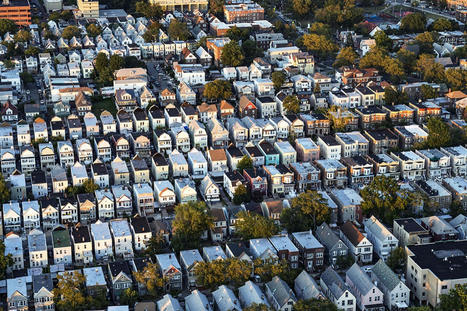
Today, the U.S. Census Bureau releases the 2015-2019 American Community Survey 5-year estimates on over 40 topics for smaller geographies and population groups.
|
Scoop.it!

Changes since March 2020 have clearly revealed the coming shift from print textbook reserves to digital learning materials that all students can equit Via Peter Mellow
Scoop.it!

It is the time of year when predictions become a popular topic of conversation. To that end, Fast Company senior writer Mark Sullivan asked startup CEOs, executives at big companies, investors, and other experts for their predictions for the year ahead. Those predictions can be found Here. Here is a glimpse at what thirty experts believe we can expect. Via Edumorfosis, Ines Bieler
Scoop.it!

The science supports that face coverings are saving lives during the coronavirus pandemic, and yet the debate trundles on. How much evidence is enough? Via ToKTutor

ToKTutor's curator insight,
January 18, 2021 2:13 AM
May2021 Title 1: Face masks, Covid ballistics & shared responsibility: no need to take scientific knowledge claims always and only on trust when the preponderance of evidence points to a level of truth.

Candis Gary's curator insight,
January 18, 2021 11:09 AM
Fascinating viewpoint. I wear the mask but can still smell through the cover. Should we be concerned every time, we see or hear a cough or sneeze.? This article contradicts another scoop.it, I have, which said, we have the coronavirus months before it became public.
Scoop.it!

The world leader in international exchange since 1947, CIEE offers students, professionals, and educators the most comprehensive, relevant, valuable exchange programs available.
Scoop.it!

3D digital maps will become living breathing, real-time representations of the world. Some refer to this idea as a "digital twin" of the planet. Via Anat Lechner PhD
Scoop.it!

See the story of this unique year through McKinsey’s 20 best charts and data visualizations of 2020, from the early days of lockdowns and a tumultuous summer to a hopeful year end. Via Anat Lechner PhD
Scoop.it!

Here are suggested practices for assessing and offering feedback on participation, especially for faculty teaching in diverse environments. Via EDTECH@UTRGV
Scoop.it!

In recent years, social media has become an important platform for political discourse, being a site of both political conversations between voters and political advertisements from campaigns. While their individual influences on public discourse are well documented, the interplay between individual-level cognitive biases, social influence processes, dueling campaign efforts, and social media platforms remains unexamined. We introduce an agent-based model that integrates these dynamics and illustrates how their combination can lead to the formation of echo chambers. We find that the range of political viewpoints that individuals are willing to consider is a key determinant in the formation of polarized networks and the emergence of echo chambers and show that aggressive political campaigns can have counterproductive outcomes by radicalizing supporters and alienating moderates. Our model results demonstrate how certain elements of public discourse and political polarization can be understood as the result of an interactive process of shifting individual opinions, evolving social networks, and political campaigns. We also introduce a dynamic empirical case, retweet networks from the final stage of the 2016 U.S. presidential election, to show how our proposed model can be calibrated with real-world behavior. Public Discourse and Social Network Echo Chambers Driven by Socio-Cognitive Biases Read the full article at: link.aps.org Via Complexity Digest
Scoop.it!

Students who take online college courses may not realize it, but they are the beneficiaries of a special bill of rights. Its goal? To ensure student... Via Peter Mellow
Scoop.it!
When August 2021 rolls around, what changes will we have put into place to ensure that what we learned during 2020 has made education better? Via NextLearning
Scoop.it!

The reopening of campuses post-pandemic won't necessarily spell the end to online learning, according to a recent survey from Top Hat. Via Yashy Tohsaku, LGA
Scoop.it!

Exhibiting a dogmatic faith in metrics, higher education executives are being guided less by rational considerations about educational values and more by the “snake oils” of efficiency, profitability, and accountability. But these dark arts exact a price. Due to increasing competition for funds and jobs, and with the jobs themselves becoming increasingly precarious, universities have become “anxiety machines” for academics. (...) - ABC, by NN Trakakis, 2020/09/29 Via ESR_Info
|





