Your new post is loading...
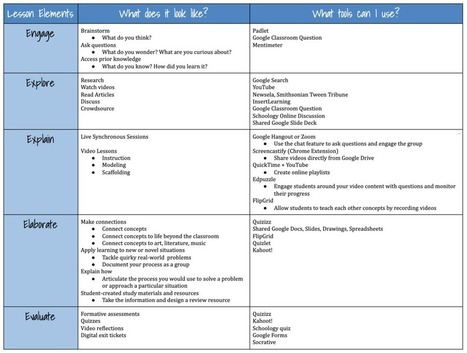
Covid 19 has educators and educational institutions worried about and preparing for possible school closures. What happens if students have to stay home for days or even weeks? How can we keep them learning remotely? What strategies and technology tools
Via Ana Cristina Pratas
Image by Castaway in Scotland, CC-BY-NC Switching to online delivery? If you teach at an institution that is affected by the Coronavirus and is temporarily switching from campus-based teaching to o…
Via Ana Cristina Pratas
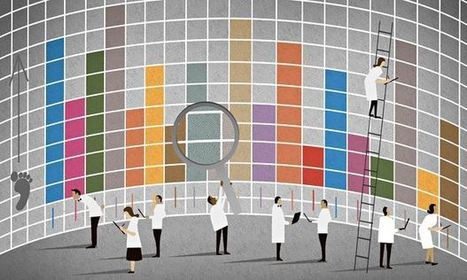
From online forum debates to predictive essay writing software, data showing how students learn can help universities adapt their teaching
Via Grant Montgomery
An introduction to the logic and methods of analysis of data to improve teaching and learning.
Via Grant Montgomery
We've Been Hearing a lot About Big Data Lately, but What Does it Mean for Educators? Wikipedia defines Big Data as, “a blanket term for any collection of d
Via Grant Montgomery
Augmented reality and virtual reality could fundamentally change the way we interact with and interpret data.
Via Grant Montgomery

|
Scooped by
Dennis Swender
March 17, 2020 8:06 PM
|
Two cybersecurity reports that highlight mobile device risks — one from Verizon and the other from NetScout Systems — have also touched on the education sector in their findings.
Give students a new way to interact with information and Thinglink's virtual reality app is a great example of this technology in action.
Via Luísa Lima, Juergen Wagner
Such a SIMPLE and free idea for using text messages in the classroom. I love the last idea for building and assessing vocabulary!
Via Consultants-E, Juergen Wagner
|
|
Rescooped by
Dennis Swender
from eflclassroom
March 17, 2020 5:09 PM
|
Spread the loveThe delivery of education has advanced over time as different technologies became available, and people’s lifestyles started to change. With the advent of computers and the internet, classes were no longer confined to a building, and distance learning became possible. With the advancement of technology, students received their learning materials via their computers and laptops, and eLearning came into being. The next development was mLearning, where students receive their learning materials on their mobile devices. There are several differences between these two forms of education. 1. Purpose eLearning aims to teach specific skills or deliver in-depth, comprehensive information …
Via Mariano Fernandez S., Juergen Wagner
|
|
Rescooped by
Dennis Swender
from Moodle and Web 2.0
March 17, 2020 5:03 PM
|
artificial intelligence (AI) and neuro-enhancement tools promise to enable new approaches and efficiencies that can help personalize learning and chip away at the inequities lurking within our education system.
Via EDTECH@UTRGV, Juergen Wagner
|
Only ChronicleVitae delivers higher ed jobs, a free dossier service, and career resources of Chronicle caliber. Recruiters find the most informed candidates in higher ed here.
Via Ana Cristina Pratas
|
|
Rescooped by
Dennis Swender
from Educación a Distancia y TIC
March 18, 2020 2:39 PM
|
Based on research conducted for more than a decade, here are online learning tips to provide meaningful lessons that don’t stymie student learning.
Via EDTECH@UTRGV, LGA
A Stanford-led national workgroup calls for a new movement in learning analytics—redefining the field and offering a scalable road map to success.
Via Grant Montgomery
Analysis of the digital trails that students leave will become central to curriculum design, says Martin Hall
Via Grant Montgomery
|
|
Scooped by
Dennis Swender
March 17, 2020 8:12 PM
|
TikTok recently incorporated paid advertising, Nike and Disney have already taken the lead. Tips to help your brand get started with TikTok marketing.
Quick response (QR) codes are easy to create and have many uses in the classroom. With the posting of a QR code, you can lead students to information by just using their computer's or mobil
Via RitaZ, Juergen Wagner
What does make a difference is how students use technology. When students use technology in passive ways to consume media, even educational media, the positive impact is limited. But when students use technology actively, as a tool to create, to design, to explore, and to collaborate, they enable new kinds of deep, often transformational, learning experiences.
Via Nik Peachey, Juergen Wagner
An interesting compilation from Edudemic on the topic of mobile learning. Probably still early days for many schools/colleges but nic
Via Euneos
|
|
Rescooped by
Dennis Swender
from eflclassroom
March 17, 2020 5:07 PM
|
"This fall I started producing a weekly podcast.I’m not great at coming up with clever names so the podcast is simply called The Practical Ed Tech Podcast. In this post I’ll outline the…"
Via Leona Ungerer, Juergen Wagner
"Canva, one of my favorite online graphic design apps, had a big announcement for schools today. They're calling it Canva for Education. This new offering gives teachers and their students access to premium tools for absolutely no additional cost ..."
Via Leona Ungerer, Juergen Wagner
|