


A look at how the e-learning platform may help bridge the education gap for tech jobs in emerging fields.

 Your new post is loading...
 Scoop.it! A look at how the e-learning platform may help bridge the education gap for tech jobs in emerging fields. No comment yet.
Sign up to comment
Scoop.it!

This generation is the first for whom the freedom to express every impulse to the entire world is as easy as it used to be to open your mouth and talk to a friend. How does all that change the monotony and joy and pain and wonder and turmoil that is the average teenager's life? What is it like? Via Nik Peachey 
Scott Langston's curator insight,
November 25, 2015 9:22 PM
Great article - where does @NikPreachy keep finding these? 
Bernard Rentier's curator insight,
November 28, 2015 1:55 AM
How does that impact on the future of Science communication? Research of this generation will soon take the lead in scholarly production. They will use their own IT language and tools (and there are many). We better all get ready for this...
Scoop.it!

If you've ever wanted to launch your online course, the best time is now. Here are 5 ways to prevent your course from flopping.
Scoop.it!
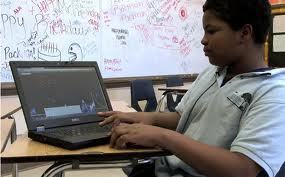
""Most digital learning tools used in schools are unsatisfactory and only test the knowledge the pupils already have," says Björn Sjödén, who has reviewed a large number of computer programs in his doctoral thesis "What Makes Good Educational Software?"" Via EDTECH@UTRGV
Scoop.it!

In the age of the digital classroom, libraries and IT specialists should no longer operate as separate entities. Via EDTECH@UTRGV
Scoop.it!

An app called SKIES transforms a traditional lecture into a shared learning experience. Via EDTECH@UTRGV
Scoop.it!

tchat.io is a tool to make it easy to participate in Twitter chats. Enter the hashtag you want to follow for the chat. We'll filter out all other tweets so you can focus on discussing one topic. Via Nik Peachey 
Nik Peachey's curator insight,
October 16, 2015 4:27 AM
Really handy tool if you participate in synchronous Twitter discussions.
Scoop.it!

Allowing you to download the MP3 audio from Google Translate. Simply type what you want to hear - up to 100 characters - and hit submit. Via Nik Peachey 
पै.सोन्याभाऊ मंजुळे's curator insight,
December 17, 2019 12:02 AM
सोन्या भाऊ फ्रेंड सर्कल महाराष्ट्र
Scoop.it!

Foxtype helps you write in a more polite, friendly tone. We rate the politeness of your sentences. We also help re-write your sentences to sound more polite. Via Nik Peachey
Nik Peachey's curator insight,
November 2, 2015 12:42 AM
This is an interesting concept. Not really sure how trustworthy it is though. 
adion's comment,
November 7, 2015 10:06 AM
"Are you sure?" => "Would you know if you be would sure?" :-\
Scoop.it!
Qmedia is a new tool developed at the University of Virginia that provides new ways to use video for instructional and scholarly purposes. We like to think of it as video, outside of the box. The viewer interacts with the whole screen and can see a wide array of web-based resources that offers a more immersive experience that adds context to support the video's narrative. Via Nik Peachey 
Stephen Thergesen's curator insight,
November 6, 2015 11:13 AM
Immersion is exactly what I have been looking for. It's exactly what my learners want and need.
Scoop.it!

Venngage is an easy to use Infographic Maker that lets you make beautiful Infographics from templates. Via Nik Peachey 
Karen Dunlap's curator insight,
November 15, 2015 5:44 PM
Just when you thought piktoart had the monopoly. 
Diane Johnson's curator insight,
November 15, 2015 8:18 PM
Great way for students to communicate understanding! 
Multimedia y Nuevas Tecnologias's curator insight, November 20, 2015 11:11 PM
Creando infografias
Scoop.it!

Data are at the heart of the ongoing dialogue between teachers and students. We asked more than 4,600 teachers about the digital tools available to help teachers collect and use data to tailor and improve instruction for individual students.
Via Nik Peachey
Scoop.it!
" Are You Prepared For The Future Of Social Learning? by Krish Kupathil, Mobiliya
R = e –t/s where R is retention, T is time and S is strength. A formula detailing a chemical reaction, or the new math behind a social media outreach strategy? Actually, an expression of the ability to remember, discovered by the German psychologist Herman Ebbinghaus. Known as the famous Forgetting Curve, it hypothesized the decline of memory retention over time. In fact we now know that 50 percent of formal learning is forgotten within the first hour. With this statistic in mind, it is surprising that our formal education system –our schools, colleges and universities— has primarily relied on conventional learning methods to deliver information. Until even a few decades ago, schools, colleges and even professional organizations saw learning happening through structured modules, courses and programs delivered by the ‘head’ of the class, typically a teacher or trainer, to a group of passive listeners.
With the Internet exploding with information resources and tools for learning, teachers can be facilitators of information with a greater emphasis on explanation and critical thinking as opposed to the dissemination source. Formal learning systems have in some cases been slower to adopt this model, rightfully concerned with accuracy of material and consistency; yet with ever increasing numbers of individuals accessing information in learning environments, the necessity of these formal systems to adopt technological change is very clear."
Learn more:
Via EDTECH@UTRGV, juandoming, Gust MEES 
Tony Guzman's curator insight,
November 18, 2015 11:52 AM
This article poses the question: Are you ready for having social learning be the norm in the classroom of the future? |
Scoop.it!

The Internet of Things (IoT) will connect everyone and everything like never before. Through an innovative new education lab in America’s heartland, the University of Wisconsin is preparing the next generation of engineers to harness it. 
Phillip Morgan's curator insight,
November 25, 2015 1:23 AM
Check out the impact of higher education that has modified the face of learning. 
AdeemWaqas's curator insight,
November 25, 2015 4:08 AM
The future of learning and e-learning? Check out this innovative program at the University of Wisconsin-Madison
Scoop.it!

"When I was studying History at University in the late 1970s I had an eccentric, English born lecturer. Alan loved silent cinema, wore taped up, broken glasses (for four years) and on one memorable occasion he even showed up wearing two startlingly different shoes. His passion was twentieth century Russian and German history and he frequently sprouted complex, incomprehensible words in these languages. Nice anecdote you say; but what’s the point! I have always remembered one particular German word that he favoured, Verschlimmbesserung. There is no direct English translation but the term alludes to a supposed improvement that has just made things worse." Via EDTECH@UTRGV 
Lon Woodbury's curator insight,
December 3, 2015 4:32 PM
Good question, and the answer being "balance" is good also. -Lon
Scoop.it!

"M-Learning or Mobile Learning is a current buzzword for every organization. For many people, M-Learning is about making the training content accessible on mobile devices to cater to the learners’ needs on the go. But wait! Is that the complete definition? Not quite so. This article will talk about some incomplete and inaccurate design decisions that typically lead to failure of M-Learning projects. Let’s look at some of these reasons for failure and how they can be averted." Via EDTECH@UTRGV 
JJones's curator insight,
July 12, 2017 9:37 PM
Lessons Learned, should be included in your assessment of adding e-learning! 
Michelle Kelly's curator insight,
July 14, 2017 5:14 PM
Sometimes the best lessons come from evaluating failures...
Scoop.it!
Want to know the differences of Andragogy vs Pedagogy? Check the Pedagogy vs Andragogy debate and address your learners’ needs, regardless of their ages. Via EDTECH@UTRGV
Scoop.it!

As with many ideas which may be simply stated Prensky’s world of ‘Digital Natives and Immigrants’ has been oversimplified and misunderstood. In part this is the danger that comes with relying upon a cultural metaphor and a consequence of society’s love affair with neat dichotomies. Via Nik Peachey 
Dr. Laura Sheneman's curator insight,
October 23, 2015 9:50 AM
"Prensky’s analysis continues to spark debate and that is a positive thing. The reality of how our supposedly Digital Natives or Immigrants engage with technology and learning reveals a more complex landscape than a simple dichotomy allows for. A richer subculture analysis is required where individual narrative of technologies meanings may be revealed" 
Angela C. Dowd's curator insight,
October 24, 2015 12:06 PM
Well written and relevant...instructional designers often talk about this. Thanks Nik!
Scoop.it!

Wridea is a web service first to avoid ideas being forgotten, then to organize and improve those ideas by giving you the opportunity to share your ideas with friends and necessary tools to improve your ideas by yourself and individually. Via Nik Peachey 
Rosemary Tyrrell, Ed.D.'s curator insight,
November 11, 2015 12:51 PM
Could be useful for brainstorming activities.
Scoop.it!

WriteURL is a free online text editor. Collaborate in real-time, simple sharing, work offline, no registration. Via Nik Peachey 
Craig Van Ham's curator insight,
March 24, 2016 8:57 PM
Great tool for doing collaborative writing work.
Scoop.it!
Venngage is an easy to use Infographic Maker that lets you make beautiful Infographics from templates. Via Nik Peachey
Karen Dunlap's curator insight,
November 15, 2015 5:44 PM
Just when you thought piktoart had the monopoly.
Diane Johnson's curator insight,
November 15, 2015 8:18 PM
Great way for students to communicate understanding!
Multimedia y Nuevas Tecnologias's curator insight, November 20, 2015 11:11 PM
Creando infografias
Scoop.it!

New report studies close to a thousand different institutions to provide a detailed snapshot of 2015’s dynamic college and university social media use. Via EDTECH@UTRGV
Scoop.it!

"With the advance of technology and mobile gadgetry there emerged a wide variety of learning trends endemic to 21st century classroom environment. One of these trends is what is conventionally referred to as BYOD/T (Bring Your Own Device/Technology). In a BYOD classroom, students bring their own technology (e.g hand-held devices, laptops..etc) and use them for various learning activities. The pedagogical strength of BYOD is that it is an effective way to personalize learning and allow students easy and quick access to the technology they need to explore and learn collaboratively in a student-centerer environment." Via EDTECH@UTRGV |






