Your new post is loading...

|
Rescooped by
Dennis Swender
from Into the Driver's Seat
October 6, 2016 1:12 PM
|
Last week, Google announced a new name and new branding for our beloved Google Apps: G Suite. This rebranding is also true for our educational suite of applications, now G Suite for Education, as well as the rest of the world using what was formerly known as Google Apps for Work. The core suite of applications did not change, just the name and branding so far. But we also received a few updates over the last few days that are worth mentioning.
Via Jim Lerman
|
|
Rescooped by
Dennis Swender
from Educational Technology News
October 6, 2016 1:11 PM
|
Want to know what obstructs Mobile Learning Adoption in organizations? Check the 4 main Barriers To Mobile Learning Adoption and how to overcome them.
Via EDTECH@UTRGV
|
|
Scooped by
Dennis Swender
October 6, 2016 1:11 PM
|
Developing critical listening and speaking skills is an essential element of a student's higher-education experience. However, verbally presenting one's ideas and listening to contributions made by student peers are not typical experiences for online students, as most activities in online classes consist of reading and writing. As online course offerings increase, institutions have an obligation to ensure faculty are empowered to teach with tools that enable students to learn out loud. These tools and the content created with them must be accessible to all learners, including those who are hard of hearing and have vision impairments.
|
|
Rescooped by
Dennis Swender
from Open Educational Resources
October 6, 2016 1:09 PM
|
Rutgers University in New Jersey has launched its Open and Affordable Textbook Project, which offers grants to faculty or department groups that switch to free, low-cost or open alternatives to traditional textbooks.
Via Peter Mellow
|
|
Rescooped by
Dennis Swender
from Learning & Technology News
October 6, 2016 1:07 PM
|
I confess. I’m a little perplexed by the recent call to create a new discipline for education technology. There are already hundreds of academic conferences and academic publications and professional organizations and published studies devoted to education technology; hundreds of schools offer degrees – primarily graduate degrees – in education technology. Depending on what you count as ed-tech, the field has been around for at least a century.
Via Nik Peachey
As a , I know how critical it is to have complete control over the images I upload to my website. Of course, there have been times where I want to update some old photos for a blog post and I…
Via imaginetsa
|
|
Rescooped by
Dennis Swender
from E-learning
September 23, 2016 1:56 AM
|
Our school captions all the videos we create and I have been exploring the benefits of “Open captioning.” In open captioning the captions are overlaid on the video, no matter what. Open captioning is front and center in this project for 3 reasons. The first is accessibility.
Via paul rayner
|
|
Rescooped by
Dennis Swender
from E-learning
September 22, 2016 9:00 AM
|
“It all comes back to relationships. Whether you use technology or have face-to-face conversations, it has to be about building that relationship if anything different is going to happen.”
Via paul rayner
|
|
Rescooped by
Dennis Swender
from E-learning
September 22, 2016 8:58 AM
|
By Jessica Sanders Google Maps is a great free tool for teachers to engage students. They’ll love mapping major novel moments, guessing locations based on clues, and investigating cities around the world.
Via paul rayner
|
|
Scooped by
Dennis Swender
September 19, 2016 11:30 AM
|
When an American company outsources work to an Indian firm, plenty of IT professionals bemoan how management is willing to bury middle-class jobs in pursuit of profits. But what if the organization doing the outsourcing is a public university?
|
|
Rescooped by
Dennis Swender
from :: The 4th Era ::
September 19, 2016 10:18 AM
|
Key Trends Accelerating K-12 Educational Technology Adoption
The NMC/CoSN Horizon Report > 2016 K-12 Edition identifies “Coding as a Literacy” and “Students as Creators” as short-term trends accelerating the adoption of educational technology in K-12 education over the next one to two years. “Collaborative Learning” and “Deeper Learning Approaches” are mid-term trends expected to drive technology use in the next three to five years; meanwhile, “Redesigning Learning Spaces” and “Rethinking How Schools Work” are long-term trends anticipated to impact institutions for the next five years or more.
Significant Challenges Impeding K-12 Educational Technology Adoption
Several challenges are barriers to the mainstream use of technology in schools. “Authentic Learning Experiences” and “Rethinking the Roles of Teachers” are perceived as solvable challenges — those which we both understand and know how to solve. “Advancing Digital Equity” and “Scaling Teaching Innovations” are considered difficult challenges, which are defined and well understood but with solutions that are elusive. Described as wicked challenges are the “Achievement Gap” and “Personalizing Learning,” which are complex to define, much less to address.
Important Developments in Educational Technology for K-12 Education
Additionally, the report identifies makerspaces and online learning as digital strategies and technologies expected to enter mainstream use in the near-term horizon of one year or less. Robotics and virtual reality are seen in the mid-term horizon of two to three years; artificial intelligence and wearable technology are seen emerging in the far-term horizon of four to five years.
Via Jim Lerman
Do you want to see how social media impacts your business? Discover four ways to use Google Analytics to measure the impact of your social media marketing.
Via massimo facchinetti
|
|
Rescooped by
Dennis Swender
from Digital Delights for Learners
September 19, 2016 10:06 AM
|
★★★ Directory of 350+ of the best tools and services to capture, edit, publish and distribute video online.
Via Ana Cristina Pratas
|
|
|
Rescooped by
Dennis Swender
from E-learning
October 6, 2016 1:12 PM
|
What's on the five-year horizon for K-12 Educational Technology & which trends and technologies will drive educational change?
This publication charts the five-year horizon for the impact of emer
Via Dr. Tom D'Amico (@TDOttawa) , paul rayner
|
|
Rescooped by
Dennis Swender
from Educational Technology News
October 6, 2016 1:11 PM
|
Want to know how to Evaluate The Learnability Of Online Courses? Check a case study that showcases how to Evaluate The Learnability Of Online Courses.
Via EDTECH@UTRGV
|
|
Rescooped by
Dennis Swender
from Digital Delights for Learners
October 6, 2016 1:10 PM
|
We are here to give you the know-how necessary to continue to learn about new free tech tools for your classroom.
Via Ana Cristina Pratas
|
|
Rescooped by
Dennis Swender
from Learning & Technology News
October 6, 2016 1:08 PM
|
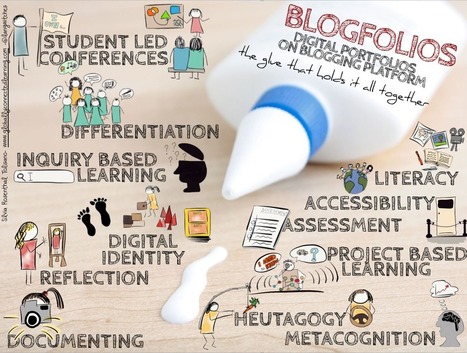
Blogfolios are a pedagogical tool/platform for the teacher to facilitate learning and at at the same time can become in critical component for a heutagogical (self-directed/ self-motivated) process for the learner. Blogfolios are the glue that can hold all curricular content, goals and objectives as well as support school initiatives, observations, assessment and accountability requirements or personal passions, interest and projects together
Via Nik Peachey
|
|
Rescooped by
Dennis Swender
from Learning & Technology News
October 6, 2016 1:06 PM
|
Students are not the only ones looking for more at-home learning: parents and teachers are also on board. Eighty-eight percent of parents and 84 percent of teachers are interested in having more at-home digital content available to supplement what's being taught in school. The increasingly digital behaviors of students, teachers, and parents are expanding the way learning occurs. Understanding and positioning ahead of that behavioral shift will be critical in helping educational organizations succeed in the digital future.
Via Nik Peachey
|
|
Rescooped by
Dennis Swender
from AdLit
October 2, 2016 9:29 AM
|
One of the conversations was going back to the idea of Twitter and does it actually promote literacy. Thinking about, jumping onto Twitter years ago has led to many amazing opportunities for me, but I also think that it has led to tremendous growth in my own learning over time. Since I first started connecting with others through the medium, I have written over 88,000 tweets, written over 1,100 blog posts, and one book. I am a firm believer that if you want to become better at writing, the best way to do it is to write more.
Without connecting on Twitter, I truly believe that I would not have written in the other mediums. I have started blogs before, but never made it past a few posts. As for a book? I doubt that was something I would have ever done without Twitter. I am not the only one; so many educators that have connected through the medium have written and published their own books. I have seen people criticize that so many educators are writing books now, and I think, “Wow! So many educators are writing books now!” Educators sharing their wisdom with different audiences all over the world is a pretty powerful thing.
Via John Evans, Lynnette Van Dyke
|
|
Rescooped by
Dennis Swender
from E-learning
September 22, 2016 9:00 AM
|
Many of us working in the arena of education technology in schools are eager to try new things. We love how technology can engage students and help them achieve their learning goals. Most of the time we are pushing ahead to keep on top of the latest and greatest in the ed tech world so…
Via paul rayner
|
|
Rescooped by
Dennis Swender
from E-learning
September 22, 2016 8:59 AM
|
In a digitally focused world, education is getting more and more digitized pushing us, teachers and educators, to re-conceptualize what it really means to be a teacher in the 21st century. Whether you are a technological determinist or instrumentalist, technology has become an essential force shaping much of our teaching and pedagogical practices.
Via paul rayner
|
|
Rescooped by
Dennis Swender
from E-learning
September 22, 2016 8:58 AM
|
HyperDoc Lesson Created by @SEANJFAHEY Make a copy of this HyperDoc by going to file, then select “Make a copy” OBJECTIVE - to discover what technology is, how it is defined, and how technology affect our lives. Color Codes: Activity: Read, Watch, or Do to help you lear
Via paul rayner
|
|
Scooped by
Dennis Swender
September 19, 2016 11:00 AM
|
For your safety and the safety of your family and friends, avoid posting these 10 things on any social networks. Here's what not to post on Facebook.
|
|
Rescooped by
Dennis Swender
from Into the Driver's Seat
September 19, 2016 10:13 AM
|
Description by The Scout Report "Anyone looking to keep in touch with friends and family far away may want to check out WhatsApp, a handy messaging and calling app. Popular outside of the United States, WhatsApp allows users to share text messages, photographs, and videos with one another using WiFi, thus eliminating SMS fees. Free to download, WhatsApp can be used on iPhone, Android, and Windows phones as well as on desktop computers. In addition, users can share documents of 100mb or less."
Via Jim Lerman
|
|
Rescooped by
Dennis Swender
from Educational Technology News
September 19, 2016 10:06 AM
|
Wondering how to create a self-paced eLearning course? Check this article to discover 7 tips to create a self-paced eLearning courses for your users.
Via EDTECH@UTRGV
|