


Americans spend nearly a quarter of their time online on social networking sites and blogs, up from 15.8 percent just a year ago (a 43 percent increase) according to research released from The Nielsen Company.
Via Marcia Conner

 Your new post is loading...
 Scoop.it! Americans spend nearly a quarter of their time online on social networking sites and blogs, up from 15.8 percent just a year ago (a 43 percent increase) according to research released from The Nielsen Company. Via Marcia Conner No comment yet.
Sign up to comment
Scoop.it!
In love with colors, since 2002. A designer tool for creating color combinations that work together well. Formerly known as Color Scheme Designer. Use the color wheel to create great color palettes. Via Peter Mellow
Scoop.it!
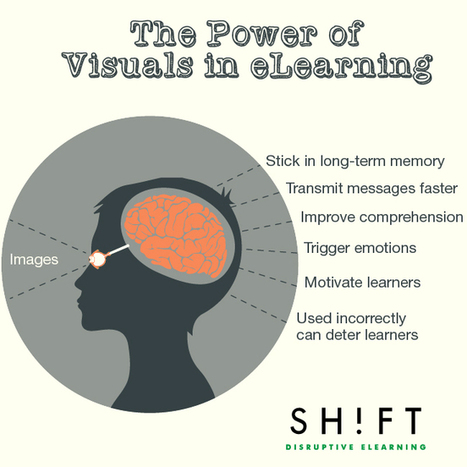
We are now in the age of visual information where visual content plays a role in every part of life. As 65 percent of the population are visual learn Via Peter Mellow
Scoop.it!
The purpose of this class is to examine the various ways in which language has been an object of study as well as to familiarize the student with the termino... Via Dr. Doris Molero
Scoop.it!
Difference between technology of education and technology in . , . . . . Technology of education and technology in education are two phrases that ar Via Nevermore Sithole
Scoop.it!

This the fifth in a series of blogs looking at online language... What is it? How is it being used? Why do we need to teach it? Here Esther looks at why we need to teach online language as part of digital capability and basic literacy. Via ColinHickie
Scoop.it!

New study finds students at most risk may be those least well served by learning outside the classroom. Via Dr. Susan Bainbridge, Peter Mellow
Scoop.it!
Some colleges cap online class registrations while others adhere to their face-to-face limits. Still others consider each specific course. Which strategy works best? Via Peter Mellow
Scoop.it!
A presentation outlining different approaches to ensuring quality of technology enhanced learning and teaching in higher education. Please cite: Sankey. M. (20… Via Peter Mellow
Scoop.it!

Online courses are increasingly holding synchronous sessions. Here's how to increase engagement, participation, and accountability during virtual meetings. Via Peter Mellow
Scoop.it!

Scoop.it!

Giving students "voice, choice and connectivity" will help them gain a sense of belonging in a group even when they're states and countries apart. Via Peter Mellow 
Hadley Garcia's curator insight,
July 6, 2017 2:01 PM
Algunas herramientas útiles no sólo para clases en línea
|
Scoop.it!

Even though there are a few imposters out there, The Conversation Prism is still the original and the most thoughtful visualization of the social media tools landscape.... Via Marcia Conner
Scoop.it!
Images on webpages are almost a given these days. It is what we have come to expect. Likewise learners don't want to be confronted with page after page of text without any visuals. Whilst these might be images, videos or animations, this post is about images and where to get these without costing a fortune, and still being legal.
Via Peter Mellow
Scoop.it!

Free images for blogs and marketers. I have collected a bunch of sites that give you free images for commercial use. Check it out regularly as we add sites Via TechinBiz 
Everett Bowes's curator insight,
July 10, 2017 4:15 AM
Great resources, especially Pixabay which I use daily.
Everett Bowes's curator insight,
July 10, 2017 4:15 AM
Great resources, especially Pixabay which I use daily. 
Oskar Almazan's curator insight,
November 1, 2017 8:13 AM
En marketing, a great image is often a key component of the message. Constant need for pictures can dig deep into your pocket when using stock photography. If you want a particular image, then it makes sense to pay for the stock images as it will be a lot cheaper than to hire a photographer. What to do when you need images all the time, but their marketing lifespan can be measured only in days, maybe hours? Images for Facebook posts, email newsletters, individual slides in presentations that you use only once… Paying 10 or 20 dollars per image for these adds up. So where do you get free images? I have collected a bunch of sites that give you exactly that… free images for commercial use.
Scoop.it!

It’s been more than five years since online education got a massive boost when three free online courses, taught by Stanford professors, launched in October 2011. Each of these courses has had over… Via Dr. Susan Bainbridge, Miloš Bajčetić, Stephania Savva, Ph.D
Scoop.it!

From
llt

Drawing from an ecological interactional analysis of the Facebook communications of three German-speaking academics whose social and professional lives are largely led in English, the authors consider the kinds of symbolic maneuvers required to participate in the translingual conversational flows of SNS-mediated communication. Based on this analysis, this article argues that texts generated through SNS-mediated communication can provide classroom opportunities for critical, stylistically sensitive reflection on the nature of talk in line with multiliteracies approaches. Via Nik Peachey, Lynnette Van Dyke
Scoop.it!

Scoop.it!
A team of researchers studied student reactions to a large online course designed using the Quality Matters standards, with results that validated the use of QM. They offer tips on improving specific areas such as accessibility and usability. Via Peter Mellow
Scoop.it!
Jing Liu questions the effectiveness of distance education, but says coupled with the development of learning science, it can do better. Via Peter Mellow
Scoop.it!

Most college students are digital natives, but they still need some help with navigating online media. Via Peter Mellow
Scoop.it!
A National Study of Online Learning Leaders in US Higher Education - A downloadable PDF of the research. Worth a read. Via Peter Mellow
Scoop.it!

The Online College Students 2017: Comprehensive Data on Demands and Preferences report surveyed 1,500 current, prospective and recently graduated online college students to learn about developing trends in online learning. This sixth annual report reveals how students feel about the value that online learning provides, how mobile technology affects online learning, the most popular fields of study and more.
Via ColinHickie
Scoop.it!

Online students crave interaction with classmates and instructors, according to a new report from Learning House and Aslanian Market Research. Via Peter Mellow 
lisa gorena's curator insight,
July 5, 2017 12:32 PM
Insights gathered from a report about online students. 1,500 students were polled. Online learning is longer a new trend and students are more savvy about researching programs and getting what they want out of these programs. The majority of these students polled are taking these online courses to advance in or change jobs. |






