


The ideomotor effect says that people can move or move something without their conscious mind realizing it. In the case of the Ouija board, if you really want the answer to a question to be yes and your partner knows it, you could both push the planchette to “YES” without either of you consciously applying any force. (And if you think you can ever keep your hands completely still, try keeping a laser pointer’s dot perfectly motionless.)"


 Your new post is loading...


















More evidence for unconscious rationality: this time it's the "ideomotor effect": you can move things - and even do so in cooperation with others - without the conscious mind realizing it.
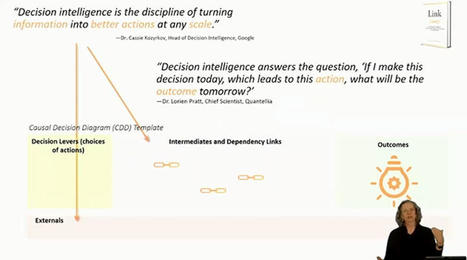
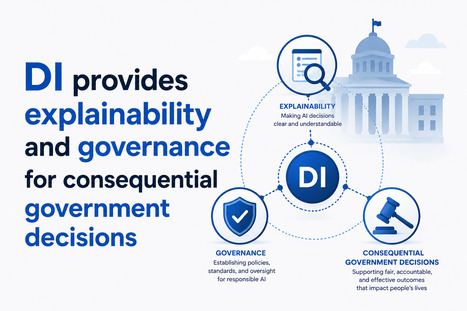
When I throw a ball at an audience during a DI talk, and when I say that decision intelligence is meant to train our intuitions to align more effectively in complex situations, this is what I'm talking about.
There's a myth that "conscious == rational" and "unconscious == irrational". I think that Kahneman and behavioral economics have debunked the former. And now there's an increasing understanding of the validity of may aspects of the rational unconscious.
Of course, this is what Malcolm Gladwell covered in "Blink". DI takes the cognitive science insights there and transitions them into practical applications that solve "wicked" problems.
In DI we do this using a combination of methods, from systems thinking, to AI, to big data, and the interconnectedness insights of Buckminster Fuller, all on a basis of improved understanding of neuroscience and cognition.