


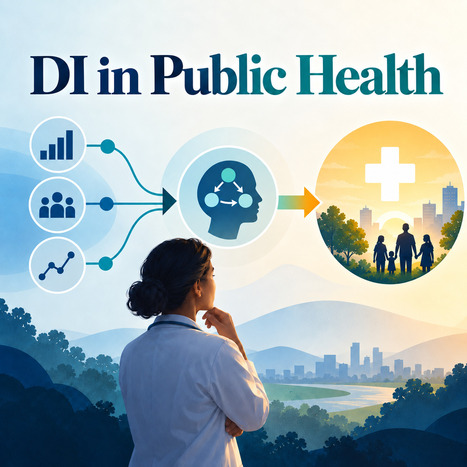

"At the 2026 Public Health in the Rockies conference, Lucy Funk, BSN, RN (who is a Business Development Manager for Jefferson County Public Health in Colorado) presented applied research demonstrating how Decision Intelligence (DI) helped a public health organization move from data and analysis to effective action. In “Data Outputs Inform. Humans Decide: Decision Intelligence in Public Health,” Funk described using Causal Decision Diagrams (CDDs) to visualize a decision about recruiting physicians to refer patients to a free post-partum nurse home visiting program, with the goal of reducing maternal and infant morbidity and mortality. Referrals increased from a 30% baseline to 44%, and the number of referring providers grew by 570%, from three to seventeen. Funk also presented “What Profits the People? Applying Business Strategy to Increase Utilization,” examining whether business development and sales strategies could increase utilization of a public health program. By identifying mutual value, aligning referral processes with provider workflows, and addressing barriers, physician-office referrals increased from zero to an average of 59 per month."


 Your new post is loading...
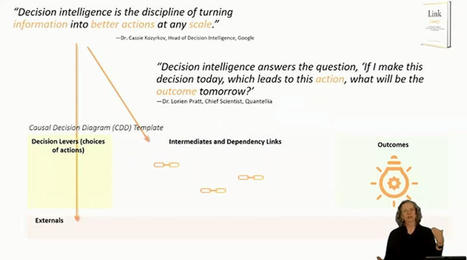























These presentations highlight a broader opportunity for DI: applying causal reasoning not only to programmatic and operational decisions, but also to business development decisions that determine whether valuable services successfully reach the people they were designed to serve. Decision Intelligence provides a bridge between data and action. Funk’s work demonstrates how causal models can help decision makers identify where to intervene, clarify assumptions about how actions produce outcomes, and learn systematically from results. The business development application extends that opportunity. Growth, partnerships, outreach, and utilization all involve decisions within complex systems. DI can make the causal logic behind those strategies visible and testable, shifting the focus from “What does the data tell us?” to the more consequential question: “Given what we know, what should we do?”. Contributor: Bernadette Howlett, PhD.