


"Since the datasets available in these fields are small, data scientists cannot apply pre-packaged Deep Learning algorithms, but have to artfully determine the features to train and engineer their networks with convolution/dense layers to learn these rather complex features. The data scientists that perform these tasks have to be machine learning engineers who walked in the shoes of a radiologists, internist or a chemical engineer."


 Your new post is loading...





















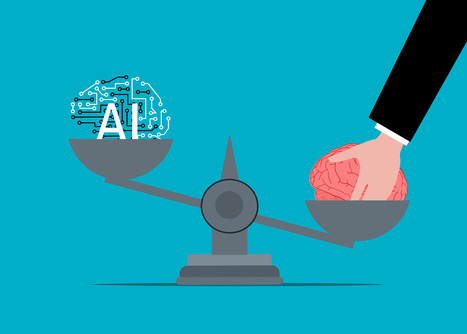







The art of building learning systems requires a collaboration between people and the learning systems, specifically to inject human expertise when data is impoverished.
One way to do this is in feature engineering, where domain knowledge is inserted into systems through preprocessing features to be those that are most likely to lead to good learning results.
Another source of information: labels on training data. But this can be onerous for large data sets, which is where the magic of deep learning comes in, which can combine supervised with unsupervised training passes. This article shows a good way to think about all of this. Thanks to Shalini and Yann.