Your new post is loading...

|
Scooped by
Dr. Stefan Gruenwald
May 14, 2021 1:38 PM
|
One of the great puzzles of modern space science is neatly summed up by the view from NASA’s Perseverance, which just landed on Mars: Today it’s a desert planet, and yet the rover is sitting right next to an ancient river delta. The apparent contradiction has puzzled scientists for decades, especially because at the same time that Mars had flowing rivers, it was getting less than a third as much sunshine as we enjoy today on Earth. But a new study led by University of Chicago planetary scientist Edwin Kite, an assistant professor of geophysical sciences and an expert on climates of other worlds, uses a computer model to put forth a promising explanation: Mars could have had a thin layer of icy, high-altitude clouds that caused a greenhouse effect. “There’s been an embarrassing disconnect between our evidence, and our ability to explain it in terms of physics and chemistry,” said Kite. “This hypothesis goes a long way toward closing that gap.” Of the multiple explanations scientists had previously put forward, none have ever quite worked. For example, some suggested that a collision from a huge asteroid could have released enough kinetic energy to warm the planet. But other calculations showed this effect would only last for a year or two—and the tracks of ancient rivers and lakes show that the warming likely persisted for at least hundreds of years. Kite and his colleagues wanted to revisit an alternate explanation: High-altitude clouds, like cirrus on Earth. Even a small amount of clouds in the atmosphere can significantly raise a planet’s temperature, a greenhouse effect similar to carbon dioxide in the atmosphere.
|
|
Scooped by
Dr. Stefan Gruenwald
May 14, 2021 12:11 PM
|
This is why Pfizer’s announcement that they are developing an oral antiviral drug that could be used at the first sign of infection or exposure is such promising news. The drug is part of a class of medicines called protease inhibitors and works by inhibiting an enzyme that the virus needs to replicate in human cells. Protease inhibitors are used to treat other viral pathogens such as HIV and hepatitis C. A virus takes over our cell’s RNA in order to produce viral proteins to make more copies of itself. Initially, the infected cell forms a single viral protein chain like a long string that is mostly non-functional. The protease enzyme cuts the protein chain in specific areas to produce fully-functional working subunits that are critical for the virus to replicate. Protease inhibitors are a class of antiviral drugs that shut down this protein-cutting process and stops a virus from multiplying. Respiratory viruses like influenza, respiratory syncytial virus, and now Covid-19 are uniquely challenging to treat once symptoms arise. Because infections and symptoms for respiratory viruses are typically short-lived, the immune system quickly engages in viral replication suppression. This is why these protease inhibitor drugs are ideally used in congregate living situations such as long-term care facilities, workplaces, schools, prisons, and family homes. Once an infection is detected in those communities, everyone exposed can immediately start prophylactic (preventative) treatment by taking a pill while isolating, preventing the viral replication and the spread of infection in the greater community.
|
|
Scooped by
Dr. Stefan Gruenwald
May 14, 2021 12:04 PM
|
For the past 150 years or so, scientists have theorized that the life cycle of the present-day lamprey mirrors the evolution of all fish – and thus of all vertebrates. Newly analyzed fossils, however, indicate that such is not the case. The lamprey is a long eel-like fish, which latches onto the bodies of other fish using its sucker-like mouth. A ring of teeth within that mouth then rasps away the skin of the host fish, so the lamprey can feed on its blood. And while adult lampreys are free-swimming, sighted fish, their larvae are tiny blind worm-like creatures that burrow into the riverbed, then filter-feed on food particles carried past in the current. Because previously discovered fossils indicated that adult lampreys have changed very little over the past 360 million years (or more), it was thought that their life cycle was just as ancient. Scientists thus theorized that the animals' transition from bottom-dwelling filter-feeders to free-swimming predators was a remnant of the process in which wormy invertebrates eventually evolved into the first vertebrate fishes. Now, though, fossils of lamprey hatchlings discovered in Illinois, South Africa and Montana are challenging that theory. Some of the fossilized remains include an egg sac, indicating that the creatures had only recently hatched. And importantly, they looked very much like miniature adult lampreys, complete with eyes and tooth-lined sucker mouths. In other words, they were not similar to today's riverbed-burrowing larvae. Based on these findings, it is now thought that the filter-feeding larval stage may have subsequently evolved as a means of adapting to life in freshwater lakes and rivers – originally, lampreys were strictly marine animals.
|
|
Rescooped by
Dr. Stefan Gruenwald
from Virus World
May 11, 2021 4:23 PM
|
Scientific American is the essential guide to the most awe-inspiring advances in science and technology, explaining how they change our understanding of the world and shape our lives. Since the novel coronavirus began its global spread, influenza cases reported to the World Health Organization have dropped to minuscule levels. The reason, epidemiologists think, is that the public health measures taken to keep the coronavirus from spreading also stop the flu. Influenza viruses are transmitted in much the same way as SARS-CoV-2, but they are less effective at jumping from host to host. As Scientific American reported last fall, the drop-off in flu numbers was both swift and universal. Since then, cases have stayed remarkably low. “There’s just no flu circulating,” says Greg Poland, who has studied the disease at the Mayo Clinic for decades. The U.S. saw about 600 deaths from influenza during the 2020-2021 flu season. In comparison, the Centers for Disease Control and Prevention estimated there were roughly 22,000 deaths in the prior season and 34,000 two seasons ago. Because each year’s flu vaccine is based on strains that have been circulating during the past year, it is unclear how next year’s vaccine will fare, should the typical patterns of the disease return. The WHO made its flu strain recommendations for vaccines in late February as usual, but they were based on far fewer cases than in a common year. At the same time, with fewer virus particles circulating in the world, there is less chance of an upcoming mutation, so it is possible the 2021–2022 vaccine will prove extra effective. Public health experts are grateful for the reprieve. Some are also worried about a lost immune response, however. If influenza subsides for several years, today’s toddlers could miss a chance to have an early-age response imprinted on their immune system. That could be good or bad, depending on what strains circulate during the rest of their life. For now, future flu transmission remains a roll of the dice....
Via Juan Lama
|
|
Scooped by
Dr. Stefan Gruenwald
May 11, 2021 1:47 PM
|
Single-photon imaging is the future of high-speed digital photography and vastly surpasses conventional cameras in low-light conditions. However, fixing the blurring caused by the motion of independent objects remains challenging. Recently, researchers at Tokyo University of Science developed an innovative deblurring approach that accurately estimates the motion of individual objects and adjusts the final image accordingly. Their strategy produces high-quality images even in complex dynamic scenes and may find applications in medicine, science, and security. PDF file is here.
|
|
Scooped by
Dr. Stefan Gruenwald
May 11, 2021 1:35 PM
|
America’s new normal temperature is a degree hotter than it was just two decades ago. Scientists have long talked about climate change — hotter temperatures, changes in rain and snowfall and more extreme weather — being the “new normal.” Data released Tuesday by the National Oceanic and Atmospheric Administration put hard figures on the cliche. The new United States normal is not just hotter, but wetter in the eastern and central parts of the nation and considerably drier in the West than just a decade earlier. Meteorologists calculate climate normals based on 30 years of data to limit the random swings of daily weather. It’s a standard set by the World Meteorological Organization. Every 10 years, NOAA updates normal for the country as a whole, states and cities — by year, month and season.
|
|
Scooped by
Dr. Stefan Gruenwald
May 11, 2021 1:29 PM
|
Collaboration between deep learning experts and microscopy experts leads to a significantly improved data-intensive light-field microscopy method by using AI and pairing it with light-sheet microscopy. The result is the power of light-field microscopy available to biologists in near real time vs. days or weeks, AND the expansion of biologists' ability to use this microscopy for many things more things requiring the most detailed observation. To observe the swift neuronal signals in a fish brain, scientists have started to use a technique called light-field microscopy, which makes it possible to image such fast biological processes in 3D. But the images are often lacking in quality, and it takes hours or days for massive amounts of data to be converted into 3D volumes and movies. Now, EMBL scientists have combined artificial intelligence (AI) algorithms with two cutting-edge microscopy techniques - an advance that shortens the time for image processing from days to mere seconds, while ensuring that the resulting images are crisp and accurate. The findings are published in Nature Methods. "Ultimately, we were able to take 'the best of both worlds' in this approach," says Nils Wagner, one of the paper's two lead authors and now a PhD student at the Technical University of Munich. "AI enabled us to combine different microscopy techniques, so that we could image as fast as light-field microscopy allows and get close to the image resolution of light-sheet microscopy." Although light-sheet microscopy and light-field microscopy sound similar, these techniques have different advantages and challenges. Light-field microscopy captures large 3D images that allow researchers to track and measure remarkably fine movements, such as a fish larva's beating heart, at very high speeds. But this technique produces massive amounts of data, which can take days to process, and the final images usually lack resolution. Light-sheet microscopy homes in on a single 2D plane of a given sample at one time, so researchers can image samples at higher resolution. Compared with light-field microscopy, light-sheet microscopy produces images that are quicker to process, but the data are not as comprehensive, since they only capture information from a single 2D plane at a time. To take advantage of the benefits of each technique, EMBL researchers developed an approach that uses light-field microscopy to image large 3D samples and light-sheet microscopy to train the AI algorithms, which then create an accurate 3D picture of the sample. "If you build algorithms that produce an image, you need to check that these algorithms are constructing the right image," explains Anna Kreshuk, the EMBL group leader whose team brought machine learning expertise to the project. In the new study, the researchers used light-sheet microscopy to make sure the AI algorithms were working, Anna says. "This makes our research stand out from what has been done in the past." Robert Prevedel, the EMBL group leader whose group contributed the novel hybrid microscopy platform, notes that the real bottleneck in building better microscopes often isn't optics technology, but computation. That's why, back in 2018, he and Anna decided to join forces. "Our method will be really key for people who want to study how brains compute. Our method can image an entire brain of a fish larva, in real time," Robert says.
|
|
Scooped by
Dr. Stefan Gruenwald
May 4, 2021 8:09 PM
|
Three brown dwarfs whirl on their axes at a dizzying rate that might be close to the celestial speed limit for these bodies. Astronomers have caught three brown dwarfs spinning at the fastest rates ever recorded for these objects, which are sometimes described as ‘failed stars’. Brown dwarfs are celestial objects with masses that fall between those of large, Jupiter-like planets and the smallest ordinary stars. They are cooler and dimmer than ordinary stars because they are too small to sustain long-term nuclear fusion. Megan Tannock at the University of Western Ontario in London, Canada, and her collaborators analysed nearly 80 brown dwarfs with regular variations in their brightness and light spectrum. Such variations are produced when brighter spots on the stars’ surfaces come in and out of view as the stars rotate. Measuring the period of such variations gives an accurate estimate of how fast a star is spinning. The authors found that 3 of the brown dwarfs had record-short rotation periods, ranging from 1 hour and 5 minutes to 1 hour and 14 minutes. The similarity between the periods suggests that the objects might be moving at close to a maximum speed limit, beyond which they would break apart.
|
|
Rescooped by
Dr. Stefan Gruenwald
from Biomimicry
May 4, 2021 4:17 PM
|
"Army ants form colonies of millions yet have no permanent home. They march through the jungle each night in search of new foraging ground. Along the way they perform logistical feats that would make a four-star general proud, including building bridges with their own bodies. Much like the swarms of cheap, dumb robots ,army ants manage this coordination with no leader and with minimal cognitive resources. An individual army ant is practically blind and has a minuscule brain that couldn’t begin to fathom their elaborate collective movement. “There is no leader, no architect ant saying ‘we need to build here,’” said Simon Garnier, director of the Swarm Lab at the New Jersey Institute of Technology and co-author of a new study that predicts when an army ant colony will decide to build a bridge.
Via Miguel Prazeres
|
|
Rescooped by
Dr. Stefan Gruenwald
from random computing
May 4, 2021 3:24 PM
|
A recent study led by Princeton University researchers, in collaboration with University of Maryland and IBM, explored the architectural design of quantum computers (QC). In a paper presented at the 2019 ACM/IEEE International Symposium on Computer Architecture, the researchers performed the largest real-system evaluation of quantum computers to date, using seven quantum computers from IBM, Rigetti and the University of Maryland. The researchers developed new software to compile from QC applications to hardware prototypes; on error-prone early-stage QC hardware, this compiler delivers up to 28 times improvement in program correctness rates compared to industry compilers. The study stresses the importance of careful instruction set design, rich connectivity topologies and the need to co-design applications and hardware to achieve the best performance from fledgling QC systems.
Via Scott Turner
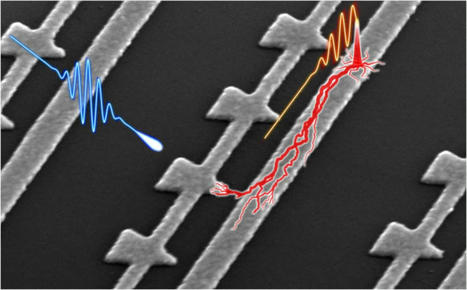
MIT researchers develop compact on-chip device for detecting electric-field waveforms with attosecond time resolution. Understanding how light waves oscillate in time as they interact with materials is essential to understanding light-driven energy transfer in materials, such as solar cells or plants. Due to the fantastically high speeds at which light waves oscillate, however, scientists have yet to develop a compact device with enough time resolution to directly capture them. Now, a team led by MIT researchers has demonstrated chip-scale devices that can directly trace the weak electric field of light waves as they change in time. Their device, which incorporates a microchip that uses short laser pulses and nanoscale antennas, is easy to use, requiring no special environment for operation, minimal laser parameters, and conventional laboratory electronics. The team’s work, published earlier this month in Nature Photonics, may enable the development of new tools for optical measurements with applications in areas such as biology, medicine, food safety, gas sensing, and drug discovery. “The potential applications of this technology are many,” says co-author Phillip Donnie Keathley, group leader and Research Laboratory of Electronics (RLE) research scientist. “For instance, using these optical sampling devices, researchers will be able to better understand optical absorption pathways in plants and photovoltaics, or to better identify molecular signatures in complex biological systems.”
Via Tony Shan
β-Thalassemia is caused in part by a mutated β-globin gene, so researchers developed a way to replace the entire mutated gene with a healthy version that restored and balanced protein production to a normal level. A team of scientists led by Stanford University researchers Daniel Dever and Matthew Porteus developed a possible gene therapy for the blood disorder β-thalassemia — by replacing an entire gene at once. β-Thalassemia is a complex condition that can stem from a wide array of mutations of various sizes and types. One of the main underlying problems is a dangerous reduction in the production of haemoglobin, the protein in red blood cells that shuttles oxygen throughout the body, due to a loss-of-function mutation in the HBB gene that produces β-globin. To restore those haemoglobin levels, scientists cut out one of the two HBA genes that produces α-globin and replaced it with a full-length HBB transgene within patient-derived cells in mice, according to the study published last month in the journal Nature Medicine. About one in 100,000 people develop β-thalassemia, making it one of the more common genetic blood diseases in the world, according to the study. Without adequate haemoglobin to carry oxygen throughout their body, patients often experience symptoms including anaemia, muscle weakness and fatigue. They may also develop enlarged organs and undergo delayed physical development. The reduced haemoglobin levels are rough enough, but the disease is further complicated because only one of the two components of haemoglobin is missing. Without enough β-globin to bind to, excess unpaired α-globin comes out of solution and forms red-blood-cell-killing aggregates that can also lead to blood clots. Even with recent improvements in how the disorder is treated, patients worldwide have a mean life expectancy of just 30 years.
Via BigField GEG Tech
|
|
Scooped by
Dr. Stefan Gruenwald
April 29, 2021 11:21 AM
|
Rudimentary cross-catalytic replication can be established by double-hairpins of tRNA-like sequences, implying that replication and translation could have emerged along a common evolutionary trajectory. Can replication and translation emerge in a single mechanism via self-assembly? The key molecule, transfer RNA (tRNA), is one of the most ancient molecules and contains the genetic code. Our experiments show how a pool of oligonucleotides, adapted with minor mutations from tRNA, spontaneously formed molecular assemblies and replicated information autonomously using only reversible hybridization under thermal oscillations. The pool of cross-complementary hairpins self-selected by agglomeration and sedimentation. The metastable DNA hairpins bound to a template and then interconnected by hybridization. Thermal oscillations separated replicates from their templates and drove an exponential, cross-catalytic replication. The molecular assembly could encode and replicate binary sequences with a replication fidelity corresponding to 85–90 % per nucleotide. The replication by a self-assembly of tRNA-like sequences suggests that early forms of tRNA could have been involved in molecular replication. This would link the evolution of translation to a mechanism of molecular replication.
|
|
|
Scooped by
Dr. Stefan Gruenwald
May 14, 2021 1:36 PM
|
A team of researchers from QuTech in the Netherlands reports realization of the first multi-node quantum network, connecting three quantum processors. In addition, they achieved a proof-of-principle demonstration of key quantum network protocols. Their findings mark an important milestone towards the future quantum internet and have now been published in Science. The quantum internet The power of the Internet is that it allows any two computers on Earth to be connected with each other, enabling applications undreamt of at the time of its creation decades ago. Today, researchers in many labs around the world are working towards first versions of a quantum internet – a network that can connect any two quantum devices, such as quantum computers or sensors, over large distances. Whereas today’s Internet distributes information in bits (that can be either 0 or 1), a future quantum internet will make use of quantum bits that can be 0 and 1 at the same time. ‘A quantum internet will open up a range of novel applications, from unhackable communication and cloud computing with complete user privacy to high-precision time-keeping,’ says Matteo Pompili, PhD student and a member of the research team. ‘And like with the Internet 40 years ago, there are probably many applications we cannot foresee right now.’ Towards ubiquitous connectivity The first steps towards a quantum internet were taken in the past decade by linking two quantum devices that shared a direct physical link. However, being able to pass on quantum information through intermediate nodes (analogous to routers in the classical internet) is essential for creating a scalable quantum network. In addition, many promising quantum internet applications rely on entangled quantum bits, to be distributed between multiple nodes. Entanglement is a phenomenon observed at the quantum scale, fundamentally connecting particles at small and even at large distances. It provides quantum computers their enormous computational power and it is the fundamental resource for sharing quantum information over the future quantum internet. By realizing their quantum network in the lab, a team of researchers at QuTech – a collaboration between Delft University of Technology and TNO – is the first to have connected two quantum processors through an intermediate node and to have established shared entanglement between multiple stand-alone quantum processors. Operating the quantum network The rudimentary quantum network consists of three quantum nodes, at some distance within the same building. To make these nodes operate as a true network, the researchers had to invent a novel architecture that enables scaling beyond a single link. The middle node (called Bob) has a physical connection to both outer nodes (called Alice and Charlie), allowing entanglement links with each of these nodes to be established. Bob is equipped with an additional quantum bit that can be used as memory, allowing a previously generated quantum link to be stored while a new link is being established. After establishing the quantum links Alice–Bob and Bob–Charlie, a set of quantum operations at Bob converts these links into a quantum link Alice-Charlie. Alternatively, by performing a different set of quantum operations at Bob, entanglement between all three nodes is established.
|
|
Scooped by
Dr. Stefan Gruenwald
May 14, 2021 12:06 PM
|
In September 2020, a team led by astronomers in the United Kingdom announced that they had detected the chemical phosphine in the thick clouds of Venus. The team’s reported detection, based on observations by two Earth-based radio telescopes, surprised many Venus experts. Earth’s atmosphere contains small amounts of phosphine, which may be produced by life. Phosphine on Venus generated buzz that the planet, often succinctly touted as a “hellscape,” could somehow harbor life within its acidic clouds. Since that initial claim, other science teams have cast doubt on the reliability of the phosphine detection. Now, a team led by researchers at the University of Washington has used a robust model of the conditions within the atmosphere of Venus to revisit and comprehensively reinterpret the radio telescope observations underlying the initial phosphine claim. As they report in a recent paper accepted to the Astrophysical Journal, the U.K.-led group likely wasn’t detecting phosphine at all. “Instead of phosphine in the clouds of Venus, the data are consistent with an alternative hypothesis: They were detecting sulfur dioxide,” said co-author Victoria Meadows, a UW professor of astronomy. “Sulfur dioxide is the third-most-common chemical compound in Venus’ atmosphere, and it is not considered a sign of life.” The team behind the new study also includes scientists at NASA’s Caltech-based Jet Propulsion Laboratory, the NASA Goddard Space Flight Center, the Georgia Institute of Technology, the NASA Ames Research Center and the University of California, Riverside. The UW-led team shows that sulfur dioxide, at levels plausible for Venus, can not only explain the observations but is also more consistent with what astronomers know of the planet’s atmosphere and its punishing chemical environment, which includes clouds of sulfuric acid. In addition, the researchers show that the initial signal originated not in the planet’s cloud layer, but far above it, in an upper layer of Venus’ atmosphere where phosphine molecules would be destroyed within seconds. This lends more support to the hypothesis that sulfur dioxide produced the signal.
|
|
Rescooped by
Dr. Stefan Gruenwald
from Virus World
May 12, 2021 2:25 PM
|
Led by surges in the two hotspots and Eastern Europe, the average number of new daily cases has exceeded 800,000 for more than a week. Worldwide, the number of new coronavirus cases has shot upward since the beginning of March, more than doubling in two months. For the past two weeks, new global cases have exceeded their previous high point in early January. The average daily rate of new cases has now been above 800,000 for more than a week. The increase in cases is largely being driven by the uncontrolled outbreak in India, where new cases have risen sharply for the past month and show no signs of abating. A seven-day rolling average of new daily cases in the nation exceeded 357,000 on Thursday, a more than fivefold increase since April 1. India now accounts for more than 40 percent of the world’s new cases. The country’s death rate has followed the same dramatic curve, with more than 3,000 people now dying every day. Analysts say even those grim numbers may be undercounted. The second wave of the virus in India has been devastating. In hospitals in New Delhi, the capital, a shortage of medical oxygen has reached crisis levels, and cremation grounds are working around the clock as relatives and friends continue to bring more bodies to be burned. After enacting one of the world’s strictest lockdowns last March, which kept deaths relatively low, Indian officials relaxed restrictions. Some politicians even held crowded rallies in recent weeks as the country’s infection rate picked up. The surge has left hospitals overwhelmed. “People are angry because they are not getting ventilators and oxygen,” said Dr. Rakesh Kumar, a physician in the northern Indian state of Uttar Pradesh. “They are saying, ‘We are paying for the facilities; then why are our patients dying?’” Medical professionals in India face crushing conditions. “No hospital has shut down and no doctor has retreated from the front lines,” one doctor wrote in a Facebook post. “We are fighting missiles with sticks but we are not leaving the fort.” The vaccine rollout in India has been too slow to stem the wave of cases, despite the country’s status as one of the world’s leading vaccine producers. Less than 2 percent of its residents are fully vaccinated, and less than 10 percent have received at least one dose. Other countries and regions are also seeing worrisome trends. Uruguay, currently experiencing the world’s highest cases per capita, is adding almost 3,000 cases per day — a staggering number in a country of just 3.5 million people. Indeed, much of South America is faring poorly: In addition to Uruguay, Paraguay, Brazil, Peru, Argentina and Colombia all rank among the top 20 nations in the world for Covid deaths per capita as of Thursday. Several factors have combined to fuel the outbreak in South America. In Brazil, the continent’s largest country, President Jair Bolsonaro’s dismissive attitude toward the threat posed by the virus has led to a monthslong crisis that has spilled over into neighboring nations. And early research has indicated that the P.1 variant, first identified in the Brazilian city of Manaus late last year, might be more transmissible and more deadly than earlier forms of the virus. Colombia’s second largest city, Medellín, is also among the places seeing severe outbreaks. Officials there largely managed to control the virus last year. But a second and third wave, in January and April, have devastated the city. Though officials added a thousand new intensive care units in the region in 2020, that preparation has not been enough. On a recent day, Dr. Andrés Aguirre, who leads Hospital Pablo Tobón Uribe, said that about 300 patients in Medellín and the surrounding area were waiting for space in an intensive care unit. And with vaccination moving slowly across the region, he said, he expected the situation to worsen: “The fourth peak and fifth peak will come.” Central and Eastern Europe account for half of the 20 nations with the highest Covid deaths per capita. Further east, a surge of cases in Turkey has led to a new lockdown that began on Thursday evening and is set to last three weeks. And in parts of western Europe, elevated case rates have reached a plateau or only very slowly begun to decline. New cases remain especially high in France, the Netherlands and Sweden. The region has been battered by a wave of new cases this spring amid the rise of the B.1.1.7 variant. In a recent news conference, Dr. Tedros Ghebreyesus, the director general of the WHO, expressed appreciation for the outpouring of international support India has received during its crisis, which has included cash and medical supplies from all over the world. “At the same time, we must remember that many other countries all over the world are still experiencing intense transmission,” Dr. Tedros said. After briefly discussing the state of the virus in Brazil, which has begun to see a decline in deaths from its worst days earlier this month, Dr. Tedros added: “The pandemic has taught us that no country can ever let down its guard.”
Via Juan Lama
|
|
Rescooped by
Dr. Stefan Gruenwald
from Virus World
May 11, 2021 4:22 PM
|
Data from Qatar provide strongest evidence yet that COVID-19 vaccines can stop strains thought to pose a threat to immunization efforts. Qatar’s second wave of COVID-19 was a double whammy. In January, after months of relatively few cases and deaths, the Gulf nation saw a surge driven by the fast-spreading B.1.1.7 variant, which was first identified in the United Kingdom. Weeks later, the B.1.351 strain, which is linked to reinfections and dampened vaccine effectiveness, took hold. Amid this storm, researchers in Qatar have found some of the strongest evidence yet that current vaccines can quell variants such as B.1.351. Clinical trials in South Africa — where B.1.351 was first identified — had suggested that vaccines would take a hit against such variants. But this study offers a fuller picture of what countries battling such variants can expect. People in Qatar who received two doses of the Pfizer–BioNTech vaccine were 75% less likely to develop a case of COVID-19 caused by B.1.351 than were unvaccinated people, and had near-total protection from severe disease caused by that strain. The findings — published on 5 May in The New England Journal of Medicine1 — suggest that current RNA vaccines are a potent weapon against the most worrisome immune-evading variants. Pfizer, based in New York City, and BioNTech, in Mainz, Germany, are developing an updated RNA vaccine targeting B.1.351, as is Moderna, based in Cambridge, Massachusetts. Early results from Moderna’s efforts suggest that a booster shot of the updated vaccine triggers a strong response against B.1.351. “I think this variant is probably the worst of all the variants we know,” says Laith Jamal Abu-Raddad, an infectious-disease epidemiologist at Weill Cornell Medicine—Qatar in Doha, who led the Qatari study. “We have the tools, despite these variants, to control at least the severe forms of infection — and this should work quite well on transmission.” Weaker protection Researchers in South Africa identified B.1.351 in late 2020, and it’s now the predominant strain there. Laboratory studies show that the variant harbours mutations that blunt the effects of virus-blocking antibodies, and trials suggest that some COVID-19 vaccines are significantly less effective against the strain than against others. Early lab research suggested that RNA vaccines, including the Pfizer–BioNTech jab, would be weakened by B.1.351, but probably not fully compromised. In April, the companies announced that a small trial in South Africa had found the vaccine to be fully effective against B.1.351, but the study of 800 people recorded a total of just 6 infections caused by B.1.351 in the placebo group, so efficacy might have been much lower. Abu-Raddad’s team analysed tens of thousands of COVID-19 cases that occurred between the start of Qatar’s vaccination campaign in late December and the end of March. Genome sequencing showed that B.1.1.7 and B.1.351 were the predominant coronavirus lineages during this period and, from mid-February, each accounted for about half of the country’s cases. The researchers compared SARS-CoV-2 infection rates in vaccinated people with those in unvaccinated controls. People who received two vaccine doses were about 90% less likely to develop an infection caused by B.1.1.7, echoing findings from Israel, the United Kingdom and elsewhere. The researchers identified around 1,500 ‘breakthrough’ infections caused by the B.1.351 variant in vaccinated individuals, but only 179 of these occurred more than 2 weeks after the second dose. There were hardly any severe cases of COVID-19 caused by either B.1.1.7 or B.1.351 among fully vaccinated individuals. “Even though there were breakthrough infections, they didn’t lead to hospitalization and death, except very, very rarely,” says Abu-Raddad. Two people died of COVID-19 caused by B.1.351 after receiving their second vaccine dose, but it is very likely that they were infected before the protective effects of the booster shot began. “If, a year ago, I told somebody we would have 75% effectiveness against the worst variants we had, they would consider this extremely good news,” Abu-Raddad adds. Promising data Shabir Madhi, a vaccinologist at the University of the Witwatersrand in Johannesburg, South Africa, says the Qatari results are promising. The comparatively high levels of virus-blocking antibodies triggered by two doses of an RNA vaccine probably explain why it confers better protection against B.1.351 than do other vaccines, such as the one developed by the University of Oxford, UK, and pharmaceutical company AstraZeneca in Cambridge, UK. But Madhi expects that other vaccines will also prevent severe disease caused by that variant. In another 5 May New England Journal of Medicine study2, his team reported that the jab produced by biotechnology company Novavax in Gaithersburg, Maryland, lowered the risk of getting COVID-19 by 60% in participants without HIV in a South African trial involving more than 6,000 people. As-yet unpublished data show that the vaccine was highly effective against severe cases of COVID-19 caused by B.1.351, with no cases in vaccinated individuals and five in the placebo arm. If vaccine efficacy is lower against B.1.351, even highly successful immunization programmes in countries affected by the variant might not reduce cases to the same extent as in countries dealing with less troublesome strains, says Madhi. “Nevertheless, by protecting high-risk individuals, we could still return to a relatively normal lifestyle, even with ongoing circulation.” Qatar, where more than one-third of the population has received at least one dose of the vaccine, might provide an early glimpse at how the worst coronavirus variants can be controlled. Abu-Raddad says there is evidence that the Pfizer–BioNTech vaccine might also be highly effective at blocking transmission of B.1.351. And after cases of the variant peaked in mid-April, he says, “things have been going extremely well, the numbers are going down very, very rapidly”. Publication cited available in NEJM (May 5, 2021): https://www.nejm.org/doi/10.1056/NEJMc2104974 See also The Lancet (May 5, 2021): https://doi.org/10.1016/S0140-6736(21)00947-8
Via Juan Lama
|
|
Scooped by
Dr. Stefan Gruenwald
May 11, 2021 1:39 PM
|
We can learn a lot from nature if we listen to it more—and scientists around the world are trying to do just that. From mountain peaks to ocean depths, biologists are increasingly planting audio recorders to unobtrusively eavesdrop on the groans, shrieks, whistles and songs of whales, elephants, bats and especially birds. This summer, for example, more than 2,000 electronic ears will record the soundscape of California’s Sierra Nevada mountain range, generating nearly a million hours of audio. To avoid spending multiple human lifetimes decoding it, researchers are relying on artificial intelligence. Such recordings can create valuable snapshots of animal communities and help conservationists understand, in vivid detail, how policies and management practices affect an entire population. Gleaning data about the number of species and individuals in a region is just the beginning. The Sierra Nevada soundscape contains crucial information about how last year’s historic wildfires affected birds living in different habitats and ecological conditions across the area. The recordings could reveal how various animal populations weathered the catastrophe and which conservation measures help species rebound more effectively. Such recordings can also capture details about interactions between individuals in larger groups. For example, how do mates find each other amid a cacophony of consorts? Scientists can additionally use sound to track shifts in migration timing or population ranges. Massive amounts of audio data are pouring in from research elsewhere as well: sound-based projects are underway to count insects, study the effects of light and noise pollution on avian communities, track endangered species, and trigger alerts when recorders detect noise from illegal poaching or logging activities. “Audio data is a real treasure trove because it contains vast amounts of information,” says ecologist Connor Wood, a Cornell University postdoctoral researcher, who is leading the Sierra Nevada project. “We just need to think creatively about how to share and access [that information].” This is a looming problem because it takes humans a long time to extract useful insights from recordings. Fortunately the latest generation of machine-learning AI systems—which can identify animal species from their calls—can crunch thousands of hours of data in less than a day. “AI and machine learning has been the big game changer for us,” says Laurel Symes, assistant director of the Cornell Lab of Ornithology’s Center for Conservation Bioacoustics. She studies acoustic communication in animals, including crickets, frogs, bats and birds, and has amassed many months of recordings of katydids (famously vocal long-horned grasshoppers that are an essential part of the food web) in the rain forests of central Panama. Patterns of breeding activity and seasonal population variation are hidden in this audio, but analyzing it is enormously time-consuming: it took Symes and three of her colleagues 600 hours of work to classify various katydid species from just 10 recorded hours of sound. But a machine-learning algorithm her team is developing, called KatydID, performed the same task while its human creators “went out for a beer,” Symes says.
|
|
Scooped by
Dr. Stefan Gruenwald
May 11, 2021 1:31 PM
|
They may be tiny weapons, but Brigham Young University's holography research group has figured out how to create lightsabers -- green for Yoda and red for Darth Vader, naturally -- with actual luminous beams rising from them. Inspired by the displays of science fiction, the researchers have also engineered battles between equally small versions of the Starship Enterprise and a Klingon Battle Cruiser that incorporate photon torpedoes launching and striking the enemy vessel that you can see with the naked eye. "What you're seeing in the scenes we create is real; there is nothing computer generated about them," said lead researcher Dan Smalley, a professor of electrical engineering at BYU. "This is not like the movies, where the lightsabers or the photon torpedoes never really existed in physical space. These are real, and if you look at them from any angle, you will see them existing in that space." It's the latest work from Smalley and his team of researchers who garnered national and international attention three years ago when they figured out how to draw screenless, free-floating objects in space. Called optical trap displays, they're created by trapping a single particle in the air with a laser beam and then moving that particle around, leaving behind a laser-illuminated path that floats in midair; like a "a 3D printer for light." The research group's new project, funded by a National Science Foundation CAREER grant, goes to the next level and produces simple animations in thin air. The development paves the way for an immersive experience where people can interact with holographic-like virtual objects that co-exist in their immediate space. "Most 3D displays require you to look at a screen, but our technology allows us to create images floating in space -- and they're physical; not some mirage," Smalley said. "This technology can make it possible to create vibrant animated content that orbits around or crawls on or explodes out of every day physical objects." To demonstrate that principle, the team has created virtual stick figures that walk in thin air. They were able to demonstrate the interaction between their virtual images and humans by having a student place a finger in the middle of the volumetric display and then film the same stick finger walking along and jumping off that finger. Smalley and Rogers detail these and other recent breakthroughs in a new paper published in Nature Scientific Reports this month. The work overcomes a limiting factor to optical trap displays: wherein this technology lacks the ability to show virtual images, Smalley and Rogers show it is possible to simulate virtual images by employing a time-varying perspective projection backdrop.
|
|
Scooped by
Dr. Stefan Gruenwald
May 11, 2021 1:20 PM
|
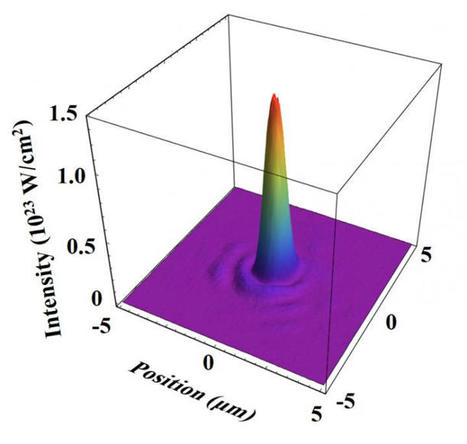
Scientists at the Institute for Basic Science have recently achieved the highest laser intensity in history. The record-breaking laser intensity over 10^23 W/cm^2 enable scientists to explore novel physical phenomena occurring under extreme physical conditions. Recently, laser scientists at the Center for Relativistic Laser Science (CoReLS) within the Institute for Basic Science (IBS) in South Korea realized the unprecedented laser intensity of 10^23 W/cm^2. This has been a milestone that has been pursued for almost two decades by many laser institutes around the world. An ultrahigh intensity laser is an important research tool in several fields of science, including those which explore novel physical phenomena occurring under extreme physical conditions. Since the demonstration of the10^22 W/cm^2 intensity laser by a team at the University of Michigan in 2004, the realization of laser intensity over10^23 W/cm^2 has been pursued for nearly 20 years. In general, achieving such a level of ultra-high laser intensity requires two things: laser with extremely high power output, and focusing that laser to the smallest spot as possible. While continuous-wave lasers are limited to megawatt-scale intensity, far higher peak power output (on the order of petawatt) is possible in pulsed laser systems by delivering the energy in the time scale as short as femtoseconds. In order to reach the goal of developing the world's most powerful laser, several ultrahigh power laser facilities with outputs of 10 PW and beyond, such as ELI (EU), Apollon (France), EP-OPAL (USA), and SEL (China), have been built or are being planned. A recent study from Osaka University even proposed a concept prototype for an exawatt class laser. Meanwhile, the CoReLS laser team has been operating a 4-PW laser system since 2016. This year in April 2021, they have finally achieved the record-breaking milestone of10^23 W/cm^2 by tightly focusing the multi-PW laser beam. Several special techniques have been employed to achieve this feat. The power intensity was maximized by using a focusing optics called an off-axis parabolic mirror, which was used to focus a 28 cm laser beam down to a spot only 1.1 micrometers wide. Such a diffraction-limited tight focusing can be obtained only with a clean laser beam without wavefront distortion. The CoReLS laser team, thus, made its PW laser beam as clean as possible using a set of deformable mirrors to correct the wavefront distortion of the PW laser. The CoReLS 4-PW laser is a femtosecond, ultrahigh power Ti:sapphire laser, based on the chirped pulse amplification (CPA) technique.
|
|
Rescooped by
Dr. Stefan Gruenwald
from Biomimicry
May 4, 2021 4:19 PM
|
Researchers from the University of Illinois have managed to create a new camera called the Mantis Cam that can see polarized light. This technology provides possible solutions for everything from unlocking the mysteries of the underwater world to early cancer detection.
The research was published in the journal Optica and takes its inspiration from the mantis shrimp, a crustacean with an incredible visual system. Humans have 3 different types of color receptors, but the mantis shrimp has 16 different receptors alongside another 6 polarization channels. Animals in the underwater world use polarized light for “covert communication channels” as well as hunting and navigation. “The animal kingdom is full of creatures with much more sensitive and sophisticated eyes than our own,” says Viktor Gruev, co-author of the study. “These animals perceive natural phenomena that are invisible to humans.”
Via Miguel Prazeres
|
|
Scooped by
Dr. Stefan Gruenwald
May 4, 2021 3:58 PM
|
Wherever scientists look, they can spot them: whether in remote mountain lakes, in Arctic sea ice, in the deep-ocean floor or in air samples, even in edible fish—thousands upon thousands of microscopic plastic particles in the micro to millimeter range. This microplastic is now even considered one of the defining features of the Anthropocene, the age of the Earth shaped by modern humans. Microplastics are formed by weathering and physicochemical or biological degradation processes from macroscopic plastic products, such as the tons of plastic waste in the oceans. It is unlikely that these degradation processes will stop at the micrometer scale. And so there is growing concern about the potential harmful effects nanoplastics could have on various ecosystems. "Numerous media reports suggest, through their sometimes highly emotional coverage, that we are facing a huge problem here," says Empa researcher Bernd Nowack, who has long studied the material flows of synthetic micro- and nanoparticles, for example from textiles or tire abrasion, into the environment. But Nowack says at present this statement can hardly be substantiated by scientific findings: "We don't even know how much nanoplastics there is in the different ecosystems." Huge gaps in knowledge This is primarily because it is enormously difficult in terms of measurement technology to identify artificial nanoparticles made of plastic in environmental samples with thousands and thousands of (natural) particles of similar size. Appropriate analytical methods would first have to be developed, says Denise Mitrano of ETH Zurich. And then it would be a matter of understanding exactly what risk the tiny plastic particles—some of which differ considerably in their chemical composition—pose to humans and the environment, in other words: how dangerous they ultimately are. Adds Nowack, "So we can't justifiably say we have a serious problem here—but we also can't say we don't." That's because the smaller particles become, the more likely they are to reach organs and tissues that are inaccessible to larger particles. The blood-brain barrier or placenta, for instance, prevents particles and macromolecules from passing through until they reach a certain size—or rather, smallness—thereby protecting the tissues and organs "behind" them, i.e. the brain and fetus, respectively, from potentially dangerous substances such as viruses and bacteria. "Even if we ingest microplastics, for example through our food, they probably do not enter our bloodstream or our brain, but are simply excreted again," says Peter Wick, head of Empa's Particles-Biology Interactions lab, who studies the interactions of nanoparticles with biological systems. "With nanoplastics, we can't be so sure."
There are some tasks that traditional robots — the rigid and metallic kind — simply aren’t cut out for. Soft-bodied robots, on the other hand, may be able to interact with people more safely or slip into tight spaces with ease. But for robots to reliably complete their programmed duties, they need to know the whereabouts of all their body parts. That’s a tall task for a soft robot that can deform in a virtually infinite number of ways. MIT researchers have developed an algorithm to help engineers design soft robots that collect more useful information about their surroundings. The deep-learning algorithm suggests an optimized placement of sensors within the robot’s body, allowing it to better interact with its environment and complete assigned tasks. The advance is a step toward the automation of robot design. “The system not only learns a given task, but also how to best design the robot to solve that task,” says Alexander Amini. “Sensor placement is a very difficult problem to solve. So, having this solution is extremely exciting.”
Via Tony Shan
A group of systems biologists in Berlin have developed parallel genome editing in tiny worms to produce diverse indel mutations in regulatory elements in genomic DNA and a powerful software package, crispr-DART, to analyze the indel mutations following targeted DNA sequencing. Using this new approach, they directly map gene regulatory genotypes to physical and physiological attributes in the worm. Nearly 40% of our genomes consist of regulatory elements that control when and where a gene is expressed. Although biomedical research has focused on protein-coding regions of genomes, understanding how regulatory regions control gene expression is central to understanding attributes of health and disease. While progress has been made in understanding gene regulation in cell lines and yeast, few studies have been done in live animals or in large populations. One of the technical challenges of studying regulatory regions is that they must ultimately be understood in the context of their genomic and tissue environments and developmental timing. Systems biologists at the Max Delbrück Center (MDC) for Molecular Medicine in Berlin report a new in vivo parallel genetics approach in their article “Parallel genetics of regulatory sequences using scalable genome editing in vivo” published in Cell Reports that introduce diverse mutations on a large scale in the genomes of thousands of microscopic worms called Caenorhabditis elegans and tracks their physiological effects. This offers a systematic method to link genotype to phenotype—a monumental task at the current frontiers of biology. “With cell lines, you are missing development processes, many cell-types, as well as interaction between cell types that all affect gene regulation,” says Jonathan Froehlich, a PhD student in MDC’s Systems Biology of Gene Regulatory Elements Lab in the Berlin Institute for Medical Systems Biology (BIMSB) and co-first author on the article. “We can now really test these regulatory sequences in the environment where they are important and observe the consequences on the organism.” The researchers use CRISPR-Cas9 to introduce large scale mutations in the form of genomic deletions or insertions (indels) in a parent generation of the hermaphrodite worms and studied the physiological effects in thousands of worms in subsequent generations. “One part is controlled, the part where we design the guide RNAs and tell the Cas9 nuclease where to go, but the outcome of this is semi-random,” says Froehlich. “You will have many different types of outcomes and we can see what the effect is on the animal.” The authors link several mutations in regulatory regions to specific physiological effects using the new approach. One of their expected findings was the identification of two independently functioning let-7 microRNA binding sites in the downstream regulatory region of a gene called lin-41. If at least one of the two sites was intact, the worms developed normally, else gene expression was mis-regulated and the worms developed abnormally and died. “This demonstrates nicely how this system can be used to study gene regulation during development,” says Nikolaus Rajewsky, PhD, scientific director of MDC’s BIMSB, who oversaw the project.
Via BigField GEG Tech
Throughout human history, workers have thrived on ingenuity and invention, which has led us to maximise the utility of resources around us in pursuit of productivity and efficiency
Even today technology continues to evolve, and in recent times that innovation has delivered us intelligent technologies including AI, robotics, and automation. Once the stuff of science fiction, these new technologies are being adopted at an astounding rate, and data shows the pace of innovation is only going to continue in future.
Our recent forecast of the UK’s workforce for example, which looked at how automating technologies might impact jobs on a task by task basis, found that the equivalent of 1.4 million full-time roles could be automated by the end of this year. That’s the equivalent of 4.8% of work currently undertaken across the country.
Via Edumorfosis, juandoming
|