Your new post is loading...

|
Scooped by
Dr. Stefan Gruenwald
August 2, 2021 4:15 AM
|
Researchers at the University of California San Diego created an ultrasound patch that can measure blood flow in vessels as deep as 14 cm within the body. The stretchy patch can be applied to the skin and may help clinicians to monitor and diagnose various conditions, including blockages that could cause an infarct. The patch contains an array of ultrasound transducers that can measure blood flow in vessels directly beneath it and the ultrasound beam can also be steered to assess vessels that are nearby, but not directly below. Monitoring blood flow in specific vessels can help clinicians to diagnose various cardiovascular diseases. For instance, measuring changes in blood flow in the carotid artery could show that someone is at a risk of stroke, and help to initiate treatment before a stroke occurs. However, current technology to accurately measure blood flow can be inconvenient, invasive, requiring a qualified technician to use an ultrasound probe to investigate the target. The flexible device contains a 12 x 12 grid of tiny ultrasound transducers embedded in a stretchy polymer. The transducers can be controlled to activate together, allowing the researchers to investigate vessels that are as deep as 14 cm beneath the skin. In another mode, the transducers will activate at different times, causing the ultrasound beam to be steered, which allows the user to investigate vessels that do not lie directly beneath the patch. “With the phased array technology, we can manipulate the ultrasound beam in the way that we want,” said Muyang Lin, another researcher involved in the study. “This gives our device multiple capabilities: monitoring central organs as well as blood flow, with high resolution. This would not be possible using just one transducer.”
|
|
Scooped by
Dr. Stefan Gruenwald
July 28, 2021 7:46 PM
|
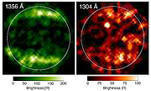
For the first time, astronomers have uncovered evidence of water vapor in the atmosphere of Jupiter's moon Ganymede. This water vapor forms when ice from the moon's surface sublimates—that is, turns from solid to gas. Scientists used new and archival datasets from NASA's Hubble Space Telescope to make the discovery, published in the journal Nature Astronomy. Previous research has offered circumstantial evidence that Ganymede, the largest moon in the solar system, contains more water than all of Earth's oceans. However, temperatures there are so cold that water on the surface is frozen solid. Ganymede's ocean would reside roughly 100 miles below the crust; therefore, the water vapor would not represent the evaporation of this ocean. Astronomers re-examined Hubble observations from the last two decades to find this evidence of water vapor. In 1998, Hubble's Space Telescope Imaging Spectrograph (STIS) took the first ultraviolet (UV) images of Ganymede, which revealed in two images colorful ribbons of electrified gas called auroral bands, and provided further evidence that Ganymede has a weak magnetic field. The similarities in these UV observations were explained by the presence of molecular oxygen (O2). But some observed features did not match the expected emissions from a pure O2 atmosphere. At the same time, scientists concluded this discrepancy was likely related to higher concentrations of atomic oxygen (O). As part of a large observing program to support NASA's Juno mission in 2018, Lorenz Roth of the KTH Royal Institute of Technology in Stockholm, Sweden led the team that set out to measure the amount of atomic oxygen with Hubble. The team's analysis combined the data from two instruments: Hubble's Cosmic Origins Spectrograph (COS) in 2018 and archival images from the Space Telescope Imaging Spectrograph (STIS) from 1998 to 2010. To their surprise, and contrary to the original interpretations of the data from 1998, they discovered there was hardly any atomic oxygen in Ganymede's atmosphere. This means there must be another explanation for the apparent differences in these UV aurora images. Roth and his team then took a closer look at the relative distribution of the aurora in the UV images. Ganymede's surface temperature varies strongly throughout the day, and around noon near the equator it may become sufficiently warm that the ice surface releases (or sublimates) some small amounts of water molecules. In fact, the perceived differences in the UV images are directly correlated with where water would be expected in the moon's atmosphere. "So far only the molecular oxygen had been observed," explained Roth. "This is produced when charged particles erode the ice surface. The water vapor that we measured now originates from ice sublimation caused by the thermal escape of water vapor from warm icy regions." This finding adds anticipation to ESA (European Space Agency)'s upcoming mission, JUICE, which stands for JUpiter ICy moons Explorer. JUICE is the first large-class mission in ESA's Cosmic Vision 2015-2025 program. Planned for launch in 2022 and arrival at Jupiter in 2029, it will spend at least three years making detailed observations of Jupiter and three of its largest moons, with particular emphasis on Ganymede as a planetary body and potential habitat.
|
|
Scooped by
Dr. Stefan Gruenwald
July 27, 2021 6:57 PM
|
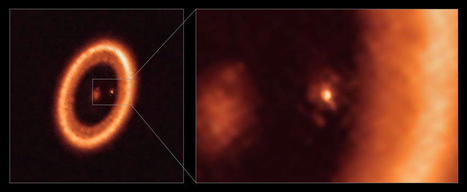
Planetary formation is a complicated, multilayered process. Even with the influx of data on exoplanets, there are still only two known planets that are not yet fully formed. Known as PDS 70b and PDS 70c, the two planets, which were originally found by the Very Large Telescope, are some of the best objects we have to flesh out our planetary formation models. And now, one of them has been confirmed to have a moon-forming disk around it. That additional insight came from observations conducted by ALMA. Astronomers had long predicted that planet PDS 70c was surrounded by such a disk, but with the images they had captured previously they were unable to confirm its existence. Now, it has been physically confirmed beyond the shadow of a doubt. Moon formation is even less well understood than planetary formation at this point. Even the origins of our own Moon are still up for debate. But the PDS 70c discovery has the potential to illuminate the creation of at least one as we are watching. In fact, there is enough material in the disk to create three moons the size of our own around the Jupiter-like planet. The moon formation process also plays a key part in planetary formation, with circumplanetary disks that can form moons also influencing the creation of the planet itself. Watching that disk evolve will help scientists with their models of both moon and planetary formation. That evolution is sure to take millions of years, but so far PDS 70c is the only known planet with any type of circumplanetary disk. The same data set confirming its existence showed that it’s Saturn-like twin, PDS 70b, does not have a disk that some scientists had previously suggested. Others might be found with more powerful telescopes, but until then this system is the best we have. Given its uniqueness, the PDS 70 system will remain a focal point of plenty of observational firepower. Now there’s one more important detail to look into with those instruments – hopefully there will be more details to discover as well.
|
|
Scooped by
Dr. Stefan Gruenwald
July 27, 2021 6:41 PM
|
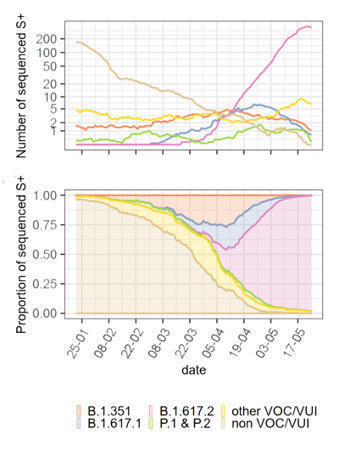
The world is yet again bracing itself for more COVID-19 restrictions. This time surrounds the Delta variant, first detected in India and classed a variant of concern by the UK government on May 6, 2021. Recently, a number of researchers from the JUNIPER consortium, whose work feeds into SPI-M and SAGE (the Scientific Advisory Group for Emergencies), published a summary of what they have learnt about the Delta variant so far, and what it potentially means for the near future. See here more detailed coverage of the COVID-19 pandemic. "Collecting and interpreting data about a new variant as it is first appearing in a population, and modeling its potential impact, is an extremely difficult task," says Julia Gog, a senior member of JUNIPER. "Our scientists started focussing particularly on the Delta variant in early April and we have spent the last three weeks making sure our results are robust as new data is continually becoming available. We have been developing novel methods in response to immediate needs, but these approaches are now out there and tested, and ready for use against future variant threats." It was the early work by JUNIPER members, particularly Robert Challen, that first brought the potential of this variant to SPI-M's attention. The early warning helped inform the UK government's response to the Delta variant back in May 2021, when surge testing and targeted interventions were put into place in emerging hotspots. The subsequent stress-testing of these first results confirms what was already suspected back then: that the Delta variant is likely to become dominant in the UK. Depending on just how transmissible the variant is and exactly how it responds to the vaccines, this means the possibility of a sizeable third wave is not off the table. Why is there concern despite the vaccines? There are various reasons for why we're not yet in safe territory, despite the vaccination program going well. Since there are still many people who have not been fully vaccinated, and since the vaccines aren't 100% effective against any variant, there is still scope for the virus to outrun the vaccines. The possibility of new variants emerging compounds this threat. The worry here is that a new variant could be more transmissible than existing ones, or more resistant to the vaccines. Although there's a lot of uncertainty surrounding many aspects of COVID-19, it is possible to construct mathematical models that allow you to explore scenarios that are likely to occur under various assumptions about the new variants. Such modeling work was already done by JUNIPER researchers in the middle of May 2021, and first presented at a research meeting hosted by the Isaac Newton Institute (INI).
|
|
Scooped by
Dr. Stefan Gruenwald
July 23, 2021 8:14 PM
|
At just 500 years old and spinning at 1.4 rotations per second, this magnetic neutron star is even more exotic than previously thought. Astronomers discovered the youngest member of a bizarre group of stars, known as magnetars, using NASA’s Neil Gehrels Swift Telescope in March of 2020. And now, further observations shed even more light on the exotic beast.
Magnetars are a special breed of already strange neutron stars. Remnants of supernovae, neutron stars are incredibly dense objects — second only to black holes — that compress more than a Sun’s worth of mass into a sphere only about as wide as a city. Magnetars, however, are a subset of neutron stars that sport the universe’s most powerful magnetic fields. The fields around these stars are roughly a million billion times stronger than the magnetic fields of Earth.
However, despite their extreme nature, astronomers have identified only 31 magnetars out of the 3,000 or so known neutron stars. So, after the discovery of J1818.0-1607 by Swift last year, researchers further observed the new object with NASA’s Chandra X-ray Observatory. They found that the 31st known magnetar is even more special than they previously thought. Their findings were published November 26 in The Astrophysics Journal Letters.
|
|
Scooped by
Dr. Stefan Gruenwald
July 22, 2021 11:41 AM
|
The partners use AlphaFold to release more than 350,000 protein structure predictions including the entire human proteome to the scientific community. DeepMind recently announced its partnership with the European Molecular Biology Laboratory (EMBL), Europe’s flagship laboratory for the life sciences, to make the most complete and accurate database yet of predicted protein structure models for the human proteome. This will cover all ~20,000 proteins expressed by the human genome, and the data will be freely and openly available to the scientific community. The database and artificial intelligence system provide structural biologists with powerful new tools for examining a protein’s three-dimensional structure, and offer a treasure trove of data that could unlock future advances and herald a new era for AI-enabled biology. AlphaFold’s recognition in December 2020 by the organisers of the Critical Assessment of protein Structure Prediction (CASP) benchmark as a solution to the 50-year-old grand challenge of protein structure prediction was a stunning breakthrough for the field. The AlphaFold Protein Structure Database builds on this innovation and the discoveries of generations of scientists, from the early pioneers of protein imaging and crystallography, to the thousands of prediction specialists and structural biologists who’ve spent years experimenting with proteins since. The database dramatically expands the accumulated knowledge of protein structures, more than doubling the number of high-accuracy human protein structures available to researchers. Advancing the understanding of these building blocks of life, which underpin every biological process in every living thing, will help enable researchers across a huge variety of fields to accelerate their work. Last week, the methodology behind the latest highly innovative version of AlphaFold, the sophisticated AI system announced last December that powers these structure predictions, and its open source code were published in Nature. Today’s announcement coincides with a second Nature paper that provides the fullest picture of proteins that make up the human proteome, and the release of 20 additional organisms that are important for biological research. “Our goal at DeepMind has always been to build AI and then use it as a tool to help accelerate the pace of scientific discovery itself, thereby advancing our understanding of the world around us,” said DeepMind Founder and CEO Demis Hassabis, PhD. “We used AlphaFold to generate the most complete and accurate picture of the human proteome. We believe this represents the most significant contribution AI has made to advancing scientific knowledge to date, and is a great illustration of the sorts of benefits AI can bring to society.” AlphaFold is already helping scientists to accelerate discovery The ability to predict a protein’s shape computationally from its amino acid sequence – rather than determining it experimentally through years of painstaking, laborious and often costly techniques – is already helping scientists to achieve in months what previously took years. “The AlphaFold database is a perfect example of the virtuous circle of open science,” said EMBL Director General Edith Heard. “AlphaFold was trained using data from public resources built by the scientific community so it makes sense for its predictions to be public. Sharing AlphaFold predictions openly and freely will empower researchers everywhere to gain new insights and drive discovery. I believe that AlphaFold is truly a revolution for the life sciences, just as genomics was several decades ago and I am very proud that EMBL has been able to help DeepMind in enabling open access to this remarkable resource.” AlphaFold is already being used by partners such as the Drugs for Neglected Diseases Initiative (DNDi), which has advanced their research into life-saving cures for diseases that disproportionately affect the poorer parts of the world, and the Centre for Enzyme Innovation (CEI) is using AlphaFold to help engineer faster enzymes for recycling some of our most polluting single-use plastics. For those scientists who rely on experimental protein structure determination, AlphaFold’s predictions have helped accelerate their research. For example, a team at the University of Colorado Boulder is finding promise in using AlphaFold predictions to study antibiotic resistance, while a group at the University of California San Francisco has used them to increase their understanding of SARS-CoV-2 biology. The AlphaFold Protein Structure Database The AlphaFold Protein Structure Database builds on many contributions from the international scientific community, as well as AlphaFold’s sophisticated algorithmic innovations and EMBL-EBI’s decades of experience in sharing the world’s biological data. DeepMind and EMBL’s European Bioinformatics Institute (EMBL-EBI) are providing access to AlphaFold’s predictions so that others can use the system as a tool to enable and accelerate research and open up completely new avenues of scientific discovery.
|
|
Scooped by
Dr. Stefan Gruenwald
July 21, 2021 10:01 PM
|
Immunohistochemical stains for individual markers revolutionized diagnostic pathology decades ago but cannot capture enough information to accurately predict response to immunotherapy. Newer multiplex immunofluorescent technologies provide the potential to visualize the expression patterns of many functionally relevant molecules but present numerous challenges in accurate image analysis and data handling, particularly over large tumor areas. Drawing from the field of astronomy, in which petabytes of imaging data are routinely analyzed across a wide spectral range, Berry et al. developed a platform for multispectral imaging of whole-tumor sections with high-fidelity single-cell resolution. The resultant AstroPath platform was used to develop a multiplex immunofluorescent assay highly predictive of responses and outcomes for melanoma patients receiving immunotherapy.
|
|
Scooped by
Dr. Stefan Gruenwald
July 21, 2021 2:03 PM
|
Existential threat The vast majority of decarbonization scenarios put forward by the UN’s Intergovernmental Panel on Climate Change (IPCC) and the UN Environment Program, especially those which are consistent with actual current levels of carbon emissions, point toward the 60—80 percent probability of breaching the 1.5°C safe limit. Even when the more ambitious IPCC decarbonization scenarios are taken into account, the scientists find that: “All the IPCC scenarios violate the 1.5°C peak heating target” with a probability between 40 percent and higher than 80 percent. “Such high probabilities of violation would be considered unacceptable in other areas, like engineering or public health,” write the co-authors Harald Desing and Rolf Widmer of the Swiss Federal Laboratories for Material Science and Technology in Switzerland. “Growing understanding of the Earth system suggests that peak heating beyond 1.5°C may be an existential threat to the biosphere and therefore also humanity,” they explain in their paper. “Transitions that exceed this vital threshold with a high probability expose future generations to substantial risks without their prior consent.” Although some residual probability might still be acceptable for society, they say, by tolerating high probabilities between 40 and 80 percent the current climate discourse “exposes future generations to unprecedented risks without their prior consent.” To illustrate the urgency of climate action, the paper shows that even if carbon emissions were to remain constant at 2018 levels, there would be a 66 percent probability of depleting the remaining carbon budget before 2028. Of course, carbon emissions continue to rise every year and are forecast to increase this year by as much as 5 percent. However, while this sober warning suggests that the “existential threat” of dangerous climate change beyond the 1.5°C limit is baked into prevailing decarbonisation plans, the paper also shows that a rapid transition to a solar-based renewable energy system can dramatically reduce this risk. But we need to act fast. The paper uses the concept of Energy Return on Investment (EROI)—a measure of the amount of energy used to extract a certain quantity of energy from any given resource—to assess the prospects of such a transition. The speed of action would require a temporary increase in fossil fuel emissions above current levels “for the sole purpose of accelerating the growth of renewable energy capacity” and switching off the “fossil engine” before 2030.
|
|
Scooped by
Dr. Stefan Gruenwald
July 17, 2021 8:13 PM
|
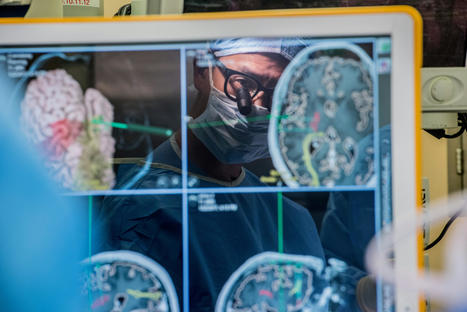
Researchers at UC San Francisco have successfully developed a “speech neuroprosthesis” that has enabled a man with severe paralysis to communicate in sentences, translating signals from his brain to the vocal tract directly into words that appear as text on a screen. The achievement, which was developed in collaboration with the first participant of a clinical research trial, builds on more than a decade of effort by UCSF neurosurgeon Edward Chang, MD, to develop a technology that allows people with paralysis to communicate even if they are unable to speak on their own. The study is published in the New England Journal of Medicine. "To our knowledge, this is the first successful demonstration of direct decoding of full words from the brain activity of someone who is paralyzed and cannot speak," said Chang, the Joan and Sanford Weill Chair of Neurological Surgery at UCSF, Jeanne Robertson Distinguished Professor, and senior author on the study. "It shows strong promise to restore communication by tapping into the brain's natural speech machinery." Each year, thousands of people lose the ability to speak due to stroke, accident, or disease. With further development, the approach described in this study could one day enable these people to fully communicate. Translating Brain Signals into Speech Previously, work in the field of communication neuroprosthetics has focused on restoring communication through spelling-based approaches to type out letters one-by-one in text. Chang's study differs from these efforts in a critical way: his team is translating signals intended to control muscles of the vocal system for speaking words, rather than signals to move the arm or hand to enable typing. Chang said this approach taps into the natural and fluid aspects of speech and promises more rapid and organic communication. "With speech, we normally communicate information at a very high rate, up to 150 or 200 words per minute," he said, noting that spelling-based approaches using typing, writing, and controlling a cursor are considerably slower and more laborious. "Going straight to words, as we're doing here, has great advantages because it's closer to how we normally speak."
|
|
Scooped by
Dr. Stefan Gruenwald
July 13, 2021 10:02 AM
|
Jupiter’s moon Europa and its global ocean may currently have conditions suitable for life. Scientists are studying processes on the icy surface as they prepare to explore. Jupiter’s icy moon Europa and its global ocean may currently have conditions suitable for life. Scientists are studying processes on the icy surface as they prepare to explore. It’s easy to see the impact of space debris on our Moon, where the ancient, battered surface is covered with craters and scars. Jupiter’s icy moon Europa withstands a similar trouncing – along with a punch of super-intense radiation. As the uppermost surface of the icy moon churns, material brought to the surface is zapped by high-energy electron radiation accelerated by Jupiter. NASA-funded scientists are studying the cumulative effects of small impacts on Europa’s surface as they prepare to explore the distant moon with the Europa Clipper mission and study the possibilities for a future lander mission. Europa is of particular scientific interest because its salty ocean, which lies beneath a thick layer of ice, may currently have conditions suitable for existing life. That water may even make its way into the icy crust and onto the moon’s surface. The new study, which was published July 12, 2021 in the journal Nature Astronomy, is a bit more pessimistic. In it, researchers modeled how Europa's surface is disturbed by small but frequent impacts — a real issue for a world without a substantial atmosphere to burn up incoming hunks of rock and ice. They found that such "impact gardening" likely churns the top 12 inches (30 cm) or so of Europan ice significantly, bringing previously buried bits up to the surface, where radiation can zap any interesting molecules into unrecognizable goo. "If we hope to find pristine, chemical biosignatures, we will have to look below the zone where impacts have been gardening," study lead author Emily Costello, a planetary research scientist at the University of Hawaii at Manoa, said in a statement. "Chemical biosignatures in areas shallower than that zone may have been exposed to destructive radiation." Previous work has suggested that just 8 inches (20 centimeters) of ice could likely shield any biomolecules that might exist on Europa from that punishing radiation environment, even in the hardest-hit regions of the moon.
|
|
Scooped by
Dr. Stefan Gruenwald
July 12, 2021 7:22 PM
|
Changing climate patterns have left millions of people vulnerable to weather extremes. As temperature fluctuations become more commonplace around the world, conventional power-guzzling cooling and heating systems need a more innovative, energy-efficient alternative, and in turn, lessen the burden on already struggling power grids. In a new study, researchers at Texas A&M University have created novel 3D printable phase-change material (PCM) composites that can regulate ambient temperatures inside buildings using a simpler and cost-effective manufacturing process. Furthermore, these composites can be added to building materials, like paint, or 3D printed as decorative home accents to seamlessly integrate into different indoor environments. "The ability to integrate phase-change materials into building materials using a scalable method opens opportunities to produce more passive temperature regulation in both new builds and already existing structures," said Dr. Emily Pentzer, associate professor in the Department of Materials Science and Engineering and the Department of Chemistry. Dr. Emily Pentzer and her team have created novel 3D printable phase-change material composites that can regulate ambient temperatures inside buildings using a simpler and cost-effective manufacturing process. This study was published in the June issue of the journal Matter. Heating, ventilation and air conditioning (HVAC) systems are the most commonly used methods to regulate temperatures in residential and commercial establishments. However, these systems guzzle a lot of energy. Furthermore, they use greenhouse materials, called refrigerants, for generating cool, dry air. These ongoing issues with HVAC systems have triggered research into alternative materials and technologies that require less energy to function and can regulate temperature commensurate to HVAC systems. One of the materials that have gained a lot of interest for temperature regulation is phase-change materials. As the name suggests, these compounds change their physical state depending on the temperature in the environment. So, when phase-change materials store heat, they convert from solid to liquid upon absorbing heat and vice versa when they release heat. Thus, unlike HVAC systems that rely solely on external power to heat and cool, these materials are passive components, requiring no external electricity to regulate temperature.
|
|
Scooped by
Dr. Stefan Gruenwald
July 12, 2021 7:17 PM
|
Some exoplanet searches could be missing nearly half of the Earth-sized planets around other stars. New findings from a team using the international Gemini Observatory and the WIYN 3.5-meter Telescope at Kitt Peak National Observatory suggest that Earth-sized worlds could be lurking undiscovered in binary star systems, hidden in the glare of their parent stars. As roughly half of all stars are in binary systems, this means that astronomers could be missing many Earth-sized worlds. Earth-sized planets may be much more common than previously realized. Astronomers working at NASA Ames Research Center have used the twin telescopes of the international Gemini Observatory, a Program of NSF's NOIRLab, to determine that many planet-hosting stars identified by NASA's TESS exoplanet-hunting mission are actually pairs of stars -- known as binary stars -- where the planets orbit one of the stars in the pair. After examining these binary stars, the team has concluded that Earth-sized planets in many two-star systems might be going unnoticed by transit searches like TESS's, which look for changes in the light from a star when a planet passes in front of it. The light from the second star makes it more difficult to detect the changes in the host star's light when the planet transits. The team started out by trying to determine whether some of the exoplanet host stars identified with TESS were actually unknown binary stars. Physical pairs of stars that are close together can be mistaken for single stars unless they are observed at extremely high resolution. So the team turned to both Gemini telescopes to inspect a sample of exoplanet host stars in painstaking detail. Using a technique called speckle imaging, the astronomers set out to see whether they could spot undiscovered stellar companions. Using the `Alopeke and Zorro instruments on the Gemini North and South telescopes in Chile and Hawai'i, respectively, the team observed hundreds of nearby stars that TESS had identified as potential exoplanet hosts. They discovered that 73 of these stars are really binary star systems that had appeared as single points of light until observed at higher resolution with Gemini. "With the Gemini Observatory's 8.1-meter telescopes, we obtained extremely high-resolution images of exoplanet host stars and detected stellar companions at very small separations," said Katie Lester of NASA's Ames Research Center, who led this work. Lester's team also studied an additional 18 binary stars previously found among the TESS exoplanet hosts using the NN-EXPLORE Exoplanet and Stellar Speckle Imager (NESSI) on the WIYN 3.5-meter Telescope at Kitt Peak National Observatory, also a Program of NSF's NOIRLab. After identifying the binary stars, the team compared the sizes of the detected planets in the binary star systems to those in single-star systems. They realized that the TESS spacecraft found both large and small exoplanets orbiting single stars, but only large planets in binary systems. These results imply that a population of Earth-sized planets could be lurking in binary systems and going undetected using the transit method employed by TESS and many other planet-hunting telescopes. Some scientists had suspected that transit searches might be missing small planets in binary systems, but the new study provides observational support to back it up and shows which sizes of exoplanets are affected.
|
|
Scooped by
Dr. Stefan Gruenwald
July 12, 2021 7:09 PM
|
Three mutations in the Epsilon coronavirus spike protein dampen the neutralizing potency of antibodies induced by current vaccines or past COVID infections. The mutations give this coronavirus variant of concern a means to totally evade specific monoclonal antibodies used in clinics and reduces the effectiveness of antibodies from the plasma of vaccinated people. To better understand the exact immune escape strategies at work here, the scientists visualized this variant's infection machinery to see what is different from the original configuration of the pandemic coronavirus, and what the implications of these changes are. The international project was led by David Veesler's lab in the Department of Biochemistry at the University of Washington in Seattle and by Luca Piccoli and Davide Corti of Vir Biotechnology. For several years, the Veesler lab and its collaborators have been exploring the molecular conformation and infection mechanics of SARS-like coronaviruses. They also examine how antibodies attempt to block infection mechanisms, and how variants come up with new dodges. Their latest data shows that the Epsilon variant "relies on an indirect and unusual neutralization-escape strategy," according to the researchers. Their findings are published as a First Release paper in Science.
|
|
|
Scooped by
Dr. Stefan Gruenwald
July 28, 2021 7:50 PM
|
The global economy's business-as-usual approach to climate change has seen Earth's "vital signs" deteriorate to record levels, an influential group of scientists said Wednesday, warning that several climate tipping points were now imminent. The researchers, part of a group of more than 14,000 scientists who have signed on to an initiative declaring a worldwide climate emergency, said that governments had consistently failed to address the root cause of climate change: "the overexploitation of the Earth".
Since a similar assessment in 2019, they noted an "unprecedented surge" in climate-related disasters, including flooding in South America and Southeast Asia, record-shattering heatwaves and wildfires in Australia and the US, and devastating cyclones in Africa and South Asia. Of 31 "vital signs"—key metrics of planetary health that include greenhouse gas emissions, glacier thickness, sea-ice extent and deforestation—they found that 18 hit record highs or lows. For example, despite a dip in pollution linked to the pandemic, levels of atmospheric CO2 and methane hit all-time highs in 2021.
Greenland and Antarctica both recently showed all-time low levels of ice mass, and glaciers are melting 31 percent faster than they did just 15 years ago, the authors said. Both ocean heat and global sea levels set new records since 2019, and the annual loss rate of the Brazilian Amazon reached a 12-year high in 2020.
Highlights of a landmark Intergovernmental Panel on Climate Change (IPCC) draft report on the effects of a warming planet on nature. Echoing previous research, they said that forest degradation linked to fire, drought and logging was causing parts of the Brazilian Amazon to now act as a source of carbon, rather than absorb the gas from the atmosphere. Livestock such as cows and sheep are now at record levels, numbering more than four billion and with a mass exceeding that of all humans and wild land mammals combined, they said.
Tim Lenton, director of the University of Exeter's Global Systems Institute and study co-author, said the recent record-breaking heatwave in the Western United States and Canada showed that the climate had already begun to "behave in shocking, unexpected ways. We need to respond to the evidence that we are hitting climate tipping points with equally urgent action to decarbonize the global economy and start restoring instead of destroying nature," he said.
|
|
Scooped by
Dr. Stefan Gruenwald
July 28, 2021 7:42 PM
|
Materials scientists can now shuffle layered compounds together, much like combining two different decks of cards. The technique, recently discovered by a team of researchers at the U.S. Department of Energy's Ames Laboratory, is leading to development of new materials with unusual electron transport properties that have potential applications in next-generation quantum technologies. The discovered technique has shown another unexpected and promising application in new materials design. The "reshuffling" approach can generate thermally stable three-dimensional (3D) heterostructures from layered transition metal dichalcogenides (TMDCs). These are van der Waals materials composed of metal nanolayers sandwiched between two other layers of chalcogens—sulfur, selenium, or tellurium. Similar to graphite, these compounds can be exfoliated into 2D layers, which display unique electron transport properties and quantum phenomena. "TMDCs are very intriguing to researchers as a possibility for applications in renewable energy, catalysis and optoelectronics, to name only a few," said project leader Viktor Balema, a Senior Scientist in the Divisions of Materials Sciences and Engineering at Ames Laboratory. "Our goal in research has been the development of such re-assembly methods for these layered materials, which are not only efficient, but also scalable and cost effective in production." Researchers at Ames Laboratory have been successful in overcoming one of the major challenges of composing these layered materials—the difficulty of sandwiching together atomically dissimilar, incommensurate, materials—through the use of mechanochemistry that is facilitated by ball milling. "Now, we have demonstrated that we can mechanochemically design novel layered heterostructures, control their composition and tune their properties," said Ihor Hlova, a scientist in the Divisions of Materials Sciences and Engineering at Ames Laboratory. "This opens a way to a variety of different combinations—the possibilities are basically unlimited."
|
|
Scooped by
Dr. Stefan Gruenwald
July 27, 2021 6:54 PM
|
Among the first, and strangest, planets to be detected around other stars is a variety known as “hot Jupiters” – star-hugging, superheated giants once thought so unlikely that many scientists doubted their existence. But 25 years later, hot Jupiters have been confirmed across the galaxy and even in our own stellar neighborhood. Now a survey using data from NASA’s Spitzer Space Telescope, switched off in 2020, is teasing out important features of hot Jupiter atmospheres and providing a few surprises for scientists. Spitzer’s parting gift also offers a glimmer of the future – a coming revolution in our understanding of exoplanets, the worlds orbiting other stars. Measurements of the temperature and chemical properties of hot Jupiters, and how these affect their cauldron-like atmospheres, were made possible by gathering light from the infrared part of the spectrum – the “heat maps” that were Spitzer’s specialty. Far more detailed observations are expected from the James Webb Space Telescope, which will launch in 2021, and other instruments to come in the decades ahead. “To me, the transition is going from more than 15 years of exoplanetary science with Spitzer to a new era,” said Jean-Michel Desert, an astronomer at the University of Amsterdam and a co-author of the new study. “The legacy of Spitzer for the future – that to me is the key moment.” Families of planets Hot Jupiters are gas giants, in some ways similar to our own Jupiter in terms of mass and size, but with far higher temperatures. They orbit their stars so tightly that a “year” – once around the star – can take just a few days. This short orbital leash keeps them infernally hot. Astronomers have found more than 700 hot Jupiters so far in our own galaxy – so many that they now have been able to conduct the largest statistical survey of these extreme planets using Spitzer data. The new study, involving 49 hot Jupiters – chosen in part because molecular signatures in their atmospheres could be measured more precisely – begins to reveal trends and commonalities of the entire population. “Hot Jupiters – all of them are quite peculiar,” Desert said. “But we do see families of these exoplanets.” They seem to group into three families, the science team found: the “cooler” hot Jupiters, with atmospheric temperatures up to about 1,300 degrees Fahrenheit (700 degrees Celsius), “hot” hot Jupiters, from about 1,300 to 3,100 degrees Fahrenheit (700 to 1,700 degrees Celsius), and ultra-hot Jupiters, those above 3,100 Fahrenheit (1,700 degrees Celsius). The most unexpected finding for scientists who study these behemoths: Among the cooler hot Jupiters, no trace of methane was seen in their atmospheres. Computer models – simulations of hot Jupiter atmospheres – that are calculated using common scientific assumptions predicted methane in abundance for these worlds. The gas is present in small amounts in the atmosphere of our own (non-hot) Jupiter and plentiful in the gas giants Uranus and Neptune. “We saw that some atmospheres behave differently compared to the [simpler models],” lead author Claire Baxter, also of the University of Amsterdam, wrote in an email. “To not find methane in any of the planets [at temperatures lower than about 1,300 degrees Fahrenheit] was surprising with the basic assumptions we had made.”
|
|
Rescooped by
Dr. Stefan Gruenwald
from Virus World
July 26, 2021 12:00 PM
|
Scientists who study glacier ice have found viruses nearly 15,000 years old in two ice samples taken from the Tibetan Plateau in China. Most of those viruses, which survived because they had remained frozen, are unlike any viruses that have been cataloged to date. The findings, published in the journal Microbiome, could help scientist understand how viruses have evolved over centuries. For this study, the scientists also created a new, ultra-clean method of analyzing microbes and viruses in ice without contaminating it. “These glaciers were formed gradually, and along with dust and gases, many, many viruses were also deposited in that ice,” said Zhi-Ping Zhong, lead author of the study and a researcher at The Ohio State University Byrd Polar and Climate Research Center who also focuses on microbiology. “The glaciers in western China are not well-studied, and our goal is to use this information to reflect past environments. And viruses are a part of those environments.” The researchers analyzed ice cores taken in 2015 from the Guliya ice cap in western China. The cores are collected at high altitudes – the summit of Guliya, where this ice originated, is 22,000 feet above sea level. The ice cores contain layers of ice that accumulate year after year, trapping whatever was in the atmosphere around them at the time each layer froze. Those layers create a timeline of sorts, which scientists have used to understand more about climate change, microbes, viruses and gases throughout history. Researchers determined that the ice was nearly 15,000 years old using a combination of traditional and new, novel techniques to date this ice core. When they analyzed the ice, they found genetic codes for 33 viruses. Four of those viruses have already been identified by the scientific community. But at least 28 of them are novel. About half of them seemed to have survived at the time they were frozen not in spite of the ice, but because of it. “These are viruses that would have thrived in extreme environments,” said Matthew Sullivan, co-author of the study, professor of microbiology at Ohio State and director of Ohio State’s Center of Microbiome Science. “These viruses have signatures of genes that help them infect cells in cold environments – just surreal genetic signatures for how a virus is able to survive in extreme conditions. These are not easy signatures to pull out, and the method that Zhi-Ping developed to decontaminate the cores and to study microbes and viruses in ice could help us search for these genetic sequences in other extreme icy environments – Mars, for example, the moon, or closer to home in Earth’s Atacama Desert.” Viruses do not share a common, universal gene, so naming a new virus – and attempting to figure out where it fits into the landscape of known viruses – involves multiple steps. To compare unidentified viruses with known viruses, scientists compare gene sets. Gene sets from known viruses are cataloged in scientific databases. Those database comparisons showed that four of the viruses in the Guliya ice cap cores had previously been identified and were from virus families that typically infect bacteria. The researchers found the viruses in concentrations much lower than have been found to exist in oceans or soil. The researchers’ analysis showed that the viruses likely originated with soil or plants, not with animals or humans, based on both the environment and the databases of known viruses. The study of viruses in glaciers is relatively new: Just two previous studies have identified viruses in ancient glacier ice. But it is an area of science that is becoming more important as the climate changes, said Lonnie Thompson, senior author of the study, distinguished university professor of earth sciences at Ohio State and senior research scientist at the Byrd Center. “We know very little about viruses and microbes in these extreme environments, and what is actually there,” Thompson said. “The documentation and understanding of that is extremely important: How do bacteria and viruses respond to climate change? What happens when we go from an ice age to a warm period like we’re in now?” This study was an interdisciplinary effort between Ohio State’s Byrd Center and its Center for Microbiome Science. The 2015 Guliya ice cores were collected and analyzed as part of a collaborative program between the Byrd Polar and Climate Research Center and the Institute of Tibetan Plateau Research of the Chinese Academy of Sciences.
Via Juan Lama
|
|
Scooped by
Dr. Stefan Gruenwald
July 23, 2021 8:00 PM
|
The mission will explore whether Jupiter’s moon Europa has conditions suitable for life. NASA has selected Space Exploration Technologies Corp. (SpaceX) of Hawthorne, California, to provide launch services for Earth’s first mission to conduct detailed investigations of Jupiter's moon Europa. The Europa Clipper mission will launch in October 2024 on a Falcon Heavy rocket from Launch Complex 39A at NASA’s Kennedy Space Center in Florida. The total contract award amount for launch services is approximately $178 million. The Europa Clipper will conduct a detailed survey of Europa and use a sophisticated suite of science instruments to investigate whether the icy moon has conditions suitable for life. Key mission objectives are to produce high-resolution images of Europa’s surface, determine its composition, look for signs of recent or ongoing geological activity, measure the thickness of the moon’s icy shell, search for subsurface lakes, and determine the depth and salinity of Europa’s ocean. NASA’s Launch Services Program at Kennedy will manage the Europa Clipper launch service. NASA's Jet Propulsion Laboratory in Southern California leads the development of the Europa Clipper mission in partnership with the Johns Hopkins Applied Physics Laboratory in Laurel, Maryland, for NASA’s Science Mission Directorate in Washington. The Planetary Missions Program Office at NASA’s Marshall Space Flight Center in Huntsville, Alabama, executes program management of the Europa Clipper mission. For more information about the Europa Clipper mission, visit: https://europa.nasa.gov/
|
|
Scooped by
Dr. Stefan Gruenwald
July 21, 2021 10:38 PM
|
Don’t expect to see any of these ten moths hovering around a streetlight, because they are just a small selection of the worlds rarest moths and while they might not be the most amazing looking, they are still worthy of our attention…
|
|
Scooped by
Dr. Stefan Gruenwald
July 21, 2021 9:43 PM
|
NVIDIA is collaborating with AstraZeneca on a transformer-based generative AI model for chemical structures used in drug discovery that will be among the very first projects to run on Cambridge-1, which is soon to go online as the UK’s largest supercomputer. The model will be open sourced, available to researchers and developers in the NVIDIA NGC software catalog, and deployable in the NVIDIA Clara Discovery platform for computational drug discovery. Separately, UF Health is harnessing NVIDIA’s state-of-the-art Megatron framework and BioMegatron pre-trained model — available on NGC — to develop GatorTron, the largest clinical language model to date. New NGC applications include AtacWorks, a deep learning model that identifies accessible regions of DNA, and MELD, a tool for inferring the structure of biomolecules from sparse, ambiguous or noisy data. Megatron Model for Molecular Insights The MegaMolBART drug discovery model being developed by NVIDIA and AstraZeneca is slated for use in reaction prediction, molecular optimization and de novo molecular generation. It’s based on AstraZeneca’s MolBART transformer model and is being trained on the ZINC chemical compound database — using NVIDIA’s Megatron framework to enable massively scaled-out training on supercomputing infrastructure. The large ZINC database allows researchers to pretrain a model that understands chemical structure, bypassing the need for hand-labeled data. Armed with a statistical understanding of chemistry, the model will be specialized for a number of downstream tasks, including predicting how chemicals will react with each other and generating new molecular structures. “Just as AI language models can learn the relationships between words in a sentence, our aim is that neural networks trained on molecular structure data will be able to learn the relationships between atoms in real-world molecules,” said Ola Engkvist, head of molecular AI, discovery sciences, and R&D at AstraZeneca. “Once developed, this NLP model will be open source, giving the scientific community a powerful tool for faster drug discovery.” The model, trained using NVIDIA DGX SuperPOD, gives researchers ideas for molecules that don’t exist in databases but could be potential drug candidates. Computational methods, known as in-silico techniques, allow drug developers to search through more of the vast chemical space and optimize pharmacological properties before shifting to expensive and time-consuming lab testing. This collaboration will use the NVIDIA DGX A100-powered Cambridge-1 and Selene supercomputers to run large workloads at scale. Cambridge-1 is the largest supercomputer in the U.K., ranking No. 3 on the Green500 and No. 29 on the TOP500 list of the world’s most powerful systems. NVIDIA’s Selene supercomputer topped the most recent Green500 and ranks fifth on the TOP500.
|
|
Scooped by
Dr. Stefan Gruenwald
July 20, 2021 5:08 PM
|
In the mid-2030s, every U.S. coast will experience rapidly increasing high-tide floods, when a lunar cycle will amplify rising sea levels caused by climate change. High-tide floods – also called nuisance floods or sunny day floods – are already a familiar problem in many cities on the U.S. Atlantic and Gulf coasts. The National Oceanic and Atmospheric Administration (NOAA) reported a total of more than 600 such floods in 2019. Starting in the mid-2030s, however, the alignment of rising sea levels with a lunar cycle will cause coastal cities all around the U.S. to begin a decade of dramatic increases in flood numbers, according to the first study that takes into account all known oceanic and astronomical causes for floods. Led by the members of the NASA Sea Level Change Science Team from the University of Hawaii, the new study shows that high tides will exceed known flooding thresholds around the country more often. What’s more, the floods will sometimes occur in clusters lasting a month or longer, depending on the positions of the Moon, Earth, and the Sun. When the Moon and Earth line up in specific ways with each other and the Sun, the resulting gravitational pull and the ocean’s corresponding response may leave city dwellers coping with floods every day or two.
|
|
Scooped by
Dr. Stefan Gruenwald
July 17, 2021 8:10 PM
|
A new study of lithium production in a classical nova found a production rate of only a couple of percent that seen in other examples. This shows that there is a large diversity within classical novae and implies that nova explosions alone cannot explain the amount of lithium seen in the current Universe. This is an important result for understanding both the explosion mechanism of classical novae and the overall chemical evolution of the Universe. In the modern world, lithium is used in the rechargeable batteries powering smartphones and other devices. It was thought that most of the lithium found on Earth, and the rest of the Universe, was originally produced in classical nova explosions. Observations of the classical nova V339 Del using the Subaru Telescope supported this theory, providing the first observational evidence of large amounts of lithium being produced and ejected into space (Classical Nova Explosions are Major Lithium Factories in the Universe on February 18, 2015).
Now, a team led by Akira Arai, a researcher at Koyama Astronomical Observatory of Kyoto Sangyo University, used the Subaru Telescope’s open-use observation program to study V5669 Sgr, a classical nova that appeared in Sagittarius in 2015. This was only the eighth time this type of study has been successfully conducted. Four of those eight, including the first, were conducted using the Subaru Telescope. This time is remarkable because the estimated lithium production is only a few percent of the production seen in the others. This indicates that there is a large diversity in novae. The fact that some novae produce only a small amount of lithium suggests that other objects, such as supernovae, may make important contributions to lithium production in the Universe.
A classical nova occurs in a close binary system consisting of a white dwarf and a companion star. Gas from the companion star accumulates on the white dwarf, increasing the temperature and pressure on the surface, leading to explosive nucleosynthesis. During the explosion, an unstable isotope of beryllium (7Be) is formed. This beryllium decays into lithium with a half-life of 53 days.
The research group observed the absorption lines of this beryllium in the spectrum of the nova about one month after the explosion. These absorption lines are in the ultraviolet region and are easily affected by absorption by the Earth's atmosphere, making ground-based observations extremely difficult. Therefore, the observations require a large telescope with a spectrometer with high sensitivity in ultraviolet region located at high altitude, where the air is thin. The Subaru Telescope is the only telescope that can observe lithium synthesis in novae from the northern hemisphere. It is hoped that the Subaru Telescope will continue to be at the forefront of this field and will help us to understand how the elements were synthesized and evolved to create the material-rich Universe in which we live. To maximize scientific return and enable researchers to pursue their own original investigations into topics like this, the Subaru Telescope offers an open-use observation program where Japanese researchers can apply for observing time. These results are published in The Astrophysical Journal on July 2021 as Arai et al. “Detection of 7Be II in the Classical Nova V5669 Sgr (Nova Sagittarii 2015 No. 3).” It can be accessed here.
|
|
Scooped by
Dr. Stefan Gruenwald
July 12, 2021 7:24 PM
|
Scientists from the Division of Physics at the University of Tsukuba used the quantum effect called "spin-locking" to significantly enhance the resolution when performing radio-frequency imaging of nitrogen-vacancy defects in diamond. This work may lead to faster and more accurate material analysis, as well as a path towards practical quantum computers. Nitrogen-vacancy (NV) centers have long been studied for their potential use in quantum computers. A NV center is a type of defect in the lattice of a diamond, in which two adjacent carbon atoms have been replaced with a nitrogen atom and a void. This leaves an unpaired electron, which can be detected using radio-frequency waves, because its probability of emitting a photon depends on its spin state. However, the spatial resolution of radio wave detection using conventional radio-frequency techniques has remained less than optimal. Now, researchers at the University of Tsukuba have pushed the resolution to its limit by employing a technique called "spin-locking." Microwave pulses are used to put the electron's spin in a quantum superposition of up and down simultaneously. Then, a driving electromagnetic field causes the direction of the spin to precess around, like a wobbling top. The end result is an electron spin that is shielded from random noise but strongly coupled to the detection equipment. "Spin-locking ensures high accuracy and sensitivity of the electromagnetic field imaging," first author Professor Shintaro Nomura explains. Due to the high density of NV centers in the diamond samples used, the collective signal they produced could be easily picked up with this method. This permitted the sensing of collections of NV centers at the micrometer scale. "The spatial resolution we obtained with RF imaging was much better than with similar existing methods," Professor Nomura continues, "and it was limited only by the resolution of the optical microscope we used." The approach demonstrated in this project may be applied in a broad variety of application areas -- for example, the characterizations of polar molecules, polymers, and proteins, as well as the characterization of materials. It might also be used in medical applications -- for example, as a new way to perform magnetocardiography.
|
|
Scooped by
Dr. Stefan Gruenwald
July 12, 2021 7:19 PM
|
A team of physicists from the Harvard-MIT Center for Ultracold Atoms and other universities has developed a special type of quantum computer known as a programmable quantum simulator capable of operating with 256 quantum bits, or "qubits." The system marks a major step toward building large-scale quantum machines that could be used to shed light on a host of complex quantum processes and eventually help bring about real-world breakthroughs in material science, communication technologies, finance, and many other fields, overcoming research hurdles that are beyond the capabilities of even the fastest supercomputers today. Qubits are the fundamental building blocks on which quantum computers run and the source of their massive processing power. "This moves the field into a new domain where no one has ever been to thus far," said Mikhail Lukin, the George Vasmer Leverett Professor of Physics, co-director of the Harvard Quantum Initiative, and one of the senior authors of the study published today in the journal Nature. "We are entering a completely new part of the quantum world." According to Sepehr Ebadi, a physics student in the Graduate School of Arts and Sciences and the study's lead author, it is the combination of system's unprecedented size and programmability that puts it at the cutting edge of the race for a quantum computer, which harnesses the mysterious properties of matter at extremely small scales to greatly advance processing power. Under the right circumstances, the increase in qubits means the system can store and process exponentially more information than the classical bits on which standard computers run. "The number of quantum states that are possible with only 256 qubits exceeds the number of atoms in the solar system," Ebadi said, explaining the system's vast size. Already, the simulator has allowed researchers to observe several exotic quantum states of matter that had never before been realized experimentally, and to perform a quantum phase transition study so precise that it serves as the textbook example of how magnetism works at the quantum level. These experiments provide powerful insights on the quantum physics underlying material properties and can help show scientists how to design new materials with exotic properties. The project uses a significantly upgraded version of a platform the researchers developed in 2017, which was capable of reaching a size of 51 qubits. That older system allowed the researchers to capture ultra-cold rubidium atoms and arrange them in a specific order using a one-dimensional array of individually focused laser beams called optical tweezers. This new system allows the atoms to be assembled in two-dimensional arrays of optical tweezers. This increases the achievable system size from 51 to 256 qubits. Using the tweezers, researchers can arrange the atoms in defect-free patterns and create programmable shapes like square, honeycomb, or triangular lattices to engineer different interactions between the qubits.
|
|
Scooped by
Dr. Stefan Gruenwald
July 12, 2021 7:12 PM
|
Contrary to what science once suggested, older people with a declining sense of smell do not have comprehensively dampened olfactory ability for odors in general -- it simply depends upon the type of odor. Researchers at the University of Copenhagen reached this conclusion after examining a large group of older Danes' and their intensity perception of common food odors. That older people aren't as good at smelling as they once were, is something that many can relate to. And, it has also been scientifically demonstrated. One's sense of smell gradually begins to decline from about the age of 55. Until now, it was believed that one's sense of smell broadly declined with increasing age. However, a study from the University of Copenhagen reports that certain food odors are significantly more affected than others. The Department of Food Science's Eva Honnens de Lichtenberg Broge and her fellow researchers have tested the ability of older Danes to perceive everyday food odors. The researchers measured how intensely older adults perceived different food odors, as well as how much they liked the odors. "Our study shows that the declining sense of smell among older adults is more complex than once believed. While their ability to smell fried meat, onions and mushrooms is markedly weaker, they smell orange, raspberry and vanilla just as well as younger adults. Thus, a declining sense of smell in older adults seems rather odor specific. What is really interesting is that how much you like an odor is not necessarily dependent on the intensity perception" says Eva Honnens de Lichtenberg Broge. For example, liking of seemed to be largely unaffected for fried meat, onions and mushrooms, despite the largest decline in intensity perception was seen for these specific odors. Also the ability to smell coffee declined, among other things, though they didn't like the aroma of coffee to the same degree as younger adults. The test subjects included 251 Danes between the ages of 60 and 98 and a control group consisting of 92 people between the ages of 20 and 39.
|