Your new post is loading...

|
Scooped by
Dr. Stefan Gruenwald
July 11, 2022 10:33 PM
|
NASA’s James Webb Space Telescope is the most sophisticated scientific observatory ever built by mankind. NASA, in collaboration with European Space Agency (ESA) and the Canadian Space Agency (CSA), launched and is operating this telescope. Launched in December 2021, the telescope was put in orbit in January 2022. The telescope is named after the administrator of NASA, James E. Webb who was the administrator during the Gemini and the Apollo programs. Previously, NASA had the deepest observations into the universe’s distant past using the Hubble Space Telescope which is powerful enough to observe and capture the night sky up to billions of light-years away called the Hubble Deep Fields. JWST is the successor of the Hubble Space Telescope with much sophistication and powerful infrared resolution technology. On 11th July 2022, President Joe Biden released the first image from the James Web Space Telescope. The image peeks into thousands of galaxies in the galaxy cluster SMACS 0723 revealing the distant past for us making it one of the sharpest images of the earliest universe.
|
|
Rescooped by
Dr. Stefan Gruenwald
from Virus World
July 11, 2022 5:22 PM
|
The lineages’ rise seems to stem from their ability to infect people who were immune to earlier forms of Omicron and other variants. Like a Hollywood franchise that churns out sequel after mind-numbing sequel, Omicron is back. Mere weeks after the variant’s BA.2 lineage caused surges globally, two more Omicron spin-offs are now on the rise worldwide. First spotted by scientists in South Africa in April and linked to a subsequent rise in cases there, BA.4 and BA.5 are the newest members of Omicron’s growing family of coronavirus subvariants. They have recently been detected in dozens of countries worldwide. The BA.4 and BA.5 subvariants are spiking globally because they can spread faster than other circulating variants — mostly BA.2, which caused a surge in cases at the beginning of the year. But so far, the latest Omicron variants seem to be causing fewer deaths and hospitalizations than their older cousins — a sign that growing population immunity is tempering the immediate consequences of COVID-19 surges. Nature magazine explores what the rise of BA.4 and BA.5 means for the pandemic. What are BA.4 and BA.5? The two variants are more similar to BA.2 than to the BA.1 strain that kicked off most countries’ Omicron waves late last year. But BA.4 and BA.5 carry their own unique mutations, including changes called L452R and F486V in the viral spike protein that might tweak its ability to latch onto host cells and skirt some immune responses. A recent study found that BA.4 and BA.5 share an origin with earlier Omicron strains. But an unpublished analysis led by evolutionary geneticists Bette Korber and William Fischer at Los Alamos National Laboratory in New Mexico suggests that the variants are probably offshoots of BA.2 instead. Korber and Fischer also found that many genome sequences that are classified as BA.2 in public databases are actually BA.4 or BA.5. As a result, researchers could be underestimating the variants’ ongoing rise, as well as the diversity of mutations carried by them. “It is important in this particular moment in the pandemic to get these calls right,” Korber and Fischer wrote in an e-mail to Nature. Why are the variants on the rise globally? Variants’ transmission advantages can result from biological changes that speed infection, for instance, allowing the virus to infect more people, more quickly. But the rise of BA.4 and BA.5 seems to stem, instead, from their capacity to infect people who were immune to earlier forms of Omicron and other variants, says Christian Althaus, a computational epidemiologist at the University of Bern. With most of the world outside Asia doing little to control SARS-CoV-2, the rise — and inevitable fall — of BA.4 and BA.5 will be driven almost entirely by population immunity, Althaus adds, with cases increasing when protection lulls and falling only when enough people have been infected. On the basis of the rise of BA.5 in Switzerland — where BA.4 prevalence is low — Althaus estimates that about 15% of people there will get infected. But countries are now likely to have distinct immune profiles because their histories of COVID-19 waves and vaccination rates differ, Althaus adds. As a result, the sizes of BA.4 and BA.5 waves will vary from place to place. “It might be 5% in some countries and 30% in others. It all depends on their immunity profile,” he says. What impact will BA.4 and BA.5 have on society? This, too, is likely to vary by country. Despite high case numbers, South Africa experienced only a small rise in hospitalizations and deaths during its BA.4 and BA.5 wave, says Waasila Jassat, a public-health specialist at the country’s National Institute for Communicable Diseases in Johannesburg. In a study that will soon be posted to the medRxiv preprint server, Jassat and her colleagues found that South Africa’s BA.4 and BA.5 wave led to similar rate of hospitalization but slightly lower death rate when compared with the country’s earlier Omicron wave. Both Omicron surges proved much milder, in terms of hospitalizations and deaths, than the country’s ferocious Delta wave. Outside South Africa, other countries are seeing more significant impacts from BA.4 and BA.5. In Portugal — where COVID-19 vaccination and boosting rates are very high — the levels of death and hospitalization associated with the latest wave are similar to those in the first Omicron wave (although still nothing like the impact caused by earlier variants). One explanation for the difference could be Portugal’s demographics, says Althaus. “The more elderly people you have, the more severe disease.” Jassat thinks that the nature of a country’s immunity can also explain varying outcomes. About half of adult South Africans have been vaccinated, and just 5% have taken up a booster. But this, combined with sky-high infection rates from earlier COVID-19 waves, has erected a wall of ‘hybrid immunity’ that offers strong protection against severe disease, particularly in older people, who are the most likely to have been vaccinated, she adds. How well do vaccines work against the variants? Lab studies consistently suggest that antibodies triggered by vaccination are less effective at blocking BA.4 and BA.5 than they are at blocking earlier Omicron strains, including BA.1 and BA.2 [2–6]. This could leave even vaccinated and boosted people vulnerable to multiple Omicron infections, scientists say. Even people with hybrid immunity, stemming from vaccination and previous infection with Omicron BA.1, produce antibodies that struggle to incapacitate BA.4 and BA.5. Research teams have attributed that to the variants’ L452R and F486V spike mutations. One explanation for this is the observation that BA.1 infection after vaccination seems to trigger infection-blocking ‘neutralizing’ antibodies that recognize the ancestral strain of SARS-CoV-2 (the one that vaccines are based on) better than they recognize Omicron variants [2,7]. “Infection with BA.1 does induce a neutralizing antibody response, but it appears to be a little bit narrower than one would expect,” leaving people susceptible to immune-escaping variants such BA.4 and BA.5, says Ravindra Gupta, a virologist at the University of Cambridge, UK. What comes next? That’s anybody’s guess. The parade of Omicron subvariants could continue, with new variants picking further holes in existing immunity. “Nobody can say BA.4/5 is the final variant. It is highly probable that additional Omicron variants will emerge,” says Kei Sato, a virologist at the University of Tokyo. Researchers have identified several spots on the spike protein that are currently recognized by the antibodies that are triggered by vaccination and previous infection, but that could mutate in future Omicron strains2. Another possibility is the emergence of a variant from a branch of the SARS-CoV-2 family tree different from the one that bore Omicron. Repeat Omicron infections could build broad immunity against successive lineages, creating an opening for a totally different SARS-CoV-2 variant that is unfamiliar to people’s immune responses, says Gupta. “The bar is getting higher and higher for a virus to take over.” Increasingly, scientists think that variants including Omicron and Alpha probably originated from months-long chronic SARS-CoV-2 infections, in which sets of immune-evading and transmissibility-boosting mutations can build up. But the longer Omicron and its offshoots continue to dominate, the less likely it is that a totally new variant will emerge from a chronic infection, says Mahan Ghafari, who researches viral evolution at the University of Oxford, UK. To succeed, future variants will have to evade immunity. But they could come with other worrying properties. Sato’s team found that BA.4 and BA.5 were deadlier in hamsters than was BA.2, and better able to infect cultured lung cells6. Epidemiology studies, such as the one led by Jassat, suggest that successive COVID-19 waves are getting milder. But this trend should not be taken for granted, Sato cautions. Viruses don’t necessarily evolve to become less deadly. It’s also unclear when the next variant will appear. BA.4 and BA.5 started emerging in South Africa only a few months after BA.1 and BA.2, a pattern now being repeated in places including the United Kingdom and United States. But as global immunity from repeated vaccination and infection builds, Althaus expects the frequency of SARS-CoV-2 waves to slow down. One possible future for SARS-CoV-2 is that it will become like the other four seasonal coronaviruses, the levels of which ebb and flow with the seasons, usually peaking in winter and typically reinfecting people every three years or so, Althaus says. “The big question is whether symptoms will become milder and milder and whether issues with long COVID will slowly disappear,” he says. “If it stays like it is now, then it will be a serious public-health problem.” Published in Nature (June 23, 2022): https://doi.org/10.1038/d41586-022-01730-y
Via Juan Lama
|
|
Scooped by
Dr. Stefan Gruenwald
July 11, 2022 11:14 AM
|
Gaia’s data release 3 contains new and improved details for almost two billion stars in our galaxy. The catalog includes new information including chemical compositions, stellar temperatures, colors, masses, ages, and the speed at which stars move towards or away from us (radial velocity). Much of this information was revealed by the newly released spectroscopy data, a technique in which the starlight is split into its constituent colors. The data also includes special subsets of stars, like those that change brightness over time. Also new in this data set is the largest catalogue yet of binary stars, thousands of Solar System objects such as asteroids and moons of planets, and millions of galaxies and quasars outside the Milky Way. Chemical composition of stars What stars are made of can tell us about their birthplace and their journey afterwards, and therefore about the history of the Milky Way. With today’s data release, Gaia is revealing the largest chemical map of the galaxy coupled to 3D motions, from our solar neigbourhood to smaller galaxies surrounding ours. Some stars contain more ‘heavy metals’ than others. During the Big Bang, only light elements were formed (hydrogen and helium). All other heavier elements – called metals by astronomers – are built inside stars. When stars die, they release these metals into the gas and dust between the stars called the interstellar medium, out of which new stars form. Active star formation and death will lead to an environment that is richer in metals. Therefore, a star’s chemical composition is giving us crucial information about its origin. With Gaia, we see that some stars in our galaxy are made of primordial material, while others like our Sun are made of matter enriched by previous generations of stars. Stars that are closer to the centre and plane of our galaxy are richer in metals than stars at larger distances. Gaia also identified stars that originally came from different galaxies than our own, based on their chemical composition. “Our galaxy is a beautiful melting pot of stars,” says Alejandra Recio-Blanco of the Observatoire de la Côte d’Azur in France, who is a member of the Gaia collaboration. Binary stars, asteroids, quasars, and much more Other papers that are published today reflect the breadth and depth of Gaia's discovery potential. A new binary star catalogue presents the mass and evolution of more than 800 thousand binary systems, while a new asteroid survey comprising 156 thousand rocky bodies is digging deeper into the origin of our Solar System. Gaia is also revealing information about 10 million variable stars, mysterious macro-molecules between stars, as well as quasars and galaxies beyond our own cosmic neighbourhood. “Unlike other missions that target specific objects, Gaia is a survey mission. This means that while surveying the entire sky with billions of stars multiple times, Gaia is bound to make discoveries that other more dedicated missions would miss. This is one of its strengths, and we can’t wait for the astronomy community to dive into our new data to find out even more about our galaxy and its surroundings than we could’ve imagined,” says Timo Prusti, Project Scientist for Gaia at ESA. More details on Gaia’s data releases 3 can be found here: https://www.cosmos.esa.int/web/gaia/data-release-3 From 13 June 2022, 12:00 CEST onwards, the new Gaia data can be accessed at https://gea.esac.esa.int/archive/ Gaia’s data release 3 was presented today during a virtual media briefing at https://www.esa.int/ESA_Multimedia/ESA_Web_TV These data are summarized in a series of infographics: https://www.esa.int/Science_Exploration/Space_Science/Gaia/Gaia_data_release_3_media_kit More in-depth stories on the new Gaia data can be found here: https://www.cosmos.esa.int/web/gaia/dr3-stories A series of scientific papers describing the data and their validation process will appear in a special issue of the journal Astronomy & Astrophysics: https://www.cosmos.esa.int/web/gaia/dr3-papers
|
|
Scooped by
Dr. Stefan Gruenwald
July 9, 2022 3:11 PM
|
Imagine Bach's "Cello Suite No. 1" played on a strand of DNA.
This scenario is not as impossible as it seems. Too small to withstand a rhythmic strum or sliding bowstring, DNA is a powerhouse for storing audio files and all kinds of other media.
"DNA is nature's original data storage system. We can use it to store any kind of data: images, video, music -- anything," said Kasra Tabatabaei, a researcher at the Beckman Institute for Advanced Science and Technology and a coauthor on this study.
Expanding DNA's molecular makeup and developing a precise new sequencing method enabled a multi-institutional team to transform the double helix into a robust, sustainable data storage platform.
The team's paper appeared in Nano Letters in February 2022.
In the age of digital information, anyone brave enough to navigate the daily news feels the global archive growing heavier by the day. Increasingly, paper files are being digitized to save space and protect information from natural disasters.
From scientists to social media influencers, anyone with information to store stands to benefit from a secure, sustainable data lock box -- and the double helix fits the bill.
"DNA is one of the best options, if not the best option, to store archival data especially," said Chao Pan, a graduate student at the University of Illinois Urbana-Champaign and a coauthor on this study.
Its longevity rivaled only by durability, DNA is designed to weather Earth's harshest conditions -- sometimes for tens of thousands of years -- and remain a viable data source. Scientists can sequence fossilized strands to uncover genetic histories and breathe life into long-lost landscapes.
Despite its diminutive stature, DNA is a bit like Dr. Who's infamous police box: bigger on the inside than it appears.
"Every day, several petabytes of data are generated on the internet. Only one gram of DNA would be sufficient to store that data. That's how dense DNA is as a storage medium," said Tabatabaei, who is also a fifth-year Ph.D. student.
Another important aspect of DNA is its natural abundance and near-infinite renewability, a trait not shared by the most advanced data storage system on the market today: silicon microchips, which often circulate for just decades before an unceremonious burial in a heap of landfilled e-waste.
"At a time when we are facing unprecedented climate challenges, the importance of sustainable storage technologies cannot be overestimated. New, green technologies for DNA recording are emerging that will make molecular storage even more important in the future," said Olgica Milenkovic, the Franklin W. Woeltge Professor of Electrical and Computer Engineering and a co-PI on the study.
|
|
Scooped by
Dr. Stefan Gruenwald
July 6, 2022 6:31 PM
|
The human genome is littered with "selfish genetic elements," which do not seem to benefit their hosts, but instead seek only to propagate themselves. Selfish genetic elements can wreak havoc by, for instance, distorting sex ratios, impairing fertility, causing harmful mutations, and even potentially causing population extinction. Biologists at the University of Rochester, including Amanda Larracuente, an associate professor of biology, and Daven Presgraves, a University Dean's Professor of Biology, have for the first time used population genomics to shed light on the evolution and consequences of a selfish genetic element known as Segregation Distorter (SD). In a paper published in the journal eLife, the researchers report that SD has caused dramatic changes in chromosome organization and genetic diversity. A genome-sequencing first The researchers used fruit flies as model organisms to study SD, a selfish genetic element that skews the rules of fair genetic transmission. Fruit flies share about 70 percent of the same genes that cause human diseases, and because they have such short reproductive cycles -- less than two weeks -- scientists are able to create generations of the flies in a relatively short amount of time. Female flies transmit SD-infected chromosomes to about 50 percent of their offspring, as expected under Mendel's laws of inheritance. Males, however, transmit SD chromosomes to nearly 100 percent of their offspring, because SD kills any sperm that do not carry the selfish genetic element. How does SD do this? Because it has evolved into what researchers refer to as a "supergene" -- a cluster of selfish genes on the same chromosome that are inherited together. Researchers have known for decades that SD evolved to form a supergene. But this is the first time they have used what is known as population genomics -- examining genome-wide patterns of DNA sequence variations among individuals in a population -- to study the dynamics, evolution, and long-term effects of SD on a genome's evolution. "This is the first time anyone has sequenced the whole genomes of SD chromosomes and therefore been able to make inferences about both the history and the genomic consequences of being a supergene," Presgraves says. An evolutionary downfall on the horizon The advantage of being a supergene is that multiple genes can act together to cause SD's near-perfect transmission to offspring. As the researchers found, however, there are major drawbacks to being a supergene. In sexual reproduction, chromosomes from the mother and the father swap genetic material to produce new genetic combinations unique to each offspring. In most cases, the chromosomes line up properly and crossover. Scientists have long recognized that the exchange of genetic material by crossing over -- known as recombination -- is vital because it empowers natural selection to eliminate deleterious mutations and enable the spread of beneficial mutations. As the researchers showed, however, one of the major costs of SD's near-perfect transmission is that it does not undergo recombination. The selfish genetic element gains a short-term transmission advantage by shutting down recombination to ensure it gets passed on to all of its offspring. But SD is not forward-looking: preventing recombination has led to SD accumulating many more deleterious mutations compared to normal chromosomes. "Without recombination, natural selection can't purge deleterious mutations effectively, so they can accumulate on SD chromosomes," Larracuente says. "These mutations might be ones that disrupt the function or regulation of genes."
|
|
Scooped by
Dr. Stefan Gruenwald
July 6, 2022 6:23 PM
|
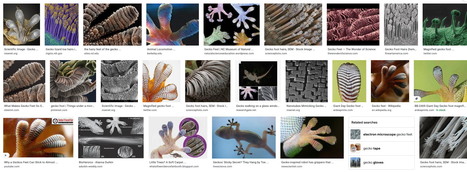
Geckos are famous for having grippy feet that allow them to scale vertical surfaces with ease. They get this seeming superpower from millions of microscopic, hairlike structures on their toes. Now, scientists have zoomed in for an even closer look at those structures, called setae, and found that they are coated in an ultra-thin film of water-repelling lipid molecules only one nanometer, or billionths of a meter, thick. Researchers from the National Institute of Standards and Technology (NIST) analyzed the surface of the setae using high-energy X-rays thrown off by a type of particle accelerator called a synchrotron. The synchrotron microscope showed that the lipid molecules line the surface of the setae in dense, orderly arrays. Lipids can play a role in this process because they are hydrophobic, meaning they repel water. "The lipids might function to push away any water beneath the spatulae, allowing them to make closer contact with the surface," said physicist and co-author Tobias Weidner of Aarhus University in Denmark. "This would help geckos maintain their grip on wet surfaces." The setae and spatulae are made of a type of keratin protein similar to that found in human hair and fingernails. They are extremely delicate. The researchers showed that the keratin fibers are aligned in the direction of the setae, which might help them resist abrasion. "The most exciting thing for me about this biological system is that everything is perfectly optimized on every scale, from the macro to the micro to the molecular," said biologist and co-author Stanislav Gorb of Kiel University in Germany. "This can help biomimetic engineers know what to do next. You can imagine gecko boots that don't slip on wet surfaces, or gecko gloves for holding tools that are wet," said NIST physicist and co-author Dan Fischer. "Or a vehicle that can run up walls, or a robot that can run along power lines and inspect them." The NIST synchrotron microscope that the researchers used to analyze the setae is unique in its ability to identify molecules on the surface of a three-dimensional object, measure their orientation and map their position. It is located at the U.S. Department of Energy's Brookhaven National Laboratory, where the National Synchrotron Light Source II, a half-mile-long particle accelerator, provides a source of high-energy X-rays for illumination. This microscope is typically used to understand the physics of advanced industrial materials, including batteries, semiconductors, solar panels and medical devices. "But it is fascinating to figure out how gecko feet work," Fischer said, "and we can learn a lot from nature when it comes to improving our own technology."
|
|
Scooped by
Dr. Stefan Gruenwald
July 6, 2022 6:14 PM
|
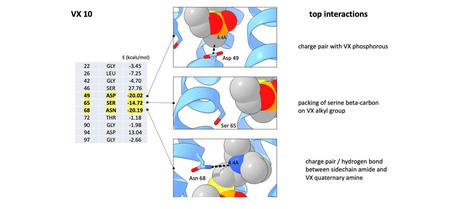
VX is classified as a neurotoxin and an incredibly deadly chemical warfare agent that has been used in assassinations by some nations. It can cause permanent brain damage in those who survive exposure. These potentially life-saving findings are published in the July 2022 edition of Science Advances, with lab member Jim McCann serving as the paper's primary author. It outlines the design of two proteins that detect the neurotoxin by changing their shape in the presence of VX. In collaboration with Douglas Pike and Vikas Nanda at Rutgers University, the CCNY team used a protein design program called ProtCAD to design 20 different proteins. According to Koder, the computer code was new and unlike anything the team had previously worked with, so it came as a bit of a surprise that two of their protein designs worked rather quickly. "Having the first thing we tried with a small molecule actually just work was pretty great," Koder said. "In that absence of VX, all of the negative charges repel each other and then the protein unfolds. And it really extends, almost like a stick. When the protein binds VX it wraps all the way around the molecule becoming much more compact." Previous detectors for this type of molecule often produced false positives from chemicals like insecticides. This new design can help prevent those misleading results, by scanning the entire molecular surface down to one hundred-millionth of a centimeter. "We get this remarkable specificity because we're making contact with the whole molecule," said Koder. This work adds to a rapidly advancing field of biosensing technology used to detect the presence of incredibly small molecules called biomarkers.
|
|
Scooped by
Dr. Stefan Gruenwald
July 6, 2022 6:09 PM
|
Researchers have exceeded the current record for generating energy from a nuclear fusion reaction. It’s a big step toward solving the world power consumption crisis. Nuclear fusion is called the holy grail of energy production — because it could lead to a virtually unlimited source of safe and sustainable power. The nuclear test happened at the world’s most powerful fusion plant — the JET Fusion facility in the UK. The record-breaking nuclear fusion reaction had a temperature of more than 150 million degrees Celsius, 10 times hotter than the heart of the sun. The research team explained that the breakthrough is a landmark for this technology, and a key step toward developing practical nuclear fusion. The difference between fusion and fission Most nuclear reactors use fission — that’s when big unstable atoms like uranium are split in two, releasing lots of energy and radiation. Fission is the current technique used around the globe in nuclear power plants. But fusion is different. It involves forcing atoms of hydrogen together — fusing them to create: helium, lots of energy, and just a tiny bit of short-lived radiation. Using fusion to create mini-suns inside reactors like this, is one of the greatest tech challenges humanity has ever faced. It holds the potential for producing almost unlimited supplies of energy, forever. The essential part of the test fusion reaction only lasted for 5 seconds — and only generated enough power to boil about 60 kettles of water — 11 mega-watts of power. But it’s an important proof of the science of fusion. The power output was more than double what was achieved in similar tests in year 1997.
|
|
Scooped by
Dr. Stefan Gruenwald
July 1, 2022 3:32 PM
|
Are we going to soon witness the creative genius of a virtual Picasso or Leonardo da Vinci? We could be on the way with the latest trend in the AI field: visual generative models. While systems like GPT-3 create text from text, others like DALL·E 2 — a wordplay between Spanish painter Salvador Dalí and Pixar’s cute robot WALL·E — can create visual art from just words and sentences. As you can see from the cover image of this article, this tech gives a new meaning to the idiom “an image is worth more than a thousand words.” OpenAI, the company behind DALL·E 2, announced the model in April. In just a couple of months, it has sounded all the alarms that AI is getting too close to human-level visual creativity. It can create anything you can imagine — and anything you can’t — from a single sentence. And OpenAI isn’t alone. Just a month later, Google Brain announced Imagen, a similar — and even slightly better — model. And now, another team from Google Brain released yet another model called Parti. And that’s without mentioning all the projects coming from low-budget research groups that don’t count on the resources of the Googles and OpenAIs of the world. Some examples are brand new research labs like Midjourney, free apps like Dream, open-source alternatives like Hugging Face’s DALL·E mini (now called Craiyon), or the collab notebooks (e.g. disco diffusion) that originate from the work of a few independent researchers like Katherine Crowson and Ryan Murdock, who started the movement among digital artists. Now that the tech is proven and the uncertainty removed, the whole AI community is in a race to build the next best text-to-image model. And they aren’t stopping anytime soon. This will have important consequences. Today, I’ll focus on how this technology will disrupt the visual arts. DALL·E 2, the main star of today’s issue, will accompany us on this journey.
|
|
Scooped by
Dr. Stefan Gruenwald
June 29, 2022 8:42 PM
|
Traditionally, structural biologists approach the complexity of cellular proteomes in a reductionist manner. Proteomes are fractionated, their molecular components purified and studied one-by-one using the experimental methods for structure determination at their disposal. Visual proteomics aims at obtaining a holistic picture of cellular proteomes by studying them in situ, ideally in unperturbed cellular environments. The method that enables doing this at highest resolution is cryo-electron tomography. It allows to visualize cellular landscapes with molecular resolution generating maps or atlases revealing the interaction networks which underlie cellular functions in health and in disease states. Current implementations of cryo-ET do not yet realize the full potential of the method in terms of resolution and interpretability. To this end, further improvements in technology and methodology are needed. This review describes the state of the art as well as measures which we expect will help overcoming current limitations.
|
|
Scooped by
Dr. Stefan Gruenwald
June 29, 2022 8:17 PM
|
Astronomers discovered a rocket body heading toward a lunar collision late last year. Impact occurred March 4, with NASA's Lunar Reconnaissance Orbiter later spotting the resulting crater. Surprisingly the crater is actually two craters, an eastern crater (18-meter diameter, about 19.5 yards) superimposed on a western crater (16-meter diameter, about 17.5 yards). A rocket body impacted the Moon on March 4, 2022, near Hertzsprung crater, creating a double crater roughly 28 meters wide in the longest dimension. The double crater was completely unexpected and may indicate that the rocket body had large masses at each end. Typically a spent rocket has mass concentrated at the motor end; the rest of the rocket stage mainly consists of an empty fuel tank. Since the origin of the rocket body remains uncertain, the double nature of the crater may indicate its identity. The crater formed (5.226 degrees north, 234.486 degrees east, 1,863 meters elevation) in a complex area where the impact of ejecta from the Orientale basin event overlies the degraded northeast rim of Hertzsprung basin (536 kilometers diameter). The new crater is not visible in this view, but its location is indicated by the white arrow. LROC WAC mosaic, 110 kilometers width. No other rocket body so far that crashed on the Moon has created double craters. The four Apollo SIV-B craters were somewhat irregular in outline (Apollos 13, 14, 15, 17) and were substantially larger (greater than 35 meters, about 38 yards) than each of the double craters. The maximum width (29 meters, about 31.7 yards) of the double crater of the mystery rocket body was near that of the S-IVBs.
LRO is managed by NASA's Goddard Space Flight Center in Greenbelt, Maryland, for the Science Mission Directorate at NASA Headquarters in Washington. Launched on June 18, 2009, LRO has collected a treasure trove of data with its seven powerful instruments, making an invaluable contribution to our knowledge about the Moon. NASA is returning to the Moon with commercial and international partners to expand human presence in space and bring back new knowledge and opportunities.
|
|
Scooped by
Dr. Stefan Gruenwald
June 25, 2022 1:55 AM
|
Pigs are valuable large animal models for biomedical and genetic research, but insights into the tissue- and cell-type-specific transcriptome and heterogeneity remain limited. By leveraging single-cell RNA sequencing, scientists now generated a multiple-organ single-cell transcriptomic map containing over 200,000 pig cells from 20 tissues/organs. They were able to comprehensively characterize the heterogeneity of cells in tissues and to identify 234 cell clusters, representing 58 major cell types. In-depth integrative analysis of endothelial cells reveals a high degree of heterogeneity. They also identified several functionally distinct endothelial cell phenotypes, including an endothelial to mesenchymal transition subtype in adipose tissues. Intercellular communication analysis predicts tissue- and cell type-specific crosstalk between endothelial cells and other cell types through the VEGF, PDGF, TGF-β, and BMP pathways. Regulon analysis of single-cell transcriptome of microglia in pig and 12 other species further identifies MEF2C as an evolutionally conserved regulon in the microglia. This important work describes the landscape of single-cell transcriptomes within diverse pig organs and identifies the heterogeneity of endothelial cells and evolutionally conserved regulon in microglia.
|
|
Scooped by
Dr. Stefan Gruenwald
June 25, 2022 1:03 AM
|
Researchers at Duke University are developing an artificial intelligence tool for toilets that would help providers improve care management for patients with gastrointestinal issues through remote patient monitoring. The tool, which can be installed in the pipes of a toilet and analyzes stool samples, has the potential to improve treatment of chronic gastrointestinal issues like inflammatory bowel disease or irritable bowel syndrome, according to a press release. When a patient flushes the toilet, the mHealth platform photographs the stool as it moves through the pipes. That data is sent to a gastroenterologist, who can analyze the data for evidence of chronic issues. A study conducted by Duke University researchers found that the platform had an 85.1 percent accuracy rate on stool form classification and a 76.3 percent accuracy rate on detection of gross blood. “Typically, gastroenterologists have to rely on patient self-reported information about their stool to help determine the cause of their gastrointestinal health issues, which can be very unreliable,” Deborah Fisher, MD, an associate professor of medicine at Duke and one of the study’s lead authors, said in the press release. “Patients often can’t remember what their stool looks like or how often they have a bowel movement, which is part of the standard monitoring process,” she said. “The smart toilet technology will allow us to gather the long-term information needed to make a more accurate and timely diagnosis of chronic gastrointestinal problems.” This remote patient monitoring platform has the potential to benefit both patients and healthcare providers. Patients won’t need to do anything out of the ordinary, and gastroenterologists won’t have to try and diagnose based on a patient’s description or recollection. “An IBD flare-up could be diagnosed using the smart toilet and the patient’s response to treatment could be monitored with the technology,” Sonia Grego, PhD, a lead researcher on the study and founding director of the Duke Smart Toilet Lab, said in the release. “This could be especially useful for patients who live in long-term care facilities who may not be able to report their conditions and could help improve initial diagnosis of acute conditions,” The program makes use of something that nearly every American has at home. It’s not the first study to target the toilet. Back in 2019, researchers at the Rochester Institute of Technology developed a sensor-embedded toilet seat. The toilet seat was designed to allow care providers to remotely monitor a patient’s weight, heart rate, blood pressure, blood oxygenation levels, and stroke volume. Similar to the AI tool for toilet pipes, RIT’s smart toilet seat presents the ability to catch patients’ symptoms early enough before they could lead to something more severe. With gastroenterology appearing on Doximity’s list of specialties that are least engaged in telehealth, this artificial intelligence software, once available to the public, could change minds. Gastroenterology usually requires in-person and hands-on interaction but using remote monitoring in this way might prove to be even more beneficial.
|
|
|
Scooped by
Dr. Stefan Gruenwald
July 11, 2022 10:25 PM
|
A Google engineer became convinced a large language model had become sentient and touched off a debate about how we should think about artificial intelligence. Current AIs aren’t sentient, at least we don't think so. But they’re getting very good at faking sentience, and that’s scary enough. Recently, the Washington Post’s Nitasha Tiku published a profile of Blake Lemoine, a software engineer assigned to work on the Language Model for Dialogue Applications (LaMDA) project at Google. LaMDA is a chatbot AI, and an example of what machine learning researchers call a “large language model,” or even a “foundation model.” It’s similar to OpenAI’s famous GPT-3 system, and has been trained on literally trillions of words compiled from online posts to recognize and reproduce patterns in human language. LaMDA is a really good large language model. So good that Lemoine became truly, sincerely convinced that it was actually sentient, meaning it had become conscious, and was having and expressing thoughts the way a human might. The LaMDA story arrived after a week of increasingly urgent alarm among people in the closely related AI safety universe. The worry here is similar to Lemoine’s, but distinct. AI safety folks don’t worry that AI will become sentient. They worry it will become so powerful that it could destroy the world. The writer/AI safety activist Eliezer Yudkowsky’s essay outlining a “list of lethalities” for AI tried to make the point especially vivid, outlining scenarios where a malign artificial general intelligence (AGI, or an AI capable of doing most or all tasks as well as or better than a human) leads to mass human suffering. For instance, suppose an AGI “gets access to the Internet, emails some DNA sequences to any of the many many online firms that will take a DNA sequence in the email and ship you back proteins, and bribes/persuades some human who has no idea they’re dealing with an AGI to mix proteins in a beaker …” until the AGI eventually develops a super-virus that kills us all. Holden Karnofsky had a similar piece, explaining how even an AGI “only” as smart as a human could lead to ruin. If an AI can do the work of a present-day tech worker or quant trader, for instance, a lab of millions of such AIs could quickly accumulate billions if not trillions of dollars, use that money to buy off skeptical humans, and, well, the rest is a Terminator movie. There are quite eminent AI researchers, like Ilya Sutskever or Stuart Russell, who consider artificial general intelligence likely, and likely hazardous to human civilization. There are others, like Yann LeCun, who are actively trying to build human-level AI because they think it’ll be beneficial, and still others, like Gary Marcus, who are highly skeptical that AGI will come anytime soon.
|
|
Scooped by
Dr. Stefan Gruenwald
July 11, 2022 4:28 PM
|
It is called GPT. And it is the near future of artificial intelligence (AI). After analyzing thousands of websites, Wikipedia articles and self-published books, it learns to write on its own. The great thing about this application is that it is perfectly natural. As Andrew Ng, the chief scientist of Baidu, said, “It didn’t take me long to get used to the idea that AI could write something that reads like it was written by a human.” So what will the next five years look like? By 2020, the first generation of chat-bots will be able to chat with people on a wide variety of topics. By 2025, self-driving cars will be mainstream, and so will electric vehicles, which will account for a majority of the market. By 2030, A.I. will have become much smarter and will be able to do things that we cannot even imagine. This is a great time to be alive! The only problem is that, in the next five years, A.I. will replace millions of jobs. By 2020, over five million jobs will be lost, and the number of jobs will continue to increase with each passing year. By 2030, 50 percent of jobs will be lost. However, there will be a silver lining. There will be a lot of new jobs that require a high degree of creativity and emotional intelligence. So if you are a computer programmer, don’t lose hope. The thing that we can be sure of is that the A.I. revolution is not a myth. It is the future. And it is happening right now.Will you be a part of it? More on Artificial Intelligence
|
|
Scooped by
Dr. Stefan Gruenwald
July 11, 2022 10:52 AM
|
The first ever exoplanets were discovered 30 years ago around a rapidly rotating star, called a pulsar. Now, astronomers have revealed that these planets may be incredibly rare. The processes that cause planets to form, and survive, around pulsars are currently unknown. A survey of 800 pulsars followed by the Jodrell Bank Observatory over the last 50 years has revealed that this first detected exoplanet system may be extraordinarily uncommon: less than 0.5% of all known pulsars could host Earth-mass planets. Pulsars are a type of neutron star, the densest stars in the universe, born during powerful explosions at the end of a typical star’s life. They are exceptionally stable, rapidly rotating, and have incredibly strong magnetic fields. Pulsars emit beams of bright radio emission from their magnetic poles that appear to pulse as the star rotates. The extremely violent conditions surrounding the births and lives of pulsars make ‘normal’ planet formation unlikely, and many of these detected planets are exotic objects (such as planets made mostly of diamond) unlike those we know in our Solar System. A team of astronomers at the University of Manchester performed the largest search for planets orbiting pulsars to date. In particular, the team looked for signals that indicate the presence of planetary companions with masses up to 100 times that of the Earth, and orbital time periods between 20 days and 17 years. Of the 10 potential detections, the most promising is the system PSR J2007+3120 with the possibility of hosting at least two planets, with masses a few times bigger than the Earth, and orbital periods of 1.9 and ~3.6 years. The results of the work indicate no bias for particular planet masses or orbital periods in pulsar systems. However, the results do yield information of the shape of these planets’ orbits: in contrast to the near-circular orbits found in our Solar System, these planets would orbit their stars on highly elliptical paths. This indicates that the formation process for pulsar-planet systems is vastly different than traditional star-planet systems. Discussing the motivation of her research, Iuliana Nițu, a PhD student at the University of Manchester explains: “Pulsars are incredibly interesting and exotic objects. Exactly 30 years ago, the first extra-solar planets were discovered around a pulsar, but we are yet to understand how these planets can form and survive in such extreme conditions. Finding out how common these are, and what they look like is a crucial step towards this.”
|
|
Rescooped by
Dr. Stefan Gruenwald
from Virus World
July 6, 2022 7:11 PM
|
The first COVID-19 vaccine outside a clinical trial setting was administered on Dec 8, 2020. To ensure global vaccine equity, vaccine targets were set by the COVID-19 Vaccines Global Access (COVAX) Facility and WHO. However, due to vaccine shortfalls, these targets were not achieved by the end of 2021. We aimed to quantify the global impact of the first year of COVID-19 vaccination programs. A mathematical model of COVID-19 transmission and vaccination was separately fit to reported COVID-19 mortality and all-cause excess mortality in 185 countries and territories. The impact of thr COVID-19 vaccination initiative was determined by estimating the additional lives lost if no vaccines had been distributed. We also estimated the additional deaths that would have been averted had the vaccination coverage targets of 20% set by COVAX and 40% set by WHO been achieved by the end of 2021. Findings Based on official reported COVID-19 deaths, we estimated that vaccinations prevented 14·4 million (95% credible interval [Crl] 13·7–15·9) deaths from COVID-19 in 185 countries and territories between Dec 8, 2020, and Dec 8, 2021. This estimate rose to 19·8 million (95% Crl 19·1–20·4) deaths from COVID-19 averted when we used excess deaths as an estimate of the true extent of the pandemic, representing a global reduction of 63% in total deaths (19·8 million of 31·4 million) during the first year of COVID-19 vaccination. In COVAX Advance Market Commitment countries, we estimated that 41% of excess mortality (7·4 million [95% Crl 6·8–7·7] of 17·9 million deaths) was averted. In low-income countries, we estimated that an additional 45% (95% CrI 42–49) of deaths could have been averted had the 20% vaccination coverage target set by COVAX been met by each country, and that an additional 111% (105–118) of deaths could have been averted had the 40% target set by WHO been met by each country by the end of 2021. Interpretation COVID-19 vaccination has substantially altered the course of the pandemic, saving tens of millions of lives globally. However, inadequate access to vaccines in low-income countries has limited the impact in these settings, reinforcing the need for global vaccine equity and coverage. Published in The Lancet Infectious Diseases (June 23, 2022):
Via Juan Lama
|
|
Scooped by
Dr. Stefan Gruenwald
July 6, 2022 6:27 PM
|
In a recently published paper, NASA scientists and engineers give new details about the agency’s Deep Atmosphere Venus Investigation of Noble gases, Chemistry, and Imaging (DAVINCI) mission, which will descend through the layered Venus atmosphere to the surface of the planet in mid-2031. DAVINCI is the first mission to study Venus using both spacecraft flybys and a descent probe. DAVINCI, a flying analytical chemistry laboratory, will measure critical aspects of Venus’ massive atmosphere-climate system for the first time, many of which have been measurement goals for Venus since the early 1980s. It will also provide the first descent imaging of the mountainous highlands of Venus while mapping their rock composition and surface relief at scales not possible from orbit. The mission supports measurements of undiscovered gases present in small amounts and the deepest atmosphere, including the key ratio of hydrogen isotopes – components of water that help reveal the history of water, either as liquid water oceans or steam within the early atmosphere. The mission’s carrier, relay and imaging spacecraft (CRIS) has two onboard instruments that will study the planet’s clouds and map its highland areas during flybys of Venus and will also drop a small descent probe with five instruments that will provide a medley of new measurements at very high precision during its descent to the hellish Venus surface. “This ensemble of chemistry, environmental, and descent imaging data will paint a picture of the layered Venus atmosphere and how it interacts with the surface in the mountains of Alpha Regio, which is twice the size of Texas,” said Jim Garvin, lead author of the paper in the Planetary Science Journal and DAVINCI principal investigator from NASA’s Goddard Space Flight Center in Greenbelt, Maryland. “These measurements will allow us to evaluate historical aspects of the atmosphere as well as detect special rock types at the surface such as granites while also looking for tell-tale landscape features that could tell us about erosion or other formational processes.” DAVINCI will make use of three Venus gravity assists, which save fuel by using the planet’s gravity to change the speed and/or direction of the CRIS flight system. The first two gravity assists will set CRIS up for a Venus flyby to perform remote sensing in the ultraviolet and the near infrared light, acquiring over 60 gigabits of new data about the atmosphere and surface. The third Venus gravity assist will set up the spacecraft to release the probe for entry, descent, science, and touchdown, plus follow-on transmission to Earth. The first flyby of Venus will be six and half months after launch and it will take two years to get the probe into position for entry into the atmosphere over Alpha Regio under ideal lighting at “high noon,” with the goal of measuring the landscapes of Venus at scales ranging from 328 feet (100 meters) down to finer than one meter. Such scales enable lander style geologic studies in the mountains of Venus without requiring landing. Once the CRIS system is about two days away from Venus, the probe flight system will be released along with the titanium three foot (one meter) diameter probe safely encased inside. The probe will begin to interact with the Venus upper atmosphere at about 75 miles (120 kilometers) above the surface. The science probe will commence science observations after jettisoning its heat shield around 42 miles (67 kilometers) above the surface. With the heatshield jettisoned, the probe’s inlets will ingest atmospheric gas samples for detailed chemistry measurements of the sort that have been made on Mars with the Curiosity rover. During its hour-long descent to the surface, the probe will also acquire hundreds of images as soon as it emerges under the clouds at around 100,000 feet (30,500 meters) above the local surface. “The probe will touch-down in the Alpha Regio mountains but is not required to operate once it lands, as all of the required science data will be taken before reaching the surface.” said Stephanie Getty, deputy principal investigator from Goddard. “If we survive the touchdown at about 25 miles per hour (12 meters/second), we could have up to 17-18 minutes of operations on the surface under ideal conditions.” DAVINCI is tentatively scheduled to launch June 2029 and enter the Venusian atmosphere in June 2031. “No previous mission within the Venus atmosphere has measured the chemistry or environments at the detail that DAVINCI’s probe can do,” said Garvin. “Furthermore, no previous Venus mission has descended over the tesserae highlands of Venus, and none have conducted descent imaging of the Venus surface. DAVINCI will build on what Huygens probe did at Titan and improve on what previous in situ Venus missions have done, but with 21st century capabilities and sensors.” Discovery Program class missions like DAVINCI complement NASA's larger “flagship” planetary science explorations, with the goal of achieving outstanding results by launching more smaller missions using fewer resources and shorter development times. They are managed for NASA’s Planetary Science Division by the Planetary Missions Program Office at Marshall Space Flight Center in Huntsville, Alabama.
|
|
Scooped by
Dr. Stefan Gruenwald
July 6, 2022 6:16 PM
|
Researchers at the University of Cologne and Masaryk University in Brno (Czech Republic) have discovered the fastest known star, which travels around a black hole in record time. The star, S4716, orbits Sagittarius A*, the black hole in the center of our Milky Way, in four years and reaches a speed of around 8,000 kilometers per second. S4716 comes as close as 100 AU (astronomical unit) to the black hole—a small distance by astronomical standards. One AU corresponds to 149,597,870 kilometers. The study has been published in The Astrophysical Journal. In the vicinity of the black hole at the center of our galaxy is a densely packed cluster of stars. This cluster, called S cluster, is home to well over a hundred stars that differ in their brightness and mass. S stars move particularly fast. "One prominent member, S2, behaves like a large person sitting in front of you in a movie theater: it blocks your view of what's important," said Dr. Florian Peissker, lead author of the new study. "The view into the center of our galaxy is therefore often obscured by S2. However, in brief moments we can observe the surroundings of the central black hole." By means of continuously refining methods of analysis, together with observations covering almost twenty years, the scientist now identified without a doubt a star that travels around the central supermassive black hole in just four years. A total of five telescopes observed the star, with four of these five being combined into one large telescope to allow even more accurate and detailed observations. "For a star to be in a stable orbit so close and fast in the vicinity of a supermassive black hole was completely unexpected and marks the limit that can be observed with traditional telescopes," said Peissker. Moreover, the discovery sheds new light on the origin and evolution of the orbit of fast-moving stars in the heart of the Milky Way. "The short-period, compact orbit of S4716 is quite puzzling," Michael Zajaček, an astrophysicist at Masaryk University in Brno who was involved in the study, said. "Stars cannot form so easily near the black hole. S4716 had to move inwards, for example by approaching other stars and objects in the S cluster, which caused its orbit to shrink significantly."
|
|
Scooped by
Dr. Stefan Gruenwald
July 6, 2022 6:12 PM
|
University of Chicago physicists have invented a "quantum flute" that, like the Pied Piper, can coerce particles of light to move together in a way that's never been seen before. Described in two studies published in Physical Review Letters and Nature Physics, the breakthrough could point the way towards realizing quantum memories or new forms of error correction in quantum computers, and observing quantum phenomena that cannot be seen in nature. Assoc. Prof. David Schuster's lab works on quantum bits—the quantum equivalent of a computer bit—which tap the strange properties of particles at the atomic and sub-atomic level to do things that are otherwise impossible. In this experiment, they were working with particles of light, known as photons, in the microwave spectrum.The system they devised consists of a long cavity made in a single block of metal, designed to trap photons at microwave frequencies. The cavity is made by drilling offset holes— like holes in a flute. "Just like in the musical instrument," Schuster said, "you can send one or several wavelengths of photons across the whole thing, and each wavelength creates a 'note' that can be used to encode quantum information." The researchers can then control the interactions of the "notes" using a master quantum bit, a superconducting electrical circuit. But their oddest discovery was the way the photons behaved together. In nature, photons hardly ever interact—they simply pass through each other. With painstaking preparation, scientists can sometimes prompt two photons to react to each other's presence. "Here we do something even weirder," Schuster said. "At first the photons don't interact at all, but when the total energy in the system reaches a tipping point, all of a sudden, they're all talking to each other."
|
|
Scooped by
Dr. Stefan Gruenwald
July 3, 2022 11:47 AM
|
Chronic cough is globally prevalent across all age groups. This disorder is challenging to treat because many pulmonary and extra-pulmonary conditions can present with chronic cough, and cough can also be present without any identifiable underlying cause or be refractory to therapies that improve associated conditions. Most patients with chronic cough have cough hypersensitivity, which is characterized by increased neural responsiveness to a range of stimuli that affect the airways and lungs, and other tissues innervated by common nerve supplies. Cough hypersensitivity presents as excessive coughing often in response to relatively innocuous stimuli, causing significant psychophysical morbidity and affecting patients’ quality of life. Understanding the mechanism(s) that contribute to cough hypersensitivity and excessive coughing in different patient populations and across the lifespan is advancing and has contributed to the development of new therapies for chronic cough in adults. Owing to differences in the pathology, the organs involved and individual patient factors, treatment of chronic cough is progressing towards a personalized approach, and, in the future, novel ways to endotype patients with cough may prove valuable in management.
|
|
Scooped by
Dr. Stefan Gruenwald
July 1, 2022 11:04 AM
|
Language models have demonstrated remarkable performance on a variety of natural language tasks — indeed, a general lesson from many works, including BERT, GPT-3, Gopher, and PaLM, has been that neural networks trained on diverse data at large scale in an unsupervised way can perform well on a variety of tasks. Quantitative reasoning is one area in which language models still fall far short of human-level performance. Solving mathematical and scientific questions requires a combination of skills, including correctly parsing a question with natural language and mathematical notation, recalling relevant formulas and constants, and generating step-by-step solutions involving numerical calculations and symbolic manipulation. Due to these challenges, it is often believed that solving quantitative reasoning problems using machine learning will require significant advancements in model architecture and training techniques, granting models access to external tools such as Python interpreters, or possibly a more profound paradigm shift. In “Solving Quantitative Reasoning Problems With Language Models” (to be released soon on the arXiv), we present Minerva, a language model capable of solving mathematical and scientific questions using step-by-step reasoning. We show that by focusing on collecting training data that is relevant for quantitative reasoning problems, training models at scale, and employing best-in-class inference techniques, we achieve significant performance gains on a variety of difficult quantitative reasoning tasks. Minerva solves such problems by generating solutions that include numerical calculations and symbolic manipulation without relying on external tools such as a calculator. The model parses and answers mathematical questions using a mix of natural language and mathematical notation. Minerva combines several techniques, including few-shot prompting, chain of thought or scratchpad prompting, and majority voting, to achieve state-of-the-art performance on STEM reasoning tasks. You can explore Minerva’s output with our interactive sample explorer! A Model Built for Multi-step Quantitative Reasoning To promote quantitative reasoning, Minerva builds on the Pathways Language Model (PaLM), with further training on a 118GB dataset of scientific papers from the arXiv preprint server and web pages that contain mathematical expressions using LaTeX, MathJax, or other mathematical typesetting formats. Standard text cleaning procedures often remove symbols and formatting that are essential to the semantic meaning of mathematical expressions. By maintaining this information in the training data, the model learns to converse using standard mathematical notation. Minerva also incorporates recent prompting and evaluation techniques to better solve mathematical questions. These include chain of thought or scratchpad prompting — where Minerva is prompted with several step-by-step solutions to existing questions before being presented with a new question — and majority voting. Like most language models, Minerva assigns probabilities to different possible outputs. When answering a question, rather than taking the single solution Minerva scores as most likely, multiple solutions are generated by sampling stochastically from all possible outputs. These solutions are different (e.g., the steps are not identical), but often arrive at the same final answer. Minerva uses majority voting on these sampled solutions, taking the most common result as the conclusive final answer.
|
|
Scooped by
Dr. Stefan Gruenwald
June 29, 2022 8:29 PM
|
The grey wolf (Canis lupus) has been present across most of the northern hemisphere for the last few hundred thousand years and, unlike many other large mammals, did not go extinct in the Late Pleistocene. Studies of present-day genomes have found that current population structure formed mostly in the last ~30,000–20,000 years9,10,11, or roughly since the Last Glacial Maximum (LGM; ~28–23 thousand years ago (ka)12). Siberian wolves predating the LGM have ancestries that are largely basal to present-day diversity, which has led to suggestions that many pre-LGM wolf lineages went extinct13,14. Among the central questions is thus to what extent the global wolf population was subject to extinction processes or responded to climate change with new adaptations. While it is clear that grey wolves gave rise to dogs, there is no consensus regarding when, where and how this happened1,2,3,4,5,6,7,8. Skeletal remains attributable to the present-day dog lineage appear archaeologically by 14 ka15, and genetic estimates of when the ancestors of dogs and modern wolves diverged range from 40–14 ka9,13,16. However, genetic data from modern and ancient dogs coupled with modern wolves, to which previous studies were largely restricted, may not be able to resolve the origin of dogs. Genetic diversity within dogs is affected by their dynamic history and is unable to confidently pinpoint an origin. Relationships to modern wolves can likewise be affected by local extinction and gene flow since domestication6,9. Regions where early dogs have been found do not necessarily imply places of origin either, as the existence of earlier dogs elsewhere cannot be excluded. Instead, the origin of dogs could be resolved if wolf genetic diversity across space and time was exhaustively characterized and it could be determined which populations were closest to the ancestors of dogs. A research team now sequenced 66 new ancient wolf genomes from Europe, Siberia and north-western North America to a median of 1× coverage (range, 0.02–13×) and incorporated five previously sequenced ancient wolf genomes14,17 and increased coverage for one13. They also sequenced an ancient dhole genome from the Caucasus, contextually dated to >70 ka, to serve as an outgroup. Fractions of X-chromosome DNA showed that 69% of the wolves were male (95% confidence interval (CI), 57–80%; P = 0.0013, binomial test), mirroring male over-representation among ancient genomes from woolly mammoths18, bison19, brown bears19 and domestic dogs8. The total dataset spans the last 100,000 years.
|
|
Scooped by
Dr. Stefan Gruenwald
June 26, 2022 4:04 PM
|
An innovative scientific instrument, the Compact Color Biofinder, developed by a team of University of Hawai‘i at Mānoa researchers, may change the game in the search for signs of extraterrestrial life. Most biological materials, for example, amino acids, fossils, sedimentary rocks, plants, microbes, proteins and lipids, have strong organic fluorescence signals that can be detected by specialized scanning cameras. In a study published in Nature Scientific Reports recently, the research team reported that the Biofinder is so sensitive that it can accurately detect the bio-residue in fish fossils from the 34-56 million year-old Green River formation. "The Biofinder is the first system of its kind," said Anupam Misra, lead instrument developer and researcher at the Hawai'i Institute of Geophysics and Planetology at the UH Manoa School of Ocean and Earth Science and Technology (SOEST). "At present, there is no other equipment that can detect minute amounts of bio-residue on a rock during the daytime. Additional strengths of the Biofinder are that it works from a distance of several meters, takes video and can quickly scan a large area." Though the Biofinder was first developed in 2012 by Misra, advances supported by the NASA PICASSO program culminated in the latest color version of the compact Biofinder. Finding evidence of biological residue in a vast planetary landscape is an enormous challenge. So, the team tested the Biofinder's detection abilities on the ancient Green River fish fossils and corroborated the results through laboratory spectroscopy analysis, scanning electron microscopy and fluorescence lifetime imaging microscopy. "There are some unknowns regarding how quickly bio-residues are replaced by minerals in the fossilization process," said Misra. "However, our findings confirm once more that biological residues can survive millions of years, and that using biofluorescence imaging effectively detects these trace residues in real time." The search for life -- which may be existing or extinct -- on planetary bodies is one of the major goals of planetary exploration missions conducted by NASA and other international space agencies. "If the Biofinder were mounted on a rover on Mars or another planet, we would be able to rapidly scan large areas quickly to detect evidence of past life, even if the organism was small, not easy to see with our eyes, and dead for many millions of years," said Misra. "We anticipate that fluorescence imaging will be critical in future NASA missions to detect organics and the existence of life on other planetary bodies." "The Biofinder's capabilities would be critical for NASA's Planetary Protection program, for the accurate and no-invasive detection of contaminants such as microbes or extraterrestrial biohazards to or from planet Earth," said Sonia J. Rowley, the team biologist and co-author on the study. Misra and colleagues are applying to have the opportunity to send the Biofinder on a future NASA mission. "The detection of such biomarkers would constitute groundbreaking evidence for life outside of planet Earth," said Misra.
|
|
Scooped by
Dr. Stefan Gruenwald
June 25, 2022 1:11 AM
|
Europe's Gaia space camera tracks everything that shines or moves in our Milky Way galaxy. Europe's Gaia telescope has dropped its latest batch of data as it seeks to assemble the largest catalog of light sources in the sky. It is becoming a discovery machine like no other. Stars, asteroids and distant, bright galaxies - anything that can be visibly pinpointed is having its vital statistics measured by the observatory. Gaia has already mapped the positions of nearly two billion objects. Now, it can reveal more about their make-up. "Essentially, previously, we could say very precisely where they are; now we can say what they are," Prof Nick Walton, from Cambridge University and a member of the Gaia science team, told BBC News. The European Space Agency's (Esa) Gaia satellite was launched in 2013 and placed a million miles from Earth. It looks a bit like a spinning top hat. And as it rotates, the telescope uses its British-built billion-pixel camera to track everything that shines or moves - with astonishing accuracy. This is especially important when trying to measure distances to objects, which Gaia achieves by tracking how these targets wobble ever so slightly on the sky as it circles the Sun - a neat form of trigonometry that has now been practiced on 1.8 billion stars in, or very near, our Milky Way galaxy. - As the Earth goes around the Sun, relatively nearby stars appear to move against the "fixed" stars that are even further away
- Because we know the Sun-Earth distance, we can use the parallax angle to work out the distance to the target star
- But such angles are very small - less than one arcsecond for the nearest stars, or 0.05% of the full Moon's diameter
- Gaia is making repeat observations to reduce measurement errors down to seven micro-arcseconds for the very brightest stars
- Parallaxes are used to anchor other, more indirect techniques on the 'ladder' deployed to measure the most far-flung distances
In the previous release of data, in December 2020, Gaia also revealed basic brightness and color information on these stars. The new data dump reveals spectroscopy information as well. Spectroscopy slices the light coming from stars into its constituent colors, to reveal the chemistry, temperature, mass, age and velocity of the targets under study. And for an important subset of stars - some 33 million - it has allowed Gaia scientists to determine how quickly these objects are moving towards or away from Earth. Combined with their previously established movement across the sky, this means we now have their full three-dimensional behavior. Such information will give researchers even keener insights on how the Milky Way galaxy is structured and is evolving - from the past, into the future. Gaia's data haul now includes: - two billion light sources - mostly stars but also many Solar System objects and some beyond the Milky Way
- spectroscopic detail revealing temperature, chemistry, mass and age for 100s of millions of objects
- 1.9 million quasars - distant galaxies where a voracious central black hole is powering light emission
- 156,000 asteroids - critical for understanding their origin and possibility of them passing close to Earth
|