Your new post is loading...

|
Rescooped by
Dr. Stefan Gruenwald
from Virus World
March 1, 2023 2:31 PM
|
Corals, sturgeon and other aquatic creatures harbor signs of infection by influenza and its distant relatives. The influenza virus might actually have started in fish. Researchers trawling genetic databases have discovered a distant relative of influenza viruses — which are responsible for seasonal flu, not to mention the avian flu roiling the globe — in sturgeon [1]. The authors also found that the wider virus family that includes influenza probably originated hundreds of millions of years ago in primordial aquatic animals that evolved well before the first fish. Viruses in this group seem to be especially adept at jumping between hosts, says Mary Petrone, a virologist at the University of Sydney, Australia, who co-authored the preprint describing the findings. Knowing about ancient host jumps could help scientists identify viruses with the potential to spark new human epidemics. The study was posted on 16 Feburary 2023 to the preprint server bioRxiv and has not yet been peer reviewed. Influenza’s origins story Like many virologists, Petrone spent the first couple years of the pandemic intensively studying SARS-CoV-2. But when she moved to Australia to do postdoctoral research, Petrone wanted to steer clear of human infections and spend time in one of the country’s most famous ecosystems. “After working on COVID for two years, I thought going to coral reefs to do fieldwork sounded really good,” she says. Corals are part of a phylum called Cnidaria, whose ancestors branched off from other animals around 600 million years ago. Petrone hoped that studying corals could reveal the deeper history of viruses that infect animals — particularly those with RNA genomes. This viral group includes numerous human and animal pathogens. Petrone’s first call was not to a diving shop but to Zoe Richards, a coral-reef researcher at Curtin University in Bentley, Australia, who provided samples of two coral species collected off the coast of Western Australia. Analysis of RNA collected from the corals found evidence of infection with viruses that belong to a grouping called Articulavirales, which includes influenza’s family of viruses and a group called Quaranjaviruses. The latter group’s members circulate in ticks and occasionally spill over into humans, birds and other vertebrates. The new analysis suggests that coral-infecting viruses are part of an ancient viral family that probably emerged around 600 million years ago, and later gave rise to other members of Articulavirales, including influenza and Quaranjaviruses. Secrets of the hagfish The discovery got Petrone wondering whether influenza viruses might also have been born at sea. There was already some evidence for this. In 2018, researchers identified a distant relative of influenza in hagfish [2]. These slimy, jawless creatures descended from an early lineage of vertebrates, and the study’s authors hinted that influenza evolved alongside vertebrates. Searching genetic databases, Petrone found influenza-related RNA sequences in samples from Siberian sturgeon (Acipenser baerii). Sturgeon are jawed vertebrates, more closely related to humans than hagfish are. But the sturgeon virus had branched off from the main influenza family tree before any other known influenza virus, including the hagfish virus. The discovery of the two early lineages of influenza suggest that influenza probably infected aquatic animals, including fish, before moving onto land, says Petrone. But it’s not clear whether influenza moved onto land with early terrestrial vertebrates, or jumped from sea to land more recently. To determine this, researchers will need to look for relatives of influenza in more animals and gain a better understand how the virus spreads between host species, researchers say. Born at sea Jie Cui, an evolutionary virologist at the Pasteur Institute of Shanghai in China, agrees that influenza and its wider family probably emerged from the sea. In 2021, his team analysed deep-sea lobster genomes and identified viruses that are part of influenza’s wider group [3]. “There is great untapped viral diversity in aquatic environments,” he says. Robert Gifford, an evolutionary virologist at the University of Glasgow, UK, says it would be surprising to find a major group of viruses that didn’t arise in aquatic environments because of the ancient nature of marine life. “The study provides compelling evidence that influenza viruses have an aquatic origin.” Identifying ancient host jumps could also help researchers gauge the risk that certain viruses pose to humans, researchers say. Petrone’s team found signs that Quaranjaviruses that infect ticks might have jumped to the creatures after first circulating in crustaceans. Uncovering such jumps shows that the study of aquatic viruses “can help us to better understand the historic emergence and evolution of viruses with zoonotic potential”, adds Chantal Vogels, an arbovirologist at the Yale School of Public Health in New Haven, Connecticut. Gifford agrees that studies such as Petrone’s could help to identify viruses that have the capacity to spark epidemics in humans and other animals. But he cautions that conclusions about ancient host jumps can change as more of the viral family tree gets filled in, reshuffling relationships. Cited research available in bioRxiv (Feb. 16, 2023): https://doi.org/10.1101/2023.02.15.528772
Via Juan Lama
|
|
Scooped by
Dr. Stefan Gruenwald
February 28, 2023 1:33 PM
|
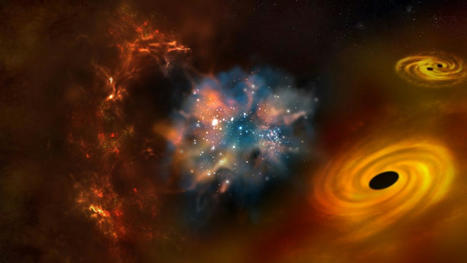
The first stars in the cosmos may have topped out at over 10,000 times the mass of the sun, roughly 1,000 times bigger than the biggest stars alive today, a new study has found. Nowadays, the biggest stars are 100 solar masses. But the early universe was a far more exotic place, filled with mega-giant stars that lived fast and died very, very young, the researchers found. And once these doomed giants died out, conditions were never right for them to form again. The cosmic Dark Ages More than 13 billion years ago, not long after the Big Bang, the universe had no stars. There was nothing more than a warm soup of neutral gas, almost entirely made up of hydrogen and helium. Over hundreds of millions of years, however, that neutral gas began to pile up into increasingly dense balls of matter. This period is known as the cosmic Dark Ages. In the modern day universe, dense balls of matter quickly collapse to form stars. But that’s because the modern universe has something that the early universe lacked: a lot of elements heavier than hydrogen and helium. These elements are very efficient at radiating energy away. This allows the dense clumps to shrink very rapidly, collapsing to high enough densities to trigger nuclear fusion – the process that powers stars by combining lighter elements into heavier ones. But the only way to get heavier elements in the first place is through that same nuclear fusion process. Multiple generations of stars forming, fusing, and dying enriched the cosmos to its present state. Without the ability to rapidly release heat, the first generation of stars had to form under much different, and much more difficult, conditions. Cold fronts To understand the puzzle of these first stars, a team of astrophysicists turned to sophisticated computer simulations of the dark ages to understand what was going on back then. They reported their findings in January in a paper published to the preprint database arXiv and submitted for peer review to the Monthly Notices of the Royal Astronomical Society.
|
|
Scooped by
Dr. Stefan Gruenwald
February 27, 2023 6:57 PM
|
Astronomers from the University of Texas and the University of Arizona have discovered a rapidly growing black hole in one of the most extreme galaxies known in the very early Universe. The discovery of the galaxy and the black hole at its centre provides new clues on the formation of the very first supermassive black holes. The new work is published in Monthly Notices of the Royal Astronomical Society. Using observations taken with the Atacama Large Millimeter Array (ALMA), a radio observatory sited in Chile, the team have determined that the galaxy, named COS-87259, containing this new supermassive black hole is very extreme, forming stars at a rate 1000 times that of our own Milky Way and containing over a billion solar masses worth of interstellar dust. The galaxy shines bright from both this intense burst of star formation and the growing supermassive black hole at its center. The black hole is considered to be a new type of primordial black hole -- one heavily enshrouded by cosmic "dust," causing nearly all of its light to be emitted in the mid-infrared range of the electromagnetic spectrum. The researchers have also found that this growing supermassive black hole (frequently referred to as an active galactic nucleus) is generating a strong jet of material moving at near light speed through the host galaxy. Today, black holes with masses millions to billions of times greater than that of our own Sun sit at the centre of nearly every galaxy. How these supermassive black holes first formed remains a mystery for scientists, particularly because several of these objects have been found when the Universe was very young. Because the light from these sources takes so long to reach us, we see them as they existed in the past; in this case, just 750 million years after the Big Bang, which is approximately 5% of the current age of the Universe. What is particularly astonishing about this new object is that it was identified over a relatively small patch of the sky typically used to detect similar objects -- less than 10 times the size of the full moon -- suggesting there could be thousands of similar sources in the very early Universe. This was completely unexpected from previous data. The only other class of supermassive black holes we knew about in the very early Universe are quasars, which are active black holes that are relatively unobscured by cosmic dust. These quasars are extremely rare at distances similar to COS-87259, with only a few tens located over the full sky. The surprising discovery of COS-87259 and its black hole raises several questions about the abundance of very early supermassive black holes, as well as the types of galaxies in which they typically form. Ryan Endsley, the lead author of the paper and now a Postdoctoral Fellow at The University of Texas at Austin, says "These results suggest that very early supermassive black holes were often heavily obscured by dust, perhaps as a consequence of the intense star formation activity in their host galaxies. This is something others have been predicting for a few years now, and it's really nice to see the first direct observational evidence supporting this scenario."
|
|
Scooped by
Dr. Stefan Gruenwald
February 27, 2023 6:26 PM
|
Scanning the first images of a well-known early galaxy taken by NASA’s James Webb Space Telescope (JWST), Cornell astronomers were intrigued to see a blob of light near its outer edge. Their initial focus, and the infrared observatory’s target, was SPT0418-47, one of the brightest dusty, star-forming galaxies in the early universe, its distant light bent and magnified by a foreground galaxy’s gravity into a circle, called an Einstein ring. But a deeper dive into the early JWST data released last fall produced a serendipitous discovery: a companion galaxy previously hidden behind the light of the foreground galaxy, one that surprisingly seems to have already hosted multiple generations of stars despite its young age, estimated at 1.4 billion years old. “We found this galaxy to be super-chemically abundant, something none of us expected,” said Bo Peng, a doctoral student in astronomy, who led the data analysis. “JWST changes the way we view this system and opens up new venues to study how stars and galaxies formed in the early universe.” Peng is the lead author of “Discovery of a Dusty, Chemically Mature Companion to z~4 Starburst Galaxy in JWST Early Release Science Data,” published Feb. 17 in the Astrophysical Journal Letters, with eight co-authors who are current or former members of the Department of Astronomy in the College of Arts and Sciences. Earlier images of the same Einstein ring captured by the Atacama Large Millimeter/submillimeter Array (ALMA) in Chile contained hints of the companion resolved clearly by JSWT, but they couldn’t be interpreted as anything more than random noise, said Amit Vishwas, Ph.D. ’19, a research associate at the Cornell Center for Astrophysics and Planetary Sciences (CCAPS) and the paper’s second author. Investigating spectral data embedded in each pixel of images from JWST’s NIRSpec instrument, Peng identified a second new light source inside the ring. He determined that the two new sources were the images of a new galaxy being gravitationally lensed by the same foreground galaxy responsible for creating the ring, although they were eight to 16 times fainter – a testament to the power of JWST’s infrared vision.
|
|
Scooped by
Dr. Stefan Gruenwald
February 27, 2023 3:44 PM
|
Our universe could be the mirror image of an antimatter universe extending backwards in time before the Big Bang. So claim physicists in Canada, who have devised a new cosmological model positing the existence of an “antiuniverse” which, paired to our own, preserves a fundamental rule of physics called CPT symmetry. The researchers still need to work out many details of their theory, but they say it naturally explains the existence of dark matter. Standard cosmological models tell us that the universe – space, time and mass/energy – exploded into existence some 14 billion years ago and has since expanded and cooled, leading to the progressive formation of subatomic particles, atoms, stars and planets. However, Neil Turok of the Perimeter Institute for Theoretical Physics in Ontario reckons that these models’ reliance on ad-hoc parameters means they increasingly resemble Ptolemy’s description of the solar system. One such parameter, he says, is the brief period of rapid expansion known as inflation that can account for the universe’s large-scale uniformity. “There is this frame of mind that you explain a new phenomenon by inventing a new particle or field,” he says. “I think that may turn out to be misguided.” Instead, Turok and his Perimeter Institute colleague Latham Boyle set out to develop a model of the universe that can explain all observable phenomena based only on the known particles and fields. They asked themselves whether there is a natural way to extend the universe beyond the Big Bang – a singularity where general relativity breaks down – and then out the other side. “We found that there was,” he says. The answer was to assume that the universe as a whole obeys CPT symmetry. This fundamental principle requires that any physical process remains the same if time is reversed, space inverted and particles replaced by antiparticles. Turok says that this is not the case for the universe that we see around us, where time runs forward as space expands, and there’s more matter than antimatter. Instead, says Turok, the entity that respects the symmetry is a universe–antiuniverse pair. The antiuniverse would stretch back in time from the Big Bang, getting bigger as it does so, and would be dominated by antimatter as well as having its spatial properties inverted compared to those in our universe – a situation analogous to the creation of electron–positron pairs in a vacuum, says Turok. Turok, who also collaborated with Kieran Finn of Manchester University in the UK, acknowledges that the model still needs plenty of work and is likely to have many detractors. Indeed, he says that he and his colleagues “had a protracted discussion” with the referees reviewing the paper for Physical Review Letters – where it was eventually published – over the temperature fluctuations in the cosmic microwave background. “They said you have to explain the fluctuations and we said that is a work in progress. Eventually they gave in,” he says.
|
|
Scooped by
Dr. Stefan Gruenwald
February 27, 2023 12:50 PM
|
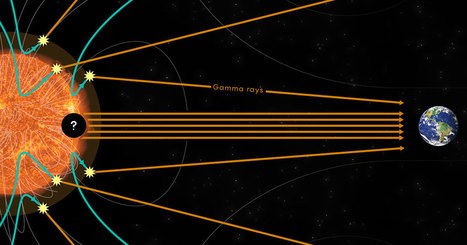
The sun radiates far more high-frequency light than expected, raising questions about unknown features of the sun’s magnetic field and the possibility of even more exotic physics. Several decade’s worth of telescope observations of the sun have revealed a startling mystery: Gamma rays, the highest frequency waves of light, radiate from our nearest star seven times more abundantly than expected. Stranger still, despite this extreme excess of gamma rays overall, a narrow bandwidth of frequencies is curiously absent. The surplus light, the gap in the spectrum, and other surprises about the solar gamma-ray signal potentially point to unknown features of the sun’s magnetic field, or more exotic physics. “It’s amazing that we were so spectacularly wrong about something we should understand really well: the sun,” said Brian Fields, a particle astrophysicist at the University of Illinois, Urbana-Champaign. The unexpected signal has emerged in data from the Fermi Gamma-ray Space Telescope, a NASA observatory that scans the sky from its outpost in low-Earth orbit. As more Fermi data have accrued, revealing the spectrum of gamma rays coming from the sun in ever-greater detail, the puzzles have only proliferated. “We just kept finding surprising things,” said Annika Peter of Ohio State University, a co-author of a recent white paper summarizing several years of findings about the solar gamma-ray signal. “It’s definitely the most surprising thing I’ve ever worked on.”
|
|
Scooped by
Dr. Stefan Gruenwald
February 27, 2023 12:45 PM
|
Employing an elegant music metaphor, Carl Sagan wrote, “It is not known whether there is a vast array of biological themes and counterpoints in the universe; whether there are places that have fugues, compared with which our one tune is a bit thin and reedy. Or it may be that our tune is the only tune around. Accordingly, the prospects for life on other planets must be considered in any general discussion of life.” Today a new generation of astrobiologists have taken Sagan’s prospect to heart. If life has managed to gain a foothold somewhere else in the cosmos, alien life could look very different than the varieties of life found on Earth. If we don’t have a broad, robust definition of what life is, we may miss it when searching for extraterrestrial life in the cosmos. In a recent white paper submitted to the Planetary Science and Astrobiology Decadal Survey 2023-2032, of the National Academies, a group of scientists, affiliated with NASA, SETI, and universities around the world, outlined a way forward in astrobiological research. They wrote “the probability that life in the universe would share a biochemical ancestry with life on Earth quickly diminishes the further away from Earth we explore.” It’s imperative, the scientists continued, “that we build foundational knowledge for life detection strategies that target universal biosignatures.” Aaron Goldman, a biologist from Oberlin College, who has been working on problems relating to the origin of life on Earth, says it’s important we distinguish what we mean when we talk about living and non-living entities, especially in the context of astrobiology. “The most successful definitions of life fall into two general categories: entropic definitions, which describe life through its ability to increase internal order at the expense of increasing disorder in the surrounding environment; and evolutionary definitions, which describe life through its ability to evolve by natural selection,” Goldman says. Entropic definitions detail life’s ability to harness sources of free energy, such as the sun, that feed metabolic processes which allow life to build structures and carry out its functions. The set of objects we call “life” are highly ordered and are low in entropy, according to this view. But the entropic view of life is not without its problems. A counterintuitive result of thinking about life this way means stars themselves could meet the criteria to be considered life. Nuclear fusion and fission in the star’s core maintain the structures and processes that are necessary to its stable physiology and anatomy—a type of stellar metabolism that mirrors the metabolic processes of biological organisms. It seems obvious, though, that stars are not living, or at least they are not in the same class of entities that we might call life. Similarly, it’s easy to see the appeal of evolutionary definitions of life as a self-sustaining system capable of Darwinian evolution. Evolution by natural selection has driven diversity and adaptation in all living things on Earth since the last universal common ancestor. The trouble with qualitative descriptions of life, like the entropic and evolutionary approaches, is they often present numerous gray areas and strange counter examples. In such cases we are left with a set of life’s features that serve as a litmus test for whether one set of phenomena qualifies as life or not. Are viruses alive? Being unable to replicate without infecting a host, and their lack of energy needs, might suggest they aren’t under both the entropic and evolutionary views. What about digital or synthetic lifeforms? A lot of people might say no because they don’t share the biological features with the entities that we do call living, and are composed of an entirely different substrate. Under one such set of criteria, our answers might say no, and under another they might say yes, while our intuition might tell us something else altogether. In recognizing the problems that can crop up when trying to apply these universal qualitative definitions of life, astrobiologists have asked, Are there quantifiable features of chemistry that can distinguish the characteristics of life in a way that can be applied in our search for extraterrestrial life? Could it be possible to build a “physics of life” from the ground up? One of the first attempts at setting out a quantifiable framework for identifying extraterrestrial biological processes was made in 2004 by NASA planetary scientist Chris McKay. McKay introduced the “lego principle,” which describes the blocks of molecules that constitute structures in biology, such as proteins. McKay noticed that in contrast to abiotic processes, biology does not draw from the full range of available organic molecules when producing structures associated with life. Amino acids, which are probably the most important set of organic molecules used in Earth-based living systems, have the quality of being chiral. This means they have a non-superimposable mirror image, or that each amino acid has a left-handed and a right-handed version of itself. Of the 20 amino acids used in proteins, Earth-based life only makes use of the left-handed version, whereas abiotic processes tend to use an even distribution of left-handed and right-handed organic molecules. McKay’s lego principle could be applied in the search for alien biochemistry in the solar system. Organic material sampled from promising sites for life, like Mars or Europa, could be tested for the chirality of one type of organic molecule over the other. Analyzing the concentration of organic molecules in these environments may reveal patterns indicative of life, even if those patterns do not involve the specific organic molecules exploited by Earth-based life. Could it be possible to build a “physics of life” from the ground up? Astrobiologist Sara Walker from Arizona State University and chemist Lee Cronin from the University of Glasgow have their own view of life. Their “assembly theory” suggests there is a quantifiable difference in the complexity of molecules that can be created by living processes compared to non-living ones. “Basically the idea is what underlies life is the physics that builds complexity in the universe,” Walker says. In a rudimentary way, for an atom to form a bond to create a molecule, an energy barrier has to be crossed, so as a molecule gets more complex, it gets increasingly unlikely that it was created by chance; or as Walker puts it, “the universe doesn’t make complex things for free.” Life, though, is able to bypass these energy barriers, opening up an extremely vast chemical space where a mind-boggling number of complex molecular structures can be realized. The goal of assembly theory, says Walker, is to “understand the circumstances when selection emerges and when you start building up complexity.” Assembly theory describes complex molecules with something called the molecular assembly index. The molecular assembly value of a molecule is determined by the shortest number of steps that are needed to create that molecule through its elementary building blocks (atoms and their bonds), and this number can be derived for a given molecule through analysis in mass spectrometers. Finding collections of molecules in space above a certain MA threshold would highly suggest the presence of processes that we might call living. For assembly theory, it is the intrinsic complexity of an object which determines whether it was the product of living processes.
|
|
Scooped by
Dr. Stefan Gruenwald
February 23, 2023 2:36 PM
|
A quarter of a century ago a conjecture shook the world of theoretical physics. It had the aura of a revelation. “At first, we had a magical statement ... almost out of nowhere,” says Mark Van Raamsdonk, a theoretical physicist at the University of British Columbia. The idea, put forth by Juan Maldacena of the Institute for Advanced Study in Princeton, N.J., suggested something profound: that our universe could be a hologram. Much like a 3-D hologram emerges from the information encoded on a 2-D surface, our universe's 4-D spacetime could be a holographic projection of a lower-dimensional reality. Specifically, Maldacena showed that a five-dimensional theory of a type of imaginary spacetime called anti–de Sitter space (AdS) that included gravity could describe the same system as a lower-dimensional quantum field theory of particles and fields in the absence of gravity, referred to as a conformal field theory (CFT). In other words, he found two different theories that could describe the same physical system, showing that the theories were, in a sense, equivalent—even though they included different numbers of dimensions, and one factored in gravity where the other didn't. Maldacena then surmised that this AdS/CFT duality would hold for other pairs of theories in which one had a single extra dimension, possibly even those describing 4-D spacetime akin to ours. The conjecture was both intriguing and shocking. How could a theory that included gravity be the same as a theory that had no place for gravity? How could they describe the same universe? But the duality has largely held up. In essence, it argues that we can understand what happens inside a volume of spacetime that has gravity by studying the quantum-mechanical behavior of particles and fields at that volume's surface, using a theory with one less dimension, one in which gravity plays no role. “Sometimes some things are easier to understand in one description than the other, and knowing that you're really talking about the same physics is very powerful,” says Netta Engelhardt, a theoretical physicist at the Massachusetts Institute of Technology. In the 25 years since Maldacena proposed the idea, physicists have used this power to address questions about whether black holes destroy information, to better understand an early epoch in the our universe's history called inflation, and to arrive at an astonishing conclusion that spacetime may not be fundamental—it may be something that emerges from quantum entanglement in a lower-dimensional system. These advances all involve the theoretically plausible spacetime of anti–de Sitter space, which is not the de Sitter space that describes our universe. But physicists are optimistic that they'll one day arrive at a duality that works for both. If that were to happen, it could lead to a theory of quantum gravity, which would combine Einstein's general relativity with quantum mechanics. It would also imply that our universe is in truth a hologram.
|
|
Scooped by
Dr. Stefan Gruenwald
February 23, 2023 12:23 PM
|
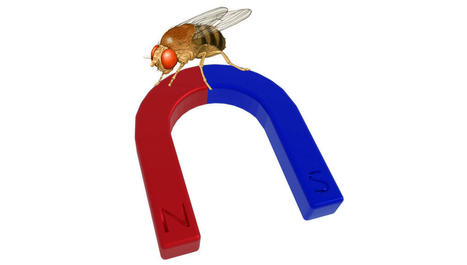
Many migratory species use the Earth’s magnetic field to keep their journeys on track. Now a study of a very non-migratory animal, the Drosophila fruit fly, shows the same capacity exists in some unexpected places. Perhaps humans are the rare ones because we don’t have this capability; if so, why? In the quest for survival, access to information about the world, particularly information your rivals lack, is exceptionally valuable. So it is not surprising animals have developed an astonishing array of ways to observe the world around them. Magnetic fields are one of these, but before humanity’s invention of powerful electromagnets these were generally very weak. The effort required to detect them was much greater than for light or sound. Consequently, biologists thought that only those animals that really needed to know their place on Earth – migratory pigeons or turtles for example – had exploited magnetoreception. However, a paper in Nature calls this into question. The possibility that Drosophila are capable of magnetoreception was raised in 2015 with the identification of a MagR protein produced by the flies that orientates itself to align with magnetic fields. The newly-published paper goes past this, revealing two methods by which the flies’ cells appear able to detect fields. The previous work identified photoreceptor proteins known as cryptochromes as being the sensors used by Drosophila to detect fields, with the capacity apparently failing in flies engineered not to produce cryptochromes leaving them magnetically blind. The authors of the new paper point to work showing cryptochromes do this by harnessing the powers of quantum super-positioning. However, the team also question the need for cryptochromes, showing their role may be substituted by a molecule that occurs in all living cells, humans included. Dr Alex Jones (no, not that one) of the National Physics Laboratory said in a statement, "The absorption of light by the cryptochrome results in movement of an electron within the protein which, due to quantum physics, can generate an active form of cryptochrome that occupies one of two states. The presence of a magnetic field impacts the relative populations of the two states, which in turn influences the 'active-lifetime' of this protein." The authors showed the molecule flavin adenine dinucleotide (FAD) binds to the cryptochromes to create their sensitivity to magnetism. However, they also found the cryptochromes may be an amplifier of FAD’s capacity, not essential to it. Even without cryptochromes, fly cells engineered to express extra FAD were able to respond to the presence of magnetic fields, as well as being highly sensitive to blue light in the presence of these fields. The magnetoreception required nothing more complex than an electron transfer to a side chain. The authors think cryptochromes may have evolved to take advantage of this. "This study may ultimately allow us to better appreciate the effects that magnetic field exposure might potentially have on humans,” said co-lead author Professor Ezio Rosato of the University of Leicester.
|
|
Scooped by
Dr. Stefan Gruenwald
February 23, 2023 12:15 PM
|
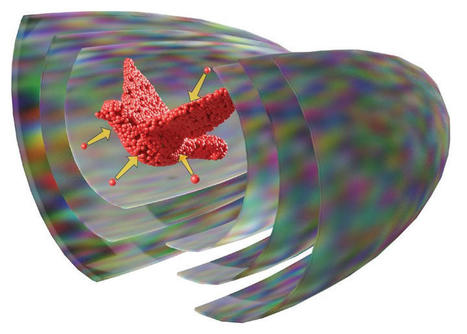
Scientists assemble matter in 3D using sound waves for 3D printing Scientists from the Max Planck Institute for Medical Research and the Heidelberg University have created a new technology to assemble matter in 3D. Their concept uses multiple acoustic holograms to generate pressure fields with which solid particles, gel beads and even biological cells can be printed. These results pave the way for novel 3D cell culture techniques with applications in biomedical engineering. Additive manufacturing or3D printing enables the fabrication of complex parts from functional or biological materials. Conventional 3D printing can be a slow process, where objects are constructed one line or one layer at a time. Researchers in Heidelberg and Tübingen now demonstrate how to form a 3D object from smaller building blocks in just a single step. "We were able to assemble microparticles into a three-dimensional object within a single shot using shaped ultrasound," says Kai Melde, postdoc in the group and first author of the study. "This can be very useful for bioprinting. The cells used there are particularly sensitive to the environment during the process," adds Peer Fischer, Professor at Heidelberg University. Sound waves exert forces on matter -- a fact that is known to any concert goer who experiences the pressure waves from a loudspeaker. Using high-frequency ultrasound, which is inaudible to the human ear, the wavelengths can be pushed below a millimeter into the microscopic realm, which is used by the researcher to manipulate very small building blocks, like biological cells. In their previous studies Peer Fischer and colleagues showed how to form ultrasound using acoustic holograms -- 3D-printed plates, which are made to encode a specific sound field. Those sound fields, they demonstrated, can be used to assemble materials into two-dimensional patterns. Based on this the scientists devised a fabrication concept. Acoustic field catches particles With their new study the team was able to take their concept a step further. They capture particles and cells freely floating in water and assemble them into three-dimensional shapes. On top of that, the new method works with a variety of materials including glass or hydrogel beads and biological cells. First author Kai Melde says that "the crucial idea was to use multiple acoustic holograms together and form a combined field that can catch the particles." Heiner Kremer, who wrote the algorithm to optimize the hologram fields, adds: "The digitization of an entire 3D object into ultrasound hologram fields is computationally very demanding and required us to come up with a new computation routine." The scientists believe that their technology is a promising platform for the formation of cell cultures and tissues in 3D. The advantage of ultrasound is that it is gentle for using biological cells and that it can travel deep into tissue. This way it can be used to remotely manipulate and push cells without harm.
|
|
Scooped by
Dr. Stefan Gruenwald
February 23, 2023 11:51 AM
|
Sensing a hug from each other via the internet may be a possibility in the near future. A research team led by City University of Hong Kong (CityU) recently developed a wireless, soft e-skin that can both detect and deliver the sense of touch, and form a touch network allowing one-to-multiuser interaction. It offers great potential for enhancing the immersion of distance touch communication. “With the rapid development of virtual and augmented reality (VR and AR), our visual and auditory senses are not sufficient for us to create an immersive experience. Touch communication could be a revolution for us to interact throughout the metaverse,” said Dr Yu Xinge, Associate Professor in the Department of Biomedical Engineering (BME) at CityU. While there are numerous haptic interfaces in the market to simulate tactile sensation in the virtual world, they provide only touch sensing or haptic feedback. The uniqueness of the novel e-skin is that it can perform self-sensing and haptic reproducing functions on the same interface. Skin-patch device provides integrated functions for touch sensing and haptic reproduction The e-skin contains 16 flexible actuators (cum sensors) in a 4 X 4 array, a microcontroller unit (MCU), a Bluetooth module and other electronics on a flexible circuit board. All the components are combined in a 7cm X 10cm, 4.2mm-thick skin-patch-like device. The button-liked actuator, comparable in size to a HK 10-cent coin, serves as the core part of the e-skin. Each of the actuators consists of a flexible coil, a soft silicone support, a magnet and a thin polydimethylsiloxane (PDMS) film, which perform the touch sensing and haptic feedback functions based on electromagnetic induction. Once the actuator is pressed and released by an external force, a current is induced to provide electrical signals for tactile sensation to a corresponding actuator in another e-skin patch. The deeper the sender presses, the stronger and longer the sensation generated on the other e-skin. The electrical signal generated from the actuators is converted to a digital signal by an analog-to-digital converter on the circuit board of the e-skin patch. The data is then transmitted to the actuators on another e-skin via Bluetooth. When the signal is received, a current is induced to reproduce the haptic feedback on the receiver’s e-skin through mechanical vibration. The process can be reversed to deliver vibrations from the receiver’s e-skin to the corresponding actuator of the sender’s. Although each actuator can perform only one task at a time, the rest of the 15 actuators on the e-skin can supplement each other and perform the sensing or haptic reproducing function, allowing the e-skin patch to achieve bidirectional touch transmission simultaneously.
|
|
Scooped by
Dr. Stefan Gruenwald
February 23, 2023 11:34 AM
|
Recent lab studies have shown that aging is a reversible process, an advancement that has prompted scientists to seek ways to stop the functional decline of cells and tissues, as well as restore their regenerative capacity. This includes researchers at the University at Buffalo, where chemical engineer Stelios Andreadis showed that the embryonic gene NANOG could reprogram senescent (aged) adult stem cells and skeletal muscle cells, thereby reversing the hallmarks of aging. How exactly NANOG works, though, has been a mystery. Now, two new studies from Andreadis’ lab are helping to answer this question. One in Cell Reports explores the role NANOG plays in restoring mitochondrial function in aging stem cells. The other, published Feb. 16 in Nature Communications, sheds light on how it reverses aging in skeletal muscle. The works builds upon the scientific community’s understanding of NANOG, which is named for the mythical land of youth in Irish folklore, and could help lead to the development of medicines that mimic the gene. “With these studies, we discovered that NANOG reverses cellular senescence by restoring metabolic pathways that are active in younger cells. This brings us closer to developing improved treatments that will help alleviate suffering worldwide for people struggling with age-related illnesses,” said Andreadis, PhD, at SUNY.
|
|
Scooped by
Dr. Stefan Gruenwald
February 23, 2023 11:28 AM
|
ChatGPT is listed as a co-author for more than 200 books available for sale on Amazon. However, a report shows some people do not feel the need to disclose the AI helped write their masterpiece. People are using the chatbot to churn out novels, children's stories and non-fiction in just a few hours and selling some copies for more than $20. And while some list ChatGPT as the book's co-author, others writers do not feel it is necessary to disclose that they had help from AI in writing their masterpiece. Mary Rasenberger, executive director of the Authors Guild, told Reuters: 'This is something we really need to be worried about, these books will flood the market and a lot of authors are going to be out of work.' ChatGPT, developed by OpenAI, is a large language model trained on massive text data, allowing it to generate eerily human-like text in response to a given prompt. The chatbot can simulate dialogue, answer follow-up questions, admit mistakes, challenge incorrect premises and reject inappropriate requests. It responds to user text prompts and can be asked to write essays, lyrics for songs, stories, marketing pitches, scripts, complaint letters and even poetry. And people are using the system to live out their dream of being published authors, one of these individuals is Brett Schickler. Schickler learned how to use the program to create a 30-page illustrated children's e-book in a matter of hours, offering it for sale in January through Amazon. 'The idea of writing a book finally seemed possible,' said Schickler, a salesman in Rochester, New York. 'I thought 'I can do this.''
|
|
|
Scooped by
Dr. Stefan Gruenwald
February 28, 2023 3:56 PM
|
The largest diamond ever found is not on Earth, but faraway across the galaxy. It's an old burned out corpse of a star named BPM 37093 located only about 50 lightyears away from Earth in a region of the sky referred to as the constellation Centaurus. The white dwarf is a chunk of crystallized carbon that weighs 5 million trillion trillion pounds. That would equal a diamond of 10 billion trillion trillion carats.
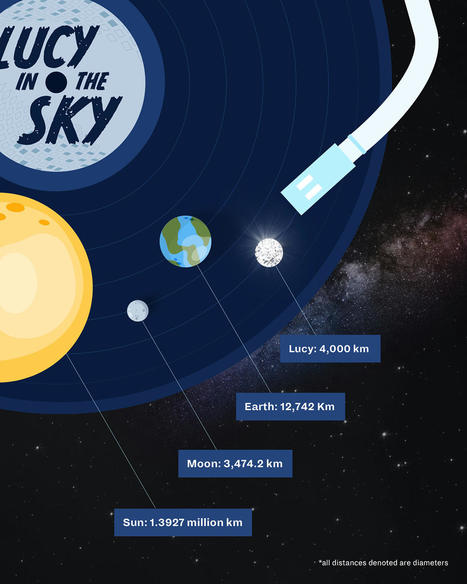
Lucy. After it was discovered in 2004, astronomers nicknamed the space diamond Lucy after the Beatles song Lucy In The Sky With Diamonds. Lucy, also known as BPM 37093 and V*886 Cen, is the 886th variable star in the constellation Centaurus.
Star of Africa. By comparison, the largest such precious stones on Earth are the 545-caret Golden Jubilee Diamond and the 530-carat Great Star of Africa. The Golden Jubilee Diamond was found in 1985 and is in Thailand's Royal Palace as part of the crown jewels. The Great Star of Africa was found in 1905 and is in the Tower of London as part of the Crown Jewels of England.
White dwarf. A white dwarf is the hot cinder left behind when a star uses up its nuclear fuel and dies. It is made mostly of carbon and oxygen. and surrounded by a thin layer of hydrogen and helium gases. The Sun's diameter is 870,000 miles (1.4 million km). Lucy is tiny at a mere 2,500 miles (4,000 km) diameter. The Sun is 109 times the diameter of Earth. Lucy is only about 2/3rds the size of Earth. That's tiny for a star. However, Lucy's mass is about the same as our Sun. That's a lot of weight in a tiny ball. What is Lucy? Lucy is the most massive pulsating white dwarf currently known. Like other white dwarfs, Lucy probably is composed mostly of carbon and oxygen created by the past thermonuclear fusion of helium nuclei. While Lucy is a dead star now, it used to shine like our Sun. Lucy is very dim now, shining with only 1/2000th of the Sun's visual brightness. Lucy has a very thin atmosphere of hydrogen and helium. The atmosphere of our Sun is mostly hydrogen and helium.
How do they know? Astronomers had suspected since the 1960s that the interiors of white dwarfs would be crystallized and Lucy seems to confirm that. In its death struggles, the core of a star like Lucy or our own Sun becomes exposed and slowly cools down over time. Such a star begins to pulsate when the core surface temperature drops to about 12,000 degrees. By comparison, the Sun's core temperature now is about 27,000,000°F (15,000,000°C). Its surface temperature is about 11,000°F (6,000°C).
Lucy pulsates like a giant gong. Its internal pulsations are something like seismic waves inside Earth. Astronomers measured the pulsations to figure out Lucy's carbon interior was solidified (crystallized). Astronomers measured the pulsations hidden in Lucy's interior in the same way geologists use seismographs to measure earthquakes inside Earth.
Where to look. Lucy is not visible from Earth with the unaided eye. It must be viewed with a telescope and is best seen from Earth's Southern Hemisphere during March-June.
|
|
Scooped by
Dr. Stefan Gruenwald
February 28, 2023 1:21 PM
|
Today’s mathematical research, both pure and applied, is paving the way for major scientific, engineering, and technological breakthroughs. Cutting-edge work in the mathematical sciences is responsible for advances in artificial intelligence, manufacturing, precision medicine, cybersecurity, and more. Find out how the mathematical sciences are helping to improve our everyday lives by checking out the stories and infographics below. This series of illustrations shows how advances in the mathematical sciences anticipate and enable later technologies that profoundly impact our daily lives, including life-saving advances in medical imaging and treatment, predictive traffic-avoiding routing, communications advances enabling GPS and high-speed cellular communications, safer online commerce with cryptographic security protocols, development of novel materials based on advanced simulations, improved forecasting of extreme weather events, and much more.
The leaps forward in technology have often built upon theoretical work whose impact would not have been predicted at the time of their creation. The same is true today: researchers and practitioners in the mathematical sciences continue to innovate, and we can only begin to imagine the future inventions their work will enable. Mathematical and statistical advances are playing a key role in emerging areas such as cyber warfare, quantum computing, artificial intelligence and machine learning for automation, genetic sequencing and related advances in vaccine creation to fight novel and existing viruses, and supply chain management.
The increasing pace of technological and social development will require many more advances in the mathematical sciences because they are a foundation for advances across science, medicine, business, finance, and even entertainment. New discoveries in mathematics happening today will reverberate for decades and centuries to come.
|
|
Scooped by
Dr. Stefan Gruenwald
February 27, 2023 6:54 PM
|
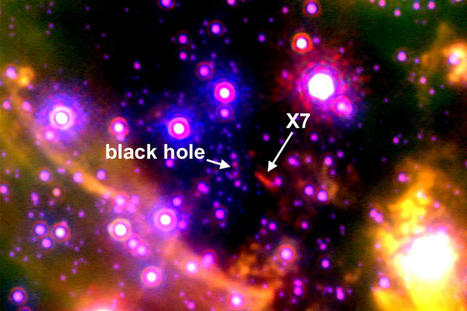
Research by UCLA and Keck Observatory scientists concluded that the mysterious X7 object could be a debris cloud from a stellar collision. For two decades, scientists have observed an elongated object named X7 near the supermassive black hole at the center of the Milky Way and wondered what it was. Was it pulled off a larger structure nearby? Was its unusual form the result of stellar winds or was it shaped by jets of particles from the black hole? Now, having examined the evolution of X7 using 20 years of data gathered by the Galactic Center Orbit Inintiative, astronomers from the UCLA Galactic Center Group and the Keck Observatory propose that it could be a cloud of dust and gas that was ejected during the collision of two stars. Over time, they report, X7 has stretched, and it is being pulled apart as the black hole drags it closer, exerting its tidal force upon the cloud. They expect that within the next few decades, X7 will disintegrate and the gas and dust of which it is composed will eventually be drawn toward the black hole, which is called Sagittarius A*, or Sgr A*. The study is published in The Astrophysical Journal. "No other object in this region has shown such an extreme evolution," said Anna Ciurlo, a UCLA assistant researcher and the paper's lead author. "It started off comet-shaped and people thought maybe it got that shape from stellar winds or jets of particles from the black hole. But as we followed it for 20 years we saw it becoming more elongated. Something must have put this cloud on its particular path with its particular orientation." X7 has a mass of about 50 Earths and is on an orbital path around Sgr A* that would take 170 years to complete. But that might never happen. Based on its trajectory, the team estimates that X7 will make its closest approach to Sgr A* around the year 2036, and then likely spiral toward Sgr A* and disappear. "We anticipate the strong tidal forces exerted by the galactic black hole will ultimately tear X7 apart before it completes even one orbit," said co-author Mark Morris, UCLA professor of physics and astronomy.
|
|
Scooped by
Dr. Stefan Gruenwald
February 27, 2023 6:24 PM
|
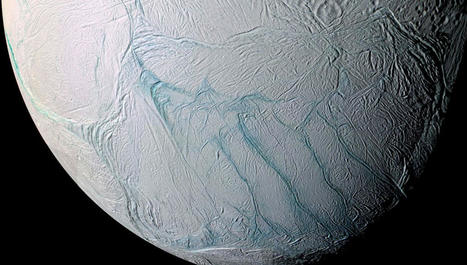
A new model explains some peculiar observations of Cassini and could help with the search for life on the icy moon. Underneath its icy shell, Enceladus harbors a deep water-ocean with hydrothermal activity at its bottom. And on the southern pole of the moon, a region called the tiger stripes is known to have geysers. And these geysers launch material into space and ended up forming the E-ring. The E-ring is quite unlike all the other rings of Saturn. It is much wider, roughly the Earth-Moon distance, and much thicker than the other rings. It is also rich in microscopic particles of ice and silica and the Cassini mission identified the icy moon Enceladus as its creator. It is unclear how the nano-silica particles seen by Cassini formed but one suggestion sees them as coming from the seafloor of Enceladus, and new models agree with the idea. Materials can be lifted from the moon’s seafloor and taken to the icy shell in a matter of months. “Our model shows that these grains may be transported through the ocean interior on timescales faster than previously thought,” Assistant Professor Emily Hawkins, from Loyola Marymount University, said in a statement. “The nano-silica material is thought to be important in the generation of life on the icy moon. Ultimately, our research aids in the understanding of the habitability of Enceladus, and will guide future missions to the outer solar system moon.” What keeps the interior of Enceladus going is the tidal forces it experiences as it goes around Saturn in a strongly elliptical orbit. The forces squish the rocky core and the ice shell and the bottom of the ocean gets heated by hydrothermal vents that form there. “It’s like boiling a pot on a stove. Tidal friction adds heat to the ocean and causes upwelling currents of warm water,” explained planetary scientist Ashley Schoenfeld, the article’s lead author and a graduate student at the University of California, Los Angeles. “What our study shows is that these flows are strong enough to pick up materials from the seafloor and bring them to the ice shell that separates the ocean from the vacuum of space.” While it takes only a few months for particles to rise from the seafloor, it is unclear how long its takes for them to be sprayed into space. The process might be quick or it could involve more complex processes related to the ice shell. The team is now looking further into this distant ocean evolution and investigating what might end up in space. But it is clear that understanding the composition of the E-rings might provide fantastic insights into what lies beneath the ice shelf. Maybe even life.
|
|
Scooped by
Dr. Stefan Gruenwald
February 27, 2023 1:09 PM
|
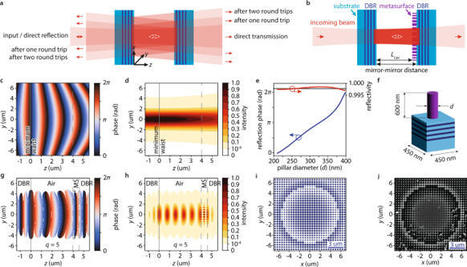
Cavities concentrate light and enhance its interaction with matter. Confining to microscopic volumes is necessary for many applications but space constraints in such cavities limit the design freedom. A team of scientists now demonstrated stable optical microcavities by counteracting the phase evolution of the cavity modes using an amorphous Silicon metasurface as cavity end mirror. Careful design allowed them to limit the metasurface scattering losses at telecom wavelengths to less than 2% and using a distributed Bragg reflector as metasurface substrate ensures high reflectivity. This demonstration experimentally achieves telecom-wavelength microcavities with quality factors of up to 4600, spectral resonance linewidths below 0.4 nm, and very small mode volumes. The method introduces freedom to stabilize modes with arbitrary transverse intensity profiles and to design cavity-enhanced hologram modes. This approach introduces the nanoscopic light control capabilities of dielectric metasurfaces to cavity electrodynamics and is industrially scalable using semiconductor manufacturing processes.
|
|
Scooped by
Dr. Stefan Gruenwald
February 27, 2023 12:48 PM
|
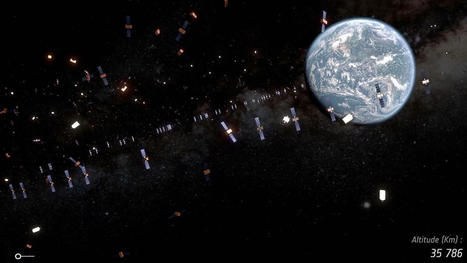
Just 10 years ago, a mere thousand or so operational satellites may have orbited our planet, but there will be tens or even hundreds of thousands a decade from now. Experts have been sounding alarm bells for years that Earth orbit is getting a bit too crowded. So how many satellites can we actually launch to space before it gets to be too much? Jonathan McDowell is an astrophysicist and astronomer at the Harvard-Smithsonian Center for Astrophysics who studies super-energetic phenomena in the universe such as jet-emitting black holes in galactic centers. In recent years, however, McDowell has gained prominence for his work in a completely different field of space research. In his monthly digital circular called Jonathan's Space Report(opens in new tab), McDowell tracks the growing number of satellite launches and the ballooning number of objects in Earth orbit. The project started with an ambition to "provide a pedantic historical record of the space age," but has, in a way, become a chronicle of the environmental destruction of the near Earth environment. In his frequent media appearances, McDowell has been vocal about his views on the future of the increasingly overcrowded near-Earth space. "It's going to be like an interstate highway, at rush hour in a snowstorm with everyone driving much too fast," he told Space.com when asked what the situation in orbit will be like if existing plans for satellite megaconstellations such as SpaceX's Starlink, OneWeb and Amazon Kuiper come to fruition. "Except that there are multiple interstate highways crossing each other with no stoplights."
|
|
Scooped by
Dr. Stefan Gruenwald
February 27, 2023 11:15 AM
|
When the Sun and Moon act on the Earth, our planet bulges a little bit due to these tidal forces. And, when something gravitationally pulls on a spinning, bulging object, that external force acts the same way that lightly putting your finger up against a spinning top acts: as a frictional force, slowing the rotation down. Over time, this can really add up! This “braking” effect takes angular momentum away from the spinning Earth, causing it to rotate slower and slower over time. But angular momentum is something that’s fundamentally conserved; it cannot be created or destroyed, only transferred from one object to another. If the Earth’s rotation is slowing down, that angular momentum must transfer elsewhere. So where is that elsewhere? Into the Moon, which spirals away from the Earth as the Earth’s rotation slows down. With every year that passes, these tidal forces lengthen the amount of time it takes for Earth to complete a full 360° rotation by a tiny, but barely perceptible amount. Compared to precisely one year ago today, our planet takes an extra 14 microseconds to complete a full rotation. This extra 14 microseconds per day adds up over time, which is why — on average — we have to add a leap second to our clock to keep them where they ought to be every 18 months. Of course, this effect accumulates over longer periods of time, but there are other effects working alongside it: - radiation from the Sun, which pushes Earth slightly outward in its orbit around the Sun,
- the solar wind — particles from the Sun — which collide with Earth and slightly slow its motion down,
- and mass loss from the Sun, which emits particles and converts mass into energy (via Einstein’s E = mc2) through nuclear fusion in its core, causing Earth to slowly spiral outwards, away from the Sun.
While the effects of angular momentum loss cause Earth to spin at a slower rate, meaning that as time goes on, it takes fewer “days” to make up a year, these effects all do something else entirely. When you push Earth outwards, when you slow Earth’s motion down, or when you decrease the mass of the Sun, it causes the year to lengthen. The greatest effect, as it turns out, comes from mass loss, as the Sun a total of about 5.6 million tons of mass each second from nuclear fusion (4 million) and the solar wind (1.6 million) combined, or the equivalent of 177 trillion tons of mass per year. With each year that goes by, this mass loss means that Earth spirals outwards at a rate of approximately 1.5 cm (about 0.6 inches) every year. Over the history of our Solar System, taking into account how our Sun has changed, we’re somewhere around 50,000 km farther from the Sun versus 4.5 billion years ago. And we’re orbiting around the Sun at a slightly slower speed — about 0.01 km/s slower — today than we were back when the Solar System first formed. Consider that at our fastest, Earth moves through space at 30.29 km/s (18.83 mi/s), while at our slowest, we move at 29.29 km/s (18.20 mi/s), this difference is very, very small, and the effect can be completely neglected without losing pretty much any accuracy. Similarly, effects like earthquakes, ice melting, core formation, and thermal expansion of the Earth all exist, but only dominate on very short timescales where changes are relatively rapid. What does, then, on the long timescales we’re considering? The dominant effect in determining how the length of a Tropical Year changes relative to a calendar year is set by tidal braking of the Earth. And the longer we wait, the greater the discrepancy becomes. It won’t be, astronomically speaking, all that long before adding a second here or there becomes a wildly insufficient fix for our changing planet. The way we’ll need to modify our calendar, as the Earth’s rotation slightly slows down, is by removing days, rather than adding them. As time goes on initially, we’ll want to begin reducing the frequency of leap years; we’ll be able to eliminate them entirely after another ~4 million years passes. At that point, Earth will rotate a little more slowly, and a calendar year will correspond to precisely 365.0000 days. Beyond that point, we’ll need to start having “reverse” leap years, where we remove a day every so often, before we eventually go down to ~364 day years some ~21 million years into the future. As these changes occur, the day will lengthen to greater than 24 hours. Eventually, we’ll even pass Mars, with a 24 hour, 37 minute day, to become the planet with the 3rd longest day in the Solar System, behind only Mercury and Venus.
|
|
Scooped by
Dr. Stefan Gruenwald
February 23, 2023 12:31 PM
|
Snakes bite 5.4 million people each year—and roughly half are injected with venom, according to the WHO. Between 81,000 and 138,000 people die, while around three times as many suffer amputations and other permanent disabilities. Due to their size, children often suffer the most severe effects. For 128 years, our primary treatment against snakebite has been using mixtures of polyclonal antibodies derived from immunized animal blood. Although they are proven effective, these medicines may cause adverse reactions that can sometimes be severe. So, the search for novel ways to treat severe snakebite envenoming is ongoing. Recently, an international team of scientists led by DTU reached remarkable results and developed a new modernized prototype treatment that proves effective against the venom of African and Asian elapid snakes, such as some cobra, mamba, and krait species—many of which are among the world's deadliest. "We have previously developed antibodies against the venom toxins from single snake species; however, our new results demonstrate that our technology has great potential in neutralizing toxins from multiple species, even from different continents. This broadened cross-neutralization capacity is very promising. It could provide the basis for more effective treatments for snakebite victims in the future," says Andreas Hougaard Laustsen-Kiel, a professor at DTU Bioengineering. He conducted the research with colleagues at DTU, ETH Zurich, Universidad de Costa Rica, and industrial partners Sophion Bioscience and IONTAS. Their work is published in Nature Communications. New antibody works against several neurotoxins In essence, their approach is to develop antibodies of fully human origin, which offer fewer adverse reactions, competitive costs, and, when fine-tuned, superior efficacy. They use phage display technology, a popular in vitro methodology within drug discovery, to select antibodies that bind well to the toxins in the venom, enabling broad neutralization. "There has been a revolution in recombinant antibody technology over the last three decades. I am delighted to be involved in these efforts to direct phage display technology to the blight of snakebite envenomation," says John McCafferty, the inventor of antibody phage display. He founded IONTAS and has recently established a new anti-venom group at the University of Cambridge.
|
|
Scooped by
Dr. Stefan Gruenwald
February 23, 2023 12:20 PM
|
Looking a bit like an errant piece of Halloween toilet-roll teepeeing through the deep, the giant phantom jellyfish was first spotted during dives back in early 2022 in the coastal waters of the Antarctic Peninsula. These jellies really live up to their name, stretching to a gargantuan 10 meters (30 feet) in length, and yet since they were named back in 1910 only 126 encounters with S. gigantea have been recorded. It's no wonder then that it became the star of a paper published in the journal Polar Research of the Norwegian Polar Institute. It remarks on the new opportunities presented to ecological research by personal submersibles like those attached to Viking Octantis, the expedition vessel belonging to Viking Cruises. It’s comparable to the helping hand a boom in blackwater diving hobbyists has provided the sciences in helping researchers lay eyes on animals that are difficult and expensive to observe. “Here, we demonstrate that personal submersibles, now increasingly deployed by the expedition cruise industry, can be vessels of opportunity for biological research in the polar regions,” wrote the paper’s authors. "We describe direct observations of the rarely encountered scyphozoan Stygiomedusa gigantea at water depths of 80–280 m [262-919 feet] in Antarctic Peninsula coastal waters as an example of the potential that personal submersibles present for the scientific community, and we outline possible research avenues for utilizing these platforms in the future.” The giant phantom jelly is thought to lurk anywhere from the water’s surface to a depth of 6,665 meters (21,900 feet) feeding on plankton and small fishes. Its giant bell (that bulbous bit at the top) can be a meter (3.3 feet) across and drags along four oral arms for feeding.
|
|
Scooped by
Dr. Stefan Gruenwald
February 23, 2023 12:13 PM
|
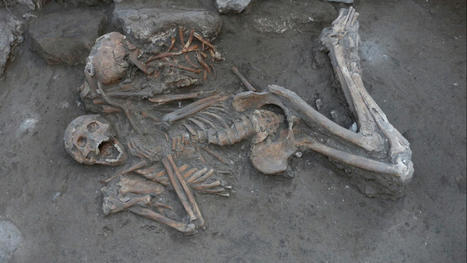
A recent excavation in Megiddo, Israel, unearthed the earliest example of a particular type of cranial surgery in the Ancient Near East — and potentially one of the oldest examples of leprosy in the world. Archaeologists know that people have practiced cranial trephination, a medical procedure that involves cutting a hole in the skull, for thousands of years. They've turned up evidence that ancient civilizations across the globe, from South America to Africa and beyond, performed the surgery. Now, thanks to a recent excavation at the ancient city of Megiddo, Israel, there's new evidence that one particular type of trephination dates back to at least the late Bronze Age. Rachel Kalisher, a Ph.D. candidate at Brown University's Joukowsky Institute for Archaeology and the Ancient World, led an analysis of the excavated remains of two upper-class brothers who lived in Megiddo around the 15th century B.C. She found that not long before one of the brothers died, he had undergone a specific type of cranial surgery called angular notched trephination. The procedure involves cutting the scalp, using an instrument with a sharp beveled edge to carve four intersecting lines in the skull, and using leverage to make a square-shaped hole. Kalisher said the trephination is the earliest example of its kind found in the Ancient Near East. "We have evidence that trephination has been this universal, widespread type of surgery for thousands of years," Kalisher said. "But in the Near East, we don't see it so often -- there are only about a dozen examples of trephination in this entire region. My hope is that adding more examples to the scholarly record will deepen our field's understanding of medical care and cultural dynamics in ancient cities in this area." Kalisher's analysis, written in collaboration with scholars in New York, Austria and Israel, was published on Wednesday, Feb. 22, in PLOS ONE.
|
|
Scooped by
Dr. Stefan Gruenwald
February 23, 2023 11:39 AM
|
Researchers create a network of interacting proteins – or interactome – to aid drug discovery Scientists at Open Targets, EMBL’s European Bioinformatics Institute (EMBL-EBI), and GSK are revealing the shared basis of diseases using a map of interacting human proteins. By helping to understand how biological processes affect human traits and diseases, this work will prioritise new targets for drug discovery and identify drug repurposing opportunities. Proteinsdo most of the work in our cells and are made following blueprints encoded in genes. They are essential for the structure, function, and regulation of the body’s tissues, and are often the target of drugs or therapies. Genome Wide Association Studies (GWAS) help us establish the genetic basis of disease by linking specific genes to diseases. To determine how those genes contribute to disease, we need to understand the function of the proteins they encode and link specific biological processes to diseases. In this new study, published in the journal Nature Genetics, researchers created a network of interacting proteins – or an interactome – combining evidence from different sources, including EMBL-EBI’s IntAct database, Reactome, and Signor. Using this interactome, they identified groups of proteins interacting with genes that have been linked through GWAS to over 1,000 human traits from 21 therapeutic areas.
|
|
Scooped by
Dr. Stefan Gruenwald
February 23, 2023 11:31 AM
|
Nature has an extraordinary knack for producing composite materials that are simultaneously light and strong, porous and rigid – like mollusk shells or bone. But producing such materials in a lab or factory – particularly using environmentally friendly materials and processes – is extremely challenging. Researchers in the Soft Materials Laboratory in the School of Engineering turned to nature for a solution. They have pioneered a 3D printable ink that contains Sporosarcina pasteurii: a bacterium which, when exposed to a urea-containing solution, triggers a mineralization process that produces calcium carbonate (CaCO3). The upshot is that the researchers can use their ink – dubbed BactoInk – to 3D-print virtually any shape, which will then gradually mineralize over the course of a few days. “3D printing is gaining increasing importance in general, but the number of materials that can be 3D printed is limited for the simple reason that inks must fulfil certain flow conditions,” explains lab head Esther Amstad. “For example, they must behave like a solid when at rest, but still be extrudable through a 3D printing nozzle – sort of like ketchup.” Amstad explains that 3D printing inks containing small mineral particles have previously been used to meet some of these flow criteria, but that the resulting structures tend to be soft, or to shrink upon drying, leading to cracking and loss of control over the shape of the final product. “So, we came up with a simple trick: instead of printing minerals, we printed a polymeric scaffold using our BactoInk, which is then mineralized in a second, separate step. After about four days, the mineralization process triggered by the bacteria in the scaffold leads to a final product with a mineral content of over 90%.” The result is a strong and resilient bio-composite, which can be produced using a standard 3D printer and natural materials, and without the extreme temperatures often required for manufacturing ceramics. Final products no longer contain living bacteria, as they are submerged in ethanol at the end of the mineralization process. The method, which describes the first 3D printing ink that uses bacteria to induce mineralization, has recently been published in the journal Materials Today.
|