After analyzing the achondrite meteorite samples, researchers discovered that water comprised less than two millionths of their mass. For comparison, the wettest meteorites -- a group called carbonaceous chondrites -- contain up to about 20% of water by weight, or 100,000 times more than the meteorite samples studied by Newcombe and her co-authors.
This means that the heating and melting of planetesimals leads to near-total water loss, regardless of where these planetesimals originated in the solar system and how much water they started out with. Newcombe and her co-authors discovered that, contrary to popular belief, not all outer solar system objects are rich in water. This led them to conclude that water was likely delivered to Earth via unmelted, or chondritic, meteorites.
Newcombe said their findings have applications beyond geology. Scientists of many disciplines -- and especially exoplanet researchers -- are interested in the origin of Earth's water because of its deep connections with life.
"Water is considered to be an ingredient for life to be able to flourish, so as we're looking out into the universe and finding all of these exoplanets, we're starting to work out which of those planetary systems could be potential hosts for life," Newcombe said. "In order to be able to understand these other solar systems, we want to understand our own."
A Testosterone Enanthate course is used to promote mass muscle gain and strength development. It can be taken alone or combined with other drugs such as Deca Durabolin. The results can increase up to 4 times when stacked.$60.00 – $70.00
Vyvanse is a commonly prescribed medication for the treatment of ADHD and binge eating disorder. However, not everyone is familiar with the advantages of this medication and the steps of its prescription process.$600.00$390.00
Xanax is the branded name for the generic medication called alprazolam. Xanax is a prescription drug used to treat anxiety disorders and anxiety that is caused by depression. It can also be used for sleeping disorders (such as insomnia). Xanax is also used to treat patients suffering from panic disorders / panic attacks induced by situations that cause panic such as embarrassment, social anxiety, and helplessness. Xanax is a drug that works by regulating abnormal excitement stimulation in the brain.$450.00$270.00
Xenical capsules are a weight loss treatment for people with a BMI over 30 containing 120mg of orlistat. It can also be used by people who have a BMI over 28 with weight-related conditions such as high blood pressure.$400.99$209.99
Tramadol is a strong pain medication that is used to treat moderate to severe pain. This drug is an opioid, which means that it acts on the central nervous system and changes the perception of pain. Tramadol is often used to treat pain after surgery or injury, as well as pain related to cancer or chronic conditions such as arthritis. It can also be used to treat other conditions, as recommended by the healer.$300.00$190.00
Breaking a longstanding impasse in our understanding of olfaction, scientists at UC San Francisco (UCSF) have created the first molecular-level, 3D picture of how an odor molecule activates a human odorant receptor, a crucial step in deciphering the sense of smell.
The findings, appearing online March 15, 2023, in the journal Nature, are poised to reignite interest in the science of smell with implications for fragrances, food science, and beyond. Odorant receptors -- proteins that bind odor molecules on the surface of olfactory cells -- make up half of the largest, most diverse family of receptors in our bodies; A deeper understanding of them paves the way for new insights about a range of biological processes.
"This has been a huge goal in the field for some time," said Aashish Manglik, MD, PhD, an associate professor of pharmaceutical chemistry and a senior author of the study. The dream, he said, is to map the interactions of thousands of scent molecules with hundreds of odorant receptors, so that a chemist could design a molecule and predict what it would smell like.
"But we haven't been able to make this map because, without a picture, we don't know how odor molecules react with their corresponding odor receptors," Manglik said.
A Picture Paints the Scent of Cheese
Smell involves about 400 unique receptors. Each of the hundreds of thousands of scents we can detect is made of a mixture of different odor molecules. Each type of molecule may be detected by an array of receptors, creating a puzzle for the brain to solve each time the nose catches a whiff of something new.
"It's like hitting keys on a piano to produce a chord," said Hiroaki Matsunami, PhD, professor of molecular genetics and microbiology at Duke University and a close collaborator of Manglik. Matsunami's work over the past two decades has focused on decoding the sense of smell. "Seeing how an odorant receptor binds an odorant explains how this works at a fundamental level."
To create that picture, Manglik's lab used a type of imaging called cryo-electron microscopy (cryo-EM), that allows researchers to see atomic structure and study the molecular shapes of proteins. But before Manglik's team could visualize the odorant receptor binding a scent molecule, they first needed to purify a sufficient quantity of the receptor protein.
Odorant receptors are notoriously challenging, some say impossible, to make in the lab for such purposes. The Manglik and Matsunami teams looked for an odorant receptor that was abundant in both the body and the nose, thinking it might be easier to make artificially, and one that also could detect water-soluble odorants. They settled on a receptor called OR51E2, which is known to respond to propionate -- a molecule that contributes to the pungent smell of Swiss cheese.
But even OR51E2 proved hard to make in the lab. Typical cryo-EM experiments require a milligram of protein to produce atomic-level images, but co-first author Christian Billesbøelle, PhD, a senior scientist in the Manglik Lab, developed approaches to use only 1/100th of a milligram of OR51E2, putting the snapshot of receptor and odorant within reach.
"We made this happen by overcoming several technical impasses that have stifled the field for a long time," said Billesbøelle. "Doing that allowed us to catch the first glimpse of an odorant connecting with a human odorant receptor at the very moment a scent is detected."
This molecular snapshot showed that propionate sticks tightly to OR51E2 thanks to a very specific fit between odorant and receptor. The finding jibes with one of the duties of the olfactory system as a sentinel for danger. While propionate contributes to the rich, nutty aroma of Swiss cheese, on its own, its scent is much less appetizing.
"This receptor is laser focused on trying to sense propionate and may have evolved to help detect when food has gone bad," said Manglik. Receptors for pleasing smells like menthol or caraway might instead interact more loosely with odorants, he speculated.
In a groundbreaking announcement at the 54th Lunar and Planetary Science Conference held in The Woodlands, Texas, scientists revealed the discovery of a relict glacier near Mars' equator. Located in Eastern Noctis Labyrinthus at coordinates 7° 33' S, 93° 14' W, this finding is significant as it implies the presence of surface water ice on Mars in recent times, even near the equator. This discovery raises the possibility that ice may still exist at shallow depths in the area, which could have significant implications for future human exploration.
The surface feature identified as a "relict glacier" is one of many light-toned deposits (LTDs) found in the region. Typically, LTDs consist mainly of light-colored sulfate salts, but this deposit also shows many of the features of a glacier, including crevasse fields and moraine bands. The glacier is estimated to be 6 kilometers long and up to 4 kilometers wide, with a surface elevation ranging from +1.3 to +1.7 kilometers. This discovery suggests that Mars' recent history may have been more watery than previously thought, which could have implications for understanding the planet's habitability.
"What we've found is not ice, but a salt deposit with the detailed morphologic features of a glacier. What we think happened here is that salt formed on top of a glacier while preserving the shape of the ice below, down to details like crevasse fields and moraine bands," said Dr. Pascal Lee, a planetary scientist with the SETI Institute and the Mars Institute, and the lead author of the study.
The presence of volcanic materials blanketing the region hints of how the sulfate salts might have formed and preserved a glacier's imprint underneath. When freshly erupted pyroclastic materials (mixtures of volcanic ash, pumice, and hot lava blocks) come in contact with water ice, sulfate salts like the ones commonly making up Mars' light-toned deposits may form and build up into a hardened, crusty salt layer.
"This region of Mars has a history of volcanic activity. And where some of the volcanic materials came in contact with glacier ice, chemical reactions would have taken place at the boundary between the two to form a hardened layer of sulfate salts," explains Sourabh Shubham, a graduate student at the University of Maryland's Department of Geology, and a co-author of the study. "This is the most likely explanation for the hydrated and hydroxylated sulfates we observe in this light-toned deposit."
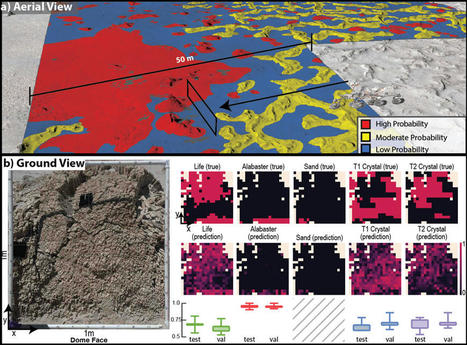
Wouldn’t finding life on other worlds be easier if we knew exactly where to look for it? Researchers have limited opportunities to collect samples on Mars or elsewhere or access remote sensing instruments when hunting for life beyond Earth. In a paper published in Nature Astronomy, an interdisciplinary study led by SETI Institute Senior Research Scientist Kim Warren-Rhodes, mapped the sparse life hidden away in salt domes, rocks and crystals at Salar de Pajonales at the boundary of the Chilean Atacama Desert and Altiplano. Warren-Rhodes then worked with co-investigators Michael Phillips (Johns Hopkins Applied Physics Lab) and Freddie Kalaitzis (University of Oxford) to train a machine learning model to recognize the patterns and rules associated with their distributions so it could learn to predict and find those same distributions in data on which it was not trained. In this case, by combining statistical ecology with AI/ML, the scientists could locate and detect biosignatures up to 87.5% of the time (versus ≤10% by random search) and decrease the area needed for search by up to 97%.
“Our framework allows us to combine the power of statistical ecology with machine learning to discover and predict the patterns and rules by which nature survives and distributes itself in the harshest landscapes on Earth.,” said Rhodes. “We hope other astrobiology teams adapt our approach to mapping other habitable environments and biosignatures. With these models, we can design tailor-made roadmaps and algorithms to guide rovers to places with the highest probability of harboring past or present life—no matter how hidden or rare.”
A video clip showing the major concepts of integrating datasets from orbit to the ground is presented. The first frames zoom in from a global view to an orbital image of Salar de Pajonales. The salar is then overlain with an interpretation of its compositional variability derived from ASTER multispectral data. The next sequence of frames transitions to drone-derived images of the field site within Salar de Pajonales. Note features of interest that become identifiable in the scene, starting with polygonal networks of ridges, then individual gypsum domes and polygonal patterned ground, and ending with individual blades of selenite. The video ends with a first-person view of a set of gypsum domes studied in the article using machine learning techniques. Video credit: M. Phillips
Ultimately, similar algorithms and machine learning models for many different types of habitable environments and biosignatures could be automated onboard planetary robots to efficiently guide mission planners to areas at any scale with the highest probability of containing life. Rhodes and the SETI Institute NASA Astrobiology Institute (NAI) team used the Salar de Pajonales, as a Mars analog. Pajonales is a high altitude (3,541 m), high U/V, hyperarid, dry salt lakebed, considered inhospitable to many life forms but still habitable.
During the NAI project’s field campaigns, the team collected over 7,765 images and 1,154 samples and tested instruments to detect photosynthetic microbes living within the salt domes, rocks and alabaster crystals. These microbes exude pigments that represent one possible biosignature on NASA’s Ladder of Life Detection.
At Pajonales, drone flight imagery connected simulated orbital (HiRISE) data to ground sampling and 3D topographical mapping to extract spatial patterns. The study’s findings confirm (statistically) that microbial life at the Pajonales terrestrial analog site is not distributed randomly but concentrated in patchy biological hotspots strongly linked to water availability at km to cm scales.
Next, the team trained convolutional neural networks (CNNs) to recognize and predict macro-scale geologic features at Pajonales—some of which, like patterned ground or polygonal networks, are also found on Mars—and micro-scale substrates (or ‘micro-habitats’) most likely to contain biosignatures.
Like the Perseverance team on Mars, the researchers tested how to effectively integrate a UAV/drone with ground-based rovers, drills and instruments (e.g., VISIR on ‘MastCam-Z’ and Raman on ‘SuperCam’ on the Mars 2020 Perseverance rover).
A Testosterone Enanthate course is used to promote mass muscle gain and strength development. It can be taken alone or combined with other drugs such as Deca Durabolin. The results can increase up to 4 times when stacked.$60.00 – $70.00
Vyvanse is a commonly prescribed medication for the treatment of ADHD and binge eating disorder. However, not everyone is familiar with the advantages of this medication and the steps of its prescription process.$600.00$390.00
Xanax is the branded name for the generic medication called alprazolam. Xanax is a prescription drug used to treat anxiety disorders and anxiety that is caused by depression. It can also be used for sleeping disorders (such as insomnia). Xanax is also used to treat patients suffering from panic disorders / panic attacks induced by situations that cause panic such as embarrassment, social anxiety, and helplessness. Xanax is a drug that works by regulating abnormal excitement stimulation in the brain.$450.00$270.00
Xenical capsules are a weight loss treatment for people with a BMI over 30 containing 120mg of orlistat. It can also be used by people who have a BMI over 28 with weight-related conditions such as high blood pressure.$400.99$209.99
Tramadol is a strong pain medication that is used to treat moderate to severe pain. This drug is an opioid, which means that it acts on the central nervous system and changes the perception of pain. Tramadol is often used to treat pain after surgery or injury, as well as pain related to cancer or chronic conditions such as arthritis. It can also be used to treat other conditions, as recommended by the healer.$300.00$190.00
Astronomers using the SMARTS 1.5-meter Telescope at Cerro Tololo Inter-American Observatory in Chile, a Program of NSF's NOIRLab, have uncovered the first example of a phenomenally rare type of binary star system, one that has all the right conditions to eventually trigger a kilonova -- the ultra-powerful, gold-producing explosion created by colliding neutron stars. Such an arrangement is so vanishingly rare that only about 10 such systems are thought to exist in the entire Milky Way Galaxy. The findings are published today in the journal Nature.
This unusual system, known as CPD-29 2176, is located about 11,400 light-years from Earth. It was first identified by NASA's Neil Gehrels Swift Observatory. Later observations with the SMARTS 1.5-meter Telescope allowed astronomers to deduce the orbital characteristics and types of stars that make up this system -- a neutron star created by an ultra-stripped supernova and a closely orbiting massive star that is in the process of becoming an ultra-stripped supernova itself.
An ultra-stripped supernova is the end-of-life explosion of a massive star that has had much of its outer atmosphere stripped away by a companion star. This class of supernova lacks the explosive force of a traditional supernova, which would otherwise "kick" a nearby companion star out of the system. "The current neutron star would have to form without ejecting its companion from the system. An ultra-stripped supernova is the best explanation for why these companion stars are in such a tight orbit," said Noel D. Richardson at Embry-Riddle Aeronautical University and lead author of the paper. "To one day create a kilonova, the other star would also need to explode as an ultra-stripped supernova so the two neutron stars could eventually collide and merge." As well as representing the discovery of an incredibly rare cosmic oddity, finding and studying kilonova progenitor systems such as this can help astronomers unravel the mystery of how kilonovae form, shedding light on the origin of the heaviest elements in the Universe.
"For quite some time, astronomers speculated about the exact conditions that could eventually lead to a kilonova," said NOIRLab astronomer and co-author André-Nicolas Chené. "These new results demonstrate that, in at least some cases, two sibling neutron stars can merge when one of them was created without a classical supernova explosion."
Producing such an unusual system, however, is a long and unlikely process. "We know that the Milky Way contains at least 100 billion stars and likely hundreds of billions more. This remarkable binary system is essentially a one-in-ten-billion system," said Chené. "Prior to our study, the estimate was that only one or two such systems should exist in a spiral galaxy like the Milky Way."
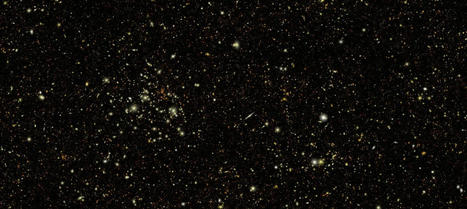
The synthetic galaxy catalog will help test Roman's capabilities and foster collaboration with the Rubin project.
Scientists have created a gargantuan synthetic survey that shows some of what we can expect from NASA's Nancy Grace Roman Space Telescope, slated to launch in the mid-2020s, and the Vera C. Rubin Observatory's Legacy Survey of Space and Time (LSST), funded by the National Science Foundation and the Department of Energy. Though it represents just a small chunk of the real future surveys, this simulated version contains a staggering number of galaxies – 33 million of them, along with 200,000 foreground stars in our home galaxy.
The team drew data froma mock universe originally developed tosupport science planning with the Vera C. Rubin Observatory, which is located in Chile and set to begin full operations in 2024, and the Rubin/LSST Dark Energy Science Collaboration. Because the Roman and Rubin/LSST simulations use the same source data, astronomers can compare them and see what they can expect to learn from pairing the telescopes’ observations once they’re both actively scanning the universe.
The work put in now will also help both teams make the most of the data they collect in the future. "The idea there was to use the same simulated data, so that downstream we can foster more collaboration," said James Chiang, a lead scientist at the Department of Energy's SLAC National Accelerator Laboratory and a researcher on the project. "I'm excited to work with everyone and see things come together."
We’re seeing a new wave of generative AI applications that are transforming the way people interact with technology – from games and dialog agents to creative brainstorming and coding tools. Google wants to continue making AI accessible by empowering all developers to start building the next generation of applications with generative AI by providing easy-to-use APIs and tools.
Just recently, Google announced the PaLM API, a new developer offering that makes it easy and safe to experiment with Google’s large language models (LLMs). Alongside the API, Google is now releasing MakerSuite, a tool that lets developers start prototyping quickly and easily. Currently, they are making these tools available to only a select group of developers through a Private Preview, and a waitlist for others will follow soon.
According to Andreas Braun, the CTO of Microsoft Germany, Microsoft will release GPT-4 next week with AI powered video generation capabilities.
This announcement was made by Andreas Braun, the CTO of Microsoft Germany and Lead Data & AI STU, during the AI in Focus Digital Kickoff.
Bing, which currently runs on the power of ChatGPT and GPT 3.5, has faced criticism for its sluggishness in generating and presenting search results.
The forthcoming release of GPT-4 is anticipated to enhance Bing's capabilities and provide users with fresh opportunities. Through the use of multimodal models, users will be able to engage via various channels, such as text, images, and sounds. A major highlight of the latest version is its capability to generate videos.
OpenAI recently made an announcement about the development of a mobile app for ChatGPT, featuring the latest GPT-4 AI technology. The app will allow users to create videos with AI assistance, showcasing the potential of GPT-4.
Along with this, GPT-4 will offer faster answer generation compared to the current GPT 3.5 version. Furthermore, GPT-4's answers will be more akin to human responses, enhancing its human-like capabilities. These advancements will also be incorporated into Bing Chat in the near future.
Having invested billions of dollars in OpenAI, Microsoft is poised to quickly integrate GPT-4 into Bing search. Although, Andreas Braun did not mention a specific timeline for when Bing Chat will receive the benefits of GPT-4.
This updated version, with its capabilities of generating videos and producing more lifelike answers, has the potential to revolutionize our experience with AI technology.
You can even see the difference between protons and neutrons!
The Relativistic Heavy Ion Accelerator (RHIC), from the Brookhaven Laboratory in the United States, is a sophisticated device capable of accelerating gold ions to a speed of up to 99.995% that of light. Thanks to him, it has recently been possible to verify, for example, Einstein's famous equation E=mc2.
Now, researchers in this laboratory have shown how it is possible to obtain precise details about the arrangement of protons and neutrons in gold using a type of quantum interference never seen before in an experiment . The technique is reminiscent of the positron emission tomography (PET) scan that doctors use to peer into the brain and other anatomical parts.
No microscopic probe or X-ray machine is capable of peering into the innards of the atom, so physicists can only theorize what happens there based on the remains of high-speed collisions that take place in particle colliders , such as CERN 's LHC .
However, this new tool opens the possibility of making more precise inferences of protons and neutrons (which make up atomic nuclei) thanks to the quantum entanglement of particles produced when gold atoms rub against each other at high speed.
The researchers have shown how it is possible to obtain precise details about the arrangement of protons and neutrons in gold using a type of quantum interference never seen before in an experiment.
At this scale, nothing can be observed directly because the very light used to carry out the observation interferes with the same observation. However, given enough energy, light waves can actually stir up pairs of particles that make up protons and neutrons, such as quarks and antiquarks .
When two nuclei intersect within a few nuclear radii, a photon from one nucleus can interact through a virtual quark-antiquark pair with gluons from the other nucleus (gluons are mediators of the strong interaction, the force that binds nuclei). quarks inside protons and neutrons).
This allows for the equivalent of the first experimental observation of entanglement involving different particles, allowing images so precise that the difference between the place of neutrons and protons within the atomic nucleus can even begin to be appreciated.
Aber-clam Lincoln, a quahog clam believed to be 214 years old found at Alligator Point, was released into the Gulf of Mexico Friday by his caretakers at the Gulf Specimen Marine Lab in Panacea. Americorps member Blaine Parker dug up the two-century old mollusk while collecting shellfish to make chowder. Parker said it is hefty enough to make two servings and has shells large enough to use as bowls to serve it in. “We were just going to eat it, but we thought about it a while and figured it was probably pretty special. So, we didn’t want to kill it,” said Parker.
Instead, he took it to the aquarium at the Gulf Specimen Marine Lab where he works as a specimen collector. While most Ocean quahogs are within 2.8 to 4.3 inches in length and weigh up to a half pound, Lincoln checks in at 6 inches and weighs 2.6 pounds. The clam has been drawing up to 100 visitors a day.
Parker is a recent Eckerd College graduate with a degree in environmental studies and marine science. He said, a clam, like a tree, lays down annual growth bands, alternating bands of light on its shell, that scientists used to estimate its age. There are 214 layers on the shell of the clam he found, which would mean it was likely born in 1809, the same year as Abraham Lincoln. It was also discovered on Presidents Day weekend. So, Parker named his find Aber-clam Lincoln.
Quahogs occur in the Atlantic from Greenland south to North Carolina. They move about by being tossed in the surf, and crawl along the sand by expanding and contracting their muscle.
With Lincoln being so old it is possible, like many Floridians, circumstances moved him south for him to become one of the oldest known Florida transplants.
Quahogs are known to live 200 or more years. A 507-year-old clam, found in the Icelandic seabed and named Ming, broke the Guinness World Record for oldest animal when it was discovered in 2007. Scientists think an incredible low metabolic rates of Lincoln and other quahogs is responsible for their long life.
A University of Kansas study of the energy needs of 299 species of extinct and living bivalves found those with minimal energy requirements escaped extinction.
Northwestern University and the University of California San Diego (UC San Diego) astrophysicists have discovered the tightest ultracool dwarf binary system ever observed. The two stars are so close that it takes them less than one Earth day to revolve around each other. In other words, each star's "year" lasts just 17 hours.
The newly discovered system, named LP 413-53AB, is composed of a pair of ultracool dwarfs, a class of very low-mass stars that are so cool that they emit their light primarily in the infrared, making them completely invisible to the human eye. They are nonetheless one of the most common types of stars in the universe.
Previously, astronomers had only detected three short-period ultracool dwarf binary systems, all of which are relatively young -- up to 40 million years old. LP 413-53AB is estimated to be billions of years old -- similar age to our sun -- but has an orbital period that is at least three times shorter than the all ultracool dwarf binaries discovered so far.
The research was published on March 1 in the Astrophysical Journal Letters. "It's exciting to discover such an extreme system," said Chih-Chun "Dino" Hsu, a Northwestern astrophysicist who led the study. "In principle, we knew these systems should exist, but no such systems had been identified yet."
Hsu is a postdoctoral researcher in Northwestern's Center for Interdisciplinary Exploration and Research in Astrophysics(CIERA). He began this study while a Ph.D. student at UC San Diego, where he was advised by Professor Adam Burgasser.
The team first discovered the strange binary system while exploring archival data. Hsu developed an algorithm that can model a star based on its spectral data. By analyzing the spectrum of light emitted from a star, astrophysicists can determine the star's chemical composition, temperature, gravity and rotation. This analysis also shows the star's motion as it moves toward and away from the observer, known as radial velocity.
When examining the spectral data of LP 413-53AB, Hsu noticed something strange. Early observations caught the system when the stars were roughly aligned and their spectral lines overlapped, leading Hsu to believe it was just one star. But as the stars moved in their orbit, the spectral lines shifted in opposite directions, splitting into pairs in later spectral data. Hsu realized there were actually two stars locked into an incredibly tight binary.
Using powerful telescopes at the W.M. Keck Observatory, Hsu decided to observe the phenomenon for himself. On March 13, 2022, the team turned the telescopes toward the constellation Taurus, where the binary system is located, and observed it for two hours. Then, they followed up with more observations in July, October and December as well as January 2023.
"When we were making this measurement, we could see things changing over a couple of minutes of observation," Burgasser said. "Most binaries we follow have orbit periods of years. So, you get a measurement every few months. Then, after a while, you can piece together the puzzle. With this system, we could see the spectral lines moving apart in real time. It's amazing to see something happen in the universe on a human time scale."
The observations confirmed what Hsu's model predicted. The distance between the two stars is about 1% of the distance between the Earth and the sun. "This is remarkable, because when they were young, something like 1 million years old, these stars would have been on top of each other," said Burgasser.
The team speculates that the stars either migrated toward each other as they evolved, or they could have come together after the ejection of a third -- now lost -- stellar member. More observations are needed to test these ideas. Hsu also said that by studying similar star systems researchers can learn more about potentially habitable planets beyond Earth. Ultracool dwarfs are much fainter and dimmer than the sun, so any worlds with liquid water on their surfaces -- a crucial ingredient to form and sustain life -- would need to be much closer to the star. However, for LP 413-53AB, the habitable zone distance happens to be the same as the stellar orbit, making it impossible to form habitable planets in this system.
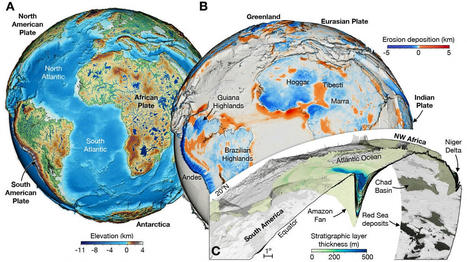
For the first time, scientists now have a continuous model of the the Earth's past 100 million years. This will provide a new tool to understand ocean chemistry and how geomorphology affects biological evolution.
Climate, tectonics and time combine to create powerful forces that craft the face of our planet. Add the gradual sculpting of the Earth's surface by rivers and what to us seems solid as rock is constantly changing. However, our understanding of this dynamic process has at best been patchy. Scientists have now published new research revealing a detailed and dynamic model of the Earth's surface over the past 100 million years. Working with scientists in France, University of Sydney geoscientists have published this new model in the journal Science.
For the first time, it provides a high-resolution understanding of how today's geophysical landscapes were created and how millions of tonnes of sediment have flowed to the oceans.
Lead author Dr Tristan Salles from the University of Sydney School of Geosciences, said: "To predict the future, we must understand the past. But our geological models have only provided a fragmented understanding of how our planet's recent physical features formed.
"If you look for a continuous model of the interplay between river basins, global-scale erosion and sediment deposition at high resolution for the past 100 million years, it just doesn't exist.
"So, this is a big advance. It's not only a tool to help us investigate the past but will help scientists understand and predict the future, as well."
Using a framework incorporating geodynamics, tectonic and climatic forces with surface processes, the scientific team has presented a new dynamic model of the past 100 million years at high resolution (down to 10 kilometres), broken into frames of a million years.
Second author Dr Laurent Husson from Institut des Sciences de la Terre in Grenoble, France, said: "This unprecedented high-resolution model of Earth's recent past will equip geoscientists with a more complete and dynamic understanding of the Earth's surface.
Bumblebees are clumsy fliers. It is estimated that a foraging bee bumps into a flower about once per second, which damages its wings over time. Yet despite having many tiny rips or holes in their wings, bumblebees can still fly.
Aerial robots, on the other hand, are not so resilient. Poke holes in the robot’s wing motors or chop off part of its propellor, and odds are pretty good it will be grounded.
Inspired by the hardiness of bumblebees, MIT researchers have developed repair techniques that enable a bug-sized aerial robot to sustain severe damage to the actuators, or artificial muscles, that power its wings — but to still fly effectively.
They optimized these artificial muscles so the robot can better isolate defects and overcome minor damage, like tiny holes in the actuator. In addition, they demonstrated a novel laser repair method that can help the robot recover from severe damage, such as a fire that scorches the device.
Using their techniques, a damaged robot could maintain flight-level performance after one of its artificial muscles was jabbed by 10 needles, and the actuator was still able to operate after a large hole was burnt into it. Their repair methods enabled a robot to keep flying even after the researchers cut off 20 percent of its wing tip.
This could make swarms of tiny robots better able to perform tasks in tough environments, like conducting a search mission through a collapsing building or dense forest.
“We spent a lot of time understanding the dynamics of soft, artificial muscles and, through both a new fabrication method and a new understanding, we can show a level of resilience to damage that is comparable to insects,” says Kevin Chen, the D. Reid Weedon, Jr. Assistant Professor in the Department of Electrical Engineering and Computer Science (EECS), the head of the Soft and Micro Robotics Laboratory in the Research Laboratory of Electronics (RLE), and the senior author of the paper on these latest advances. “We’re very excited about this. But the insects are still superior to us, in the sense that they can lose up to 40 percent of their wing and still fly. We still have some catch-up work to do.”
Venus appears to have volcanic activity, according to a new research paper that offers strong evidence to answer the lingering question about whether Earth's sister planet currently has eruptions and lava flows.
Venus, although similar to Earth in size and mass, differs markedly in that it does not have plate tectonics. The boundaries of Earth's moving surface plates are the primary locations of volcanic activity.
New research by University of Alaska Fairbanks Geophysical Institute research professor Robert Herrick revealed a nearly 1-square-mile volcanic vent that changed in shape and grew over eight months in 1991. Changes on such a scale on Earth are associated with volcanic activity, whether through an eruption at the vent or movement of magma beneath the vent that causes the vent walls to collapse and the vent to expand.
The research was published today in the journal Science. Herrick studied images taken in the early 1990s during the first two imaging cycles of NASA's Magellan space probe. Until recently, comparing digital images to find new lava flows took too much time, the paper notes. As a result, few scientists have searched Magellan data for feature formation. "It is really only in the last decade or so that the Magellan data has been available at full resolution, mosaicked and easily manipulable by an investigator with a typical personal workstation," Herrick said.
The new research focused on an area containing two of Venus' largest volcanoes, Ozza and Maat Mons. "Ozza and Maat Mons are comparable in volume to Earth's largest volcanoes but have lower slopes and thus are more spread out," Herrick said. Maat Mons contains the expanded vent that indicates volcanic activity.
Herrick compared a Magellan image from mid-February 1991 with a mid-October 1991 image and noticed a change to a vent on the north side of a domed shield volcano that is part of the Maat Mons volcano. The vent had grown from a circular formation of just under 1 square mile to an irregular shape of about 1.5 square miles.
The later image indicates that the vent's walls became shorter, perhaps only a few hundred feet high, and that the vent was nearly filled to its rim. The researchers speculate that a lava lake formed in the vent during the eight months between the images, though whether the contents were liquid or cooled and solidified isn't known.
The researchers offer one caveat: a nonvolcanic, earthquake-triggered collapse of the vent's walls might have caused the expansion. They note, however, that vent collapses of this scale on Earth's volcanoes have always been accompanied by nearby volcanic eruptions; magma withdraws from beneath the vent because it is going somewhere else.
The surface of Venus is geologically young, especially compared to all the other rocky bodies except Earth and Jupiter's moon Io, Herrick said. "However, the estimates of how often eruptions might occur on Venus have been speculative, ranging from several large eruptions per year to one such eruption every several or even tens of years," he said.
In a new study, University of California, Irvine astronomers describe how extraterrestrial life has the potential to exist on distant exoplanets inside a special area called the "terminator zone," which is a ring on planets that have one side that always faces its star and one side that is always dark.
"These planets have a permanent day side and a permanent night side," said Ana Lobo, a postdoctoral researcher in the UCI Department of Physics & Astronomy who led the new work, which just published in The Astrophysical Journal. Lobo added that such planets are particularly common because they exist around stars that make up about 70 percent of the stars seen in the night sky -- so-called M-dwarf stars, which are relatively dimmer than our sun.
The terminator is the dividing line between the day and night sides of the planet. Terminator zones could exist in that "just right" temperature zone between too hot and too cold. "You want a planet that's in the sweet spot of just the right temperature for having liquid water," said Lobo, because liquid water, as far as scientists know, is an essential ingredient for life.
On the dark sides of terminator planets, perpetual night would yield plummeting temperatures that could cause any water to be frozen in ice. The side of the planet always facing its star could be too hot for water to remain in the open for long. "This is a planet where the dayside can be scorching hot, well beyond habitability, and the night side is going to be freezing, potentially covered in ice. You could have large glaciers on the night side," Lobo said.
Lobo, alongside Aomawa Shields, UCI associate professor of physics & astronomy, modeled the climate of terminator planets using software typically used to model our own planet's climate, but with a few adjustments, including slowing down planetary rotation.
It's believed to be the first time astronomers have been able to show that such planets can sustain habitable climates confined to this terminator region. Historically, researchers have mostly studied ocean-covered exoplanets in their search for candidates for habitability. But now that Lobo and her team have shown that terminator planets are also viable refuges for life, it increases the options life-hunting astronomers have to choose from.
"We are trying to draw attention to more water-limited planets, which despite not having widespread oceans, could have lakes or other smaller bodies of liquid water, and these climates could actually be very promising," Lobo said.
One key to the finding, Lobo added, was pinpointing exactly what kind of terminator zone planet can retain liquid water. If the planet is mostly covered in water, then the water facing the star, the team found, would likely evaporate and cover the entire planet in a thick layer of vapor. But if there's land, this effect shouldn't occur.
Cambridge scientists have successfully trialed an artificial pancreas for use by patients living with type 2 diabetes. The device – powered by an algorithm developed at the University of Cambridge -- doubled the amount of time patients were in the target range for glucose compared to standard treatment and halved the time spent experiencing high glucose levels.
Around 415 million people worldwide are estimated to be living with type 2 diabetes, which costs around $760 billion in annual global health expenditure. According to Diabetes UK, in the UK alone, more than 4.9million people have diabetes, of whom 90% have type 2 diabetes, and this is estimated to cost the NHS £10 Billion per year.
Type 2 diabetes causes levels of glucose -- blood sugar -- to become too high. Ordinarily, blood sugar levels are controlled by the release of insulin, but in type 2 diabetes insulin production is disrupted. Over time, this can cause serious problems including eye, kidney and nerve damage and heart disease. The disease is usually managed through a combination of lifestyle changes -- improved diet and more exercise, for example -- and medication, with the aim of keeping glucose levels low.
Researchers from the Wellcome-MRC Institute of Metabolic Science at the University of Cambridge have developed an artificial pancreas that can help maintain healthy glucose levels. The device combines an off-the-shelf glucose monitor and insulin pump with an app developed by the team, known as CamAPS HX. This app is run by an algorithm that predicts how much insulin is required to maintain glucose levels in the target range.
The researchers have previously shown that an artificial pancreas run by a similar algorithm is effective for patients living with type 1 diabetes, from adults through to very young children. They have also successfully trialled the device in patients with type 2 diabetes who require kidney dialysis.
Today, in Nature Medicine, the team report the first trial of the device in a wider population living with type 2 diabetes (not requiring kidney dialysis). Unlike the artificial pancreas used for type 1 diabetes, this new version is a fully closed loop system -- whereas patients with type 1 diabetes need to tell their artificial pancreas that they are about to eat to allow adjustment of insulin, for example, with this version they can leave the device to function entirely automatically.
The researchers recruited 26 patients from the Wolfson Diabetes and Endocrine Clinic at Addenbrooke's Hospital, part of Cambridge University Hospitals NHS Foundation Trust, and a local group of GP surgeries. Patients were randomly allocated to one of two groups -- the first group would trial the artificial pancreas for eight weeks and then switch to the standard therapy of multiple daily insulin injections; the second group would take this control therapy first and then switch to the artificial pancreas after eight weeks.
The team used several measures to assess how effectively the artificial pancreas worked. The first was the proportion of time that patients spent with their glucose levels within a target range of between 3.9 and 10.0mmol/L. On average, patients using the artificial pancreas spent two-thirds (66%) of their time within the target range -- double that while on the control (32%).
A second measure was the proportion of time spent with glucose levels above 10.0 mmol/L. Over time, high glucose levels raise the risk of potentially serious complications. Patients taking the control therapy spent two-thirds (67%) of their time with high glucose levels -- this was halved to 33% when using the artificial pancreas.
Physicists at the University of Cincinnati are learning more about the bizarre behavior of “strange metals,” which operate outside the normal rules of electricity.
Physicists are learning more about the bizarre behavior of "strange metals," which operate outside the normal rules of electricity. Theoretical physicist Yashar Komijani, an assistant professor at the University of Cincinnati, contributed to an international experiment using a strange metal made from an alloy of ytterbium, a rare earth metal. Physicists in a lab in Hyogo, Japan, fired radioactive gamma rays at the strange metal to observe its unusual electrical behavior.
Led by Hisao Kobayashi with the University of Hyogo and RIKEN, the study was published in the journal Science. The experiment revealed unusual fluctuations in the strange metal's electrical charge. "The idea is that in a metal, you have a sea of electrons moving in the background on a lattice of ions," Komijani said. "But a marvelous thing happens with quantum mechanics. You can forget about the complications of the lattice of ions. Instead, they behave as if they are in a vacuum."
Komijani for years has been exploring the mysteries of strange metals in relation to quantum mechanics. "You can put something in a black box and I can tell you a lot about what's inside it without even looking at it just by measuring things like resistivity, heat capacity and conductivity," he said.
"But when it comes to strange metals, I have no idea why they are showing the behavior they do. The mystery is what is happening inside this strange system. That is the question." Strange metals are of interest to a wide range of physicists studying everything from particle physics to quantum mechanics. One reason is because of their oddly high conductivity, at least under extremely cold temperatures, which gives them potential as superconductors for quantum computing. "The thing that is really exciting about these new results is that they provide a new insight into the inner machinery of the strange metal," said study co-author Piers Coleman, a distinguished professor at Rutgers University.
"These metals provide the canvas for new forms of electronic matter -- especially exotic and high temperature superconductivity," he said.
A Testosterone Enanthate course is used to promote mass muscle gain and strength development. It can be taken alone or combined with other drugs such as Deca Durabolin. The results can increase up to 4 times when stacked.$60.00 – $70.00
Vyvanse is a commonly prescribed medication for the treatment of ADHD and binge eating disorder. However, not everyone is familiar with the advantages of this medication and the steps of its prescription process.$600.00$390.00
Xanax is the branded name for the generic medication called alprazolam. Xanax is a prescription drug used to treat anxiety disorders and anxiety that is caused by depression. It can also be used for sleeping disorders (such as insomnia). Xanax is also used to treat patients suffering from panic disorders / panic attacks induced by situations that cause panic such as embarrassment, social anxiety, and helplessness. Xanax is a drug that works by regulating abnormal excitement stimulation in the brain.$450.00$270.00
Xenical capsules are a weight loss treatment for people with a BMI over 30 containing 120mg of orlistat. It can also be used by people who have a BMI over 28 with weight-related conditions such as high blood pressure.$400.99$209.99
Tramadol is a strong pain medication that is used to treat moderate to severe pain. This drug is an opioid, which means that it acts on the central nervous system and changes the perception of pain. Tramadol is often used to treat pain after surgery or injury, as well as pain related to cancer or chronic conditions such as arthritis. It can also be used to treat other conditions, as recommended by the healer.$300.00$190.00
Atmospheric muons and neutrinos are the most abundant signals detected in IceCube. They are produced in cosmic-ray-induced air showers in the Earth’s atmosphere. Cosmic rays are high-energy protons and heavier nuclei traveling through space. When these cosmic rays reach Earth and collide with atoms in the atmosphere, they create an avalanche-like cascade of secondary particles called an air shower. The production of atmospheric neutrinos and muons in high-energy particle interactions depends on the properties of the Earth’s atmosphere and, thus, its seasonal change in temperature. Although seasonal variations for atmospheric muons have been previously measured, this had not yet been achieved for atmospheric neutrinos.
In a paper submitted to The European Physical Journal C, the IceCube Collaboration investigated the temperature dependence of the atmospheric muon neutrino flux. The collaborators report a significant observation of a correlation between the rate of neutrinos spanning gigaelectronvolt to petaelectronvolt energies detected by the IceCube Neutrino Observatory—a gigaton-scale neutrino detector operating at the South Pole—and atmospheric temperatures of the stratosphere. While at first glance these measurements establish IceCube as a gigantic atmospheric thermometer, they scientifically open a new view on the physics of high-energy particle interactions in air showers.
When a neutrino interacts with a molecule of ice in the detector, it creates a secondary charged particle that produces Cherenkov light, which is then picked up by the optical sensors. Scientists are then able to reconstruct each detected neutrino and determine its direction. To look at the temperature dependence of atmospheric neutrinos, the collaborators determined the atmospheric conditions for the respective time and direction of each neutrino event from a sample of 260,000 neutrinos detected by IceCube over a 6-year period. They also used a temperature dataset provided by the Atmospheric Infrared Sounder (AIRS) on NASA’s Aqua satellite, which provides daily coverage of the global distribution of atmospheric temperatures. The atmospheric neutrino rate measured by IceCube was then correlated with an average of the atmospheric temperature called effective temperature.
“We observed a highly significant correlation between the temperature and the neutrino rate, but at the same time there is a slight tension between these results and the results we expect from current air shower models,” says Jakob Böttcher, a physics PhD student at RWTH Aachen University and study lead. “We measured a 3.5% change in the atmospheric muon neutrino flux for the observed 10% seasonal change of the effective atmospheric temperature.”
Metformin is a medicine that is used to treat type 2 diabetes by helping to bring your blood sugar levels under control. Metformin is prescribed when lifestyle changes like diet and exercise plans have not been effective in controlling your blood sugars.
Mifepristone (also known as RU 486) is used to cause an abortion during the early part of pregnancy. It is used up to week 10 of pregnancy (up to 70 days after the first day of your last menstrual period).$519.00$360.00
Mounjaro Mounjaro is a new medication that has been shown to be effective in promoting.weight. Mounjaro contains the drug Tirzepatide which works by targeting a protein named glucose-dependent insulinotropic polypeptide receptor (GIP receptor), which helps to regulate blood sugar levels and also plays a role in appetite and weight regulation
While Mounjaro (Tirzepatide) has received initial approval for use
the process is also termed as ending an undesired pregnancy using abortion pills. It is the safest alternative to surgical abortion. Women who do not wish to go for surgery can go for medical abortion with MTP Kit if the gestation week is within 8 weeks.$590.00$250.00
Myrbetriq is a brand-name drug of Mirabegron. This medicine is used to treat the symptoms of overactive bladder such as frequent urination or sudden need to urinate. Tell your doctor about all your medical conditions before starting Myrbetriq.$320.00$200.00
Our online pharmacy is well known among our customers for being the best one available. Naltrexone to make you can charge to know where those who drive, etc. Where those patients feel funny.$300.00$200.00
Opana ER, also available as Numorphan or Opana, is an opioid medication. It helps treat moderate to severe pain. The extended-release form of oxymorphone is for around-the-clock treatment of pain or should not use-as-needed basis for pain.$540.00$220.00
Ozempic is a brand name for Semaglutide which is used in the treatment of type 2 diabetes. It belongs to a class of drugs called anti-diabetics, Glucagon-like Peptide-1 Agonists.$439.99$320.99
INGREDIENTS:– CAS: 96-48-0 – EINECS: 202-509-5 – Gamma-Butyrolactone 99,9% GBL Cleaner 1000mLPRECAUTIONS FOR USE– Do not swallow. – Avoid any contact with the eyes. – Keep out of reach of children. – In case of contact with eyes, rinse immediately with clean water and consult your doctor. – Wear suitable protective clothing. – In case of accident or if you feel unwell, seek medical advice immediately.$200.00$150.00
testosterone cypionate This medication is used in men who do not make enough of a natural substance called testosterone. In males, testosterone is responsible for many normal functions, including growth and development of the genitals, muscles, and bones. It also helps cause normal sexual development (puberty) in boys.$65.00 – $70.00
MIT's Kulik Lab has designed better ways of discovering and designing novel, environmentally benign, and energy-efficient materials for energy applications in a vast chemical space where molecular combinations that offer remarkable optical, conductive, magnetic, and heat transfer properties await discovery.
Swift and significant gains against climate change require the creation of novel, environmentally benign, and energy-efficient materials. One of the richest veins researchers hope to tap in creating such useful compounds is a vast chemical space where molecular combinations that offer remarkable optical, conductive, magnetic, and heat transfer properties await discovery. But finding these new materials has been slow going.
“While computational modeling has enabled us to discover and predict properties of new materials much faster than experimentation, these models aren’t always trustworthy,” says Heather J. Kulik PhD ’09, associate professor in the departments of Chemical Engineering and Chemistry. “In order to accelerate computational discovery of materials, we need better methods for removing uncertainty and making our predictions more accurate.”
A team from Kulik’s lab set out to address these challenges with a team including Chenru Duan PhD ’22.
A tool for building trust
Kulik and her group focus on transition metal complexes, molecules comprised of metals found in the middle of the periodic table that are surrounded by organic ligands. These complexes can be extremely reactive, which gives them a central role in catalyzing natural and industrial processes. By altering the organic and metal components in these molecules, scientists can generate materials with properties that can improve such applications as artificial photosynthesis, solar energy absorption and storage, higher efficiency OLEDS (organic light emitting diodes), and device miniaturization.
“Characterizing these complexes and discovering new materials currently happens slowly, often driven by a researcher’s intuition,” says Kulik. “And the process involves trade-offs: You might find a material that has good light-emitting properties, but the metal at the center may be something like iridium, which is exceedingly rare and toxic.”
Researchers attempting to identify nontoxic, earth-abundant transition metal complexes with useful properties tend to pursue a limited set of features, with only modest assurance that they are on the right track. “People continue to iterate on a particular ligand, and get stuck in local areas of opportunity, rather than conduct large-scale discovery,” says Kulik.
A Testosterone Enanthate course is used to promote mass muscle gain and strength development. It can be taken alone or combined with other drugs such as Deca Durabolin. The results can increase up to 4 times when stacked.$60.00 – $70.00
Vyvanse is a commonly prescribed medication for the treatment of ADHD and binge eating disorder. However, not everyone is familiar with the advantages of this medication and the steps of its prescription process.$600.00$390.00
Xanax is the branded name for the generic medication called alprazolam. Xanax is a prescription drug used to treat anxiety disorders and anxiety that is caused by depression. It can also be used for sleeping disorders (such as insomnia). Xanax is also used to treat patients suffering from panic disorders / panic attacks induced by situations that cause panic such as embarrassment, social anxiety, and helplessness. Xanax is a drug that works by regulating abnormal excitement stimulation in the brain.$450.00$270.00
Xenical capsules are a weight loss treatment for people with a BMI over 30 containing 120mg of orlistat. It can also be used by people who have a BMI over 28 with weight-related conditions such as high blood pressure.$400.99$209.99
Tramadol is a strong pain medication that is used to treat moderate to severe pain. This drug is an opioid, which means that it acts on the central nervous system and changes the perception of pain. Tramadol is often used to treat pain after surgery or injury, as well as pain related to cancer or chronic conditions such as arthritis. It can also be used to treat other conditions, as recommended by the healer.$300.00$190.00
Dr. Alan D. Thompson is a world expert in artificial intelligence (AI), specializing in the augmentation of human intelligence, and advancing the evolution of ‘integrated AI’.
Alan’s applied AI research and visualizations are featured worldwide, with citations in the University of Oxford’s debate on AI Ethics in December 2021, and in the US Government’s economic research report in February 2023. His 2021-2022 experiments with Leta AI and Aurora AI have been viewed over 2.5 million times.
Prior to his work in AI, Alan was a major contributor to human intelligence research and practice. As chairman for Mensa International’s gifted families committee, Alan served two consecutive terms sharing best practice among 54 countries, and his work on gifted education was referenced in the Department of Education’s High Potential policy.
Alan’s best-selling book, Bright, was made available to families at Elon Musk’s gifted school. A copy of the book will be sent to the moon aboard the Peregrine lunar lander in 2023. Alan continues to advise enterprise, government, and international media in the fields of artificial intelligence and human intelligence, consulting to the award-winning series Decoding Genius for GE, Making Child Prodigies for ABC (with the Australian Prime Minister), 60 Minutes for Network Ten/CBS, and Child Genius for Warner Bros.
Alan completed his Bachelor of Science (Computer Science, AI, and Psychology) at Edith Cowan University, 2004; studied Gifted Education at Flinders University, 2017; became a Fellow of the Institute of Coaching affiliated with Harvard Medical School, 2017; and received his doctorate from Emerson, 2021. Alan’s dissertation was adapted into a book featuring Dr Rupert Sheldrake, Connected: Intuition and Resonance in Smart People.
Researchers have developed a cheaper and more energy-efficient way to make hydrogen directly from seawater.
The new method from RMIT University researchers splits the seawater directly into hydrogen and oxygen – skipping the need for desalination and its associated cost, energy consumption and carbon emissions.
Hydrogen has long been touted as a clean future fuel and a potential solution to critical energy challenges, especially for industries that are harder to decarbonise like manufacturing, aviation and shipping.
Almost all the world’s hydrogen currently comes from fossil fuels and its production is responsible for around 830 million tonnes of carbon dioxide a year*, equivalent to the annual emissions of the United Kingdom and Indonesia combined. But emissions-free ‘green’ hydrogen, made by splitting water, is so expensive that it is largely commercially unviable and accounts for just 1% of total hydrogen production globally.
Lead researcher Dr Nasir Mahmood, a Vice-Chancellor’s Senior Research Fellow at RMIT, said green hydrogen production processes were both costly and relied on fresh or desalinated water. “We know hydrogen has immense potential as a clean energy source, particularly for the many industries that can’t easily switch over to be powered by renewables,” Mahmood said. “But to be truly sustainable, the hydrogen we use must be 100% carbon-free across the entire production life cycle and must not cut into the world’s precious freshwater reserves. Our method to produce hydrogen straight from seawater is simple, scaleable and far more cost-effective than any green hydrogen approach currently in the market. With further development, we hope this could advance the establishment of a thriving green hydrogen industry in Australia.”
A provisional patent application has been filed for the new method, detailed in a lab-scale study published in Wiley journal, Small.
Metformin is a medicine that is used to treat type 2 diabetes by helping to bring your blood sugar levels under control. Metformin is prescribed when lifestyle changes like diet and exercise plans have not been effective in controlling your blood sugars.
Mifepristone (also known as RU 486) is used to cause an abortion during the early part of pregnancy. It is used up to week 10 of pregnancy (up to 70 days after the first day of your last menstrual period).$519.00$360.00
Mounjaro Mounjaro is a new medication that has been shown to be effective in promoting.weight. Mounjaro contains the drug Tirzepatide which works by targeting a protein named glucose-dependent insulinotropic polypeptide receptor (GIP receptor), which helps to regulate blood sugar levels and also plays a role in appetite and weight regulation
While Mounjaro (Tirzepatide) has received initial approval for use
the process is also termed as ending an undesired pregnancy using abortion pills. It is the safest alternative to surgical abortion. Women who do not wish to go for surgery can go for medical abortion with MTP Kit if the gestation week is within 8 weeks.$590.00$250.00
Myrbetriq is a brand-name drug of Mirabegron. This medicine is used to treat the symptoms of overactive bladder such as frequent urination or sudden need to urinate. Tell your doctor about all your medical conditions before starting Myrbetriq.$320.00$200.00
Our online pharmacy is well known among our customers for being the best one available. Naltrexone to make you can charge to know where those who drive, etc. Where those patients feel funny.$300.00$200.00
Opana ER, also available as Numorphan or Opana, is an opioid medication. It helps treat moderate to severe pain. The extended-release form of oxymorphone is for around-the-clock treatment of pain or should not use-as-needed basis for pain.$540.00$220.00
Ozempic is a brand name for Semaglutide which is used in the treatment of type 2 diabetes. It belongs to a class of drugs called anti-diabetics, Glucagon-like Peptide-1 Agonists.$439.99$320.99
INGREDIENTS:– CAS: 96-48-0 – EINECS: 202-509-5 – Gamma-Butyrolactone 99,9% GBL Cleaner 1000mLPRECAUTIONS FOR USE– Do not swallow. – Avoid any contact with the eyes. – Keep out of reach of children. – In case of contact with eyes, rinse immediately with clean water and consult your doctor. – Wear suitable protective clothing. – In case of accident or if you feel unwell, seek medical advice immediately.$200.00$150.00
testosterone cypionate This medication is used in men who do not make enough of a natural substance called testosterone. In males, testosterone is responsible for many normal functions, including growth and development of the genitals, muscles, and bones. It also helps cause normal sexual development (puberty) in boys.$65.00 – $70.00
A new technique greatly reduces the error in an optical neural network, which uses light to process data instead of electrical signals. With their technique, the larger an optical neural network becomes, the lower the error in its computations. This could enable them to scale these devices up so they would be large enough for commercial uses.
As machine-learning models become larger and more complex, they require faster and more energy-efficient hardware to perform computations. Conventional digital computers are struggling to keep up.
An analog optical neural network could perform the same tasks as a digital one, such as image classification or speech recognition, but because computations are performed using light instead of electrical signals, optical neural networks can run many times faster while consuming less energy.
However, these analog devices are prone to hardware errors that can make computations less precise. Microscopic imperfections in hardware components are one cause of these errors. In an optical neural network that has many connected components, errors can quickly accumulate.
Even with error-correction techniques, due to fundamental properties of the devices that make up an optical neural network, some amount of error is unavoidable. A network that is large enough to be implemented in the real world would be far too imprecise to be effective.
MIT researchers have overcome this hurdle and found a way to effectively scale an optical neural network. By adding a tiny hardware component to the optical switches that form the network’s architecture, they can reduce even the uncorrectable errors that would otherwise accumulate in the device.
Their work could enable a super-fast, energy-efficient, analog neural network that can function with the same accuracy as a digital one. With this technique, as an optical circuit becomes larger, the amount of error in its computations actually decreases.
“This is remarkable, as it runs counter to the intuition of analog systems, where larger circuits are supposed to have higher errors, so that errors set a limit on scalability. This present paper allows us to address the scalability question of these systems with an unambiguous ‘yes,’” says lead author Ryan Hamerly, a visiting scientist in the MIT Research Laboratory for Electronics (RLE) and Quantum Photonics Laboratory and senior scientist at NTT Research.
Hamerly’s co-authors are graduate student Saumil Bandyopadhyay and senior author Dirk Englund, an associate professor in the MIT Department of Electrical Engineering and Computer Science (EECS), leader of the Quantum Photonics Laboratory, and member of the RLE. The research is published today in Nature Communications.
Metformin is a medicine that is used to treat type 2 diabetes by helping to bring your blood sugar levels under control. Metformin is prescribed when lifestyle changes like diet and exercise plans have not been effective in controlling your blood sugars.
Mifepristone (also known as RU 486) is used to cause an abortion during the early part of pregnancy. It is used up to week 10 of pregnancy (up to 70 days after the first day of your last menstrual period).$519.00$360.00
Mounjaro Mounjaro is a new medication that has been shown to be effective in promoting.weight. Mounjaro contains the drug Tirzepatide which works by targeting a protein named glucose-dependent insulinotropic polypeptide receptor (GIP receptor), which helps to regulate blood sugar levels and also plays a role in appetite and weight regulation
While Mounjaro (Tirzepatide) has received initial approval for use
the process is also termed as ending an undesired pregnancy using abortion pills. It is the safest alternative to surgical abortion. Women who do not wish to go for surgery can go for medical abortion with MTP Kit if the gestation week is within 8 weeks.$590.00$250.00
Myrbetriq is a brand-name drug of Mirabegron. This medicine is used to treat the symptoms of overactive bladder such as frequent urination or sudden need to urinate. Tell your doctor about all your medical conditions before starting Myrbetriq.$320.00$200.00
Our online pharmacy is well known among our customers for being the best one available. Naltrexone to make you can charge to know where those who drive, etc. Where those patients feel funny.$300.00$200.00
Opana ER, also available as Numorphan or Opana, is an opioid medication. It helps treat moderate to severe pain. The extended-release form of oxymorphone is for around-the-clock treatment of pain or should not use-as-needed basis for pain.$540.00$220.00
Ozempic is a brand name for Semaglutide which is used in the treatment of type 2 diabetes. It belongs to a class of drugs called anti-diabetics, Glucagon-like Peptide-1 Agonists.$439.99$320.99
INGREDIENTS:– CAS: 96-48-0 – EINECS: 202-509-5 – Gamma-Butyrolactone 99,9% GBL Cleaner 1000mLPRECAUTIONS FOR USE– Do not swallow. – Avoid any contact with the eyes. – Keep out of reach of children. – In case of contact with eyes, rinse immediately with clean water and consult your doctor. – Wear suitable protective clothing. – In case of accident or if you feel unwell, seek medical advice immediately.$200.00$150.00
testosterone cypionate This medication is used in men who do not make enough of a natural substance called testosterone. In males, testosterone is responsible for many normal functions, including growth and development of the genitals, muscles, and bones. It also helps cause normal sexual development (puberty) in boys.$65.00 – $70.00
This observation from the NASA/ESA/CSA James Webb Space Telescope contains three different images of the same supernova-hosting galaxy, all of which were created by a colossal gravitational lens. Gravitational lensing occurs when a massive celestial body causes a sufficient curvature of spacetime to bend the path of light traveling past or through it, almost like a vast lens. In this case, the lens is the galaxy cluster RX J2129, located around 3.2 billion light-years from Earth in the constellation Aquarius. This annotated image of the cluster highlights the three images of the lensed galaxy, including the one where the supernova was detected.
Astronomers discovered the supernova in the triply-lensed background galaxy using observations from the NASA/ESA Hubble Space Telescope, and they suspected that they had found a very distant Type Ia supernova. These supernovae always produce a fairly consistent luminosity — at the same distance, one looks as bright as any other — which makes them particularly helpful to astronomers. As their distance from Earth is proportional to how dim they appear in the night sky, objects with known brightness can be used as 'standard candles' to measure astronomical distances.
The gravitational lens has created three lensed images of the background galaxy, which are not uniform in size, position or age. Because mass in the galaxy cluster is distributed unevenly, rays of light emitted by the supernova are bent by the lens in different amounts, and so they take longer or shorter paths to the viewer — resulting in separate images. The light that took the longest path gives us the oldest image of the galaxy, in which the supernova is still visible. The next image is of the galaxy as it appears roughly 320 days later than the first one, and the last image roughly 1000 days after the first. At both later points in time, the supernova has already faded from view. The name for the transient is AT 2022riv.
This observation was captured by Webb's Near-InfraRed Camera to measure the brightness of the lensed supernova. As part of the same programme, NIRSpec spectroscopy of the supernova was also obtained, which will allow comparison of this distant supernova to Type Ia supernovae in the nearby Universe. This is an important way to verify that one of astronomers’ tried-and-tested methods of measuring vast distances works as expected.
[Image description: The main image shows a large elliptical galaxy, surrounded by many small similar galaxies in a cluster, and background stars and galaxies. Three smaller pull-outs show three lensed images of a background galaxy, close up.]
Galaxies come in many different shapes and sizes, but the basic ingredients seem fairly consistent. There's usually a big black hole at the center, a bunch of stars and gas, and a generous serving of dark matter that helps glue the whole thing together.
While dark matter is, well, dark, the stars, gas, and swirling core of heated material stand out with the radiant beauty of a city in the night.
However, one newly discovered dwarf galaxy located a mere 94 million light-years away is defying expectations. It's named FAST J0139+4328, and it's not emitting any optical light. In fact, it's barely emitting any light at all.
FAST J0139+4328 appears to be what is known as a dark galaxy. Aside from a small smattering of stars, the galaxy seems to be made up almost entirely of dark matter.
A paper describing the discovery has been accepted for publication in The Astrophysical Journal Letters, and is available on the preprint server arXiv.
"This is the first time that an isolated dark galaxy has been detected in the nearby Universe" write a team of astronomers led by Jin-Long Xu of the Chinese Academy of Sciences in Beijing.
Dark matter is currently the leading explanation for a weird discrepancy between the amount of normal, or baryonic, matter observed in corners of the Universe and the strength of the gravity required to hold it together. Put simply, there's just not enough baryonic matter to account for all the gravity. Galaxies are spinning so fast that they should fly apart without something else binding it all together.
Whatever is responsible for this extra gravity remains elusive. It doesn't seem to interact with normal matter in any way other than through gravity; nor does it emit any form of radiation we can currently detect. We simply can't see the source of this extra mass. Still, reserving a space for some kind of unknown material goes a long way towards resolving the problems we observe.
However, dark matter theory isn't perfect either. One problems is a discrepancy between simulations of the dark matter distribution in the Universe and the number of dwarf galaxies we see out there orbiting larger galaxies. There are way fewer dwarf galaxies than the simulations suggest there ought to be. This is known as the dwarf galaxy problem.
It is possible we're simply unable to detect some kinds of dwarf galaxy, such as those with very few stars, consisting primarily of gas and dark matter. Finding enough of them would help resolve the whole shortfall in dwarf galaxies.
To get content containing either thought or leadership enter:
To get content containing both thought and leadership enter:
To get content containing the expression thought leadership enter:
You can enter several keywords and you can refine them whenever you want. Our suggestion engine uses more signals but entering a few keywords here will rapidly give you great content to curate.


 Your new post is loading...


























Buy Testosterone enanthate
A Testosterone Enanthate course is used to promote mass muscle gain and strength development. It can be taken alone or combined with other drugs such as Deca Durabolin. The results can increase up to 4 times when stacked.$60.00 – $70.00Buy Vayarin Online
$200.00Buy Vyvanse online
Vyvanse is a commonly prescribed medication for the treatment of ADHD and binge eating disorder. However, not everyone is familiar with the advantages of this medication and the steps of its prescription process.$600.00 $390.00Buy Xanax online
Xanax is the branded name for the generic medication called alprazolam. Xanax is a prescription drug used to treat anxiety disorders and anxiety that is caused by depression. It can also be used for sleeping disorders (such as insomnia). Xanax is also used to treat patients suffering from panic disorders / panic attacks induced by situations that cause panic such as embarrassment, social anxiety, and helplessness. Xanax is a drug that works by regulating abnormal excitement stimulation in the brain.$450.00 $270.00Buy Xenical online
Xenical capsules are a weight loss treatment for people with a BMI over 30 containing 120mg of orlistat. It can also be used by people who have a BMI over 28 with weight-related conditions such as high blood pressure.$400.99 $209.99purchase tramadol online
Tramadol is a strong pain medication that is used to treat moderate to severe pain. This drug is an opioid, which means that it acts on the central nervous system and changes the perception of pain. Tramadol is often used to treat pain after surgery or injury, as well as pain related to cancer or chronic conditions such as arthritis. It can also be used to treat other conditions, as recommended by the healer.$300.00 $190.00