Your new post is loading...

|
Scooped by
Dr. Stefan Gruenwald
May 9, 2018 1:47 PM
|
The European mistletoe (Viscum album) is a plant steeped in ancient associations with druids and Northern European folklore and since the 18th century, has been synonymous with kissing at Christmas time. This plant is a hemiparasite (a parasitic plant that is capable of some photosynthesis), latching onto trees and extracting water and nutrients from them. Now, two new studies, published in the journal Current Biology, show that mistletoe’s parasitic lifestyle has led the species to a rather surprising evolutionary loss. Two research teams — one of which was led by Dr. Etienne Meyer from the Max Planck Institute of Molecular Plant Physiology and the other by Dr. Hans-Peter Braun of the Leibniz Universität Hannover — discovered that the European mistletoe has evolved in a manner that makes it unique among multicellular organisms. The plant lacks key components of the cellular machinery other organisms depend upon to convert glucose into the energy-carrying molecule ATP. “A loss of respiratory capacity has previously been observed only in unicellular eukaryotes, leading to a parasitic or symbiotic life style. We are reporting the first case of a multicellular eukaryote that lost most of its respiratory capacity,” Dr. Meyer said. “There was no known example that life without mitochondrial complex I is possible in multicellular eukaryotes. So, we were definitely surprised to realize that Viscum album lives without this complex,” Dr. Braun added. Earlier studies suggested that the genomes within cellular powerhouses known as mitochondria of Viscum species had lost genes encoding complex I subunits. It was a first among multicellular eukaryotes. But it wasn’t proof that mistletoe lacked the complex altogether. There was a possibility that the genes encoding complex I had been transferred from mitochondria into the nuclear genome. Nevertheless, the findings drew the attention of the researchers. Without knowing about one another, they decided to take a closer look. Dr. Braun and co-authors found biochemical evidence that the mitochondria of European mistletoe completely lack complex I. They also have greatly reduced amounts of complexes II and V. At the same time, complexes III and IV form what they described as ‘remarkably stable respiratory super-complexes.’ The team’s results offer biochemical proof that the genes encoding subunits of complex I have not been transferred to the nuclear genome and that this respiratory complex indeed is not assembled. As a consequence, the plant’s entire respiratory chain is remodeled.
|
|
Scooped by
Dr. Stefan Gruenwald
May 9, 2018 1:42 PM
|
The Google I/O keynote 2018 included a segment on Google Assistant with a slew of newly announced features, but none was as startling as its rollout of Google Duplex: a voice-powered service that pretends to be human and calls businesses on your behalf. Google CEO Sundar Pichai played back two phone conversations that he alleged were 100-percent legitimate, in which Google's AI-driven voice service called real-world businesses and scheduled appointments based on a user's data. In both cases, voices that sounded decidedly more human and realistic than the default female Google Assistant voice used seemingly natural speech patterns. Phrases like "um" and a decidedly West Coast question-like lilt could be heard as Google Duplex confirmed both a salon appointment and a dinner reservation. The two calls were completed with different voices: one male, one female. "We are still developing this technology," Pichai told the I/O crowd, and he admitted many calls in Duplex's testing phase "didn't quite go as expected." Pichai did not play any sample audio of these failed tests. Pichai says the service will also automatically call businesses during holidays and special events to discover whether shops will be opened or closed and update Google's listings accordingly. That part of Duplex's service will launch "as an experiment in the coming weeks." The fuller Duplex service did not receive as formal a launch window. After I/O's conclusion, a lengthy breakdown of Duplex went live at the Google Blog. The post includes more sample Duplex calls, including a Google attempt to confirm hours of operation, as previously described in Pichai's speech, along with apparent successes in responding to interruptions. One call's audio, at the bottom of the blog post, includes more awkward and sometimes even rude-sounding speech and tone from Duplex's robotic speakers than in other examples, but the text doesn't acknowledge this disconnect.
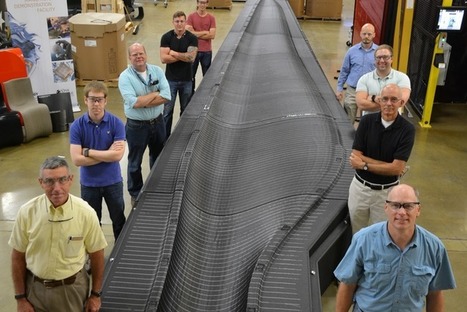
In collaboration with Oak Ridge National Laboratory's Manufacturing Demonstration Facility Team and turbine blade manufacturer TPI Composites, Sandia National Laboratories 3D printed a massive mold to produce wind turbine blades. Sandia researchers have been working on wind turbines for the better part of 40 years; it’s part of the lab's effort to make the renewable energy more affordable. However, building wind turbine prototypes takes a lot of time and effort, and each requires custom molds that take up to 16 months to complete before the blade can be developed and tested. Through the use of 3D printing, the team was able to cut mold development time by more than 80 percent, going from 16 months of development time down to 3 months. The work cut out more than a year of labor. The 13-meter blade mold is relatively small compared to other blades currently on the market and under development — for example, GE's Haliade-X blades will be 107 meters long. However, by cutting design and development time and cost, engineers could take greater risks during the prototype phase that could potentially accelerate innovation in the market.
Via Alan Charky
|
|
Scooped by
Dr. Stefan Gruenwald
May 8, 2018 6:41 PM
|
The scientist who predicted a global ocean on Titan 35 years ago is still baffled over why Cassini did not find it. In 1981, when Voyagers 1 and 2 found Titan shrouded in methane haze, they went to work on calculations. Because Titan spends up to 20% of its orbit outside Saturn’s protective magnetic field, Titan’s predominantly-nitrogen atmosphere is exposed to the solar wind during those times. Particles in the solar wind ionize the methane (CH4) into charged forms (CH3–) that quickly recombine into other hydrocarbons, mostly ethane (C2H6), because the free hydrogen ions (H+) escape into space. Ethane is a more stable molecule that is liquid at Titan temperatures. Having nowhere else to go, the ethane rains down on the surface and accumulates. A little math shows that so much liquid ethane should have fallen in 4.5 billion years (the assumed age of the solar system), that there should be a huge quantity by now, based on how much methane is found in the atmosphere today (there could have been more in the past). “Titan is covered by an ocean one to several kilometers deep consisting mainly of ethane,” predicted Dr Jonathan Lunine in 1983 with two colleagues. Lunine subsequently reduced that estimate somewhat, but still claimed that a global ocean should be there. He continued working as an important scientist on the Cassini-Huygens mission until its conclusion last September. Radar on the Cassini orbiter failed to find oceans of liquid, except for some large lakes near the poles. Most of the largely-flat, crater-sparse, US-diameter globe is dominated by sand dunes and dry riverbeds and playas, with very few mountains exceeding 1,000 feet. The “ground truth” came in January 2005, when the European Space Agency’s Huygens Probe landed on a dry lakebed with just some hints of methane moisture in the soil. Now, with Alexander Hayes and Ralph Lorentz, Lunine looks back at “A post-Cassini view of Titan’s methane-based hydrologic cycle.” in a new open-access paper in Nature Geoscience.
Protein engineering is used to generate novel protein folds and assemblages, to impart new properties and functions onto existing proteins, and to enhance our understanding of principles that govern protein structure. While such approaches can be employed to reprogram protein–protein interactions, modifying protein–DNA interactions is more difficult. This may be related to the structural features of protein–DNA interfaces, which display more charged groups, directional hydrogen bonds, ordered solvent molecules and counterions than comparable protein interfaces. Nevertheless, progress has been made in the redesign of protein–DNA specificity, much of it driven by the development of engineered enzymes for genome modification. Scientists now describe the creation of novel DNA specificities for zinc finger proteins, meganucleases, TAL effectors, recombinases and restriction endonucleases. The ease of re-engineering each system is related both to the modularity of the protein and the extent to which the proteins have evolved to be capable of readily modifying their recognition specificities in response to natural selection. The development of engineered DNA binding proteins that display an ideal combination of activity, specificity, deliverability, and outcomes is not a fully solved problem, however each of the current platforms offers unique advantages, offset by behaviors and properties requiring further study and development.
Via dromius
|
|
Scooped by
Dr. Stefan Gruenwald
May 7, 2018 11:10 PM
|
We are our own worst enemy when it comes to developing obesity. The body is naturally geared to assimilate energy from the food we eat and store it as fat until it is needed. This is the result of millions of years of evolution under the pressure of low food availability. But today, where many of us have constant access to high calorie foods, our body’s impressive ability to convert food into fat has, ironically, become problematic. Consequently, the number of overweight people worldwide is skyrocketing, leading to large health consequences for both the individual and society. However, as part of a new study, researchers at the University of Copenhagen have now managed to inhibit the body’s ability to store fat. They genetically delete the enzyme NAMPT in fat tissue of mice, and this renders the animals completely resistant to becoming overweight or obese, even on a very fatty diet. "We gave the mice a diet that more or less corresponds to continuously eating burgers and pizza. Still, it was impossible for them to expand their fat tissue. Our ultimate goal is that by understanding these fundamental underpinnings of how we become obese, we can apply our finding to the development of novel treatment strategies for metabolic disease,’ says Karen Nørgaard Nielsen, first author on the publication and a Ph.D. student at the Novo Nordisk Foundation Center for Basic Metabolic Research. The findings are in line with results obtained from humans. Several studies have shown that the presence of large amounts of the enzyme NAMPT in blood and in stomach fat tissue is significantly connected with being overweight or obese. However, this study provides the first evidence that NAMPT is absolutely required to become overweight or obese and that lack of NAMPT in fat tissue fully protects against obesity. In the University of Copenhagen study, the researchers compared how normal mice and mice lacking NAMPT in fat tissue gained weight when given either high-fat food or a healthier, lower-fat diet. When on the healthy diet, there was no difference in body weight or the amount of fat between the normal mice and the mice lacking NAMPT. However, when the mice were given high-fat food, the control mice became very obese, yet the mice lacking NAMPT gained no more weight from high-fat food than when they were on the healthier diet. In addition, the mice lacking NAMPT maintained better control of blood glucose than normal mice when eating high-fat food.
|
|
Scooped by
Dr. Stefan Gruenwald
May 7, 2018 10:44 PM
|
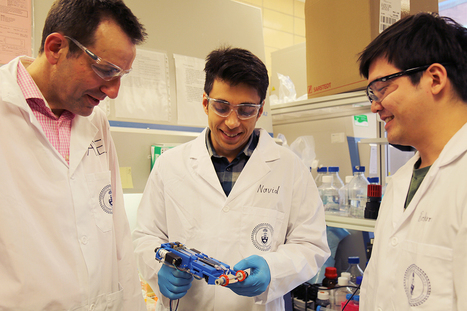
University of Toronto researchers have developed a handheld 3D skin printer that deposits even layers of skin tissue to cover and heal deep wounds. The team believes it to be the first device that forms tissue in situ, depositing and setting in place, within two minutes or less. The research, led by PhD student Navid Hakimi under the supervision of Associate Professor Axel Guenther of the Faculty of Applied Science & Engineering, and in collaboration with Dr. Marc Jeschke, director of the Ross Tilley Burn Centre at Sunnybrook Hospital and professor of immunology at the Faculty of Medicine, was recently published in the journal Lab on a Chip. For patients with deep skin wounds, all three skin layers – the epidermis, dermis and hypodermis – may be heavily damaged. The current preferred treatment is called split-thickness skin grafting, where healthy donor skin is grafted onto the surface epidermis and part of the underlying dermis. Split-thickness grafting on large wounds requires enough healthy donor skin to traverse all three layers, and sufficient graft skin is rarely available. This leaves a portion of the wounded area “ungrafted” or uncovered, leading to poor healing outcomes.
|
|
Scooped by
Dr. Stefan Gruenwald
May 7, 2018 10:35 PM
|
As people age, their intestinal stem cells begin to lose their ability to regenerate. These stem cells are the source for all new intestinal cells, so this decline can make it more difficult to recover from gastrointestinal infections or other conditions that affect the intestine. This age-related loss of stem cell function can be reversed by a 24-hour fast, according to a new study from MIT biologists. The researchers found that fasting dramatically improves stem cells’ ability to regenerate, in both aged and young mice. In fasting mice, cells begin breaking down fatty acids instead of glucose, a change that stimulates the stem cells to become more regenerative. The researchers found that they could also boost regeneration with a molecule that activates the same metabolic switch. Such an intervention could potentially help older people recovering from GI infections or cancer patients undergoing chemotherapy, the researchers say. “Fasting has many effects in the intestine, which include boosting regeneration as well as potential uses in any type of ailment that impinges on the intestine, such as infections or cancers,” says Omer Yilmaz, an MIT assistant professor of biology, a member of the Koch Institute for Integrative Cancer Research, and one of the senior authors of the study. “Understanding how fasting improves overall health, including the role of adult stem cells in intestinal regeneration, in repair, and in aging, is a fundamental interest of my laboratory.”
|
|
Scooped by
Dr. Stefan Gruenwald
May 4, 2018 3:55 PM
|
What if we could edit the sensations we feel; paste in our brain pictures that we never saw, cut out unwanted pain or insert non-existent scents into memory? UC Berkeley neuroscientists are building the equipment to do just that, using holographic projection into the brain to activate or suppress dozens and ultimately thousands of neurons at once, hundreds of times each second, copying real patterns of brain activity to fool the brain into thinking it has felt, seen or sensed something. The goal is to read neural activity constantly and decide, based on the activity, which sets of neurons to activate to simulate the pattern and rhythm of an actual brain response, so as to replace lost sensations after peripheral nerve damage, for example, or control a prosthetic limb. “This has great potential for neural prostheses, since it has the precision needed for the brain to interpret the pattern of activation. If you can read and write the language of the brain, you can speak to it in its own language and it can interpret the message much better,” said Alan Mardinly, a postdoctoral fellow in the UC Berkeley lab of Hillel Adesnik, an assistant professor of molecular and cell biology. “This is one of the first steps in a long road to develop a technology that could be a virtual brain implant with additional senses or enhanced senses.” Mardinly is one of three first authors of a paper appearing online April 30, 2018, in advance of publication in the journal Nature Neuroscience that describes the holographic brain modulator, which can activate up to 50 neurons at once in a three-dimensional chunk of brain containing several thousand neurons, and repeat that up to 300 times a second with different sets of 50 neurons. “The ability to talk to the brain has the incredible potential to help compensate for neurological damage caused by degenerative diseases or injury,” said Ehud Isacoff, a UC Berkeley professor of molecular and cell biology and director of the Helen Wills Neuroscience Institute, who was not involved in the research project. “By encoding perceptions into the human cortex, you could allow the blind to see or the paralyzed to feel touch.”
|
|
Scooped by
Dr. Stefan Gruenwald
May 4, 2018 3:50 PM
|
An innovative, eel-like robot developed by engineers and marine biologists at the University of California can swim silently in salt water without an electric motor. Instead, the robot uses artificial muscles filled with water to propel itself. The foot-long robot, which is connected to an electronics board that remains on the surface, is also virtually transparent. The team, which includes researchers from UC San Diego and UC Berkeley, details their work in the April 25 issue of Science Robotics. The team, which includes researchers from UC San Diego and UC Berkeley, details their work in the April 25 issue of Science Robotics. Researchers say the bot is an important step toward a future when soft robots can swim in the ocean alongside fish and invertebrates without disturbing or harming them. Today, most underwater vehicles designed to observe marine life are rigid and submarine-like and powered by electric motors with noisy propellers. "Instead of propellers, our robot uses soft artificial muscles to move like an eel underwater without making any sound," said Caleb Christianson, a Ph.D. student at the Jacobs School of Engineering at UC San Diego. One key innovation was using the salt water in which the robot swims to help generate the electrical forces that propel it. The bot is equipped with cables that apply voltage to both the salt water surrounding it and to pouches of water inside of its artificial muscles. The robot's electronics then deliver negative charges in the water just outside of the robot and positive charges inside of the robot that activate the muscles. The electrical charges cause the muscles to bend, generating the robot's undulating swimming motion. The charges are located just outside the robot's surface and carry very little current so they are safe for nearby marine life. "Our biggest breakthrough was the idea of using the environment as part of our design," said Michael T. Tolley, the paper's corresponding author and a professor of mechanical engineering at the Jacobs School at UC San Diego. "There will be more steps to creating an efficient, practical, untethered eel robot, but at this point we have proven that it is possible."
|
|
Scooped by
Dr. Stefan Gruenwald
May 4, 2018 3:44 PM
|
Engineers at the University of California, Riverside, have demonstrated prototype devices made of an exotic material that can conduct a current density 50 times greater than conventional copper interconnect technology. Current density is the amount of electrical current per cross-sectional area at a given point. As transistors in integrated circuits become smaller and smaller, they need higher and higher current densities to perform at the desired level. Most conventional electrical conductors, such as copper, tend to break due to overheating or other factors at high current densities, presenting a barrier to creating increasingly small components. The electronics industry needs alternatives to silicon and copper that can sustain extremely high current densities at sizes of just a few nanometers. The advent of graphene resulted in a massive, worldwide effort directed at investigation of other 2D layered materials that would meet the need for nanoscale electronic components that can sustain a high current density. While 2D materials consist of a single layer of atoms, 1D materials consist of individual chains of atoms weakly bound to one another, but their potential for electronics has not been as widely studied. One can think of 2D materials as thin slices of bread while 1D materials are like spaghetti. Compared to 1D materials, 2D materials seem huge. A group of researchers led by Alexander A. Balandin, a distinguished professor of electrical and computer engineering in the Marlan and Rosemary Bourns College of Engineering at UC Riverside, discovered that zirconium tritelluride, or ZrTe3, nanoribbons have an exceptionally high current density that far exceeds that of any conventional metals like copper. The new strategy undertaken by the UC Riverside team pushes research from two-dimensional to one-dimensional materials -- an important advance for the future generation of electronics. "Conventional metals are polycrystalline. They have grain boundaries and surface roughness, which scatter electrons," Balandin said. "Quasi-one-dimensional materials such as ZrTe3consist of single-crystal atomic chains in one direction. They do not have grain boundaries and often have atomically smooth surfaces after exfoliation. We attributed the exceptionally high current density in ZrTe3 to the single-crystal nature of quasi-1D materials." In principle, such quasi-1D materials could be grown directly into nanowires with a cross-section that corresponds to an individual atomic thread, or chain. In the present study the level of the current sustained by the ZrTe3 quantum wires was higher than reported for any metals or other 1D materials. It almost reaches the current density in carbon nanotubes and graphene.
|
|
Scooped by
Dr. Stefan Gruenwald
May 4, 2018 1:30 PM
|
Yale physicists have uncovered hints of a time crystal — a form of matter that “ticks” when exposed to an electromagnetic pulse — in the last place they expected: a crystal you might find in a child’s toy. The discovery means there are now new puzzles to solve, in terms of how time crystals form in the first place. Ordinary crystals such as salt or quartz are examples of three-dimensional, ordered spatial crystals. Their atoms are arranged in a repeating system, something scientists have known for a century. Time crystals, first identified in 2016, are different. Their atoms spin periodically, first in one direction and then in another, as a pulsating force is used to flip them. That’s the “ticking.” In addition, the ticking in a time crystal is locked at a particular frequency, even when the pulse flips are imperfect. Scientists say that understanding time crystals may lead to improvements in atomic clocks, gyroscopes, and magnetometers, as well as aid in building potential quantum technologies. The U.S. Department of Defense recently announced a program to fund more research into time crystal systems. Yale’s new findings are described in a pair of studies, one in Physical Review Letters and the other in Physical Review B. The studies represent the second known experiment observing a telltale signature for a discrete time crystal (DTC) in a solid. Previous experiments led to a flurry of media attention in the past year. “We decided to try searching for the DTC signature ourselves,” said Yale physics professor Sean Barrett, principal investigator for the two new studies. “My student Jared Rovny had grown monoammonium phosphate (MAP) crystals for a completely different experiment, so we happened to have one in our lab.”
|
|
Scooped by
Dr. Stefan Gruenwald
May 4, 2018 1:23 PM
|
Researchers in China have developed a filter that removes salt from water up to three times as fast as conventional filters. The membrane has a unique nanostructure of tubular strands, inspired by the mathematical-biology work of codebreaker Alan Turing. The filter is the most finely constructed example of the mathematician’s ‘Turing structures’ yet, and their first practical application, say researchers. “These 3D structures are quite extraordinary,” says Patrick Müller, a systems biologist at the Friedrich Miescher Laboratory in Tübingen, Germany. The filter’s tubular strands, just tens of nanometers in diameter, would be impossible to produce by other methods, such as 3D printing, he says. The work is published on 3 May in Science1. British mathematician Alan Turing is best known for his code-breaking exploits for the UK government during the Second World War, and as the father of computer science and artificial intelligence. But he also produced a seminal work2 in the then-nascent field of mathematical biology in 1952, just two years before his death. In it, he proposed a mathematical model for a process by which the cells of an embryo might begin to form structures — limbs, bones and organs. In this process, two substances continuously react with each other, but diffuse through their container at very different rates. The quicker-diffusing reactant — called the inhibitor — pushes back against the slower one, called the activator, effectively corralling the resulting product into a pattern of spots or stripes. (The terminology was coined by biologists Hans Meinhardt and Alfred Gierer, who independently formulated an equivalent theory in 1972.)
|
|
|
Scooped by
Dr. Stefan Gruenwald
May 9, 2018 1:46 PM
|
Planetary nebulae -- massive rings of luminous, interstellar gas and dust -- mark the end of the active life of 90% of all stars. But, for years, astronomers weren’t sure if the Sun would follow the same fate -- until now. University of Manchester’s Professor Albert Zijlstra and colleagues predict the Sun will form a faint planetary nebula. Planetary nebulae mark the end of the active life of 90% of all stars. They trace the transition from a red giant to a degenerate white dwarf. Stellar models1,2 predicted that only stars above approximately twice the solar mass could form a bright nebula. But the ubiquitous presence of bright planetary nebulae in old stellar populations, such as elliptical galaxies, contradicts this: such high-mass stars are not present in old systems. The planetary nebula luminosity function, and especially its bright cut-off, is almost invariant between young spiral galaxies, with high-mass stars, and old elliptical galaxies, with only low-mass stars. In this new study Zijlstra and his team show that new evolutionary tracks of low-mass stars are capable of explaining in a simple manner this decades-old mystery. The agreement between the observed luminosity function and computed stellar evolution validates the latest theoretical modeling. With these models, the planetary nebula luminosity function provides a powerful diagnostic to derive star formation histories of intermediate-age stars. The new models predict that the Sun at the end of its life will also form a planetary nebula, but it will be faint.
|
|
Scooped by
Dr. Stefan Gruenwald
May 9, 2018 12:50 PM
|
For the first time, researchers have demonstrated a light-based device that mimics a fish's incredible jamming avoidance response (JAR) by moving the frequency of an emitted signal away from other signals that could potentially cause interference. The new system could eventually help overcome the spectral bandwidth crunch caused by ever increasing numbers of wireless devices and transmitted data competing for space on a limited amount of available bandwidth.
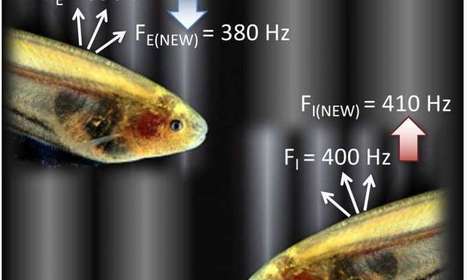
Eigenmannia are cave-dwelling fish that live in complete darkness. To survive without the presence of light, the fish emit an electric field to communicate with other fish and to sense the surrounding environment. When two fish emit signals at similar frequencies they can interfere with each other, or jam, creating a scrambled signal. Thanks to a unique neural algorithm, these fish can adjust their electric communication signals so that they don't interfere with those coming from other nearby fish. "We think that humans could use the same jamming avoidance response neural algorithm as the Eigenmannia, but at a much faster speed and frequency," said research team leader Mable P. Fok from the University of Georgia. "This could allow a smarter and more dynamic way to use our wireless communication systems without the need for the complicated coordination processes that currently prevent jamming by reserving whole sections of bandwidth for specific phone carriers or users such as the military." "To create the photonic system, we had to understand how neurons in Eigenmannia carry out the JAR and then translate that from an engineering viewpoint into a photonic design," said Fok. "Because the SOA actually acts very much like a neuron it could be used to do all the necessary tasks." The new photonic JAR system uses an off-the-shelf optical component known as a semiconductor optical amplifier (SOA) to mimic the Eigenmannia's JAR. The SOA identifies the properties of its own emitted signal and uses that as a reference to detect a potential jamming and to determine if that signal is higher or lower in frequency. It then moves the emitted signal away from the potential jamming signal. The researchers tested their photonic JAR using various types of jamming signals in the microwave region of the electromagnetic spectrum, which is used for local area wireless networks such as Bluetooth. "We could see the photonic JAR system move the signal frequency when a jamming signal was approaching and stop moving if the jamming frequency was moving away," said Fok. "It happened automatically, almost as if it were alive." The researchers are now working to improve the system so that it can respond to more than one jamming signal nearby. They also want to make the system portable and more user friendly for non-technical users.
|
|
Rescooped by
Dr. Stefan Gruenwald
from Geology
May 8, 2018 6:43 PM
|
The US and European space agencies are edging towards a joint mission to bring back rock and soil samples from Mars. NASA and ESA have signed a letter of intent that could lead to the first "round trip" to another planet. The move was announced as a meeting in Berlin, Germany, discussed the science goals and feasibility of a Mars Sample Return (MSR) mission. The venture would allow scientists to answer key questions about Martian history. Those questions include whether the Red Planet once hosted life. Scientists at the Mars meeting said that there was only so much they could learn from Martian meteorites and from the various rovers and static landers sent to the Red Planet. The next step had to be a mission that would retrieve samples from the Martian surface, blast them into space in a capsule and land them safely on Earth.
Via Dr. Catherine Russell
|
|
Rescooped by
Dr. Stefan Gruenwald
from Papers
May 8, 2018 6:37 PM
|
Artificial intelligence (AI) is tricked by optical illusions, find researchers working on deep neural networks (DNNs). The study is published in Frontiers in Psychology. Developed with reference to the network structures and the operational algorithms of the brain, DNNs have achieved notable success in a broad range of fields — including computer vision, in which they have produced results comparable to, and in some cases superior to, human experts. DNNs are based on predictive coding theory. This assumes that the internal models of the brain predict the visual world at all times and that errors between the prediction and the actual sensory input further refine the internal models. If the theory substantially reproduces the visual information processing of the brain, then the DNNs can be expected to represent the human visual perception of motion. In this research, the DNNs were trained with natural-scene videos of motion from the point of view of the viewer. The motion prediction ability of the obtained computer model was then verified using a rotating propeller in unlearned videos and the “Rotating Snake Illusion” (image above). The computer model accurately predicted the magnitude and direction of motion of the rotating propeller in the unlearned videos. Surprisingly, it also represented the rotational motion for the illusion images that were not physically moving — much like human visual perception. While the trained network accurately reproduced the direction of illusory rotation, it did not detect motion components in negative control pictures wherein people do not perceive illusory motion.
Via Complexity Digest
|
|
Scooped by
Dr. Stefan Gruenwald
May 8, 2018 11:07 AM
|
SureFly's hybrid gas- and battery-powered vertical take-off and landing vehicle is making news after declaring success on its first flight—manned, untethered, lifitng off for the first time, outside Cincinnati, Ohio. The hybrid electric two-seat helicopter SureFly from truck company Workhorse. In the video of the liftoff, SureFly CEO Steve Burns called attention to a number of features, including the training wheels, or outriggers. The flight was actually a "hover" lasting only seconds. Yet Burns called the event "a huge milestone for our company." What milestone? As far as test flights go in general, how is one impressed over a craft that was in the air for seconds, just making it off the ground? There are answers for that. Joel Stocksdale, Autoblog: "As you'll see, for its first time off the ground, it pretty much just hovers for a bit before landing again. But it does fly under its own power, and it's not connected to anything, which is an important milestone in its development," said Stocksdale. "While a few feet of hover might seem insignificant," said Sasha Lekach, Mashable, the passenger drone startup is hailing the untethered lift-off with a pilot outside of Cincinnati, Ohio, as a huge success." As more details about the helicopters are known, it does seem like a big deal worth watching. The way SureFly sees it, "after 78 years the helicopter has been reinvented." The way in which self driving cars are making the highways safer, SureFly takes that benefit to aviation. You have heard the talk before, of flying taxis, of short-haul carriers above ground to create an option to road traffic, and this vehicle suggests it may come round before long. This new flavor on helicopters touts safety as a key attribute. Its designers put battery backup and a ballistic parachute in the mix. More stable vehicle than the typical helicopter, it has props connected to electric motors. The four carbon fiber arms fold down, for storage in standard garages. Nick Lavars in New Atlas summed up key features: The SureFly was designed to use a mix of diesel and electricity "to power eight contra-rotating propellers and carry up to 400 lb (180 kg) over a range of approximately 70 mi ( 112 km)." SureFly listed the following features: electric driven props, having two props per arm, contra rotating. The craft has 8 motors, and each drives a propeller. A gasoline piston engine drives dual generators to provide power to the prop motors. The dual lithium battery packs, 7.5kWh each, are for emergency landing power in the event of generator failures. The maximum altitude was given as around 4,000 feet. Well, since safety is touted, consider the next disaster level, because if all that should fail, the plan is to have a ballistic parachute in there as well, for bringing the whole craft down. SureFly said it has an estimated 70-mile flight range, designed for short hop applications. The curb weight is 1,100 lbs. As explained in the video, the pilot is going to tell the computer, 'take me over there,' and the computer is going to figure out how to do that. Applications? Burns said there was a lot of short hop applications possible. Stocksdale said, "SureFly proposes a wide variety of applications for its vertical-take-off-and-landing (VTOL) aircraft, including taxi, agricultural, military, first responder and commuting duty." This two-seater could be carrying pilot and passenger, obviously, or pilot and cargo. The company did spell out applications such as precision agriculture, emergency responders, city commuters and the military. The target price is under $200,000.
|
|
Scooped by
Dr. Stefan Gruenwald
May 7, 2018 11:00 PM
|
In an amazing achievement akin to adding solar panels to your body, a northeast sea slug sucks raw materials from algae to provide its lifetime supply of solar-powered energy, according to a study by Rutgers University–New Brunswick and other scientists.
“It’s a remarkable feat because it’s highly unusual for an animal to behave like a plant and survive solely on photosynthesis,” said Debashish Bhattacharya, senior author of the study and distinguished professor in the Department of Biochemistry and Microbiology at Rutgers–New Brunswick. “The broader implication is in the field of artificial photosynthesis. That is, if we can figure out how the slug maintains stolen, isolated plastids to fix carbon without the plant nucleus, then maybe we can also harness isolated plastids for eternity as green machines to create bioproducts or energy. The existing paradigm is that to make green energy, we need the plant or alga to run the photosynthetic organelle, but the slug shows us that this does not have to be the case.”
The sea slug Elysia chlorotica, a mollusk that can grow to more than two inches long, has been found in the intertidal zone between Nova Scotia, Canada, and Martha’s Vineyard, Massachusetts, as well as in Florida. Juvenile sea slugs eat the nontoxic brown alga Vaucheria litorea and become photosynthetic – or solar-powered – after stealing millions of algal plastids, which are like tiny solar panels, and storing them in their gut lining, according to the study published online in the journal Molecular Biology and Evolution.
|
|
Scooped by
Dr. Stefan Gruenwald
May 7, 2018 10:39 PM
|
An ancient virus infecting residents across Australia's Northern Territory is leaving death and despair in its path, and doctors are now calling for greater efforts to stop the spread of infections. The rates of human T-cell leukemia virus type 1, or HTLV-1, infection are exceeding 40% among adults in remote regions of central Australia, with indigenous communities being the hardest hit, especially in the town of Alice Springs. Many doctors -- including the man who discovered the virus nearly four decades ago -- are raising the alarm about how little has been done to prevent, test for and treat HTLV-1, which cancause leukemia and lymphoma. HTLV-1 -- an ancient virus whose DNA can be found in 1,500-year-old Andean mummies -- can spread from mother to child, particularly through breastfeeding; between sexual partners, through unprotected sex; and by blood contact, such as through transfusions. Because it can be transmitted through sex, it's considered a sexually transmitted infection, or STI.
|
|
Scooped by
Dr. Stefan Gruenwald
May 5, 2018 2:46 AM
|
China's 500-meter Aperture Spherical radio Telescope (FAST) discovered a radio millisecond pulsar (MSP) coincident with the unassociated gamma-ray source 3FGL J0318.1+0252 in the Fermi Large Area Telescope (LAT) point-source list. This is another milestone of FAST. FAST, world's largest single-dish radio telescope, operated by the National Astronomical Observatory of the Chinese Academy of Sciences, has discovered more than 20 new pulsars so far. This first MSP discovery was made by FAST on Feb. 27 and later confirmed by the Fermi-LAT team in reprocessing of Fermi data on April 18th. The newly discovered pulsar, now named PSR J0318+0253, was isolated via the timing of gamma-ray pulsations. This discovery is the first result from the FAST-Fermi LAT collaboration outlined in a MoU signed between the FAST team and Fermi-LAT team. "This discovery demonstrates the great potential of FAST in pulsar searching, highlighting the vitality of the large aperture radio telescope in the new era," said Kejia Lee, scientist at the Kavli Institute of Astronomy and Astrophysics, Peking University. Radio follow-up of Fermi-LAT unassociated sources is an effective technique for finding new pulsars. Previous radio observations, including three epochs with Arecibo in June 2013, failed to detect the MSP. In a one-hour tracking observation with the FAST ultra-wide band receiver, the radio pulses toward 3FGL J0318.1+0252 were detected with a spin period of 5.19 milliseconds, an estimated distance of about 4000 light-years, potentially one of the faintest radio MSPs discovered.
|
|
Scooped by
Dr. Stefan Gruenwald
May 4, 2018 3:51 PM
|
New all-inorganic perovskite solar cells tackle three key challenges in solar cell technology: efficiency, stability, and cost. Harnessing energy from the sun, which emits immensely powerful energy from the center of the solar system, is one of the key targets for achieving a sustainable energy supply. Light energy can be converted directly into electricity using electrical devices called solar cells. To date, most solar cells are made of silicon, a material that is very good at absorbing light. But silicon panels are expensive to produce. Scientists have been working on an alternative, made from perovskite structures. True perovskite, a mineral found in the earth, is composed of calcium, titanium and oxygen in a specific molecular arrangement. Materials with that same crystal structure are called perovskite structures. Perovskite structures work well as the light-harvesting active layer of a solar cell because they absorb light efficiently but are much cheaper than silicon. They can also be integrated into devices using relatively simple equipment. For instance, they can be dissolved in solvent and spray coated directly onto the substrate. Materials made from perovskite structures could potentially revolutionize solar cell devices, but they have a severe drawback: they are often very unstable, deteriorating on exposure to heat. This has hindered their commercial potential. The Energy Materials and Surface Sciences Unit at the Okinawa Institute of Science and Technology Graduate University (OIST), led by Prof. Yabing Qi, has developed devices using a new perovskite material that is stable, efficient and relatively cheap to produce, paving the way for their use in the solar cells of tomorrow. Their work was recently published in Advanced Energy Materials. Postdoctoral scholars Dr. Jia Liang and Dr. Zonghao Liu made major contributions to this work. This material has several key features. First, it is completely inorganic -- an important shift, because organic components are usually not thermostable and degrade under heat. Since solar cells can get very hot in the sun, heat stability is crucial. By replacing the organic parts with inorganic materials, the researchers made the perovskite solar cells much more stable. "The solar cells are almost unchanged after exposure to light for 300 hours," says Dr. Zonghao Liu, an author on the paper. All-inorganic perovskite solar cells tend to have lower light absorption than organic-inorganic hybrids, however. This is where the second feature comes in: The OIST researchers doped their new cells with manganese in order to improve their performance. Manganese changes the crystal structure of the material, boosting its light harvesting capacity. "Just like when you add salt to a dish to change its flavor, when we add manganese, it changes the properties of the solar cell," says Liu.
|
|
Scooped by
Dr. Stefan Gruenwald
May 4, 2018 3:48 PM
|
Smashing mantis shrimp. Snapping trap-jaw ants. Stinging jellyfish. Some of the fastest living things -- at least over short distances -- are also the smallest. A new mathematical model explores how the smallest and speediest things on Earth generate their powerful jumps, snaps, strikes and punches. The model could help explain why robots can't hold a candle to the fastest-moving insects and other tiny-but-powerful creatures, and how they could get closer. When it comes to things that are ultrafast and lightweight, robots can't hold a candle to the fastest-jumping insects and other small-but-powerful creatures. New research could help explain why nature still beats robots, and describes how machines might take the lead. Take the smashing mantis shrimp, a small crustacean not much bigger than a thumb. Its hammer-like mouthparts can repeatedly deliver 69-mile-per-hour wallops more than 100 times faster than the blink of an eye to break open hard snail shells.
|
|
Scooped by
Dr. Stefan Gruenwald
May 4, 2018 1:31 PM
|
Magnetic materials are the backbone of modern digital information technologies, such as hard-disk storage. A University of Washington-led team has now taken this one step further by encoding information using magnets that are just a few layers of atoms in thickness. This breakthrough may revolutionize both cloud computing technologies and consumer electronics by enabling data storage at a greater density and improved energy efficiency. In a study published online May 3 in the journal Science, the researchers report that they used stacks of ultrathin materials to exert unprecedented control over the flow of electrons based on the direction of their spins — where the electron “spins” are analogous to tiny, subatomic magnets. The materials that they used include sheets of chromium tri-iodide (CrI3), a material described in 2017 as the first ever 2-D magnetic insulator. Four sheets — each only atoms thick — created the thinnest system yet that can block electrons based on their spins while exerting more than 10 times stronger control than other methods. “Our work reveals the possibility to push information storage based on magnetic technologies to the atomically thin limit,” said co-lead author Tiancheng Song, a UW doctoral student in physics.
|
|
Scooped by
Dr. Stefan Gruenwald
May 4, 2018 1:26 PM
|
A University of Kansas anthropological geneticist is part of an international research team working to shed light upon one of the unanswered questions concerning the peopling of the New World: Namely, what was the size of the original founding population of the Americas? Despite numerous genetic studies that have helped contribute to knowledge about how ancient groups populated the Americas, scientists have not reached a consensus about how many Native Americans made up the original population. This analysis of DNA sequences suggests the Native American founding population that migrated from Siberia consisted of approximately 250 people. The study "How strong was the bottleneck associated to the peopling of the Americas? New insights from multilocus sequence data," published in the journal Genetics and Molecular Biology, includes Michael Crawford, KU professor of anthropology, and the researchers' results corroborate findings of previous studies that were based on smaller datasets. "Going from a few hundred founders to around 40 million inhabitants of the Americas, who eventually live under different environmental conditions to which they adapt, is pretty exciting stuff," said Crawford, also head of KU's Laboratory of Biological Anthropology. "It's about understanding how evolution operates in terms of genetic diversity." The researchers examined nine noncoding regions of the DNA samples collected from populations that trace the path of the migration. This included samples of individuals from China, 10 Siberian groups and from 10 Native American populations scattered across Central and South America representing several different tribal affiliations.
|