Your new post is loading...

|
Scooped by
Dr. Stefan Gruenwald
May 4, 2018 1:20 PM
|
Mexican mammal may have staged its comeback thanks to dwindling agriculture. The last time anyone saw the San Quintin kangaroo rat was more than 30 years ago, in the arid scrublands of Baja California in Mexico. Mexican authorities declared the small mammal critically endangered, and possibly extinct, in 1994. So biologists couldn't believe their eyes when not one, but four San Quintin kangaroo rats (Dipodomys gravipes) hopped into their survey traps in 2017. Named for their ability to leap like kangaroos, the rats are key species in arid areas across western North America, dispersing seeds and feeding predators such as coyotes and foxes. The San Quintin kangaroo rat is about 12 centimeters long, with a long, tufted tail and enormous hind legs that allow it to leap about 2 meters and speed away at 10 kilometers per hour. They once lived by the thousands in a narrow coastal valley stretching 150 kilometers along the Pacific coast of northern Baja California. But their numbers began to dwindle with the introduction of intensive agriculture in the 1970s, after which their habitat and food disappeared. Then, just 9 months ago, a team of researchers doing a routine inventory of mammals in the region discovered the rats in their survey traps. None of them had ever seen the species before, so they had to compare it with museum specimens and photographs, they will report in an upcoming issue of the Bulletin of the Southern California Academy of Sciences.
|
|
Scooped by
Dr. Stefan Gruenwald
May 4, 2018 1:15 PM
|
Neural networks and quantum processors have one thing in common: It is amazing they work at all. It was never obvious that you could train a network, and for decades most people doubted it would ever be possible. Likewise, it is not obvious that quantum physics could ever be harnessed for computation, since the distinctive effects of quantum physics are so well hidden from us. And yet both work—not always, but more often than we had any right to expect. On this precedent, it seems likely that their union will also find its place. Today the mashup of the two seems the most natural thing in the world. Neural networks and other machine-learning systems have become the most disruptive technology of the 21st century. They out-human humans, beating us not just at tasks most of us were never really good at, such as chess and data-mining, but also at the very types of things our brains evolved for, such as recognizing faces, translating languages and negotiating four-way stops. These systems have been made possible by vast computing power, so it was inevitable that tech companies would seek out computers that were not just bigger, but a new class of machine altogether. Quantum computers, after decades of research, have nearly enough oomph to perform calculations beyond any other computer on Earth. Their killer app is usually said to be factoring large numbers, which are the key to modern encryption. That’s still another decade off, at least. But even today’s rudimentary quantum processors are uncannily matched to the needs of machine learning. They manipulate vast arrays of data in a single step, pick out subtle patterns that classical computers are blind to, and don’t choke on incomplete or uncertain data. “There is a natural combination between the intrinsic statistical nature of quantum computing … and machine learning,” said Johannes Otterbach, a physicist at Rigetti Computing, a quantum-computer company in Berkeley, California. If anything, the pendulum has now swung to the other extreme. Google, Microsoft, IBM and other tech giants are pouring money into quantum machine learning, and a startup incubator at the University of Toronto is devoted to it. “‘Machine learning’ is becoming a buzzword,” said Jacob Biamonte, a quantum physicist at the Skolkovo Institute of Science and Technology in Moscow. “When you mix that with ‘quantum,’ it becomes a mega-buzzword.” - and a gigantic technological opportunity for the future.
|
|
Scooped by
Dr. Stefan Gruenwald
May 4, 2018 1:55 AM
|
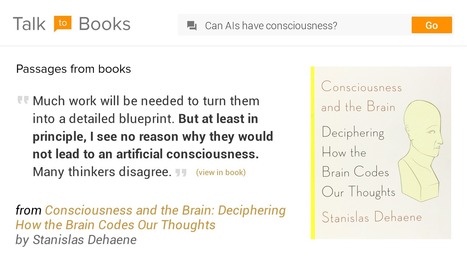
Google announced today, April 13, 2018, a new experimental publicly available technology called Talk to Books, which lets you ask questions in plain-English sentences to discover relevant information from more than 100,000 books, comprising 600 million sentences. For example, if you ask, “Can AIs have consciousness?,” Talk to Books returns a list of books that include information on that specific question. The new feature was developed by a team at Google Research headed by Ray Kurzweil, a Google director of engineering. As Kurzweil and associates note in a Google Research Blog post today, “With Talk to Books, we’re combining two powerful ideas: semantic search and a new way to discover books.” Experiments in understanding language Semantic search is based on searching meaning, rather than on keywords or phrases. Developed with machine learning, it uses “natural language understanding” of words and phrases. Semantic search is explained further on Google’s new “Semantic Experiences” page, which includes a link to Semantris, a set of word-association games that lets you explore how Google’s AI has learned to predict which words are semantically related. The new semantic-search feature is based on the research by Kurzweil and his team in developing an enhanced version of Google’s “smart reply” feature (which provides suggestions for responding to each of your Google emails), as explained in anarXiv paper by Kurzweil’s team. That research is further described in a March 29, 2018 arXiv paper. Also released is a version of the underlying technology that will enable developers to use these new semantic-search tools — including a universal sentence encoder — in their own applications, similar to Talk to Books.
|
|
Scooped by
Dr. Stefan Gruenwald
May 2, 2018 2:47 PM
|
Google is betting that the future of healthcare is going to be structured data and AI. The company is applying AI to disease detection, new data infrastructure, and potentially insurance. In this report we explore Google's many healthcare initiatives and areas of potential future expansion. Google has always seen itself as more than a search and advertising company. Now it’s turning its focus to healthcare, betting that its AI prowess can create a powerful new paradigm for the detection, diagnosis, and treatment of disease. “So tomorrow, if AI can shape healthcare, it has to work through the regulations of healthcare … In fact, I see that as one of the biggest areas is where the benefits will play out for the next 10 – 20 years.” — Sundar Pichai, CEO of Google In short, Google seems to be going after the healthcare space from every possible angle. For example, did you know that Google has a project to release sterilized mosquitoes to control the spread of infectious disease? Or that the company has started a limited commercial rollout of its diabetes management program? Or that it appears to be exploring insurance? This analysis dives deep into how Google is pushing healthcare forward with a focus on data and AI, including: - The specific disease areas where Google is studying diagnostics and management — including diabetes, Parkinson’s Disease, and heart disease, among others
- How Google is rebuilding the healthcare data infrastructure layer to potentially become the new data pipes for health giants
- Possible areas of expansion, including hardware for providers, insurance and more
- How Google could make eventually money off its many disparate healthcare bets
- Obstacles between where the company is today and where it’s trying to go
|
|
Scooped by
Dr. Stefan Gruenwald
May 2, 2018 2:39 PM
|
Wanted: A million people willing to share their DNA and 10 years of health habits, big and small, for science. This coming Sunday, the U.S. government will open nationwide enrollment for an ambitious experiment: If they can build a large enough database comparing the genetics, lifestyles and environments of people from all walks of life, researchers hope to learn why some escape illness and others don’t, and better customize ways to prevent and treat disease. “A national adventure that is going to transform medical care,” is how Dr. Francis Collins, director of the National Institutes of Health, describes his agency’s All of Us Research Program. Congress has authorized $1.45 billion over 10 years for the project. It all hinges on whether enough people around the country will sign up, either online or through participating health centers. There’s already interest: More than 25,000 people got early entry to the project over the past year through an invitation-only pilot test run by participating universities and health providers.
|
|
Scooped by
Dr. Stefan Gruenwald
May 2, 2018 2:24 PM
|
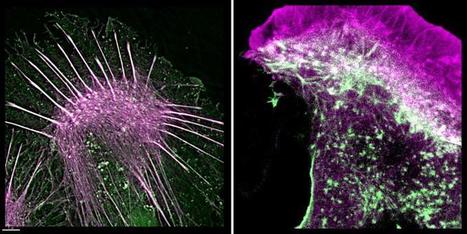
Scientists have developed a new way to see inside individual cells, and study how they move and operate inside the human body. The improved understanding of cell-level activity could give researchers extra insight and tools to tackle cancers and other diseases. The researchers are using a lab-made protein called an Affimer that binds to the F-actin protein. F-actin is part of the network within cells which gives them their shape and helps them move and divide. By seeing the cells move and change, scientists can begin to develop chemical compounds to target them, over time becoming new drug candidates. Affimers were first developed at the University of Leeds and are a man-made alternative to animal-derived antibodies. This has the important extra benefit of reducing the numbers of animals used in research work. This latest type of Affimer technology which recognises the F-actin protein is an important step forward in giving scientists the tools to combat diseases. Details are published in the Scientific Reports journal.
|
|
Scooped by
Dr. Stefan Gruenwald
May 2, 2018 2:17 PM
|
Researchers used a trio of transcription factors to transform pancreatic duct cells in vivo into β-like cells that secrete insulin and improve diabetes symptoms. One strategy to treat type 1 diabetes, where the immune system destroys insulin-producing β cells, is to convert other cells into β-like cells that then take over insulin production. In a study published today (May 2) in Molecular Therapy, researchers reprogrammed pancreatic duct cells in vivo to successfully treat both genetically and chemically induced diabetes in mice. “The work is part of a long line of studies attempting to genetically engineer insulin-producing cells in various tissues,” says Jake Kushner, a pediatric endocrinologist at Baylor College of Medicine in Houston who did not participate in the study. “It’s an exciting advance because it refines our understanding of what the capacity is of the various different components of either the pancreas or the liver to be transduced and make insulin-producing cells.” Previous work had shown that both liver and pancreas cells could be converted into insulin-producing cells. Thus, Yuhan Wang, then a graduate student in Markus Grompe’s lab at Oregon Health & Science University, and colleagues set out to determine which of these cell types would make the best β-like cells. In the latest study, the researchers intravenously injected diabetic mice with a virus loaded with the genes for Pdx1, Neurog3, and Mafa—transcription factors that had already been shown to reprogram cells to a β-like state. The team first targeted the mice’s liver cells, called hepatocytes, and found that after the injection, the hepatocytes that were altered by the transcription factors initially made insulin and could reduce levels of high blood sugar in the mice. But the cells did not respond appropriately to low glucose levels by turning off insulin production, and their ability to make insulin didn’t last, so the mice ended up with high blood sugar again. The hepatocytes also did not express characteristic β-like genes, suggesting that they were not truly reprogrammed. Viral injections into the duct systems of the liver and pancreas also induced insulin production in both types of duct cells. The team observed that the insulin-positive duct cells of the pancreas turned on greater numbers of characteristic β-like genes compared with the insulin-positive liver duct cells. The insulin-positive duct cells of the pancreas also turned off genes specific to the cells’ identity before transformation, while the insulin-positive liver duct cells did not. A majority of the insulin-positive cells were originally pancreatic, not liver, duct cells, the authors also found. The researchers then showed that viral injections to the ducts eliminated diabetes symptoms—namely, high blood sugar—during an eight-week experiment in 30 percent to 40 percent of the diabetic mice. The rest of the treated mice showed only transient improvements or didn’t respond to the injections at all.
|
|
Scooped by
Dr. Stefan Gruenwald
May 2, 2018 2:06 PM
|
Over 26 million people worldwide suffer from heart failure annually. When the cause of heart failure cannot be identified, endomyocardial biopsy (EMB) represents the gold-standard for the evaluation of disease. However, manual EMB interpretation has high inter-rater variability. Deep convolutional neural networks (CNNs) have been successfully applied to detect cancer, diabetic retinopathy, and dermatologic lesions from images. In this study, scientists develop a CNN classifier to detect clinical heart failure from H&E stained whole-slide images from a total of 209 patients, 104 patients were used for training and the remaining 105 patients for independent testing. The CNN was able to identify patients with heart failure or severe pathology with a 99% sensitivity and 94% specificity on the test set, outperforming conventional feature-engineering approaches. Importantly, the CNN outperformed two expert pathologists by nearly 20%. These results suggest that deep learning analytics of EMB can be used to predict cardiac outcome.
|
|
Scooped by
Dr. Stefan Gruenwald
May 2, 2018 1:50 PM
|
Have you ever talked to Siri, Alexa, or Cortana to set up an alarm, call friends, or arrange a meeting? Many people may agree that despite their usefulness in common and routine tasks, it’s difficult to force conversational agents to talk on general, sometimes philosophical topics. Data scientist, Dmitry Persiyanov, to explain how to fix this issue with neural conversational models and build chatbots using machine learning.
|
|
Scooped by
Dr. Stefan Gruenwald
May 1, 2018 10:51 AM
|
In 2016, scientists unveiled one of the most ambitious genetic engineering efforts yet: Genome Project-write wanted to do nothing less than create (not just edit) human cells immune to all known viruses. There was a rough start that included dramatic funding shortfalls, but it now looks like the initiative is getting underway in earnest. Harvard's Wyss Institute and French immunotherapy company Cellectis have formed a partnership that will see Cellectis supply genome engineering tools to a Wyss team led by George Church. They'll use custom enzymes to remove redundant codons (nucleotide "triplets" that produce amino acids for specific proteins) and prevent viruses with those codons from hijacking cells to produce copies of themselves. It's an important deal, but you won't want to pop open the champagne just yet. STAT noted that the project needs to make a whopping 400,000 changes to the 20,000 genes in the human genome (for context, Church's team made 321 changes to E. coli bacteria). And this won't be affordable in the near term -- it would currently cost about $30 million to recode a human genome, and even the plans to reduce that cost by a thousand fold would still make it a non-trivial exercise. There's a good reason why Genome Project-write gave itself 10 years to reach its goal, and there's no certainty the group will accomplish its goal in time.
|
|
Scooped by
Dr. Stefan Gruenwald
April 29, 2018 1:45 PM
|
A machine learning method called “deep learning,” which has been widely used in face recognition and other image- and speech-recognition applications, has shown promise in helping astronomers analyze images of galaxies and understand how they form and evolve. In a new study, accepted for publication in Astrophysical Journal and available online, researchers used computer simulations of galaxy formation to train a deep learning algorithm, which then proved surprisingly good at analyzing images of galaxies from the Hubble Space Telescope. The researchers used output from the simulations to generate mock images of simulated galaxies as they would look in observations by the Hubble Space Telescope. The mock images were used to train the deep learning system to recognize three key phases of galaxy evolution previously identified in the simulations. The researchers then gave the system a large set of actual Hubble images to classify. The results showed a remarkable level of consistency in the neural network’s classifications of simulated and real galaxies. “We were not expecting it to be all that successful. I’m amazed at how powerful this is,” said coauthor Joel Primack, professor emeritus of physics and a member of the Santa Cruz Institute for Particle Physics (SCIPP) at UC Santa Cruz. “We know the simulations have limitations, so we don’t want to make too strong a claim. But we don’t think this is just a lucky fluke.” Galaxies are complex phenomena, changing their appearance as they evolve over billions of years, and images of galaxies can provide only snapshots in time. Astronomers can look deeper into the universe and thereby “back in time” to see earlier galaxies (because of the time it takes light to travel cosmic distances), but following the evolution of an individual galaxy over time is only possible in simulations. Comparing simulated galaxies to observed galaxies can reveal important details of the actual galaxies and their likely histories.
|
|
Scooped by
Dr. Stefan Gruenwald
April 29, 2018 1:26 PM
|
Using CRISPR/Cas9 to silence a gene that regulates cholesterol in adult mice marks a first for the genetic engineering technique. Biomedical engineers have used a CRISPR/Cas9 genetic engineering technique to turn off a gene that regulates cholesterol levels in adult mice, leading to reduced blood cholesterol levels and gene repression lasting for six months after a single treatment. This marks the first time researchers have delivered CRISPR/Cas9 repressors for targeted therapeutic gene silencing in adult animal models. The study appears in Nature Communications. The CRISPR/Cas9 system is based on an antiviral defense mechanism in bacteria in which the Cas9 enzyme recognizes the viral DNA sequences of previous infections and cuts up invading DNA during re-infection. Researchers have engineered the CRISPR/Cas9 system to not only locate and cut specific sequences of DNA, but to also turn on or off the expression of targeted genes without making permanent changes to the DNA coding sequence. While this CRISPR/Cas9 repressor technique has emerged as a robust tool for disrupting gene regulation in cell culture models, it had not yet been adapted for delivery to adult animals for applications such as gene therapy. Why Pcsk9?In their most recent study, Charles Gersbach, associate professor of biomedical engineering at Duke University, and members of his laboratory developed an approach to efficiently package and deliver the CRISPR/Cas9 repressor system to mice. They tested their delivery system by silencing Pcsk9, a gene that regulates cholesterol levels. While several drugs have been developed to treat high cholesterol and cardiovascular disease by blocking the activity of Pcsk9, this new approach would prevent Pcsk9 from being made. “We previously used these same types of tools to turn genes on and off in cultured cells, and we wanted to see if we could also deliver them to animal models with an approach that is relevant for gene therapy,” Gersbach says. “We wanted to change the genes in a way that would have a therapeutic outcome, and Pcsk9 is a useful proof-of-concept given its role regulating cholesterol levels, which in turn affect health issues like heart disease.” Pcsk9 encodes an enzyme that regulates low-density lipoprotein (LDL) receptor degradation, and loss-of-function mutations in Pcsk9 are associated with low serum cholesterol levels and reduced risk of cardiovascular disease with no recorded adverse side effects 30,31,32. Strategies to inhibit expression of Pcsk9 by antibodies, antisense oligonucleotides, and genome editing are currently being explored to lower harmful LDL cholesterol in the serum and reduce cardiovascular disease risk, with antibody-based therapies approved for treatment of familial hypercholesterolemia 27,33,34,35,36,37. The mechanism and phenotypic effects of Pcsk9 silencing are well understood, making this an advantageous model for testing the efficacy of in vivo silencing with CRISPR/Cas9 repressors.
|
|
Scooped by
Dr. Stefan Gruenwald
April 29, 2018 1:18 PM
|
Researchers at Google, Harvard University, and Gladstone Institutes have developed and tested new deep-learning algorithms that can identify details in terabytes of bioimages, replacing slow, less-accurate manual labeling methods. Deep learning is a type of machine learning that can analyze data, recognize patterns, and make predictions. A new deep-learning approach to biological images, which the researchers call “in silico labeling” (ISL), can automatically find and predict features in images of “unlabeled” cells (cells that have not been manually identified by using fluorescent chemicals). The new deep-learning network can identify whether a cell is alive or dead, and get the answer right 98 percent of the time (humans can typically only identify a dead cell with 80 percent accuracy) — without requiring invasive fluorescent chemicals, which make it difficult to track tissues over time. The deep-learning network can also predict detailed features such as nuclei and cell type (such as neural or breast cancer tissue). The deep-learning algorithms are expected to make it possible to handle the enormous 3–5 terabytes of data per day generated by Gladstone Institutes’ fully automated robotic microscope, which can track individual cells for up to several months. The research was published in the April 12, 2018 issue of the journal Cell.
|
|
|
Scooped by
Dr. Stefan Gruenwald
May 4, 2018 1:17 PM
|
A team of researchers at MIT and elsewhere has developed a new approach to deep learning systems — using light instead of electricity, which they say could vastly improve the speed and efficiency of certain deep-learning computations. Deep-learning systems are based on artificial neural networks that mimic the way the brain learns from an accumulation of examples. They can enable technologies such as face- and voice-recognition software, or scour vast amounts of medical data to find patterns that could be useful diagnostically, for example. But the computations these systems carry out are highly complex and demanding, even for supercomputers. Traditional computer architectures are not very efficient for calculations needed for neural-network tasks that involve repeated multiplications of matrices (arrays of numbers). These can be computationally intensive for conventional CPUs or even GPUs. Programmable nanophotonic processor Instead, the new approach uses an optical device that the researchers call a “programmable nanophotonic processor.” Multiple light beams are directed in such a way that their waves interact with each other, producing interference patterns that “compute” the intended operation. The optical chips using this architecture could, in principle, carry out dense matrix multiplications (the most power-hungry and time-consuming part in AI algorithms) for learning tasks much faster, compared to conventional electronic chips. The researchers expect a computational speed enhancement of at least two orders of magnitude over the state-of-the-art and three orders of magnitude in power efficiency. “This chip, once you tune it, can carry out matrix multiplication with, in principle, zero energy, almost instantly,” says Marin Soljacic, one of the MIT researchers on the team. To demonstrate the concept, the team set the programmable nanophotonic processor to implement a neural network that recognizes four basic vowel sounds. Even with the prototype system, they were able to achieve a 77 percent accuracy level, compared to about 90 percent for conventional systems. There are “no substantial obstacles” to scaling up the system for greater accuracy, according to Soljacic.
|
|
Scooped by
Dr. Stefan Gruenwald
May 4, 2018 1:57 AM
|
Fast live-cell 3D phase imaging of cellular dynamics. (Left) Human fibroblast migrating on a glass substrate, showing first frame of a 25-second movie imaged. Scientists at the Laboratory of Biomedical Optics (LOB) at EPFL (École Polytechnique Fédérale de Lausanne) in Switzerland have developed the first microscope platform that can perform “super-resolution” imaging in both space and time — capturing unprecedented “4D” views inside living cells. The landmark paper is published in Nature Photonics and on open-access ArXiv. Super-resolution microscopy is a technique (covered extensively on KurzweilAI) that can “see” beyond Abbe’s diffraction-of-light limit, providing unprecedented views of cells and their interior structures and organelles. The developers won the Nobel Prize in Chemistry in 2014. But super-resolution microscopy only offers improved spatial resolution. That might suffice for static samples, like solid materials or fixed cells, but living cells are highly dynamic and depend on a complex set of constantly changing biological processes that occur across sub-second timescales. So to visualize and understand how living cells function in health and disease, high “temporal” (time) resolution is also required. Enter the 4D microscope. A team led by Professor Theo Lasser, head of the LOB, has developed a “4D microscope” that they dubbed PRISM (Phase Retrieval Instrument with Super-resolution Microscopy). A simple add-on to existing widefield microscopes, it combines 3D super-resolution microscopy (for high spatial resolution) with fast 3D phase (time) imaging in a single instrument. Phase imaging translates phase changes (changes over time) of light — caused by changes in cells and their organelles — into conventional spatial maps of the cells.
|
|
Scooped by
Dr. Stefan Gruenwald
May 4, 2018 1:53 AM
|
MIT neuroscientists have developed a new magnetic resonance imaging (MRI) sensor that allows them to monitor neural activity deep within the brain by tracking calcium ions. Calcium ions are directly linked to neuronal firing at high resolution — unlike the changes in blood flow detected by functional MRI (fMRI), which provide only an indirectindication of neural activity. The new sensor can also monitor large areas, compared to fluorescent molecules, used to label calcium in the brain and image it with traditional microscopy, which is limited to small areas of the brain. A calcium-based MRI sensor could allow researchers to link specific brain functions directly to specific neuron activity, and to determine how distant brain regions communicate with each other during particular tasks. The research is described in a paper in the April 30, 2018 issue of Nature Nanotechnology.
|
|
Scooped by
Dr. Stefan Gruenwald
May 2, 2018 2:42 PM
|
A study of the most recent near-reversals of the Earth's magnetic field by an international team of researchers, including the University of Liverpool, has found it is unlikely that such an event will take place anytime soon. There has been speculation that the Earth's geomagnetic fields may be about to reverse , with substantial implications, due to a weakening of the magnetic field over at least the last two hundred years, combined with the expansion of an identified weak area in the Earth's magnetic field called the South Atlantic Anomaly, which stretches from Chile to Zimbabwe. In a paper published in the Proceedings of the National Academy of Sciences, a team of international researchers model observations of the geomagnetic field of the two most recent geomagnetic excursion events, the Laschamp, approximately 41,000 years ago, and Mono Lake, around 34,000 years ago, where the field came close to reversing but recovered its original structure. The model reveals a field structures comparable to the current geomagnetic field at both approximately 49,000 and 46,000 years ago, with an intensity structure similar to, but much stronger than, today's South Atlantic Anomaly (SAA); their timing and severity is confirmed by records of cosmogenic nuclides. However, neither of these SAA-like fields developed into an excursion or reversal. Richard Holme, Professor of Geomagnetism at the University of Liverpool, said: "There has been speculation that we are about to experience a magnetic polar reversal or excursion. However, by studying the two most recent excursion events, we show that neither bear resemblance to current changes in the geomagnetic field and therefore it is probably unlikely that such an event is about to happen.
|
|
Scooped by
Dr. Stefan Gruenwald
May 2, 2018 2:28 PM
|
Hemophilia B is caused by defects in the gene for a protein called clotting factor IX (FIX). Hemophiliacs may make reduced amounts of the protein, or lack a functional version altogether, leading to life-threatening delays in blood clotting. Currently, patients are treated with injections—as often as a few times a week—containing FIX made in animal cells and then purified. But the approach is expensive, time-consuming and can become less effective over time. Recently, Salk scientists developed a new approach, treating mice genetically engineered to have hemophilia B with strands of messenger RNA encoding the FIX gene. Like the standard treatment, however, this required repeat injections each time levels of the messenger RNA ran low. So the scientists wanted to try a more permanent approach: transplanting healthy liver cells, capable of producing FIX, into patients. “The appeal of a cell-based approach is that you minimize the number of treatments that a patient needs,” says Suvasini Ramaswamy, a former Salk research associate in the Verma lab and first author of the new paper. “Rather than constant injections, you can do this in one shot.”
|
|
Scooped by
Dr. Stefan Gruenwald
May 2, 2018 2:21 PM
|
Researchers from the University of Copenhagen have succeeded in targeting and killing a single bacterial species (E. coli) without causing harm to the surrounding community of commensal bacteria in a simulated small intestinal microbiome using a cocktail of viruses (bacteriophages). The study proved that this approach is as effective in killing the targeted E. coli as broad-spectrum antibiotics but has much gentler impact on the normal, and often beneficial, microflora compared to antibiotics. Imagine that you have become ill because you have eaten some food that contained pathogenic bacteria. You keep running to the toilet and you may also throw up. You go to the doctor and are prescribed broad-spectrum antibiotics, which – in addition to killing the bad bacteria in your intestinal flora – carpet bomb the complex community of commensal bacteria forming a healthy intestinal flora. New research from the Department of Food Science (FOOD) at the University of Copenhagen suggests that, in the not-too-distant future, it might be possible to drink a cocktail of selective viruses (bacteriophages) that travel directly into the gut and kill the disease-causing bacteria, so you get better – without the use of antibiotics and without harming the beneficial commensal intestinal bacteria. The researchers have come a step closer to this scenario.
|
|
Scooped by
Dr. Stefan Gruenwald
May 2, 2018 2:13 PM
|
Mantis shrimp vision is extraordinary, both in terms of their color vision and their ability to see the polarization of light. Not only this, but they have extremely mobile eyes that never seem to stop moving. While most animals keep eye movements to a minimum to avoid blur, mantis shrimp apparently go out of their way to move their eyes as much as possible. Each eye is capable of independent rotation in all three degrees of rotational freedom; pitch (up-down), yaw (side-to-side) and roll (twisting about the eye-stalk). The Bristol-led team of researchers based at the University’s Ecology of Vision Laboratory, wanted to test the limits of this incredible mobility to discover at what point mantis shrimp have to steady their gaze. Their findings are published today in the journalProceedings of the Royal Society B. Like any other animal, the mantis shrimp do make stabilizing side-to-side movements that help keep their vision steady as they move through the world, but the team found that even while stabilizing in the horizontal direction, they can’t resist rolling their eyes. This is completely counter-intuitive; the whole point in stabilising gaze is to keep the appearance of the world around them steady, but by rolling their eyes ‘up’ suddenly becomes ‘sideways’ and the world gets very complicated. Amazingly, this has no effect on the mantis shrimp - no matter what position they’ve rolled their eyes to, or how quickly they’re rolling, mantis shrimp can still reliably and accurately follow the motion of a pattern that is moving sideways. Ilse Daly from Bristol’s School of Biological Sciences and lead author of the study, said: “It would be like you tipping your head on its side, then back to normal and all angles in between all while trying to follow the motion of a target. “Just to make things even more confusing, the left and right eyes can move completely independently of one another, such that one eye could be oriented horizontally, while the other could be twisted completely through 90 degrees to be on its side.” Following this unexpected discovery, the team tested to see how mantis shrimp would respond if the world started to roll around them. In humans, such a stimulus would induce severe vertigo, as visitors to certain theme parks may have experienced with rides which challenge people to walk through a tunnel along a solid, fixed gangway while the walls of the tunnel rotate around them - which is nearly impossible to do without falling over. Ilse Daly added: “We expected that, in response to the world around them apparently rolling, mantis shrimp should roll their eyes to follow their surroundings. They did not. “The mantis shrimp visual system seems entirely immune from any negative effects of rolling their eyes. Indeed, it appears as though rolling has absolutely no effect on their perception of space at all: up is still up, even when their eyes have rolled completely sideways. This is unprecedented in the animal kingdom.”
|
|
Scooped by
Dr. Stefan Gruenwald
May 2, 2018 2:02 PM
|
Borrowing points from the holographic universe theory, the late Stephen Hawking and colleague Thomas Hertog argue that our universe and other ‘pocket universes’ are not the infinite structures. Professor Stephen Hawking believed that before the Big Bang 13.7 billion years ago, time and space as we know it did not exist. In the past, Hawking predicted that as the universe goes back in time, it shrinks and closes off like a sphere. His latest paper, however - submitted just weeks before his death - adds new constraints to the history of the universe that challenge his previous theories. According to earlier 'no boundaries' theory, the universe was shrunk and condensed to an incredibly dense ball of heat and energy the size of a single atom. Inside this speck, the laws of physics and time as we know them cease to function, and time as we understand it did not exist. If we move back in time from the Big Bang, the 'arrow' of time shrinks infinitely as the universe becomes smaller, never reaching a clear starting point. Hawking said in a recent interview that before the Big Bang, time was bent - 'It was always reaching closer to nothing but didn't become nothing.' Essentially, 'there was never a Big Bang that produced something from nothing. It just seemed that way from mankind's point of perspective.' In a lecture on the so-called no-boundary proposal, Hawking wrote: 'Events before the Big Bang are simply not defined, because there's no way one could measure what happened at them. Since events before the Big Bang have no observational consequences, one may as well cut them out of the theory, and say that time began at the Big Bang.' But, his new work, published posthumously, challenges this earlier ‘no boundary theory.' Borrowing points from the string theory – the concept that the universe is a complex hologram – Hawking and colleague Thomas Hertog argue that our universe and other ‘pocket universes’ are not the infinite structures some have proposed. Instead, Hawking says the universe is ‘reasonably smooth and globally finite,’ setting new boundaries in cosmological history that could ultimately allow the theory to be tested. ‘Now we’re saying that there is a boundary in our past,’ Hertog added. The ‘most promising’ observable phenomena that could help to test the new model would be gravitational waves generated in the Big Bang itself, according to Hertog. ‘The creation of space and time goes together with the generation of gravitational waves in our theory, and perhaps the detailed pattern of those gravitational waves will give us a key signature of our model,’ Hertog says. These ancient gravitational waves, however, are far too faint to be detected by current instruments such as the LIGO experiment. The upcoming LISA observatory – the Laser Interferometer Space Antenna – ‘should be ideally suited to capture those gravitational waves from the Big Bang,’ the physicist says.
|
|
Scooped by
Dr. Stefan Gruenwald
May 2, 2018 1:47 PM
|
A newly found "transitional" bird fossil sheds light on a pivotal point in the pathway from dinosaurs to modern birds. Ichthyornis dispar lived in North America about 86 million years ago. The seagull-sized bird had a beak and a brain much like modern birds, but the sharp teeth and powerful jaws of dinosaurs like Velociraptor. "It shows us what the first bird beak looked like," said Bhart-Anjan Bhullar of Yale University, a study researcher. "It's a real mosaic of features, a transitional form." It has long been known that birds evolved from dinosaurs in what was a slow gradual process, involving feathers, wings and beaks. Evidence for feathers has shown up in the fossil record, but it has proved very difficult to study the anatomy of the tiny delicate skulls of ancient birds. The researchers combined fossil evidence from the complete skull and two previously overlooked cranial fossils with the latest CT scanning techniques to build an advanced 3D model of the skull of the primitive bird. As study researcher Daniel Field, from the University of Bath, put it, most skull fossils are "squashed flat during the fossilization process". He said the "extraordinary new specimen", which was discovered only recently, reveals similar brain proportions to that of a modern bird, while other parts of the skull more closely resemble those of predatory dinosaurs. Half-bird, half-dinosaur
Dr Steve Brusatte of the University of Edinburgh, who is not connected with the research, described the study as a game-changer in how we understand the evolution of the bird beak and brain. "The beaks of these primitive birds were very small and seem to have been evolving to take over some of the functions of the hand, like manipulating food and cleaning the feathers, that became impossible once the hands were incorporated into the wing," he said. "This helps to show that the evolution of birds from dinosaurs was a long and gradual process - it didn't just happen overnight, and for much of the Age of Dinosaurs there would have existed these creatures that looked half-dinosaur, half-bird." The famous naturalist Charles Darwin read about the fossil and said the work on "old birds" afforded support for the theory of evolution. A century or so on, the strange bird is filling in the gaps in our knowledge of these "extraordinary flying machines".
|
|
Scooped by
Dr. Stefan Gruenwald
May 1, 2018 10:49 AM
|
The world’s oldest known spider has died at the age of 43. As Henry Bodkin at The Telegraph reports, the eight-legged, quadragenarian that lived in the Australian outback died after being attacked by a parasitic wasp. According to a press release, Number 16 was first noticed in 1974 soon after she was born at the North Bungulla Reserve near Tammin in southwestern Australia. She was selected by researcher Barbara York Main as a participant in a long-term research study about trapdoor spiders, Giaus villosus. Main monitored the spiders for years, and according to Michelle Starr at ScienceAlert, marked and observed over 150 spider burrows. But Number 16 was the only survivor of the early days of the project—spiders 1 through 15 all died over the decades. No. 16 was last seen alive in the spring of 2016, but when researchers checked on her in October of that year, they found that a parasitic wasp had infiltrated the burrow, which was already falling into disrepair. The researchers came to the conclusion that the spider was dead or would soon be eaten from the inside out by the wasp larvae. Despite the gruesome death, her legacy lives on. “To our knowledge this is the oldest spider ever recorded, and her significant life has allowed us to further investigate the trapdoor spider’s behavior and population dynamics,” says Leanda Mason of Curtin University, lead author of a paper about Number 16 published in the journal Pacific Conservation Biology. The life spans of spiders vary considerably from species to species. While many common house spiders live a few years some can survive up to seven years. Tarantulas, on the other hand, can live into their 20s. The arachnid with the longest known lifespan prior to Number 16 was a 28-year-old tarantula found in Mexico.
|
|
Scooped by
Dr. Stefan Gruenwald
April 29, 2018 1:31 PM
|
The European Space Agency’s Gaia satellite has been helping map the billions of stars in the Milky Way, and a group of astronomers is using the spacecraft’s stunning new star catalog to search for signs of highly advanced alien civilizations. A team of scientists from Sweden’s Uppsala University and the University of Heidelberg in Germany combed Gaia’s first data release of a billion stars from September 2016. They then cross-referenced it with observations from the Australia-based Milky Way-watching RAVE project looking for differences in how far away the two observatories place certain stars. Simply put, the Gaia data shows how far away a star is by watching it move across a background of far more distant stars, an effect called parallax. RAVE data, on the other hand, estimates the distance of a star based on the properties of its brightness. So the scientists looked for stars observed by both Gaia and RAVE where the data seemed to disagree on the distance of a star. The idea is that the disparity in distance measurements by the different instruments could be explained by the presence of a partial Dyson sphere, a structure that envelopes or partially envelopes a star to harvest its energy. Science fiction has long envisioned huge alien megastructures like planet-size artificial spheres or rings or swarms of energy-collecting spacecraft. They’ve also been floated as a possible explanation for the strange dimming and re-brightening behavior of the now famous Boyajian’s Star, also known as Tabby’s Star or KIC 8462852. Cross-referencing the data sets revealed a handful of stars in Gaia data that may possibly be circled by such alien megastructures. However, upon closer examination, the team determined that errors in the data could account for differing measurements in the case of all but one star named TYC 6111-1162-1. The researchers used a third observatory to take a closer look at the star. They didn’t find evidence of alien megastructures, but instead of an unseen companion star, which could also account for the discrepancies in measurements. While they haven’t discovered advanced aliens just yet, the team maintains that their method of searching for possible Dyson spheres is still sound. They say the search will become even easier with future releases of Gaia data, which will provide both types of distance measurements for many stars. “We estimate that Gaia Data Release 3, currently scheduled for late 2020, should allow the technique to be applied to samples of (about 1 million) stars,” they write in a report uploaded to Cornell’s Arxiv repository of scientific papers. Meanwhile, the second Gaia Data Release dropped on Wednesday, with a fresh batch of 1.7 billion stars to check for ambitious alien construction projects. If anyone finds anything, please notify Elon Musk. He’s always looking for fresh inspiration. Crowd Control: A crowdsourced science fiction novel written by CNET readers. Solving for XX: The tech industry seeks to overcome outdated ideas about “women in tech.”
|
|
Scooped by
Dr. Stefan Gruenwald
April 29, 2018 1:19 PM
|
Neuroscientists at the Neuronano Research Centre at Lund University in Sweden have developed and tested an ambitious new design for processing and storing the massive amounts of data expected from future implantable brain machine interfaces (BMIs) and brain-computer interfaces (BCIs). The system would simultaneously acquire data from more than 1 million neurons in real time. It would convert the spike data (using bit encoding) and send it via an effective communication format for processing and storage on conventional computer systems. It would also provide feedback to a subject in under 25 milliseconds — stimulating up to 100,000 neurons. Monitoring large areas of the brain in real time Applications of this new design include basic research, clinical diagnosis, and treatment. It would be especially useful for future implantable, bidirectional BMIs and BCIs, which are used to communicate complex data between neurons and computers. This would include monitoring large areas of the brain in paralyzed patients, revealing an imminent epileptic seizure, and providing real-time feedback control to robotic arms used by quadriplegics and others.
|