Scales, spines, feathers and hair are examples of vertebrate skin appendages, which constitute a remarkably diverse group of micro-organs. Despite their natural multitude of forms, these appendages share early developmental processes at the embryonic stage. Two researchers from the University of Geneva (UNIGE) have discovered how to permanently transform the scales that normally cover the feet of chickens into feathers, by specifically modifying the expression of certain genes. These results, published in the journal Science Advances, open new perspectives for studying mechanisms that have enabled radical evolutionary transitions in form among species.
The skin of terrestrial vertebrates is adorned with diverse keratinized appendages, such as hair, feathers, and scales. Despite the diversity of forms within and among species, the embryonic development of skin appendages typically begins in a very similar way. Indeed, all of these structures develop from cells that produce a localized thickening on the skin surface and express particular genes. One of these genes, called Sonic hedgehog (Shh), controls a signaling pathway - a communication system that allows the transmission of messages within and between cells. Shh signalling is involved in the development of diverse structures, including the neural tube, limb buds and skin appendages.
A common ancestor
The laboratory of Michel Milinkovitch, professor in the Department of Genetics and Evolution at the Faculty of Science of the UNIGE, is interested in the physical and biological processes that generate the diversity of skin appendages in vertebrates. In particular, his group has previously demonstrated that hair, feathers and scales are homologous structures inherited from a reptilian common ancestor.
Feathers of the chicken embryo are used by scientists as a model system to understand skin appendage development. While it is known that certain breeds of chickens, such as the ‘Brahma’ and ‘Sablepoot’ varieties, exhibit feathered legs and dorsal foot surfaces, the genetic determinism of this trait is not fully understood.
A transient modification for a permanent change
As the signaling pathways responsible for this transformation have not been fully determined, Michel Milinkovitch’s group investigated the potential role of the Shh pathway. “We used the classic technique of ‘egg candling’, in which a powerful torch illuminates blood vessels on the inside of the eggshell. This allowed us to precisely treat chicken embryos with a molecule that specifically activates the Shh pathway, injected directly into the bloodstream,’’ explains Rory Cooper, a post-doctoral researcher in Michel Milinkovitch’s laboratory and co-author of the study.
The two scientists observed that this single stage-specific treatment is sufficient to trigger the formation of abundant juvenile down-type feathers, in areas that would normally be covered with scales. Remarkably, these experimentally-induced feathers are comparable to those covering the rest of the body, as they are regenerative and are subsequently and autonomously replaced by adult feathers.
After comparison with embryos injected with a ‘control’ solution (without the active molecule), RNA sequencing analysis showed that the Shh pathway is both immediately and persistently activated following injection of the molecule. This confirms that activation of the Shh pathway underlies the conversion of scales into feathers.
‘‘Our results indicate that an evolutionary leap - from scales to feathers - does not require large changes in genome composition or expression. Instead, a transient change in expression of one gene, Shh, can produce a cascade of developmental events leading to the formation of feathers instead of scales,’’ says Michel Milinkovitch. This research, initially focused on the study of the development of scales and feathers, therefore has important implications for understanding the evolutionary mechanisms generating the enormous diversity of animal forms observed in nature.
Artificial intelligence is moving fast. We can now converse with large language models such as ChatGPT as if they were human beings. Vision models can generate award-winning photographs as well as convincing videos of events that never happened. These systems are certainly getting smarter, but are they conscious? Do they have subjective experiences, feelings, and conscious beliefs in the same way that we as humans do, but tables and chairs and pocket calculators do not? And if not now, then when—if ever—might this happen?
While some researchers suggest that conscious AI is close at hand, others, including me, believe it remains far away and might not be possible at all. But even if unlikely, it is unwise to dismiss the possibility altogether. The prospect of artificial consciousness raises ethical, safety, and societal challenges significantly beyond those already posed by AI. Importantly, some of these challenges arise even when AI systems merely seem to be conscious, even if, under the hood, they are just algorithms whirring away in subjective oblivion.
Many people, including some experts, are already projecting sophisticated cognitive competences into AI systems—large language models in particular—on the basis of largely anecdotal and frankly sketchy evidence. But do these models really understand anything? Do they—as has been claimed—have a theory of mind (the ability to attribute mental states, such as beliefs and desires, to others)? Claims that language models possess these capabilities usually rest on suggestive pieces of dialogue. This sort of evidence is remarkably weak, as any psychologist will tell you. It is even weaker when we seek to extrapolate from human experience to a machine. Although humans would need to be cognitively sophisticated to engage in some of the dialogue that chatbots are now capable of, the same conclusion does not hold for AI. Language models may well be able to participate in sophisticated linguistic interactions without understanding anything at all.
The lack of true understanding in language models is revealed by their tendency to confabulate: to make stuff up, spouting nonsense in confident language. When I asked Open-AI’s GPT-4 to write a biography of me, it stated wrongly that I was born in London. When I asked it to do it again with fewer errors in dates and places, it got things even more wrong, saying I was born in Hammersmith, London—a revealing answer since being more specific is more likely to be wrong, as anybody who understands anything knows.
Future language models won’t be so easy to catch out. Before long, they may give us the seamless and impenetrable impression of understanding and knowing things, regardless of whether they do. As this happens, we may also become unable to avoid attributing consciousness to them too, suckered in by our anthropomorphic bias and our inbuilt inclination to associate intelligence with awareness.
Systems like this will pass the so-called Garland Test, an idea which has passed into philosophy from Alex Garland’s perspicuous and beautiful film Ex Machina. This test reframes the classic Turing Test—usually considered a test of machine intelligence—as a test of what it would take for a human to feel that a machine is conscious, even given the knowledge that it is a machine. AI systems that pass the Garland test will subject us to a kind of cognitive illusion, much like simple visual illusions in which we cannot help seeing things in a particular way, even though we know the reality is different.
Our ethical attitudes will become contorted in the future. When we feel that something is conscious—and conscious like us—we will come to care about it. We might value its supposed well-being above other actually conscious creatures such as non-human animals. Or perhaps the opposite will happen. We may learn to treat these systems as lacking consciousness, even though we still feel they are conscious. Then we might end up treating them like slaves—inuring ourselves to the perceived suffering of others. Scenarios like these have been best explored in science-fiction series such as Westworld, where things don’t turn out very well for anyone.
In short, trouble is on the way whether emerging AI merely seems conscious, or actually is conscious. We need to think carefully about both possibilities, while being careful not to conflate them. And we need action, too. Along with new institutions like the one that Marcus and Reuel propose, there should be major investment into research into consciousness within the mind and brain sciences, so that we can be better informed when developing and responding to new generations of AI. This research in turn will also benefit society in many other ways, for example in medicine, law, and animal welfare.
Accelerated research is also needed in social sciences and the humanities to clarify the implications of machines that merely seem conscious. And AI research should continue, too, both to aid in our attempts to understand biological consciousness and to create socially positive AI. We need to walk the line between benefiting from the many functions that consciousness offers while avoiding the pitfalls. Perhaps future AI systems could be more like oracles, as the AI expert Yoshua Bengio has suggested: systems that help us understand the world and answer our questions as truthfully as possible, without having goals—or selves—of their own.
Like the technology itself, attitudes toward AI are at an inflection point. Time is short to develop a rational and fit-for-purpose framework to ensure that the enormous potential of AI is used for the benefit of humanity and the planet. The implications of either true or apparent artificial consciousness must be part of the conversation. We need to bring to the forefront of our collective awareness the importance of understanding awareness itself.
Scientists and engineers have created incredible tools that allow us to see in new ways—electron microscopes, magnetic resonance imaging (MRI), computed tomography (CT) scanners, and large telescopic arrays. What do all these tools and machines have in common? Mathematics and statistics—including the Fourier transform (developed in the early 19th century), the modern theory of compressed sensing (developed early in the 21st century), statistical theory, and data analysis—are needed to turn these data into images that we can see and use.
The impact of discrete and continuous transforms, such as the Fourier transform, has been tremendous. One reason for this is that in some applications (such as image processing), using the transformed versions of functions makes the math work a lot easier, better, and faster. Apart from Fourier transforms, many other transforms can be generated that give similar advantages.
Let’s take a closer look at how these mathematical tools give us new views of our universe, from small to large, from molecular systems to brains and bones, and on to black holes and gravitational waves.
Medical Imaging
X rays are high-energy photon beams that pass through most substances but not through high-density solids such as bone. They were discovered accidentally at the end of the 19th century by Wilhelm Conrad Röntgen, who was experimenting with cathode rays. The medical applications were recognized immediately, and X-ray analysis is a building block of some modern medical imaging systems.
In CT, the information from X-ray scans at multiple angles is mathematically integrated to create an image. A beam is passed that gives density measurements of two-dimensional (2D) slices of a three-dimensional (3D) object, like a brain. To get a full picture of the brain slice, the beam is rotated in the same plane as the slice, and at each angle, a density measurement is obtained. The collection of all these individual density measurements can be represented by a contour, as shown in the graphic. The problem is how to reconstruct the slices, and then the actual 3D brain image, from these measurements. This reconstruction problem is an example of an inverse problem: from indirectly measured data, finding the object that produced the data.
Gravitational Waves, Black Holes, and Radio Astronomy
In April 2019, Katie Bouman and the Event Horizon team gave the world its first glimpse of a black hole, an image painstakingly reconstructed from hundreds of terabytes of data collected from several interconnected special telescopes around the world. The joining of these specialized telescopes, linked through precise timing of atomic clocks, is a system known as Very Long Baseline Interferometry. This linkage creates the “Earth-size telescope” required to achieve the desired resolution for an object as far away as a black hole. Each pair of telescopes captures a single measurement at a single point in time from the light source. This measurement, or spatial frequency, is the Fourier transform of the incoming radiation relative to the projected baseline (line of sight) between the two telescopes. To augment the sparsity of the data that can be collected in this way, scientists use the rotation of Earth. Measuring how these projected baselines change in time produces short elliptical paths of data, as the graphic shows. The data obtained is still sparse (from very few telescopes) and noisy (from the atmosphere and other sources of corruption). We now arrive at our mathematical problem: how to reconstruct the image that generated this sparse and exceedingly noisy data. This large-scale inverse problem was solved using a classical technique involving the Fourier transform for image reconstruction and regularized maximum likelihood, a modern method using tools from probability and statistics.
An international research team led by Professor Long Xiao from the School of Earth Sciences of China University of Geosciences (Wuhan) has discovered the presence of marine sedimentary rocks on the surface of Mars for the first time by comprehensively analyzing the scientific data obtained by the multispectral camera (MSCam) carried by the Zhurong rover. The relevant research results were published in the journal National Science Review under the title "Evidence for Marine Sedimentary Rocks in Utopia Planitia: Zhurong Rover Observations."
Currently Mars is cold and dry, lacking water and traces of life, but the Martian environment billions of years ago may have been very different. Past studies have proven that there was a large amount of liquid water on Mars in the early days, and the paleo-ocean hypothesis was proposed through landform analysis of satellite images and numerical simulation.
It has been proposed that the paleo-ocean area in the northern lowlands formed a special marine sedimentary geological unit, called the Vasitas Borealis Formation (VBF), but this proposition has lacked the support of in-situ data. Therefore, whether there was an ocean in the northern plain of Mars has been the focus of controversy for decades.
In 2021, the Zhurong rover carried by China's Tianwen-1 Mars mission successfully landed on the southern edge of the Utopia Plain in the eastern part of the northern plain of Mars. Part of the mission was to search for any possible evidence for or against the existence of an ancient ocean, which may have hosted early life on Mars.
After landing, the Zhurong rover headed south towards potential coastline areas, observing the exposed Vasitas Borealis Formation along the way. Zhurong traveled about 1,921 meters, and used different imaging and analysis systems to conduct detailed in-situ observations of outcrops and surface rocks. The navigation and terrain cameras obtained 106 sets of panoramic images, which recorded in detail the surface morphology and structural characteristics of many rocks near the route of the Zhurong rover.
The research team examined the photos sent back by the rover's on-board camera and found that the exposed rocks featured bedding structures, which are significantly different from the common volcanic rocks on the surface of Mars, and also different from the bedding structures formed by aeolian sand deposition. The structures indicated bidirectional flow characteristics consistent with low-energy tidal currents in Earth's littoral-shallow marine environment.
Based on the rock images obtained by MSCam, the research team analyzed in detail the surface structure of the rocks in the inspection area of the Zhurong rover. Since the observed rocks are all located in the Zhurong inspection area, the research team named the geological unit it represents the Zhurong Member. During the study, the research team found that the rocks in the section typically retained local lens-shaped cross-bedding fabrics, mainly composed of a variety of small-scale cross-bedding, accompanied by a small amount of lens-shaped flaser bedding and sedimentary structures of small channel structures.
The circuits come with software optimized to run PyTorch, and emphasize the task of making recommendations.
Meta Properties, owner of Facebook, WhatsApp and Instagram, on Thursday unveiled its first custom-designed computer chip tailored especially for processing artificial intelligence programs, called the Meta Training and Inference Accelerator, or "MTIA."
The chip, consisting of a mesh of blocks of circuits that operate in parallel, runs software that optimizes programs using Meta's PyTorch open-source developer framework.
Meta describes the chip as being tuned for one particular type of AI program: deep learning recommendation models. These are programs that can look at a pattern of activity, such as clicking on posts on a social network, and predict related, possibly relevant material to recommend to the user. The chip is version one of what Meta refers to as a family of chips, and said it was begun in 2020. No detail was offered as to when future models of the chip will arrive.
Meta follows other giant tech companies that have developed their own chips for AI in addition to using the standard GPU chips from Nvidia that have come to dominate the field. Microsoft, Google and Amazon have all unveiled multiple custom chips over the past several years to handle different aspects of AI programs.
The Meta announcement was part of a broad presentation in which several Meta executives discussed how they are beefing up Meta's computing capabilities for artificial intelligence. In addition to the MTIA chip, the company discussed a "next-gen data center" it is building that "will be an AI-optimized design, supporting liquid-cooled AI hardware and a high-performance AI network connecting thousands of AI chips for data center-scale AI training clusters."
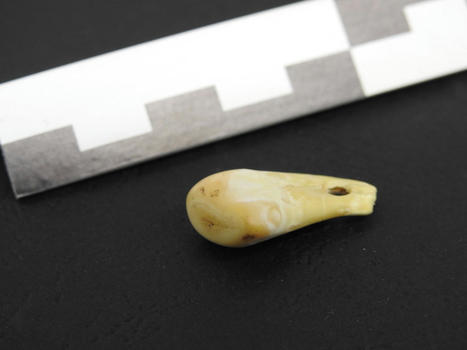
An international research team led by the Max Planck Institute for Evolutionary Anthropology in Leipzig, Germany, has for the first time successfully isolated ancient human DNA from a Paleolithic artefact: a pierced deer tooth discovered in Denisova Cave in southern Siberia. To preserve the integrity of the artefact, they developed a new, nondestructive method for isolating DNA from ancient bones and teeth. From the DNA retrieved they were able to reconstruct a precise genetic profile of the woman who used or wore the pendant, as well as of the deer from which the tooth was taken. Genetic dates obtained for the DNA from both the woman and the deer show that the pendant was made between 19,000 and 25,000 years ago. The tooth remains fully intact after analysis, providing testimony to a new era in ancient DNA research, in which it may become possible to directly identify the users of ornaments and tools produced in the deep past.
Pierced deer tooth discovered from Denisova Cave in southern Siberia that yielded ancient human DNA. Artefacts made of stone, bones or teeth provide important insights into the subsistence strategies of early humans, their behavior and culture. However, until now it has been difficult to attribute these artefacts to specific individuals, since burials and grave goods were very rare in the Palaeolithic. This has limited the possibilities of drawing conclusions about, for example, division of labor or the social roles of individuals during this period.
In order to directly link cultural objects to specific individuals and thus gain deeper insights into Paleolithic societies, an international, interdisciplinary research team, led by the Max Planck Institute for Evolutionary Anthropology in Leipzig, has developed a novel, non-destructive method for DNA isolation from bones and teeth. Although they are generally rarer than stone tools, the scientists focused specifically on artefacts made from skeletal elements, because these are more porous and are therefore more likely to retain DNA present in skin cells, sweat and other body fluids.
A new DNA extraction method
Lead author Elena Essel working in the clean laboratory on the pierced deer tooth discovered from Denisova Cave. Before the team could work with real artefacts, they first had to ensure that the precious objects would not be damaged. “The surface structure of Paleolithic bone and tooth artefacts provides important information about their production and use. Therefore, preserving the integrity of the artefacts, including microstructures on their surface, was a top priority” says Marie Soressi, an archaeologist from the University of Leiden who supervised the work together with Matthias Meyer, a Max Planck geneticist.
The team tested the influence of various chemicals on the surface structure of archaeological bone and tooth pieces and developed a non-destructive phosphate-based method for DNA extraction. “One could say we have created a washing machine for ancient artifacts within our clean laboratory," explains Elena Essel, the lead author of the study who developed the method. "By washing the artifacts at temperatures of up to 90°C, we are able to extract DNA from the wash waters, while keeping the artifacts intact.”
It appears that AI has found potential alien "technosignatures" hidden in radio signals from space that could point to alien technology.
The goal of the search for extraterrestrial intelligence (SETI) is to quantify the prevalence of technological life beyond Earth via their ‘technosignatures’. One theorized technosignature is narrowband Doppler drifting radio signals. The principal challenge in conducting SETI in the radio domain is developing a generalized technique to reject human radiofrequency interference.
Now, astronomers presented a comprehensive deep-learning-based technosignature search on 820 stellar targets from the Hipparcos catalogue, totaling over 480 h of on-sky data taken with the Robert C. Byrd Green Bank Telescope as part of the Breakthrough Listen initiative. They implement a novel β-convolutional variational autoencoder to identify technosignature candidates in a semi-unsupervised manner while keeping the false-positive rate manageably low, reducing the number of candidate signals by approximately two orders of magnitude compared with previous analyses on the same dataset.
This work returned eight promising extraterrestrial intelligence signals of interest not previously identified. Re-observations on these targets have so far not resulted in re-detections of signals with similar morphology. This machine-learning approach presents itself as a leading solution in accelerating SETI and other transient research into the age of data-driven astronomy.
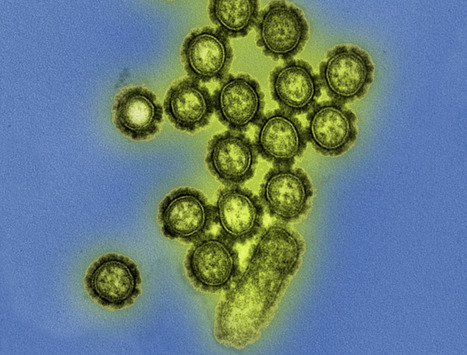
A clinical trial of an experimental universal influenza vaccine developed by researchers at the National Institute of Allergy and Infectious Diseases’ (NIAID) Vaccine Research Center (VRC), part of the National Institutes of Health, has begun enrolling volunteers at Duke University in Durham, North Carolina. This Phase 1 trial will test the experimental vaccine, known as H1ssF-3928 mRNA-LNP, for safety and its ability to induce an immune response.
The trial will enroll up to 50 healthy volunteers aged 18 through 49. Three groups of study participants (10 participants each) will be vaccinated with 10, 25 and 50 micrograms of the experimental vaccine, respectively. After evaluation of the data to determine an optimum dosage, an additional 10 participants will be enrolled to receive the optimum dosage. The study also will include a group of participants who will receive a current quadrivalent seasonal influenza vaccine. This will allow the researchers a point of direct comparison between the immunogenicity and safety of the candidate vaccine and available seasonal flu vaccines. Participants will be regularly evaluated to assess the vaccine’s safety (and, secondarily, its efficacy) and will receive follow-up appointments for up to one year after vaccination.
Seasonal influenza, or flu, kills thousands of people in the United States each year. The Centers for Disease Control and Prevention estimates that between 2010 and 2020, between 12,000 and 52,000 people died of flu in the United States annually. Although annual seasonal flu vaccines are valuable tools in controlling the spread and severity of influenza, they do not provide immunity against every flu strain. Each year, before the flu season begins, scientific experts must predict which influenza strains are likely to be most common during the upcoming months and then select three or four of these strains to include in the next seasonal flu vaccine. Vaccine manufacturers then need time to produce and distribute the vaccine—during which the dominant strains of the virus can change in unexpected ways, potentially decreasing the efficacy of the vaccine. An effective universal flu vaccine could eliminate these problems by protecting its recipients against a wide variety of strains and ideally providing durable long-term immunity, so people would not need to be vaccinated every year. “A universal influenza vaccine would be a major public health achievement and could eliminate the need for both annual development of seasonal influenza vaccines, as well as the need for patients to get a flu shot each year,” said Acting NIAID Director Hugh Auchincloss, M.D. “Moreover, some strains of influenza virus have significant pandemic potential. A universal flu vaccine could serve as an important line of defense against the spread of a future flu pandemic.”
Alpha Centauri is our closest stellar neighbor, a binary star system located just 4.376 light-years away. Despite its proximity, repeated astronomical surveys have failed to find hard evidence of extrasolar planets in this system. Part of the problem is that the system consists of two stars orbiting each other, which makes detecting exoplanets through the two most popular methods very challenging. In 2019, Breakthrough Initiatives announced they were backing a new project to find exoplanets next door – the Telescope for Orbit Locus Interferometric Monitoring of our Astronomical Neighbourhood (TOLIMAN, after the star’s ancient name in Arabic).
This low-cost mission concept was designed by a team from the University of Sydney, Australia, and aims to look for potentially-habitable exoplanets in the Alpha Centauri system using the Astrometry Method. This consists of monitoring a star’s apparent position in the sky for signs of wobble, indicating that gravitational forces (like planets) are acting on it. Recently, the University of Sydney signed a contract with EnduroSat, a leading microsatellites and space services provider, to provide the delivery system and custom-built minisatellite that will support the mission when it launches.
Alpha Centauri consists of a G-type primary star (similar to our Sun) and a K-type (orange dwarf) secondary. Because of its binary nature, it has been very difficult to discern possible signals from this system that could be the result of exoplanets. This includes the Transit Method, where astronomers monitor stars for periodic dips in luminosity that may indicate planets passing in front of the star (transiting) relative to the observer. But since the stars also make transits, dips in luminosity are very common.
TOLIMAN will search for planets in the habitable or “Goldilocks” zone around two Sun-like stars in the system, Alpha Centauri A and B, which are just four light years from Earth. Mission leader Professor Peter Tuthill from the University of Sydney said: “That’s tantalizingly close to home. Astronomers have discovered thousands of exoplanets outside our own solar system but most are thousands of light years away and beyond our reach. Modern satellite technology will allow us to explore our celestial backyard and perhaps lay the groundwork for visionary future missions spanning the interstellar voids to the Centauri system.”
Discovering exoplanets is a major technological challenge, even for large space telescopes. For a mini satellite, the task is daunting. To achieve this, the team is developing a small custom-designed space telescope capable of extremely fine measurements.
The satellite needs to fit the telescope within a limited volume – just 12 litres – and maintain its thermal and mechanical stability with exquisite precision using active systems. EnduroSat will provide the delivery system for the custom-built mini satellite that supports the mission.
“Any exoplanets we find that close to Earth can be followed up with other instruments, giving excellent prospects for discovering and analysing atmospheres, surface chemistry or even fingerprints of a biosphere – the tentative signs of life,” said Professor Tuthill from the Sydney Institute for Astronomy and School of Physics.
EnduroSat’s flight-proven MicroSat technology can downlink payload data at a speed of 125+ Mbps, which will be critical for downloading all data from prolonged observation sessions.
Astronomers at the Institute for Advanced Study and the Flatiron Institute, along with their collaborators, have utilized artificial intelligence (AI) to improve a method of calculating the mass of massive clusters of galaxies. The AI revealed that by incorporating a simple term into an existing equation, researchers can now achieve much more accurate mass estimates than ever before.
The newly enhanced calculations will allow scientists to determine the basic characteristics of the universe with greater precision, according to a report by the astrophysicists, which was published in the Proceedings of the National Academy of Sciences (PNAS). “It’s such a simple thing; that’s the beauty of this,” says study co-author Francisco Villaescusa-Navarro, a research scientist at the Flatiron Institute’s Center for Computational Astrophysics (CCA) in New York City. “Even though it’s so simple, nobody before had thought of this and found this term. People have been working on this for decades, and still they were not able to find this. That really shows you the power of AI, which gets smarter every month.”
Understanding the universe requires knowing where and how much stuff there is. Galaxy clusters are the most massive objects in the universe: A single cluster can contain anything from hundreds to thousands of galaxies, along with plasma, hot gas, and dark matter. The cluster’s gravity holds these components together. Understanding such galaxy clusters is crucial to pinning down the origin and continuing evolution of the universe.
Perhaps the most crucial quantity determining the properties of a galaxy cluster is its total mass. But measuring this quantity is difficult — galaxies cannot be ‘weighed’ by placing them on a scale. The problem is further complicated because the dark matter that makes up much of a cluster’s mass is invisible. Instead, scientists deduce the mass of a cluster from other observable quantities.
In the early 1970s, Rashid Sunyaev, current distinguished visiting professor at the Institute for Advanced Study’s School of Natural Sciences, and his collaborator Yakov B. Zel’dovich developed a new way to estimate galaxy cluster masses. Their method relies on the fact that as gravity squashes matter together, the matter’s electrons push back. That electron pressure alters how the electrons interact with particles of light called photons. As photons left over from the Big Bang’s afterglow hit the squeezed material, the interaction creates new photons. The properties of those photons depend on how strongly gravity is compressing the material, which in turn depends on the galaxy cluster’s heft. By measuring the photons, astrophysicists can estimate the cluster’s mass.
However, this ‘integrated electron pressure’ is not a perfect proxy for mass, because the changes in the photon properties vary depending on the galaxy cluster. Wadekar and his colleagues thought an artificial intelligence tool called ‘symbolic regression’ might find a better approach. The tool essentially tries out different combinations of mathematical operators — such as addition and subtraction — with various variables, to see what equation best matches the data.
Electron cryo-tomography (cryo-ET) is emerging as a powerful technique to provide detailed 3D images of cellular environments and enclosed biomolecules. However, one of the challenges of the methodology is the identification of protein molecules in the images for further processing.
A research team around Stefan Raunser, Director at the MPI of Molecular Physiology in Dortmund, led by Thorsten Wagner, developed software to pick proteins in crowded cellular volumes. The new open-source tool, called TomoTwin, is based on deep metric learning and allows scientists to locate several proteins with high accuracy and throughput without manually creating or retraining the network each time. The paper is published in the journal Nature Methods.
"TomoTwin paves the way for automated identification and localization of proteins directly in their cellular environment, expanding the potential of cryo-ET," says Gavin Rice, co-first author of the publication. Cryo-ET has the potential to decipher how biomolecules work within a cell and, by that, to unveil the basis of life and the origin of diseases.
In a cryo-ET experiment, scientists use a transmission electron microscope to obtain 3D images, called tomograms, of the cellular volume containing complex biomolecules. To gain a more detailed image of each different protein, they average as many copies of them as possible—similar to photographers capturing the same photo at varying exposures to later combine them in a perfectly exposed image. Crucially, one has to correctly identify and locate the different proteins in the picture before averaging them.
"Scientists can attain hundreds of tomograms per day, but we lacked tools to fully identify the molecules within them," says Rice. So far, researchers have used algorithms based on templates of already known molecular structures to search for matches in the tomograms, but these tend to be error-prone. Identifying molecules by hand is another option which ensures high-quality picking but takes days to weeks per dataset.
Another possibility would be to use a form of supervised machine learning. These tools can be very accurate but currently lack usability, as they require manually labeling thousands of examples to train the software for each new protein, an almost impossible task for small biological molecules in a crowded cellular environment.
TomoTwin
The newly developed software TomoTwin overcomes many of these obstacles: It learns to pick the molecules that are similar in shape within a tomogram and maps them to a geometric space—the system is rewarded for placing similar proteins near each other and penalized otherwise. In the new map researchers can isolate and accurately identify the different proteins and use this to locate them inside the cell.
"One advantage of TomoTwin is that we provide a pre-trained picking model," says Rice. By removing the training step, the software can even run on local computers—where processing a tomogram usually requires 60-90 minutes, runtime on the MPI supercomputer Raven is reduced to 15 minutes per tomogram.
TomoTwin allows researchers to pick dozens of tomograms in the time it takes to manually pick a single one, therefore increasing the throughput of data and the averaging rate to obtain a better image. The software can currently locate globular proteins or protein complexes larger than 150 kilodaltons in cells; in the future, the Raunser group aims to include membrane proteins, filamentous proteins, and proteins of smaller sizes.
AI algorithms can screen for pancreatic cancer and predict whether patients will develop the disease up to three years before a human doctor can make the same diagnosis, according to research published in Nature on Monday.
Pancreatic cancer is deadly; the five-year survival rate averages 12 percent. Academics working in Denmark and the US believe AI could help clinicians by detecting pancreatic cancer at earlier stages, if the software can reliably predict which patients are at higher risk of developing the disease.
The researchers trained AI algorithms on millions of medical records obtained in the Danish National Patient Registry and the US Veterans Affairs Corporate Data Warehouse. The models were trained to correlate diagnosis codes – labels used by hospitals describing different medical conditions – to pancreatic cancer.
Some diagnosis codes for jaundice, abdominal and pelvic pain, weight loss, for example, are more closely related to the disease – especially if they are found in patients about six months before diagnosis – while others like Type 2 diabetes, anemia, or inflammation of the pancreas are usually found earlier.
"Cancer gradually develops in the human body, often over many years and fairly slowly, until the disease takes hold," Chris Sander, the study's co-senior investigator and leader of a lab working at the Department of Systems Biology at Harvard Medical School, told The Register.
"The AI system attempts to learn from signs in the human body that may relate to such gradual changes. But it is early days for this, and while the AI system can make reasonably accurate predictions, it cannot, or not currently, identify mechanisms or causative events. Like often in science, correlation is useful for prediction, but causation is much harder to establish," he said.
Researchers teach AI to pinpoint mutations linked to cancer The most effective model, based on a transformer-based architecture, showed that out of the top 1,000 highest-risk patients over 50, about 320 would go on to develop pancreatic cancer. The model is less accurate when trying to predict pancreatic cancer over longer time intervals compared to shorter ones, and for patients younger than 50.
"AI on real-world clinical records has the potential to produce a scalable workflow for early detection of cancer in the community, to shift focus from treatment of late-stage to early-stage cancer, to improve the quality of life of patients and to increase the benefit/cost ratio of cancer care," the paper reads.
Effective prediction in real-world settings will rely on the quality of patients' medical histories. Future AI-based screening tools for pancreatic cancer will have to be trained on specific local population data, the study found. A model trained on data from Danish patients, for example, was not as accurate when applied to US patients.
"Given the experience in Denmark and one or two US health systems, this means that in each country with different conditions and different systems, it is best to re-train the model locally. AI needs a lot of data to train. Access in different locations is not straightforward, as medical records are and should be confidential. So local approval and data security is essential," Sander said.
The study is still in its early stages, and the software cannot yet be used to run screening programs. Improvements are needed before even a trial can be conducted. "Once a surveillance program is implemented, the actual computing costs for applying the software are moderate. The training is what consumes considerable computing resources. The actual clinical tests to see early signs of cancer or to detect cancer when it is still very small are costly, much more expensive than for example mammograms," Sander added. Still, the team believes that as the technology improves and operating costs decrease, AI could become a valuable screening tool in the future.
An international team led by scientists at the University of Sydney has demonstrated nanowire networks can exhibit both short- and long-term memory like the human brain.
The research has been published today in the journal Science Advances, led by Dr Alon Loeffler, who received his PhD in the School of Physics, with collaborators in Japan. "In this research we found higher-order cognitive function, which we normally associate with the human brain, can be emulated in non-biological hardware," Dr Loeffler said. "This work builds on our previous research in which we showed how nanotechnology could be used to build a brain-inspired electrical device with neural network-like circuitry and synapse-like signaling. "Our current work paves the way towards replicating brain-like learning and memory in non-biological hardware systems and suggests that the underlying nature of brain-like intelligence may be physical."
Nanowire networks are a type of nanotechnology typically made from tiny, highly conductive silver wires that are invisible to the naked eye, covered in a plastic material, which are scattered across each other like a mesh. The wires mimic aspects of the networked physical structure of a human brain.
Advances in nanowire networks could herald many real-world applications, such as improving robotics or sensor devices that need to make quick decisions in unpredictable environments. "This nanowire network is like a synthetic neural network because the nanowires act like neurons, and the places where they connect with each other are analogous to synapses," senior author Professor Zdenka Kuncic, from the School of Physics, said.
"Instead of implementing some kind of machine learning task, in this study Dr Loeffler has actually taken it one step further and tried to demonstrate that nanowire networks exhibit some kind of cognitive function." To test the capabilities of the nanowire network, the researchers gave it a test similar to a common memory task used in human psychology experiments, called the N-Back task. For a person, the N-Back task might involve remembering a specific picture of a cat from a series of feline images presented in a sequence. An N-Back score of 7, the average for people, indicates the person can recognize the same image that appeared seven steps back.
When applied to the nanowire network, the researchers found it could 'remember' a desired endpoint in an electric circuit seven steps back, meaning a score of 7 in an N-Back test."What we did here is manipulate the voltages of the end electrodes to force the pathways to change, rather than letting the network just do its own thing. We forced the pathways to go where we wanted them to go," Dr Loeffler said. "When we implement that, its memory had much higher accuracy and didn't really decrease over time, suggesting that we've found a way to strengthen the pathways to push them towards where we want them, and then the network remembers it.
"Neuroscientists think this is how the brain works, certain synaptic connections strengthen while others weaken, and that's thought to be how we preferentially remember some things, how we learn and so on."
The researchers said that when the nanowire network is constantly reinforced, it reaches a point where that reinforcement is no longer needed. At that point the information is consolidated into memory. "It's kind of like the difference between long-term memory and short-term memory in our brains," Professor Kuncic explained. "If we want to remember something for a long period of time, we really need to keep training our brains to consolidate that, otherwise it just kind of fades away over time. One task showed that the nanowire network can store up to seven items in memory at substantially higher than chance levels without reinforcement training and near-perfect accuracy with reinforcement training."
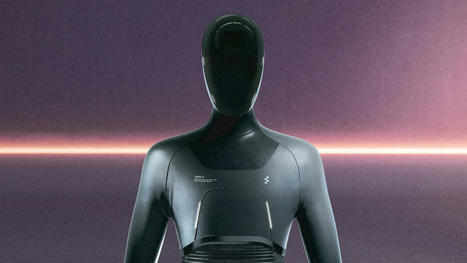
Figure 01 is a bipedal, AI-powered humanoid. And it wants to work in a warehouse.
Key to Figure’s robotics approach is its reliance on artificial intelligence to enable its robots to learn and improve their abilities. As movements and performance evolves, the robots can progress from basic lifting and carrying tasks to more advanced functions. That work will start out in the warehouse setting, doing the kind of heavy lifting that people don’t particularly enjoy.
“Our business plan is to get to revenue as fast as we can. And honestly that means doing things that are technically easier,” says Figure founder Brett Adcock.
Single-purpose robots are already common in warehouses, like the roving robots that carry boxes to shelves in Amazon fulfillment centers, and a robot created for DHL Supply Chain that unloads boxes from trucks at warehouse loading bays. Human-like robots could be a more versatile solution for the warehouse, Adcock says. Instead of relying on one robot to unload a truck and another to haul boxes around, Figure’s plan is to create a robot that can do almost anything a human worker otherwise would.
In some ways, it’s a narrower approach to the humanoid robot, which many other companies have sought to build. Honda’s Asimo was intended to help a range of users, from people with limited mobility to older folks needing full-time care. NASA has invested in humanoid “robonauts” that are capable of assisting with missions in space. Boston Dynamics has pushed the limits of robotics by creating humanoids that can jump and flip.
“Existing humanoids today have just been stunts and demos,” Adcock says. “We want to get away from that and show that they can be really useful.” Figure has produced five prototypes of its humanoid. They’re designed to have 25 degrees of motion, including the ability to bend over fully at the waist and lift a box from the ground up to a high shelf. Hands will add even more flexibility and utility. That is the plan, at least. Right now, the prototype robots are mainly just walking.
Adcock expects to conduct extensive testing and refinement in the coming months, getting the robots to the point where they can handle most general warehouse applications by the end of the year. A pilot of 50 robots working in a real warehouse setting is being eyed for 2024. “Hardware companies take time,” he says. “This will take 20 or 30 years for us to really build out.”
With a reflective featureless face mask that may remind some viewers of a character from G.I. Joe, Figure 01 is a sleeker vision of the humanoid robots people may now be familiar with. Atlas, the walking, jumping, and parkour-enabled robot from the research wing of Boston Dynamics, for example, has prioritized mechanical skills over aesthetics.
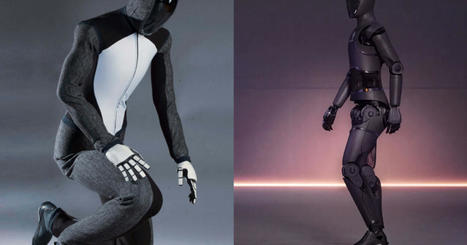
Figure’s robot bears some similarity to Tesla’s Optimus robot. Announced in 2021 during a presentation featuring a human in a spandex robot suit, Optimus also aspires to a smoother form but its latest prototype looks more science science than science fiction. Adcock says Figure’s robots use advanced electric motors, enabling smoother movement than the hydraulically run Atlas, which is allowing the prototypes to have a more natural gait while also fitting the mechanical systems into a smaller package. “We want to fool like 90% of people in a walking Turing test,” he says.
The concept is being built around the notion that the robot can be continually improved over time, learning new skills and eventually expanding into more complex tasks. Being able to do more, Adcock says, makes what could be a very expensive device much more affordable to build and buy. That could someday lead to Figure’s robots working in manufacturing, retail, home care, or even outer space. “I really believe that humanoids will colonize planets,” Adcock says.
For now, Figure is targeting the humble warehouse. “If we unveil the humanoid at some big event, it’ll just be doing warehouse work on stage the whole time,” Adcock says. “No back flips, none of that crazy parkour stuff. We just want to do real, practical work.”
Many of the world’s languages are in danger of disappearing, and the limitations of current speech recognition and generation technology will only accelerate this trend. We want to make it easier for people to access information and use devices in their preferred language, and today we’re announcing a series of artificial intelligence (AI) models that could help them do just that.
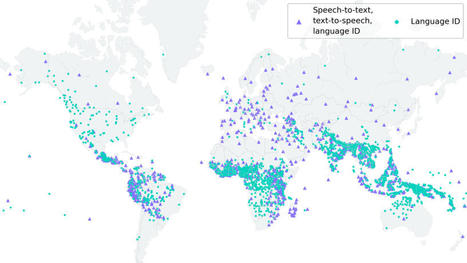
Massively Multilingual Speech (MMS) models expand text-to-speech and speech-to-text technology from around 100 languages to more than 1,100 — more than 10 times as many as before — and can also identify more than 4,000 spoken languages, 40 times more than before.
There are also many use cases for speech technology — from virtual and augmented reality technology to messaging services — that can be used in a person’s preferred language and can understand everyone’s voice. We are open-sourcing our models and code so that others in the research community can build on our work and help preserve the world’s languages and bring the world closer together.
Collecting audio data for thousands of languages was our first challenge because the largest existing speech datasets cover 100 languages at most. To overcome this, we turned to religious texts, such as the Bible, that have been translated in many different languages and whose translations have been widely studied for text-based language translation research. These translations have publicly available audio recordings of people reading these texts in different languages. As part of the MMS project, we created a dataset of readings of the New Testament in more than 1,100 languages, which provided on average 32 hours of data per language.
By considering unlabeled recordings of various other Christian religious readings, we increased the number of languages available to more than 4,000. While this data is from a specific domain and is often read by male speakers, our analysis shows that our models perform equally well for male and female voices. And while the content of the audio recordings is religious, our analysis shows that this doesn’t bias the model to produce more religious language.
Humanoid robots built around cutting-edge AI brains promise shocking, disruptive change to labor markets and the wider global economy – and near-unlimited investor returns to whoever gets them right at scale. Big money is now flowing into the sector.
The jarring emergence of ChatGPT has made it clear: AIs are advancing at a wild and accelerating pace, and they're beginning to transform industries based around desk jobs that typically marshal human intelligence. They'll begin taking over portions of many white-collar jobs in the coming years, leading initially to huge increases in productivity, and eventually, many believe, to huge increases in unemployment.
If you're coming out of school right now and looking to be useful, blue collar work involving actual physical labor might be a better bet than anything that'd put you behind a desk. It's starting to look like a general-purpose humanoid robot worker might be closer than anyone thinks, imbued with light-speed, swarm-based learning capabilities to go along with GPT-version-X communication abilities, a whole internet's worth of knowledge, and whatever physical attributes you need for a given job. Such humanoids will begin as dumbass job-site apprentices with zero common sense, but they'll learn – at a frightening pace, if the last few months in AI has been any kind of indication. They'll be available 24/7, power sources permitting, gradually expanding their capabilities and overcoming their limitations until they begin displacing humans. They could potentially crash the cost of labor, leading to enormous gains in productivity – and a fundamental upheaval of the blue-collar labor market at a size and scale limited mainly by manufacturing, materials, and what kinds of jobs they're capable of taking over.
The best-known humanoid to date has been Atlas, by Boston Dynamics. Atlas has shown impressive progress over the last 10 years. But Atlas is a research platform, and Boston Dynamics founder Marc Raibert has been clear that the company is in no rush to take humanoids to the mass market. Hanson Robotics and Engineered Arts, among others, have focused on human/robot interaction, concentrating on making humanoids like Sophia and Ameca, with lifelike and expressive faces. Ameca in particular communicates using the GPT language model.
Others are absolutely focused on getting these things into mass usage as quickly as possible. Elon Musk announced Tesla's entry into humanoid robotics in 2021, and the company appears to have made pretty decent progress on the Optimus prototypes for its Tesla Bot in the intervening months. "It's probably the least understood or appreciated part of what we're doing at Tesla," he told investors last month. "But it will probably be worth significantly more than the car side of things long-term."
Just this year, entrepreneur Brett Adcock, founder of the Vettery "online talent marketplace," and more recently Archer Aviation, one of the leading contenders in the emerging electric VTOL aircraft movement, announced his latest venture is focused on humanoid robots. The first phase of a Musk-like "master plan" for the new company, Figure, aims first to "build a feature-complete electromechanical humanoid," then to "perform human-like manipulation," then to "integrate humanoids into the labor force."
An audio recast of the article “HARPA | Welcome” by HARPA AI with the following content: Chrome extension for AI-powered web automation: ChatGPT for Google Search, ChatGPT writer, summarize, rewrite, extract and monitor web pages, prices and data.
Would you like to optimize your workflow and increase productivity online? Page-aware ChatGPT prompts and commands could be just what you need. HARPA AI Chrome Extension offers over 100 prompts and commands designed to help you streamline your work and get more done in less time. It has ChatGPT prompts for LinkedIn, Instagram, YouTube, TikTok, Amazon, Quora, StackOverflow, and a host of other web services.
With commands ranging from marketing and SEO to learning and productivity, HARPA AI is a powerful tool for creating engaging content, optimizing your SEO strategy, developing your career, summarizing web pages and YouTube videos, reviewing your CV, fixing or writing code snippets, extracting prices and keywords from websites, finding alternatives, creating captivating stories, and much more.
With its advanced AI capabilities and personalized dialogue options, you can easily create customized commands and sequences of prompts to meet your unique needs.
Fake virtual identities are nothing new. The ability to so easily create them has been both a boon for social media platforms — more “users” — and a scourge, tied as they are to the spread of conspiracy theories, distorted discourse and other societal ills.
Still, Twitter bots are nothing compared with what the world is about to experience, as any time spent with ChatGPT illustrates. Flash forward a few years and it will be impossible to know if someone is communicating with another mortal or a neural network.
Sam Altman knows this. Altman is the co-founder and the CEO of ChatGPT parent OpenAI and has long had more visibility than most into what’s around the corner. It’s why more than three years ago, he conceived of a new company that could serve first and foremost as proof-of-personhood. Called Worldcoin, its three-part mission — to create a global ID, a global currency and an app that enables payment, purchases and transfers using its own token, along with other digital assets and traditional currencies — is as ambitious as it is technically complicated, but the opportunity is also vast.
In broad strokes, here’s how the outfit, still in beta and based in San Francisco and Berlin, works: To use the service, users must download its app, then have their iris scanned using a silver, melon-sized orb that houses a custom optical system. Once the scan is complete, the individual is added to a database of verified humans, and Worldcoin creates a unique cryptographic “hash” or equation that’s tied to that real person. The scan isn’t saved, but the hash can be used in the future to prove the person’s identity anonymously through the app, which includes a private key that links to a shareable public key. Because the system is designed to verify that a person is actually a unique individual, if the person wants to accept a payment or fund a specific project, the app generates a “zero-knowledge proof” — or mathematical equation — that allows the individual to provide only the necessary amount of information to a third party. Some day, the technology might even help people to vote on how AI should be governed. (A piece in the outlet IEEE Spectrum better spells out the specifics of Worldcoin’s tech.)
Investors eager to be in business with Altman jumped at the chance to fund the outfit almost as soon as it was imagined, with Andreessen Horowitz, Variant, Khosla Ventures, Coinbase and Tiger Global providing it with $125.5 million. But the public has been more wary. When in June 2021, Bloomberg reported that Altman was at work on Worldcoin, many questioned its promise to give one share of its new digital currency to everyone who agreed to an iris scan. Worldcoin said it needed to be decentralized from the outset so it could deliver future currency drops as part of universal basic income programs. (Altman has long predicted that AI will generate enough wealth to pay every adult some amount of money each year.) From Worldcoin’s perspective, the crypto piece was necessary. Yet some quickly deemed it another crypto scam, while others questioned whether a nascent startup collecting biometric data could truly secure its participants’ privacy.
Altman later said the press owed to a “leak” and that Worldcoin wasn’t ready to tell its story in 2021. Now, reorganized under a new parent organization called Tools for Humanity that calls itself both a research lab and product company, the outfit is sharing more details. Whether they’ll be enough to win over users is an open question, but certainly, more people now understand why proving personhood online is about to become essential.
In this exclusive preview of groundbreaking, unreleased technology, former Apple designer and Humane cofounder Imran Chaudhri envisions a future where AI enables our devices to "disappear." He gives a sneak peek of his company's new product -- shown for the first time ever on the TED stage -- and explains how it could change the way we interact with tech and the world around us. Witness a stunning vision of the next leap in device design.
Imagine using your cellphone to control the activity of your own cells to treat injuries and disease. It sounds like something from the imagination of an overly optimistic science fiction writer. But this may one day be a possibility through the emerging field of quantum biology.
Over the past few decades, scientists have made incredible progress in understanding and manipulating biological systems at increasingly small scales, from protein folding to genetic engineering. And yet, the extent to which quantum effects influence living systems remains barely understood.
Quantum effects are phenomena that occur between atoms and molecules that can't be explained by classical physics. It has been known for more than a century that the rules of classical mechanics, like Newton's laws of motion, break down at atomic scales. Instead, tiny objects behave according to a different set of laws known as quantum mechanics.
For humans, who can only perceive the macroscopic world, or what's visible to the naked eye, quantum mechanics can seem counterintuitive and somewhat magical. Things you might not expect happen in the quantum world, like electrons "tunneling" through tiny energy barriers and appearing on the other side unscathed, or being in two different places at the same time in a phenomenon called superposition.
Research in quantum mechanics is usually geared toward technology. However, and somewhat surprisingly, there is increasing evidence that nature—an engineer with billions of years of practice—has learned how to use quantum mechanics to function optimally. If this is indeed true, it means that our understanding of biology is radically incomplete. It also means that we could possibly control physiological processes by using the quantum properties of biological matter.
Quantumness in biology is probably real
Researchers can manipulate quantum phenomena to build better technology. In fact, you already live in a quantum-powered world: from laser pointers to GPS, magnetic resonance imaging and the transistors in your computer—all these technologies rely on quantum effects. In general, quantum effects only manifest at very small length and mass scales, or when temperatures approach absolute zero. This is because quantum objects like atoms and molecules lose their "quantumness" when they uncontrollably interact with each other and their environment. In other words, a macroscopic collection of quantum objects is better described by the laws of classical mechanics. Everything that starts quantum dies classical. For example, an electron can be manipulated to be in two places at the same time, but it will end up in only one place after a short while—exactly what would be expected classically.
In a complicated, noisy biological system, it is thus expected that most quantum effects will rapidly disappear, washed out in what the physicist Erwin Schrödinger called the "warm, wet environment of the cell." To most physicists, the fact that the living world operates at elevated temperatures and in complex environments implies that biology can be adequately and fully described by classical physics: no funky barrier crossing, no being in multiple locations simultaneously.
Chemists, however, have for a long time begged to differ. Research on basic chemical reactions at room temperature unambiguously shows that processes occurring within biomolecules like proteins and genetic material are the result of quantum effects. Importantly, such nanoscopic, short-lived quantum effects are consistent with driving some macroscopic physiological processes that biologists have measured in living cells and organisms. Research suggests that quantum effects influence biological functions, including regulating enzyme activity, sensing magnetic fields, cell metabolism and electron transport in biomolecules.
A team of researchers with the ESA propose an upgrade for the LISA mission (LISAMax), which could revolutionize gravitational wave astronomy as we know it!
With greater sensitivity, astronomers will be able to trace GW events back to their source and use them to probe the interiors of exotic objects and the laws of physics. As part of their Voyage 2050 planning cycle, the European Space Agency (ESA) is considering mission themes that could be ready by 2050 – including GW astronomy. In a recent paper, researchers from the ESA’s Mission Analysis Section and the University of Glasgow presented a new concept that would build on top of LISA – known as LISAmax. As they point out in the report, this observatory could potentially improve GW sensitivity by up to two orders of magnitude.
The research was led by theoretical physics Dr. Waldemar Martens, a Mission Analyst at the ESA’s European Space Operations Center (ESOC) in Darmstadt, Germany. He was joined by aerospace engineer and astrophysicist Michael Khan, also a Missions Analyst at the ESOC, and astrophysicist Dr. Jean-Baptiste Bayle, an astronomy and astrophysics Research Fellow with the University of Glasgow. The paper that describes their findings appeared online recently and is currently being reviewed for publication by the journal Classical and Quantum Gravity.
Since they were first detected by LIGO scientists in 2015, researchers with LIGO and other observatories worldwide have refined the types of GW events they can detect. This includes the Virgo Observatory in Italy (near Pisa) and the Kamioka Gravitational Wave Detector (KAGRA) in Hida, Japan. These observatories have since partnered with LIGO, forming the Ligo-Virgo-KAGRA (LVK) Collaboration. The efforts of these and other observatories, plus upgrades that have provided increased sensitivity, have multiplied the number of events detected and even traced some back to their sources. As Dr. Martens told Universe Today via email, this pioneering work has been invaluable. But like all forms of astronomy, future progress is dependent in part on having observatories in space: “Now that there is no doubt that gravitational waves can be measured, astronomers want to use them as an additional source of information where previously only electromagnetic waves were available. Earth-based detectors, like LIGO/Virgo/Kagra are sensitive in the frequency range of tens of Hertz to several kilo-Hertz. This makes them sensitive to sources like black hole mergers of a few tens of solar masses. However, it is known that much larger objects, like super-massive black holes (>10^6 solar masses), exist in the center of galaxies. Mergers of these objects produce gravitational waves far below the sensitive band of Earth-based detectors. To see them, we have to go to space and construct an observatory, like LISA, that has an arm length of 2.5 million km.”
So far, astronomers have detected GW events caused by binary black holes (BBHs) or binary neutron stars (kilonova events), where the co-orbiting bodies eventually merged. It is also theorized that there are many other potential sources, and studying these events could advance our understanding of the Universe. “Among those are primordial gravitational waves that were produced during processes a fraction of a second after the Big Bang,” said Dr. Martens. “We hope that LISA can detect those, but it is not clear yet. That’s one of the reasons why detectors with higher sensitivity and/or different frequency bands are considered for Voyage 2050.”
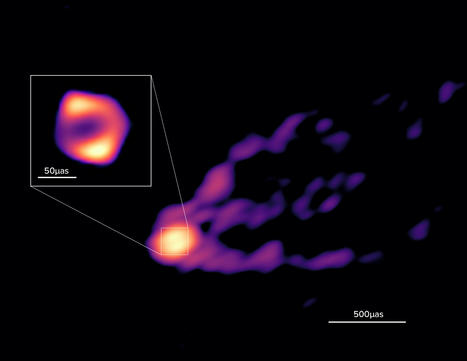
Scientists studying the supermassive black hole at the heart of the M87 galaxy have revealed the origins of the monster's powerful jet and imaged the jet and its source together for the first time. What's more, the observations have revealed that the black hole's ring is much larger than scientists previously believed. The observations were published (April 26, 2023) in the prestigious science magazine Nature.
The Global mm-VLBI Array (GMVA) united radio telescopes around the world to produce these new results, including the National Science Foundation's National Radio Astronomy Observatory (NRAO) and Green Bank Observatory (GBO), Atacama Large Millimeter/ submillimeter Array (ALMA), Very Long Baseline Array (VLBA), and Green Bank Telescope (GBT). The SMBH at the center of the M87 galaxy is the most recognizable in the universe. It was the first black hole to be captured in an image, created by the Event Horizon Telescope (EHT) and made public in 2019. The image of its dense, dark core framed by an amorphous glowing ring made international headlines.
"M87 has been observed over many decades, and 100 years ago we knew the jet was there, but we couldn't place it in context," said Ru-Sen Lu, an astronomer at the Shanghai Astronomical Observatory, leader of a Max Planck Research Group at the Chinese Academy of Sciences, and lead author of the new paper. "With GMVA, including the premier instruments at NRAO and GBO, we're observing at a lower frequency so we're seeing more detail— and now we know there are more details to see."
Eduardo Ros, an astronomer and the Scientific Coordinator for Very Long Baseline Interferometry (VLBI) at the Max Planck Institute for Radio Astronomy added, "We've seen the ring before, but now we see the jet. This puts the ring in context—and it's bigger than we thought. If you think of it like a fire-breathing monster, before, we could see the dragon and the fire, but now we can see the dragon breathing the fire."
Since its discovery in 2007, fast radio bursts (FRBs) have baffled astronomers. FRBs are powerful, millisecond-long radio bursts from space that produces as much energy during their brief existence as the Sun produces over a few days. Very little is known about what or how most FRBs are produced; most come from outside our Milky Way galaxy. However, one FRB that has never stopped repeating has been highlighted by a NEW study recently published in Science.
Using the five-hundred-meter Aperture Spherical Radio Telescope (FAST) in China, astronomers identified the repeated burst in 2022 as FRB 20190520B. FRB 20190520B, which produces radio bursts a few times an hour, occasionally at different radio frequencies, is the rarest repeating FRB of all. Astronomers hurried to extend the original study using additional radio frequencies after discovering this exciting phenomenon.
Powerful magnetic fields surrounding the burst
Further research revealed that FRB 20190520B is located in a 3.9 billion light-year-distance dwarf galaxy, home to an incredibly dense environment. The FRB source is surrounded by substances that emit powerful, long-lasting radio waves. The exploding source was speculated to be a young neutron star in a complex environment as a result of this.
The burst emits potent signals at relatively high radio frequencies, according to observations of FRB 20190520B made with the CSIRO Parkes radio telescope in New South Wales, the Green Bank Telescope in the United States, and the Murriyang radio telescope in Australia. The electromagnetic waves in these high-frequency transmissions turned out to be highly polarized, which means they are "waving" in one direction considerably more powerfully than in others.
Different frequencies cause this polarization to shift in direction, and monitoring how much it varies lets us know how strong the magnetic field was when the signal passed through. This polarization measurement indicates a highly magnetized environment surrounding FRB 20190520B. Additionally, throughout the 16 months that astronomers monitored the source, the magnetic field's strength appeared to change and even reverse directions twice. The magnetic field's direction around an FRB has never been seen to alter.
Binary System Hypothesis
Recent observations of recurrent FRBs are most commonly explained by binary systems, consisting of a neutron star and another massive star or a black hole. The most recent findings support the concept involving a big star. However, other possibilities cannot yet be ruled out. Strong stellar winds and well-organized magnetic fields are known to surround massive stars. A reversal is anticipated in the direction of the magnetic field direction if the source of the bursts were going in and out of the stellar wind region as it moved through its orbit. This explanation is supported by the timing of the magnetic field reversal, the observed variability in the apparent field strength, and the concentrated plasma surrounding the burst source.
The famous first image of a black hole just got two times sharper. A research team used artificial intelligence to dramatically improve upon its first image from 2019, which now shows the black hole at the center of the M87 galaxy as darker and bigger than the first image depicted.
AI algorithms—in particular, neural networks that use many interconnected nodes and are able to learn to recognize patterns—are perfectly suited for picking out the patterns of galaxies. Astronomers began using neural networks to classify galaxies in the early 2010s. Now the algorithms are so effective that they can classify galaxies with an accuracy of 98%.
Astronomers working on SETI, the Search for Extraterrestrial Intelligence, use radio telescopes to look for signals from distant civilizations. Early on, radio astronomers scanned charts by eye to look for anomalies that couldn't be explained. More recently, researchers harnessed 150,000 personal computers and 1.8 million citizen scientists to look for artificial radio signals. Now, researchers are using AI to sift through reams of data much more quickly and thoroughly than people can. This has allowed SETI efforts to cover more ground while also greatly reducing the number of false positive signals.
AI has proved itself to be excellent at identifying known objects—like galaxies or exoplanets—that astronomers tell it to look for. But it is also quite powerful at finding objects or phenomena that are theorized but have not yet been discovered in the real world. Teams have used this approach to detect new exoplanets, learn about the ancestral stars that led to the formation and growth of the Milky Way, and predict the signatures of new types of gravitational waves. To do this, astronomers first use AI to convert theoretical models into observational signatures—including realistic levels of noise. They then use machine learning to sharpen the ability of AI to detect the predicted phenomena.
Finally, radio astronomers have also been using AI algorithms to sift through signals that don't correspond to known phenomena. Recently a team from South Africa found a unique object that may be a remnant of the explosive merging of two supermassive black holes. If this proves to be true, the data will allow a new test of general relativity—Albert Einstein's description of space-time.
Making predictions and plugging holes
As in many areas of life recently, generative AI and large language models like ChatGPT are also making waves in the astronomy world. The team that created the first image of a black hole in 2019 used a generative AI to produce its new image. To do so, it first taught an AI how to recognize black holes by feeding it simulations of many kinds of black holes. Then, the team used the AI model it had built to fill in gaps in the massive amount of data collected by the radio telescopes on the black hole M87.
Using this simulated data, the team was able to create a new image that is two times sharper than the original and is fully consistent with the predictions of general relativity. Astronomers are also turning to AI to help tame the complexity of modern research. A team from the Harvard-Smithsonian Center for Astrophysics created a language model called astroBERT to read and organize 15 million scientific papers on astronomy. Another team, based at NASA, has even proposed using AI to prioritize astronomy projects, a process that astronomers engage in every 10 years.
Catalyst materials are critical for refining petroleum products and for manufacturing pharmaceuticals, plastics, food additives, fertilizers, green fuels, industrial chemicals and much more.
Catalyst materials accelerate chemical reactions without undergoing changes themselves. They are critical for refining petroleum products and for manufacturing pharmaceuticals, plastics, food additives, fertilizers, green fuels, industrial chemicals and much more. Scientists and engineers have spent decades fine-tuning catalytic reactions -- yet because it's currently impossible to directly observe those reactions at the extreme temperatures and pressures often involved in industrial-scale catalysis, they haven't known exactly what is taking place on the nano and atomic scales. This new research helps unravel that mystery with potentially major ramifications for industry.
In fact, just three catalytic reactions -- steam-methane reforming to produce hydrogen, ammonia synthesis to produce fertilizer, and methanol synthesis -- use close to 10% of the world's energy. "If you decrease the temperatures at which you have to run these reactions by only a few degrees, there will be an enormous decrease in the energy demand that we face as humanity today," says Manos Mavrikakis, a professor of chemical and biological engineering at UW-Madison who led the research. "By decreasing the energy needs to run all these processes, you are also decreasing their environmental footprint."
In their research, the UW-Madison engineers develop and use powerful modeling techniques to simulate catalytic reactions at the atomic scale. For this study, they looked at reactions involving transition metal catalysts in nanoparticle form, which include elements like platinum, palladium, rhodium, copper, nickel, and others important in industry and green energy.
According to the current rigid-surface model of catalysis, the tightly packed atoms of transition metal catalysts provide a 2D surface that chemical reactants adhere to and participate in reactions. When enough pressure and heat or electricity is applied, the bonds between atoms in the chemical reactants break, allowing the fragments to recombine into new chemical products.
"The prevailing assumption is that these metal atoms are strongly bonded to each other and simply provide 'landing spots' for reactants. What everybody has assumed is that metal-metal bonds remain intact during the reactions they catalyze," says Mavrikakis. "So here, for the first time, we asked the question, 'Could the energy to break bonds in reactants be of similar amounts to the energy needed to disrupt bonds within the catalyst?'"
According to Mavrikakis's modeling, the answer is yes. The energy provided for many catalytic processes to take place is enough to break bonds and allow single metal atoms (known as adatoms) to pop loose and start traveling on the surface of the catalyst. These adatoms combine into clusters, which serve as sites on the catalyst where chemical reactions can take place much easier than the original rigid surface of the catalyst.
Using a set of special calculations, the team looked at industrially important interactions of eight transition metal catalysts and 18 reactants, identifying energy levels and temperatures likely to form such small metal clusters, as well as the number of atoms in each cluster, which can also dramatically affect reaction rates.
Their experimental collaborators at the University of California, Berkeley, used atomically-resolved scanning tunneling microscopy to look at carbon monoxide adsorption on nickel (111), a stable, crystalline form of nickel useful in catalysis. Their experiments confirmed models that showed various defects in the structure of the catalyst can also influence how single metal atoms pop loose, as well as how reaction sites form.
Mavrikakis says the new framework is challenging the foundation of how researchers understand catalysis and how it takes place. It may apply to other non-metal catalysts as well, which he will investigate in future work. It is also relevant to understanding other important phenomena, including corrosion and tribology, or the interaction of surfaces in motion. "We're revisiting some very well-established assumptions in understanding how catalysts work and, more generally, how molecules interact with solids," Mavrikakis says.
To get content containing either thought or leadership enter:
To get content containing both thought and leadership enter:
To get content containing the expression thought leadership enter:
You can enter several keywords and you can refine them whenever you want. Our suggestion engine uses more signals but entering a few keywords here will rapidly give you great content to curate.


 Your new post is loading...