Allergy (and clinical immunology)
21.0K views | +6 today
Allergy (and clinical immunology)
Ressources et Actualités pour la spécialité Allergie
Your new post is loading...
Rescooped by Gilbert C FAURE from Physical and Mental Health - Exercise, Fitness and Activity
January 29, 2015 8:15 AM
Scoop.it!

Potential peanut allergy cure

Potential peanut allergy cure | Allergy (and clinical immunology) | Scoop.it
Clinical trial transforms the lives of 80 per cent of young participants with potentially fatal allergies.

Via Peter Mellow
No comment yet.
Scooped by Gilbert C FAURE
January 21, 2015 1:38 PM
Scoop.it!

Probiotic, peanut OIT may benefit children with peanut allergies - Healio

Probiotic, peanut OIT may benefit children with peanut allergies - Healio | Allergy (and clinical immunology) | Scoop.it
Allergy Immunology | The administration of a probiotic with peanut oral immunotherapy increased sustained unresponsiveness in children with peanut allergy, according to recent study results.The researchers conducted a double blind,...
No comment yet.
Scooped by Gilbert C FAURE
December 22, 2014 3:51 AM
Scoop.it!

Firm develops patch to stops reactions in peanut allergy sufferers - Daily Mail

Firm develops patch to stops reactions in peanut allergy sufferers - Daily Mail | Allergy (and clinical immunology) | Scoop.it
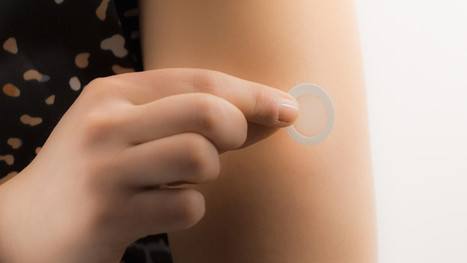
French biotech firm DBV Technologies has created a patch which administers small amounts of the peanut allergen to the skin, so over time the immune system becomes used to it.
No comment yet.
Scooped by Gilbert C FAURE
November 20, 2014 9:41 AM
Scoop.it!

Peanut in household dust linked to peanut allergy in children with eczema ... - Medical Xpress

Peanut in household dust linked to peanut allergy in children with eczema ... - Medical Xpress | Allergy (and clinical immunology) | Scoop.it
A new study led by researchers at King's College London in collaboration with the US Consortium of Food Allergy Research and the University of Dundee has found a strong link between environmental exposure to peanut protein during infancy (measured...
No comment yet.
Scooped by Gilbert C FAURE
October 27, 2014 6:46 AM
Scoop.it!

French developer of 'peanut allergy patch' makes US debut - Reuters

French developer of 'peanut allergy patch' makes US debut - Reuters | Allergy (and clinical immunology) | Scoop.it
PARIS (Reuters) - French biotech firm DBV Technologies - developer of what it says is a breakthrough treatment for peanut allergy sufferers - makes its U.S.
No comment yet.
Scooped by Gilbert C FAURE
October 24, 2014 5:29 AM
Scoop.it!

Peanut in house dust linked to allergy in children with skin gene mutation - The University of Manchester (press release)

Peanut in house dust linked to allergy in children with skin gene mutation - The University of Manchester (press release) | Allergy (and clinical immunology) | Scoop.it
Peanut in house dust linked to allergy in children with skin gene mutation The University of Manchester (press release) The study, published this month in the Journal of Allergy and Clinical Immunology, was carried out in 557 children from the...
Gilbert C FAURE's insight:

.... from the Manchester Asthma and Allergy Study (MAAS) – a flagship study from the University of Manchester and University Hospital of South Manchester led by Professors Adnan Custovic and Angela Simpson – who have been followed from birth (1996/7) to the present day.

The children in MAAS, who are representative of the normal population, have been thoroughly assessed for peanut allergy with skin prick tests, blood tests and in some cases oral food challenge tests and peanut allergy was diagnosed in 3% of them.

They have undergone genetic tests and 9% of them carry mutations in the FLG gene. In addition, dust samples were collected from their home environment in early life, in which it was possible to quantify peanut protein.

Peanut protein is present on hands and in saliva for up to three hours after peanuts or peanut-based food has been eaten, and can persist on table surfaces and sofa or pillow dust even after routine cleaning.

By combining information on genetics and the environment, it was possible to gain insights on risk factors for peanut allergy. For children who did not carry an FLG mutation, the amount of peanut protein in the house dust had no significant effect on whether or not the child developed peanut allergy.

For children with an FLG mutation, higher levels of peanut protein in household dust in infancy increased the likelihood of peanut allergy in childhood. For example, a three-fold increase in house dust peanut exposure during infancy was associated with a three-fold increase in risk of peanut allergy.

No comment yet.
Scooped by Gilbert C FAURE
September 28, 2014 1:28 PM
Scoop.it!

Dry roasting enhances peanut-induced allergic sensitization across mucosal and cutaneous routes in mice - Journal of Allergy and Clinical Immunology

Dry roasting enhances peanut-induced allergic sensitization across mucosal and cutaneous routes in mice - Journal of Allergy and Clinical Immunology | Allergy (and clinical immunology) | Scoop.it
Dry roasting enhances peanut-induced allergic sensitization - Journal of Allergy and Clinical Immunology http://t.co/VwFWzMjtVj
No comment yet.
Scooped by Gilbert C FAURE
September 20, 2014 4:12 PM
Scoop.it!

IL-9 differentiated peanut allergy, peanut sensitivity in children - Healio

IL-9 differentiated peanut allergy, peanut sensitivity in children - Healio | Allergy (and clinical immunology) | Scoop.it
IL-9 differentiated peanut allergy, peanut sensitivity in children
Healio
Interleukin-9 best differentiated children with peanut allergy from those with peanut sensitivity and atopic children without peanut allergy, according to recent study results.
No comment yet.
Scooped by Gilbert C FAURE
August 18, 2014 9:56 AM
Scoop.it!

Basophil activation test discriminates between allergy and tolerance in peanut-sensitized children - Journal of Allergy and Clinical Immunology

Gilbert C FAURE's insight:

BAT in peanut-allergic children showed a peanut dose-dependent upregulation of CD63 and CD203c while there was no significant response to peanut in peanut-sensitized but tolerant (P < .001) and non–peanut-sensitized nonallergic children (P < .001). BAT optimal diagnostic cutoffs showed 97% accuracy, 95% positive predictive value, and 98% negative predictive value. BAT allowed reducing the number of required OFCs by two-thirds. BAT proved particularly useful in cases in which specialists could not accurately diagnose peanut allergy with SPT and sIgE to peanut and to Arah2. Using a 2-step diagnostic approach in which BAT was performed only after equivocal SPT or Arah2-sIgE, BAT had a major effect (97% reduction) on the number of OFCs required.

Conclusions

BAT proved to be superior to other diagnostic tests in discriminating between peanut allergy and tolerance, particularly in difficult cases, and reduced the need for OFCs.

No comment yet.
Scooped by Gilbert C FAURE
July 21, 2014 2:26 PM
Scoop.it!

Immunoglobulin E Signal Inhibition during Allergen Ingestion Leads to Reversal of Established Food Allergy and Induction of Regulatory T Cells: Immunity

Immunoglobulin E Signal Inhibition during Allergen Ingestion Leads to Reversal of Established Food Allergy and Induction of Regulatory T Cells: Immunity | Allergy (and clinical immunology) | Scoop.it
Peanut antibody makes T cells worse. What about pathogen specific antibody in chronic infection? #allergy #HIV http://t.co/zz1gxzFhqH
No comment yet.
Scooped by Gilbert C FAURE
June 14, 2014 12:02 PM
Scoop.it!

Basophil activation testing measured peanut oral immunotherapy desensitization | Allergy Immunology

Basophil activation testing measured peanut oral immunotherapy desensitization | Allergy Immunology | Allergy (and clinical immunology) | Scoop.it
Allergy Immunology | Basophil activation testing showed that decrease in the log-transformed area under the curve measurements correlated with desensitization in peanut oral immunotherapy, according to research presented at the European Academy of...
No comment yet.
Scooped by Gilbert C FAURE
May 18, 2014 9:48 AM
Scoop.it!

Experts mystified by blow-out in food allergies

Experts mystified by blow-out in food allergies | Allergy (and clinical immunology) | Scoop.it
Tens of thousands more boys suffer from peanut allergies than girls, ground-breaking data shows, but doctors are at a loss to explain the figures or define how to stop the soaring allergy ''epidemic''.
No comment yet.
Scooped by Gilbert C FAURE
March 19, 2014 2:46 PM
Scoop.it!

Peanut oral immunotherapy results in ... [J Allergy Clin Immunol. 2014] - PubMed - NCBI

PubMed comprises more than 23 million citations for biomedical literature from MEDLINE, life science journals, and online books. Citations may include links to full-text content from PubMed Central and publisher web sites.
No comment yet.
Rescooped by Gilbert C FAURE from ReactNow - Latest News updated around the clock
January 29, 2015 8:14 AM
Scoop.it!

Peanut allergy researchers say they may have found key to a cure

Peanut allergy researchers say they may have found key to a cure | Allergy (and clinical immunology) | Scoop.it
Melbourne-based study of children given nut protein with probiotic has transformed the lives of 80% of those who took part in clinical trial

Via ReactNow
No comment yet.
Scooped by Gilbert C FAURE
January 9, 2015 9:24 AM
Scoop.it!

Distinct parameters of the basophil activation test reflect the severity and threshold of allergic reactions to peanut - Journal of Allergy and Clinical Immunology

RT @GoAllergy: Editors choice! Well done @alex_fsantos Use of BAT in predicting dose & severity of peanut reactions. http://t.co/AR3JvwhE70
No comment yet.
Scooped by Gilbert C FAURE
December 3, 2014 8:45 AM
Scoop.it!

Peanut Allergy Patch Quest Has French Company Spurning Suitors - Bloomberg

Peanut Allergy Patch Quest Has French Company Spurning Suitors - Bloomberg | Allergy (and clinical immunology) | Scoop.it
DBV Technologies SA has drawn suitors after its peanut allergy patch showed positive results in early tests. The company is spurning advances because it wants to go it alone.
No comment yet.
Scooped by Gilbert C FAURE
November 10, 2014 2:55 PM
Scoop.it!

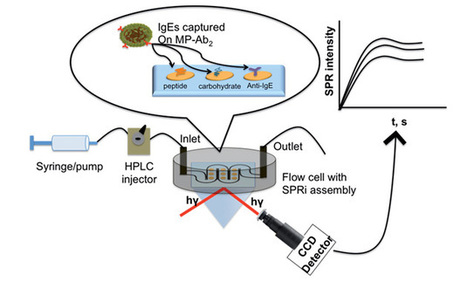
Ultrasensitive peanut allergy test - Royal Society of Chemistry

Ultrasensitive peanut allergy test - Royal Society of Chemistry | Allergy (and clinical immunology) | Scoop.it
Immunoassay recognises immunoglobulins for both peptide and carbohydrate epitopes
No comment yet.
Scooped by Gilbert C FAURE
October 27, 2014 6:45 AM
Scoop.it!

Will This Doctor-Turned-Entrepreneur Cure Peanut Allergies? - Forbes

Will This Doctor-Turned-Entrepreneur Cure Peanut Allergies? - Forbes | Allergy (and clinical immunology) | Scoop.it
French doctor turned entrepreneur Pierre-Henri Benhamou led his team to an IPO on the Nasdaq this week as part of his mission to expand his biotech startup on US soil.
No comment yet.
Scooped by Gilbert C FAURE
October 13, 2014 4:37 AM
Scoop.it!

Understanding and Applying the Newest Guidelines for Food Allergy - HCPLive

Understanding and Applying the Newest Guidelines for Food Allergy - HCPLive | Allergy (and clinical immunology) | Scoop.it
HCPLive Understanding and Applying the Newest Guidelines for Food Allergy HCPLive Evaluation of sudden IgE allergy requires a careful history, physical examination, tests and background knowledge of common triggers such as peanut, tree nut, milk,...
No comment yet.
Scooped by Gilbert C FAURE
September 23, 2014 1:48 PM
Scoop.it!

The dry-roasting process may trigger peanut allergies, a new Oxford study says - Washington Post

The dry-roasting process may trigger peanut allergies, a new Oxford study says - Washington Post | Allergy (and clinical immunology) | Scoop.it
Medical News Today
The dry-roasting process may trigger peanut allergies, a new Oxford study says
Washington Post
Peanut allergies are extremely common — and can be extremely dangerous.
No comment yet.
Scooped by Gilbert C FAURE
August 26, 2014 9:54 AM
Scoop.it!

Peanut allergy prevalence in US children continues to rise - Healio

Peanut allergy prevalence in US children continues to rise - Healio | Allergy (and clinical immunology) | Scoop.it
Peanut allergy prevalence in US children continues to rise
Healio
Prevalence of peanut allergy among US children ranged from 2% to 5% based on testing criteria, reflecting higher than previously reported estimates.
No comment yet.
Scooped by Gilbert C FAURE
July 29, 2014 1:03 PM
Scoop.it!

Basophil activation tests effectively distinguished peanut allergy from ... - Healio

Basophil activation tests effectively distinguished peanut allergy from ... - Healio | Allergy (and clinical immunology) | Scoop.it
Basophil activation tests effectively distinguished peanut allergy from ...
Healio
“BAT [basophil activation test] was performed using flow cytometry, and its diagnostic performance was evaluated in relation to allergy vs.
No comment yet.
Scooped by Gilbert C FAURE
June 17, 2014 5:44 AM
Scoop.it!

Hypoallergenic peanuts offer hope for peanut allergy sufferers

Hypoallergenic peanuts offer hope for peanut allergy sufferers | Allergy (and clinical immunology) | Scoop.it
Hypoallergenic peanuts could someday help peanut allergy sufferers lead a more normal life (Hypoallergenic peanuts offer hope for peanut allergy sufferers http://t.co/FEAS3djk9g)...
No comment yet.
Scooped by Gilbert C FAURE
May 28, 2014 3:43 PM
Scoop.it!

Modified food challenge for peanut allergy could determine thresholds - Healio

Modified food challenge for peanut allergy could determine thresholds - Healio | Allergy (and clinical immunology) | Scoop.it
Modified food challenge for peanut allergy could determine thresholds Healio Peanut- and Ara h 2-specific IgE levels, skin prick test responses, basophil activation, and TH2 cytokine production by peripheral blood mononuclear cells were...
No comment yet.
Scooped by Gilbert C FAURE
May 7, 2014 2:07 PM
Scoop.it!

Peanut, milk, and wheat intake during pregnancy is associated with reduced allergy and asthma in children

The Journal of Allergy and Clinical Immunology, Volume 133, Issue 5, Pages 1373-1382, May 2014, Authors:Supinda Bunyavanich, MD, MPH; Sheryl L. Rifas-Shiman, MPH; Thomas A. Platts-Mills, MD; Lisa Workman, BA; Joanne E.
No comment yet.