


|
Scooped by
KRII-KROTOASA RESEARCH-INTENSIVE INSTITUTE
August 7, 2014 2:49 AM
|

No comment yet.
Sign up to comment

 Your new post is loading... Your new post is loading...
No comment yet.
Sign up to comment
KRII-KROTOASA RESEARCH-INTENSIVE INSTITUTE 's insight:
Demand for chocolate is rising and cocoa prices are at a three-year high, but the majority of farmers growing the crop remain in poverty. Cocoa farmers face a number of challenges: small plots of land, aging trees that are less productive and small profits that make it difficult to support themselves and send their children to school. “Income to farmers are not enough to lift them out of poverty,” Yaw Osei-Owusu, Conservation Alliance International’s country director in Ghana, told Devex in a video interview. There’s a growing recognition that more must be done not only to improve cocoa farmers livelihoods but to make it an attractive job for future generations to ensure a sustainable supply. Companies that rely on steady, quality cocoa are seeing these challenges, and are working to tackle them — individually and through the newly launched Cocoa Action platform Challenges There are many factors holding back cocoa farmers from escaping poverty, and one of the main problems that unlike with other crops, cocoa farmers don’t have much control over decision-making. In Ghana, for instance, cocoa is largely purchased and sold through the government, which keeps some of the money to run programs to support farmers and improve infrastructure. That also means that less of the sales prices makes its way back to the farmers and any additional funds they may get as a result of fair trade or other special certifications is insignificant, Osei-Owusu said...more
KRII-KROTOASA RESEARCH-INTENSIVE INSTITUTE 's insight:
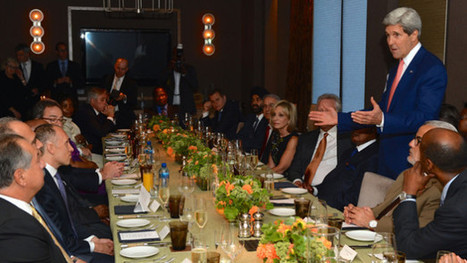
.Below is a list of expected attendees at tonight’s White House Dinner on the occasion of the U.S.-Africa Leaders Summit. Additional details about the Summit Dinner are available HERE...
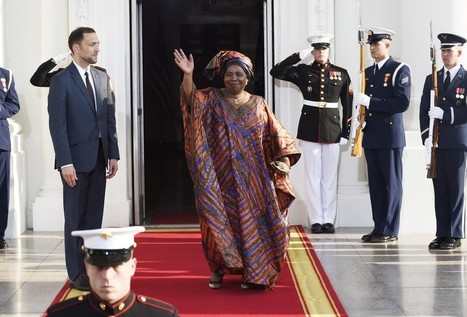
The complete guest list for the U.S.-Africa Leaders Summit dinner provided by the White House.
President Obama welcomes leaders from across Africa to the Nation's Capital for a three-day U.S.-Africa Leaders Summit.
KRII-KROTOASA RESEARCH-INTENSIVE INSTITUTE 's insight:
I do not see the countries and peoples of Africa as a world apart; I see Africa as a fundamental part of our interconnected world – partners with America on behalf of the future we want for all of our children. That partnership must be grounded in mutual responsibility and mutual respect.” President Obama President Obama welcomes leaders from across the African continent to the nation’s capital for a three-day U.S.-Africa Leaders Summit, the first such event of its kind. This Summit, the largest event any U.S. President has held with African heads of state and government, builds on the President’s trip to Africa in the summer of 2013 and will strengthen ties between the United States and one of the world’s most dynamic and fastest growing regions. Specifically, the August 4-6 Summit advances the Administration’s focus on trade and investment in Africa and highlights America’s commitment to Africa’s security, its democratic development, and its people. At the same time, it highlights the depth and breadth of the United States’ commitment to the African continent, advances our shared priorities, and enables discussion of concrete ideas to deepen the partnership. At its core, this Summit is about fostering stronger ties between the United States and Africa. The theme of the Summit is "Investing in the Next Generation." Focusing on the next generation is at the core of a government’s responsibility and work, and this Summit is an opportunity to discuss ways of stimulating growth, unlocking opportunities, and creating an enabling environment for the next generation.
KRII-KROTOASA RESEARCH-INTENSIVE INSTITUTE 's insight:
THE PRESIDENT: Thank you so much. Thank you. Please be seated. Well, good afternoon, everybody. To Mayor Bloomberg, thank you -- not only for the kind introduction, but to Bloomberg Philanthropies as our co-host, and for the great work that you’re doing across Africa to help create jobs, and promote public health, encourage entrepreneurship, especially women. So thank you very much, Michael, for your leadership. I want to thank our other co-host -- my great friend and tireless Commerce Secretary, Penny Pritzker. (Applause.)
I want to welcome all of our partners who are joining us from across Africa -- heads of state and government, and let me welcome the delegations from Sierra Leone, Liberia and Guinea, with whom we are working so urgently to control the Ebola outbreak and whose citizens are in our thoughts and prayers today. I also want to welcome Madame Chairperson Dlamini-Zuma of the African Union Commission; President of the African Development Bank, Donald Kaberuka; as well as the President of the World Bank, Dr. Jim Kim. Please give them all a round of applause. (Applause.)
And I want to acknowledge members of Congress who are here and who are such great champions of Africa’s engagement with -- America’s engagement with Africa. In a city that does not always agree on much these days, there is broad bipartisan agreement that a secure, prosperous and self-reliant Africa is in the national interest of the United States.
And most of all, I want to thank all of you -- the business leaders, the entrepreneurs both from the United States and from across Africa who are creating jobs and opportunity for our people every day. And I want to acknowledge leaders from across my administration who, like Penny, are your partners, including our U.S. Trade Representative, Mike Froman; USAID Administrator Raj Shah; and our new head of the Millennium Challenge Corporation, Dana Hyde; President of the Export-Import Bank, Fred Hochberg; Director of the U.S. Trade and Development Agency, Lee Zak; and our President and CEO of OPIC, Elizabeth Littlefield.
So we are here, of course, as part of the U.S.-Africa Leaders Summit -- the largest gathering any American President has ever hosted with African heads of state and government. And this summit reflects a perspective that has guided my approach to Africa as President. Even as Africa continues to face enormous challenges, even as too many Africans still endure poverty and conflict, hunger and disease, even as we work together to meet those challenges, we cannot lose sight of the new Africa that’s emerging. We all know what makes Africa such an extraordinary opportunity. Some of the fastest-growing economies in the world. A growing middle class. Expanding sectors like manufacturing and retail. One of the fastest-growing telecommunications markets in the world. More governments are reforming, attracting a record level of foreign investment. It is the youngest and fastest-growing continent, with young people that are full of dreams and ambition. Last year in South Africa, in Soweto, I held a town hall with young men and women from across the continent, including some who joined us by video from Uganda. And one young Ugandan woman spoke for many Africans when she said to me, “We are looking to the world for equal business partners and commitments, and not necessarily aid. We want to do [business] at home and be the ones to own our own markets.” That’s a sentiment we hear over and over again. When I was traveling throughout Africa last year, what I heard was the desire of Africans not just for aid, but for trade and development that actually helps nations grow and empowers Africans for the long term. As President, I’ve made it clear that the United States is determined to be a partner in Africa’s success -- a good partner, an equal partner, and a partner for the long term. (Applause.) We don’t look to Africa simply for its natural resources; we recognize Africa for its greatest resource, which is its people and its talents and their potential. (Applause.) We don’t simply want to extract minerals from the ground for our growth; we want to build genuine partnerships that create jobs and opportunity for all our peoples and that unleash the next era of African growth. That’s the kind of partnership America offers. And since I took office, we’ve stepped up our efforts across the board. More investments in Africa; more trade missions, like the one Penny led this year; and more support for U.S. exports. And I’m proud -- I’m proud that American exports to Africa have grown to record levels, supporting jobs in Africa and the United States, including a quarter of a million good American jobs. But here’s the thing: Our entire trade with all of Africa is still only about equal to our trade with Brazil -- one country. Of all the goods we export to the world, only about one percent goes to Sub-Saharan Africa. So we’ve got a lot of work to do. We have to do better -- much better. I want Africans buying more American products. I want Americans buying more African products. I know you do, too. And that’s what you’re doing today. (Applause.) So I’m pleased that in conjunction with this forum, American companies are announcing major new deals in Africa. Blackstone will invest in African energy projects. Coca-Cola will partner with Africa to bring clean water to its communities. GE will help build African infrastructure. Marriott will build more hotels. All told, American companies -- many with our trade assistance -- are announcing new deals in clean energy, aviation, banking, and construction worth more than $14 billion, spurring development across Africa and selling more goods stamped with that proud label, “Made in America.” And I don’t want to just sustain this momentum, I want to up it. I want to up our game. So today I’m announcing a series of steps to take our trade with Africa to the next level. First, we’re going to keep working to renew the African Growth and Opportunity Act -- and enhance it. (Applause.) We still do the vast majority of our trade with just three countries -- South Africa, Nigeria and Angola. It’s still heavily weighted towards the energy sector. We need more Africans, including women and small- and medium-sized businesses, getting their goods to market. And leaders in Congress -- Democrats and Republicans -- have said they want to move forward. So I’m optimistic we can work with Congress to renew and modernize AGOA before it expires, renew it for the long term. We need to get that done. (Applause.) Second, as part of our “Doing Business in Africa” campaign, we’re going to do even more to help American companies compete. We’ll put even more of our teams on the ground, advocating on behalf of your companies. We’re going to send even more trade missions. Today, we’re announcing $7 billion in new financing to promote American exports to Africa. Earlier today, I signed an executive order to create a new President’s advisory council of business leaders to help make sure we’re doing everything we can to help you do business in Africa. (Applause.) And I would be remiss if I did not add that House Republicans can help by reauthorizing the Export-Import Bank. That is the right thing to do. (Applause.) I was trying to explain to somebody that if I’ve got a Ford dealership and the Toyota dealership is providing financing to anybody who walks in the dealership and I’m not, I’m going to lose business. It’s pretty straightforward. We need to get that reauthorized. (Applause.) And you business leaders can help make clear that it is critical to U.S. business. Number three, we want to partner with Africa to build the infrastructure that economies need to flourish. And that starts with electricity, which most Africans still lack. That’s why last year while traveling throughout the continent, I announced a bold initiative, Power Africa, to double access to electricity in Sub-Saharan Africa and help bring electricity to more than 20 million African homes and businesses. Now, we’ve joined with African governments, the African Development Bank, and the private sector -- and I will tell you, the response has exceeded our projections. It has been overwhelming. Already, projects and negotiations are underway that, when completed, will put us nearly 80 percent of the way toward our goal. On top of the significant resources we’ve already committed, I’m announcing that the United States will increase our pledge to $300 million a year for this effort. And as of today -- including an additional $12 billion in new commitments being announced this week by our private sector partners and the World Bank and the government of Sweden -- we’ve now mobilized a total of more than $26 billion to Power Africa just since we announced it -- $26 billion. (Applause.) So today we’re raising the bar. We decided we’re meeting our goal too easily, Zuma, so we’ve got to go up. So we’re tripling our goal, aiming to bring electricity to more than 60 million African homes and businesses that can spark growth for decades to come. (Applause.) Fourth, we’ll do more to help Africans trade with each other, because the markets with the greatest potential are often the countries right next door. And it should not be harder to export your goods to your neighbor than it is to export those goods to Los Angeles or to Amsterdam. (Applause.) So through our Trade Africa initiative, we’ll increase our investments to help our African partners build their own capacity to trade, to strengthen regional markets, make borders more efficient, modernize the customs system. We want to get African goods moving faster within Africa, as well as outside of Africa. And finally, we’re doing more to empower the next generation of African entrepreneurs and business leaders -- it’s young men and women, like our extraordinary Mandela Washington Fellows that I met with last week. And I have to say to the heads of state and government, you would have been extraordinarily proud to meet these young people who exhibit so much talent and so much energy and so much drive. With new Regional Leadership Centers and online courses, we’re going to offer training and networking for tens of thousands of young entrepreneurs across Africa. New grants will help them access the capital they need to grow. Our annual Global Entrepreneurship Summit this year will be held in Morocco. Next year, it will be held for the first time in Sub-Saharan Africa -- because we want to make sure that all that talent is tapped and they have access to the capital and the networks and the markets that they need to succeed. Because if they succeed, then the countries in which they live will succeed. They’ll create jobs. They’ll create growth. They’ll create opportunity. So the bottom line is the United States is making a major and long-term investment in Africa’s progress. And taken together, the new commitments I’ve described today -- across our government and by our many partners -- total some $33 billion. And that will support development across Africa and jobs here in the United States. Up to tens of thousands of American jobs are supported every time we expand trade with Africa. As critical as all these investments are, the key to unlocking the next era of African growth is not going to be here in the United States, it’s going to be in Africa. And so, during this week’s summit, we’ll be discussing a whole range of areas where we’re going to have to work together -- areas that are important in their own right, but which are also essential to Africa’s growth. Capital is one thing. Development programs and projects are one thing. But rule of law, regulatory reform, good governance -- those things matter even more, because people should be able to start a business and ship their goods without having to pay a bribe or hire somebody’s cousin. Agricultural development is critical because it’s the best way to boost incomes for the majority of Africans who are farmers, especially as they deal with the impacts of climate change. Rebuilding a strong health infrastructure, especially for mothers and children, is critical because no country can prosper unless its citizens are healthy and strong, and children are starting off with the advantages they need to grow to their full potential. And we’re going to have to talk about security and peace, because the future belongs to those who build, not those who destroy. And it’s very hard to attract business investment, and it’s very hard to build infrastructure, and it’s very hard to sustain entrepreneurship in the midst of conflict. So I just want to close with one example of what trade can help us build together. Kusum Kavia was born in Kenya; her family was originally from India. Eventually, she emigrated to the United States and along with her husband started a small business in California. It started off as a small engineering firm. Then it started manufacturing small power generators. With the help of the Export-Import Bank -- including seminars and a line of credit and risk insurance -- they started exporting power generators to West Africa. In Benin, they helped build a new electric power plant. And it’s ended up being a win-win for everybody. It’s been a win for their company, Combustion Associates, because exports to Africa have boosted their sales, which means they’ve been able to hire more workers here in the United States. They partner with GE; GE is doing well. Most of their revenues are from exports to Africa. It’s been a win for their suppliers in Texas and Ohio and New York. It’s been a win for Benin and its people, because more electricity for families and businesses, jobs for Africans at the power plant because the company hires locally and trains those workers. And they hope to keep expanding as part of our Power Africa initiative. So this is an example of just one small business. Imagine if we can replicate that success across our countries. Kusum says, “When our customers see the label, ‘Made in America,’ when they see our flag, it puts us above all the competition.” And her vision for their company is the same vision that brings us all here today. She says, “We really want to have a long-term partnership with Africa.” So Kusum is here. I had a chance to meet her backstage. Where is she? Right there. Stand up, Kusum. So she’s doing great work. Thank you so much. (Applause.) But she’s an example of what’s possible -- a long-term partnership with Africa. And that’s what America offers. That’s what we’re building. That’s the difference we can make when Africans and Americans work together. So let’s follow Kusum’s lead. Let’s do even more business together. Let’s tear down barriers that slow us down and get in the way of trade. Let’s build up the infrastructure -- the roads, the bridges, the ports, the electricity -- that connect our countries. Let’s create more and sell more and buy more from each other. I’m confident that we can. And when we do, we won’t just propel the next era of African growth, we’ll create more jobs and opportunity for everybody -- for people here in the United States and for people around the world. So thank you very much, everybody, for what so far has been an outstanding session. And I’ve got the opportunity to speak to this young man. (Applause.) Q So thank you very much, Mr. President for this opportunity. I’ll start by wishing you a belated Happy Birthday. THE PRESIDENT: Thank you. Q Thank you very much. (Laughter.) THE PRESIDENT: Have you introduced yourself to everybody? Q I wanted to really jump into the issues. (Laughter.) THE PRESIDENT: Yes, go ahead and introduce yourself. Q All right. I’m Takunda Chingonzo. I’m a young entrepreneur. I’m 21. I’m from Zimbabwe. And I’m working in the wireless technology space. We’re essentially liberating the Internet for Zimbabweans. (Applause.) THE PRESIDENT: And let me just -- this is an example of our young African leaders; in fact, the youngest young African leader. But one thing I will say, though, if you’re going to promote your business, you’ve got to make sure to let people know who you are. (Laughter.) Q Definitely, definitely. THE PRESIDENT: Just a little tip. Q Definitely. THE PRESIDENT: You can’t be shy, man. (Laughter.) Please, go ahead. Q That’s correct, Mr. President. So I was really going to start by delving into a personal experience. I was going to get to my business and how I got to where we are. So as I was saying, we’re working in the technology space. I’m working on my third startup -- it’s called Saisai. We’re creating Zimbabwe’s first free Internet-access network, hence liberating the Internet. So in our working, we came to a point in time where we needed to import a bit of technology from the United States, and so we were engaging in conversation with these U.S.-based businesses. And the response that we got time and time again was that unfortunately we cannot do business with you because you are from Zimbabwe. And I was shocked -- this doesn’t make sense. And so this is the exact same experience that other entrepreneurs that are in Zimbabwe have gone through, even through the meetings that I’ve had here. You know, you sit down with potential investors, you talk about the project, the outlook, the opportunity, the growth and all that -- and they’re excited, you can see. All systems are firing, right? And then I say I’m from Zimbabwe and they look at me and they say, young man, this is a good project, very good, very good, but unfortunately we cannot engage in business with you. And I understand that the sanctions that we have -- that are imposed on entities in Zimbabwe, these are targeted sanctions, right? But then we have come to a point in time where we as young Africans are failing to properly engage in business with U.S.-based entities because there hasn’t been that clarity. These entities believe that Zimbabwe is under sanctions. So what really can we do to do try and clarify this to make sure that we as the young entrepreneurs can effectively develop Africa and engage in business? THE PRESIDENT: Well, obviously, the situation in Zimbabwe is somewhat unique. The challenge for us in the United States has been how do we balance our desire to help the people of Zimbabwe with what has, frankly, been a repeated violation of basic democratic practices and human rights inside of Zimbabwe. And we think it is very important to send clear signals about how we expect elections to be conducted, governments to be conducted -- because if we don’t, then all too often, with impunity, the people of those countries can suffer. But you’re absolutely right that it also has to be balanced with making sure that whatever structures that we put in place with respect to sanctions don’t end up punishing the very people inside those countries. My immediate suggestion -- and this is a broader point to all the African businesses who are here, as well as the U.S. businesses -- is to make sure that we’re using the Department of Commerce and the other U.S. agencies where we can gather groups of entrepreneurs and find out exactly what can be done, what can’t be done, what resources are available. It may be that you and a group of entrepreneurs in Zimbabwe are able to meet with us and propose certain projects that allow us to say this is something that will advance as opposed to retard the progress for the Zimbabwean people. So what I’d suggest would be that we set up a meeting and we find out what kinds of things that the young entrepreneurs of Zimbabwe want to do, and see if there are ways that we can work with you consistent with the strong message that we send about good governance in Zimbabwe. Q I see. Because really -- the point of emphasis really is that as young Africans we want to converse with other business entities here in the U.S., and if these sanctions are really targeted, then in honest truth, they aren’t supposed to hamper the business that we’re trying to engage in, the development that we’re talking about. THE PRESIDENT: Well, let’s see if we can refine them further based on some of the things you’re talking about. Q That’s all right. Now, there have been a good number of investments that have been announced here -- multibillion-dollar investments in Africa -- and we’re really excited. And there’s been a lot of talk about how the public and private partnerships are the vehicle through which this investment will come into Africa, but I really want to bring it to a point of clarity. I believe that the private sector is stratified in itself. We have the existing indigenous businesses in these countries that you’re hoping to invest in, and this is where usually the funding comes through -- the partnerships and all that. That is well and fine. But then, underneath that, we have these young, upcoming entrepreneurs -- the innovators, those that come up with products and services that disrupt the industry. And this is the innovation that we want in Africa, to build products by Africans for Africans. But in most cases, in what we have seen over the past years, is that, indeed, this investment comes through but it never cascades down to these young entrepreneurs, the emerging businesses. And so the existing businesses then form a sort of ceiling which we cannot break through. When it comes to investment, when you’re talking about solving unemployment, I believe that it’s more realistic to assume and understand that the probability of 10 startups employing 10 people in a given time period, it’s more realistic than one indigenous company employing 100 people. So what really has been -- or rather, has there been any consideration in these deals that have been structured in the investments that you announced to cater for the young entrepreneur who is trying to innovate to solve the problems in society? THE PRESIDENT: Well, first of all, I think for the business leaders who are here, both African and U.S., it’s hard being a startup everywhere. Q That’s true. THE PRESIDENT: Part of what you’re describing is typical of business around the world: Folks who are already in, they don’t necessarily want to share. They don’t want to be disrupted. If there’s a good opportunity, they’d rather do it themselves. If they see a small up-and-coming hotshot who might disrupt their business, they may initially try to block you or they may try to buy you out. And getting financing for a startup is always going to be difficult. You hear that from entrepreneurs here in the U.S. as well. Having said that, what is absolutely true is that as we think about the billions of dollars that we’re mobilizing, we want to make sure that small businesses, medium-size businesses, women-owned businesses -- that they have opportunity. And so my instructions to all of our agencies and hopefully the work that we're doing with all of our partners is how can we identify, target financing for the startup; how can we identify and link up U.S. companies with small and medium-size businesses and not just the large businesses? And I think you are absolutely right that by us trying to spread investment, not narrowly through one or two companies but more broadly, that the opportunities for success in those countries are higher, and it also creates a healthy competition. And that's true also in terms of how we're designing – for example, our Feed the Future program, which is working with almost 2 million small farmers inside of Africa. When I was in Senegal, I met with a woman, maybe in her 30s; she had a small plot of land initially. Through the Feed the Future program, she had been able to mechanize, double her productivity. By doubling her productivity and, through a smartphone, getting better prices to the market, she was able to increase her profits. Then she bought a tractor. Then she doubled her productivity again. And suddenly what had started off as just a program to increase her income had become capital for a growing business where she was now hiring people in her area and doing some of the process of the grain that she grew herself, so that she could move up the value chain. There are entrepreneurs like that all across Africa. Sometimes the capital they need is not very large. Sometimes it's a fairly modest amount. And so what I want to do is to make sure that we are constantly looking out for opportunities to disburse this capital not just narrowly, but broadly. And one of the things that I hope happens with U.S. companies is that they’re constantly looking for opportunities to partner with young entrepreneurs, startups, and not just always going to the same well-established businesses. Now, there are going to be some large-capital projects where you’ve got a good, solid, established company. Hopefully they, themselves, have policies with respect to their suppliers that allow them to start encouraging and growing small businesses as well. Q Exactly. And on that note, I'm glad that you acknowledged that and I hope that even in these deals, in the investments that you're talking about, that one of the conditions be that those large organizations that are getting investment have policies that cascade down to people at the grassroots. You spoke about this lady who was using a smartphone to -- it is one key issue that is really propelling business and development in Africa, the ability to leverage technology. And really it is all about the Internet of things. And that is why I'm personally working in liberating the Internet to get more people connected. Now, this is a huge opportunity in Africa as well. Now, there is this troubling issue that has been brought to our attention with entities and organizations that have come up and have said we want to control the Internet, we want to see who gets what traffic and from whom. And policies and activities like that become challenges for startups that are trying to leverage the Internet, for this lady farmer that you talked about who is trying to leverage and get information from the Internet. So I want to understand what is your stance on net neutrality and its effects on the global development in Africa? THE PRESIDENT: Well, this is an important issue for all the heads of state and government not just in Africa but around the world. The reason the Internet is so powerful is because it's open. My daughters, 16 and 13, they can access information from anyplace in the world. They can learn about a particular discipline instantaneously, in ways that when I was their age -- first of all, I wasn’t as motivated as they are. I was lazier than them. (Laughter.) They do much better in school than I did. But the world is at their fingertips. And what facilitates that, and what has facilitated the incredible value that's been built by companies like Google and Facebook and so many others, all the applications that you find on your smartphone, is that there are not restrictions, there are not barriers to entry for new companies who have a good idea to use this platform that is open to create value. And it is very important I think that we maintain that. Now, I know that there’s a tension in some countries -- their attitude is we don't necessarily want all this information flowing because it can end up also being used as a tool for political organizing, it can be used as a tool to criticize the government, and so maybe we’d prefer a system that is more closed. I think that is a self-defeating attitude. Over the long term, because of technology, information, knowledge, transparency is inevitable. And that's true here in the United States; it's true everywhere. And so what we should be doing is trying to maintain an open Internet, trying to keep a process whereby any talented person who has an idea can suddenly use the Internet to disperse information. There are going to be occasional tensions involved in terms of us monitoring the use of the Internet for terrorist networks or criminal enterprises or human trafficking. But we can do that in ways that are compatible with maintaining an open Internet. And this raises the broader question that I mentioned earlier, which is Africa needs capital; in some cases, Africa needs technical assistance; Africa certainly needs access to markets. But perhaps the biggest thing that Africa is going to need to unleash even more the potential that's already there and the growth that's already taking place is laws and regulations and structures that empower individuals and are not simply designed to control or empower those at the very top. And the Internet is one example. You’ve got to have a system and sets of laws that encourage entrepreneurship, but that's also true when it comes to a whole host of issues. It's true when it comes to how hard is it to get a business permit when a new startup like yours wants to establish itself. When it comes to Power Africa, there are billions of dollars floating around the world that are interested in investing in power generation in Africa. And the countries that are going to attract that investment are the ones where the investor knows that if a power plant is built, that there are rules in place that are transparent that ensure that they’re going to get a decent return, and that some of the revenue isn't siphoned off in certain ways so that the investor has political risks or risks with respect to corruption. The more that governments set up the right rules, understanding that in the 21st century the power that drives growth and development and the marketplace involves knowledge and that can't be controlled, the more successful countries are going to be. Q I see. So just to clarify on the issue of net neutrality, you are advocating for an open and fair Internet -- THE PRESIDENT: Yes. Q -- which would -- then it has structure to ensure that the platform itself isn't abused. THE PRESIDENT: Well, there are two issues -- net neutrality -- in the United States, one of the issues around net neutrality is whether you are creating different rates or charges for different content providers. That's the big controversy here. You have big, wealthy media companies who might be willing to pay more but then also charge more for more spectrum, more bandwidth on the Internet so they can stream movies faster or what have you. And I personally -- the position of my administration, as well as I think a lot of companies here is you don’t want to start getting a differentiation in how accessible the Internet is to various users. You want to leave it open so that the next Google or the next Facebook can succeed. There’s another problem, though -- there are other countries -- and I think this is what you were alluding to -- that feel comfortable with the idea of controlling and censoring Internet content in their home countries, and setting up rules and laws about what can or cannot be on the Internet. And I think that that not only is going to inhibit entrepreneurs who are creating value on the Internet; I think it’s also going to inhibit the growth of the country generally, because closed societies that are not open to new ideas, eventually they fall behind. Eventually, they miss out on the future because they’re so locked into trying to maintain the past. Q I see. Thank you for the clarity. I think we’re out of a bit of time. I’ll ask my final question. When we began this conversation, we were alluding to the fact that -- the need to separate the political function and economic function. In other words, politics should not get in the way of business. And I’ve gone to quite a good number of -- I know it’s difficult -- so I’ve gone to a good number of conferences where the end deliverable of the entire summit, or whatever it is, is that we need to lobby government to create policies that are conducive, and this and that. And that’s usually what you get -- either you’re trying to lobby somebody to do something, right? And, in turn, governments come up and say, yes, we promise to come up with this and that, and this and that. And that’s a whole political sphere of things. My question is, apart from that, what can we as business leaders, as the private sector, what can we do sort of independently to -- what can we do to create this economic environment that fosters for the growth and development of Africa as a continent? THE PRESIDENT: Well, look, although this isn’t always a popular position here in Washington these days, the truth is, is that government really can help set the conditions and the framework for markets to function effectively -- in part because governments are able to initiate projects like roads and bridges and airports that any individual business would find cost prohibitive. It wouldn’t make sense to invest in what is a collective good; it’s not going to help your bottom line if everybody else is using it. So that’s part of the function of government. Part of the function of government is to educate a population so that you got a well-trained workforce. It’s hard for companies to invest in doing that by themselves. There are certain common goods, like maintaining clean air and clean water, and making sure that if you have capital markets, that they’re well-regulated so that they’re trust-worthy, and small investors and large investors know that if they invest in a stock that they’re not being cheated. So there are a whole host of functions that government has to play. But in the end, what drives innovation typically is not what happens in government, it’s what’s happening in companies. And what we found in the United States is, is that companies, once they’ve got the basic rules and they’ve got the basic platform, they are able to create value and innovation and cultures that encourage growth. And I think that African entrepreneurs are going to be the trendsetters for determining how societies think about themselves and, ultimately, how governments think about these issues. The truth of the matter is, is that if you have big, successful companies or you’ve got widespread entrepreneurship, and you have a growing middle class and practices have been established in terms of fair dealing, and treating your workers properly, and extending opportunity to smaller contractors, and promoting women and making sure women are paid like men -- suddenly, what happens is businesses create new norms and new sensibilities. And governments oftentimes will respond. And so I think in Africa what I’d like to see more and more of is partnerships between American businesses, between African businesses. Some of the incredible cultures of some of our U.S. businesses that do a really good job promoting people and maintaining a meritocracy, and treating women equally, and treating people of different races and faiths and sexual orientations fairly and equally, and making sure that there are typical norms of how you deal with people in contracts and respect legal constraints -- all those things I think can then take root in a country like Zimbabwe or any other country. Hopefully, governments are encouraging that, not inhibiting that. They recognize that that’s how the world as a whole is increasingly moving in that direction. And over time, you will see an Africa that is driven by individual entrepreneurs and private organizations, and governments will be responsive to their demands. So I think the one thing I want to make sure people understand, though, is it’s not an either/or issue. Government has a critical role to play. The marketplace has a critical role to play. Nonprofit organizations have a critical role to play. But the goal and the orientation constantly should be how do we empower individuals to work together. And if we are empowering young people like you all across Africa, if we’ve got a 21-year-old who has already started three businesses, we’ve got to figure out how to invest in him, how to make it easier for him to succeed. If you succeed, you’re going to then be hiring a whole bunch of people, and they, in turn, will succeed. And that’s been the recipe for growth in the 20th century and the 21st century. And I’m confident that Africa is well on its way. America just wants to make sure that we’re helpful in that process. And I know that all the U.S. companies who are here, that’s their goal as well. We are interested in Africa, because we know that if Africa thrives and succeeds, and if you’ve got a bunch of entrepreneurs, they’re going to need supplies from us maybe, or they may supply us with outstanding products; they’re going to have a growing middle class that wants to buy iPhones or applications from us. In turn, they may provide us new services and we can be the distributor for something that’s invented in Africa, and all of us grow at the same time. That’s our goal, and I’m confident that we can make it happen. And this summit has been a great start. So I want to thank you for doing a great job moderating. I want to thank all the leaders here not only of government, but also business for participating. There’s been great energy, great enthusiasm. I know a lot of business has gotten done. If any of you are interested in investing in this young man, let him know. (Laughter.) All right, thank you, guys. END

KRII-KROTOASA RESEARCH-INTENSIVE INSTITUTE 's curator insight,
August 6, 2014 12:17 AM
THE PRESIDENT: Thank you so much. Thank you. Please be seated. Well, good afternoon, everybody. To Mayor Bloomberg, thank you -- not only for the kind introduction, but to Bloomberg Philanthropies as our co-host, and for the great work that you’re doing across Africa to help create jobs, and promote public health, encourage entrepreneurship, especially women. So thank you very much, Michael, for your leadership. I want to thank our other co-host -- my great friend and tireless Commerce Secretary, Penny Pritzker. (Applause.)
I want to welcome all of our partners who are joining us from across Africa -- heads of state and government, and let me welcome the delegations from Sierra Leone, Liberia and Guinea, with whom we are working so urgently to control the Ebola outbreak and whose citizens are in our thoughts and prayers today. I also want to welcome Madame Chairperson Dlamini-Zuma of the African Union Commission; President of the African Development Bank, Donald Kaberuka; as well as the President of the World Bank, Dr. Jim Kim. Please give them all a round of applause. (Applause.)
And I want to acknowledge members of Congress who are here and who are such great champions of Africa’s engagement with -- America’s engagement with Africa. In a city that does not always agree on much these days, there is broad bipartisan agreement that a secure, prosperous and self-reliant Africa is in the national interest of the United States.
And most of all, I want to thank all of you -- the business leaders, the entrepreneurs both from the United States and from across Africa who are creating jobs and opportunity for our people every day. And I want to acknowledge leaders from across my administration who, like Penny, are your partners, including our U.S. Trade Representative, Mike Froman; USAID Administrator Raj Shah; and our new head of the Millennium Challenge Corporation, Dana Hyde; President of the Export-Import Bank, Fred Hochberg; Director of the U.S. Trade and Development Agency, Lee Zak; and our President and CEO of OPIC, Elizabeth Littlefield.
....MORE 
Brad Donley's curator insight,
August 17, 2014 9:18 PM
This scoop is the Presidents reaction to the poverty of Africa. The recent outbreak of Ebola has drawn the attention of many Americans. The president has renewed the help for these extremely poor African countries. I think that this could be a good thing. If we could some day get Africa on track then it could make the world a better place. It will not happen any time soon but we need to start somewhere.
|
KRII-KROTOASA RESEARCH-INTENSIVE INSTITUTE 's insight:
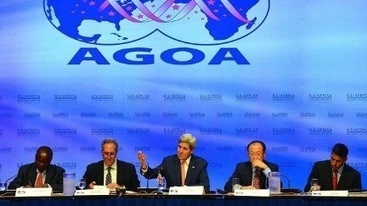
For the first time, nearly 50 African heads of state are convening in Washington, D.C. for the U.S.-Africa Leaders Summit, and development is on the top of the agenda. It’s undoubtedly a monumental event, but some Africans are wondering why such a summit can’t take place on their own continent. “We need to be more involved in African development,” Patrick Elat, a Cameroonian consultant for the World Bank, told Devex. “And when I say we, it’s Africans.” Elat was speaking on the sidelines of the Growth and Opportunity in Africa Forum on Capitol Hill on Tuesday, the second day of the summit. The event, hosted by U.S. Rep. Karen Bass (D-CA), brought together a wide selection of African policymakers and young leaders to discuss economic growth and security on the continent. These are important issues for the Cameroonian, but he said those in the audience are mainly the elite and they aren’t representative of the majority of African people. “A talk like this… a dialogue surrounding development issues in Africa… needs to take place in Africa, for the Africans,” Elat explained — and others at the forum agreed. Oladeji Tiamiyu is a recent graduate from the University of Toledo who hopes to work in international development. He said it’s obvious the African people want peace, running water, and electricity, but if they aren’t actively involved in the process, they’ll have no control. He called this “tyrannical.” Tiamiyu suggested that if a summit of this nature was held in Africa, the people could more easily voice what they are most concerned about, and frame the dialogue more effectively. “It would be on their front steps,” he said. “They would be actively going to whichever government institution was holding the event.” Others at the forum emphasized that these discussions in Washington, D.C. are good first steps. Jonah Mbaza Aboni, a Ghanaian graduate student at the University of Notre Dame was glad to see that development in Africa is being actively discussed. But he also asked: “How do we go beyond the talking?”
KRII-KROTOASA RESEARCH-INTENSIVE INSTITUTE 's insight:
I want to thank, first of all, the Vice President, who’s been a friend of mine for 35 or 40 years now, 29 of them in the Senate. And I thank him for his contribution of conscience and of commitment to Africa that he has made for as long as he has been in public life. In the Senate, we worked hand-in-hand on Darfur, South Sudan, PEPFAR, and as the Vice President said, he has traveled far and wide, but especially as Vice President to Ghana, Kenya, South Africa, to help build transparent and accountable institutions and to help lift millions of people out of poverty. I also want to especially thank Michael Bloomberg for – and everybody has, but it’s appropriate – the Bloomberg Philanthropies for sponsoring this event. Michael’s contribution to Africa comes not just in the form of this summit, but through his latest commitment of $10 million that he made just this February to African countries to build media capacity with a business focus and to promote reliability in reporting, educational opportunities, and the transparencies that the Vice President just talked about that markets need in order to give capital confidence and in order to grow...more

From
time

Activist groups called on African government officials to ban child marriage amid President Barack Obama's first U.S.-Africa summit Tuesday. “Child marriage is a complex human…
KRII-KROTOASA RESEARCH-INTENSIVE INSTITUTE 's insight:
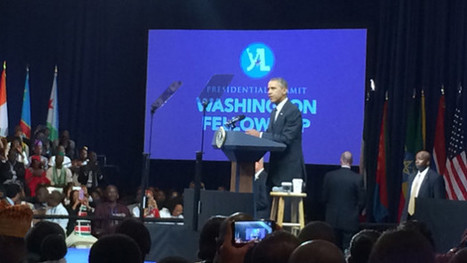
They represent all 49 countries in sub-Saharan Africa and on Monday they had an opportunity to question and challenge U.S. President Barack Obama ahead of their countries’ leaders. So what did these Young African Leaders want to know from Obama? They asked about debt forgiveness, entrepreneurship, gender equality, the African Growth and Opportunity Act, governance and youth involvement in Africa, most of which are subjects likely to come up when the leaders of their countries gather next week in Washington, D.C. for the U.S.-Africa Leaders Summit.
“The security and prosperity and justice that we seek in the world cannot be achieved without a strong and prosperous and self-reliant Africa,” the U.S. president told delegates at the Young African Leaders Initiative presidential summit. About 500 young African leaders have spent the past six weeks at universities across the United States learning leadership and networking skills they can deploy in their countries to strengthen democracy, build businesses and tackle issues of peace and security.
One of the early questions, about his commitment to closing gender inequality gaps, seemed like an easy one for Obama. “You will not find anybody more committed to this issue than I am,” he responded, adding that one of the single best measures for the success of a country is how it treats its women. Obama stressed that any U.S. government program in Africa — be it related to education, health, small business or economic development — will include a gender equality component. An enabling environment for African business Several of the other questions touched on issues that the president said would be priorities at next week’s summit, like entrepreneurship and improved access to finance — especially start-up capital. Too many African entrepreneurs lack the seed money to start businesses, and Obama said that the U.S. government will work with existing programs, determine the financing gaps and ensure that resources are being utilized in the best ways possible so that young entrepreneurs are able to start small and medium businesses. It’s critical that financing be available to everyone and not just those with connections, he insisted.
Governance and transparency is also key to ensuring that countries have an environment that will enable those businesses to grow. The president acknowledged that governance can be a sensitive issue, but emphasized that it is critical for the success of African countries. “Regardless of the resources a country possesses, regardless of how talented the people are, if you do not have a basic system of rule of law, of respect for civil rights and human rights, if you do not give people a credible legitimate way to work through the political process to express their aspirations, if you don’t respect basic freedom of speech and freedom of assembly ... if you do not have an economic system that is transparent and accountable ... If you don’t have those basic mechanisms it is very rare for a country to succeed,” Obama said.
Young people have a critical role to play and need to hold their leadership to high standards, he said, adding that they shouldn’t be “fooled” by the notion that there is a different, African way of government — one that involves setting up Swiss bank accounts and long terms in office.
YALI Summit: What you need to know Trade, debt relief Obama also discussed ways the U.S. government can help open economic markets, including the African Growth and Opportunity Act, which is used to promote trade between the U.S. and African countries and is set to expire in 2015. Negotiations to reauthorize AGOA are ongoing and will continue next week. The idea is to build on lessons learned, including that in some cases barriers other than tariffs are preventing companies from getting goods to market, the president said. The next version of AGOA will likely try to tackle some of those additional challenges, and may also seek to address the issue of trade between African countries.
Obama noted that he is “very strongly committed” to making sure AGOA is reauthorized. One of the event’s more challenging questions was about whether the president would consider advocating for the G-7 to forgive the debt of some countries so the money can be spent on providing social services like health and education. He acknowledged there was a discussion to be had about helping countries get out from under the burden of debts from past leaders, especially if loans were made but weren’t put to productive use — but he challenged the notion that the reason governments aren’t providing those services is primarily because of that debt. “At some point we have to look to the future and say we didn’t get a good deal back then but let’s make sure that we’re not making excuses for not going forward,” Obama said. “The truth is there is not a single country in Africa — and by the way this is true for the United States as well — that with the resources it has it could not be doing better.”
There are many countries that are generating a lot of income, enough to make progress even while paying back the debt, but they instead are not investing in social programs like health or education, the U.S. president added. More US initiatives for Africa The event was more than an opportunity for Obama to make several announcements, like a $38 million U.S. Agency for International Development commitment with several partners — among them the MasterCard Foundation — to open regional leadership centers in Ghana, Senegal, South Africa and Kenya. The U.S. African Development Foundation and the Department of State will also be teaming up to distribute $250 million in small entrepreneurship loans and the U.S. government will support mobile incubators to travel to rural areas and smaller cities. The YALI program aims to provide points of connection and new relationships that can spur progress.
U.S. Secretary of State John Kerry, who also addressed the group, encouraged them to use the relationships they made through the program and work together to create change. “Africa will be the place of great growth in this century. You will be the witnesses to remarkable transformation but how you transform, who benefits, what you become, what rights you protect, what opportunities you create and guarantee - that will write the real history,” Kerry said. “Each of you has incredible opportunities to change lives for the better and you can define your countries in the doing of that.”
KRII-KROTOASA RESEARCH-INTENSIVE INSTITUTE 's curator insight,
August 1, 2014 10:28 AM
They represent all 49 countries in sub-Saharan Africa and on Monday they had an opportunity to question and challenge U.S. President Barack Obama ahead of their countries’ leaders. So what did these Young African Leaders want to know from Obama? They asked about debt forgiveness, entrepreneurship, gender equality, the African Growth and Opportunity Act, governance and youth involvement in Africa, most of which are subjects likely to come up when the leaders of their countries gather next week in Washington, D.C. for the U.S.-Africa Leaders Summit.
“The security and prosperity and justice that we seek in the world cannot be achieved without a strong and prosperous and self-reliant Africa,” the U.S. president told delegates at the Young African Leaders Initiative presidential summit. About 500 young African leaders have spent the past six weeks at universities across the United States learning leadership and networking skills they can deploy in their countries to strengthen democracy, build businesses and tackle issues of peace and security.
One of the early questions, about his commitment to closing gender inequality gaps, seemed like an easy one for Obama. “You will not find anybody more committed to this issue than I am,” he responded, adding that one of the single best measures for the success of a country is how it treats its women. Obama stressed that any U.S. government program in Africa — be it related to education, health, small business or economic development — will include a gender equality component. An enabling environment for African businessSeveral of the other questions touched on issues that the president said would be priorities at next week’s summit, like entrepreneurship and improved access to finance — especially start-up capital. Too many African entrepreneurs lack the seed money to start businesses, and Obama said that the U.S. government will work with existing programs, determine the financing gaps and ensure that resources are being utilized in the best ways possible so that young entrepreneurs are able to start small and medium businesses. It’s critical that financing be available to everyone and not just those with connections, he insisted.
Governance and transparency is also key to ensuring that countries have an environment that will enable those businesses to grow. The president acknowledged that governance can be a sensitive issue, but emphasized that it is critical for the success of African countries. “Regardless of the resources a country possesses, regardless of how talented the people are, if you do not have a basic system of rule of law, of respect for civil rights and human rights, if you do not give people a credible legitimate way to work through the political process to express their aspirations, if you don’t respect basic freedom of speech and freedom of assembly ... if you do not have an economic system that is transparent and accountable ... If you don’t have those basic mechanisms it is very rare for a country to succeed,” Obama said.
Young people have a critical role to play and need to hold their leadership to high standards, he said, adding that they shouldn’t be “fooled” by the notion that there is a different, African way of government — one that involves setting up Swiss bank accounts and long terms in office. YALI Summit: What you need to know Trade, debt reliefObama also discussed ways the U.S. government can help open economic markets, including the African Growth and Opportunity Act, which is used to promote trade between the U.S. and African countries and is set to expire in 2015. Negotiations to reauthorize AGOA are ongoing and will continue next week. The idea is to build on lessons learned, including that in some cases barriers other than tariffs are preventing companies from getting goods to market, the president said. The next version of AGOA will likely try to tackle some of those additional challenges, and may also seek to address the issue of trade between African countries.
Obama noted that he is “very strongly committed” to making sure AGOA is reauthorized. One of the event’s more challenging questions was about whether the president would consider advocating for the G-7 to forgive the debt of some countries so the money can be spent on providing social services like health and education. He acknowledged there was a discussion to be had about helping countries get out from under the burden of debts from past leaders, especially if loans were made but weren’t put to productive use — but he challenged the notion that the reason governments aren’t providing those services is primarily because of that debt. “At some point we have to look to the future and say we didn’t get a good deal back then but let’s make sure that we’re not making excuses for not going forward,” Obama said. “The truth is there is not a single country in Africa — and by the way this is true for the United States as well — that with the resources it has it could not be doing better.”
There are many countries that are generating a lot of income, enough to make progress even while paying back the debt, but they instead are not investing in social programs like health or education, the U.S. president added. More US initiatives for AfricaThe event was more than an opportunity for Obama to make several announcements, like a $38 million U.S. Agency for International Development commitment with several partners — among them the MasterCard Foundation — to open regional leadership centers in Ghana, Senegal, South Africa and Kenya. The U.S. African Development Foundation and the Department of State will also be teaming up to distribute $250 million in small entrepreneurship loans and the U.S. government will support mobile incubators to travel to rural areas and smaller cities. The YALI program aims to provide points of connection and new relationships that can spur progress.
U.S. Secretary of State John Kerry, who also addressed the group, encouraged them to use the relationships they made through the program and work together to create change. “Africa will be the place of great growth in this century. You will be the witnesses to remarkable transformation but how you transform, who benefits, what you become, what rights you protect, what opportunities you create and guarantee - that will write the real history,” Kerry said. “Each of you has incredible opportunities to change lives for the better and you can define your countries in the doing of that.” |



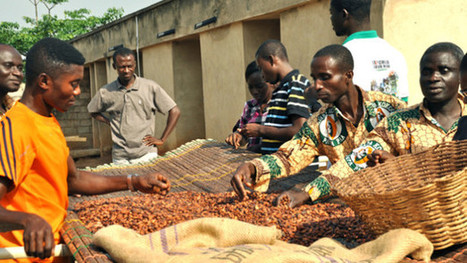


How will we able to determine if the first U.S.-Africa Summit was a success?
Devex Senior Reporter Michael Igoe asked Robert Perry, vice president of the Corporate Council on Africa, in a video interview on the sidelines of the summit in Washington, D.C.
Perry said he hopes the meetings will help change risk perceptions and overcome fears, leading more U.S. businesses to invest in the continent.
Click on the above clip to find out more about how the vice president for the Corporate Council on Africa views initiatives like Power Africa, where he believes the Export-Import Bank should play a leading role — especially when it comes to supporting ventures by small- and medium-sized U.S. companies