
This week during

 Your new post is loading... Your new post is loading...

No comment yet.
Sign up to comment
KRII-KROTOASA RESEARCH-INTENSIVE INSTITUTE 's insight:
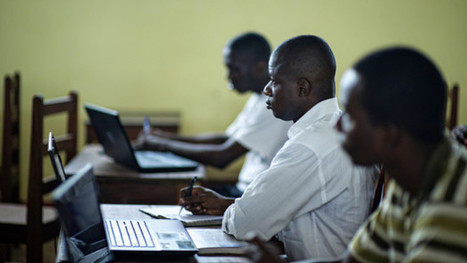
We often hear political and business leaders and Africanists talk about the need to “tell the African story.” For us, “tell the African story” means nothing. In other words, it is a cliché of no value. We don’t know what it is supposed to mean. It may be that the idea of a definitive “African story” gains traction as a response to bigoted representations of the continent that have been influential in Western journalism and thinking. But like the idea of the need for “positive stories about Africa”, it’s facile and unhelpful. Our suspicion is that political and business leaders say that when they feel uncomfortable with airing real problems that ordinary Africans experience. The phrase also assumes–as our blog title mockingly suggests–that Africa is a Country. African journalists rarely think or talk about their vocation in these terms. In most cases, they lack the continental consciousness to think or write in this way. The national trumps any continental solidarity or focus. So does the local. Their focus is very different from their counterparts in the West who report on “Africa.” Journalists are also under stress and lack resources to travel between or report from elsewhere in Africa. News organizations mostly republish wire stories or cut and paste reports from Western media. In South Africa, for example, it is not unusual for prominent newspapers to take their “international” and continental coverage straight from Western publications, often ones that stereotype Africans. For example, the Independent Group’s newspapers republish copy from Britain’s rightwing “Daily Telegraph” and the tabloid “Daily Mirror.” The worst is the Sunday Independent, where copy from the New York Times and Washington Post make up whole sections and the Mail and Guardian which reposts UK Guardian copy in bulk on its world news pages with very little edits. There’s a few homegrown networks (e.g. SABC Africa, which may not be operating anymore) or subsidiaries of “global” or US networks-like CNBC Africa, ABN News-which attempt a continental bias, but can’t help themselves in parroting cookie-cutter Western storylines, tone or foci. continue reading on AFRICA IS A COUNTRY
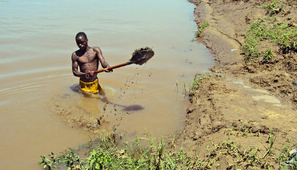
Nakuru County, Kenya – With a growing urban population, sand mining is emerging as a thriving yet dangerous and exploitative occupation for youths in search of jobs.
KRII-KROTOASA RESEARCH-INTENSIVE INSTITUTE 's insight:
Allan Karanja, 22, is a sand harvester. His job is a complex and arduous one that involves him working in deep pits, equipped only with a shovel, crowbar and no protective gear, as he mines sand. It’s also a deadly occupation. In Rhonda area, situated south of Nakuru town and next to Lake Nakuru National Park, in Kenya’s Rift Valley Region, is an area characterised by sprawling ramshackle settlements. Here hundreds of youth engage in sand mining, with the Ndarugu River, which flows into Lake Nakuru National Park, being the main site of sand harvesting. Karanja tells IPS he’s seen many of the workers around him die when weakened steep walls collapse in the midst of excavation. “Hunger is what drives us into these sand mines. We earn peanuts here despite the risks we undergo. We excavate sand without safety helmets,” Karanja says. In 2010, Nakuru town, situated 160 km north-west of Kenya’s capital city Nairobi, was voted by United Nations Human Settlements Programme or U.N.-Habitat as the fastest-growing town in East and Central Africa. The new title resulted in a rush of investors to the area and a subsequent boom in construction industry – the main consumers of sand. Rhonda is the leading source of sand in the entire Rift Valley Region, owing to its availability along the river bank. Here, sand mining dates back to the early 1980s. Jackson Kemboi is an owner of a two-hectare sand quarry where two sand harvesters died when a wall collapsed last month. A father and son died when a wall collapsed killing them on the spot, which prompted Kemboi to close temporarily.
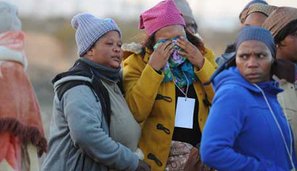
South Africa – This women’s month marks two years since the Marikana massacre. The widows of the workers killed by the South African Police Service in 2012 have since received their deceased husband’s provident fund dues, but still wait for justice whilst the media and public attention has long since transferred from their plight to the Farlam Commission.
KRII-KROTOASA RESEARCH-INTENSIVE INSTITUTE 's insight:
The focus recently has been on the prolonged strike action on the Platinum belt as well as Mr X’s sensational testimony alleging that muti and body parts were being used in flesh eating rituals by striking miners back in 2012. This is what has gripped the imagination of the public, many of whom are quick to believe this anti-black narrative – a similar narrative that was used by the apartheid era South African Defense Force about black soldiers in the border wars when they spoke of bloody rituals used to turn bullets into water. Meanwhile the widows have been all but forgotten and though the mining company Lonmin has taken on the responsibility of their children’s education and also offered a male member of the families of the deceased a job on the mines to replace the breadwinners slain by the police, they say they have not been adequately compensated for their loss. “Yes it is true, these things have happened, but what is the use of sending our kids to nice schools if they come home to no food, a tin shanty and so many problems that have not been dealt with? A breadwinner in the (extended family) does not mean that our needs are met. He has his own wife and kids to think of. It causes infighting in the families too. They did not even consult us properly to find out what we need. Maybe we could have been given the jobs,” says Thabelo Mutzumi*. continue reading on SACSIS
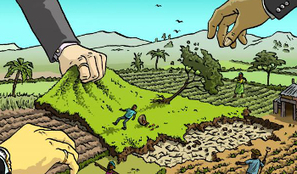
Can land grabs by foreign investors in developing countries feed the hungry? So says the press release for a recent, and unfortunate, economic study.
KRII-KROTOASA RESEARCH-INTENSIVE INSTITUTE 's insight:
It comes just as civil society and government delegates gather in Rome this week to negotiate guidelines for “responsible agricultural investment” (RAI), and as President Obama welcomes African leaders to Washington for a summit on economic development in the region. At stake in both capitals is whether the recent surge in large-scale acquisition of land in Africa and other developing regions needs to be better regulated to ensure that agricultural investment contributes to food security rather than eroding it by displacing small-scale farmers. The recent study paper will not advance those discussions. It is the kind of study that gives economists a bad name. Economists like the one in the oft-told joke who, shipwrecked on a deserted island, offers his expertise to his stranded shipmates: “Assume we have a boat.” In this case, these seemingly well-intentioned Italian economists came up with the dramatic but useless estimate that global land grabs could feed 190-550 million people in developing countries. The heroic assumptions they needed to get there should have stranded them on a deserted island, because they make no sense in the real world. • Assume land grabs produce staple food. (Mostly, they don’t.) continue reading on farmlandgrab.org
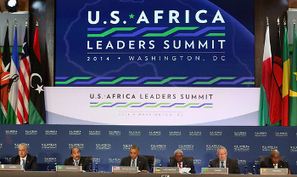
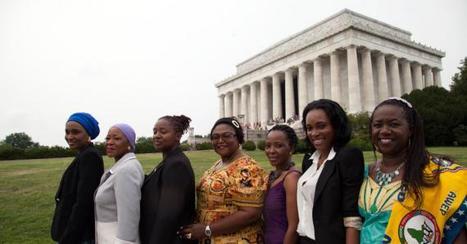
Washington DC – Africa’s leaders have flown home after meeting President Barack Obama, politicians, business executives and civil society in an unprecedented U.S.-Africa Leaders Summit. The event, themed “Investing in the Next Generation”, lasted three days from the 4th to the 6th of August during which participants discussed plans to strengthen the relationship between the two parties.
KRII-KROTOASA RESEARCH-INTENSIVE INSTITUTE 's insight:
Despite his Kenyan roots, President Barack Obama seemed to have somewhat overlooked the African continent over the course of his presidential career. Aside from a week-long trip to Senegal, South Africa and Tanzania last year and a 24-hour visit to Ghana in 2009, US engagement felt very limited particularly compared to China’s growing influence. Hence expectations were high when the President invited fifty heads of state to Washington for the first-ever US-Africa Summit. Let’s talk about business With an underlying aim to move away from development aid towards “equal” economic partnerships, trade and investment were star topics discussed in depth over the three days. This started on Monday with a forum on the African Growth and Opportunity Act (AGOA), a legislative agreement signed by former US President Bill Clinton in 2000 to promote a free-market system and fuel US-Africa trade and investment. The AGOA is due to expire in 2015, and South African President Jacob Zuma led the way in securing plans to renew and strengthen the Act in the future. Core economic discussions took place during the US-Africa Business Forum on Tuesday, when American companies such as Coca Cola, General Electric and Marriott pledged 14 billion dollars of investment in various sectors such as energy and infrastructure around the continent. In addition, the Doing Business in Africa Campaign (DBIA) – launched by the Obama Administration in 2012 to help US businesses harness trade and investment opportunities in Sub-Saharan Africa – was offered 7 billion dollars, and Obama’s “Power Africa” Initiative, set up in 2013, will receive a 12 billion dollars in new commitments from a mix of public and mainly private partners. These will be provided by the World Bank, the African Development Bank, the Swedish government and US companies, which are highly attracted by a continent whose total electricity output is similar to a country the size of Spain, and where a mere 8% of hydroelectric potential is currently being exploited. According to the White House, “these new commitments amount to more than 33 billion dollars, supporting economic growth across Africa and tens of thousands of U.S. jobs”. Energy was inevitably a key theme of the US-Africa Business Forum, but how about climate change and environmental degradation? “Africa can be a clean energy beacon for the world”, said US Vice-President Joe Biden before announcing an additional 10 million dollars would be committed to the US-Africa Clean Energy Finance Initiative, which was launched in 2012 to catalyze private sector investment into clean energy projects in Africa. Yet the sum devoted to green investments still falls uncomfortably short compared to other pledges. The usual suspects The guests’ reactions to the Summit seem generally positive. Upon his return to South Africa on Thursday, Jacob Zuma said the three days had “reshaped” US-Africa relations and “taken it to another level” in a statement acquired by PANA. His enthusiasm is not unfounded, however. Together with Nigeria, Ghana, Kenya, Liberia and Tanzania, South Africa is amongst the handful of countries (none of them francophone) likely to benefit from the opportunities provided by the AGOA, which is biased towards oil and gas. On another note, the Chairperson of the African Union Commission, Nkosazana Dlamini Zuma, told reporters she thought the summit was successful and appreciated the frank discussion amongst leaders. “Africa looks forward to doing business with American companies, not because we need aid or assistance, but because it makes business sense to invest in Africa,” she said. Yet it is precisely this financial and economic focus which draws criticism from the media and civil society. “We see a definite shift in the US policy towards Africa,” managing editor of The East African Pamela Sittoni told Afronline. “It’s a bit of a concern that they are adopting the trade and investment stand, as opposed to a previous policy where aid was linked to governance and the respect for human rights and democracy. We fear that this new emphasis on trade is actually overlooking other issues that are important, such as issues of corruption which must not be downplayed.” Good governance and democracy in the shadows? These topics were not entirely excluded from the agenda, with a Civil Society Forum and various discussions centered on tackling the lack of democracy, security and high levels of corruption that affect a majority of African countries. In fact, regional director of the National Democratic Institute (NDI) Christopher Fomunyoh stated: “While trade and investment became the predominant theme because of Africa’s potential as a market, and because of contributions from the US private sector towards the Summit, I would say the other issues were still addressed.” It is also on these terms that President Robert Mugabe did not receive an invitation, together with the leaders of Sudan, Central African Republic and Eritrea. Still it is difficult to see much beyond symbolic actions and sweeping announcements. Whilst acknowledging the US has a more solidarity-based approach to Africa than China, Italian journalist Father Giulio Albanese claims trade and investments will not solve poverty. “We need welfare policies, and most importantly we need to ensure greater participation in terms of democracy and civil society. It seems to me Obama has been latent on these issues.” US vs China… and the EU Speaking of China, many observers see the Summit as a move to reassert American influence on the continent. With over 210 billion dollars in trade volume with Africa in 2013 (against 85 billion between the US and Africa), China has overtaken the world’s superpower and has been organizing Forum on China-Africa Cooperation (FOCAC) Summits since 2000. Although this was never explicitly stated, Obama himself alluded to Sino-African relations during the Summit stating, “We don’t look to Africa simply for its natural resources. We recognise Africa for its greatest resource which is its people and its talents and its potential”. Indeed, Mr Fomunyoh seemed to think this distinguishes the US from their Chinese counterparts. “The US is putting emphasis on the overall environment of good governance that can foster economic growth,” he told Afronline, “whereas the Chinese have focused solely on commercial relationships and do not bring up issues of good governance and human rights with African leaders”. As attention is focused on US-China relations, where does this leave the European Union? “A sleeping beauty!” says Father Albanese. “We have policies in Brussels pursuing democracy and human rights, but then sovereign countries like France and the UK acting like mavericks.” He adds, “the problem is moving from words to facts. As long as we only focus on investment terms and agreements we will never solve Africa’s problems.” Yet Mr. Fomunyoh sees greater opportunities, claiming this is a chance “for Africa to leverage real interest by multiple partners, in a way that allows a more balanced commercial relationship between the continent and the world’s major economic blocs.” What we know is many words have been said over the Summit’s three days. Now Africans wait for facts.
KRII-KROTOASA RESEARCH-INTENSIVE INSTITUTE 's insight:
Discussion Highlights GAKWAYA Titus says: We thank the Obama Last Mandate to have realized that some thing has to be done to Africa . There are many engagements the American had in Africa, and assisted many but what was achieved ??? Our African leaders, should have proper policies for lifting up their people. Solutions should be designed from home. Not imposed. The solutions, will not come from China or America. The last dormant years are enough. Up Africa. Thank you Mr. Igoe for clearly articulating several of the key points of tension concerning ‘African aid/African trade’ that have come out of the summit over the last few days. I wanted to quickly point out that even if USAID isn’t directly working to guide the impact of private investment by the likes of Coca Cola, there have been important shifts in the zeitgeist of the for-profit world towards greater appreciation of social/development impacts and recognition of evaluation and program learning, which have been increasingly used in some for-profit companies to ensure optimal development impacts and financial returns. Coke is actually a great example in this regard, in recognizing that positive development impacts in the lives of developing communities makes good business sense. As a result they’ve found ways to incorporate socially minded strategy as a means to further returns to traditional financial metrics. Consider for example the partnership between Coca-Cola and TechnoServe in East Africa (see Project Nurture). TechnoServe has bolstered agricultural productivity and quality, and livelihoods for small land mango farmers in Kenya and Uganda, while Coca Cola has connected new markets for the sale of those mangos. Importantly TechnoServe tracts development impacts, and adjusts or even ends its programs accordingly based on findings, which should always be the core result of quality research and evaluation. Another development has been the rise of successful scalable social enterprises. For example, organizations like One Acre Fund provide much needed inputs, technical support, financial aid, and business development for small land farmers, while also operating through smaller for-profit entities in different countries throughout Africa. Integrated within their programing is an evaluation apparatus that in turn tracks the impacts of the program and can lead to adjustments in the programing offered and the business model, to ensure its long term sustainability. At Clair de Lune, a social enterprise based in Burkina Faso that sells solar lights, evaluation is also built into our model. Tracking impacts and the number of rural households reached gives us useful information on the success of our business model, as well as the impact on, and development of, our clients. Our penultimate goal is to ensure poor households see an increase along specific quantifiable quality of life metrics. Thus by pairing for profit sustainability and developmental impacts as duel goals, social enterprises represent a bridge between concerns over singular minded for profit companies and singularly minded development/aid programs.
KRII-KROTOASA RESEARCH-INTENSIVE INSTITUTE 's insight:
Africa is opening for business and the rest of the world is keeping watch. But should U.S. companies join the fray? “I think one of the key takeaways is that Africa is open for business, and if we have to move away from the aid narrative to the investment and business narrative. I think it's important for the U.S. gets involved through its companies and just look for business opportunities,” Investec Asset Management CEO Hendrik du Toit told Devex Assistant Editor Kelli Rogers in a video interview on the sidelines of the summit in Washington, D.C. Du Toit said the benefits in looking for business opportunities and taking them will be mutual given companies’ expertise and Africa’s potential. Click on the above clip to find out more about ways companies can join the investment and business narrative for Africa’s development and implement projects successfully, opportunities in Power Africa as well as tips for African governments to create a suitable investment climate and business environment.
KRII-KROTOASA RESEARCH-INTENSIVE INSTITUTE 's insight:
Where do public health goals fit into an agenda focused on trade and investment, and what message have health ministers brought with them to the first ever gathering of African heads of state in the United States? Devex caught up with Tanzanian Minister of Health and Social Welfare Tanzania Dr. Seif Seleman Rashid on the sidelines of the U.S.-Africa Leaders Summit to learn how the high-level rhetoric around a new narrative of partnership with the continent means for a ministry that still relies heavily on foreign aid programs and assistance. Rashid shared his views on emerging health sectors where investment and innovation are the words of the day, discussed recent agreements with the U.S. Agency for International Development to upgrade Tanzania’s electronic health management systems, and talked about his own ambitions to leave behind a more “independent” national health system. Below are highlights from our conversation with the minister outside an event sponsored by Squire Patton Boggs and the Tanzania Investment Center on the sidelines of the U.S.-Africa Leaders Summit in Washington, D.C.
KRII-KROTOASA RESEARCH-INTENSIVE INSTITUTE 's insight:
Social media is emerging as a powerful tool for African entrepreneurs, and development professionals looking to support home-grown African business should think now — and not later — about how to harness it. “For the first time in a very long time, it’s quite cool to be Nigerian,” Jason Njoku, founder and CEO of iROKO Partners, said during a panel discussion hosted by the Brookings Institution during the first day of the U.S.-Africa Leaders Summit. Njoku explained that in Nigeria there is a mass of young people that are mobile and actively engaged in social media. He emphasized that social media not only makes governments more accountable, but also opens up the country to entrepreneurs, investors and NGOs looking to connect on a wide scale. “You have the opportunity to realign how business is done,” he said. Four years ago, Njoku flew to Lagos, Nigeria’s largest city, to digitized Nollywood movies for the first time. After partnering with YouTube, he was soon streaming full length Nollywood films online, a system which instantly became hugely popular among the country’s youth. When iROKO Partners finally launched its own movie streaming platform in 2012, it reached 500,000 registered users in less than six months. Today they have expanded to the music scene and are continuing to grow. Social media is beginning to play an active role in other African economies as well. Chedi Ngulu, a 33 year-old entrepreneur who started a PR and communications company in Tanzania, described how social media is essential to his work: “Our Internet penetration is 12 percent but it’s skyrocketing … Don’t think today, think what is going to happen next year and the following year, and be prepared for it.” Ngulu said the best way for the international business and development community to support entrepreneurs in a social media-driven world is to give them a space to be creative, and try things. He also stressed the importance of helping out disseminate local content that Africans can relate to. But very few foreign investors are supporting African entrepreneurs in any sector. Carolyn Campbell, managing director and general counsel at Emerging Capital Partners, said that private equity firms like hers only account for about 0.1 percent of total investment in Africa. In an earlier panel discussion, U.S. Representative Christopher Smith (R-NJ) emphasized that governments can only do so much to spark growth and prosperity in Africa. The private sector, he said, has to do the rest. Smith underscored that there are budding entrepreneurs and prosperous business owners on the African continent who are ready to partner with the American private sector, and U.S. companies would benefit if only African business opportunities were better marketed. “People need to look beyond disease,” he said. “Africa isn’t just dealing with crises.
KRII-KROTOASA RESEARCH-INTENSIVE INSTITUTE 's insight:
Five years ago, during his first visit to sub-Saharan Africa as U.S. president, Barack Obama memorably told Ghana’s parliament that “Africa does not need strong men. It needs strong institutions.” And months before his re-election, Obama stressed strengthening democratic institutions as one of four pillars of his administration’s sub-Saharan Africa strategy. “Our message to those who would derail the democratic process is clear and unequivocal: the United States will not stand idly by when actors threaten legitimately elected governments or manipulate the fairness and integrity of democratic processes,” Obama said in the strategy. Obama’s strident and lofty rhetoric on democracy in Africa may make for odd bedfellows this week as 50 African heads of state gather in Washington for the first-ever U.S.-Africa Leaders Summit. While sub-Saharan Africa as a whole has made marked progress toward democracy and institution building since the 1990s, more than a dozen of the African leaders expected in Washington can aptly be called strongmen — President Yoweri Museveni of Uganda and President Paul Kagame of Rwanda included.
KRII-KROTOASA RESEARCH-INTENSIVE INSTITUTE 's insight:
This week, more than 40 African heads of state are in Washington, D.C., for the first-ever U.S.-Africa Leaders Summit. The theme is “Investing in the Next Generation,” which is fitting given the youthful demographics of the continent and the significant issues the next generation faces — from recent abductions of Nigerian schoolgirls to unemployment and forced recruitment of child soldiers, to name a few. I hope the Obama administration will use this opportunity to lead for girls and announce new commitments to end child, early and forced marriage. Evidence compiled by the International Center for Research on Women and others has consistently shown that adolescent girls are among the most vulnerable to rights abuses and are yet the best-positioned to contribute to a more peaceful and prosperous future when they have a fair chance — a decent education, access to health care and the opportunity to contribute economically. However, these opportunities escape child brides, who are less likely to finish their education, more likely to experience violence, sexually transmitted infections, early pregnancy and complications in childbirth, typically living a life of domestic servitude. This is not only a violation of their fundamental human rights, but also an unnecessary and avoidable challenge to the outcomes African leaders gathering this week seek — more educated, healthy and productive societies. As such, the U.S. president and first lady should use the summit to advance a child marriage-free future for the continent. Specifically, they should work together with their African counterparts to advance bilateral and multilateral commitments to end child marriage, all of which should be guided by a concrete and comprehensive strategy outlining what impact we seek to achieve, and by when. This would be fitting and appropriate given that White House aides assure us that gender and youth will be “cross-cutting issues” running throughout summit events. The public schedule shows one “signature event” on investing in women for peace and prosperity today, and the Spousal Program on Aug. 6 — to be co-chaired by Michelle Obama and Laura Bush — also holds some promise given the first lady’s remarks last week in support of girls’ education and ending child marriage (it’s only the second time she’s spoken out on global gender issues). Either would be an excellent opportunity to commit to an action agenda to end child marriage. There is some momentum behind this. The U.S.-Africa Leaders Summit comes on the heels of last month’s Girl Summit co-hosted by the United Kingdom and UNICEF, where the U.K. committed nearly $100 million in funding to end female genital mutilation and early and forced marriage. The event set the stage for similar leadership by the United States, which participated but whose commitments were considerably smaller by comparison. There have been some encouraging statements by U.S. leaders — most recently the first lady, but also from the Ambassador at Large for Global Women’s Issues Catherine Russell at the U.N. Commission on the Status of Women, Secretary of State John Kerry on World Population Day and even a presidential proclamation issued on the last International Day of the Girl. Lots of good talk, but so far no clear vision for the change we seek to make. There’s appetite for action among African leaders, too — the African Union recently launched a campaign to end child marriage. The government of Zambia has been actively developing support for U.N. resolutions on the practice, the Ethiopian government has been tackling the practice at home and many others across the continent are beginning to recognize and meet the needs of already married adolescents girls, many of whom lack access to education, health care and basic rights to determine their own future. So this week’s summit is just the right forum to kick-start those efforts. However, as the meeting opens, the agenda is admittedly trade, energy and security-heavy. Groups like Human Rights Watch have criticized the White House for the alleged insufficient attention given to human rights in the agenda. There will reportedly be no communique or single outcome document from the summit, and new policy and funding announcements will be sprinkled across the event’s three days. This will make it difficult to track progress and outcomes — or we may not have any at all, which would certainly be a missed opportunity. Either way, the fact remains that if the United States and its African partners are serious about “investing in the next generation,” they cannot afford to ignore child marriage when the highest prevalence rates in the world are in Western and sub-Saharan Africa, with more than 26 million women on the continent who were married before their 18th birthday. They must not think small with a few scattered investments in a handful of countries, but push farther to ensure their governments are looking across the various disciplines of justice, diplomacy, health care and education to determine how they can position existing efforts to drive change. Diplomats should be negotiating with their counterparts — in the AU, the U.N. and bilaterally — demonstrating that they take this issue seriously. Finance ministers should be budgeting serious resources to tackle the practice, from legal reforms to education platforms to targeted strategies for service sectors such as justice and health care. For its part, and as a major donor to African education, health care, food security and governance initiatives, the U.S. should craft a strategy that will guide these investments to ensure they best address factors that influence child marriage. And everyone should be supportive of a target on ending child, early and forced marriage in the post-2015 development agenda. Obama clearly wants to make investment in Africa a part of his foreign policy legacy. As the White House clearly states, “focusing on the next generation is at the core of a government’s responsibility and work, and this summit is an opportunity to discuss ways of stimulating growth, unlocking opportunities, and creating an enabling environment for the next generation.” At the core of that mission should be the U.S. and African leaders working together to ensure every girl and boy who comprises that next generation has the free and full capacity to stay in school, to understand and access their rights, to protect the integrity of their bodies and to determine if, when and whom to marry. These are all basic human rights and core American values.
KRII-KROTOASA RESEARCH-INTENSIVE INSTITUTE 's insight:
A little over a year ago in Cape Town, U.S. President Barack Obama announced Power Africa, an ambitious effort to provide electricity to several countries in sub-Saharan Africa, where two-thirds of the population are off the grid. How has the initiative performed so far, and what are the main lessons learned? Devex Senior Reporter Michael Igoe asked Power Africa Coordinator Andy Herscowitz in a video interview on the sidelines of the U.S.-Africa Leaders Summit in Washington, D.C. Click on the above clip to learn more insights from Herscowitz about what short-term goals have been accomplished, the challenges that lie ahead, how the initiative can achieve scale beyond the initial $7 billion, and ways to engage not only U.S. firms but also the local business community.
|
KRII-KROTOASA RESEARCH-INTENSIVE INSTITUTE 's insight:
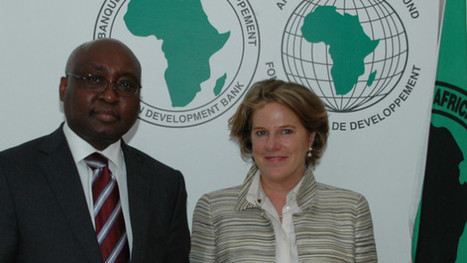
Africa’s largest wind power project is a go. African Development Bank President Donald Kaberuka and Elizabeth Littlefield, president and CEO of the U.S. Overseas Private Investment Corp., signed on Friday a letter of intent to finance the 310-megawatt Lake Turkana Wind Power Project in northern Kenya. Investors hope the project will help address a power supply shortfall in the country, which experiences frequent outages and could save up to $150 million annually on imported electricity. “This project was not easy to mount,” Kaberuka said during the signing ceremony in Washington, D.C. while Littlefield noted she hopes this partnership will be a model for many in the future between AfDB and OPIC. Kaberuka agreed and added: “We can leverage on each other’s strengths.”
KRII-KROTOASA RESEARCH-INTENSIVE INSTITUTE 's insight:
“ The companies need to be held accountable, and we would ask President Obama to also support us in this message,” said Ali Idrissa, the national co-ordinator of Publiez Ce Que Vous Payez (Publish What You Pay, or PWYP), in Niger, a country rich in uranium and iron deposits. “We need to look at the entire production chain of these extractive industries; we need to continue putting pressure on this industry …so we can fight poverty and corruption and ensure we have a better development,” he added. Idrissa, one of scores of African activists who have descended on Washington for this week’s unprecedented gathering, was speaking at a forum sponsored by the Open Society Foundations (OSF), Global Witness, Human Rights Watch, and Oxfam America, among other groups, on civil society efforts to promote government and corporate transparency and accountability on the continent. The activists, whose numbers are dwarfed by the size of official government delegations, most of which are led by heads of state, as well as U.S. and African corporate chiefs eager to explore business prospects, nonetheless claimed at least part of the spotlight Monday. At what was billed as a “Civil Society Forum Global Town Hall” meeting at the National Academy of Sciences, both Vice President Joe Biden and Secretary of State John Kerry echoed Idrissa’s concerns in general remarks.

Donors and countries in Africa need “revolutionary” changes to turn the tide on “bad data”, as well as to insulate data from politics, according to a report on the data revolution in Sub-Saharan Africa.
KRII-KROTOASA RESEARCH-INTENSIVE INSTITUTE 's insight:
“Nowhere is the need for better data more urgent than in most African countries, where data improvements have been sluggish,” says the final report of the Data for African Development Working Group, published this month (8 July). Funding for data collection is often unstable and inadequate, data accuracy is rarely checked, donors’ priorities sometimes overtake national ones, and national statistical offices lack incentives to improve, says the working group, co-chaired by the Center for Global Development and the African Population and Health Research Center. Although data collection is happening — more than 80 per cent of African countries conducted a census between 2005 and 2014 — the report states there is a “paucity of reliable data” on key indicators of development such as maternal mortality. And it adds that the early efforts have been “focused on collecting more — not necessarily better — data”. “This may divert attention from the underlying problems surrounding production, analysis, and use of basic data that have inhibited progress to date,” it says.
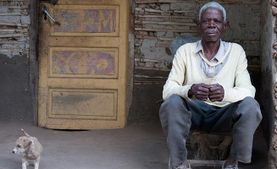
Yaounde – Social protection programmes across the African continent still have a long way to go in order to avoid deprivation and resilient growth.
KRII-KROTOASA RESEARCH-INTENSIVE INSTITUTE 's insight:
For the last 13 years, Michael Ndah, 37, has worked for three road construction companies in Cameroon, but it is only in the last two years that his current employer has managed to register him with the National Social Insurance Fund (CNPS). The CNPS is a pension system for workers in the private sector but they can only join if they are signed up by their employers. Benefits also include medical and surgical care and hospitalisation. But Ndah’s CNPS cover does not provide for his family’s health. “When my wife goes to the hospital I cannot use my insurance card for treatment and they say I must first pay in cash,” he tells IPS. The labour code provides that seven percent of a worker’s salary is given to CNPS each month, with the highest salary calculated by the system being 300,000 CFA (about 640 dollars) — even if the person earns above this. It is a contributive system where 2.8 percent of the payments are covered by the employee, with the remaining contributions covered by the employer. But with 640 dollars being the maximum wage allowed by CNPS, overall pensions are low. And it’s a huge concern for Ndah. “I don’t know if, before my retirement, I would have contributed enough to be eligible for a monthly pension payment,” Ndah worries. continue reading on IPS
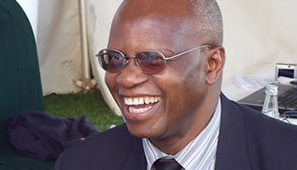
Zimbabwe’s justice minister is frantically trying to fend off probes into allegations of human rights abuses perpetrated by President Robert Mugabe’s regime since the country’s independence in 1980.
KRII-KROTOASA RESEARCH-INTENSIVE INSTITUTE 's insight:
Justice and Legal Affairs Minister Patrick Chinamasa, a member of the highest decision-making body of the ruling ZANU-PF party, the Politburo, is reportedly trying to weaken the Zimbabwe Human Rights Commission (ZHRC) so that it would not be able to investigate decades of governing party abuses. The commission was established in March 2010 but has been dormant due to the absence of an enabling act that clearly spells out its scope of work. In late 2010, Chinamasa introduced a bill that seeks to operationalise the commission, which is currently being debated in the lower house. If approved, it will be submitted to the Senate and but will require Mugabe to sign it into law. The bill has attracted criticism from human rights organisations and civil society locally and internationally. Critics say it has many gaps that need to be addressed in order to give birth to an effective human rights commission in this Southern African nation. These gaps relate to the functions of the commission, whom it reports to, its powers to ensure that human rights abuse victims are paid compensation or reparations, and the commission’s powers to prosecute those found guilty of abuses. Failure to eliminate the gaps, civil society says, could lead to Chinamasa abusing his ministerial powers by dictating what the commission should and should not investigate. ZHRC chairperson Reginald Austin told IPS that his commission has concerns about Chinamasa’s apparent attempt to control its activities. “Our concern with the current bill is that although we are defined as an independent commission, there are provisions in the bill that severely compromise the commission’s work and take away the idea of the commission’s independence,” he said. Austin explained that Chinamasa had included a clause in the ZHRC bill that compels the commission to regularly brief him and also get his approval on various issues, which include the financing of the ZHRC and who it meets with. “We are of the view that our funding and budgetary updates as well as (the report on) our activities should not go to the minister but to parliament since we were established by an act of parliament,” said Austin. He said the commission also had issues with the attempt by the minister to take away their transparency. The minister, as outlined in the current bill, can label sensitive information as “secret” and withhold it from the public. “What that provision does is hold us back from disclosing certain details to the public despite the fact that the public is entitled to that information. That on its own is tantamount to unnecessary interference by the minister,” Austin added. Chinamasa, in response, said parliament would make its decision on the bill soon. “The bill is before parliament. I do not see the reason why people should make a noise now before the bill is (passed into law),” he told IPS. “There is no need to press panic buttons at this moment,” Chinamasa added. However, he refused to discuss claims that he was trying to be the commission’s “dictator”. “I will not comment on such matters. I am the minister of justice and not a dictator. I simply lay the provisions of the law and if they are passed by parliament, they will become law. I do not dictate,” Chinamasa said. The Zimbabwe Lawyers for Human Rights (ZLHR), a group of practicing lawyers that seeks to protect the rights of Zimbabweans from being violated by the government, noted that the current state of the proposed law would result in an ineffective commission that depends on the direction given by the justice minister in its operations. “It must be borne in mind that the current foundation of the ZHRC … is weak and problematic and does not, in and of itself, facilitate the creation of an independent institution,” ZLHR said. Human rights organisations fear Chinamasa could prevent investigations into violations perpetrated by ZANU-PF in the 1980s and push the commission to investigate the post 2008 abuses. Violence erupted throughout the country in 2008 after the disputed elections. ZANU-PF have maintained that after 2008 Mugabe was not alone in human rights abuses as Morgan Tsvangirai’s Movement for Democratic Change (MDC) also violated ZANU-PF supporters’ human rights by allegedly engaging in violence and murder. An investigation into post 2008 abuses could also see non-governmental organisations (NGOs) being dragged before the commission to answer ZANU-PF’s allegations that NGOs distributed food to mostly MDC activists and denied food to their supporters. Asked to comment on whether there were other abuses the commission was likely to probe outside the scope of the post 1980 violations, Austin said the outcome of the ZHRC bill would determine this. “The parliamentarians are the ones who can state what we will and will not be able to do in terms of the commission looking at abuses, and whether we will be empowered by the law to look at violations that belong to the pre-independence and post-independence eras,” Austin said. South African-based Crisis in Zimbabwe Coalition (CiZC) coordinator Dhewa Mavhinga said civil society organisations were deeply concerned that Chinamasa was trying to curtail the commission’s work by “smuggling through the back door” provisions that would effectively make it toothless. “What the minister is trying to do is to create a paper tiger,” said Mavhinga. “He is trying to smuggle into the law provisions that give him total control of what the commission can do and cannot do. We, as civil society organisations working on the Zimbabwean crisis believe, firmly, that the minister should not guide the commission in its work and should make the commission as independent as possible,” he added. He said his organisation believed that it is the commission’s mandate to probe human rights abuses perpetrated in Zimbabwe by the Mugabe regime. “These violations were committed and there is no way they can be swept under the carpet without being addressed,” Mavhinga added. By George Nyathi - IPS Africa
KRII-KROTOASA RESEARCH-INTENSIVE INSTITUTE 's insight:
What happens when almost 50 African heads-of-state, many of their ministers, hundreds of U.S. and African business leaders, donor officials, development professionals, civil society activists, artists, and entrepreneurs all gather together in one place to discuss the future of U.S.-African relations? The short answer: we don’t really know yet. As promised, the U.S.-Africa Leaders Summit in Washington, D.C. played host to plenty of big announcements. Among them: $1 billion from the Swedish government as it joins U.S. President Obama’s signature Power Africa initiative; an additional $7 billion from the New Alliance for Food Security and Nutrition’s private sector partners; a new $100 million “global resilience partnership” between the U.S. Agency for International Development and the Rockefeller Foundation; and $38 million from USAID and others to open leadership centers for young Africans. If nothing else, Obama succeeded in placing the word “billion” next to the word “Africa” in the U.S. media as never before. That is no small feat since, as he pointed out in his remarks at the U.S.-Africa Business Forum, “Our entire trade with all of Africa is still only about equal to our trade with Brazil — one country.” Indeed, when it comes to investing in Africa’s future, the U.S. has significant ground yet to gain on China. And for those who view strong economic ties as the cornerstone of development cooperation, this week’s summit was long overdue. Changing the narrative or redirecting attention? But headline-grabbing investment announcements, while useful in transforming the African narrative from “aid to trade,” also risk redirecting attention from some of the extremely troubled conditions under which those investments are poised to take place. For example, the six countries where Obama’s Power Africa initiative operates rank only as high as 63rd and as low as 144th out of 177 countries on Transparency International’s global corruption index. Only one of the six — Ghana — ranks in the top half worldwide in its corruption control efforts. While energy sector reform is part of the Power Africa package, so far reform efforts seem to have stressed standardizing documents and economic liberalization to facilitate international investment over difficult commitments to combat corruption. The U.S. government development agency leaders who have been tasked with helping break down the barriers to U.S. private investment in Africa — using tools such as credit guarantees, public-private partnerships and insurance schemes — will have to be careful that the risks they are mitigating include those of corruption, exploitation, and conflict, not just of poor profits and bad deals. American companies are bound by the U.S. Foreign Corrupt Practices Act, which compels their investments to meet transparent accounting criteria and forbids bribery of foreign officials. But will U.S. investments go beyond a “do no harm” approach on hard-fought issues such as governance, corruption, and social inclusion? Do they need to? What is the American alternative, exactly? Closer economic ties and investments in infrastructure, power, agribusiness, and transport can help lift people out of poverty and create incentives for leaders to prioritize the strength of public institutions over personal gain. But unless they are conditioned on measurable improvements to development and governance challenges, those investments can also legitimize irresponsible, unaccountable leadership. The chief criticisms of this week’s summit were its lack of attention to good governance, Obama’s invitation to Washington of notorious human rights abusers, and the perception of a marginalized role for civil society in proceedings. There is an argument to be made that investment, trade and growth are the tip of the spear of progress across development challenges. At the same time, China’s approach to investment on the African continent has been widely derided as being unconcerned with concepts such as inclusive growth and undeterred by social and environmental risks. So what exactly is the U.S. alternative we heard articulated in Washington this week, and who are the actors at its leading edge? Obama’s strategic shift from African aid to African trade has somewhat altered the role of U.S. development agencies, who now convene mutual interests and facilitate commercial ties. What remains to be seen, however, is what role development professionals will play as those investments they have helped facilitate begin to mature over time. How closely will USAID monitor Coca-Cola’s newly-announced $5 billion investment within the framework of the New Alliance for Food Security and Nutrition, for example? Is that investment subject to anywhere near the same degree of transparent and independent evaluation as publicly-funded agricultural development programs aspire to be? And as U.S. development agencies increasingly play a “convening role” in bridging public and private aims and leveraging commercial resources — now increasingly in Africa — will they remain as committed to the monitoring and oversight role that pins those resources against indicators other than profit and production? What comes next? These are all questions that require considerable attention and scrutiny in the coming months, but aside from a few traffic closures, the occasional protest, and the constant wail of motorcade sirens, the first-ever U.S.-Africa Leaders Summit produced a generally favorable response. That may be, in part, because attendance at a summit in Washington, D.C. is generally limited to those who can afford the trip. At Devex we seized the opportunity to hear from health ministers about innovation and solar energy entrepreneurs about Power Africa’s progress, to explore the link between regional African trade and human rights enforcement, to hear what young African leaders want from President Obama, and to learn about university partnerships for science and technology. The Obama administration’s summit organizers described the gathering as a “starting point” in a new kind of relationship and we will continue to track progress along the way. This includes following U.S. legislative efforts to embed Africa programs in law through the African Growth and Opportunity Act reauthorization, as well as bills to codify Power Africa. And we will monitor how discussions among civil society activists and business leaders at this summit might feed into September’s U.N. General Assembly and the special discussions around finalizing the post-2015 sustainable development goals. Stay tuned.
KRII-KROTOASA RESEARCH-INTENSIVE INSTITUTE 's insight:
The Secretary General of the New Partnership for Africa’s Development (NEPAD) Council and the Chairman of Africa.com announced that they have signed a memorandum of understanding (MOU) with a goal of supporting socio-economic development on the African continent.
Under the MOU, the two parties will support one another’s efforts in ensuring that Africa’s small and medium businesses have affordable access to the web and the Africa.com domain name, and to address the critical issue of youth unemployment across the African continent through the development of entrepreneurial opportunities in the technology sector. The MOU emphasizes both parties’ commitments to building local institutions. The partnership between the two parties is being forged as Africa.com, the world’s largest Africa-related website with over 3 million visitors per month from over 200 countries around the world, launches its domain name business. This business has two components. For the first time, small businesses will have the opportunity to build their online businesses on a domain that speaks to their pan-African identity. For example, a travel agent can register the name travel.africa.com or a vendor of mobile devices can register phones.africa.com. Second, after the small business registers the name, they can secure in one place, all of the services they need to take their African business online: email, hosting, a do-it-yourself website builder, etc. The NEPAD Council, an independent not-for-profit organization comprised of African professionals and scholars, recognized the potential of the Africa.com offering to engage youth across the continent, and to provide a platform upon which they can engage with the global digital ecosystem, while promoting a positive pan-African identity. The NEPAD Council Secretary General, Dr. Adesina Iluyemi said, “We are looking forward to partner with Africa.com to give web presence and visibility to Africa’s businesses, and to provide training to the youth throughout the continent on how to get their businesses, ideas and projects online, we recognized the power that this effort has to address youth unemployment in Africa.”Africa.com Chairman and CEO Teresa Clarke, said, ”Africa.com has long held a deep regard for the important work undertaken by the NEPAD Council to mobilize and energize global action. The NEPAD Council is an organization of Africa’s best minds, who are committed to promoting and advancing accumulative and inclusive socio-economic development in Africa. We are pleased to be one element of their comprehensive strategic framework for creating opportunities for Africa’s businesses and youth.” About the NEPAD Council The NEPAD Council is an independent international not-for-profit organisation endorsed by African Heads of States in 2004. It advocates for and advances the cause of sustainable socio-economic development in Africa through partnerships and collaborations. It is made up of accomplished and intelligent African experts and professionals in Europe, North America and Africa. For more information visit www.nepadcouncil.org About Africa.com Africa.com is the .com for Africa – Imagine the possibilities…Style.africa.com, Wine.africa.com, Sports.africa.com, Homes.africa.com, Inspiration.africa.com, Poetry.africa.com… An Africa.com domain name is a valuable digital asset that can help you build and brand your online presence throughout the entire African continent. With Africa.com you get more than just a web address. Our exclusive membership program is free for all Africa.com users. Once you become a member, you can take advantage of all the promotional support we offer to showcase your business to our 2 million visitors each month from over 200 countries around the world as well as our active social media platforms which include over 60,000 Facebook users. Membership will soon include special deals with retailers across the continent and access to exclusive events. Many large brands, innovators and entrepreneurs are building their African dreams on Africa.com including Twitter, Apple, Forbes, CNBC, Starbucks, IBM, Europcar, Standard Bank, Marks & Spencer, Sasol, Danon, Evian, Bath & Bodyworks, etc. Joining these global brands in building their African dreams are the following budding entrepreneurs across the African continent: Sandton Hair, DeeBee Wines, Muweti Game Reserve, Mcourser E-Learning, Foreign Exchange, Matangazo Classifieds, BusinessIndex, Libya Institute for Advanced Studies, Xcom Africa Consulting, TravelGuide Africa.
KRII-KROTOASA RESEARCH-INTENSIVE INSTITUTE 's insight:
How can local renewable energy startups harness opportunities from large-scale development initiatives like Power Africa? Power Africa is a great idea because it’s bringing in the private sector players that normally what have taken much longer to venture into the sector and into the continent, Kojo Appiah, founder of KATA Solar, told Devex Senior Reporter Michael Igoe in this video interview on the sidelines of the U.S.-Africa Leaders Summit in Washington D.C. That doesn’t mean the initiative is perfect — at least for now. Now, Appiah explained, it’s time to shift the focus from exclusively off-grid solutions to the commercial to also include other needs in countries like Ghana, where most of the population does have access to electricity but there’s not enough generation capacity to develop the commercial and industrial sectors.
KRII-KROTOASA RESEARCH-INTENSIVE INSTITUTE 's insight:
African civil society leaders gathered on Wednesday at the U.S. House of Representatives to present a series of recommendations meant to boost peace, human rights, security, democracy and economic growth on the continent. One key discussion point was the African Union’s ongoing struggle to enforce key human rights agreements. The surprising solution, according to some: more regional trade within Africa. Soraya Aziz Souleymane, a development specialist from the Democratic Republic of Congo, said the AU doesn’t have enough coercive power, as countries abide by AU treaties voluntarily, and the only way to enforce those agreements is through economic sanctions. But, she emphasized, sanctions aren’t very effective because African countries actually trade very little with one another. “If the AU wants to have more power at an African level, it should be to increase the trade and partnership among African countries in a way that if those trades are cut, the country will really feel the pitch, and that will then become an incentive for them to behave in a way that is compliant with the treaties that they themselves have ratified,” Souleymane said. More regional trade, separation of powers While the focus of the first-ever U.S.-Africa Leaders Summit has largely been on transatlantic trade between the U.S. and Africa, African civil society leaders underscored the contention that more robust trade between African countries could help facilitate progress on a wide range of regional challenges — including human rights. That message will surely resonate with advocates of a consistent and fully-funded trade facilitation program, including capacity building and technical assistance to accompany the so-called “Bali package,” a World Trade Organization agreement signed in December that would compel member states to meet universal customs standards so goods can move across borders more easily. Some developing country signatories — including many in Africa — have expressed concern that the deal’s requirements will not be accompanied by the necessary funding and technical assistance required to achieve them. The human rights argument for regional and continental trade in Africa could lend further weight to calls for more donor assistance. Arthur Gwagwa of the Zimbabwe Human Rights Forum agreed that the AU has an enforcement problem when it comes to issues of human rights, and proposed another solution. He said there’s a need for a “separation of powers” between the African Commission on Human and People’s Rights, which proposes human rights agreements, and the African Union, which is supposed to implement them. “The African Commission is a human rights organization, whereas the AU is a political organization,” Gwagwa told Devex. The AU, he explained, doesn’t necessarily feel obliged to enforce the decisions of the African Commission. “I think there’s an authoritarian solidarity at the AU level,” he added.
KRII-KROTOASA RESEARCH-INTENSIVE INSTITUTE 's insight:
The government of Sweden has accepted an invitation from U.S. President Barack Obama to join Power Africa, an initiative to double access to energy in sub-Saharan Africa. Sweden will commit an additional $1 billion to complement the U.S. government’s $7 billion investment in Africa’s energy sector, according to Anders Borg, Swedish minister of finance. “If we take a really long term perspective … then we will have an Africa with 2.2 billion people” by 2050, Borg said at the Corporate Council on Africa’s Business Forum’s Power Africa Luncheon on Monday. The minister added that if access to consistent power can help those people achieve middle-income status in that time, that means “in Africa we have two new Chinas coming in the next 30 to 40 years.” Sweden’s commitment will include credit guarantees and other measures to help mitigate the risks to private sector investors in African energy, Borg said. Power Africa currently operates in six countries — Tanzania, Liberia, Ethiopia, Ghana, Nigeria and Kenya — but the initiative is likely to expand well beyond that, according to some of its leaders. Andy Herscowitz, Power Africa coordinator, noted that his team is currently hiring “regional transaction advisers” to help the initiative address cross-border power projects. Elizabeth Littlefield, president and CEO of the Overseas Private Investment Corp., suggested that the only reason Power Africa is currently limited to six countries is a lack of resources, urging that it expand to include all 54 African nations. For that to happen, Power Africa will need to attain lasting power to live beyond the current administration. Two bills — the Electrify Africa Act in the House and Energize Africa in the Senate — could help to ensure Power Africa’s longevity and contribute to a more robust staffing commitment by the U.S. government, Littlefield said. ‘Speed’Private sector representatives at the event asserted that the most important thing for Power Africa to address is how fast it can get things done. "It’s all about speed," pointed out Joseph Brandt, president and CEO of CountourGlobal, adding that Power Africa's leaders should focus on the time it takes to "put capacity on the ground" and ask themselves: “How do we speed things up?" One answer is standardization. When countries standardize power purchasing agreements and determine that those agreements are not just models, but the actual documents that will structure deals, "then you have a way to accelerate," Brandt said. Paul Hinks, chairman of the Corporate Council on Africa and CEO of Symbion Power expressed a similar sentiment: "Every agency involved in Power Africa must ask themselves if their own processes match.” The interagency team today released the first-ever Power Africa annual report for 2014, which notes that the initiative has already reached 25 percent of its overall megawatt goals and the $7 billion public investment has so far leveraged $18 billion in private capital. Herscowitz was careful, though, to manage expectations. "That sounds like a great number, but we had the luxury of working on deals that have been in the works for six or seven years," he said, adding that there is "no low-hanging fruit anymore."
KRII-KROTOASA RESEARCH-INTENSIVE INSTITUTE 's insight:
African leaders on Monday urged U.S. investors to be flexible, have courage and shorten their checklists — especially when it comes to expanding power by investing in energy. “The main focus for us is the energy sector,” John Dramani Mahama, president of Ghana, said at the Chamber of Commerce’s Presidential Plenary in Washington, D.C. Mahama wishes to establish Ghana as the energy hub for West Africa, and would like to double power production using the natural gas potential of the country. Mozambique, too, would like to see increased investment in energy production, energy transmission and energy distribution, according to President Armando Guebuza. Energy — or lack thereof — is increasingly becoming a constraint to growth in Africa, and one of the major focuses of investment in Ghana is “sorting out the energy sector,” Mahama explained. “We want to make more power available locally … to be able to drive the kind of investment growth we want to see,” he said. But to do it — and to build on opportunities that a more connected Africa will bring — will take increased investment and deeper partnerships with the U.S. private sector. However, while investment in Africa has grown significantly over the past decade, businesses still consider investing in Africa as a high-risk venture. African leaders present on Monday’s panel discussion expressed many priorities for their countries — Guebaza pointed to a heavier focus on targeted education for youth, while Abdeliliah Benkirane, prime minister of Morocco, said his country could benefit from simplifying administration and bureaucracy, as well as freeing itself from corruption. “There are great possibilities to invest in all fields, all you need to have is some courage. And you have to be flexible,” Benkirane said. There is a level of understanding to reach, as well. For one, Mahama hopes to increase the knowledge that Africa is composed of 54 different countries — all unique. Just because Somalia is on fire, for example, does not mean Morocco is on fire, just as a conflict in Ukraine does not mean all of Europe is in conflict, he explained, although he did add that there generally is a certain risk inherent to investing in the continent. “If [Americans] will come with shorter checklists and not expect to check every single box,” this could help speed along business opportunities, Mahama noted, adding that Indians and Europeans are coming with shorter checklists already and getting a strong return on their investments. But Hendrik du Toit, CEO of Investec Asset Management, a South African company that now provides investment products and services to institutions and individuals around the world, told Devex he thinks all investors have long checklists — and should. “Investors don't put money down for nothing ... they want a return, they do their homework, and it’s up to countries and economies to compete for those dollars,” he said. “There are other countries and economies who will compete if you don't want to.” It’s frank discussions and communication like this that could help bolster relations between the continents. “For me if we come away from the U.S. understanding each other, I guess it will create a partnership that is more durable,” Mahama said of the larger goals of the U.S.-Africa Leaders Summit that will continue through Wednesday. And by understanding each other, Mahama, Guebuza and Benkirane agreed that it would mean adapting views to accommodate a rapidly growing Africa.
KRII-KROTOASA RESEARCH-INTENSIVE INSTITUTE 's insight:
Strengthening science, technology and innovation is a very obvious way to address development challenges in Africa — yet universities remain strapped for cash. Take the case of South Africa, the continent’s most advanced economy. Grace Naledi Mandisa Pandor, minister of science and technology, lamented how recent statistics show that funding for higher education is declining, despite her country’s need to build and maintain a skilled workforce and create a fertile environment to grow ideas and meet critical human needs. “Without [this] we are losing human capital that would contribute to innovation,” she said on Tuesday during the Symposium on Science, Technology and Innovation for Economic Growth in Africa hosted by The National Academies in Washington, D.C., one of several side events organized around this week’s U.S.-Africa Leaders Summit. Pandor called for a strong university system with a vibrant and active higher education sector that is closely linked to science and tech needs. But how can this be achieved? For one, she told Devex, the South African government is attaching scholarships to every education program they initiate. The challenge, then, is making sure the institutions are present for educated scientists to continue to work in their home countries. “What we need to do is address institution building in order to absorb these graduates into science institutions on the continent,” she said. “How do we expand the institutional base so the many young people we produce can continue working in science?” It’s a challenge that can be met, in part, by either capitalizing on current or forming new partnerships — whether domestic or international. Successful partnerships Wole Soboyejo, president of Africa University of Science and Technology, science, technology and innovation is already the engine of sustainable development in Europe, the Americas and Asia, so why not Africa? U.S. and Africa university partnerships can be particularly helpful to meet this goal, and Soboyejo gave the example of the U.S.-Africa Materials Institute, based at Princeton University, Soboyejo said. Funded by the National Science Foundation, this program was established as a virtual institute that focuses on materials research and education in areas that can stimulate human capacity development and economic development in Africa. Talented physicists, mathematicians, chemists, biologists, engineers and more — collaborating between the U.S. and Africa — developed a range of innovations, including solar energy to provide vaccine refrigeration for medical clinics in rural communities in Kenya and a ceramic water filter factory in Abeokuta, Nigeria. Up to 99 of 100 fellows selected from Africa to work in conjunction with the program at Princeton returned to successful careers on the continent. Another successful partnership has been the African University of Science and Technology in Abuja, Nigeria, the first of the Nelson Mandela Institutions. Nelson Sewankambo, president of the Uganda National Academy of Sciences, explained how the role of science academies in supporting science, technology and innovation also serves to advance good governance. Since policy advisory space in Africa remains uncrowded, academies have an opportunity to fill that space with advice based on scientific evidence. Sewankambo said he would like to see an increase in value and demand for science with a purpose: development and improvement of people’s lives, which panelist Calestous Juna linked back to education and capitalizing on in-country training that already exists. According to this internationally recognized authority in the application of science and technology to sustainable development worldwide, most African ministries that deal with technical issues such as telecommunications, transportation or railways, have small trainings that have potential to be upgraded to larger workshops and even graduate programs, he said. This has been done on a large scale in China and in South Korea, but more African countries should realize it could become a foundation for expanding higher education. In addition, private companies such as IBM or General Electric often have in-house training initiatives in African countries that could be better harnessed. “These are not new ideas ... it hasn't been done in Africa because the focus has been around classical models, there has been resistance to anything beyond classical models,” Juna said.
|