Africa's Development, Trade, Finance
16.3K views | +1 today
Africa's Development, Trade, Finance
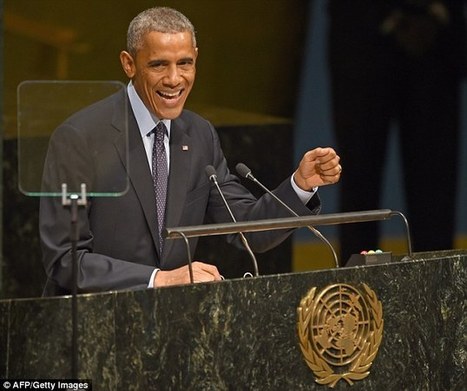
(1) The UN General Assembly resolution 68/237 proclaimed 2015 - 2024 A Decade Dedicated to People of African Descent: Recognition, Justice and Development. (2) The Africa-EU Partnership is based on shared values and aims at promoting common interests and achieving shared strategic objectives. The Joint Africa-EU Strategy, which was adopted at the Lisbon Summit in 2007, constitutes the overarching long-term framework for Africa-EU relations. It is implemented through jointly identified priorities, which are of common interest to both the EU and Africa and significantly impact on the daily lives of citizens on both continents. (3) On April 22–23, 2005, Asian and African countries renewed their longstanding solidarity at the 2005 Asian African Summit in Jakarta. The 2005 Asian African Summit yielded, inter-alia, the Declaration on the New Asian African Strategic Partnership (NAASP), the Joint Ministerial Statement on the New Asian African Strategic Partnership Plan of Action, and the Joint Asian African Leaders’ Statement on Tsunami, Earthquake and other Natural Disaster. The aforementioned declaration of NAASP is a manifestation of intra-regional bridge-building forming a new strategic partnership commitment between Asia and Africa, standing on three pillars, i.e. political solidarity, economic cooperation, and socio-cultural relations, within which governments, regional/sub-regional organizations, as well as peoples of Asian and African nations interact. The 2005 Asian African Summit was attended by 106 countries, comprising 54 Asian countries and 52 African countries . The Summit concluded a follow-up mechanism for institutionalization process in the form of Summit concurrent with Business Summit every four years, Ministerial Meeting every two years, and Sectoral Ministerial as well as Technical Meeting if deemed necessary. (4) Washington, D.C., August 4-6, 2014 President Obama pledged $33 billion in U.S. private and public assistance to Africa, Obama told the leaders of 50 African nations that some of their governments must bolster the rule of law, reform government regulations and root out corruption to promote economic development.  Obama discussed pledges of more than $14 billion by various American businesses for help with projects involving clean energy, aviation, banking and construction. Coca-Cola will help provide clean water, General Electric will assist with infrastructure development, and Marriott will build more hotels, Obama said. The United States is determined to be a partner in Africa's success We don't look to Africa simply for its natural resources; we recognize Africa for its greatest resource, which is its people and its talents and their potential. The president discussed a total of $33 billion in public and private commitments, including $7 billion in new financing to promote U.S. exports and investments in Africa and $12 billion in help from the president's Power Africa initiative involving private-sector partners, the World Bank and the government of Sweden. (5) The ACP-EU partnership agreement: The "Partnership Agreement between the members of the African, Caribbean and Pacific Group of States of the one part and the European Community and its Member States of the other part" was signed on 23 June 2000 in Cotonou, Bénin – hence the name " ACP-EC Partnership Agreement" or "Cotonou Agreement". It was concluded for a twenty-year period from March 2000 to February 2020, and entered into force in April 2003. It was for the first time revised in June 2005, with the revision entering into force on 1 July 2008. A second revision of the Agreement was agreed on 11th March 2010. (6) German development policy is formulated by the Federal Ministry for Economic Cooperation and Development and implemented by organisations such as KfW and GIZ. Germany takes international agreements as well as the commitments it has entered into very seriously. Therefore, in consultation with its African partners and other donors, it is focusing increasingly on certain cooperation priorities.
Your new post is loading...
Scooped by KRII-KROTOASA RESEARCH-INTENSIVE INSTITUTE
September 25, 2014 4:16 AM

Africa’s economic ‘rise’ does not reflect reality

Africa’s economic ‘rise’ does not reflect reality | Africa's Development, Trade, Finance | Scoop.it
Jostein Hauge: A more nuanced breakdown of the numbers suggests that the familiar narrative of a booming continent may be a myth (Africa’s economic ‘rise’ does not reflect reality | Jostein Hauge
No comment yet.
Scooped by KRII-KROTOASA RESEARCH-INTENSIVE INSTITUTE
September 25, 2014 4:14 AM

CDC official: New Obama climate change rules coud slow down EBOLA work

CDC official: New Obama climate change rules coud slow down EBOLA work | Africa's Development, Trade, Finance | Scoop.it
Executive order will force federal agencies to consider the global-warming impact of international development work, including overseas programs that fight diseases.
No comment yet.
Scooped by KRII-KROTOASA RESEARCH-INTENSIVE INSTITUTE
September 25, 2014 4:11 AM

Invest in Young People to Harness Demographic Dividend - Inter Press Service

Invest in Young People to Harness Demographic Dividend - Inter Press Service | Africa's Development, Trade, Finance | Scoop.it
Invest in Young People to Harness Demographic Dividend Inter Press Service Johannesburg — Different issues will be competing for the attention of different African leaders attending the 69th United Nations General Assembly Special Session on...
No comment yet.
Scooped by KRII-KROTOASA RESEARCH-INTENSIVE INSTITUTE
September 11, 2014 7:09 AM

In defence of the African Union « Afronline – The Voice Of Africa

In defence of the African Union « Afronline – The Voice Of Africa | Africa's Development, Trade, Finance | Scoop.it
KRII-KROTOASA RESEARCH-INTENSIVE INSTITUTE 's insight:


The African Union (AU) gets a lot of flak. Critics often argue that it is slow to respond to security threats; that it prioritises power over justice; and that it fails to adequately represent the needs of this continent’s 1,11 billion citizens.


The continental organisation is often dismissed as a talk shop for tyrants, or depicted as an ineffectual, lumbering bureaucracy that worries more about per diems than it does about Africa’s most pressing political problems.

There is merit to some of these critiques. But they don’t tell the whole story, and they leave out the good bits. It is time to give credit where credit is due, and to recognise that – as imperfect as it may be – Africa is in much better shape with the AU than without it.

First we must acknowledge that the AU operates under several massive constraints, which greatly limit the scope of its ability (if not its ambition, so often couched in the lofty rhetoric of pan-Africanism).

Firstly, it faces an immense financial challenge. Africa is the poorest continent, and also the continent most afflicted by violence. Yet the AU’s budget in 2014 is just US$308 million (to put this in perspective, the United Nations’ budget is US$5,2 billion). In the context of the challenges that the AU is supposed to address, this amount is wholly inadequate. Member countries are intended to contribute to the AU, but while countries such as South Africa and Nigeria pay more than their fair share, many struggle to meet their financial commitments. Still more funds must be raised from international partners.

Why does this matter? Because successful interventions – be they medical, humanitarian, military or police – are expensive. For example, the United Nations (UN) estimates that US$600 million is necessary to contain the spread of Ebola (the AU has so far contributed just US$1 million from its humanitarian fund), while there is an US$800 million shortfall in the international fund to prevent famine and relieve suffering in South Sudan.

Peacekeeping is particularly expensive. The latest budget for Monusco, the UN mission in the Democratic Republic of Congo, is US$1,4 billion. It’s all very well to strive for African solutions to African problems, but the truth is that Africa simply can’t afford to address major crises on its own. Nor should it. The developed world, with its long history of interfering in Africa’s affairs, often with disastrous results, must bear some responsibility – and not just when the interests of the major powers are at risk.

No comment yet.
Scooped by KRII-KROTOASA RESEARCH-INTENSIVE INSTITUTE
September 3, 2014 4:38 PM

State of Mining in Africa

KRII-KROTOASA RESEARCH-INTENSIVE INSTITUTE 's insight:


Mining developments, whether greenfield or brownfield, are not easy and require discerning investors and mining executives to overcome unique barriers that prevent the above five key factors from becoming a constant within the mining project or operation. Looking at the current mining investment, development and production environment in Africa against these factors, Deloitte’s research shows two main factors continue to have lingering barriers which lead the less agile and adventurous investors away from the continent.

These are governance and infrastructure. We believe what is driving this is governments of resource rich countries across the continent are seeking to strike the balance of delivering the value of the mineral back to its people, while at the same time, create an operating environment that is attractive to investors and thus setting the country up for further growth. Getting policy set right in a dynamic political and economic environment where commodity prices are on the move is proving to be a tricky balancing act. Drawing from last year’s research, the Deloitte global Tracking the Trends in Mining 2013 notes that “mining companies understand the need to meet local government and community requirements when operating mine sites. Those requirements, however, have escalated considerably in recent years. Today corporate social responsibility extends well beyond meeting the minimum legal requirements associated with conducting an environmental impact assessment.

It involves understanding shifting community and government expectation, addressing the demands of NGOs and relevant stakeholder groups, and committing to a higher level of transparency and operational sustainability”. This is acutely evident in Africa for example where Zambia’s current government has begun to introduce measures which are meant to transparently deliver more to Zambia and Zambians. The question is - how could this impact existing agreements with mining companies in Zambia in terms of the economic viability of any particular project or operation.

No comment yet.
Scooped by KRII-KROTOASA RESEARCH-INTENSIVE INSTITUTE
September 3, 2014 3:26 PM

FYI: Conflict and the Post 2015 Development Agenda South Africa

South Africa has an important and respected voice in global policy debates. This derives from its political identity, its economic attributes, and its role in …
KRII-KROTOASA RESEARCH-INTENSIVE INSTITUTE 's insight:


South Africa has an important and respected voice in global policy debates. This derives from its political identity, its economic attributes, and its role in regional and international diplomacy. South Africa’s unique political experience has imbued it with a particular moral legitimacy. Furthermore, through its active inter-national role since 1994, it is regarded as a key player in the emergent African order, and a key African actor in the international system.


It has sub-Saharan Africa’s largest economy (accounting for over a third of its GDP and some 40 per cent of exports), and it is the dominant economy in the southern African region. The shape and content of the new framework for international development after 2015 will be important for future growth and prosperity in Africa. The global process to debate what issues should feature in this framework – and how they can be incorporated – is well underway, with wide-ranging consultations having already taken place, and continuing up until the negotiations phase of the process begins in September 2014.The current framework, the Millennium Development Goals (MDGs), has been influential in defining international development priorities, but it does not incorporate issues of peace and stability.


The significance of this omission is evidenced by the fact that only about 20 per cent of the countries that the World Bank categorises as ‘fragile or conflict-affected’ are on track to meet the basic poverty target. The conclusion is clear: if the post-2015 framework is to promote effective development in conflict-affected states, it must address the challenges of violence and insecurity.Given South Africa’s role on the continent and internationally, it will be an influential actor in defining the shape and content of the post-2015 process – including if and how to include peace and stability in the new framework.


In order to inform and catalyse debate about these issues within the South African policy community, four leading South African organisations and Saferworld have compiled this set of short papers on how these issues affect South Africa and the wider continent.The papers draw on the South African organisations’ extensive experience of researching and responding to the various identified challenges.

No comment yet.
Scooped by KRII-KROTOASA RESEARCH-INTENSIVE INSTITUTE
August 20, 2014 6:45 AM

FACT SHEET: U.S. Support for Combating Wildlife Trafficking | The White House

FACT SHEET: U.S. Support for Combating Wildlife Trafficking | The White House | Africa's Development, Trade, Finance | Scoop.it
KRII-KROTOASA RESEARCH-INTENSIVE INSTITUTE 's insight:


Like other forms of illicit trade, wildlife trafficking undermines security across nations. Well-armed, well-equipped, and well-organized networks of criminals, insurgent elements, and corrupt officials exploit porous borders and weak institutions to profit from trading in poached wildlife.


Record high demand for illegally traded wildlife products, coupled with inadequate preventative measures and weak institutions, has resulted in an explosion of illicit trade in wildlife in recent years.  That trade is decimating iconic animal populations.  Today, because of the actions of poachers, species such as elephants and rhinoceroses face the risk of significant decline or even extinction.

Over the past five years, tens of thousands of elephants have been slaughtered by poachers and criminal networks in Africa.  In 2013, more than 1,000 rhinos were killed in South Africa alone, and the pace of killing is on track to surpass this record in 2014. Urgent action is needed now and the United States is providing leadership and commitment to protecting our world heritage and endangered wildlife.


In recognition of the importance of combating wildlife trafficking to the United States and our African partners, the U.S.-Africa Leaders Summit included a Dialogue on Combating Wildlife Trafficking Signature Event that addressed best practices and next steps for addressing this international crisis, to include inspiring youth to confront the issue.  President Gnassingbé of the Togolese Republic, President Pohamba of the Republic of Namibia, President Bongo Odimba of the Gabonese Republic, and President Kikwete of the United Republic of Tanzania were featured in the event, due to their roles in combating the illegal trade on the continent.


A Coordinated Strategy


National Strategy for Combating Wildlife Trafficking.  In February 2014, President Obama issued a National Strategy for Combating Wildlife Trafficking.  The Strategy identifies three priorities for stemming illegal trade in wildlife:  (1) strengthening domestic and global enforcement; (2) reducing global demand; and (3) building international cooperation and partnerships. 


In 2014, the United States will invest more than $60 million in support of these efforts.

  • A Presidential Task Force on Combating Wildlife Trafficking, chaired by senior officials at the Department of State, the Department of the Interior, and the Department of Justice, is charged with implementing the Strategy and includes broad interagency representation from other relevant departments and agencies. 
  • The Task Force is supported by the Advisory Council on Wildlife Trafficking, an 8-member body that makes recommendations to the Task Force and provides it with ongoing advice and assistance.  The Advisory Council is comprised of leaders from the private sector and nonprofit organizations, and former government officials.  Along with the Task Force, it was formed pursuant to the President’s Executive Order of July 1, 2013 that charted a path forward to increase U.S. efforts to counter poaching and the illegal wildlife trade.


Strengthening Enforcement


The United States has worked with African governments for years to strengthen their capacity to fight wildlife trafficking.  We also help protect Africa’s natural resources by prosecuting criminals who traffic in endangered and protected species in the United States, including those trafficking endangered rhinoceros horn and elephant ivory.


U.S. Efforts with Partners Overseas.  Across Africa, the United States supports partner institutions in building their capacity to better protect natural resources and bring criminals to justice.  Key capacity building efforts focus on: improving cross-border cooperation; strengthening wildlife trafficking laws; enhancing wildlife management both inside and outside protected areas with government and communities; and providing critical training to rangers, community scouts, police, customs officials, prosecutors, and judges. 


Through the International Law Enforcement Academy, the State Department, along with the Department of the Interior’s U.S. Fish and Wildlife Service (USFWS) and the Department of Justice, have trained more than 450 law enforcement officers in Africa and Asia. 

  • Establishing Wildlife Enforcement Networks.  For the last decade, the State Department and U.S. Agency for International Development (USAID) have worked with our partners to build active coordination and improve information sharing by establishing regional Wildlife Enforcement Networks (WENs) in Southeast Asia, South Asia, Central America, and the Horn of Africa.  We are supporting efforts to establish WENs in Central and Southern Africa and stationing USFWS agents in Africa, Asia, and South America to partner with the WENs and assist enforcement efforts. 
  • Supporting Community-Based and Partner Solutions.  USAID has doubled its efforts to address this crisis, investing $26 million in Africa in fiscal year 2014 alone to develop new solutions by working with local communities, governments and other partners.  For example, USAID supported a tripling of ranger enrollment at a Kenyan Field Training School in 2012, which, combined with a recent training helped more than 300 young men from northern Kenya become conservation rangers in their pastoralist communities.  Long-term investments in community conservation increase habitat under conservation, build capacity of community scouts and rangers, and develop livelihood and economic opportunities for local communities through conservation based enterprises.  Many countries with strong community conservancies have recorded a below average or no loss of wildlife from poaching in these areas. 
  • Leveraging Rewards.  In November 2013, Secretary of State Kerry announced the first reward offer under the Transnational Organized Crime Reward Programs to combat wildlife trafficking.  This reward offers up to $1 million for information leading to the dismantling of the Xaysavang Network, a transnational crime syndicate facilitating wildlife trafficking from Africa and Asia.
  • Pursuing Global Operations.  In early 2014, the United States also worked with governments across Africa and Asia on Cobra II, a global cooperative effort to combat wildlife poaching and trafficking.  Cobra II brought together police, customs, and wildlife officials from 28 countries and resulted in hundreds of arrests and major seizures of trafficked wildlife and wildlife products.


U.S. Efforts at Home.  Our domestic enforcement efforts complement and support the work that the United States does around the globe in partnership with foreign nations.  United States law prohibits smuggling into or trafficking in the United States of plants or animals that were killed in violation of the wildlife laws of other nations as well as those protected under U.S. law or international treaties. 


We take wildlife crime seriously and are committed to making wildlife traffickers pay for their crimes.  

  • Operation Crash.  One current example of U.S. enforcement operations targeting those who exploit Africa’s natural resources is Operation Crash, an ongoing U.S. Fish and Wildlife Service investigation into the rhinoceros horn trade.  With enforcement support from 40 U.S. states and 10 foreign nations, federal investigators have taken down several sophisticated, international criminal networks, and their investigations continue.  Defendants have been convicted of numerous offenses, including conspiracy, smuggling, money laundering, and bribery, are receiving significant jail terms, and have already forfeited millions in illegal wildlife, gold bars, luxury vehicles, and currency.
  • Smuggling Conviction Example.  In a recent case, a defendant who smuggled newly acquired elephant ivory from West Africa into the United States, disguising and selling it as antique, was sentenced to 30 months in prison and forfeited $150,000 as well as approximately one ton of ivory -- one of the largest known caches of illegal ivory ever seized in the United States.
  • Additional U.S. Enforcement Actions.  Specially trained USFWS Wildlife Inspectors work side-by-side with U.S. Customs & Border Protection (CBP) officers and agricultural specialists at our ports of entry to detect and identify illegally traded wildlife products.  USFWS has agents dedicated to investigating perpetrators and bringing them to justice.  This year, we significantly enhanced our wildlife trafficking detection capabilities by integrating USFWS officers into CBP’s Commercial Targeting Analysis Center, thereby combining the specialized knowledge that resides within the wildlife trafficking enforcement realm with the powerful tools and analysis capabilities of CBP.  In addition, U.S. Immigration and Customs Enforcement, Homeland Security Investigations continue to investigate wildlife trafficking in coordination with USFWS and National Oceanic Atmospheric Administration (NOAA).  Earlier this year USFWS posted a Federal Agent at the U.S. Embassy in Bangkok to serve as a liaison on wildlife trafficking investigations in Southeast Asia.  We are actively pursuing additional regional postings in Africa.  


Reducing Demand for Illegally Traded Wildlife


The United States recognizes that, for illegal wildlife killing to stop, we must address the consumer demand that drives poaching.  To this end, we are funding public awareness campaigns and public service announcements featuring prominent celebrities and local leaders to reduce the demand in Asia.  We are engaging the transportation sector, online retailers, and the tourism industry to leverage their considerable power to aid our efforts, and we are expanding U.S. ivory trade controls to achieve a near total ban on the commercial trade of elephant ivory. 

  • Near Complete Ban on U.S. Ivory Trade.  USFWS has already issued a Director’s Order that instructs U.S. Fish and Wildlife Service personnel to strictly enforce existing restrictions on the import of elephant ivory and on the import, export and sale of items made from other protected species under the “antiques exception” of the Endangered Species Act.  In addition, USFWS has published regulations prohibiting the sale of all elephant ivory within the United States unless the seller can demonstrate that the ivory was lawfully imported prior to 1990 for African elephants and 1975 for Asian elephants, or was imported under an exemption document.  USFWS will also publish a proposed rule later this year to strengthen Endangered Species Act protections for African elephants, particularly by further restricting domestic sale and export of African elephant ivory and limiting the number of legally-allowed African elephant sport-hunted trophies that an individual may import to two per hunter per year.  We hope these actions will inspire other nations to take similar steps.  Additionally, USAID has focused efforts on behavior change and support for public awareness campaigns to reduce demand for wildlife in Thailand, Vietnam and China.  For example, campaigns use local celebrities and high-profile government officials in public service campaigns to create a groundswell of public opinion against wildlife purchases. 


Expanding International Cooperation


The United States will continue to lead global efforts to protect the world’s iconic animals, many of which live in Africa, and preserve our planet’s wildlife for future generations.  But we cannot do it alone.  Combating wildlife trafficking will require the shared understanding, commitment, and efforts of the world’s governments, intergovernmental organizations, NGOs, corporations, civil society, and individuals.  

  • U.S. Efforts in Multilateral Fora.  The United States is working to persuade U.N. Member States to treat wildlife trafficking as a “serious crime” as defined in the U.N. Convention against Transnational Organized Crime.  We have advocated for countries to work together against wildlife trafficking in a number of multilateral fora, including Asia-Pacific Economic Cooperation (APEC), Association of Southeast Asian Nations (ASEAN), the G-7, the U.N. General Assembly, the U.N. Environment Assembly, the U.N. Office on Drugs and Crime, and the U.N. Commission on Crime Prevention and Criminal Justice.  We worked with our mission to the United Nations to secure the inclusion of language to address wildlife trafficking in two Security Council Resolutions sanctioning African armed groups, which were adopted in January 2014. 
  • U.S.-Bilateral Efforts.  Bilaterally, the United States partners with many African governments to support national and local efforts to protect and sustain their wildlife and develop their own multifaceted national strategies.  We are expanding our efforts to raise the problem of wildlife trafficking at all levels of our bilateral diplomatic and development engagement with foreign governments.  U.S. Ambassadors and USAID Mission Directors in African countries and other State Department and USAID principals continue to partner with African countries to work to protect their wildlife and prevent trafficking and the corruption it breeds.
  • Wildlife Trafficking Tech Challenge.  USAID will soon launch the Wildlife Trafficking Tech Challenge to seek innovative technology solutions to shut down transit routes, improve forensic and intelligence gathering tools, address consumer demand, and combat corruption along the illegal supply chain.


No comment yet.
Scooped by KRII-KROTOASA RESEARCH-INTENSIVE INSTITUTE
August 20, 2014 6:34 AM

FACT SHEET: Investing in African Trade for our Common Future | The White House

FACT SHEET: Investing in African Trade for our Common Future | The White House | Africa's Development, Trade, Finance | Scoop.it
KRII-KROTOASA RESEARCH-INTENSIVE INSTITUTE 's insight:


Increased regional and international trade has been one of the drivers of Africa’s extraordinary average annual GDP growth rate of 5.1 percent over the last decade.  President Obama and his Administration are committed to sustaining and accelerating this growth through a comprehensive strategy to realize the potential of a renewed African Growth and Opportunity Act (AGOA). 


This strategy includes the following key elements:

  • Renew and Update AGOA to Increase Market Access Opportunities for Africa
  • Find Synergies through Aligning Assistance
  • Improve Infrastructure to Enhance Competitiveness
  • Strengthen Trade Capacity Building, Value Added Production, and Supply Chains to Increase AGOA Utilization
  • Create New Markets for Africa


Duty free access to the U.S. market under AGOA over the last 14 years has contributed to Africa’s economic success, as exports from sub-Saharan Africa to the United States more than doubled and non-oil / non-mineral exports have increased fourfold.  The application of AGOA’s eligibility criteria and engagement with African governments under the President’s Trade Africa initiative have reinforced broader U.S. and African efforts to promote good governance and improve the business environment in a number of countries, helping develop their competitiveness as an investment destination.  To fully realize AGOA’s promise the Administration is committed to renewing and improving AGOA, to further engaging on trade and investment facilitating policies, and to continuing and expanding the broad range of trade capacity building support it provides.


Renew and Update AGOA to Increase Market Access Opportunities for Africa

The Administration is committed to working with Congress to renew and update AGOA to increase market access opportunities for Africa, encourage greater U.S. investment on the continent, and support broad-based growth and two-way trade.


Approve a Long Term Extension of AGOA including “Third Country Fabric:” A long-term extension of AGOA will offer greater certainty in the investment climate, help incentivize such investments and allow lesser-developed African beneficiaries to continue to develop the capacity to trade and take advantage of AGOA preferences.


Expand AGOA’s product coverage:  AGOA already provides duty-free access for 97.5 percent of all tariff lines for virtually all AGOA beneficiaries.  However, there are 316 tariff lines – most covering agricultural products – that are not currently included.  While these products have historically been import sensitive, it is important to examine whether any products can now be added to AGOA.


Improve Rules of Origin: AGOA offers some of the most flexible rules of origin of any U.S. trade arrangement.  In an effort to update the rules, however, the Administration is working to identify ways to provide greater flexibility, encourage regional integration and the development of regional value chains, and incentivize more U.S.-Africa trade.


Update Eligibility Criteria and Review Processes: AGOA’s eligibility criteria and review processes have not been updated since its launch, notwithstanding changes in African and global trade practices over the last 14 years.  The Administration is working to identify ways that the criteria can be updated to address current challenges and to improve the effectiveness of the review processes.


Find Synergies through Aligning Assistance

President Obama has issued a Presidential Memorandum tasking agencies to recommend strategies to coordinate their trade and investment capacity building activities both across the U.S. Government and with a range of partners:  African governments, the private sector, regional economic communities, and international partners such as the African Development Bank.  The Steering Group will explore options such as supporting African efforts to develop country- and region-specific AGOA export strategies, developing compacts identifying complementary strategies and investments to be made by the AGOA countries, and partnering with companies and trade associations to develop private sector sourcing initiatives.


Improve Infrastructure to Enhance Competitiveness

The United States will link AGOA to a web of initiatives to help remove infrastructure-related constraints, which a number of recent studies identified as one of the major impediments to developing trade in Africa and improving competitiveness.


Address Hard Infrastructure Constraints: Inadequate infrastructure, particularly in the energy and transportation sectors, impedes the ability of African firms to participate more fully in regional and global trade and hinders international investment in Africa. 

  • In June 2013, President Obama launched Power Africa, an innovative private sector-led initiative aimed at doubling electricity access in sub-Saharan Africa by addressing critical constraints to energy sector development.  Power Africa aims to add more than 10,000 megawatts of electricity generation capacity in six initial focus countries, making electricity available to an additional 20 million households and commercial entities.
  • The U.S.-Africa Clean Energy Finance (ACEF) initiative is focused on supporting the deployment of renewable energy and related infrastructure that is a critical complement to more traditional sources of energy in Africa.  ACEF aligns the U.S. Trade and Development Agency’s (USTDA) project planning expertise and the U.S. Overseas Private Investment Corporation’s (OPIC) financing and risk mitigation tools  to support private sector investment and increase support for U.S. businesses and exports in sub-Saharan Africa’s clean energy sector.  Phase one of the program is on track to catalyze over $1 billion of investment in projects across Africa.
  • USTDA is using its project planning and partnership building tools, including feasibility studies, technical assistance and reverse trade missions, to develop energy, transportation and telecommunications infrastructure that can help increase trade capacity and reduce the costs of doing business.
  • The Millennium Challenge Corporation (MCC) has provided over $3 billion for compacts that support trade, principally through infrastructure, such as roads, ports, and airports, but also for improving the productivity of export-oriented industries, including agriculture, that benefit small and medium enterprises.  Going forward, MCC will intensify its analysis of trade competitiveness, including competitiveness of AGOA product lines, for AGOA beneficiaries.  MCC will also explore opportunities for regional integration that facilitate trade and address trade barriers through policy and institutional reform.
  • Through its engagement with TradeMark East Africa (TMEA), the U.S. Agency for International Development (USAID) is addressing port infrastructure issues at the key ports of Mombasa, Kenya and Dar es Salaam, Tanzania.  The United States will build on this work, including by improving trade and transport efficiency along the Northern and Central Corridors.
  • The United States will leverage its relationships with the multilateral development banks, particularly the African Development Bank and the World Bank, as well as with other donor countries, to promote additional infrastructure investment, including through regional projects, that will help African countries improve their competitiveness and increase utilization of AGOA.


Improve Soft Infrastructure: Inefficiency and corruption at the border are among the most significant obstacles to trade in Africa.  These problems are particularly acute for landlocked countries.

  • The United States will provide assistance for reforms envisioned by the recently-concluded World Trade Organization Trade Facilitation Agreement to lower the cost of doing business in Africa.  Such reforms will increase customs efficiency and ease access to new export opportunities through measures like transparency in customs practices, on-line publishing of customs information, reduction of documentary requirements, and pre-arrival processing of documents.  This translates to reduced delays for traders at the border, decreased corruption, and more trade opportunities.
  • Through TMEA, the United States will continue to support efforts to reduce transit times along transportation corridors in the East African Community (EAC), including through the migration of countries to electronic platforms and, ultimately, “single window systems” as well as the establishment of “one-stop-border-posts,” providing a single entry/departure processing procedure.
  • Through USAID, the United States will continue to support the movement of the African countries towards computerized and common regional customs platforms, like the “Revenue Authorities Digital Data Exchange 2.0” (RADDEx 2.0) platform in the EAC.  USAID also will continue to support African public and private sector partners efforts to shine a light on, and address, obstacles to transport and trade, including making available time and cost to trade data across Africa.  This includes continued support for the “Borderless Alliance” in West Africa.
  • Through USAID and the Department of Transportation, the United States will provide technical assistance in upgrading and harmonizing regulations and standards across transportation sectors, which will facilitate the flow of goods, enhance safety, and promote more efficient use of transportation resources.


Strengthen Trade Capacity Building, Value Added Production, And Supply Chains to Improve AGOA Utilization

In many cases, African producers have difficulty exporting to the United States under AGOA because they cannot meet U.S. sanitary and phytosanitary (SPS) requirements or quality and marketing standards, or because they lack other technical skills.  The United States will offer a range of trade capacity building assistance to help address these constraints and to target priority supply chains for export.


Build Capacity to Meet SPS Measures: Through USAID and USDA, the United States is helping African governments develop institutional capacity to operate science-based animal and plant health and food safety systems, in harmony with international standards.  The United States is launching a new five-year SPS policy and regulatory program supporting regional economic communities and the African Union’s Year of Agriculture.  This program will serve to increase laboratory capacity, implement aflatoxin controls, and improve regulatory policies and structures in sub-Saharan Africa, in concert with programs under the Feed the Future and Trade Africa initiatives as well as the Doing Business in Africa Campaign.


Build Capacity to Meet Quality and Marketing Standards: The United States will expand its Standards Alliance initiative, a public-private partnership between USAID and the American National Standards Institute, to help African producers meet U.S. quality standards and marketing requirements.  Work is currently underway with the EAC, under the Trade Africa umbrella, and with the Southern Africa Development Community.  USTDA will also partner with the National Electrical Manufacturers Association on the U.S.-Africa Energy Sector Standards Cooperation Program, a series of technical workshops to facilitate greater engagement between the public and private sector in the United States and sub-Saharan African countries to increase cooperation on standards and regulations for grid and off-grid energy infrastructure.


Invest in Skills Building: The United States will leverage initiatives and projects such as the Young African Leaders Initiative, the African Women’s Entrepreneurship Program, Higher Education for Development, and USDA’s Cochran and Borlaug Fellowship programs, as well as the expertise of agencies like the Small Business Administration, to deliver targeted skills training designed to expand the capacity of African entrepreneurs to trade and increase productivity in key sectors, including through e-learning. 


Advance Policies that Promote Economic Growth: Working bilaterally and through international financial institutions, the United States will amplify efforts to encourage domestic policies that promote economic growth.  Reforms to promote transparency, public financial management, fair government procurement and efforts to enhance the regulatory environment will help African countries increase predictability for domestic and foreign investment and improve their ability to trade.


Create New Markets for Africa


Promote Regional Integration: Deepening regional integration is key to improving Africa’s competitiveness and increasing sourcing from Africa.  The United States is working to promote regional integration through a number of policies and programs.  For example, through the Department of the Treasury, the United States is working with the EAC to implement an integrated payment system that will facilitate cross-border movement of goods, services, and capital.  In addition, under Trade Africa, the United States is exploring a regional investment agreement with the EAC.  This agreement will advance common practices and an improved investment climate across the entire EAC region.  As the initial EAC-focused Trade Africa work progresses, we will turn to expanding the initiative over time within sub-Saharan Africa.


Transform Existing “Trade Hubs” into “U.S.-African Trade and Investment Hubs:” The United States will upgrade the existing African Trade Hubs to “U.S.-African Trade and Investment Hubs” that will better support African exports to the United States, as well as create new opportunities for U.S. investment in and exports to Africa.


Increase U.S. Government Commercial Presence in Africa:  The U.S. Department of Commerce is doubling its presence in Africa, and USTDA and OPIC are posting additional personnel to help facilitate increased trade and investment with Africa.


Bring the Global Entrepreneurship Summit (GES) to North and Sub-Saharan Africa: The GES is a premier platform for entrepreneurs to showcase their businesses, build new networks, and learn about the latest developments in their field.   Morocco will host GES in November.  A sub-Saharan African country will do so for the first time in 2015.


No comment yet.
Scooped by KRII-KROTOASA RESEARCH-INTENSIVE INSTITUTE
August 20, 2014 6:25 AM

FACT SHEET: U.S.-African Cooperation on Food Security | The White House

FACT SHEET: U.S.-African Cooperation on Food Security | The White House | Africa's Development, Trade, Finance | Scoop.it
KRII-KROTOASA RESEARCH-INTENSIVE INSTITUTE 's insight:


Since coming into office in the midst of a global financial and food crisis, President Obama has made food security a foreign policy priority. Building on commitments first made by African leaders at the African Union (AU) Summit in Maputo in 2003, the President led the G-8 in 2009 in launching a global food security initiative in L’Aquila, Italy and then shortly after launched Feed the Future which invests assistance in countries’ national food security plans, promotes agricultural research and innovation, and helps build the capacity of our partners.  Three years later, when he hosted the 2012 G-8 at Camp David, the President joined with the G-8 and African Leaders, the African Union Commission (AUC) and private industry to launch the New Alliance for Food Security and Nutrition with a goal to lift 50 million people out of poverty in Sub-Saharan Africa by 2022.  


This year, the AU revisited its 2003 commitments and declared 2014 the Year of Agriculture and Food Security.   At the AU Summit in Malabo in June, African leaders agreed to accelerate agricultural growth as the primary strategy to end poverty in Africa, to reduce vulnerability to climate and weather related risk, to mainstream resilience and risk management, and to end hunger in Africa by 2025 through commitments that include reducing childhood stunting.  At the U.S.-Africa Leaders Summit the AUC shared its plans for a Roadmap to implement the Malabo Declaration’s commitments, including actions to build resilience to climate and weather-related risks through Climate-Smart Agriculture (CSA).  The United States affirmed our support and offered continued technical assistance to incorporate CSA into national and regional plans and use climate data, modeling and training to assist countries in adopting CSA approaches.  The United States further commits to provide technical support to strengthen the AU Commission’s and national efforts to economically empower women in agriculture. 


Further, in support of our shared food security agenda this week the United States has:

  • Announced – in partnership with the AUC – more than $10 billion in planned socially responsible private sector investments through the New Alliance.
  • Committed to train young people with 1,300 fellowships and long-term training opportunities through a range of Feed the Future Programs. 
  • Sierra Leone, the Ghana Open Data Initiative, IBM, and Kellogg Company announced they would join the United States as partners in the Global Open Data for Agriculture and Nutrition (GODAN) initiative.  GODAN supports global efforts to make agricultural and nutritional data available and accessible for unrestricted use worldwide; and
  • Invested $1 million in the World Bank’s Agricultural Insurance Development Program (AIDP).  This grant will provide analysis and technical assistance to countries to design and implement sustainable, cost-effective public private partnerships in agricultural insurance in order to increase the financial resilience of rural households. 


Additionally, together with African leaders, the United States has played a central role in the foundation of and has expressed an intention to join the global Alliance for Climate Smart Agriculture (ACSA) slated for launch at the United Nations Secretary General’s Climate Summit in New York in September 2014.  This global alliance will embrace the fundamental aspirations of climate-smart agriculture: sustainably improving productivity, building resilience, and reducing and removing greenhouse gases.


The New Alliance for Food Security and Nutrition


The New Alliance for Food Security and Nutrition  expands private sector investment and public-private partnerships for smallholder farming to reduce poverty in Sub-Saharan Africa. Under the New Alliance, international and local private sector partners outline their intentions to invest responsibly in New Alliance countries' agriculture sectors; member countries commit to undertake policy actions to attract private investment; and G-7 and other donors make funding commitments. Today, the 2013-2014 Progress Report for the New Alliance for Food Security and Nutrition will be released in conjunction with a new website (www.new-alliance.org). In its first two years, the New Alliance has expanded to include 10 African countries and 180 companies (the majority of which are African). 


In addition more than $10 billion in socially responsible private sector commitments, the New Alliance has resulted in:

  • $1.1 billion in private commitments realized;
  • 3 million smallholders reached through services, training, sourcing or production contracts;
  • Nearly 37,000 jobs created; and 
  • Country-led and country-right reforms:  in Ethiopia, private sector investment has encouraged the government to liberalize its seed sector; Nigeria has reformed an inefficient fertilizer sector; Tanzania has removed its export ban; Burkina Faso passed two significant laws governing public-private partnership; and Rwanda has strengthened its focus on addressing malnutrition and supporting farmer cooperatives.


Feed the Future


Feed the Future is the President’s global hunger and food security initiative.  With a focus on smallholder farmers and building on countries comprehensive food security plans, Feed the Future is driven by country-led priorities and rooted in partnership with governments, other donor organizations, the private sector, and civil society to enable long-term success.   particularly women, and building on the standard set by the AU when its members committed to develop comprehensive food security plans, Feed the Future is driven by country-led priorities and rooted in partnership with governments, other donor organizations, the private sector, and civil society to enable long-term success.   Feed the Future is also investing in support of a goal to reduce the prevalence of poverty and stunting in the areas where it works by twenty percent.  In June, Feed the Future released its 2014 Progress Report


(www.feedthefuture.gov/progress).  In 12 African countries (of 19 worldwide), Feed the Future has:

  • Helped nearly 1.8 million farmers in Africa (7 million globally) apply new technologies such as high-yielding seed varieties on about 3.7 million acres of land;
  • Reached 9.4 million children on the continent (12.5 million globally) with improved nutrition to ensure they have food to fuel their minds and bodies, with a particular focus on the critical 1,000 day window from pregnancy to age two;
  • More than doubled United States agricultural research investments in five years: deployed more than 34 drought-tolerant maize varieties and investing in 24 Feed the Future Innovation Labs, including the newest lab at Purdue University, which is focused on reducing food waste and post-harvest loss; and 
  • Announced a new commitment to provide technical support to strengthen the AU Commission’s and country governments’ efforts to economically empower women in agriculture.  In 2013 alone, Feed the Future, the President’s global hunger and food security initiative, helped nearly 1.8 million farmers in Africa (more than 700,000 of them women) apply new practices and technologies that have the potential to lift them out of poverty. 


A Whole of Government Approach


Led for the United States by the U.S. Agency for International Development, Feed the Future and the New Alliance draw on the agricultural, trade, investment, development and policy resources and expertise of 10 federal agencies:

  • The U.S. African Development Foundation’s food security programs have helped create more than $21 million in new economic activities that directly benefitted more than 125,000 smallholders and their families;
  • More than 1,200 Peace Corps Volunteers are working to help people make sustainable changes in how they cultivate their food, address water shortages and feed their families;
  • USDA launched the U.S. Government’s open agriculture data initiative, assessed or improved statistical systems in six Feed the Future focus countries, and trained more than 145,000 food producers in improved agricultural practices, including food safety.
  • The Millennium Challenge Corporation (MCC) has moved forward on Compacts in Feed the Future focus countries Mozambique, Tanzania and Senegal, investing in agriculture, land tenure and roads, and is developing a Compact with Liberia. MCC also works in Burkina Faso, Benin and Niger—New Alliance countries--where investments include irrigation, land tenure and roads.  In Morocco, the five-year MCC compact concluded in September 2013. Programs in key sectors such as agriculture and fisheries were hailed for their success in reducing poverty while assuring greater food security in Morocco.
  • The Treasury Department coordinates the United States government support for the World Bank’s Global Agriculture and Food Security Program (GAFSP).  GAFSP issued an additional $255 million in grants and invested approximately $50 million in small- and medium-sized agribusinesses in 2013, bringing its total multilateral funding to $961 million in private and public investments and advisory services in 31 countries. 
  • The Department of State, the Office of the United States Trade Representative and others helped foster major policy changes that support global and local food security goals. The U.S. Department of State established Feed the Future Strategic Partnerships with Brazil, India, and South Africa.  Under Strategic Partnerships, the United States and Strategic Partner countries develop and implement joint food and nutrition security-related projects in FTF countries; strengthen historical U.S. linkages with emerging market countries, particularly in multilateral and regional fora; and help improve Strategic Partners’ own overseas development assistance projects.
No comment yet.
Scooped by KRII-KROTOASA RESEARCH-INTENSIVE INSTITUTE
August 20, 2014 6:16 AM

FACT SHEET: U.S.-African Cooperation in Advancing Gender Equality | The White House

FACT SHEET: U.S.-African Cooperation in Advancing Gender Equality | The White House | Africa's Development, Trade, Finance | Scoop.it
KRII-KROTOASA RESEARCH-INTENSIVE INSTITUTE 's insight:


“…[W]e support societies that empower women -- because no country will reach its potential unless it draws on the talents of our wives and our mothers, and our sisters and our daughters… You can measure how well a country does by how it treats its women.”  –


President Obama, Cape Town, South Africa, June 30, 2013

In this fourth year of what the African Union (AU) has called the “African Women’s Decade,” the United States strongly supports the great strides and commitments many African countries and the African Union have made to increase women’s and girls’ empowerment through steps to promote good governance and rule of law, accelerate economic growth and enhance food security, advance respect for human rights, and improve access to services – from health care to education.  Long-term development will only be possible when women and men enjoy equal opportunity to rise to their full potential. 


As announced earlier today, the United States is committing new assistance to advance gender equality in Africa through:

  • Support for up to three countries to develop or implement national strategies to advance women’s participation in peacebuilding and their protection from violence. 
  • New programs in the Democratic Republic of the Congo, Libya, Mali, Rwanda, Somalia, and Uganda, as well as across West Africa, focused on increasing women’s participation in peacebuilding and constitution drafting processes, advancing women’s land rights, and mitigating election-related violence. 
  • Three new centers that will provide business development assistance to women entrepreneurs in East, Southern, and West Africa, through the Department of State’s African Women’s Entrepreneurship Program (AWEP) and the Women’s Entrepreneurial Centers of Resources, Education, Access, and Training for Economic Empowerment (WECREATE) project.
  • Technical support to strengthen AU Commission and national-level efforts to address barriers to the equal participation of women in the agricultural sector.
  • Support through wPOWER, working with the Global Alliance for Clean Cookstoves, for grants to organizations that promote the role of women entrepreneurs in selling clean technologies, as well as support for scaling up programs that educate adolescent girls on clean energy technologies.
  • Increased assistance to the Inter-Parliamentary Union to build the capacity of African parliaments working to advance gender equality and to support parliamentary campaigns on specific gender equality issues.


More broadly, the FY 2015 budget request seeks more than $190 million to directly advance gender equality across Sub-Saharan and North African countries, which includes activities to promote political and economic opportunities for women, access to health and education services, and efforts to prevent and respond to gender-based violence.  We further leverage broader development investments to advance gender equality and women’s empowerment across Africa. 


Promoting Leadership Opportunities for Women and Girls.  Women’s leadership and meaningful participation in government, the economy, and civil society accelerates economic development, improves health and educational indicators, advances democratic development, and fosters peace and security.  Five sub-Saharan and North African countries participate in the United States-led Equal Futures Partnership, through which countries undertake domestic reforms to removes barriers to women’s economic and political empowerment. 


The United States has:


Expanding Economic Opportunity.  To promote women’s economic empowerment, the African Union, the African Development Bank, the World Bank Group, African countries, and the United States have supported efforts to increase women’s access to markets, capital, and assets, and to advance women’s leadership, voice, and agency. 


The United States has:

  • Helped, in 2013 alone, nearly 1.8 million farmers in Africa (more than 700,000 of them women) apply new practices and technologies that have the potential to lift them out of poverty, with support from Feed the Future, the President’s global hunger and food security initiative.  The technologies that farmers develop are transforming women-only agricultural tasks into tasks in which husbands and wives work together and produce a greater overall benefit for themselves and their families.  The Women’s Empowerment in Agriculture Index measures the impact of agriculture investments on women to inform future programming.  Targeted programming helps advance women’s empowerment, including the African Women in Agriculture Research and Development fellowships, which strengthens the skills of African women scientists in research and leadership, and encourages research to improve the lives of smallholder famers, especially women. 
  • Promoted a range of measures to advance women’s economic participation through Millennium Challenge Corporation compacts in 14 African countries, including conducting public outreach to more than 11,000 individuals to build support for legal reforms that increase women’s rights in Lesotho, encouraging that land be registered in both husband and wife’s names and supporting the establishment of 54 women’s associations to increase women’s access to land in Mali, and providing $10 million to increase access to electricity for micro and small enterprises in markets where women predominate in Ghana.
  • Invested $2.6 million since 2010 in a network of more than 1,700 sub-Saharan African women entrepreneurs to help expand their businesses, facilitate professional exchanges, increase trade to the United States, and benefit from the African Growth and Opportunity Act, through the African Women’s Entrepreneurship Program.
  • Support women entrepreneurs throughout North Africa to gain new skills and networks, launch and expand businesses, and develop as innovative leaders, such as in Tunisia, where the Women’s Enterprise for Sustainability Centers have contributed to more than 150 women launching and expanding businesses since 2012, and in Libya, where 200 women have been trained since 2013 in entrepreneurship, accounting, finance, and economics.
  • Provided business development training and investment to female entrepreneurs working to bring clean energy access to more than 3.5 million people over the next three years through the Partnership on Women’s Entrepreneurship in Renewables (wPOWER).


Increasing Women’s Roles in Conflict Prevention and Security Decision-making.  The United States joins the African Union, regional economic communities, and many African countries in committing to strengthen prospects for peace and security through the empowerment and protection from violence of women and girls in countries affected by crisis, insecurity, and political transition. 


The United States has:

  • Invested close to $25 million in FY 2014 in Africa to support women’s roles in peacebuilding and participation in decision-making, including through programs in Ethiopia, Kenya, Liberia, Mali, Nigeria, Sierra Leone, and South Sudan.  Programs include capacity building for women leaders and women’s organizations to advocate for and provide assistance to their communities, through training in coalition building, negotiations, conflict resolution, and public speaking.
  • Engaged women leaders to advance peaceful elections, including in Sierra Leone in 2012, where the United States supported civil society partners to develop conflict-prevention messages and train women community leaders to help prevent local conflicts from escalating by acting as mediators and by advocating nonviolence through radio and other public engagement.
  • Provided nearly 4,000 African women since 2005 with training to enhance their roles as peacekeepers through the Global Peace Operations Initiative.
  • Provided training to African militaries though U.S. Africa Command (AFRICOM) and the African Center for Strategic Studies (ACSS), focused on promoting women’s participation and ensuring their protection from violence, including through a January 2014 week-long course in Kenya for representatives of 11 African nations focused on peace support operations, and as a component of ACSS’ annual Senior Leaders Seminar and the Next Generation of African Security leaders program, which involve more than 45 African countries.
  • Supported efforts to prevent and respond to gender-based violence (GBV) in emergency situations across Africa, including as part of the Safe from the Start initiative, which the United States launched in 2013 to better address the needs of women and girls and other groups at risk of GBV in emergencies.  The United States is supporting increased programming with the UN Refugee Agency and the International Committee of the Red Cross, in addition to working directly with national partners, such as in Somalia, where USAID is helping to establish referral pathways for GBV survivors to access services; training community workers and health officials on the provision of care and psychosocial support for survivors; and connecting survivors with livelihoods opportunities. 


Expanding Education Opportunities.  Recognizing that education is one of the most effective ways to expand opportunities and life choices for girls and young women, the United States has been working with countries across the continent to close the education gap between boys and girls by identifying gender-related obstacles and working with our country partners to implement policies and programs to overcome these obstacles. 


The United States has:

  • Invested an average of $350 million annually since 2010 in approximately 20 Sub-Saharan Africa countries to help girls and boys receive a quality education and obtain the skills they need to live healthy and productive lives.  This includes making sure girls are learning in classrooms and building community support for girls’ education, such as in Liberia, where the Girls Opportunity to Access Learning project grants scholarships to girls, supports girls’ clubs, and provides school-improvement grants to communities in order to create safer school environments.
  •  Promoted women’s participation in science, technology, engineering, and math fields, including through TechWomen and TechGirls, which offer women and adolescent girls from North and Sub-Saharan Africa the opportunity to participate in an intensive exchange program in the United States that equips them with skills, networks, and resources to pursue higher education and careers in technology.


Promoting the Health of Women and Families.  When women are healthy and educated, they are able to participate in the work force and are more likely to have healthy, educated children – ushering in a cycle of opportunity rather than perpetuating a cycle of poverty. 


The United States has:

  • Played a key role – by strengthening country health systems, health worker training, and investment in life-saving tools through the President’s Global Health Initiative –  in assisting 16 priority African countries to halve maternal and child mortality rates since 1990, reducing maternal mortality on average from 1,065 per 100,000 live births in 1990 to 467 in 2013, and child mortality rates from 190 deaths per 1,000 live births to 96 in 2012.  Renewed efforts to expand access to voluntary family planning also contributed to increases in the percent of married women using modern contraception in many African countries, including by up to 50 percent in Liberia and Ethiopia since 2005.
  • In West Africa, USAID invested an estimated $44 million in FY 2013, and is working through the Ouagadougou Partnership to reach an additional 1 million women with family planning information and services by 2015.  
  • The President’s Emergency Plan for AIDS Relief (PEPFAR) works to provide access to life-long anti-retroviral treatment for both mothers and their children, including for over 4 million women in Africa.  In FY 2013, PEPFAR tested over 11.5 million pregnant women across 16 African countries, and invested over $265 million to prevent mother-to-child transmission of HIV.


Addressing Gender-based Violence.  Gender-based violence undermines not only the safety, dignity, overall health status, and human rights of the millions of individuals who experience it, but also the public health, economic stability, and security of countries around the world.  


In Africa, the United States has:
  • Invested almost $60 million since 2011 to prevent and respond to GBV in the Democratic Republic of the Congo (DRC), Tanzania, and Mozambique through PEPFAR, including promoting girls’ education to help prevent HIV and GBV in the DRC, investing in research and evaluation in Tanzania, and improving the availability and quality of GBV services in Mozambique.
  • Supported judicial and law enforcement sectors working to improve access to justice for GBV survivors.  In the DRC, since 2011 the United States has provided $2.6 million to train local health, legal, and law enforcement professionals on gathering medical evidence for successful prosecution and conviction of GBV perpetrators.  In Ethiopia, the United States provided $1.2 million in FY 2012 to increase the capacity of law enforcement agencies to investigate, prosecute, and adjudicate cases concerning child, early, and forced marriage and female genital mutilation/cutting.
  • Partnered with six African nations since 2009 through the Together for Girls public-private partnership to conduct CDC national violence against children surveys, building the foundation for evidence-based solutions to end sexual violence against children, especially girls.
  • Encouraged men to partner in preventing GBV through behavior change programs, such as in Zambia, where “Boys to Men” project – established in 2014 with $2.3 million – aims to reduce social acceptance and the occurrence of GBV by promoting non-violence in schools.
  • Supported a 2010-2016 study in Burkina Faso, Ethiopia, and Tanzania to assess the effectiveness of various approaches to prevent child, early, and forced marriage, the findings of which will be shared with other regions impacted by the practice.
  • Launched in 2014 the Gender-Based Violence Emergency Response and Protection Initiative, a public-private partnership with Vital Voices and the Avon Foundation, which provides emergency assistance to GBV survivors globally and coordinates a global network of GBV first responders.  Hubs for coordinating response efforts and trainings in sub-Saharan Africa, include Mali, Kenya, and South Africa
No comment yet.
Scooped by KRII-KROTOASA RESEARCH-INTENSIVE INSTITUTE
August 19, 2014 4:54 PM

Five Ways Africa is Taking the World by Storm

Five Ways Africa is Taking the World by Storm | Africa's Development, Trade, Finance | Scoop.it
Haddis Tadesse shares his thoughts on the power of African progress, and five ways Africa is taking the world by storm.
KRII-KROTOASA RESEARCH-INTENSIVE INSTITUTE 's insight:


As Bill Gates said recently when he spoke in Addis Ababa, “Usually, people assume that realism and optimism describe two different schools of thought. I disagree. I believe my optimism about the future of Africa is extremely realistic.”


I share Bill’s view that the future of Africa is bright. Every day, we are seeing more amazing innovations and developments appearing across the continent. Whether it’s the huge growth we’re seeing around mobile money, or the way women are playing an ever-greater role as politicians and entrepreneurs, the fact that Africa is on the rise is indisputable.


Here are just a few examples of the power of African progress. Do you have any other examples? Please share them here.

No comment yet.
Scooped by KRII-KROTOASA RESEARCH-INTENSIVE INSTITUTE
August 14, 2014 12:27 AM

Stocktaking of Business Integrity and Anti Bribery Legislation, Polic…

Stocktaking of Business Integrity and Anti-Bribery Legislation, Policies and Practices in Twenty African countries © OECD, AfDB 2012 13 Executive summary Bribe…
No comment yet.
Scooped by KRII-KROTOASA RESEARCH-INTENSIVE INSTITUTE
August 12, 2014 5:53 AM

Survival International - The movement for tribal peoples

Survival International - The movement for tribal peoples | Africa's Development, Trade, Finance | Scoop.it
Survival helps tribal peoples defend their lives, protect their lands and determine their own futures.
No comment yet.
Scooped by KRII-KROTOASA RESEARCH-INTENSIVE INSTITUTE
September 25, 2014 4:14 AM

CDC official: New Obama climate change rules coud slow down EBOLA work

CDC official: New Obama climate change rules coud slow down EBOLA work | Africa's Development, Trade, Finance | Scoop.it
Executive order will force federal agencies to consider the global-warming impact of international development work, including overseas programs that fight diseases.
No comment yet.
Scooped by KRII-KROTOASA RESEARCH-INTENSIVE INSTITUTE
September 25, 2014 4:12 AM

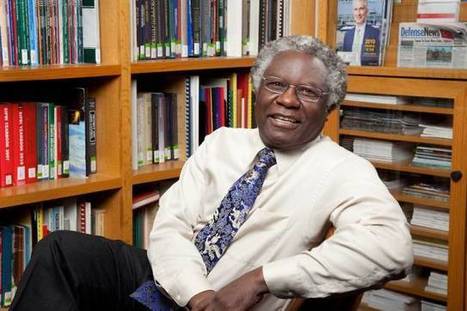
3 Questions: Calestous Juma on African development - MIT News

3 Questions: Calestous Juma on African development - MIT News | Africa's Development, Trade, Finance | Scoop.it
Africa Science News Service
3 Questions: Calestous Juma on African development
MIT News
How can Africa find new ways to spark economic growth?
Scooped by KRII-KROTOASA RESEARCH-INTENSIVE INSTITUTE
September 25, 2014 4:10 AM

Invest in Young People to Harness Demographic Dividend - Inter Press Service

Invest in Young People to Harness Demographic Dividend - Inter Press Service | Africa's Development, Trade, Finance | Scoop.it
Invest in Young People to Harness Demographic Dividend Inter Press Service Johannesburg — Different issues will be competing for the attention of different African leaders attending the 69th United Nations General Assembly Special Session on...
No comment yet.
Scooped by KRII-KROTOASA RESEARCH-INTENSIVE INSTITUTE
September 3, 2014 5:33 PM

Report on the Implementation of the Investment Policy Review

KRII-KROTOASA RESEARCH-INTENSIVE INSTITUTE 's insight:


The Investment Policy Review of Zambia (IPR) assessed this country’s legal and institutional framework for investment. It also proposed a foreign direct investment (FDI) strategy to encourage economic diversification and reach sustainable development objectives.

To meet these goals, it recommended a number of policy reforms aimed at reducing the cost of land and air transport, addressing skills shortages, promoting private sector growth through enterprise development, and increasing the country’s trade competitiveness. The IPR also suggested a series of institutional reforms to improve business facilitation. It encouraged Zambia to continue pursuing macroeconomic stability, reducing the high cost of borrowing and developing critical infrastructure, including roads and electricity in rural areas.

In 2013, the Government requested UNCTAD’s assistance to prepare a report on the implementation of the IPR. Because the circumstances have changed since 2006, ongoing economic and political developments in Zambia call for the incorporation of some new elements to the recommendations of the original report.

Thus, the summary of findings presented in this report also includes some new elements for the assessment of Zambia’s institutional and legal frameworks as well as to inform the investment policy in the years ahead. This report also reflects written comments from various stakeholders, including ministries and agencies of the Government of Zambia.

No comment yet.
Scooped by KRII-KROTOASA RESEARCH-INTENSIVE INSTITUTE
September 3, 2014 4:14 PM

USAID Power Africa 2014

#

KRII-KROTOASA RESEARCH-INTENSIVE INSTITUTE 's insight:


There is no doubt that africa is on the rise. The continent is home to six of the top ten fastest growing economies in the world.the middle class is growing rapidly and leaders across the continent are creating more opportunities for their people than ever before. Child mortality rates are declining, while life-expectancy is increasing.

Despite these advances, challenges to africa’s rapid pace of growth and development remain. approximately 600 million africans still lack access to electricity, affecting their access to quality health care and education, as well as fewer economic opportunities.the needs and the challenges are enormous, but so too are the opportunities. that is why one year ago, president obama launched Power Africa, and laid out very ambitious goals — to add 10,000 megawatts (MW) of new power generation and expand access to power to 20 million households and businesses. our long-term aim is to double access to cleaner, reliable and efficient electricity in sub-Saharan africa.this is not only the right thing to do for the people of africa, but for the global community who will benefit from an even stronger and dynamic africa for generations to come. through this initiative, we have brought all of the tools and capabilities of the u.S. Government to bear to meet these ambitious targets and to have a meaningful impact on africa’s energy poverty.

President Obama and the heads of each of the twelve participating U.S. Government agencies are leading this effort, and uSaID has the honor of coordinating Power Africa — the first Presidential initiative to be headquartered in africa. the u.S. Government cannot achieve these goals alone. Power Africa’s success will be measured by the strength of our partnerships with african governments, multilateral institutions, donors, and the private sector. private sector investors are seizing the opportunity that africa’s rapidly growing population and consumer market represents.

But investments will only flow where there is a business- friendly investment climate, which seeks to limit the uncertainty and risk involved in any long-term investment. african leaders recognize the critical role of the private sector in meeting africa’s energy needs and have shown a serious commitment to making the tough reforms needed to attract that investment, and to ensure that investment flows continue to rise.the response from the private sector, both from the u.S. and africa, has been overwhelming. as a result, Power Africa has helped facilitate the financial close of private sector transactions which expect to produce nearly 2,800 MW of new generation capacity. this private sector-led model for engaging countries is yielding results around the world. as president obama said in Cape town,“we are moving beyond the simple provision of foreign aid, to a new model of partnership between the united States and africa – a partnership of equals that focuses on your capacity to solve problems...

No comment yet.
Scooped by KRII-KROTOASA RESEARCH-INTENSIVE INSTITUTE
August 20, 2014 6:51 AM

FACT SHEET: The Doing Business in Africa Campaign | The White House

FACT SHEET: The Doing Business in Africa Campaign | The White House | Africa's Development, Trade, Finance | Scoop.it
KRII-KROTOASA RESEARCH-INTENSIVE INSTITUTE 's insight:


Through the Doing Business in Africa (DBIA) Campaign, the U.S. government is strengthening its commercial relationship with the continent of Africa, a diverse region that offers substantial trade and investment opportunities across national and regional markets.  With a 5.4 percent growth rate predicted for 2014, Africa is outpacing global growth.  U.S. goods and services exports to Africa reached a record high of $50.2 billion in 2013, up 40 percent since 2009.  These exports supported 250,000 U.S. jobs. 


New Commitments to Significantly Expand the DBIA Campaign


At today’s U.S.-Africa Business Forum, President Obama announced $7 billion in new financing to promote U.S. exports to and investments in Africa under the DBIA Campaign.  U.S. companies announced new deals in clean energy, aviation, banking, and construction worth more than $14 billion, in addition to $12 billion in new commitments under the President’s Power Africa initiative from private sector partners, the World Bank, and the government of Sweden.  Taken together, these new commitments amount to more than $33 billion, supporting economic growth across Africa and tens of thousands of U.S. jobs.


The DBIA Campaign encourages U.S. commercial engagement in Africa by harnessing the resources of the U.S. government to assist businesses in identifying and seizing opportunities and to engage with members of the African Diaspora in the United States.  The DBIA Campaign, which was launched in November 2012, has four main objectives:

  • Connect American Businesses with African Partners
  • Support Existing and New American Investment in Africa
  • Expand Access for American Businesses to Finance Their Exports to Africa
  • Reduce Barriers to Trade and Investment in Africa

The U.S. government’s newly announced two-year commitments to support the DBIA Campaign are provided below. 


An Executive Order to Create a President’s Advisory Council on Doing Business in Africa


Today the President signed an Executive Order (E.O.) to promote broad-based economic growth in the United States and in Africa by encouraging U.S. companies to trade with and invest in Africa. 

The E.O. directs the Secretary of Commerce to establish a President’s Advisory Council on Doing Business in Africa that will be comprised of not more than 15 members from the private sector, including small business.  The Advisory Council will provide information, analysis, and recommendations to the President, through the Secretary of Commerce, including on developing strategies for creating jobs in the United States and Africa through trade and investment; developing strategies by which the U.S. private sector can identify and take advantage of trade and investment opportunities in Africa; and building lasting commercial partnerships between the U.S. and African private sectors.


New U.S. Government Resources to Support U.S. Exports and Investment in Africa


Interagency Initiatives


  • The Principals of the Export-Import Bank of the United States (Ex-Im Bank), the Millennium Challenge Corporation (MCC), the Overseas Private Investment Corporation (OPIC), the U.S. Agency for International Development (USAID), and the U.S. Trade and Development Agency (USTDA) will mobilize private capital for Africa’s infrastructure through a series of at least three outcome-oriented roundtables in Africa that will advance project- and sector-specific investment opportunities and needed regulatory reforms.  These agencies will implement the initiative in coordination with DBIA Campaign agencies, African governments, and the U.S. and African private sectors.
  • The U.S. Department of Commerce and USTDA launched the 20x20 Initiative to support a total of 20 trade and reverse trade missions by 2020, to promote U.S. industry engagement in Africa.  Working with federal, state, and local government partners, these missions will foster U.S. business partnerships with key African stakeholders.
  • The Small Business Administration (SBA) and Ex-Im Bank will collectively support 50 DBIA Campaign-themed activities and outreach sessions over the next two years to facilitate U.S. trade finance, provide counseling and training on their programs, and conduct business development to support U.S. exporters, particularly small- and medium-sized enterprises.


U.S. Export-Import Bank


  • Ex-Im Bank will commit up to $3 billion in financing to support U.S. exports to Africa over the next two years.  This is in addition to Ex-Im Bank’s existing commitments of $5 billion for Power Africa and a planned commitment of $1 billion to support U.S. exports in connection with new and ongoing Angolan infrastructure projects (through the Angolan Ministry of Finance).
  • Ex-Im Bank will commit $563 million in financing to support the sale of General Electric locomotives to Transnet, South Africa’s largest integrated freight transport company. Major components of the locomotives will be manufactured at GE’s facilities in Erie, PA and Grove City, PA supporting an estimated 2,500 American jobs.

Millennium Challenge Corporation


  • MCC will commit up to $2 billion in funding for new compacts in Africa that facilitate private sector-led economic growth and poverty reduction, creating potential opportunities for U.S. companies.  This commitment includes $498 million over the next five years to support the turnaround of Ghana’s electricity sector and stimulate private investment.  This Compact represents an example of the catalytic impact of Power Africa interventions which will help create the enabling environment to catalyze billions of dollars of private investment in Ghana.
  • MCC will also lead its first ever investment mission to Africa to introduce U.S. businesses to the opportunities for investing in and around its Compacts.  In addition, MCC will hold at least eight Procurement Promotion sessions with U.S. companies to promote Compact contracting opportunities and developing five Trade and Investment Prospectuses, one for each new Compact in Africa, that outline the specific business opportunities that are expected to arise from MCC’s investments. 


Overseas Private Investment Corporation


  • OPIC will commit up to $1 billion in financing and insurance support to catalyze private sector investments in Africa.  This is in addition to OPIC’s existing $1.5 billion Power Africa commitment.  OPIC reaffirmed its plan to place personnel on the ground in sub-Saharan Africa to help facilitate increased U.S. trade and investment and will support an investment mission to the region, with a focus on the power sector.
  • OPIC will coordinate approximately a dozen U.S. government meetings on August 6, 2014, for U.S. and African private sector investors and project developers to discuss discrete transactions for financing support consideration to OPIC, as well as other DBIA investment agencies.


U.S. Trade and Development Agency (USTDA)


  • USTDA, in cooperation with the U.S. Department of Energy and U.S. Department of Transportation, hosted two African Leaders Visits in association with the U.S.-Africa Leaders Summit.  These reverse trade missions highlighted the United States’ experience fostering economic growth through strategic infrastructure investments in the energy and transportation sectors. 
  • USTDA announced it will partner with the Air Traffic and Navigation Services Company of South Africa to evaluate satellite-based automatic dependent surveillance-broadcast across the African continent, the implementation of which will improve air traffic safety and create over $100 million in U.S. export opportunities.
  • USTDA reaffirmed its plan to have local representation in Nigeria for the first time.


U.S. Department of Agriculture (USDA)


  • USDA’s Commodity Credit Corporation will make available up to $1 billion in financing guarantees available for agricultural exports to Africa over the next two years.  USDA also will conduct outreach seminars to Africa in 2015 to promote the use of its credit guarantee program for the export of U.S. agricultural products.


U.S. Department of State


  • The U.S. Department of State intends to commit $10 million toward the expansion of the U.S.-Africa Clean Energy Finance Initiative (US-ACEF), which aligns USTDA’s project planning expertise and OPIC’s financing and risk mitigation tools in new ways, to support private sector investment and increase support for U.S. businesses and exports in sub-Saharan Africa’s clean energy sector.
  • The U.S. Department of State will sponsor a medical technology trade mission to sub-Saharan Africa led by a senior State Department official.


U.S. Department of Commerce


  • The U.S. Department of Commerce reiterated its commitment to double its presence in sub-Saharan Africa by opening new offices in Angola, Tanzania, Ethiopia, and Mozambique, while expanding its operations in Ghana, and re-establishing a position at the African Development Bank. 
  • The U.S. Department of Commerce will host its next Trade Winds Conference and Mission in Africa in 2015.  The Trade Winds program brings hundreds of U.S. companies to a region to hear about opportunities, meet one-on-one with Africa businesses, and get counseling from U.S. Commercial Service officers.  Past Trade Winds have been held in Asia and Latin America and resulted in over $100 million in deals at each event.
  • The U.S. Department of Commerce launched a One-Stop-Shop website (www.trade.gov/DBIA) to offer American businesses and entrepreneurs a convenient instant access to critical African market information, financing tools available to them, projects to consider, key contacts, and much more.
  • To celebrate the second anniversary of the DBIA Campaign, the U.S. Department of Commerce will host a “Discover Sub-Saharan Africa” conference in Atlanta on November 4-6, 2014.  Its Minority Business Development Agency (MBDA) will join the Constituency for Africa in hosting a “Doing Business in Africa” workshop in October to promote business and trade opportunities in Africa and resources for reaching the African marketplace.  MBDA also committed to host a U.S.-Africa Investors Forum on August 6, 2014, in association with the U.S.-Africa Leaders Summit.
  • Through its Global City Teams Program, the National Institute of Standards and Technology, in partnership with the U.S. private sector, will target at least 25 African metropolitan areas to join their counterparts worldwide in an interactive platform to accelerate smart city and smart grid goals.


U.S. Agency for International Development (USAID)


  • USAID will commit to a bond guarantee through its Development Credit Authority that will allow Dakar, Senegal, to issue the first ever non-sovereign backed municipal bond in sub-Saharan Africa outside of South Africa (with technical assistance support from the Bill & Melinda Gates Foundation).  The guarantee will enable the city to raise $41.8 million on the regional stock exchange.  In addition, USAID guaranteed transactions are expected to mobilize $381 million in new private sector lending to small and medium enterprises across the continent. 
  • USAID will launch the Africa Private Capital Group – a platform in South Africa to mobilize U.S., South African, and international private sector investment in key sectors to development, including agriculture, energy, trade, infrastructure, and health.
  • USAID will upgrade its existing African Trade Hubs into “U.S.-African Trade and Investment Hubs” that will now create new opportunities for U.S. investment in and exports to Africa.  These hubs are located in Accra, Ghana, Nairobi, Kenya, and Gabarone, Botswana, and cover the West Africa, East Africa, and Southern Africa regions, respectively. 
  • USAID will roll out its Benchmarking the Business of Agriculture (BBA) project this fall, to assesses the ease of doing business and investing in Africa’s agriculture. The BBA provides businesses worldwide with objective information on a country’s ease of doing business in agriculture.


U.S. Department of Transportation


  • The U.S. Department of Transportation announced that Secretary Anthony Foxx will lead a transportation mission to Africa in early 2015, to discuss opportunities for improving regional connectivity, promoting safety and efficiency, and sharing best practices on increasing investment in transportation infrastructure.
  • The U.S. Department of Transportation launched its Tomorrow’s Transportation Leaders initiative, which will include up to five workshops over the next two years to engage 100 young African transportation professionals on adopting U.S. best practices.  The workshops will address transportation policies and regulatory framework, transportation investment planning, and the efficient management of transportation systems.
  • The U.S. Department of Transportation intends to direct $1 million toward strengthening civil aviation safety through the Safe Skies for Africa program.


U.S. Department of Energy


  • The U.S. Department of Energy will support the “Clean Energy Solutions Center,” a multilateral initiative of the Clean Energy Ministerial to connect policymakers in Africa with clean energy experts and best practice resources.  The Clean Energy Solutions Center is a web-based resource that draws on knowledge from global experts to help governments design and adopt policies and programs that support the deployment of clean energy technologies.  Through the partnership, the Solutions Center will provide expert policy consultations free of charge to Power Africa countries in response to requests received.

Office of the United States Trade Representative

  • On August 5, USTR signed at its headquarters a new Trade and Investment Framework Agreement with the Economic Community of West African States (ECOWAS) to provide a coordinated mechanism for engaging on trade and investment issues with the 15 West African countries that are part of ECOWAS.
No comment yet.
Scooped by KRII-KROTOASA RESEARCH-INTENSIVE INSTITUTE
August 20, 2014 6:40 AM

FACT SHEET: U.S. Support for Democratic Institutions, Good Governance, and Human Rights in Africa | The White House

FACT SHEET: U.S. Support for Democratic Institutions, Good Governance, and Human Rights in Africa | The White House | Africa's Development, Trade, Finance | Scoop.it
KRII-KROTOASA RESEARCH-INTENSIVE INSTITUTE 's insight:


“[I]f the dignity of the individual is upheld across Africa, then I believe Americans will be more free as well, because I believe that none of us are fully free when others in the human family remain shackled by poverty or disease or oppression. … Governments that respect the rights of their citizens and abide by the rule of law do better, grow faster, draw more investment than those who don’t.”  – President Obama, Cape Town, South Africa, June 30, 2013


The United States is deeply committed to helping African countries strengthen their political institutions, address the challenges of governance, promote an active and empowered civil society, and uphold human rights.  We view these efforts as vital to achieving Africa’s economic and security goals, because strong, accountable, and transparent institutions and a commitment to the rule of law help attract investment and generate prosperity, create trust in government, and help mitigate conflict and protect civilians from violence.  Our ongoing efforts include:


Supporting Free and Fair Elections.  Elections provide a crucial opportunity for citizens to hold their leaders and political parties accountable and to give ordinary citizens a role in determining the future of their nations through peaceful political competition.  Through our diplomacy and our assistance, the United States remains committed to supporting credible, transparent, and inclusive elections, encouraging a respect for the political rules of the game, and reducing the likelihood of electoral violence.  Our activities include supporting voter registration and civic and voter education; building the capacity of election commissions; strengthening political parties; training official and unofficial civil society election observers; and facilitating the inclusion of women, youth, and people with disabilities at all stages of the electoral process.  U.S. elections assistance includes:

  • In Nigeria, the United States is providing approximately $51 million over five years to support the conduct of credible and peaceful elections in 2015 and beyond.  The United States is working with other donors to support Nigeria’s electoral management bodies and strengthen the ability of Nigerian civil society to promote electoral reforms, expand voter education, and monitor electoral processes in the run-up to the 2015 elections. 
  • In the Democratic Republic of the Congo, the United States is committed to working with the Congolese people, the government, and other donors to encourage the conduct of local, provincial, and national elections that are credible, timely, and in line with the Congolese constitution.  In May 2014, the U.S. government announced $30 million in additional funding for elections and stabilization.
  • In Tunisia, the United States is committed to supporting Tunisia’s democratic process, and is providing more than $9 million in elections assistance for the 2014 elections, including to support international and domestic observer missions, voter outreach and education programs, and the establishment of a new electoral commission to oversee presidential and parliamentary elections to complete the country’s democratic transition followings decades of autocratic rule.  
  • In Malawi, the United States provided $3.5 million in assistance for voter education, media training around election issues, and the Malawi Electoral Support Network’s domestic observation and parallel vote tabulation, which helped bolster confidence in the credibility of the May 2014 elections. 


Supporting Civil Society and Promoting Civic Engagement.  A vibrant and empowered civil society is both a cornerstone of democracy, helping to promote inclusiveness, transparency, rule of law and human rights, and a partner to governments and the private sector in delivering services.  President Obama elevated democracy and governance as a key priority for the Administration when, on the margins of the 2013 UN General Assembly, he launched Stand with Civil Society, reaffirming the rights to freedom of assembly and association globally.  Through our diplomacy and our assistance, U.S. government engagement in this area in Africa includes:

  • In partnership with other governments and private foundations, the United States launched Making All Voices Count to support innovation and research that will empower citizens to engage with government, voice their feedback and demands, and secure government responses.  This partnership with the United Kingdom, Sweden, the Omidyar Network, and the Open Society Foundations is providing $55 million globally in support and capacity building from 2013 through 2017.  The first round of grants, totaling $2.5 million, was announced this spring and will benefit several African countries, including South Africa, Liberia, Ghana and Nigeria. 
  • In Tunisia, the United States has provided nearly $50 million to strengthen participatory and inclusive political processes, build the capacity of civil society to stay connected to citizens through ongoing civic education and engagement, and promote freedom of expression. 
  • In Liberia, the U.S. government, through a 5-year, $18 million program, has assisted civil society organizations in expanding their role from delivering services to engaging in governance and policy processes.  The United States has also supported programs that promote civic engagement in policymaking throughout the region, including in Ghana and Tanzania.
  • Through the Peace Corps, the United States supports volunteer programs across Africa, including Liberia’s National Youth Service Program Volunteers and Togo’s Program for the Promotion of National Volunteers.
  • Through the President’s Young African Leaders Initiative, the United States is helping enhance the capacity, leadership skills, and networks of young leaders committed to building strong democratic institutions and driving economic growth and prosperity.  President Obama recently announced the expansion of this effort through the creation of Regional Leadership Centers in Africa and doubling the number of participants in the Mandela Washington Fellowship for Young African Leaders program to reach 1,000 participants each year by 2016.


Partnering to Promote Good Governance and Openness.  The U.S. government is working to support African countries as they make improvements in the delivery of public and social services to their citizens and commit to policy and regulatory reforms designed to promote inclusive governance and attract investment, including by opening up their governments.  U.S. support in this area includes:

  • Through the Millennium Challenge Corporation (MCC), the United States partners with African countries that perform well on critical indicators of good governance, and make investments to reduce poverty and generate economic growth.  Of the seven MCC compacts currently being implemented in Africa, investments in Burkina Faso, Cabo Verde, Malawi and Zambia have direct links to building stronger governance-related institutions.  In addition, MCC’s rigorous selection criteria have provided incentives for African countries to reform policies, strengthen institutions and improve data quality.
  • With South Africa, Tanzania, and five other countries, President Obama in 2011 launched the Open Government Partnership (OGP), a voluntary, multi-stakeholder initiative in which governments make concrete commitments to promote transparency, empower citizens, fight corruption, and harness new technologies.  The OGP has grown rapidly to include 64 countries, including Ghana, Kenya, Liberia, Malawi, Sierra Leone, and Tunisia from Africa.  U.S. assistance has helped Sierra Leone to develop its first OGP National Action Plan with robust citizen engagement; Tunisia to become eligible to join OGP on the third anniversary of its revolution in January; and, with support totaling approximately $16 million, Liberia to implement its OGP commitments to transparency, accountability and citizen engagement.  The United States is also working with several private sector partners and associations to help build capacity to implement open data policies, develop legal and regulatory reforms, and improve accountability and public service delivery in African OGP member countries.
  • Voice of America (VOA), overseen by the Broadcasting Board of Governors, has country-specific news and information programming in local languages across the continent as well as in English and French.  These programs, produced with on-air talent from the countries where their audiences are located, showcase democratic best practices in the United States and around the globe, and promote understanding of human rights.  Corruption and good governance are recurring themes in much of VOA’s reporting of events in the region.
  • The United States is also providing assistance to help governments improve service delivery, including through the launch of a $38 million, four-year Democracy, Human Rights, and Governance Program in Tanzania to promote government accountability at the local and national level, including in the health, agriculture, and education sectors.  In Ghana, the U.S. government has worked to help improve the delivery of public services by training local government officials in effective planning, budgeting, and implementation and strengthening citizens’ ability to advocate and engage with local government.  In Nigeria, the United States is supporting a 5-year, $40 million program with similar goals. 


Consolidating the Rule of Law and Protecting Human Rights.  Protecting the rights and ensuring the participation of all people in civic and political life are critical to democratic governance and economic growth.  Through our active diplomacy, public outreach, and programmatic assistance, the United States continues to engage African governments, civil society, and international institutions to advance human rights for all people in Africa, including women and girls and vulnerable communities such as persons with disabilities, indigenous minorities, and individuals who are lesbian, gay, bisexual, or transgender (LGBT).  U.S. government activities in this area include:

  • The U.S. government helps build the capacity of anticorruption, counter-narcotic, judicial, and police sector institutions across Africa to uphold the rule of law through informed, transparent, and fair investigations and prosecutions of transnational organized crime.  Our West Africa Cooperative Security Initiative focuses on building the capacity of judges, prosecutors, and police to fight organized crime,  increasing civil society’s ability to expose corruption and empowering citizens to fight it,  thereby helping citizens and reform-minded officials improve governance in countries such as Senegal, Nigeria, Sierra Leone, Ghana, Burkina Faso, and Togo. 
  • In the Great Lakes region, the U.S. is funding a $1.5 million program over two years to strengthen judicial capacity; improve the impartiality, efficiency, and effectiveness of magistrates and court support personnel; support interaction between the judicial sector and civil society organizations; and provide training on best practices for addressing women’s rights.
  • In Côte d’Ivoire, the U.S. government is providing assistance of $19 million over five years to help make the justice sector more effective, accessible, and equitable, including by providing training for judicial personnel and community organizations and helping rehabilitate judicial infrastructure. 
  • In the Democratic Republic of the Congo and South Africa, the U.S. government has worked to provide legal redress mechanisms and treatment services to survivors of gender-based violence.
  • As President Obama said to the U.N. General Assembly in 2011, no country should deny people their rights because of who they love, which is why the U.S. government stands up for the human rights of LGBT people everywhere.  In addition to our ongoing public outreach and our diplomatic advocacy, the U.S. government’s investments in protecting the human rights of and access to services by LGBT persons have continued to expand, including through USAID’s LGBT Global Development Partnership and the Department of State’s Global Equality Fund, which have provided over $20 million since 2011 in 50 countries worldwide, including across Africa. 
  • President Obama announced in 2012 a comprehensive Administration strategy to prevent atrocities, underscoring that “preventing mass atrocities and genocide is a core national security interest and a core moral responsibility of the United States of America.”  The U.S. government is working to implement that strategy and investing in prevention efforts within the U.S. government and around the world, including through our efforts to support the training and deployment of effective peacekeepers to the Central African Republic and to mitigate the risk of violence associated with the upcoming national elections in Burundi, Nigeria, and other countries in Africa. 
  • The United States works closely with foreign governments and civil society to combat human trafficking, which afflicts communities in the United States, Africa, and all over the world.  The Department of State and USAID have increased their commitments to programs countering trafficking in persons in sub-Saharan Africa by $4.2 million, for a total of $13.4 million over the next two years, including technical assistance in developing and implementing strong national anti-trafficking frameworks and support to research on human trafficking in certain product supply chains.
  • The U.S. government partners with oil, gas, and mining companies and other stakeholders through the Voluntary Principles on Security and Human Rights Initiative to help and encourage companies to ensure that their activities respect the human rights of people in the communities where they do business.  To that end, the State Department funds a program to help implement the Voluntary Principles in Ghana and Nigeria.    


No comment yet.
Scooped by KRII-KROTOASA RESEARCH-INTENSIVE INSTITUTE
August 20, 2014 6:31 AM

FACT SHEET: U.S. Engagement on Climate Change and Resilience in Africa | The White House

FACT SHEET: U.S. Engagement on Climate Change and Resilience in Africa | The White House | Africa's Development, Trade, Finance | Scoop.it
KRII-KROTOASA RESEARCH-INTENSIVE INSTITUTE 's insight:


Disasters and shocks — natural or manmade — have the potential to throw poor and marginal populations into crisis and wipe away hard-earned development gains.  These disasters and shocks are occurring with greater frequency and intensity, making it difficult to build resilient communities, particularly in countries facing severe socio-economic challenges exacerbated by the effects of climate change.


At the U.S.-Africa Leaders Summit, the United States and African countries reaffirmed their shared commitment to tackling together the challenges of climate change and poverty and to partnering to build resilience to these kinds of shocks.  They also stressed their commitment to promoting low-carbon economic development and clean energy access on the African continent.  Components of this cooperative approach include the following:


The Global Resilience Partnership: At the Summit, USAID and the Rockefeller Foundation announced a $100 million Global Resilience Partnership to help protect the lives and livelihoods of the world’s most vulnerable people.  Meaningful investments across sectors in preparedness, adaptation, and inclusive economic growth can help communities function better day-to-day and, when a crisis hits, realize a resilience dividend.  The Partnership will focus its efforts in three regions with historically high vulnerability to recurrent shocks — the Sahel, Horn of Africa, and South and Southeast Asia — and build on work already being done by USAID, the Intergovernmental Authority on Development in East Africa, and Economic Community of West African States.  Current efforts to build resilience have put many communities on the path to a more secure and sustainable future.


For example, in Ethiopia and Kenya, we have helped improve pastoralist populations’ resilience to climate variability and change by strengthening disaster early warning systems and improved responses to natural hazards.  In the Sahel, we have integrated drought cycle management and climate-smart agriculture practices into multi-year national investment plans.  As in the Horn, this support is complemented by U.S. government-supported programming to build resilience to recurrent crisis by expanding economic opportunities, strengthening natural resource, conflict, and disaster risk management and improving health and nutrition outcomes.  But many more remain vulnerable as risks increase.  Now is the time to enable resilience thinking and action on a wider scale. 


Building on these current efforts and identifying new opportunities the Resilience Partnership will operate through three global centers (including two in Africa) and will:

  • Increase the ability of people, communities, systems, and countries to forecast, manage, and adapt to a variety of risks, in part by fostering innovative resilience-building technologies and practices, such as index-based livestock and crop insurance and water harvesting. 
  • Increase the capacity of critically important local, regional, and global institutions to build resilience.
  • Catalyze alliances across a broad range of private and public sector actors to leverage and scale resilience investments and innovations.


Working together to implement the Malabo Declaration:  As part of the African Union’s Year of Agriculture and Food Security, leaders agreed in the Malabo Declaration to accelerate agricultural growth as the primary strategy to end poverty in Africa, to reduce vulnerability to climate and weather related risk, and to mainstream resilience and risk management.  At the Summit this week, the African Union shared its roadmap to implement the declaration, and the United States announced several opportunities to partner with African nations in support of these objectives, including:

  • Our commitment to serve as founding members of the global Alliance for Climate Smart Agriculture, slated for launch at the United Nations Secretary-General’s Climate Summit on September 23, 2014;
  • Continued technical assistance to incorporate climate smart agriculture into national and regional plans and to use climate data, modeling, and training to assist countries in adopting climate smart approaches;
  • Sierra Leone, the Ghana Open Data Initiative, IBM, and Kellogg Company announced they would join the United States as partners in the Global Open Data for Agriculture and Nutrition (GODAN) initiative.  GODAN supports global efforts to make agricultural and nutritional data available and accessible for unrestricted use worldwide; and
  • An investment in the World Bank’s Agricultural Insurance Development Program to provide analysis and technical assistance to countries to design and implement sustainable, cost-effective public-private partnerships in agricultural insurance in order to increase the financial resilience of rural households. 


The President’s Global Climate Change Initiative:  The United States will continue to support African countries through the President’s Global Climate Change Initiative (GCCI), whose aim is to help developing countries build resilience to the effects of climate change and chart a course for low-emission development.  The GCCI has supported climate change solutions ranging from investing in climate information services in Uganda and Mali, to addressing the causes of deforestation in Zambia, to investing in clean energy solutions in Kenya, to improving management of climate-vulnerable water resources in trans-boundary river basins in southern Africa.


The United States invests additional GCCI funding in Africa through multilateral funds and global programs, including the Least Developed Countries Fund, the Forest Carbon Partnership Facility, and the Pilot Program on Climate Resilience.  This multilateral assistance leverages funding from other governments, development partners, and the private sector; makes capital investment in infrastructure; and provides a range of tailored financial products across a wide range of African countries.


The GCCI also helps enable private sector investment in renewable energy and energy efficiency through targeted efforts, such as the U.S.-Africa Clean Energy Finance (ACEF) Initiative, which complements the President’s Power Africa Initiative.  At the Summit, the United States announced additional support for ACEF, which has already financed the development of more than 20 clean energy projects in sub-Saharan Africa in less than two years of operation.


In addition, the United States partners with several African countries to help them accelerate their transition to low emission development through investments in clean energy and improved land management.  For example, through the Enhancing Capacity for Low Emission Development Strategies (EC-LEDS) program, the United States is partnering with 25 developing countries around the world, including five in Africa, that are working to reduce their long-term greenhouse gas emissions in key sectors as they grow their economies.  EC-LEDS partners in Africa include Gabon, Kenya, Malawi, South Africa, and Zambia. 


Climate change is a global challenge that requires a global solution. The United States is working with our African partners to develop a new ambitious and effective international climate change agreement in 2015 that motivates ambitious action on the part of all countries consistent with their national circumstances and capabilities.

No comment yet.
Scooped by KRII-KROTOASA RESEARCH-INTENSIVE INSTITUTE
August 20, 2014 6:20 AM

FACT SHEET: Shared Investment in Youth | The White House

FACT SHEET: Shared Investment in Youth | The White House | Africa's Development, Trade, Finance | Scoop.it
KRII-KROTOASA RESEARCH-INTENSIVE INSTITUTE 's insight:


Africa has the youngest population in the world, with approximately 200 million people between the ages of 15 and 24 – a number expected to increase to 330 million by 2034.  Africa also has the fastest growing population in the world. In fewer than three generations, 41 percent of the world’s youth will be African.  By 2050, over a quarter of the world’s labor force will be African. Between 2010 and 2020, Africa will add 163 million people to its potential labor force.  In the 21st century, Africa will be the only continent whose youth population will continue to significantly expand.  There is a shared understanding between the United States and African partners that the future success of African nations will depend on the leadership, skills, and ingenuity of the continent’s youth. 


U.S. Commitments to Increase Investment in the Next Generation

In a town hall meeting with 500 young African leaders on July 28, President Obama announced the expansion of his Young African Leaders Initiative (YALI), which was launched in 2010.  Through YALI, the United States is investing in the next generation of African leaders, and has committed significant resources to enhance leadership skills, bolster entrepreneurship, and connect young African leaders with one another, with the United States, and with the American people.  These new investments will include the development of four Regional Leadership Centers in Africa, a vast array of online classes and resources, and seed funding, training, and networking opportunities for young entrepreneurs.

The President also renamed his flagship program the Mandela Washington Fellowship, in honor of former South African President Nelson Mandela, and announced that the Fellowship will reach 1,000 young leaders each year by 2016.


African Governments’ Commitments to Increase Investment in the Next Generation

Many African Governments have been involved in supporting opportunities for youth.  Some made commitments to new activities in the course of the U.S.-Africa Leaders Summit, while others have ongoing initiatives in place.  Below is a sampling of African commitments made in connection with the U.S.-Africa Leaders Summit.

  • The African Union Commission committed to redoubling its efforts to advance educational opportunities through the Pan-African University; to carry forward the African Youth Charter by urging Member States to consider the African Youth Decade Plan of Action as a road map for implementation; and to propose for adoption by Member States a Declaration and Plan of Action on Employment, Poverty Eradication, and Inclusive Development with a primary focus on youth and women, at the upcoming Extraordinary Summit of Heads of State and Governments of the African Union in Ouagadougou in September 2014.
  • Benin, drawing on its successful Business Promotion Centers, has set up two business-type incubators which have already supported more than 2,500 young professional farmers in agricultural entrepreneurship.  In addition, Benin has committed to recruiting 15,000 youth in 2015 to fill civil servant positions and dedicated 20 percent of the national budget to agriculture to help address youth unemployment.
  • Burkina Faso has just announced a youth investment project involving 46,800 young men and women offered an opportunity to find sustainable jobs in the labor market. The five-year “Youth Employment and Skills Development Project” (PEJDC) is entirely financed by the World Bank.
  • Burundi recently established the Youth Employment Agency, which has helped about 250 high school graduates obtain permanent positions or internships within the public and private sectors during the last three years. Burundi’s Ministry of Youth has also helped some 3,700 young Burundians obtain credit for business start-ups during this period. Over the past year, Burundi has organized several sector and cross-sector meetings and workshops on youth affairs.
  • Cabo Verde will expand its current 20 youth centers to open one at each city and on every island in the country, and to expand the framework of their charters to include information on good health practices and initiatives.  
  • Republic of the Congo has instituted the “Corps of Young Volunteers and Civil Service Trainees” (Chantiers Jeunesse et Service Civique) which offers its volunteers an opportunity to do community service and participate in civic education activities while building their professional experiences as volunteer teachers, nurses, and famers. The corps will be run out of the Youth Centers (“Maison de la Jeunesse”) that are being built in each of Congo’s regions.
  • Cote d’Ivoire has declared 2014 a Year of Employment with special initiatives focused on youth, including a Young Entrepreneurs Competition and an “Alassane Ouattara Award for the Young Emerging Entrepreneur.”
  • Gabon has supported the creation of the Central African Economic and Monetary Community’s (CAEMC) “Train my Generation” Fund, which aims to support the training and employment of young people in key economic sectors.
  • Guinea, in partnership with Peace Child International, will host “The Guinea World Youth Congress” from December 2-12, 2014.  The forum will focus on youth unemployment, job creation and eco-business innovations.  
  • Senegal, as part of its government's continued commitment to youth engagement, brought two of its exceptional young leaders to the U.S.-Africa Leaders Summit as part of its delegation and will include young leaders in Senegal's delegation to the upcoming G-20 meeting as well. Senegal also announced an increase in vocational and skills training programs aimed at providing opportunities to youth.
  • Seychelles is committed to unlock the potential of its youth through its Seychelles National Youth Council, and a newly set-up fund to support young entrepreneurs to boost youth employment.  Seychellois Youth have also joined the SIDS Youth AIMS Hub (SYAH), an inter-island non-governmental organization based in Mauritius and led by a group of youth from the AIMS region – Atlantic, Indian Ocean, Mediterranean and South China Sea - to motivate young people to learn and be concerned about sustainable development. Seychelles has set up a Young Leadership Programme under the University‎ of Seychelles which aims to provide aspiring young professionals both from the public and private sector with a Masters in strategic leadership while also engaging them in community projects.
  • Somalia will launch a youth empowerment framework with key initiatives in job creation and youth representation in the government.
  • Tanzania intends to announce the establishment of a "State House Fellows" program, modeled on the long-standing White House Fellows program in the United States, to identify, train, and provide high-level experience to the next generation of Tanzanian leaders.  This new initiative complements the decades-long Tanzania National Service program, through which thousands of young people have served two year assignments in a wide range of social and economic development fields.


No comment yet.
Scooped by KRII-KROTOASA RESEARCH-INTENSIVE INSTITUTE
August 20, 2014 6:10 AM

FACT SHEET: U.S.–African Cooperation on Global Health | The White House

FACT SHEET: U.S.–African Cooperation on Global Health | The White House | Africa's Development, Trade, Finance | Scoop.it
KRII-KROTOASA RESEARCH-INTENSIVE INSTITUTE 's insight:


The United States has for decades invested in the health of Africa’s people, helped train its health and science professionals, and partnered with Africa to meet shared challenges.  As the world’s largest donor to global health, we are committed to working with African governments to improve the health of their citizens, and to reaching our goals of achieving an AIDS-free generation, ending preventable child and maternal deaths, enhancing global health security by preventing, detecting and responding to infectious disease threats, and supporting countries as they invest in the health of their own citizens.  


The United States welcomes the incredible gains in health that Africa has achieved over the past 20 years:  HIV occurrence has been cut in half; tuberculosis (TB) and malaria deaths have been reduced by 40 percent and 30 percent, respectively; 50 percent fewer women die giving birth; and 50 million children’s lives have been saved due to better access to primary health care, better drug supply chains and access to skilled health care workers.  In particular, we welcome the fact that African governments continue to increase their own domestic investments in public health, and to work with us and other partners to build the sustainable and effective public health systems that can serve the interests of their people and lay the foundation for strong and inclusive economic growth.


However, there is still more to be done.  In 2013, 1.9 million people were newly infected with HIV, 207 million were diagnosed with malaria, and one-in-ten children did not reach their fifth birthday.  Between two to three million children die annually from vaccine preventable diseases.  Women suffer disproportionally from inadequate health system capacity; 25 percent of women of reproductive age who are married or in a union have an unmet need for family planning and 287,000 women die during childbirth.  Non-communicable diseases (NCD) are also on the rise, and heart disease is the single largest killer in Africa. 


The ongoing Ebola outbreak in West Africa underscores the need to build Africa’s capacity to prevent the emergence of global health threats, to detect threats early, and to respond rapidly and effectively.  With our partners in Liberia, Sierra Leone and Guinea, the World Health Organization and countries all over the world, the United States is responding rapidly and effectively.  We are sending additional experts from our Centers for Disease Control and Prevention to augment the team that has been on the ground since March, and will work with partners to control the outbreak even as we increase assistance to those in need now.  As the crisis subsides, the United States will host our international global health and regional partners to consider how we can together “build back” and speed up the recovery of these countries’ public health sectors.

Progress Towards an AIDS-Free Generation


The goal of achieving an AIDS-free generation is a shared responsibility and the United States has an unwavering commitment to work with African countries to reach this goal.  The President’s Emergency Plan for AIDS Relief (PEPFAR), launched in 2003 by President George W. Bush and strengthened by President Obama, is America’s commitment to fighting the global HIV and AIDS epidemic.  Through shared responsibility and smart investments, PEPFAR is saving lives, building more secure families, and helping to stabilize fragile nations. 


Investments in PEPFAR have saved millions of lives, including by supporting antiretroviral treatment for 6.7 million people (up from 1.7 million in 2008), and providing interventions to 1.5 million women to prevent mother-to-child transmission over the past two years.  Our latest results show continued progress.  In fiscal year 2013 alone, PEPFAR supported HIV testing and counseling for more than 12.8 million pregnant women, which resulted in 95 percent of these babies being born HIV-free; supported 17 million people with care and support, including more than 5 million orphans and vulnerable children; and provided HIV testing and counseling for more than 57.7 million people.  PEPFAR also reached the President’s 2011 World AIDS Day goal of supporting 4.7 million men with voluntary medical male circumcision for HIV prevention by the end of 2013 and saw the birth of the one-millionth baby born free of HIV.


In partnership with African governments and the private sector, PEPFAR is accelerating chidren's HIV/AIDS treatment to double the total number of children receiving antiretroviral therapy in Africa.

Improving Global Health and Child Survival

From 1990-2012 deaths of children under 5 dropped from 12.6 million to 6.6 million worldwide.  In June 2012, the Governments of Ethiopia, India, and the United States, hosted a forum called Child Survival Call to Action, in collaboration with UNICEF, to bring together public and private constituencies in support of a global goal to end preventable child deaths by 2035 and pioneer new approaches to accelerate progress on maternal-child health.  To date, 13 African countries have launched sharpened national strategies, set national targets, and developed scorecards to track progress.  They have identified those areas where the highest rates of child and maternal deaths occur, and are reducing those rates.  In the last two years alone, 24 priority countries – of which 16 are in Africa – have achieved an eight percent reduction in under-five mortality, saving 500,000 lives.  Finally, in the last decade, malaria mortality rates in African children have been reduced by an estimated 54 percent, saving 3.3 million lives over the last decade through the President’s Malaria Initiative (PMI) and partnerships with the Global Fund to Fight AIDS, Tuberculosis and Malaria and other partners.  In April 2014, African Ministers of Health committed to ending preventable maternal, newborn and child deaths in Africa at the first Joint African Union (AU)/WHO Conference of Ministers of Health. 


Together with our partners, United States is working to reduce preventable child deaths to fewer than 20 per 1,000 live births and maternal deaths to fewer than 50 per 100,000 live births by 2035.  Achieving these goals will save an additional 5 million children’s lives each year and decrease the number of women who die from complications during pregnancy by 75 percent annually.  In June 2014, the U.S. Agency for International Development (USAID) and the Governments of Ethiopia and India, in collaboration with UNICEF, the Bill & Melinda Gates Foundation and other partners, came together for a high-level forum: Acting on the Call: Ending Preventable Child and Maternal Deaths to celebrate the progress, assess the challenges that remain and identify the steps needed to drive momentum around concrete action.  The Acting on the Call Report outlined U.S. commitments and needed action in 16 countries in Africa.  The U.S. government committed to re-align resources behind strategies that will save up to half a million children in the next three years.  In addition, USAID announced more than $600 million in new partnerships and awards with more than 26 partners.  Going forward, the United States will join with our African allies to bring in new partners, resources, and financing towards saving the lives of 8 million children and 350,000 mothers by 2020.


Significant reductions in the burden of malaria in sub-Saharan Africa resulted in a decrease in malaria mortality by one third since 2000. USG investments through PMI and contributions to the Global Fund to Fight AIDS, Tuberculosis and Malaria, combined with host country government investments and those of other development partners, have resulted in 3.3 million lives saved through scale-up of malaria control interventions over the last decade.

Accelerating Action to Prevent, Detect, and Respond to Infectious Diseases


On February 13, 29 nations, the European Union, World Health Organization, Organization for Animal Health (OIE), and Food and Agricultural Organization of the United Nations, launched the Global Health Security Agenda (GHSA).  The GHSA is an effort to accelerate measureable progress over the next five years towards a world safe and secure from infectious disease threats, whether natural, intentional or accidental in origin.  The GHSA directly supports the WHO International Health Regulations, the OIE Performance of Veterinary Services Pathway, and other relevant global health security frameworks.  On September 26, 2014, the U.S. will host a White House event to bring together nations from around the world that can make a concrete, new commitment to accelerate action on a national, regional or global basis. 


The U.S. has committed to working with at least 30 partner countries to advance global health security over the next 5 years toward 12 specific milestones.  As one example of how the U.S. will fulfill this commitment, the U.S. government and partner countries are establishing emergency operations centers, building information systems, and strengthening laboratory security to mitigate biological threats and build partner capacity.  The United States, in partnership with the African Union, will support efforts to establish an African Centers for Disease Control and Prevention, which will build on longstanding U.S. support for an increasingly capable health and science sector in Africa. 


A Comprehensive Commitment – Other Global Health Activities

Vaccines: The U.S. government continues to commit to combat infectious diseases, and invest in vaccine-preventable diseases.  Estimated measles deaths decreased by 88 percent between 2000 and 2012.  The U.S. government contributed to the development of the MenAfriVac vaccine for meningitis – and more than 100 million people have been vaccinated in 10 African countries. In line with our longstanding and effective partnership with the GAVI Alliance, the U.S. government has provided GAVI with $1.2 billion to date.  From 2001-2013, the GAVI Alliance committed $5.3 billion to deliver life-saving vaccines in Africa.  In order to accelerate progress towards ending preventable child and maternal deaths by 2035, the Obama Administration has requested an increase in its annual contribution to $200 million per year.


Non-Communicable Diseases (NCDs): The NCD burden will increase in Africa by approximately 30 percent in the next 10 years, and NCDs are estimated to lead all causes of death by 2030.  The U.S. government collaborates with governments across Africa to address NCDs through a number of initiatives, including:  the Collaborating Center for Physical Activity and Health; the Field Epidemiology Training Program; the Global Tobacco Surveillance System; Collaborative Hubs for International Research on Mental Health; Cancer Centers to develop cancer research capacity; the Human Heredity and Health in Africa (H3Africa) Initiative; and the Global Alliance for Clean Cookstoves.  Through the International Atomic Energy Agency’s Peaceful Uses Initiative, the United States Government has contributed to efforts to expand radiotherapy and radiopharmacy capacities at cancer treatment centers in Africa.  The United States will be supporting the delivery of 1 billion treatments for NTDs in Africa by the end of 2015 through the NTD Program, which mobilizes drug donations from the pharmaceutical sector.


Neglected Tropical Diseases (NTDs): The United States will be supporting the delivery of 1 billion treatments for NTDs in Africa by the end of 2015 through the NTD Program, which mobilizes drug donations from the pharmaceutical sector.

Tuberculosis Detection and Treatment: African institutions have contributed important new information on to how to diagnose and treat patients with Tuberculosis, contributing to the development and testing of a novel point-of-care diagnostic tool for TB that allows health care workers to diagnose tuberculosis and detect resistance within ninety minutes (Xpert MTB/RIF).  The new test has the potential to transform TB diagnosis and targeted treatment by enabling patients to begin treatment on the same day, rather than await lengthy laboratory results, or undergo failed therapy before drug resistance is diagnosed.  The new product has been rolled out to over two dozen countries since 2011.  If an improved rapid test were deployed globally, it is estimated that 15 million TB-related deaths would be averted by 2050. 


Meningitis A Prevention: NIH and multiple partners developed an affordable, long-lasting vaccine with the potential to eliminate epidemic meningitis from sub-Saharan Africa.  Private and public sector organizations involved included the Bill & Melinda Gates Foundation, PATH, the Serum Institute of India Ltd, the World Health Organization, the Global Alliance for Vaccines and Immunization, NIH and FDA's Center for Biologics Evaluation and Research.  The first clinical trial was launched in 2005, carried out with partner institutions in Gambia, Ghana, Mali and Senegal.  Six months after the introduction of the vaccine in early 2011, Burkina Faso, Mali, and Niger report the lowest number of confirmed meningitis A cases recorded during an epidemic season.  The vaccine is considered one of the early successes of the public-private partnership model for neglected disease product development


Innovations in Medical Education: A meaningful component of NIH cooperation with Africa is the Medical and Nursing Education Partnership Initiative – an NIH partnership with the Office of the Global AIDS Coordinator and Health Resources Services Administration to support innovative approaches to medical and nursing education in Sub-Saharan Africa and complementing research enterprises.  The goal is to create long-term capacity at Africa’s educational institutions to produce the quantity and quality of health care workers and scientists, broadening training to cover not only HIV, but maternal can child health, non-communicable diseases and other national priorities.  Key attributes include community-based curricula development; creation of rural teaching sites; synergies between research pursuits and medical education; and removal of silos between HIV and non-HIV.


Applying Genomics Research to Disease Burdens of Africa: The Human Heredity and Health in Africa project, or H3Africa, developed in partnership with the Welcome Trust and the African Society for Human Genetics, is helping African scientists harness the capabilities of genomics to deepen studies of diseases that are important to Africa, as well as the rest of the globe.  African scientists are studying the genetic and environmental contributors to non-communicable and communicable diseases, how the human microbiome contributes to health and disease, Mendelian diseases on the continent, and pharmacogenomics studies focused on Africans.  H3Africa also supports training and the study of societal implications of genomics.  The initiative is advancing new insights into the underlying genetics of TB and malaria susceptibility, among other critical questions.


Institutional Capacity Building: Through partnerships with African governments and institutions, NIH commitments to strengthen biomedical research capacity has created a growing cadre of skilled local professionals capable of adapting new interventions into control programs, and extending the impact of proven strategies.  Importantly, this support has created incentives to remain in-country.  Developing the scientific talent base has sped the clinical development and delivery of new preventive strategies, therapeutics and diagnostics for endemic health problems, as noted above.  It has enabled local communities to achieve better health outcomes, improve service delivery and develop more cost effective systems through locally-led research.  Moreover, NIH trained professionals now serve as sentinels for new health problems as they arise, representing a front line in the identification and control of emerging diseases.

No comment yet.
Scooped by KRII-KROTOASA RESEARCH-INTENSIVE INSTITUTE
August 19, 2014 4:35 PM

First tranche of MCA grant ready by mid-2015 | Business News 2014-08-19

First tranche of MCA grant ready by mid-2015 | Business News 2014-08-19 | Africa's Development, Trade, Finance | Scoop.it
KRII-KROTOASA RESEARCH-INTENSIVE INSTITUTE 's insight:


Ghana is hopeful of accessing the first tranche of funds from the Millennium Challenge Corporation’s (MCC) latest grant by mid-2015.

The agreement between Ghana and the United States to access the grant, worth US$498million under the second compact of the Millennium Challenge Account, was signed on August 5 this year. The funds will be used for improvement of power distribution in the country.

Ms. Deidra Fair James, the Country Team Leader of the Millennium Challenge Account at the United States Embassy in Ghana, told journalists in Accra that the immediate next-step for the country to access the funds is reconstitution of the Millennium Development Authority board.

“A board needs to be put in place, which should be a public-private board. This will constitute representation from key ministries and the sectors as well as representatives from civil society organisations and the private sector. That needs to happen right away,” Ms. James said.

“Once the board is in place, it will be working to hire staff. This will be a competitive process and needs to get started right away in order to move forward with the implementation.

“It takes usually about nine to 12 months to constitute a board, start hiring, collect the baseline data, and ensure all the studies are completed so we can start. There is money available to facilitate project preparations.”

Under the second compact, an initial investment of up to US$149.6million will be provided to put the country’s main distribution company, the Electricity Company of Ghana (ECG), on a path to sustainability.

It will also help the ECG meet existing and future demand for electricity by improving oversight and management, and upgrading infrastructure to reduce inefficiencies and improve service.

The grant will be targetted at enhancing the distribution system, effecting institutional changes, and creating a Power Park to boost energy consumption.

In November 2013, government submitted a concept-paper proposal to the board of directors of the MCC to support power generation and distribution in the country. Ghana’s demand for power is growing at around 10 percent per annum, spurred by robust economic growth and rising consumption.

Presently, Ghana has 2,800 megawatts of installed electricity capacity -- with government promising to deliver 5,000 megawatts by the end of 2016.

In August 2006 Ghana signed the first compact for an amount of US$547million, making it the third-biggest beneficiary of this initiative by the United States government after Tanzania (US$698million) and Morocco (US$698million).

The first compact came into force on February 16, 2007. The agricultural sector was the main focus, but transportation and rural development were also covered. In January 2011, Ghana was selected with two other countries for the second compact.

No comment yet.
Scooped by KRII-KROTOASA RESEARCH-INTENSIVE INSTITUTE
August 12, 2014 7:32 AM

africa-forum - OECD

africa-forum - OECD | Africa's Development, Trade, Finance | Scoop.it
KRII-KROTOASA RESEARCH-INTENSIVE INSTITUTE 's insight:
Africa Forum 2014

“By Africa, for Africa?”

Industrialisation and Integration for Inclusive Growth


Monday 6 October 2014 – Paris, France

 OECD Conference Centre – 2, rue André Pascal, 75016 Paris


Twitter via @OECD_Centre with #AF14


Reaching an average growth rate of about 4% in 2013, compared to the 3% growth of the global economy, Africa proved again its dynamism and resilience to regional and international turmoil. Africa´s average growth is projected to accelerate to close to 5% in 2014 and 5%-6% in 2015, particularly enhanced by the vitality of West and East African economies. A fabulous window of opportunity, this solid growth must be more inclusive to achieve Africa’s economic transformation as well as political and social stability, better using the regional and global value chains to its benefits, and addressing future challenges such as the fast pace of urbanisation bringing along necessary changes in territorial policies.


The Africa Forum is the annual gathering where OECD and African policy-makers meet private sector representatives, academics and civil society leaders working on and with Africa to discuss the region’s main challenges and opportunities. Organised by the OECD development Centre in partnership with the African Union Commission, the 2014 edition will focus on the achievements and limits of the current transformation of African economies, notably through Africa’s insertion into the global and regional value chains, as well as the new challenges that territorial development policies and the growing discrepancy between rural and urban areas represent, in Africa.


The debates will benefit from the conclusions of the African Economic Outlook 2014 report, jointly produced by the OECD Development Centre, African Development Bank (AfDB) and the United Nations Development Programme (UNDP). The publication is available at www.africaneconomicoutlook.org.


No comment yet.