


Via Grant Montgomery

 Your new post is loading...
 Scoop.it! 
No comment yet.
Sign up to comment
Scoop.it!

Robin Good's curator insight,
January 17, 2013 12:04 PM
The new FlowPlayer Designer allows you to design and customize the look and branding of your own video player and then it generates the code to embed it on your web site. If you publish video clips that are not publicly hosted (as when they are published on YouTube) but reside on your own server or on cloud services like Amazon S3, then you must have a video player to serve your video content on your site or private membership site. With Flowplayer Designer you can integrate your own company logo, select between nine pre-designed looks, control the colors of the individual elements of the player and set what controls are visible and available to the final viewer. Free to use. http://flowplayer.org/designer/
Scoop.it!

Adam | Featured Articles, Teaching & Learning, Technology in Education, The Future of Education Via Ana Cristina Pratas

Elahe Amani's curator insight,
January 16, 2013 12:14 AM
iPad will continue to play a more prominent role in classroom technology of k-16.
Scoop.it!

Discuss as a class what this means about them, their writing style, etc. Sort students into groups of three based upon varying style characteristics. You will want to make sure that your small groups have three different types of student “voices.” Via Heiko Idensen
Scoop.it!

For William Gibson, Twitter has taken the place of his previous obsession with antique watches. Via Heiko Idensen
Scoop.it!
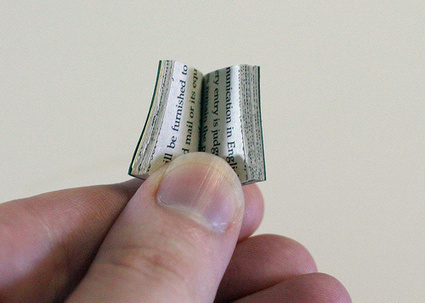
E-singles -- stories somewhere between 5,000 and 30,000 words, usually nonfiction, and sold as inexpensive ebooks -- are the format for our time. Here's why. Via Heiko Idensen
Scoop.it!
Scoop.it!

Free online Dropbox tutorial for teachers and students. TeacherTrainingVideos.com provides free step by step camtasia screencasts that take you through a whole range of ict and web2.0 tools Via Dr. Tom D'Amico (@TDOttawa)
Scoop.it!
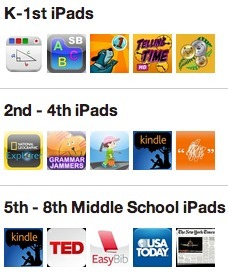
Tons of educational iPad apps organized by grade levels and categories. Via Felix Jacomino, Matisha Stanton, Dr. Tom D'Amico (@TDOttawa)

ManufacturingStories's curator insight,
August 11, 2014 5:54 PM
For more resources on STEM Education visit http://bit.ly/1640Tbl 
MrsTucceri's curator insight,
September 1, 2014 8:17 AM
Helpful collection of educational apps organized by grade levels and categories 
Karen E Smith's curator insight,
October 25, 2014 8:57 AM
Every teacher should create a list of apps that work/don't work for their teaching purposes.
Scoop.it!

Wridea is a web service first to avoid ideas being forgotten, then to organize and improve those ideas by giving you the opportunity to share your ideas with friends and necessary tools to improve your ideas by yourself and individually. Via Sarah McElrath
Scoop.it!

From
99u

You've been hunched for hours at your desk working on the same creative problem, and now your efforts are generating diminishing returns. Like a spinning wheel digging itself deeper into a rut, you just don't seem to be able to make a breakthrough.
Via mooderino
Scoop.it!

Use engaging videos on TED-Ed to create customized lessons. You can use, tweak, or completely redo any lesson featured on TED-Ed, or create lessons from scratch based on any video from YouTube.
Best flips are exceptional, user-created lessons.Users nominate the lessons they build. The lessons are carefully selected by volunteer teachers and TED-Ed. Via Kim Flintoff, Jim Lerman
|
Scoop.it!
"...As I was watching it, I was reminded of an article I had just read in The New Yorker by John McPhee, who writes about how he writes in a piece called “Structure.” (I think it is part of the paid archive now, so may want to go to your local library — you still have one, right? — to check it out). McPhee brings us right into his whole planning and writing of longer non-fiction pieces, showing off visual structures of his content. You can see charts, and maps, and visual puzzles that form the backbone of his pieces. His larger message is try to move away from chronological sequencing, and instead, find new ways to structure content in a piece of writing. But that requires considerable thinking, planning … and an understanding of structure...." Via anna smith
Scoop.it!

By Adam Popescu
"Phil Parker is unlike any writer you've ever met - or read for that matter. That's because he doesn't write most of his books. Instead, the trained economist uses sophisticated algorithms that can pen a whole book from start to finish in as little as a few minutes. The secret is sophisticated programming mimicking the thought process behind formulaic writing. It can take years to create these programs, but once completed, new books can be churned out in minutes."
Jim Lerman's insight:
A virtual lollipop to whoever can identify the image for this post. Any takers? If you know the answer, it means you're of a "certain age."
Scoop.it!

By Maria Popova
:In 2006, Larry Smith presented a challenge to his community at SMITH Magazine: How would you tell your life’s story if you could only use six words? The question, inspired by the legend that Hemingway was once challenged to write an entire novel in just six words, spurred a flurry of responses — funny, heartbreaking, moving, somewhere between PostSecret and Félix Fénéon’s three-word reports. The small experiment soon became a global phenomenon, producing a series of books and inspiring millions of people to contemplate the deepest complexities of existence through the simplicity of short-form minimalism. The latest addition to the series, Things Don’t Have To Be Complicated: Illustrated Six-Word Memoirs by Students Making Sense of the World, comes from TEDBooks and collects dozens of visual six-word autobiographies from students between the ages of 8 and 35."
Scoop.it!

Lisa Cron#s book, Wired for Story: The Writer’s Guide to Using Brain Science to Hook Readers from the Very First Sentence ...
First, the mistaken belief: From time immemorial we’ve have been taught that things like lyrical language, insightful metaphors, vivid description, memorable characters, palpable sensory details and a fresh voice are what hooks readers.
Thanks to recent advances in neuroscience, these are questions that we can now begin to answer with the kind clarity that sheds light on the genuine purpose of story, and elevates writers to the most powerful people on earth. Because story, as it turns out, has a much deeper and more meaningful purpose than simply to entertain and delight. Via Heiko Idensen
Scoop.it!

BookRx is a simple and innovative tool to use if you're looking for interesting reading material. It uses your tweets to predict which books you will enjoy. ... Reading a book is a significant investment of time. That's why it's common to ask friends for recommendations when looking for interesting literature. If you haven't said it yourself, you've probably heard someone say the common refrain: "Read any good books lately?" That method has worked fairly well thus far, but an innovative new web appsources recommendations from the person who knows you best — you. Simply insert your Twitter handle into BookRx, and seconds later the app produces a list of categories and specific books you might enjoy. The app, which was launched yesterday, is a product of Northwestern University'sKnight Lab. Shawn O'Banion, a third-year PhD student, worked with his professor, Larry Birnbaum, to create BookRx.
“Twitter is really unique because it’s a stream of consciousness for the user," O'Banion tells Mashable. "Typically you’re projecting an image of yourself on Twitter with the things that you say; while that might not be your true self, it’s actually who you want to represent on social media.” Via Heiko Idensen
Scoop.it!

Follow these simple steps to create a summary of your text. Step 1Type or paste your text into the box. Step 2Drag the slider, or enter a number in the box, to set the percentage of text to keep in the summary. % Step 3 Read your summarized text. If you would like a different summary, repeat Step 2. When you are happy with the summary, copy and paste the text into a word processor, or text to speech program, or language translation tool Via Heiko Idensen
Scoop.it!

As tuition costs continue to rise, it seems counterintuitive that professors at top universities would give away their courses for free. Via adpcenter
Scoop.it!

Jim Lerman's insight:
Google Gooru is an excellent source for tutorials on how to use Google Apps.
Scoop.it!
By Med Kharbach
"iPad has made such a radical change in education with more and more school districts adopting it as a learning tool inside the classroom. Educational Technology and Mobile Learning has been helping teachers all along the way with reviews and tutorials on how to get started using iPad in education. We have reviewed more than 500 apps and we are planning to do more reviews this year. Via Dr. Tom D'Amico (@TDOttawa)

Jynto's curator insight,
January 12, 2013 3:47 AM
Great resource, clearly laid out. Does anyone have something similar for Android devices?
Scoop.it!

By John Coleman
"It seems that globalism, technology, and political gridlock have convinced many Americans that the change brought on by each is making it impossible to do anything. This obsession with explaining why things can’t happen seems so antithetical to everything that America and our entrepreneurial spirit are founded on that I, for one, am sick of it. So I suggest we all take on a resolution to dream a little bigger this year.
"I know how challenging the world is today. It is a very complex and dynamic place where there seem to be more problems than answers. But therein lies the hope. I, too, have fallen victim to obsessing about the complexities making things more difficult to navigate, but it’s always good to take a step back and remember that no dream is achieved if it’s not first spoken of in the light of day. So a few suggestions for anyone who’s also tired of hearing about what can’t be done"
Scoop.it!

I recently confessed to a poet friend who’s writing her first novel my secret to writing a first novel – the brilliant accidental loophole that I found on my first try.
Via mooderino
Scoop.it!

Martin (Marty) Smith's comment,
January 7, 2013 8:49 PM
Strange to tell Joseph Campbell's Hero With A Thousand Faces with Lego characters but it flies by faster chan Campbell.
Martin (Marty) Smith's curator insight,
January 7, 2013 8:55 PM
Could this 65 slide deck have saved me plowing through Joseph Campbell's Hero With A Thosand Faces? Not really, but its fun and flies by providing ADD insight into the basis of all stories. |






