 Your new post is loading...

|
Rescooped by
Jim Lerman
from Into the Driver's Seat
January 27, 2013 1:23 AM
|
"Educators are always striving to find ways to make curriculum relevant in students’ everyday lives. More and more teachers are using social media around lessons, allowing students to use their cell phones to do research and participate in class, and developing their curriculum around projects to ground learning around an activity. These strategies are all part of a larger goal to help students connect to social and cultural spaces."
Via Beth Dichter, Jim Lerman
|
|
Rescooped by
Jim Lerman
from Tools for Teachers & Learners
January 27, 2013 12:33 AM
|
term.ly provides concise definitions and goes beyond standard thesauri by providing related words that scale the hierarchy of language, allowing you to browse to more and less specific terms, and through relationships
Via Nik Peachey
|
|
Rescooped by
Jim Lerman
from Tools for Teachers & Learners
January 26, 2013 8:55 PM
|
Simple Image collaboration and markup tool - Take screenshots and discuss feedback
Via Nik Peachey
|
|
Rescooped by
Jim Lerman
from iEduc
January 25, 2013 11:46 PM
|
I've been to something like one hundred conferences and corporate events in the past several years as I travel the world delivering keynotes and running seminars. I've seen a few great speeches. Sadly, most speeches I see are not very...
Via NikolaosKourakos
|
|
Rescooped by
Jim Lerman
from mlearn
January 24, 2013 11:54 PM
|
Thanks to a $10 million+ Kickstarter campaign, Pebble's e-paper smartwatch is coming soon
Via michel verstrepen
|
|
Rescooped by
Jim Lerman
from Feed the Writer
January 24, 2013 11:48 PM
|
If you want to hook readers and reel them in, use brain science. Successful writers know how to use stories to trigger an emotional response.
Via Sarah McElrath
|
|
Rescooped by
Jim Lerman
from Into the Driver's Seat
January 22, 2013 11:52 PM
|
By Richard Byrne "One of the most popular posts that I've published on Free Technology for Teachers is a list of ten free tools for creating comics online. I wrote that post three years ago. Since then some of the tools have gone offline or started charging users. So I think it's time to share a new list. Here are five free tools for creating comics online."
|
|
Scooped by
Jim Lerman
January 21, 2013 5:56 PM
|
By Ashley Prophet Summary by the Accomplished Teacher "While teachers and students can be hesitant to integrate debate into the writing process, Ashley Prophet, a graduate student, suggests a nontraditional approach that could alleviate fears over tedious debates and rowdy students. Prophet suggests a five-step process in which students seek critical reviews from their friends, adopt an approach in which students prosecute and defend their sentences, and finally use technology to publish their work."
|
|
Rescooped by
Jim Lerman
from New Web 2.0 tools for education
January 18, 2013 11:11 PM
|
phrase.it is a free online image editor which lets you add cartoon style speech and thought bubbles to your images. It's extremely easy to use and you will have great looking results within minutes.
Via John Dalziel, William Machado, Kathleen Cercone
|
|
Scooped by
Jim Lerman
January 18, 2013 11:07 PM
|
|
|
Rescooped by
Jim Lerman
from Great Books
January 18, 2013 5:43 PM
|
Idaho developed Common Core toolboxes for English langauge arts and mathematics. Each toolbox provides an overview of the standards, instructional materials and resources, and information on the new assessments. Embedded are links to videos and reports to assist educators and the public in better understanding the standards.
Via Mel Riddile, Mark Gillingham
|
|
Rescooped by
Jim Lerman
from :: The 4th Era ::
January 18, 2013 5:38 PM
|
In this post, we present Vicky Vinton and Dorothy Barnhouse's book What Readers Really Do as one of our highly recommended text for learning what it means to read closely.
Via Mark Gillingham, Jim Lerman
|
|
Rescooped by
Jim Lerman
from :: The 4th Era ::
January 18, 2013 1:34 PM
|
By Paula Bernstein Every tweet may contain a story. But in 140 characters or less, tweets can only hint at drama, romance, tragedy, and intrigue.Artists Nate Larson and Marni Shindelman take the story one step further into the real world, adding a visual component to.tweets in their "Geolocation" project. "Using publicly available GPS metadata in Twitter posts, the duo track the location of tweets and take photographs, creating a real-world context for the virtual information. They then pair the photograph with the tweet, often to powerful effect."
|
|
|
Rescooped by
Jim Lerman
from Eclectic Technology
January 27, 2013 1:22 AM
|
|
|
Rescooped by
Jim Lerman
from Tools for Teachers & Learners
January 27, 2013 12:31 AM
|
|
|
Rescooped by
Jim Lerman
from Into the Driver's Seat
January 26, 2013 12:51 AM
|
Digital comics are a great way to practise language learning in the classroom. Presentation given at AGIS 2013 in Hanover. (@wmjackson RT @slideshare: '20 effective ways to use digital comics in the classroom' is featured on our homepage.
Via Jason Dargent, Jim Lerman
|
|
Rescooped by
Jim Lerman
from The Funnily Enough
January 24, 2013 11:57 PM
|
There’s something very attractive about the outsider character. Being rejected and having to strike out alone feels quite romantic.
The main things to remember when developing this sort of character is to show how happy everyone inside the group is (even if they’re just kidding themselves), and to demonstrate clearly that the character is not welcome.
Via mooderino
|
|
Rescooped by
Jim Lerman
from Eclectic Technology
January 24, 2013 11:52 PM
|
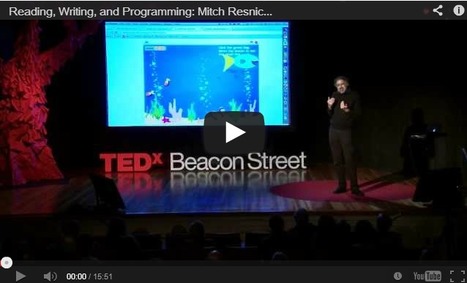
Mitch Resnik, the creator of the super-simple Scratch programming language and head of the Lifelong Kindergarten group at the MIT Media Lab, gave a TEDx talk about the value of coding and computer literacy in early education.
Via Beth Dichter
|
|
Rescooped by
Jim Lerman
from Feed the Writer
January 24, 2013 11:47 PM
|
|
|
Scooped by
Jim Lerman
January 21, 2013 11:19 PM
|
By Mike Shanahan "This fine book on writing instruction will soon have a second edition. If you are looking for a good guide for supporting teachers on writing, this is the book I would turn to now. In this new edition there is a lot more common core relevant information, including a chapter that I wrote about "writing about text." For some reason I struggled to write this chapter, but yesterday I read the page proofs and I was happy with it. It provides guidance on all the ways that common core connects reading and writing: summarizing, modeling, analysis/critical response, and synthesis. It should be out soon and for those who have been looking for common core writing help this text should do it."
|
|
Rescooped by
Jim Lerman
from HigherEd - iTunesU or University
January 18, 2013 11:14 PM
|
In case you didn’t catch it, this week on the TEDx blog, we featured four talks examining advancements in education.
It’s a topic we talk a lot about here at TED and it’s a conversation TEDx events...
Via Vicky Hennegan
|
|
Scooped by
Jim Lerman
January 18, 2013 11:07 PM
|
In March 2012, the MacArthur Foundation shared a set of design and learning principles that emerged from their Digital Media and Learning Initiative of which the NWP is a member. These design and learning principles, called "Connected Learning" are meant to support a proposal for a new approach to learning anchored in a rich history of teaching and learning research and theory. They are also being designed to mine the learning potential of the new social and digital media domains.
|
|
Rescooped by
Jim Lerman
from Into the Driver's Seat
January 18, 2013 5:52 PM
|
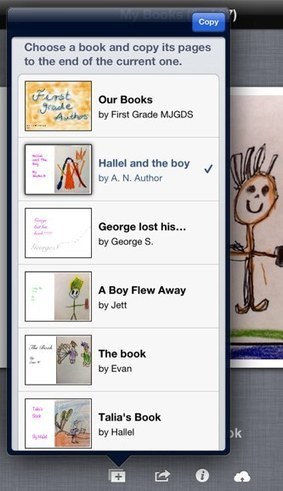
Tweet It is no secret that I am a fan of the iPad app BookCreator since its release in 2011. Our students have created several eBooks with the app. You can read about the creation, its process and ...
Via John Evans, Jim Lerman
|
|
Rescooped by
Jim Lerman
from Great Books
January 18, 2013 5:42 PM
|
"Novelist Junot Díazis a Professor of Writing at the Massachusetts Institute of Technology. He is “a writer whose finely crafted works of fiction offer powerful insight into the realities of the Caribbean diaspora, American assimilation, and lives lived between cultures.” "New York Times writer Sam Anderson recently interviewed him, and Diaz provides a number of helpful perspectives on creative expression, for any kind of artist."
Via Mark Gillingham
|
|
Rescooped by
Jim Lerman
from Technology Advances
January 18, 2013 2:41 PM
|
|

















A look at Henry Jenkins work on participatory learning and PLAY (Participatory Learning and You). So what is PLAY? "...'a mode of experimentation, of testing materials, trying out new solutions, exploring new horizons,' Jenkins said. It’s how kids interact with games – throwing themselves in without reading the rules, testing the limits and feeling free to try and fail."
This post provides a number of examples, discusses assesement and play, and provides links to additional articles on the subject.