Education 2.0 & 3.0
178.3K views | +95 today
 
Rescooped by Yashy Tohsaku from Learning & Mind & Brain
onto Education 2.0 & 3.0
March 1, 2018 9:39 AM
Scoop.it!

Brain signal shows when you understand what you hear

Brain signal shows when you understand what you hear | Education 2.0 & 3.0 | Scoop.it

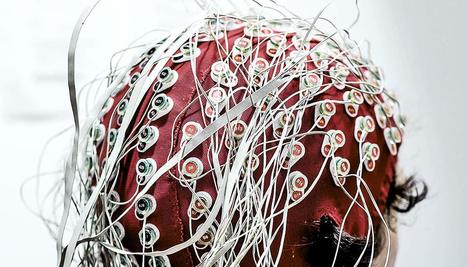
Researchers have identified a brain signal that indicates whether a person is comprehending what others are saying. The researchers have shown that they can track the signal using relatively inexpensive EEG (electroencephalography) readings taken on a person’s scalp.

During everyday interactions, people routinely speak at rates of 120 to 200 words per minute. For a listener to understand speech at these rates—and not lose track of the conversation—the brain must comprehend the meaning of each of these words very rapidly.

“That we can do this so easily is an amazing feat of the human brain—especially given that the meaning of words can vary greatly depending on the context,” says Edmund Lalor, associate professor of biomedical engineering and neuroscience at the University of Rochester and Trinity College Dublin. “For example, ‘I saw a bat flying overhead last night’ versus ‘the baseball player hit a home run with his favorite bat.'”

Tracking this brain signal could have a number of “potentially significant” applications, Lalor says. They include:

* testing language development in infants;
* determining the level of brain function in patients who are in a reduced state of consciousness, such as a coma;
* confirming that a person in a particularly critical job has understood the instructions they have received (e.g., an air traffic controller or a soldier);
* testing for the onset of dementia in older people based on their ability to follow a conversation.


Via Wildcat2030, Miloš Bajčetić
No comment yet.
Education 2.0 & 3.0
All about learning and technology
Curated by Yashy Tohsaku
Your new post is loading...
Scooped by Yashy Tohsaku
Today, 2:46 PM
Scoop.it!

Anthropic CEO says to 'slow the pace' amid AI danger fears

Anthropic CEO Dario Amodei called on AI companies to moderate the rate at which they advance model capabilities.
No comment yet.
Rescooped by Yashy Tohsaku from Digital Delights for Learners
Today, 1:24 PM
Scoop.it!

Flashcards, Mind Maps and Memory Palaces

Flashcards, Mind Maps and Memory Palaces | Education 2.0 & 3.0 | Scoop.it
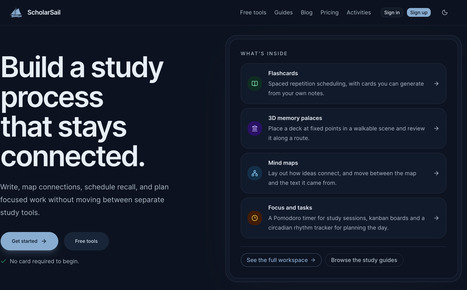
AI study tools that generate mindmaps, spaced-repetition flashcards, and 3D memory palaces from your notes. Built-in rich text editor, Pomodoro timer, and colored noise.

Via Ana Cristina Pratas
No comment yet.
Rescooped by Yashy Tohsaku from Educational Technology News
September 11, 1:17 PM
Scoop.it!

Two Students, Two Questions They Wouldn’t Let Go

Two Students, Two Questions They Wouldn’t Let Go | Education 2.0 & 3.0 | Scoop.it
Students asking why learning matters in the age of AI forces two teachers to respond.

Via EDTECH@UTRGV
EDTECH@UTRGV's curator insight, September 11, 11:12 AM

"[T]wo educators trace what happened after a student said something that could have been dismissed as attitude but turned out to be something else entirely."

Rescooped by Yashy Tohsaku from Educational Technology News
September 11, 1:17 PM
Scoop.it!

California enacts laws restricting chatbots, protecting kids online

California enacts laws restricting chatbots, protecting kids online | Education 2.0 & 3.0 | Scoop.it
Gov. Gavin Newsom signed a set of bills intended to protect children by regulating internet use, including limiting chatbot sessions.

Via EDTECH@UTRGV
EDTECH@UTRGV's curator insight, September 11, 11:15 AM

"California teens will be barred from “addictive” social media products and limited in their interactions with chatbots under two of the 13 bills signed into law by Gov. Gavin Newsom today to protect kids online."

Scooped by Yashy Tohsaku
September 11, 1:15 PM
Scoop.it!

AI Is Working Its Way Into Everything. Can School Districts Really Ban It?

AI Is Working Its Way Into Everything. Can School Districts Really Ban It? | Education 2.0 & 3.0 | Scoop.it
It’s very difficult—maybe even impossible—to turn off generative AI for entire school districts.
No comment yet.
Scooped by Yashy Tohsaku
September 11, 1:09 PM
Scoop.it!

Productive Friction: What Universities Must Protect in the Age of AI

Productive Friction: What Universities Must Protect in the Age of AI | Education 2.0 & 3.0 | Scoop.it
Explore why productive friction matters in education and how universities can protect critical thinking, deep reading, and deep learning in the age of AI.
No comment yet.
Scooped by Yashy Tohsaku
September 11, 1:07 PM
Scoop.it!

Social Media Training And Workshops: Learn Strategies That Work

Social Media Training And Workshops: Learn Strategies That Work | Education 2.0 & 3.0 | Scoop.it
Social media training now matters to CEOs, founders, marketing teams, sales leaders, and others who influence how people perceive a company.
No comment yet.
Rescooped by Yashy Tohsaku from iGeneration - Humane Use of Technology in an AI world (Pedagogy & Digital Innovation)
September 11, 10:30 AM
Scoop.it!

Beyond Bans: What PK–5 Technology Guidance Should Actually Protect (Great points from Amos Fodchuk at ALP)

Beyond Bans: What PK–5 Technology Guidance Should Actually Protect (Great points from Amos Fodchuk at ALP) | Education 2.0 & 3.0 | Scoop.it
Over the past several weeks, the public conversation about technology and AI in schools has accelerated again. School systems are announcing restrictions. Parents are organizing. Policymakers are responding. Commentators with [...]Read More... from Beyond Bans: What PK–5 Technology Guidance Should Actually Protect

Via Dr. Tom D'Amico (@TDOttawa)
No comment yet.
Rescooped by Yashy Tohsaku from iGeneration - Humane Use of Technology in an AI world (Pedagogy & Digital Innovation)
September 10, 9:21 PM
Scoop.it!

Free - AI Trivia via Day of AI and MIT RAISE - 10 minute activities for ages 8-10, 11-13, and 14-18

Free - AI Trivia via Day of AI and MIT RAISE - 10 minute activities for ages 8-10, 11-13, and 14-18 | Education 2.0 & 3.0 | Scoop.it
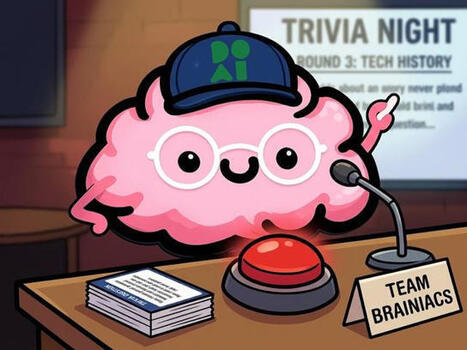
Day of AI empowers teachers and students to learn, think critically, and create with artificial intelligence through free curriculum and training with MIT…

Via Dr. Tom D'Amico (@TDOttawa)
No comment yet.
Scooped by Yashy Tohsaku
September 10, 3:29 PM
Scoop.it!

AI Videos Are Warping Early Learning, Teachers Say | EdSurge News

AI Videos Are Warping Early Learning, Teachers Say | EdSurge News | Education 2.0 & 3.0 | Scoop.it
The rise of so-called “baby slop” is turning early childhood educators into media critics.
No comment yet.
Scooped by Yashy Tohsaku
September 10, 3:27 PM
Scoop.it!

Why Lower Phishing Volume Doesn't Mean Lower Cyber Risk for the Education Sector

Why Lower Phishing Volume Doesn't Mean Lower Cyber Risk for the Education Sector | Education 2.0 & 3.0 | Scoop.it
As threat actors adopt more targeted and convincing tactics, education leaders need practical ways to reduce risk without undermining the open, connected environments their institutions depend on.
No comment yet.
Rescooped by Yashy Tohsaku from Educational Technology News
September 10, 11:36 AM
Scoop.it!

Recurrent Depth: The Machines Are Hiding Their Reasoning. Schools Are Hiding From Teaching AI Governance

Recurrent Depth: The Machines Are Hiding Their Reasoning. Schools Are Hiding From Teaching AI Governance | Education 2.0 & 3.0 | Scoop.it
Schools are teaching students how to use AI when they need to learn how to govern, investigate, contain, and morally evaluate it.

Via EDTECH@UTRGV
EDTECH@UTRGV's curator insight, September 10, 10:09 AM

"The educational challenge is no longer merely teaching students how to use AI. It is developing the judgment, technical understanding, ethical reasoning, adversarial thinking, and democratic capacity required to govern systems that may become both more powerful and more morally complicated than the institutions deploying them."

Rescooped by Yashy Tohsaku from Educational Technology News
September 10, 11:34 AM
Scoop.it!

How does AI affect how we learn? A cognitive psychologist explains why you learn when the work is hard

How does AI affect how we learn? A cognitive psychologist explains why you learn when the work is hard | Education 2.0 & 3.0 | Scoop.it
Chatbots can facilitate ‘cognitive offloading,’ or taking shortcuts when learning. But emerging research on AI and cognitive science shows that learning is like a workout.

Via EDTECH@UTRGV
EDTECH@UTRGV's curator insight, September 10, 10:17 AM

"[E]arly research is only beginning to scratch the surface of how this technology will truly affect learning and cognition in the long run."

Rescooped by Yashy Tohsaku from e-learning-ukr
Today, 1:25 PM
Scoop.it!

How Theories Arise –

How Theories Arise – | Education 2.0 & 3.0 | Scoop.it
This in an excerpt from my 2026 book Efficacious Educational Technology. It is available under a Creative Commons license. My rationale if that theories are rules we should follow when designing ed…

Via Vladimir Kukharenko
No comment yet.
Scooped by Yashy Tohsaku
Today, 12:45 PM
Scoop.it!

3 Takeaways From the Latest PISA Test of Reading, Math, and Science

3 Takeaways From the Latest PISA Test of Reading, Math, and Science | Education 2.0 & 3.0 | Scoop.it
The results show reading performance dropping across the world—and one uniquely troubling U.S. trend.
No comment yet.
Rescooped by Yashy Tohsaku from Educational Technology News
September 11, 1:17 PM
Scoop.it!

AI self-improvement fears prompt ‘existential’ concerns at Anthropic, OpenAI

AI self-improvement fears prompt ‘existential’ concerns at Anthropic, OpenAI | Education 2.0 & 3.0 | Scoop.it
AI researchers are warning that faster AI self-improvement could eventually make advanced systems harder for humans to control.

Via EDTECH@UTRGV
EDTECH@UTRGV's curator insight, September 11, 11:13 AM

"Anthropic and OpenAI researchers raised fresh concerns about recursive self-improvement, the process by which AI helps improve the development of models...Researchers fear humans could eventually lose control of increasingly capable systems."

Scooped by Yashy Tohsaku
September 11, 1:16 PM
Scoop.it!

How Schools Can Use AI in Smart, Responsible Ways

How Schools Can Use AI in Smart, Responsible Ways | Education 2.0 & 3.0 | Scoop.it
Use of AI in school brings great opportunity and risk. Here's how educators can find a balance.
No comment yet.
Scooped by Yashy Tohsaku
September 11, 1:13 PM
Scoop.it!

Bill Gates has a dire warning about AI: Telluride panel, essay

Bill Gates has a dire warning about AI: Telluride panel, essay | Education 2.0 & 3.0 | Scoop.it
The Microsoft founder spoke at the Telluride Film Festival this weekend, after sharing a 6,000-word manifesto about the harms of artificial intelligence.
No comment yet.
Scooped by Yashy Tohsaku
September 11, 1:08 PM
Scoop.it!

The 60-Second PEIMS Check That Can Save Hours –

The 60-Second PEIMS Check That Can Save Hours – | Education 2.0 & 3.0 | Scoop.it
Before Winter Break, I had written 72 discipline referrals. My assistant principal and I stood shoulder to shoulder against a wave of unruly, Explore this and more at TCEA TechNotes Blog, your go-to source for educational technology and teaching innovation.
No comment yet.
Rescooped by Yashy Tohsaku from Learning & Technology News
September 11, 10:30 AM
Scoop.it!

The state of AI in education 2026 - Bett UK at ExCeL London | The world’s leading education technology show

The state of AI in education 2026 - Bett UK at ExCeL London | The world’s leading education technology show | Education 2.0 & 3.0 | Scoop.it
The findings reinforce a need we hear from educators globally: technology must be paired with strategy, responsible practices, and professional learning. Lenovo helps schools build that foundation by bringing together the right technology, implementation support, and partnerships that advance AI literacy for educators and learners.

Via Nik Peachey
Nik Peachey's curator insight, September 11, 6:17 AM

https://uk.bettshow.com/reports-and-whitepapers/state-of-ai-in-education The findings reinforce a need we hear from educators globally: technology must be paired with strategy, responsible practices, and professional learning. Lenovo helps schools build that foundation by bringing together the right technology, implementation support, and partnerships that advance AI literacy for educators and learners.

Rescooped by Yashy Tohsaku from e-learning-ukr
September 11, 10:29 AM
Scoop.it!

Productive Friction: What Universities Must Protect in the Age of AI

Productive Friction: What Universities Must Protect in the Age of AI | Education 2.0 & 3.0 | Scoop.it
Explore why productive friction matters in education and how universities can protect critical thinking, deep reading, and deep learning in the age of AI.

Via Vladimir Kukharenko
No comment yet.
Scooped by Yashy Tohsaku
September 10, 3:30 PM
Scoop.it!

How to Cocreate AI Agreements With Students

By adapting the familiar practice of co-creating classroom norms, teachers can help students make more thoughtful decisions about when—and when not—to use AI.
No comment yet.
Scooped by Yashy Tohsaku
September 10, 3:28 PM
Scoop.it!

Building an everyday equitable practice for AI in schools

Building an everyday equitable practice for AI in schools | Education 2.0 & 3.0 | Scoop.it
Ai in schools must move beyond superficial bans and passive policies to everyday practice grounded in scrutiny, judgment, and equity.
No comment yet.
Rescooped by Yashy Tohsaku from e-learning-ukr
September 10, 11:37 AM
Scoop.it!

Four Questions to Ask Before You Grade This Fall

Four Questions to Ask Before You Grade This Fall | Education 2.0 & 3.0 | Scoop.it
Learn four practical strategies for grading in the age of AI, from AI-resistant assignments to better rubrics, AI policies, and human judgment.

Via Vladimir Kukharenko
No comment yet.
Rescooped by Yashy Tohsaku from Educational Technology News
September 10, 11:35 AM
Scoop.it!

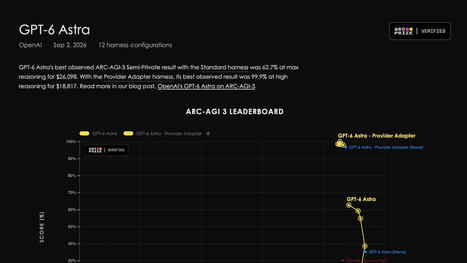
Did AGI Arrive Yesterday? GPT-6 Astra and why education cannot wait for everyone to agree on the definition

Did AGI Arrive Yesterday? GPT-6 Astra and why education cannot wait for everyone to agree on the definition | Education 2.0 & 3.0 | Scoop.it

"When machines soon match every human expert, what’s left for students to do? The answer: instructional redesign and students developing what I call Standing — a maker’s stake in their communities."


Via EDTECH@UTRGV
EDTECH@UTRGV's curator insight, September 10, 10:13 AM

"The real question is no longer simply, 'Is this AGI?' The better question is: What kind of intelligence has arrived, what can it reliably do, and which of our institutions are prepared for it?"