Education 2.0 & 3.0
174.0K views | +4 today
 
Scooped by Yashy Tohsaku
onto Education 2.0 & 3.0
July 22, 2012 10:58 AM
Scoop.it!

Part Two: Ten Steps… Transforming Past Lessons For the 21st ...

Part Two: Ten Steps… Transforming Past Lessons For the 21st ... | Education 2.0 & 3.0 | Scoop.it
21 st Century Educational Technology and Learning. Skip to content ... Technology can include Web 2.0 applications, Mega Websites, Software, various devices… phones…cameras…GPS…. Flip Video ...
No comment yet.
Education 2.0 & 3.0
All about learning and technology
Curated by Yashy Tohsaku
Your new post is loading...
Scooped by Yashy Tohsaku
Today, 11:18 AM
Scoop.it!

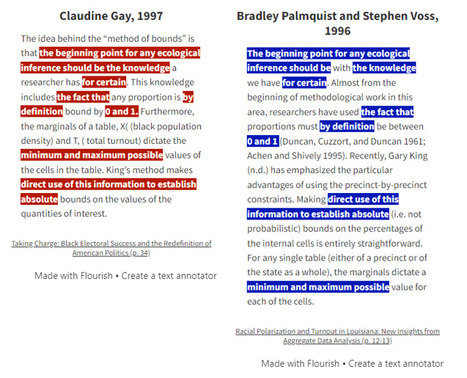
Encouraging Creative and Reflective Annotation in the Classroom

Encouraging Creative and Reflective Annotation in the Classroom | Education 2.0 & 3.0 | Scoop.it
Tips and real-life examples show how teachers can guide students to create genuinely useful artifacts of analysis and interpretation.
No comment yet.
Scooped by Yashy Tohsaku
Today, 11:06 AM
Scoop.it!

Brick City: A Disaster Card Building Challenge –

Brick City: A Disaster Card Building Challenge – | Education 2.0 & 3.0 | Scoop.it
Need a fresh challenge for your LEGO bricks or whatever building materials you have on hand?Brick City Heroes is a spin-off of my Mars Mayhem LEGO Explore this and more at TCEA TechNotes Blog, your go-to source for educational technology and teaching innovation.
No comment yet.
Rescooped by Yashy Tohsaku from Educational Technology News
May 6, 5:57 PM
Scoop.it!

4 higher education leaders on AI’s biggest benefits and risks

"Artificial intelligence is rapidly progressing and poised to reshape the workforce in the near future. The higher education sector is in a unique position, as both an employer of millions of workers and a system that prepares students for the labor force.


At the annual ASU+GSV Summit last week, four college leaders talked to Higher Ed Dive to weigh in on two questions: What about AI’s use in higher education are you most excited for? And what has you most concerned?"


Via EDTECH@UTRGV
EDTECH@UTRGV's curator insight, May 4, 12:47 PM

"[P]eople have to be thoughtful about deploying AI. Think of it as an amplifier. The largest amplification capacity for any human being is an AI agent."

Rescooped by Yashy Tohsaku from Educational Technology News
May 6, 5:52 PM
Scoop.it!

Online Classes and Conflicting Desires

Online Classes and Conflicting Desires | Education 2.0 & 3.0 | Scoop.it
Whether students vote with a ballot or with their feet, the outcome of the vote sometimes has unintended consequences. Voting offers limited information, and that’s true whether voting with your ballot or with your feet. When you chose Smith over Jones, was it because of a policy position, a party identity, personal familiarity, or because you liked their name better? And if it was based on a policy position—most votes aren’t, at least directly—did you understand the nuances behind the policy?

Via EDTECH@UTRGV
EDTECH@UTRGV's curator insight, May 4, 12:50 PM

"Conflicting desires play out beyond electoral politics. I’m seeing it in the push-pull of students wanting a more robust on-campus college experience while simultaneously crowding into online classes. The desire for a robust on-campus experience conflicts with the desire for a convenient schedule."

Rescooped by Yashy Tohsaku from Digital Learning - beyond eLearning and Blended Learning
May 6, 5:51 PM
Scoop.it!

A Practical SAMR + AI Framework for Instructional Design

A Practical SAMR + AI Framework for Instructional Design | Education 2.0 & 3.0 | Scoop.it
The SAMR + AI Matrix is a structured learning design tool that aligns the SAMR Model with Bloom's Taxonomy, mapping levels of technological use to cog

Via Peter Mellow
No comment yet.
Rescooped by Yashy Tohsaku from e-learning-ukr
May 6, 5:50 PM
Scoop.it!

Beyond Cognitive Load Theory - by Dr Peter Ellerton, PhD

Beyond Cognitive Load Theory - by Dr Peter Ellerton, PhD | Education 2.0 & 3.0 | Scoop.it
Why Learning Can’t Be Reduced to Memory Management

Via Vladimir Kukharenko
No comment yet.
Rescooped by Yashy Tohsaku from Educational Technology News
May 6, 5:49 PM
Scoop.it!

Human-In-The-Loop AI Fails The Real-Time Test

"​Human-in-the-loop (HITL) has emerged as the default answer to concerns about AI trust, safety and governance. The logic is that when AI systems make decisions that affect people, a human should be involved.​"


Via EDTECH@UTRGV
EDTECH@UTRGV's curator insight, May 5, 2:53 PM

"In safety-critical environments, insisting that humans be in every real-time loop does not make systems safer. Designing for reliability does.​"

Alessandro Cerboni's curator insight, May 6, 11:36 AM
Quando gli scenari fisici richiedono una decisione istantanea Con l'intelligenza artificiale applicata alla fisica, il ciclo di feedback è spesso inferiore al secondo. Prendiamo ad esempio la guida nel mondo reale. Un cambio di corsia con un veicolo che si avvicina rapidamente in un punto cieco, una frenata improvvisa o un pedone che scende dal marciapiede: queste situazioni si verificano in frazioni di secondo. Per la formazione del conducente in tempo reale o la prevenzione delle collisioni, un essere umano non può essere "presente" nel momento in cui è richiesta un'azione. Qualsiasi sistema che attenda l'approvazione umana introduce latenza e fragilità proprio quando il determinismo è più importante. I ritardi riducono drasticamente l'efficacia del feedback. Se un conducente viene avvisato immediatamente dopo aver ignorato un segnale di stop, può ricordare il momento esatto, capire cosa è successo e modificare il proprio comportamento. Se lo stesso avviso arriva minuti dopo, quando ci si trova in un contesto di guida completamente diverso, l'opportunità di apprendimento è in gran parte persa. Il contesto in tempo reale è ciò che rende il feedback utilizzabile.
Rescooped by Yashy Tohsaku from e-learning-ukr
May 6, 5:49 PM
Scoop.it!

Gary Marcus (@garymarcus): "Why is the AI backlash growing? Outside of coding (where there is clear value), and a handful of other domains (e.g. brainstorming), Generative AI has been a net negati...

Gary Marcus (@garymarcus): "Why is the AI backlash growing? Outside of coding (where there is clear value), and a handful of other domains (e.g. brainstorming), Generative AI has been a net negati... | Education 2.0 & 3.0 | Scoop.it
Why is the AI backlash growing?

Outside of coding (where there is clear value), and a handful of other domains (e.g. brainstorming), Generative AI has been a net negative for society.

GenAI has been undermining secondary and college education, opening up mass surveillance, increasing disinformation, delusions, impersonation, phishing, and other forms of cybercrime, nonconsensual deep fake porn, bias in employment and other domains, and economic disparity, drowning the world in slop and unwanted, over-leveraged environment-damaging data centers that risk causing a recession.

Simultaneously it has empowered a bunch of people who want to privatize almost all the gains while leave all the downsides to society, taking almost zero responsibility.

I don’t think we are better off than we were four years ago.

Some of this is technical (LLMs aren’t reliable), some of it is political/economic (such as the utter lack of responsible regulation). Most of this was predictable.

Almost none of it is good.

All that said, I honestly believes some future form of AI might be great. But Generative AI has hurt more than it has helped, and been managed irresponsibly.

It’s no wonder many people have had enough.

Via Vladimir Kukharenko
No comment yet.
Rescooped by Yashy Tohsaku from e-learning-ukr
May 6, 5:48 PM
Scoop.it!

Students Rate the Experience; Peers Evaluate the Teaching: Rethinking the Evaluation of University Instruction

Students Rate the Experience; Peers Evaluate the Teaching: Rethinking the Evaluation of University Instruction | Education 2.0 & 3.0 | Scoop.it
Student evaluations don’t tell the full story. Learn how peer evaluation can transform how universities assess teaching and support faculty growth.

Via Vladimir Kukharenko
No comment yet.
Rescooped by Yashy Tohsaku from Educational Technology News
May 6, 5:47 PM
Scoop.it!

Gemini, Claude, and ChatGPT are done waiting for your prompts

Gemini, Claude, and ChatGPT are done waiting for your prompts | Education 2.0 & 3.0 | Scoop.it

"Back in January, the viral sensation OpenClaw kicked off the personal AI assistant craze, where you install a team of AI agents on your desktop, give them goals, and set them loose. Fast forward to May and now there’s a new buzzy trend that’s ready to take off: “proactive” AI (i.e., AI agents that go to work without even being asked)."


Via EDTECH@UTRGV
EDTECH@UTRGV's curator insight, May 6, 1:17 PM

"While agentic AI tools like OpenClaw and Claude Cowork rely on outcomes previously defined by the user, Pulse, Orbit, and Proactive Assistant appear poised to act first, sussing out your interests and intentions based on your chats, connected apps, and other signals."


Scooped by Yashy Tohsaku
May 6, 5:41 PM
Scoop.it!

Students Rate the Experience; Peers Evaluate the Teaching: Rethinking the Evaluation of University Instruction

Students Rate the Experience; Peers Evaluate the Teaching: Rethinking the Evaluation of University Instruction | Education 2.0 & 3.0 | Scoop.it
Student evaluations don’t tell the full story. Learn how peer evaluation can transform how universities assess teaching and support faculty growth.
No comment yet.
Scooped by Yashy Tohsaku
May 6, 5:30 PM
Scoop.it!

AI Tunnel Vision: The Hidden Risk In AI-Driven Learning

AI Tunnel Vision: The Hidden Risk In AI-Driven Learning | Education 2.0 & 3.0 | Scoop.it
AI replaces information overload with tunnel vision, creating faster decisions but hidden risks. Organizations must build AI literacy.
No comment yet.
Scooped by Yashy Tohsaku
May 6, 5:17 PM
Scoop.it!

Protect Your Time as an Instructional Coach –

Protect Your Time as an Instructional Coach – | Education 2.0 & 3.0 | Scoop.it
Instructional coaches are often pulled in a dozen directions, but your calendar can be your greatest ally in protecting the time that makes the most Explore this and more at TCEA TechNotes Blog, your go-to source for educational technology and teaching innovation.
No comment yet.
Scooped by Yashy Tohsaku
Today, 11:14 AM
Scoop.it!

When anyone can build a course, the real job is deciding which ones shouldn’t exist

When anyone can build a course, the real job is deciding which ones shouldn’t exist | Education 2.0 & 3.0 | Scoop.it
Why deciding is the only L&D skill AI can't replace.
No comment yet.
Scooped by Yashy Tohsaku
Today, 11:04 AM
Scoop.it!

The History Of Blended Learning

The History Of Blended Learning | Education 2.0 & 3.0 | Scoop.it
Explore the history of blended learning and discover how it integrates traditional teaching and online experiences.
No comment yet.
Rescooped by Yashy Tohsaku from Educational Technology News
May 6, 5:54 PM
Scoop.it!

In An AI Classroom, Content Knowledge Matters More Than Ever

In An AI Classroom, Content Knowledge Matters More Than Ever | Education 2.0 & 3.0 | Scoop.it

"Artificial intelligence has rapidly shifted the instructional landscape. Tools that can generate explanations, draft essays, and summarize complex topics are now readily available to students. This accessibility has led some to question whether deep instructor content knowledge still holds the same importance. The answer is an unequivocal yes."


Via EDTECH@UTRGV
EDTECH@UTRGV's curator insight, May 4, 12:48 PM

"Strong instruction in an AI-rich classroom depends on strong content knowledge"

Rescooped by Yashy Tohsaku from Mobile Learning
May 6, 5:51 PM
Scoop.it!

School cellphone bans don’t affect test scores or attendance, study finds

Educators favor cellphone bans, but research shows that while new rules have reduced phone usage in schools, there has been little academic change.

Via Peter Mellow
No comment yet.
Rescooped by Yashy Tohsaku from e-learning-ukr
May 6, 5:50 PM
Scoop.it!

The Adaptive Enterprise: AI, Learning, and the Work of Making Sense

The Adaptive Enterprise: AI, Learning, and the Work of Making Sense | Education 2.0 & 3.0 | Scoop.it
The Adaptive Enterprise Framework offers a useful way to notice what is changing, interpret what that change actually means, decide what to do next, and then adjust practice accordingly—over and over again.

Via Vladimir Kukharenko
No comment yet.
Rescooped by Yashy Tohsaku from Educational Technology News
May 6, 5:50 PM
Scoop.it!

AI Tunnel Vision: The Hidden Risk In AI-Driven Learning

AI Tunnel Vision: The Hidden Risk In AI-Driven Learning | Education 2.0 & 3.0 | Scoop.it
AI replaces information overload with tunnel vision, creating faster decisions but hidden risks. Organizations must build AI literacy.

Via EDTECH@UTRGV
EDTECH@UTRGV's curator insight, May 5, 2:47 PM

"AI doesn't just filter information. It narrows it. Like blinders on a horse, it blocks out the periphery and presents a single, coherent path forward."

Rescooped by Yashy Tohsaku from Educational Technology News
May 6, 5:49 PM
Scoop.it!

What Colleges Get Wrong About AI Education

What Colleges Get Wrong About AI Education | Education 2.0 & 3.0 | Scoop.it
As AI use becomes common in the workforce, institutions of higher education must train students to be fluent in the technology, so they can evolve with it.

Via EDTECH@UTRGV
EDTECH@UTRGV's curator insight, May 5, 2:50 PM

"Competency means knowing how to operate the tools. Frankly, our students can gain competency quickly through a weekend workshop, YouTube videos or simple trial and error. Fluency, on the other hand, means understanding what the tools can and cannot do. It requires recognizing the assumptions baked into systems trained on imperfect data, asking who benefits and who bears the costs when AI is deployed in a hiring process, a courtroom or a healthcare setting."

Rescooped by Yashy Tohsaku from e-learning-ukr
May 6, 5:48 PM
Scoop.it!

Designing Online Courses in the AI Era

Designing Online Courses in the AI Era | Education 2.0 & 3.0 | Scoop.it
Designing Online Courses in the AI Era equips educators with proven strategies to engage students, build community, and communicate effectively, helping you become proficient in online teaching, and ultimately, enhancing student success and retention.

Via Vladimir Kukharenko
No comment yet.
Rescooped by Yashy Tohsaku from e-learning-ukr
May 6, 5:48 PM
Scoop.it!

Students Rate the Experience; Peers Evaluate the Teaching: Rethinking the Evaluation of University Instruction

Students Rate the Experience; Peers Evaluate the Teaching: Rethinking the Evaluation of University Instruction | Education 2.0 & 3.0 | Scoop.it
Student evaluations don’t tell the full story. Learn how peer evaluation can transform how universities assess teaching and support faculty growth.

Via Vladimir Kukharenko
No comment yet.
Rescooped by Yashy Tohsaku from Educational Technology News
May 6, 5:47 PM
Scoop.it!

In-class screen time is the next frontier in the school technology debate

In-class screen time is the next frontier in the school technology debate | Education 2.0 & 3.0 | Scoop.it

"Missouri. Utah. LA Unified School District. Bend-La Pine Schools. Medford School District. What do all of these states and school districts have in common? They’re all taking steps to restrict the use of technology and screens in their classrooms, after years of schools increasing their use of laptops."


Via EDTECH@UTRGV
EDTECH@UTRGV's curator insight, May 6, 1:21 PM

"Some worry that the push to remove technology from schools will keep students from being tech literate, or that removing all screens may mean limiting an opportunity for individualized instruction."

Scooped by Yashy Tohsaku
May 6, 5:35 PM
Scoop.it!

Great Ideas Often Fail Without Great Conversations

Great Ideas Often Fail Without Great Conversations | Education 2.0 & 3.0 | Scoop.it
Strong leadership isn’t about being right; it’s about listening, building trust, and creating processes and conversations where dissenting voices matter.
No comment yet.
Scooped by Yashy Tohsaku
May 6, 5:27 PM
Scoop.it!

Vibe Coding In eLearning: How AI Is Transforming Course Creation

Vibe Coding In eLearning: How AI Is Transforming Course Creation | Education 2.0 & 3.0 | Scoop.it
Vibe coding in eLearning redefines Instructional Design workflows, making course production faster and more efficient.
No comment yet.