Your new post is loading...
United Nations in Social Media Connect with Us! Official UN Social Media accountsFacebook Twitter Youtube Flickr Google+ Pinterest Tumblr Instagram LinkedIn The United Nations does not guarantee the truthfulness, accuracy, or validity of any comments posted to its social media outlets (blogs, social networks, message boards/forums, etc.). Users must not post any content that is obscene, defamatory, profane, libelous, threatening, harassing, abusive, hateful or embarrassing to any person or entity. The United Nations reserves the right to delete or edit any comments that it considers inappropriate or unacceptable. This page
is safe Bitdefender Antivirus Plus
[UNStories #12] The Ark of Return: Lest We Forget 1 year ago 4.50K 0 6 For over 400 years, more than 15 million men, women and children were the victims of the tragic transatlantic slave trade, one of the darkest chapters in human history. Script in English [PDF] [UNStories #12] The Ark of Return: Lest We Forget 1 year ago 4.50K 0 6 For over 400 years, more than 15 million men, women and children were the victims of the tragic transatlantic slave trade, one of the darkest chapters in human history. Script in English [PDF] MDG 2: Educación 9 months ago 771 0 0 Malala Yousafzai fue tiroteada y casi asesinada por militantes talibanes en Pakistán cuando regresaba de la escuela a su casa. El haber sobrevivido la ha convertido en una defensora aún más comprometida con la educaci... MDG 1: Poverty 9 months ago 293 0 0 For most of their lives, every one of the 1200 fishermen in Tamil Nadu in the south of India described themselves as slaves. They were in debt to money-lenders and a corrupt system ensured that they could never pay of... MDG 5: Maternal Health 9 months ago 251 0 0 Child marriage not only violates the human rights of girls, but also gravely threatens their lives, education, and future prospects. When girls are married, they are expected to begin childbearing while still children... 气候变化 1 – 越南:气候变暖威胁水稻种植 7 months ago 256 0 0 越南是世界第二大的水稻出口国,80%的水稻都生长在湄公河三角洲地区,它是一个广阔的冲积平原,也是亚洲最富饶的农业区之一。但是这的农民们说因为气候变暖和海平面的上升导致他们的水稻种植受到了威胁 Climate Change 3 – Nuclear Science and Ocean Acidification 7 months ago 225 0 0 About one billion people rely on seafood as a primary source of animal protein. Projects led by the International Atomic Energy Agency, or IAEA, are using nuclear and isotopic techniques to examine how marine organis... Climate Change 2 – Namibia: The Crisis of Drought 7 months ago 195 0 0 Struggling to survive the severe shortage of food and water, people in Namibia’s Kunene region have no choice but to wait out the worst drought in three decades. UNICEF says over 700,000 people including 109,000 child... ABOUT UN STORIES UNStories is a video series tailored for the web. You can download stories, share on mobile devices, embed on your pages, and post on social media platforms. Each story is approximately 2 minutes in length and is available in the six official languages of the United Nations free-of-charge. A spin-off of United Nations Television’s “UN in Action” series, UNStories highlights the work of the United Nations and its Agencies, Funds and Programmes. Each month 3-4 stories will be released, except during the month of August when the production team will analyse, critique and set up shows for the new season which begins each September. This page
is safe Bitdefender Antivirus Plus
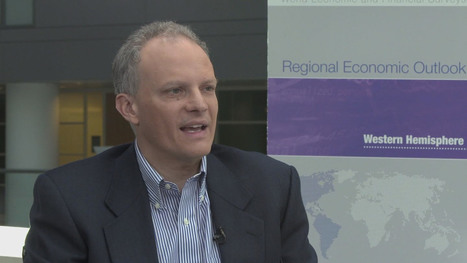
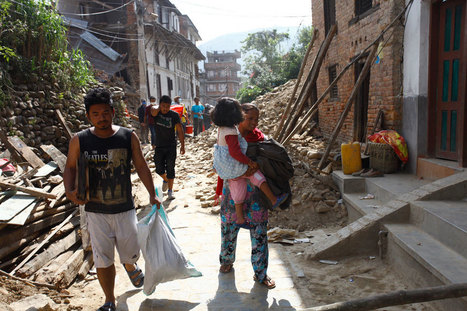
Breaking News GENEVA / SEX ABUSEJournalists and media organisations are being asked to exercise restraint in their handling of information about serious allegations of sexual exploitation and abuse of children by French military personnel in the Central African Republic, the Office of the High Commissioner for Human Rights (OHCHR) said Friday during a news briefing in Geneva. OHCHR Posted at: May 1, 2015 11:22 am Duration: 02:40 Available in: SD HD-NTSC HD-PAL SOUTH SUDAN / PRESS FREEDOM DAYThe UN Mission in South Sudan helped organize a four-day training as part of activities to mark World Press Freedom Day, which is observed on 3 May. UNMISS Posted at: May 1, 2015 12:26 pm Duration: 02:54 Available in: SD HD-NTSC HD-PAL GENEVA / BURUNDI PROTESTSAs protests continue in Burundi against President Pierre Nkurunziza’s decision to stand for re-election in June for a third term, authorities in the country are being urged to respect the human rights of protesters. UNTV CH Posted at: May 1, 2015 11:50 am Duration: 01:43 Available in: SD HD-NTSC HD-PAL FAO / NEPAL AIDThe Food and Agriculture Organization of the United Nations (FAO) says it needs around $8 million in urgent aid to respond to the aftermath and damage from the earthquake in Nepal, that killed thousands and left some 3.5 million people in need of food assistance.FAO / FILE Posted at: May 1, 2015 1:21 pm Duration: 01:28 Available in: SD HD-NTSC HD-PAL UN / WORLD PRESS FREEDOM DAYFreedom of the press facilitates the exercise of the rights of society, an international freedom of expression expert told a UN World Press Freedom Day conference Friday. UNIFEED- UNTV Posted at: May 1, 2015 1:53 pm Duration: 01:30 Available in: SD HD-NTSC HD-PAL UN / DPRK SIMONOVICDuring a meeting disrupted by a North Korean delegate, UN Human Rights official Ivan Simonovic said "it is my sincere hope that the international community will continue to examine ways to prevent and punish the crimes that are being perpetrated in the DPRK today." UNIFEED-UNTV Posted at: April 30, 2015 3:08 pm Duration: 03:15 Available in: SD HD-NTSC HD-PAL NEPAL / WFP IN REMOTE AREASThe World Food Programme is using helicopters to deliver food to earthquake-stricken villages in the remote areas of Nepal. WFP Posted at: April 30, 2015 1:00 pm Duration: 02:26 Available in: SD HD-NTSC HD-PAL NEPAL / CHILD FRIENDLY SPACESThe UN's Children's Fund, UNICEF has opened a child-friendly space in a camp for people displaced by the recent earthquake in Nepal. UNICEF Posted at: April 30, 2015 4:21 pm Duration: 03:21 Available in: SD HD-NTSC HD-PAL IMF / NEPAL AIDAn International Monetary Fund spokesman said Thursday that the IMF is ready to send a team to Nepal to assess all options how the agency might be able to help the country with its financing. IMF Posted at: April 30, 2015 4:41 pm Duration: 02:10 Available in: SD HD-NTSC HD-PAL UNESCO / JAZZ DAYSome 185 countries worldwide Thursday took part in the fourth annual International Jazz Day, the UN's cultural organization, UNESCO said. UNESCO Posted at: April 30, 2015 3:18 pm Duration: 01:13 Available in: SD HD-NTSC HD-PAL NEPAL / RELIEF SUPPLIESTwo flights arrived Wednesday at Nepal's Kathmandu airport with much-needed supplies, including water-purification tablets, family hygiene kits, tents and tarps for the population affected by the earthquake. UNICEF Posted at: April 29, 2015 11:59 am Duration: 02:20 Available in: SD HD-NTSC HD-PAL NEPAL / EARTHQUAKE 1According to UNICEF, around 1.7 million children are now in urgent need of aid in the areas worst-hit by the earthquake in Nepal. The United Nations children's organisation launched a (USD) 50.35 million appeal to get humanitarian assistance to children and their families amid growing risk of disease outbreaks. UNICEF Posted at: April 29, 2015 3:59 pm Duration: 02:18 Available in: SD HD-NTSC HD-PAL IMF / LATIN AMERICA OUTLOOK 2Growth in Latin America and the Caribbean is expected to decline for a fifth consecutive year—dipping below 1 percent in 2015—although there are clear differences along North-South lines, the IMF said in its latest regional forecast. IMF / RECENT (ENGLISH VERSION) Posted at: April 29, 2015 1:01 am Duration: 02:30 Available in: SD HD-NTSC HD-PAL IMF / LATIN AMERICA OUTLOOK 1Growth in Latin America and the Caribbean is expected to decline for a fifth consecutive year—dipping below 1 percent in 2015—although there are clear differences along North-South lines, the IMF said in its latest regional forecast. IMF / RECENT (SPANISH VERSION) Posted at: April 29, 2015 3:34 pm Duration: 02:30 Available in: SD HD-NTSC HD-PAL NEPAL / EARTHQUAKE 2According to UNICEF, around 1.7 million children are now in urgent need of aid in the areas worst-hit by the earthquake in Nepal. The United Nations children's organisation launched a (USD) 50.35 million appeal to get humanitarian assistance to children and their families amid growing risk of disease outbreaks. UNICEF Posted at: April 29, 2015 4:14 pm Duration: 01:00 Available in: SD HD-NTSC HD-PAL UN / KICILLOF ARGENTINA PRESSERAsked about similarities between Greece today and Argentina in 2001, Argentine Finance Minister Axel Kicillof told reporters "it's very concerning because it means we haven't made any progress which goes back to this international financial architecture; and that's deficient because it asks for more from those who need the most." UNIFEED-UNTV Posted at: April 29, 2015 6:14 pm Duration: 00:55 Available in: SD HD-NTSC HD-PAL UNESCO / AMANPOURCNN correspondent Christiane Amanpour Wednesday became UNESCO Goodwill Ambassador for Freedom of Expression and Journalist Safety in a ceremony at the Organization's Headquarters in Paris. UNESCO Posted at: April 29, 2015 1:12 pm Duration: 01:10 Available in: SD HD-NTSC HD-PAL WHO / ANTIBIOTIC RESISTANCEThe World Health Organization Wednesday warned that abuse of antibiotics means that the medicines are losing their effect. WHO Posted at: April 29, 2015 11:53 am Duration: Available in: SD HD-NTSC HD-PAL UNMEER / NEW CHIEFThe outgoing Chief of the United Nations Mission for Ebola Emergency Response , Ismail Ould Cheikh Ahmed warned against complacency, before living Monrovia Wednesday. UNMEER Posted at: April 29, 2015 4:42 pm Duration: 02:37 Available in: SD HD-NTSC HD-PAL UN / SYRIAN OPPOSITIONThe head of a Syrian opposition group today asked the UN Security Council for a safe zone in Syria. UNIFEED-UNTV Posted at: April 29, 2015 6:29 pm Duration: 00:43 Available in: SD HD-NTSC HD-PAL Outlook ALL STORIES ARE AVAILABLE AT www.un.org/unifeed UNIFEED RUNDOWN FOR FRIDAY, 1 MAY 2015 GENEVA / BURUNDI PROTESTS (1:43) As protests continue in Burundi against President Pierre Nkurunziza’s decision to stand for re-election in June for a third term, authorities in the country are being urged to respect the human rights of protesters. UNTV CH SOUTH SUDAN / PRESS FREEDOM DAY (2:54) The UN Mission in South Sudan helped organize a four-day training as part of activities to mark World Press Freedom Day, which is observed on 3 May. UNMISS UN / WORLD PRESS FREEDOM DAY (1:30) Freedom of the press facilitates the exercise of the rights of society, an international freedom of expression expert told a UN World Press Freedom Day conference Friday. UNIFEED- UNTV GENEVA / SEX ABUSE (2:40) Journalists and media organisations are being asked to exercise restraint in their handling of information about serious allegations of sexual exploitation and abuse of children by French military personnel in the Central African Republic, the Office of the High Commissioner for Human Rights (OHCHR) said Friday during a news briefing in Geneva. OHCHR FAO / NEPAL AID (1:28) The Food and Agriculture Organization of the United Nations (FAO) says it needs around $8 million in urgent aid to respond to the aftermath and damage from the earthquake in Nepal, that killed thousands and left some 3.5 million people in need of food assistance. FAO / FILE ================================================== UNifeed distributes video from throughout the UN system to a global network of news providers. To download stories in broadcast quality and to access stories, scripts and more information, please visit www.un.org/unifeed. UNifeed’s 10-minute daily satellite transmission (Monday – Friday 2145-2155 GMT) is available on APTN’s Global Video Wire. May 2015MTWTFSS « Apr 12345678910111213141516171819202122232425262728293031 This page
is safe Bitdefender Antivirus Plus
Today's Today's UN Radio Daily News Programme Updated at 1800 GMT, Monday to Friday
Global Ebola Response App Free App - Download Now: iPhone | Android Programmes from UN Headquarters This page
is safe Bitdefender Antivirus Plus
- Home
- Noon Briefings
Noon Briefings 1 May 2015 The Secretary-General calls on all parties in Yemen to ensure that humanitarian agencies and their partners have safe and reliable access to bring aid workers and supplies into the country and to deliver aid to millions of people in need. 30 April 2015 Under-Secretary-General for Humanitarian Affairs Valerie Amos arrived in Kathmandu, Nepal’s capital, today to meet with Government officials, community leaders and families affected by the earthquake there. Her office reports that the death toll now stands at nearly 5,600. 29 April 2015 The Secretary-General condemned the shelling and aerial bombardment of the Yarmouk refugee camp in Damascus despite assurances from the Syrian Government that the camp would not be attacked while civilians remained inside. He also called on the Government to immediately end any military operation endangering civilian lives in the camp. 28 April 2015 This morning, in Rome, the Secretary-General delivered the opening remarks at the Vatican for a symposium on climate change organized by the Pontifical Academy of Sciences, which brought together faith leaders, civil society representatives and political leaders. 27 April 2015 The Secretary-General transmitted today to the Security Council and other bodies the public summary of the Board of Inquiry regarding incidents affecting United Nations personnel, premises and operations in the Gaza Strip during the recent conflict. 24 April 2015 This morning, UN Humanitarian Chief Valerie Amos, the World Food Programme’s Ertharin Cousin as well as the High Commissioner for Refugees and his Special Envoy Actress Angelina Jolie [Pitt] briefed the Security Council on the Syria humanitarian crisis. Ms. Amos stressed that there is no humanitarian solution to the crisis, adding that the only solution is through political dialogue. 23 April 2015 The Secretary-General today spoke at the Security Council debate on the role of youth in countering vilent extremism and promoting peace. He stressed that youth lay at the heart of international peace and security. 22 April 2015 The Secretary- General condemns the wave of xenophobic violence in South Africa that has resulted in the deaths of at least seven people in the past few weeks. He urges all efforts are made to avert future attacks and encourages peaceful solutions. 21 April 2015 Addressing the Security Council, the Secretary-General said that both Israelis and Palestinians must demonstrate the commitment and courage necessary to chart a viable course towards a better future, by choosing peace over death and ending the suffering that has defined the conflict for far too long. 20 April 2015 The Secretary-General condemns in the strongest terms the attack this morning on a United Nations vehicle in Somalia’s Puntland region that killed four United Nations staff and three other people, while injuring several others. He said terrorist attacks won’t diminish the United Nations commitment to work for the cause of peace in the country. Search Search for documents and statements
Daily Noon Briefing 1 May 2015The Secretary-General calls on all parties in Yemen to ensure that humanitarian agencies and their partners have safe and reliable access to bring aid workers and supplies into the country and to deliver aid to millions of people in need. Highlights Resources
Meetings Coverage & Press Releases United Nations © 2014, New York, NY 10017 About us News & Media Resources
This page
is safe Bitdefender Antivirus Plus
United Nations News Centrewith breaking news from the UN News Service - Sunday, UN marks World Press Freedom Day…
- UN Forum on Forests opens 11th session Monday…
- General Assembly on Tuesday honours all victims of Second World War…
Featured VideoThis Week at the UN - 1 May 2015 NewsmakersYukiya Amano When I became the Director General, I said that as I come from a country with the experience of Hiroshima and Nagasaki, I will stay firm against the proliferation of nuclear weapons.More »
Headlines at a glance4 May In Nepal, senior UN official warns ‘clock is ticking’ for earthquake relief efforts 3 May Nepal: opening first field hub, UN health agency expands support to areas cut off by quake On World Press Freedom Day, UN says free expression vital for global sustainability 2 May Amid reports of new attack on Yarmouk camp, UN agency urges Syria to halt military operations in civilian areas 'Nepal is not alone,' UN and EU aid chiefs say, reaffirming commitment to assist quake-hit country 1 May Central African Republic: UN investigation into sexual abuse allegations continues Alarmed by Burundi media curbs, UN human rights office reiterates call for free and fair elections Security Council demands immediate end to hostilities in Mali, urges parties to abide by ceasefire Maldives: UN rights office says trial of former President politicized, unfair UN event addresses gender equality and safety of journalists ahead of World Press Freedom Day UN-backed Expo in Milan spotlights need to ensure healthy, safe and sufficient food for all Amid spike in arrivals, number of South Sudanese refugees in Ethiopia passes 200,000 – UN In Nepal, top UN official urges continued funding for earthquake relief efforts UN envoy to kick-off Syria talks in Geneva next week 30 April Outgoing UN rights expert advises Cambodian leaders to address democratic deficit UN relief wing says unrest continues in Burundi, requests funds for humanitarian contingency planning Children in 15 of 26 industrialized countries in UN survey lack access to child rights education Ban calls for civilian protection in Yemen, urges ceasefire as fuel shortages hamper relief efforts One in three Europeans potentially exposed to asbestos, new UN study shows Arriving for talks in Gaza, new UN envoy urges Palestinian unity, end to Israeli blockade UNESCO chief condemns killing of journalist in Democratic Republic of the Congo Nepal: quake’s impact on food security likely ‘very high,’ warns UN agency International Jazz Day: UN spotlights power of music to build ‘bridges of respect and understanding’ 29 April New UN special envoy on Ebola response makes first visit to Sierra Leone Ban calls for immediate end to hostilities in northern Mali amid surge in violence UN envoy Gordon Brown welcomes release of 200 Nigerian girls held captive by Boko Haram In Paris, Ban discusses Mediterranean crisis and climate change with President Hollande Draft political deal for Libyan parties is ‘work in progress,’ UN envoy tells Security Council UN chief expresses ‘deep regret’ about executions of eight people in Indonesia Systems to combat antibiotic resistance lacking globally, UN health agency warns Christiane Amanpour named UNESCO Goodwill Ambassador for Freedom of Expression World has learned ‘too little’ from past, says Ban on Day of Remembrance for chemical warfare victims UN and partners launch $415 million appeal to aid quake-stricken Nepal Somalia registers record export of livestock in 2014 due to trade boost with Gulf States Ban condemns attack on Yarmouk, as UN agency delivers 'critical' relief to displaced in camp UN rights experts welcome US review of lethal drone attacks, urge transparency and accountability 28 April Mali: senior UN official urges parties to ‘immediately cease hostilities’ Global tide of nuclear abolition has ebbed causing tensions among nations, Ban warns UN peacekeeping chief wraps up trip to Central African Republic as Mission reaches full strength Yemen: UN warns of impact to relief efforts amid ongoing fighting across country Top UN official in South Sudan urges release of remaining child soldiers Air pollution in Europe costs $1.6 trillion a year in deaths and diseases, UN study shows Security Council extends UN Western Sahara mission through April 2016 UN refugee agency assists hundreds of Libyans rescued at sea as Europe responds to migration crisis Burundi: Ban condemns election-related violence after President nominated as candidate At Vatican meeting, UN chief and Pope Francis discuss climate change, Mediterranean migration On World Day, UN labour agency urges culture of prevention on occupational safety and health Dip in Southern Africa’s maize harvest could push up prices and boost import needs, UN warns Ban ‘deeply concerned’ over uptick in attacks against peacekeepers in Darfur UN allocates $15 million in emergency funds for Nepal earthquake response 27 April Cyprus: UN envoy welcomes new Turkish Cypriot leader’s commitment to negotiations New sustainability agenda must harmonize humanity's relationship with planet – UN Assembly President Gaza: Security Council receives report of inquiry into incidents during 2014 conflict Aboard Italian navy ship, Ban urges collective action to ease plight of migrants crossing Mediterranean New UN platform aims to bring pastoralists’ voices to global decision-making stage Burundi: UN working to help relocate civilians fleeing election-related violence At meeting on nuclear disarmament, UN chief warns of ‘dangerous return’ to Cold War mentalities UN warns Central African Republic is becoming largest forgotten humanitarian crisis New UN report finds bulk of world’s rural populations excluded from healthcare access UN agency unveils alternative policy agenda to transform economies, make gender equality a reality Nepal: UN agencies rush supplies to earthquake survivors amid powerful aftershocks Welcoming peaceful presidential election in Togo, Ban calls for continued calm atmosphere 26 April UN agency alarmed by malnutrition among children displaced from Yarmouk camp UN responds to destruction, displacement in wake of Nepal earthquake Marking anniversary of Chernobyl disaster, Secretary-General reiterates UN's commitment to those affected 25 April Secretary-General appoints new acting Special Representative for UN Mission against Ebola UN chief urges Indonesia not to execute 10 people on death row for drug crimes Secretary-General appoints Ismail Ould Cheikh Ahmed as new special envoy for Yemen UN official in Darfur says mission's peacekeepers acted proportionately in response to attacks Nepal: Ban sends his condolences after earthquake hits Kathmandu Valley Welcoming progress in fight against malaria, Ban calls for more work to continue momentum 24 April Welcoming Myanmar’s visible strides, Ban says ‘much more hard work lies ahead’ UN resumes vaccination drive for three million children in West Africa On eve of Togo national election, Ban calls for calm and transparency Ban appoints new deputy head of humanitarian operations in Lebanon UNICEF welcomes final release of child soldiers by armed group in South Sudan Amid rising death toll in Yemen, UN urges humanitarian access, respect for international law Security Council must match scale of Syria crisis with 'bold response' – UN relief officials Mediterranean crisis: UN welcomes EU measures on migrants, urges more comprehensive action Libya: UN condemns ‘horrific’ week of human rights violations amid county’s rising violence UN rights chief urges UK to curb tabloid hate speech, end ‘decades of abuse’ targeting migrants During Azerbaijan visit, UN experts welcome 'unhindered access' to places of detention UN mission peacekeepers repel two attacks in South Darfur UN forum in Morocco agrees draft action plan for religious leaders on preventing incitement to violence Mali: Ban voices concern over series of targeted attacks against UN mission and personnel 23 April In Morocco, UN-backed forum highlights role of religious leaders in preventing atrocities UN Assembly President urges collective action to end intolerance, promote reconciliation On ‘Girls in ICT Day,’ UN urges increased opportunity in information and communications technology UN relief workers press ahead with effort to reach Yarmouk camp in Syria Fight against malaria must be taken to 'next level', UN agency urges ahead of World Day Ebola: UN launches push to engage more women, community leaders in fight against disease Eight months after Gaza war, ‘not a single home has been rebuilt’ – UN agency Hostile parties in South Sudan’s Malakal urged to respect UN personnel and property UN urges Europe to ‘put human life, rights and dignity first’ in response to Mediterranean crisis ‘Youth represent promise – not peril,’ Ban tells Council debate on countering extremism Conflict taking ‘immense’ toll on Yemen civilians, UN relief official warns On World Book Day, UN hails reading and writing as pillars of sustainable societies 22 April Ban condemns deadly xenophobic violence in South Africa UN health agency reports deaths top 1,000 in Yemen, hospitals risk shutdowns amid hostilities Ahead of World Immunization Week, UN warns global vaccination targets ‘far off track’ This page
is safe Bitdefender Antivirus Plus
Convention on the Rights of the Child Counting on the data revolution Child Rights in Uzbekistan Convention on the Rights of the Child UNICEF’s child-friendly school approach has become a model for primary school in Burkina Faso. Across the country, more than 400 such schools are helping to create a better future for more than 67,000 children eager to learn and grow. " /> Read the results of a study that explores child rights education in early childhood education, primary and secondary schools in 26 countries. The State of the World’s Children calls for brave and fresh thinking to address age-old problems that still affect the world’s most disadvantaged children. The report calls for innovation to benefit every child. After 25 years of the Convention on the Rights of the Child, it's time to ask: Is the world a better place for children? Not everyone agrees in this latest UNICEF publication. UNICEF’s child-friendly school approach has become a model for primary school in Burkina Faso. Across the country, more than 400 such schools are helping to create a better future for more than 67,000 children eager to learn and grow. " /> Read the results of a study that explores child rights education in early childhood education, primary and secondary schools in 26 countries. The State of the World’s Children calls for brave and fresh thinking to address age-old problems that still affect the world’s most disadvantaged children. The report calls for innovation to benefit every child. After 25 years of the Convention on the Rights of the Child, it's time to ask: Is the world a better place for children? Not everyone agrees in this latest UNICEF publication. The Convention on the Rights of the Child is the most rapidly and widely ratified international human rights treaty in history. The Convention changed the way children are viewed and treated – i.e., as human beings with a distinct set of rights instead of as passive objects of care and charity.
The unprecedented acceptance of the Convention clearly shows a wide global commitment to advancing children’s rights.
There is much to celebrate as we mark the 25th anniversary of the Convention, from declining infant mortality to rising school enrolment, but this historic milestone must also serve as an urgent reminder that much remains to be done. Too many children still do not enjoy their full rights on par with their peers.
Business as usual is not enough to make the vision of the Convention a reality for all children. The world needs new ideas and approaches, and the Convention must become a guiding document for every human being in every nation. Read Convention history on the CRC @ 20- UNICEF
- UNICEF and the UN
- UNICEF in depth
- Partners
- Connect and subscribe
This page
is safe Bitdefender Antivirus Plus
The Charter of the United Nations was signed on 26 June 1945, in San Francisco, at the conclusion of the United Nations Conference on International Organization, and came into force on 24 October 1945. The Statute of the International Court of Justice is an integral part of the Charter.
Charter of the United Nations This page
is safe Bitdefender Antivirus Plus
Next MUN Workshop in New York November 2015 Stay Tuned! 2015 MUN Workshop at a Glance Basic Facts The Department of Public Information is planning a Workshop in New York in mid-November 2015. More details will be posted soon.
This workshop is being organized in conjunction with the 2015 World Federation of UN Associations International Model UN (WIMUN) that will take place in New York from 10-14 November. WIMUN is completely based on the UN4MUN approach. Therefore, those who attend the workshop will have the unique opportunity to observe the UN4MUN approach in action following the workshop if they are able to extend their visit. Students who want to participate in the workshop and then as a delegate in WIMUN are welcome to do so but must register separately. Eligibility This workshop is designed for students and MUN advisors who organize MUN simulations or have participated in a MUN conference. Any student who has had a leadership role in organizing a conference or has participated as a delegate is eligible to apply. Applicants are required to have participated in at least one Model UN simulation prior to the workshop and must be able to communicate in English.
Faculty advisors who have a role in training or supervising students who organize or participate in MUN conferences are also eligible.
Registration The call for applications will be announced in March 2015. There is no registration fee for students or faculty advisors who are eligible to attend the 2015 MUN Workshop in New York. However, once accepted, participants will be responsible for all travel and living costs during the workshop. Workshop Content The workshop will focus on giving students and MUN advisors a basic understanding of the Rules of Procedure used by the General Assembly and Security Council, how decisions are made in these two Organs of the UN, what you need to know when drafting resolutions, the duties and responsibilities of the UN Secretariat, General Assembly and Security Council officials, the negotiation process that takes place during informal meetings, how consensus is achieved, how to chair meetings, the differences between UN4MUN and other MUN programmes and more.
The aim of the workshops is to examine how Model UN simulations can more accurately capture the negotiation process as it commonly occurs at the UN. This page
is safe Bitdefender Antivirus Plus
Meet our Global Workforce / Job Network: Job Family: / Department/Office: Duty Station: By date posted: This page
is safe Bitdefender Antivirus Plus
Skip to content Welcome to theUnited NationsTour the international UN Headquarters Learn MoreWhat to see and doInside the UNDiscover information, briefings, exhibits and shops Learn moreLearn more aboutthe UN Visitor CentreMeet our guides and have your questions answered Learn more 405 E 42nd Street
(46th St & 1st Ave)
New York, NY 10017 Event SG tours the renovated UN Visitors Centre09 March 2017 The Secretary-General recently toured the UN Visitors Centre after 18 months of renovation in the first basement of the iconic General Assembly Building. The staff of the Visitors Centre warmly we
This page
is safe Bitdefender Antivirus Plus
NGO Branch Department of Economic and Social Affairs How to Apply for Consultative Status Française | Español | عربي Please follow the steps below to complete your application for consultative status online. 1. Profile registration Your organization must have a registered profile before starting the application for consultative status. Before registering your organization, please check first, if your organization has not already been included. Many organizations that have participated in United Nations sponsored conferences have been added to this database. The profile registration will take about 10 minutes. Once completed, your profile will be reviewed by a substantive officer of our Branch. You will be informed by email when your registration has been accepted. It might take a few days for your profile to be approved. Please ensure that you do not submit your profile more than once. 2. Online application: Questionnaire + Summary + Supporting Documents As the next step, after you are notified that your profile registration was accepted, your organization has to submit the application, containing the online questionnaire and summary, and the supporting documents. The online application form can only be accepted in the two UN Secretariat working languages: English and French. All required documents submitted excluding publications should also be translated in English or French. If a document is too long, a translated summary may be accepted. Before applying you may want to check out the questionnaire and some hints to fill it out. Questionnaire of the Application for Consultative StatusComponents of supporting documents are: - Copy of constitution/charter and/or statutes/by-laws and amendments to those documents (pursuant to paragraph 10 of ECOSOC resolution 1996/31).
- Copy of certificate of registration. According to resolution 1996/31 an organization "should attest that it has been in existence for at least two years as at the date of receipt of the application by the Secretariat". Please provide a copy of the registration paper or, if your country does not require registration, please provide other proof of existence.
- Copy of most recent financial statement and annual report.
- Optional: Copy of examples of your publications and recent articles or statements.
- Optional: Organization chart (if available).
Completed applications must be received by June 1st of the year before the NGO wishes to be considered for recommendation by the Committee. For example, complete applications (which include a completed questionnaire and all the required supporting documentation) submitted to the NGO Branch by 1 June 2015 will be taken up by the Committee on NGOs in the year 2016. Applications received between 2 June 2015 and 1 June 2016 will be taken up in the year 2017. Login hereto submit your application online. - Click on the Consultative Status tab to start filling out the application form.
- Supporting documents can be uploaded by using the Documents tab.
3. NGO Branch screening of applications The period between 1st June and the date the Committee meets is dedicated by the NGO Branch to review the applications. During this time the NGO may be contacted and asked for more information or clarifications. Only after reviewed by an officer and considered complete, an application is submitted to the NGO Committee. When an application becomes part of the agenda of the NGO Committee a letter is sent to the NGO informing them of the upcoming session and inviting to send no more than two representatives to be present during the session. The presence of NGO representatives in the room is in no way mandatory and it does not imply any advantages. NGOs simply have the right to be present when their applications are being considered. Considering the cost involved in traveling to New York most NGOs do not attend the first time they are being considered. If the application raises many questions from member countries and gets deferred to another session, NGOs might consider useful to be present at the following session in order to be able to reply in person and avoid being deferred again. Among other requirements for obtaining consultative status are the following: - Applying organization's activities must be relevant to the work of ECOSOC;
- The NGO must have been in existence (officially registered) for at least 2 years in order to apply;
- The NGO must have a democratic decision making mechanism;
- The major portion of the organization's funds should be derived from contributions from national affiliates, individual members, or other non-governmental components.
4. The Committee on Non-Governmental Organizations The Committee meets twice a year to decide which NGOs applying for consultative status it will recommend to the ECOSOC Council. During its Session, the Committee may ask questions to the NGO. Such questions are sent to the NGO by the Secretariat and should be replied by the NGO as fast as possible in order to help the Committee make a decision and avoid getting deferred to future sessions. The Committee RecommendsThe Committee recommendations are published in a report and submitted to the next ECOSOC meeting for final approval. Official notification is sent to all reviewed NGOs, informing them about the Committee's recommendation. The Committee may decide to defer an application review until the next session, pending clarifications and answers to questions asked to the NGO. 5. ECOSOC Final Decision When the Council finally approves the Committee recommendation to grant consultative status to an NGO, official notification is sent by the Secretariat. NGOs granted General or Special consultative status must submit to the Committee on Non-Governmental Organizations, every fourth year, a brief report of their activities, in particular regarding their contribution to the work of the United Nations (Quadrennial Report).
This page
is safe Bitdefender Antivirus Plus
This is the official Web Site of the United Nations Cartographic Section in New York. Here you will find UN Peacekeeping maps, country profile maps, and geographical information.
Welcome to the
United Nations
Cartographic Section
Department of Field Support French version - Russian Version Maps General Maps
More than 100 General Maps are available currently. Maps are in PDF format for best display and print results.
Thematic maps
More Maps
¤ Withdrawal Line of Israeli forces in Lebanon
¤ The Kumanovo-Vranje Corridor
¤ UN Civilian Staff Distribution
¤ UN Civilian Staff Locations
¤ The World in 1945
¤ The World today
¤ Area of Bakassi
¤ Okavango map
Mission MapsDisplay, save or print the latest deployment maps and political operations. Maps are in PDF format for best display and print results. Click and select a mission map in the menu box below. Links to DPKO missions web sites are also available. Peacekeeping and Peacebuilding maps ¤ U.N. Peacekeeping Operations
¤ U.N. Peacekeeping Operations Image
¤ U.N. Political and Peacebuilding Missions
¤ U.N. Political and Peacebuilding Missions Image
Geographic Resources and Information Working Group
UNGGIMThe UN Programme on Global Geospatial Information Management (GGIM) aims at playing a leading role in setting the agenda for the development of global geospatial information and to promote its use to address key global challenges. UNGIWGThe United Nations Geographical Information Working Group has been established in March 2000. UNGEGNLink to the UNGEGN web site (United Nations Group of Experts on Geographical Names)
Documentation
Map LibraryThe Map Collection houses over 80,000 maps, some 3,000 atlases, gazetteers, travel guides, cartographic and geographic reference works as well as digital cartographic products.
IMPORTANT NOTICE & DISCLAIMER:
LINKS TO OTHER WEB SITES:
This is the United Nations cartographic web site. Links to other sites are provided for information only. The inclusion of these links and their content does not imply official endorsement or approval whatsoever by the United Nations.
DESIGNATIONS USED:
The depiction and use of boundaries, geographic names and related data shown on maps and included in lists, tables, documents, and databases on this web site are not warranted to be error free nor do they necessarily imply official endorsement or acceptance by the United Nations.
COPYRIGHT NOTICE:
Unless otherwise noted, the maps included on this web site are produced by the Cartographic Section and are copyrighted by the United Nations. Reproduction of any part without the permission of the copyright owner is unlawful. Reproduction of any part without the permission of the copyright owner is unlawful. Please contact us for any questions regarding publication permissions.
This site has been prepared by the Cartographic Section, DFS. We suggest that you read the F.A.Q before any requests. Thanks!
Copyright © 1999-2007, United Nations This page
is safe Bitdefender Antivirus Plus
|
Detroit – water not flowingby Francis Mead Motown = Motor City = famous artists = cars = shut-off water supplies = UN = human rights. Huh? Detroit combines all of the above. Two UN human rights reporters – officially they're called "Special Rapporteurs" – visited the Michigan city recently, after local groups appealed to them for help. Why? Because the city, bankrupt and desperately in need of revenue, had decided to cut people's water supplies off in an attempt to force them to pay their bills. Almost half the city's residences were in arrears. The Special Rapporteurs said that it’s a human rights violation to cut water supplies to someone who can’t afford to pay – and they pointed out that some countries have simply made it illegal to cut off anyone’s water for any reason – on public health grounds. The story got international attention – and we (myself, cameraman Antonio Tibaldi, and drone photographer Parker Gyokeres) went to make a film about what it all meant. We filmed with Rochelle McCaskill who'd had her water cut off. She's struggling with lupus and simply can't keep up with the bills, because her disability benefits aren't enough to pay the rent AND the water bill. Essentially, this is a film about urban poverty in a wealthy Western country – not unheard of, of course in many other industrialized countries. But Detroit is an extreme example of urban deterioration. Known as the Motor City, because of its association with the giants of the automobile industry – Ford, Chrysler, General Motors – its revenues have plummeted as the industry contracted under international competition. Then, after major rioting in the 1960s, there was a massive flight of middle class families out of the city. The city's population has gone down from nearly two million to 700,000 now. Fewer people mean it's harder and more costly to maintain services – which then become more expensive and less affordable. A horrible spiral, that's left some of the very poor in an impossible situation. Detroit's mayor has put in place repayment plans and is raising money to help the very poor – but some criticize the repayment plans as too inflexible – and the extra money hasn't reached people like Rochelle McCaskill. Thousands are still being cut off. So life is hard, very hard for Rochelle and her family. But we found an unexpected link which completed the chain back from water, human rights, and the UN – all the way back to Motown. Because Rochelle's uncle composed the famous hit song "What becomes of the Brokenhearted" while she was literally sitting on his knee! She paints to the music – and while she does, she finds the peace of mind the song talks about. A short extract from the film. (Full fim here.) Preserving the Forests in the Solomon Islandsby Gill Fickling Eight pm on a Friday evening. My skype pings with an incoming message. It's my cameraman/fixer, Wade Fairley, in the Solomon Islands where I'm due to be joining him the following Monday to shoot two stories for "21st Century". There's been a tragedy. The small boat we were to travel in the next week to a remote island in the Western Province to cover a story on sustainable logging has gone down in a storm. Five of the seven people on board have been drowned, including employees of the non-governmental organisation we were to have worked with and the boat's captain. Boat-travel in the Solomon Islands is essential but hazardous. These small vessels with outboard motors often sail heavily overloaded risking storms, high winds and dangerous currents. But with few roads across the almost 1000 islands that make up the country and the price of air-travel exorbitant, voyaging by sea is usually the only option for locals.
This was a devastating catastrophe for the local people on the island of Vella Lavella, where we were to have filmed one of the few communities in the country who engage in sustainable timber production. And we now needed a new story – fast! Furious activity, largely by Wade, during the next 24 hours, the real threat of cancellation spurring us on, resulted in an alternative story and the shoot was saved. But after a 30 hour flight to Honiara, the capital, followed the next day by an bumpy hop in a small plane to another island in the Western Province, we then needed to board the same type of boat as recently sank to take us to the community of Zaira, on the "ocean" side of the island of Vangunu. The captain warned that the swell was rising and the winds were increasing, so we needed to leave as soon as possible. With six of us on board, our camera equipment safely stored in waterproof bags and covered in a plastic sheet, we set off – firstly across the tranquil turquoise waters of the Marovo Lagoon, and then out into the open sea. I have probably never been more terrified! The waves dwarfing our small vessel were 3 metres high – walls of water alongside us, many of them breaking on the top – the sky grey and foreboding, and the wind howling. We clung on to the wooden slats across the tossing boat which served as benches for two and a half hours, drenched with sea spray. Whenever the boat rose to the top of a wave, I eyed the rocky shore and calculated which part I thought I could swim to when we capsized. But, thanks to the impressive proficiency of the captain, we didn't – although the sea was too rough to land at our destination so we went on further to a sheltered bay and then hiked two hours the next day, along the beach and through the forest to reach the village of Zaira. Eight local men helped us carry all the gear!
Arriving eventually in Zaira was like stepping into paradise! Not only were we alive, but we had walked into a time-warp – no electricity, no running water, no phone network, no shops but an abundance of warm hospitality and a pristine environment of wooden huts with palm-leaf roofs surrounded by one of the few swathes of virgin forest in the region, untouched by commercial loggers. For the next five days, we lived in a village house, eating what they ate and bathing in the local river as they did. We filmed how they harvested just what they needed from the forest – individual hardwood trees to build the roof of their new church; "maria" nuts, similar to Brazil nuts, which form a staple of their diet – each family knows which tree is theirs to harvest; and root vegetables planted in forest clearings. But not only does the forest provide for most of their needs, the villagers are now involved in a new scheme to help finance its future; the development of eco-tourism. Through the protection of their forest and sustainable management of its resources, they hope to attract visitors, charmed by the simplicity of the life-style and beauty of the surroundings. This kind of venture, which combines forest management with the provision of livelihoods for small communities, is heralded by the UN Forum on Forests, with whose support this film was being made. UN Television is producing four films for UNFF this year to showcase similar examples of sustainable forest financing around the world (see link to film from Trinidad and Tobago – "Saving the Turtles" on how forests contribute to the preservation of Leatherback Turtles and livelihoods for local people).
Leaving Zaira was a challenge – both physically, as the boat had to be launched off a platform of rocks, dodging the breaking waves and nearby reef – and emotionally. With a huge respect for these people, who tackle these hazardous boat-rides as though jumping in a cab to the supermarket, it had been a privilege for me to share their life-style in this, one of the most remote corners of the globe I had ever visited. And now I felt sad to leave this place where nature both provides and is respected, where deadlines are non-existent and the pace of daily-life allows time for people to be nice to each other! As their chief, remarkable 74 year-old Green Jino, who has systematically resisted economically-attractive offers from loggers to sell his people's land and future, says:
"Our children, our children's children, where will they go if we destroy the land? I will never sell the land because people are important and land is important for the future."
See "21st Century" feature from the Solomon Islands – "The Wood for the Trees". Akhtar’s Storyby GILL FICKLING When I first met Akhtar in 2009, he was dirty, hungry, disillusioned and scared. He was then living in a squalid camp of flimsy cardboard boxes in Greece's western port city, Patras, along with 1600 other Afghan boys and men who, like him, had come with hope of finding a new life in Europe. Destitute without food or the right to earn a living, hounded by the authorities and unable to either leave the country, or to legally stay, Akhtar, like those around him, had reached a dead end. He told me "This is like living like animals … I think I've come to the wrong place". I was in Greece with cameraman, Sebastian Rich, to shoot a story for "21st Century" on Europe's migration issue, and, in this case, Greece's inability to cope with the influx of asylum hopefuls. Akhtar's was the human face of this "problem". The film, called "Dead End", was distributed in our series in 2009. It would be four years before I would meet him again, when I shot a follow-up film with him, a long way from where we first met. Amidst the sea of desperation in Greece, Akhtar stood out because of his gentleness, humility and intelligence. Fluent in 5 languages, including English which he learnt while growing up in a UN Refugee Agency camp in Pakistan, Akhtar had been threatened by the Taliban on his return to Afghanistan, which led him to believe his life was in danger. Using family savings, he fled, paying traffickers to bring him on a hazardous, 2-month journey across Iran and Turkey, to Europe – where he hoped to find safety. He also hoped to be allowed to study, to get a good job and to support his widowed mother in Afghanistan and his younger siblings' education. Akhtar was then just 18 – the same age as my daughter – and I was deeply touched by his courage and determination, and the burden of responsibility he carried at such a young age. But he never dreamed that his welcome to Europe would be such a cold one. Desperate to get out of the impossible situation in Greece, each day, he would head down to the port where, with dozens of other boys, he tried to smuggle himself underneath trucks waiting to board the ferry to Italy. Most boys were apprehended and turned back – but some died trying, crushed in their hiding places when rear wheels were lifted. This was the start of what would turn out to be a long journey for Akhtar. When I left Greece, we kept in touch by email and the occasional phone call as he made his way from one European country to another, trying to find one that would accept him. But he always tried to evade the authorities which, by European law, would be obliged to send him back to Greece, his first country of entry into Europe. Apprehended and detained in locked Detention Centers in Hungary and in Austria, he miraculously managed to escape both times once it became clear that he would be sent back to Greece. Finally, after two years on the road fleeing from one country to the next, he arrived in Luxembourg in northern Europe where, he had heard, young asylum-seekers had a chance of being granted asylum. It was his last hope. At first, he believed he had a chance – the Luxembourg authorities provided him with housing and the chance to go back to school. He waited anxiously as his asylum application was reviewed. But to both his and his lawyer's dismay, all his applications were rejected on the grounds that his life was not believed to be in danger in Afghanistan. He was at this stage when I arranged to meet him again, in 2012, to film the follow-up on his story with UNTV cameraman Bernard Vansiliette. The previous years had taken their toll – he was cleaner than when I first met him, but his spirit and hope were diminished. He could not understand why he wasn't being given a chance – he felt he had so much to offer, and just wanted to live like a decent citizen in Europe. Even the Luxembourg Minister for Immigration, who we interviewed, agreed that the immigration system needed to be addressed to avoid situation's like Akhtar's. But in December 2013, I received some good news from Akhtar. It seemed the Luxembourg authorities had awarded him temporary leave of stay in the country in order to finish his studies. He was thrilled, filled with plans of studying for a Bachelor's degree at university after he has graduated from high-school. During the four years I've known Akhtar, the only thing he has ever asked from me is books for his studies; I hope that through that small gesture, and by highlighting his story in the international media, we may have in some way contributed to this happy ending. See the film of his 4 year journey, called Akthar's Story, distributed to broadcasters in 2013
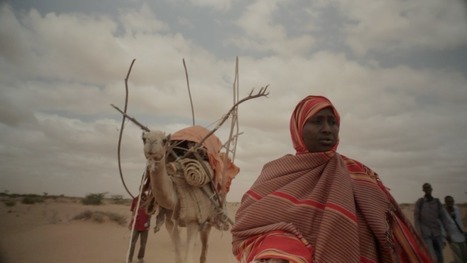
The Women Shepherds of Somalilandby Francis Mead We won’t forget Beerato. It’s a village in central Somaliland. Dust, sheep, goats, camels – and bold women, insisting on changing their lives – and knowing how to party – dancing, singing and clapping in the Sufi style. Cameraman Antonio Tibaldi and I arrived in a UN four-by-four. We had to bring eight armed guards in two more vehicles with us – UN rules – since there’s a danger of kidnapping.
We travelled with Amina Souleiman, a Somali woman who gained political asylum in the UK during Somalia’s civil war in the 90s. She now spends half her year helping women in her homeland stand up for their rights. The UN Democracy Fund is financing her project. In my opinion it’s a remarkable initiative, though each step forward has to be patient and small, and is met by resistance. We met Sahra – an impressive, highly intelligent woman, a shepherd with no formal education and one of the leading lights in the village. Sahra is one of Amina’s protegés.
Water is a central concern year round – and Beerato, when drought isn’t severe, is a major watering hole for the surrounding villages. We watched and filmed as camel herds and flocks of sheep and goats were brought in, lining up to take their turn, almost like aircraft taxiing on a runway. The semi-nomadic families here move their flocks and herds to new pastures several times each year:
Amina Souleiman (left, standing) with a woman and children from the village. Life in Beerato is precarious. By the traditional division of labour, women look after sheep and goats, while men look after the camels. If women lose their flock to drought (which happens not infrequently) they effectively lose their right to graze the tribal lands and are often forced into exile to the capital Hargeisa. Then almost the only option is to labour in the markets. In the city, life is brutally tough, money is hard to come by, and home is usually a displaced persons’ camp or a shanty town. Amina, Sahra and the village women are determined this won’t happen to them. Holding regular women’s circles, they are asserting their rights with the male village elders, and arguing for access to school and land. Already, they have installed five women teachers in the village school for the first time. Next they plan to build a hospital (money will have to be raised internationally by Amina). The hospital will provide jobs and improved health – many mothers die in childbirth. But there’s opposition all along the way – it took weeks of persistent requests before the women finally got the keys to the school office and generator. Antonio and I were both inspired by Amina’s enthusiasm and determination – and her ability to bridge the huge cultural gap between two white Western guys with cameras, and rural women in a small village. She had the capacity to know and communicate fluently between both worlds. Antonio, who’s a film director in his own right when he’s not working for the UN, was also very struck by Sahra: Fatima, already widowed, was forced by drought to leave her village for the city: The full film can be seen here on the UN’s site. A slightly longer version of the film here. (Sufi dancing near the end of the film) Risking Life and Limb in Afghanistanby Mary Ferreira and Haris Kakar Recently I had the pleasure of working with and mentoring a young journalist from Afghanistan, Haris Kakar, a participant in the Reham al-Farra Memorial Journalists Fellowship Programme which ran for 5-weeks this year – one week in Geneva and four weeks in New York. A total of 11 journalists (Radio/Internet/Print/TV) had the chance to work with UN staff and follow coverage of important events. At the end of the fellowship, each journalist had to finalize a project in their field of work. Haris, a print journalist, chose to write an article about humanitarian aid workers in Afghanistan who risk everything to help the needy. Elizabeth Scaffidi from SCD assisted in the editing process. Here’s Haris’ story… “United Nations, New York – For 30 years Mohammad Nabi has been delivering aid to his vulnerable countrymen and women in central Afghanistan, risking his life to help others get "better health and education". As the security situation deteriorates, the conflict in the central Asian nation rages on. Aid workers across Afghanistan continue to worry about the humanitarian situation as well as their own lives. Afghanistan faces a crucial moment: expecting to hold second major presidential elections next year as NATO-led International Security Assistance Forces pull out. Fifty-nine year old Nabi is an aid worker for the Swedish Committee for Afghanistan in the central Wardak province. Forty kilometers from Kabul, Wardak has been a fierce battleground for fighting between Afghan government troops and insurgents. "We are providing health and education services to people there with a half-million of the population benefiting from our aid", Nabi says. But delivering educational and health supplies is not an easy task. Gunmen regularly target military and civilian vehicles along the highway. The roadside bombs, frequently used by the rebels as weapon of choice, often kill civilians along the highway, which connects Kabul to southern Kandahar province. "Our security is a big challenge for us in this province. We are often stopped for hours by different insurgent groups," Nabi adds. He keeps close contact with tribal elders and community leaders for a worst case scenario. "Tribal elders and villagers mediate our release when they [insurgents] arrest us while delivering aid." he asserts. Although Nabi is well known among Wardak villagers, for precautionary measures he must change his appearance, such as grow a beard, don traditional clothes and even wear a turban to disguise his identity. "But people make any possible effort to help us and rescue us." Armed men have frequently beaten Nabi and his colleagues. He has even been tortured, but declines to share that story. Humanitarian agencies have been targeted by insurgents and extremists in the past. In August, five aid workers of the International Rescue Committee (ICR) were shot dead by unknown gunmen in western Afghanistan. In May this year, suicide bombers stormed the International Organization for Migration (IOM) in Kabul, killing and injuring several people. Days after an attack on an IOM compound, a suicide bomber killed a guard in an attack on a regional office of the International Committee of Red Crescent in eastern Afghanistan. A senior UN official, who spoke on the condition of anonymity, said aid agencies are continuously under attacks, spreading fear among the agencies and their workers. Afghanistan is still considered a "high risk area" in the United Nations. Nadir Farhad, a spokesman for UNHCR in Kabul, says the country's security situation has been responsible for the delay in delivering humanitarian aid to Afghans. "It is a tough job to deliver aid to people in Afghanistan," lamented Mr. Farhad. Andreas Stefansson, Swedish committee country director says being an aid worker in Afghanistan is "a tough and challenging job".
He says that his agency's workers are being arrested, mistaken for government employees by insurgents. For this reason, they rely on councils within local villages to protect their aid workers rather than security forces. The future of the humanitarian situation is unclear – Mr. Stefansson says it depends on "internal politics and foreign countries contribution to stabilize or destabilize" the country. But Nabi remains committed to helping his people as he delivers textbooks to boys and girls to make a better future. "I am happy with my job despite its risk because I serve my people." UN Special Rapporteur visits UruguayBy Mary Ferreira Montevideo, Uruguay – Covering the visit to Uruguay of the UN Special Rapporteur, Pablo de Greiff, led us to several places in Montevideo including the Supreme Court, the President's office, and the Office of Human Rights. Pablo met with government officials and members of civil society, including ex-prisoners and relatives of the "detained disappeared". For videographer Joaquim Vieira and me, following the rapporteur as he visited various ministries and offices was quite challenging since we had to travel in a separate vehicle, timing precisely when the rapporteur would arrive at the next location. We met several ex-prisoners who were eager to share their experiences during that tragic period – 1970s to 1980s – in their nation's history when "Plan Condor" was in operation across several South American countries. They said this was the first time that anyone showed so much interest in their story. We also had opportunities to visit relatives of "the disappeared" who continue to demand the truth some 40 years later. When asked if he thought that more remains would be found of those who are still listed as "disappeared" and whether the truth would come to light he said, "Some legal initiatives have been taken. There is of course a question of whether each of those initiatives goes far enough to satisfy fully the rights that victims and society have in each of the different areas. But with respect to each of them there has been some legislative and executive action." Here is a short clip highlighting some special moments with Pablo, victims, and relatives of the "disappeared". The full story will be released later. Haiti: Street Children live dangerouslyby Mary Ferreira Port-au-Prince, Haiti – The number of children living on the streets of Port-au-Prince alone doubled to 4,000 since the 2010 earthquake says UNICEF. They're everywhere – darting in between cars – trying to survive in a country mired in poverty. They clean cars to survive. Anyone driving in the Delmas area can spot five to 10 of them at a time working hurriedly to catch the next car. Often most drivers prefer not to have their cars cleaned; others pay some 50 gourdes – just a little more than one US dollar – for a quick job. With that money, street children can barely buy a piece of bread and a plastic packet of water –essential items in the sweltering heat of this Caribbean nation. We met 16-year-old Jean Leonel who has been a street child since the earthquake struck, killing both of his parents. It's a dangerous life but Jean Leonel believes there's no other choice for him. He said, "Imagine if I go to live with my grandmother, she's old and can no longer work. I have to stay here and work so that I can earn some money to care for her." His reasoning is one held by most street children who are committed to helping their relatives. For boys like Jean Leonel, they opt to remain on the streets instead of registering at shelters designated for them where they're guaranteed hot meals, regular showers, and decent living. Jean Leonel says it's tough now due to the economic crisis but he continues working the streets of Port-au-Prince hoping that one day he'll be able to return to a normal life. Here's a short clip of Jean Leonel's story. Haiti: Youth displaced by Earthquakeby Mary Ferreira Port-au-Prince, Haiti – An assignment to produce a story about youth and democracy, supported by the United Nations Democracy Fund (UNDEF), following the 2010 earthquake brought me back to Haiti with cameraman, Joaquim Vieira. I first visited this Caribbean country in 2007 when there was a strict curfew in place for UN Staff. We had been advised to remain indoors after 6 pm. Now, despite the earthquake, the country appears less tense. Of course, there is still the constant danger of kidnapping – especially for foreigners – so one needs to be vigilant and careful at all times. This story took us to a place called Saint Marc, some 90 minutes from Port-au-Prince, the capital city. There we saw young people actively involved in sports, culture, and civic duty. They were passionate about the future of their country, encouraging others to participate in the reconstruction and political processes, especially exercising their right to vote. One young woman, Lovely, travelled back to Martissant, Port-au-Prince, to show us where she lived when the earthquake struck, destroying her home, causing her to lose everything. Martissant is listed as a red zone district by MINUSTAH. A SWAT team from the Jordanian Battalion accompanied us to ensure safety while filming. Here’s a short clip of that coverage. Empowering Women in Zimbabweby Mary Ferreira
Rosemary Marimo is a woman with purpose. She began prospecting for gold in Musowe, Zimbabwe with her husband 20 years ago. Now, 60 years old, she has been running the business alone.
I first met Rosemary when I visited Zimbabwe to produce a feature story on gender equality and women’s empowerment for 21st Century, UNTV’s news magazine series. Still full of life and enthusiastic about her work, Rosemary told me that her husband died 14 years ago, "He got very sick and passed away, and I carried on." For any woman in this southern African country, it's difficult to operate a business because of the lack of collateral. Most of the family's assets are usually registered in the man's name. Rosemary started her business through a bank loan her husband obtained years ago. When he died, she almost lost everything she said, "I had to call my son back from America after he graduated as an engineer. I told him we must work hard because the bank wanted to take everything away from us." Rosemary's son returned and they managed to pay off the loan. Now he develops new equipment for the mill, which processes ore retrieved from the mine pits. Today, it's much easier for women to get into the mining sector since the Government introduced the "indigenization" programme in 2010. This programme is geared to increase local ownership of the country's mineral resources. It's also helping to empower women and encourage their participation in this critical economic sector, which earns revenue exceeding two billion US dollars annually. Now women are more likely to obtain loans from banks because of special measures adopted and offered to female business owners under the indigenisation act says Dr. Olivia Muchena, Minister of Gender Affairs in Zimbabwe, "Through various programmes a good number of our banks are opening windows or special facilities for women." To further empower women and achieve gender equality, the government is also partnering with the United Nations Development programme, UNDP, to include a gender perspective in all of its economic plans. Through UNDP's Gender & Economic Policy Management Initiative, GEPMI, some 34 policy makers – men and women – attended a weeklong workshop in late 2012 to learn how to create gender sensitive policies. Now more than 10% of all mining operations are headed by women, an industry previously dominated by men. Rosemary is now a government consultant helping new women miners avoid the pitfalls she once experienced when she first started her operation. Watch this short clip of Rosemary’s story. Great Zimbabweby Mary Ferreira 3 December 2012 – After much flying time, we arrived in Ziimbabwe to film a story on Gender Equality and Women's Empowerment. As part of the story, a workshop sponsored by UNDP, held in the town of Masvingo some 180 miles from Harare, was also covered. A group of 34 women and men who attended the workshop were fortunate to visit the ruins located minutes from the conference site. The ruins of Great Zimbabwe represent a unique testimony to the Bantu civilization and the Shona people between the 11th and 15th centuries. The city was built from granite stones, layered to form walls within which huts were erected to house the city's occupants. It's important to note that no cement was used in the construction of the city and the stones were fitted strategically to allow air to penetrate the walls, cooling the entire city. UNESCO recognized these ruins as a cultural heritage site in 1986. It's been said that the King ruling the city had multiple wives who resided on the opposite side of the walled city. At night he would go to the edge of the mountain and call the name of one of his wives. The chosen wife would respond by cackling, then travel by foot to spend the night with the King. Here's a short clip of the ruins including a cultural performance by Shona women and men. UN reporters in their own words Travelling the globe to highlight some of the world's most important and under-reported stories. Giving their eye-witness accounts from the field. UN Photo
UN Web TV is available 24 hours a day with selected live programming of United Nations meetings and events as well as with pre-recorded video features and documentaries on various global issues.
General Assembly: Thematic Debate on Strengthening Cooperation between the UN and regional and sub-regional organization Cooperation between the UN and regional and sub-regional organizations remains a cornerstone of the work of the UN as recognized in Chapter VIII of the UN Charter and numerous resolutions of the General Assembly and the Security Council. Regional and ...Read MoreThis page
is safe Bitdefender Antivirus Plus
UN Photo contains a selection of images from the United Nations photo collection, which contains approximately 800,000 photographs dating back to the mid-1940s chronicling the history of the Organization and its work.
Observance of Mine Awareness Day in Juba, South Sudan Ebola Crisis ResponseThe first-ever UN emergency health mission, the UN Mission for Ebola Emergency Response (UNMEER) was set up in response to the unprecedented outbreak. The Mission is temporary and responds to immediate needs related to the fight against Ebola, which has been reported in more than 25,516 people and killed 10,573 as of 7 April 2015, according to the World Health Organization (WHO). Safe Drinking Water for AllThe world has met the Millennium Development Goal target of halving the proportion of people without access to safe drinking water, well in advance of the 2015 deadline, according to UNICEF and the World Health Organization. Between 1990 and 2010, over two billion people gained access to improved drinking water sources, such as piped supplies and protected wells. © United Nations 2013 This page
is safe Bitdefender Antivirus Plus
Office of the Spokesperson for the Secretary-General Latest from the Spokesperson's Office - Statement
- Deputy Secretary-General's remarks at Opening Session of the Eleventh Session of the United Nations Forum on Forests [as delivered]
New York, 4 May 2015 - Statement
- Secretary-General's remarks at high-level General Assembly debate on Strengthening Cooperation between the UN and Regional and Sub-Regional Organizations
New York, 4 May 2015 - Statement
- Joint message from the UN Secretary-General, Irina Bokova, Director-General of UNESCO and Zeid Ra'ad Al Hussein, UN High Commissioner for Human Rights, on the occasion of World Press Freedom Day [scroll down for French version]
New York, 3 May 2015 - Statement
- Secretary-General's message on World Press Freedom Day [scroll down for French version]
New York, 3 May 2015 - Statement
- Secretary-General's opening remarks at high-level retreat with heads of regional and other organizations
Greentree, New York, 1 May 2015 - Statement
- Secretary-General's video message for EXPO Milano 2015 [1 May - 31 October]
Milan, Italy, 1 May 2015 - Note to Correspondents
- Note to correspondents - Geneva Consultations on Syria
Geneva, 1 May 2015 - Statement
- Statement attributable to the Spokesman for the Secretary-General on the humanitarian crisis in Yemen
New York, 30 April 2015 - Statement
- Secretary-General's remarks at International Jazz Day Concert
Paris, France, 30 April 2015 - Off the Cuff
- Secretary-General's remarks at press conference with President Francois Hollande of France
Paris, France, 29 April 2015
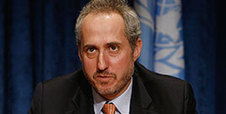
Highlights of the Spokesperson's Noon Briefing Friday, 01 May 2015 - SECRETARY-GENERAL GRAVELY CONCERNED ABOUT CONTINUING VIOLENCE IN YEMEN AND ITS IMPACT ON CIVILIANS...
- NEPAL: U.N. HUMANITARIAN CHIEF AND HEAD OF E.U. HUMANITARIAN AID CALL FOR MORE SUPPORT FOR EARTHQUAKE-AFFECTED COMMUNITIES...
- BURINDI: U.N. DEEPLY CONCERNED OVER MEASURES TAKEN TO CURTAIL RIGHTS TO FREEDOM OF EXPRESSION AND ASSEMBLY...
United Nations, S-233 (PRESS INQUIRIES ONLY) Tel. 212-963-7162 (ALL OTHER INQUIRIES) Tel. 212-963-1234 New York, NY 10027 Fax. 212-963-7055 This page
is safe Bitdefender Antivirus Plus
Press releases, press conferences, statements, official travel Meetings coverage, press releases, press conferences, committees Meetings coverage, press releases, press conferences Meetings coverage, press releases, press conferences
- 1
- 2
- 3
- 4
Summaries of official meetings and events at UN Headquarters and overseas conferences. Press releases from the main United Nations bodies, as well as offices and departments of the Secretariat. Transcripts and summaries of press conferences by United Nations officials and Member State delegations.
Search Search for documents and statements
Daily Noon Briefing 1 May 2015The Secretary-General calls on all parties in Yemen to ensure that humanitarian agencies and their partners have safe and reliable access to bring aid workers and supplies into the country and to deliver aid to millions of people in need. Highlights Resources
Meetings Coverage & Press Releases United Nations © 2014, New York, NY 10017 About us News & Media Resources
This page
is safe Bitdefender Antivirus Plus
Statute of the Court The Statute of the International Court of Justice is annexed to the Charter of the United Nations, of which it forms an integral part. The main object of the Statute is to organize the composition and the functioning of the Court. The Statute can be amended only in the same way as the Charter, i.e., by a two-thirds majority vote in the General Assembly and ratification by two-thirds of the States (Art 69). Should the ICJ consider it desirable for its Statute to be amended, it must submit a proposal to this effect to the General Assembly by means of a written communication addressed to the Secretary-General of the United Nations (Art 70). However, there has hitherto been no amendment of the Statute of the Court. STATUTE OF THE INTERNATIONAL COURT OF JUSTICE TABLE OF CONTENTS: Chapter I: Organization of the Court (Articles 2 - 33)Chapter II: Competence of the Court (Articles 34 - 38)Chapter III: Procedure (Articles 39 - 64)Chapter IV: Advisory Opinions (Articles 65 - 68)Chapter V: Amendment (Articles 69 & 70)Article 1 The International Court of Justice established by the Charter of the United Nations as the principal judicial organ of the United Nations shall be constituted and shall function in accordance with the provisions of the present Statute. CHAPTER I - ORGANIZATION OF THE COURT Article 2 The Court shall be composed of a body of independent judges, elected regardless of their nationality from among persons of high moral character, who possess the qualifications required in their respective countries for appointment to the highest judicial offices, or are jurisconsults of recognized competence in international law. Article 3 1. The Court shall consist of fifteen members, no two of whom may be nationals of the same state. 2. A person who for the purposes of membership in the Court could be regarded as a national of more than one state shall be deemed to be a national of the one in which he ordinarily exercises civil and political rights. Article 4 1. The members of the Court shall be elected by the General Assembly and by the Security Council from a list of persons nominated by the national groups in the Permanent Court of Arbitration, in accordance with the following provisions. 2. In the case of Members of the United Nations not represented in the Permanent Court of Arbitration, candidates shall be nominated by national groups appointed for this purpose by their governments under the same conditions as those prescribed for members of the Permanent Court of Arbitration by Article 44 of the Convention of The Hague of 1907 for the pacific settlement of international disputes. 3. The conditions under which a state which is a party to the present Statute but is not a Member of the United Nations may participate in electing the members of the Court shall, in the absence of a special agreement, be laid down by the General Assembly upon recommendation of the Security Council. Article 5 1. At least three months before the date of the election, the Secretary-General of the United Nations shall address a written request to the members of the Permanent Court of Arbitration belonging to the states which are parties to the present Statute, and to the members of the national groups appointed under Article 4, paragraph 2, inviting them to undertake, within a given time, by national groups, the nomination of persons in a position to accept the duties of a member of the Court. 2. No group may nominate more than four persons, not more than two of whom shall be of their own nationality. In no case may the number of candidates nominated by a group be more than double the number of seats to be filled. Article 6 Before making these nominations, each national group is recommended to consult its highest court of justice, its legal faculties and schools of law, and its national academies and national sections of international academies devoted to the study of law. Article 7 1. The Secretary-General shall prepare a list in alphabetical order of all the persons thus nominated. Save as provided in Article 12, paragraph 2, these shall be the only persons eligible. 2. The Secretary-General shall submit this list to the General Assembly and to the Security Council. Article 8 The General Assembly and the Security Council shall proceed independently of one another to elect the members of the Court. Article 9 At every election, the electors shall bear in mind not only that the persons to be elected should individually possess the qualifications required, but also that in the body as a whole the representation of the main forms of civilization and of the principal legal systems of the world should be assured. Article 10 1. Those candidates who obtain an absolute majority of votes in the General Assembly and in the Security Council shall be considered as elected. 2. Any vote of the Security Council, whether for the election of judges or for the appointment of members of the conference envisaged in Article 12, shall be taken without any distinction between permanent and non-permanent members of the Security Council. 3. In the event of more than one national of the same state obtaining an absolute majority of the votes both of the General Assembly and of the Security Council, the eldest of these only shall be considered as elected. Article 11 If, after the first meeting held for the purpose of the election, one or more seats remain to be filled, a second and, if necessary, a third meeting shall take place. Article 12 1. If, after the third meeting, one or more seats still remain unfilled, a joint conference consisting of six members, three appointed by the General Assembly and three by the Security Council, may be formed at any time at the request of either the General Assembly or the Security Council, for the purpose of choosing by the vote of an absolute majority one name for each seat still vacant, to submit to the General Assembly and the Security Council for their respective acceptance. 2. If the joint conference is unanimously agreed upon any person who fulfills the required conditions, he may be included in its list, even though he was not included in the list of nominations referred to in Article 7. 3. If the joint conference is satisfied that it will not be successful in procuring an election, those members of the Court who have already been elected shall, within a period to be fixed by the Security Council, proceed to fill the vacant seats by selection from among those candidates who have obtained votes either in the General Assembly or in the Security Council. 4. In the event of an equality of votes among the judges, the eldest judge shall have a casting vote. Article 13 1. The members of the Court shall be elected for nine years and may be re-elected; provided, however, that of the judges elected at the first election, the terms of five judges shall expire at the end of three years and the terms of five more judges shall expire at the end of six years. 2. The judges whose terms are to expire at the end of the above-mentioned initial periods of three and six years shall be chosen by lot to be drawn by the Secretary-General immediately after the first election has been completed. 3. The members of the Court shall continue to discharge their duties until their places have been filled. Though replaced, they shall finish any cases which they may have begun. 4. In the case of the resignation of a member of the Court, the resignation shall be addressed to the President of the Court for transmission to the Secretary-General. This last notification makes the place vacant. Article 14 Vacancies shall be filled by the same method as that laid down for the first election, subject to the following provision: the Secretary-General shall, within one month of the occurrence of the vacancy, proceed to issue the invitations provided for in Article 5, and the date of the election shall be fixed by the Security Council. Article 15 A member of the Court elected to replace a member whose term of office has not expired shall hold office for the remainder of his predecessor's term. Article 16 1. No member of the Court may exercise any political or administrative function, or engage in any other occupation of a professional nature. 2. Any doubt on this point shall be settled by the decision of the Court. Article 17 1. No member of the Court may act as agent, counsel, or advocate in any case. 2. No member may participate in the decision of any case in which he has previously taken part as agent, counsel, or advocate for one of the parties, or as a member of a national or international court, or of a commission of enquiry, or in any other capacity. 3. Any doubt on this point shall be settled by the decision of the Court. Article 18 1. No member of the Court can be dismissed unless, in the unanimous opinion of the other members, he has ceased to fulfill the required conditions. 2. Formal notification thereof shall be made to the Secretary-General by the Registrar. 3. This notification makes the place vacant. Article 19 The members of the Court, when engaged on the business of the Court, shall enjoy diplomatic privileges and immunities. Article 20 Every member of the Court shall, before taking up his duties, make a solemn declaration in open court that he will exercise his powers impartially and conscientiously. Article 21 1. The Court shall elect its President and Vice-President for three years; they may be re-elected. 2. The Court shall appoint its Registrar and may provide for the appointment of such other officers as may be necessary. Article 22 1. The seat of the Court shall be established at The Hague. This, however, shall not prevent the Court from sitting and exercising its functions elsewhere whenever the Court considers it desirable. 2. The President and the Registrar shall reside at the seat of the Court. Article 23 1. The Court shall remain permanently in session, except during the judicial vacations, the dates and duration of which shall be fixed by the Court. 2. Members of the Court are entitled to periodic leave, the dates and duration of which shall be fixed by the Court, having in mind the distance between The Hague and the home of each judge. 3. Members of the Court shall be bound, unless they are on leave or prevented from attending by illness or other serious reasons duly explained to the President, to hold themselves permanently at the disposal of the Court. Article 24 1. If, for some special reason, a member of the Court considers that he should not take part in the decision of a particular case, he shall so inform the President. 2. If the President considers that for some special reason one of the members of the Court should not sit in a particular case, he shall give him notice accordingly. 3. If in any such case the member of the Court and the President disagree, the matter shall be settled by the decision of the Court. Article 25 1. The full Court shall sit except when it is expressly provided otherwise in the present Statute. 2. Subject to the condition that the number of judges available to constitute the Court is not thereby reduced below eleven, the Rules of the Court may provide for allowing one or more judges, according to circumstances and in rotation, to be dispensed from sitting. 3. A quorum of nine judges shall suffice to constitute the Court. Article 26 1. The Court may from time to time form one or more chambers, composed of three or more judges as the Court may determine, for dealing with particular categories of cases; for example, labour cases and cases relating to transit and communications. 2. The Court may at any time form a chamber for dealing with a particular case. The number of judges to constitute such a chamber shall be determined by the Court with the approval of the parties. 3. Cases shall be heard and determined by the chambers provided for in this article if the parties so request. Article 27 A judgment given by any of the chambers provided for in Articles 26 and 29 shall be considered as rendered by the Court. Article 28 The chambers provided for in Articles 26 and 29 may, with the consent of the parties, sit and exercise their functions elsewhere than at The Hague. Article 29 With a view to the speedy dispatch of business, the Court shall form annually a chamber composed of five judges which, at the request of the parties, may hear and determine cases by summary procedure. In addition, two judges shall be selected for the purpose of replacing judges who find it impossible to sit. Article 30 1. The Court shall frame rules for carrying out its functions. In particular, it shall lay down rules of procedure. 2. The Rules of the Court may provide for assessors to sit with the Court or with any of its chambers, without the right to vote. Article 31 1. Judges of the nationality of each of the parties shall retain their right to sit in the case before the Court. 2. If the Court includes upon the Bench a judge of the nationality of one of the parties, any other party may choose a person to sit as judge. Such person shall be chosen preferably from among those persons who have been nominated as candidates as provided in Articles 4 and 5. 3. If the Court includes upon the Bench no judge of the nationality of the parties, each of these parties may proceed to choose a judge as provided in paragraph 2 of this Article. 4. The provisions of this Article shall apply to the case of Articles 26 and 29. In such cases, the President shall request one or, if necessary, two of the members of the Court forming the chamber to give place to the members of the Court of the nationality of the parties concerned, and, failing such, or if they are unable to be present, to the judges specially chosen by the parties. 5. Should there be several parties in the same interest, they shall, for the purpose of the preceding provisions, be reckoned as one party only. Any doubt upon this point shall be settled by the decision of the Court. 6. Judges chosen as laid down in paragraphs 2, 3, and 4 of this Article shall fulfill the conditions required by Articles 2, 17 (paragraph 2), 20, and 24 of the present Statute. They shall take part in the decision on terms of complete equality with their colleagues. Article 32 1. Each member of the Court shall receive an annual salary. 2. The President shall receive a special annual allowance. 3. The Vice-President shall receive a special allowance for every day on which he acts as President. 4. The judges chosen under Article 31, other than members of the Court, shall receive compensation for each day on which they exercise their functions. 5. These salaries, allowances, and compensation shall be fixed by the General Assembly. They may not be decreased during the term of office. 6. The salary of the Registrar shall be fixed by the General Assembly on the proposal of the Court. 7. Regulations made by the General Assembly shall fix the conditions under which retirement pensions may be given to members of the Court and to the Registrar, and the conditions under which members of the Court and the Registrar shall have their travelling expenses refunded. 8. The above salaries, allowances, and compensation shall be free of all taxation. Article 33 The expenses of the Court shall be borne by the United Nations in such a manner as shall be decided by the General Assembly. CHAPTER II - COMPETENCE OF THE COURT Article 34 1. Only states may be parties in cases before the Court. 2. The Court, subject to and in conformity with its Rules, may request of public international organizations information relevant to cases before it, and shall receive such information presented by such organizations on their own initiative. 3. Whenever the construction of the constituent instrument of a public international organization or of an international convention adopted thereunder is in question in a case before the Court, the Registrar shall so notify the public international organization concerned and shall communicate to it copies of all the written proceedings. Article 35 1. The Court shall be open to the states parties to the present Statute. 2. The conditions under which the Court shall be open to other states shall, subject to the special provisions contained in treaties in force, be laid down by the Security Council, but in no case shall such conditions place the parties in a position of inequality before the Court. 3. When a state which is not a Member of the United Nations is a party to a case, the Court shall fix the amount which that party is to contribute towards the expenses of the Court. This provision shall not apply if such state is bearing a share of the expenses of the Court Article 36 1. The jurisdiction of the Court comprises all cases which the parties refer to it and all matters specially provided for in the Charter of the United Nations or in treaties and conventions in force. 2. The states parties to the present Statute may at any time declare that they recognize as compulsory ipso facto and without special agreement, in relation to any other state accepting the same obligation, the jurisdiction of the Court in all legal disputes concerning: a. the interpretation of a treaty; b. any question of international law; c. the existence of any fact which, if established, would constitute a breach of an international obligation; d. the nature or extent of the reparation to be made for the breach of an international obligation.
3. The declarations referred to above may be made unconditionally or on condition of reciprocity on the part of several or certain states, or for a certain time. 4. Such declarations shall be deposited with the Secretary-General of the United Nations, who shall transmit copies thereof to the parties to the Statute and to the Registrar of the Court. 5. Declarations made under Article 36 of the Statute of the Permanent Court of International Justice and which are still in force shall be deemed, as between the parties to the present Statute, to be acceptances of the compulsory jurisdiction of the International Court of Justice for the period which they still have to run and in accordance with their terms. 6. In the event of a dispute as to whether the Court has jurisdiction, the matter shall be settled by the decision of the Court. Article 37 Whenever a treaty or convention in force provides for reference of a matter to a tribunal to have been instituted by the League of Nations, or to the Permanent Court of International Justice, the matter shall, as between the parties to the present Statute, be referred to the International Court of Justice. Article 38 1. The Court, whose function is to decide in accordance with international law such disputes as are submitted to it, shall apply: a. international conventions, whether general or particular, establishing rules expressly recognized by the contesting states; b. international custom, as evidence of a general practice accepted as law; c. the general principles of law recognized by civilized nations; d. subject to the provisions of Article 59, judicial decisions and the teachings of the most highly qualified publicists of the various nations, as subsidiary means for the determination of rules of law.
2. This provision shall not prejudice the power of the Court to decide a case ex aequo et bono, if the parties agree thereto. CHAPTER III - PROCEDURE Article 39 1. The official languages of the Court shall be French and English. If the parties agree that the case shall be conducted in French, the judgment shall be delivered in French. If the parties agree that the case shall be conducted in English, the judgment shall be delivered in English. 2. In the absence of an agreement as to which language shall be employed, each party may, in the pleadings, use the language which it prefers; the decision of the Court shall be given in French and English. In this case the Court shall at the same time determine which of the two texts shall be considered as authoritative. 3. The Court shall, at the request of any party, authorize a language other than French or English to be used by that party. Article 40 1. Cases are brought before the Court, as the case may be, either by the notification of the special agreement or by a written application addressed to the Registrar. In either case the subject of the dispute and the parties shall be indicated. 2. The Registrar shall forthwith communicate the application to all concerned. 3. He shall also notify the Members of the United Nations through the Secretary-General, and also any other states entitled to appear before the Court. Article 41 1. The Court shall have the power to indicate, if it considers that circumstances so require, any provisional measures which ought to be taken to preserve the respective rights of either party. 2. Pending the final decision, notice of the measures suggested shall forthwith be given to the parties and to the Security Council. Article 42 1. The parties shall be represented by agents. 2. They may have the assistance of counsel or advocates before the Court. 3. The agents, counsel, and advocates of parties before the Court shall enjoy the privileges and immunities necessary to the independent exercise of their duties. Article 43 1. The procedure shall consist of two parts: written and oral. 2. The written proceedings shall consist of the communication to the Court and to the parties of memorials, counter-memorials and, if necessary, replies; also all papers and documents in support. 3. These communications shall be made through the Registrar, in the order and within the time fixed by the Court. 4. A certified copy of every document produced by one party shall be communicated to the other party. 5. The oral proceedings shall consist of the hearing by the Court of witnesses, experts, agents, counsel, and advocates. Article 44 1. For the service of all notices upon persons other than the agents, counsel, and advocates, the Court shall apply direct to the government of the state upon whose territory the notice has to be served. 2. The same provision shall apply whenever steps are to be taken to procure evidence on the spot. Article 45 The hearing shall be under the control of the President or, if he is unable to preside, of the Vice-President; if neither is able to preside, the senior judge present shall preside. Article 46 The hearing in Court shall be public, unless the Court shall decide otherwise, or unless the parties demand that the public be not admitted . Article 47 1. Minutes shall be made at each hearing and signed by the Registrar and the President. 2. These minutes alone shall be authentic. Article 48 The Court shall make orders for the conduct of the case, shall decide the form and time in which each party must conclude its arguments, and make all arrangements connected with the taking of evidence. Article 49 The Court may, even before the hearing begins, call upon the agents to produce any document or to supply any explanations. Formal note shall be taken of any refusal. Article 50 The Court may, at any time, entrust any individual, body, bureau, commission, or other organization that it may select, with the task of carrying out an enquiry or giving an expert opinion. Article 51 During the hearing any relevant questions are to be put to the witnesses and experts under the conditions laid down by the Court in the rules of procedure referred to in Article 30. Article 52 After the Court has received the proofs and evidence within the time specified for the purpose, it may refuse to accept any further oral or written evidence that one party may desire to present unless the other side consents. Article 53 1. Whenever one of the parties does not appear before the Court, or fails to defend its case, the other party may call upon the Court to decide in favour of its claim. 2. The Court must, before doing so, satisfy itself, not only that it has jurisdiction in accordance with Articles 36 and 37, but also that the claim is well founded in fact and law. Article 54 1. When, subject to the control of the Court, the agents, counsel, and advocates have completed their presentation of the case, the President shall declare the hearing closed. 2. The Court shall withdraw to consider the judgment. 3. The deliberations of the Court shall take place in private and remain secret. Article 55 1. All questions shall be decided by a majority of the judges present. 2. In the event of an equality of votes, the President or the judge who acts in his place shall have a casting vote. Article 56 1. The judgment shall state the reasons on which it is based. 2. It shall contain the names of the judges who have taken part in the decision. Article 57 If the judgment does not represent in whole or in part the unanimous opinion of the judges, any judge shall be entitled to deliver a separate opinion. Article 58 The judgment shall be signed by the President and by the Registrar. It shall be read in open court, due notice having been given to the agents. Article 59 The decision of the Court has no binding force except between the parties and in respect of that particular case. Article 60 The judgment is final and without appeal. In the event of dispute as to the meaning or scope of the judgment, the Court shall construe it upon the request of any party. Article 61 1. An application for revision of a judgment may be made only when it is based upon the discovery of some fact of such a nature as to be a decisive factor, which fact was, when the judgment was given, unknown to the Court and also to the party claiming revision, always provided that such ignorance was not due to negligence. 2. The proceedings for revision shall be opened by a judgment of the Court expressly recording the existence of the new fact, recognizing that it has such a character as to lay the case open to revision, and declaring the application admissible on this ground. 3. The Court may require previous compliance with the terms of the judgment before it admits proceedings in revision. 4. The application for revision must be made at latest within six months of the discovery of the new fact. 5. No application for revision may be made after the lapse of ten years from the date of the judgment. Article 62 l. Should a state consider that it has an interest of a legal nature which may be affected by the decision in the case, it may submit a request to the Court to be permitted to intervene. 2 It shall be for the Court to decide upon this request. Article 63 1. Whenever the construction of a convention to which states other than those concerned in the case are parties is in question, the Registrar shall notify all such states forthwith. 2. Every state so notified has the right to intervene in the proceedings; but if it uses this right, the construction given by the judgment will be equally binding upon it. Article 64 Unless otherwise decided by the Court, each party shall bear its own costs.
CHAPTER IV - ADVISORY OPINIONS
Article 65 1. The Court may give an advisory opinion on any legal question at the request of whatever body may be authorized by or in accordance with the Charter of the United Nations to make such a request. 2. Questions upon which the advisory opinion of the Court is asked shall be laid before the Court by means of a written request containing an exact statement of the question upon which an opinion is required, and accompanied by all documents likely to throw light upon the question. Article 66 1. The Registrar shall forthwith give notice of the request for an advisory opinion to all states entitled to appear before the Court. 2. The Registrar shall also, by means of a special and direct communication, notify any state entitled to appear before the Court or international organization considered by the Court, or, should it not be sitting, by the President, as likely to be able to furnish information on the question, that the Court will be prepared to receive, within a time-limit to be fixed by the President, written statements, or to hear, at a public sitting to be held for the purpose, oral statements relating to the question. 3. Should any such state entitled to appear before the Court have failed to receive the special communication referred to in paragraph 2 of this Article, such state may express a desire to submit a written statement or to be heard; and the Court will decide. 4. States and organizations having presented written or oral statements or both shall be permitted to comment on the statements made by other states or organizations in the form, to the extent, and within the time-limits which the Court, or, should it not be sitting, the President, shall decide in each particular case. Accordingly, the Registrar shall in due time communicate any such written statements to states and organizations having submitted similar statements. Article 67 The Court shall deliver its advisory opinions in open court, notice having been given to the Secretary-General and to the representatives of Members of the United Nations, of other states and of international organizations immediately concerned. Article 68 In the exercise of its advisory functions the Court shall further be guided by the provisions of the present Statute which apply in contentious cases to the extent to which it recognizes them to be applicable. CHAPTER V - AMENDMENT Article 69 Amendments to the present Statute shall be effected by the same procedure as is provided by the Charter of the United Nations for amendments to that Charter, subject however to any provisions which the General Assembly upon recommendation of the Security Council may adopt concerning the participation of states which are parties to the present Statute but are not Members of the United Nations. Article 70 The Court shall have power to propose such amendments to the present Statute as it may deem necessary, through written communications to the Secretary-General, for consideration in conformity with the provisions of Article 69. This page
is safe Bitdefender Antivirus Plus
The Universal Declaration of Human Rights PREAMBLE Whereas recognition of the inherent dignity and of the equal and inalienable rights of all members of the human family is the foundation of freedom, justice and peace in the world, Whereas disregard and contempt for human rights have resulted in barbarous acts which have outraged the conscience of mankind, and the advent of a world in which human beings shall enjoy freedom of speech and belief and freedom from fear and want has been proclaimed as the highest aspiration of the common people, Whereas it is essential, if man is not to be compelled to have recourse, as a last resort, to rebellion against tyranny and oppression, that human rights should be protected by the rule of law, Whereas it is essential to promote the development of friendly relations between nations, Whereas the peoples of the United Nations have in the Charter reaffirmed their faith in fundamental human rights, in the dignity and worth of the human person and in the equal rights of men and women and have determined to promote social progress and better standards of life in larger freedom, Whereas Member States have pledged themselves to achieve, in co-operation with the United Nations, the promotion of universal respect for and observance of human rights and fundamental freedoms, Whereas a common understanding of these rights and freedoms is of the greatest importance for the full realization of this pledge, Now, Therefore THE GENERAL ASSEMBLY proclaims THIS UNIVERSAL DECLARATION OF HUMAN RIGHTS as a common standard of achievement for all peoples and all nations, to the end that every individual and every organ of society, keeping this Declaration constantly in mind, shall strive by teaching and education to promote respect for these rights and freedoms and by progressive measures, national and international, to secure their universal and effective recognition and observance, both among the peoples of Member States themselves and among the peoples of territories under their jurisdiction. Article 1. - All human beings are born free and equal in dignity and rights. They are endowed with reason and conscience and should act towards one another in a spirit of brotherhood.
Article 2. - Everyone is entitled to all the rights and freedoms set forth in this Declaration, without distinction of any kind, such as race, colour, sex, language, religion, political or other opinion, national or social origin, property, birth or other status. Furthermore, no distinction shall be made on the basis of the political, jurisdictional or international status of the country or territory to which a person belongs, whether it be independent, trust, non-self-governing or under any other limitation of sovereignty.
Article 3. - Everyone has the right to life, liberty and security of person.
Article 4. - No one shall be held in slavery or servitude; slavery and the slave trade shall be prohibited in all their forms.
Article 5. - No one shall be subjected to torture or to cruel, inhuman or degrading treatment or punishment.
Article 6. - Everyone has the right to recognition everywhere as a person before the law.
Article 7. - All are equal before the law and are entitled without any discrimination to equal protection of the law. All are entitled to equal protection against any discrimination in violation of this Declaration and against any incitement to such discrimination.
Article 8. - Everyone has the right to an effective remedy by the competent national tribunals for acts violating the fundamental rights granted him by the constitution or by law.
Article 9. - No one shall be subjected to arbitrary arrest, detention or exile.
Article 10. - Everyone is entitled in full equality to a fair and public hearing by an independent and impartial tribunal, in the determination of his rights and obligations and of any criminal charge against him.
Article 11. - (1) Everyone charged with a penal offence has the right to be presumed innocent until proved guilty according to law in a public trial at which he has had all the guarantees necessary for his defence.
- (2) No one shall be held guilty of any penal offence on account of any act or omission which did not constitute a penal offence, under national or international law, at the time when it was committed. Nor shall a heavier penalty be imposed than the one that was applicable at the time the penal offence was committed.
Article 12. - No one shall be subjected to arbitrary interference with his privacy, family, home or correspondence, nor to attacks upon his honour and reputation. Everyone has the right to the protection of the law against such interference or attacks.
Article 13. - (1) Everyone has the right to freedom of movement and residence within the borders of each state.
- (2) Everyone has the right to leave any country, including his own, and to return to his country.
Article 14. - (1) Everyone has the right to seek and to enjoy in other countries asylum from persecution.
- (2) This right may not be invoked in the case of prosecutions genuinely arising from non-political crimes or from acts contrary to the purposes and principles of the United Nations.
Article 15. - (1) Everyone has the right to a nationality.
- (2) No one shall be arbitrarily deprived of his nationality nor denied the right to change his nationality.
Article 16. - (1) Men and women of full age, without any limitation due to race, nationality or religion, have the right to marry and to found a family. They are entitled to equal rights as to marriage, during marriage and at its dissolution.
- (2) Marriage shall be entered into only with the free and full consent of the intending spouses.
- (3) The family is the natural and fundamental group unit of society and is entitled to protection by society and the State.
Article 17. - (1) Everyone has the right to own property alone as well as in association with others.
- (2) No one shall be arbitrarily deprived of his property.
Article 18. - Everyone has the right to freedom of thought, conscience and religion; this right includes freedom to change his religion or belief, and freedom, either alone or in community with others and in public or private, to manifest his religion or belief in teaching, practice, worship and observance.
Article 19. - Everyone has the right to freedom of opinion and expression; this right includes freedom to hold opinions without interference and to seek, receive and impart information and ideas through any media and regardless of frontiers.
Article 20. - (1) Everyone has the right to freedom of peaceful assembly and association.
- (2) No one may be compelled to belong to an association.
Article 21. - (1) Everyone has the right to take part in the government of his country, directly or through freely chosen representatives.
- (2) Everyone has the right of equal access to public service in his country.
- (3) The will of the people shall be the basis of the authority of government; this will shall be expressed in periodic and genuine elections which shall be by universal and equal suffrage and shall be held by secret vote or by equivalent free voting procedures.
Article 22. - Everyone, as a member of society, has the right to social security and is entitled to realization, through national effort and international co-operation and in accordance with the organization and resources of each State, of the economic, social and cultural rights indispensable for his dignity and the free development of his personality.
Article 23. - (1) Everyone has the right to work, to free choice of employment, to just and favourable conditions of work and to protection against unemployment.
- (2) Everyone, without any discrimination, has the right to equal pay for equal work.
- (3) Everyone who works has the right to just and favourable remuneration ensuring for himself and his family an existence worthy of human dignity, and supplemented, if necessary, by other means of social protection.
- (4) Everyone has the right to form and to join trade unions for the protection of his interests.
Article 24. - Everyone has the right to rest and leisure, including reasonable limitation of working hours and periodic holidays with pay.
Article 25. - (1) Everyone has the right to a standard of living adequate for the health and well-being of himself and of his family, including food, clothing, housing and medical care and necessary social services, and the right to security in the event of unemployment, sickness, disability, widowhood, old age or other lack of livelihood in circumstances beyond his control.
- (2) Motherhood and childhood are entitled to special care and assistance. All children, whether born in or out of wedlock, shall enjoy the same social protection.
Article 26. - (1) Everyone has the right to education. Education shall be free, at least in the elementary and fundamental stages. Elementary education shall be compulsory. Technical and professional education shall be made generally available and higher education shall be equally accessible to all on the basis of merit.
- (2) Education shall be directed to the full development of the human personality and to the strengthening of respect for human rights and fundamental freedoms. It shall promote understanding, tolerance and friendship among all nations, racial or religious groups, and shall further the activities of the United Nations for the maintenance of peace.
- (3) Parents have a prior right to choose the kind of education that shall be given to their children.
Article 27. - (1) Everyone has the right freely to participate in the cultural life of the community, to enjoy the arts and to share in scientific advancement and its benefits.
- (2) Everyone has the right to the protection of the moral and material interests resulting from any scientific, literary or artistic production of which he is the author.
Article 28. - Everyone is entitled to a social and international order in which the rights and freedoms set forth in this Declaration can be fully realized.
Article 29. - (1) Everyone has duties to the community in which alone the free and full development of his personality is possible.
- (2) In the exercise of his rights and freedoms, everyone shall be subject only to such limitations as are determined by law solely for the purpose of securing due recognition and respect for the rights and freedoms of others and of meeting the just requirements of morality, public order and the general welfare in a democratic society.
- (3) These rights and freedoms may in no case be exercised contrary to the purposes and principles of the United Nations.
Article 30. - Nothing in this Declaration may be interpreted as implying for any State, group or person any right to engage in any activity or to perform any act aimed at the destruction of any of the rights and freedoms set forth herein.
This page
is safe Bitdefender Antivirus Plus
USSR Cosmonauts Yuri Gagarin and Valentina Tereshkova Russian 00:40:47 16 Oct 1963 - USSR Cosmonauts Yuri Gagarin and Valentina Tereshkova share their experiences regarding space travels, dreams of going to the moon and nuclear threats in space. 00:08:32 English 11 Mar 1932 The League of Nations: 13th Assembly 00:07:09 English 23 Sep 1933 Construction of the Palais des Nations. 00:08:11 English 22 Sep 1930 League of Nations: 11th Assembly 00:09:50 English 13 Jul 1948 Security Council: 333rd Meeting 00:11:13 Original 25 Oct 1948 Security Council: 362, 363, 368, 370, 372 Meetings 00:16:31 English 26 Jun 1945 San Francisco 1945 00:06:13 Original 2014 70 Years of Archives Treasures 00:06:13 Various 08 Dec 1947 Trusteeship Council 2nd Session: 11th Meeting 00:10:20 English 02 Feb 1947 Economic and Social Council 6th Session: 122nd Meeting •The AV Library has over 6,330 hours of historical content in 35,16 and 8mm film and 49,400 hours of video stored in its off-site archives. •To find out more about digitizing this historic UN footage, please contact us. •Over 18,000 hours of audio in a wide variety of formats are available in our off-site archives. •Currently, 200 of the 1,000 available historic UN Radio Classics are now available for download on this website. •In 2013, an independent producer helped to digitize over 100 UN Concerts. •To find out more about digitizing these historic UN recordings, please contact usThis page
is safe Bitdefender Antivirus Plus
To find internship opportunities, go to Job Openings. Click on the links below for more information on internship programmes at major locations of the United Nations: Internship programme Why be a United Nations intern? If you are thinking of entering the world of diplomacy and public policy, an internship at the United Nations could be the ideal start for you. The objective of the internship is to give you a first-hand impression of the day-to-day working environment of the United Nations. You will be given a real chance to work with our people. As part of our team, working directly with outstanding and inspiring career professionals and senior management, you will be exposed to high-profile conferences, participate in meetings, and contribute to analytical work as well as organizational policy of the United Nations. Initially you will take on the amount of responsibility you can shoulder; the potential for growth, however, is yours to develop. Can you be a United Nations intern? - Are you enrolled in a Master's or in a Ph.D. programme, or in the final year of a Bachelor’s programme; or within one year after graduation from a Bachelor’s, Master’s or Ph.D. programme?
- Do you have excellent command of English or French?
- Are you neither a child or a sibling of a United Nations Secretariat staff member?
Keep in mind: - Duration: The internship programme lasts for at least two months and can be as long as six months. Once selected, you must begin your internship either prior to or within one year of graduation.
- Cost: United Nations interns are not paid. All costs related to travel, insurance, accommodation, and living expenses must be borne by either the interns or their sponsoring institutions.
- Visa: You will be responsible for obtaining and financing the necessary visas.
- Travel: You will arrange and finance your travel to the United Nations location where you will be an intern.
- Medical insurance: You will be responsible for costs arising from accidents and/or illness incurred during the internship and must show proof of a valid major global medical insurance coverage.
- Confidentiality: You must be discreet and keep confidential any and all unpublished information obtained during the course of the internship and may not publish any documents based on such information.
- Academic Credit: You may get academic credit from your institution of higher education for the internship. Check with your university to confirm their academic credit policy for internships.
If you are interested in internships with other United Nations funds and programmes listed, please apply with them directly through the links below. Meet a few of our interns: This page
is safe Bitdefender Antivirus Plus
Business Seminars: learn more about business opportunities with the UN The main objective of the business seminar programme is to inform potential vendors and trade entities including the Chamber of Commerce about the work of UN/PD. The seminars also provide... Welcome to the United Nations Procurement Division (UNPD) Welcome to the United Nations Procurement Division’s website. To learn more About Us and the many opportunities this site offers please see the key features of each of the above listed options. The menu is specifically designed to meet the increasing demands of Vendors seeking registration and Business Opportunities with the UN. Information about the UN General Conditions of Contract and contract Awards is equally available at this site. Top Stories Electronic Bid Submission Pilot Thursday, 23 April 2015 The United Nations Procurement Division (UNPD) is currently conducting a Pilot project to evaluate the feasibility, challenges, and benefits of using an electronic tendering (e-tendering) solution as an integral component of its procurement process.Read full story... Chief Procurement Officers meet in New York for 2015 annual conference Monday, 9 March 2015 The 2015 conference of the Chief Procurement Officers (CPOs) of the UN Secretariat is being held in New York from 23 to 27 February 2015. The conference aims to facilitate a professional exchange of information among a community of practitioners who carry out the same functions around the world, so that they are better equipped to be responsive to clients’ needs.Read full story... UNPD launches new Mobile App for Apple smart phones and tablets Wednesday, 26 November 2014 The UN Procurement Mobile App offers real-time access to information related to United Nations Procurement Division, such as business opportunities, business seminars schedule and contract awards. The “UN Procurement” Mobile App, originally released in 2011, has now received a major update for Apple devices. The new release provides our users with a completely redesigned interface that works equally well on both tablet and smart phone devices.Read full story... Events 04 May 15 - Expression-of-Interest Closing 04 May 15 - Expression-of-Interest Closing 04 May 15 - Expression-of-Interest Closing 04 May 15 - Expression-of-Interest Closing 04 May 15 - Solicitation Opening 04 May 15 - Solicitation Opening 05 May 15 - Expression-of-Interest Closing 05 May 15 - Expression-of-Interest Closing 1 United Nations Plaza 15th Floor New York, NY 10017 General Info.: +1-212-963-6249 Fax No.: +1-212-963-0377
Copyright @ 2014 UN Procurement Division. All rights reserved. This page
is safe Bitdefender Antivirus Plus
ApplicationHow do we apply for association? 1. Fill out the application form 2. Prepare the required documents: - A copy of your organization’s Constitution/By-laws
- Proof of non-profit/tax exempt status (only official government-issued documents will be accepted)
- A copy of your most recent audited financial statement (preferably in U.S. dollars)
- A notarized copy of the original signatures of both the Head of the NGO and the Main Representative
- 6 different samples of your organization’s most recent information materials related to the work of the United Nations (for example: newsletters, reports, audio or video productions, blogs, promotional publications/advertisement of events, etc).
- 2 recommendation letters from an individual/organization.
- 1 recommendation letter from a UNIC/UNIS/UNRIC or a UN office with which your NGO has partnered.
Recommendation letters should briefly describe your organization’s work/partnership and explain why your NGO is being recommended for association with DPI. 3. Send the completed application form and all required documents to the UNIC/UNIS/UNRIC servicing the country where your NGO is based. Or submit your application form and all the other required material online. In order for you to submit these documents online you need to create a profile for your organization in the CSO Net following the instructions given on that site. For the complete listing of UNIC, UNIS and UNRIC offices please visit the directory. All submitted materials must be in English or French, the two working languages of the United Nations Secretariat. Material in other languages must be accompanied by a translation into to English or French. Remember to keep a copy of all submitted documents and material. I’ve applied. What’s next? Step 1: Once your application material has been received, the UNIC/UNIS/UNRIC office will evaluate your submission and prepare a recommendation letter. Step 2: The recommendation letter and all required accompanying documents will then be sent to the NGO Relations office at UN Headquarters in New York for review and evaluation. Step 3: If your NGO meets the requirements for association, the NGO Relations Section will prepare your application for presentation to the DPI Committee on NGOs which will decide whether your Organization is approved for membership. This Committee meets twice a year-once in the spring and once in the fall- to discuss and approve applications. Step 4: Your NGO will receive a letter informing you of the decision by the DPI Committee on NGOs on your application; the UNIC/UNIS/UNRIC office in your country/region as well as the NGO/DPI Executive Committee is also informed. Step 5: If your NGO does not meet all the requirements for association, including no record of collaboration with a UN office, the DPI Committee on NGOs may offer you a probationary two- year membership or association. Probationary association status means that your NGO will have 2 years in which to establish a partnership with a relevant UNIC/UNIS/UNRIC or UN office, agency, fund or programme. The Committee will then review your progress after 2 years and determine if you can continue being associated. All decisions on your application status will be communicated to you in writing. What are the responsibilities of NGOs associated with DPI? - To raise public awareness particularly in grass root and rural communities about key issues on the UN agenda including the priorities of the UN Secretary-General
- Disseminate information and promote issues of global concern such as the Millennium Development Goals, human trafficking, climate change and vulnerable communities, HIV/AIDS, sustainable energy, violence against women, the empowerment of rural women, nuclear security, disarmament and the arms trade treaty, the illicit trade in small arms and light weapons and issues of drugs and crime among others.
- Design and implement public information activities and programmes including the printing and dissemination of publications promoting the work of the United Nations.
- Collaborate with UN Information Centres or Services on advocacy campaigns or other promotional public information activities.
- Submit yearly an online Annual Review form through the Civil Society Organizations’ Network. This is the process by which DPI-associated NGOs report back to the DPI/NGO Relations Section on their work and public information activities in support of the United Nations, and are evaluated.
Can my NGO be disassociated? Yes, the DPI Committee on NGOs which decides on whether an NGO should be disassociated from membership will approve the termination of your membership with DPI, if your NGO consistently fails to fulfill its responsibilities over a three-year period. Grounds for disassociation: Failure to meet the criteria for association
Failure to submit an Annual Review for three consecutive years
Three consecutive negative evaluations of the Annual Review process
Acts of fraud and misrepresentation of the work of the UN
Lack of collaboration with a UN entity (including UNIC/UNIS/UNRIC)
Unauthorized use of the UN logo Can my NGO re-apply for association status if it has been disassociated? Yes. Your organization can indeed re-apply for association/membership with DPI one year following its disassociation. You must follow the original application procedure for membership as disassociation renders invalid the required documentation for membership, which you originally submitted at the time of your acceptance for association. This page
is safe Bitdefender Antivirus Plus
Media accreditation and Liaison Unit The Media Accreditation and Liaison Unit (M.A.L.U.) provides the following services to the press: - Accreditation - a requirement for all journalists who wish to cover activities at the United Nations in New York (First time or Renewing)
- Liaison/Coverage - MALU liaises with Member States regarding press visits and provides escorts to events.
- Daily Media Alert - lists all open inter-governmental meetings, press briefings/conferences and other outreach activities at the United Nations Headquarters.
- Media Documents Centre - access to documents of particular interest to the press.
UN Web Services Section, Department of Public Information, United Nations © 2010 This page
is safe Bitdefender Antivirus Plus
|