(1) The United Nations is an international organization founded in 1945. It is currently made up of 193 Member States. The UN also provides a forum for its members to express their views in the General Assembly, the Security Council, the Economic and Social Council, and other bodies and committees. The UN's Chief Administrative Officer is the Secretary-General. This year, 2015, marks the 70th anniversary of the United Nations. (2) The United Nations Department of Economic and Social Affairs (UNDESA) works closely with governments and stakeholders to help countries around the world meet their economic, social and environmental goals. As the Secretariat entity responsible for the development pillar of the United Nations, our work addresses a range of cross-cutting issues that affect peoples’ lives and livelihoods. UNDESA’s work is guided by the United Nations development agenda. Furthermore, with a focus on equitable participation by all people, the United Nations development agenda has unique, universal legitimacy. Our vision for human progress goes beyond promoting global agreements and is fundamentally about action. Working closely with governments and other partners, DESA seeks concrete solutions. (3) The Division for Social Policy and Development (DSPD) is part of the Department of Economic and Social Affairs (DESA) of the United Nations Secretariat. The main objective of the Division for Social Policy and Development (DSPD) is to strengthen international cooperation for social development, in the context of the comprehensive and detailed framework of commitments and policies for action by Governments, intergovernmental and nongovernmental organizations provided by the Copenhagen Declaration on Social Development and Programme of Action of the World Summit for Social Development, with particular attention to the three core issues of poverty eradication, employment generation and social integration, in contributing to the creation of an international community that enables the building of secure, just, free and harmonious societies offering opportunities and higher standards of living for all. The Division’s work is vital for the social pillar of sustainable development. (4) The Economic and Social Council (ECOSOC) is the United Nations’ central platform for reflection, debate, and innovative thinking on sustainable development. Mandate - ECOSOC, one of the six main organs of the United Nations established by the UN Charter in 1946, is the principal body for coordination, policy review, policy dialogue and recommendations on economic, social and environmental issues, as well as for implementation of the internationally agreed development goals. ECOSOC serves as the central mechanism for the activities of the United Nations system and its specialized agencies, and supervises the subsidiary and expert bodies in the economic, social and environmental fields. ECOSOC has undergone reforms (A/RES/61/16, A/RES/68/1) in the last decade to strengthen the Council and its working methods, giving special attention to the integrated and coordinated implementation of, and follow-up to, the outcomes of all major United Nations conferences summits in the economic, social, environmental and related fields. Functions - ECOSOC engages a wide variety of stakeholders – policymakers, parliamentarians, academics, major groups, foundations, business sector representatives and 3,200+ registered non-governmental organizations – in a productive dialogue on sustainable development through a programmatic cycle of meetings. (5) UNSDN serves as a unique global portal for social development that: - Provides a one-stop shop that provides information and knowledge on social development; - Provides an interactive platform for stakeholders to share documents, lessons on best practices and develop joint work platforms; - Showcases new and innovative projects in social development; - Promotes capacity-building in developing countries and economies in transition by promoting knowledge and information in the area of social development; - Assists Member States to help achieve the Millennium Development Goals (MDGs). (6) The United Nations Non-Governmental Liaison Service (UN-NGLS) promotes constructive relations between the United Nations and civil society through dynamic partnerships to foster greater coherence around cross-cutting and emerging issues on the UN’s agenda and by facilitating meaningful civil society engagement in UN processes. Drawing on its inter-agency nature and UN system-wide perspective, UN-NGLS provides strategic information, analysis and support to a wide range of constituencies, using its unique convening and networking capacity to strengthen multistakeholder dialogue and alliance-building on core UN issues.
Deliberations beginning this week at the eleventh session of the UN Forum on Forests present an unprecedented opportunity to forge an international forest policy for ...
Since 1959 the United Nations has designated International years in order to draw attention to major issues and to encourage international action to address concerns which have global importance and ramifications.
The Report on the World Social Situation (RWSS) is prepared on a biennial basis by the Division for Social Policy and Development of the Department of Economic and Social Affairs (DESA).
Over the years, the Report has served as a background document for discussion and policy analysis of socio-economic matters at the intergovernmental level, and has aimed at contributing to the identification of emerging social trends of international concern and to the analysis of relationships among major development issues which have both international and national dimensions.
In its resolution A/RES/56/177 | English | French | Spanish | Chinese | Arabic | Russian | of 15 December 2001, the United Nations General Assembly requested the Secretary-General to change the periodicity of the Reports on the World Social Situation from a four-year cycle to a two-year cycle.
The World Youth Report offers a broad understanding of the situation of young migrants from the perspective of young migrants themselves. Learn more about the report.
United Nations Permanent Forum on Indigenous Issues
Indigenous Peoples at the United Nations
The United Nations Permanent Forum on Indigenous Issues (UNPFII) is an advisory body to the Economic and Social Council (ECOSOC), with a mandate to discuss indigenous issues related to economic and social development, culture, the environment, education, health and human rights.
The Office of the Under Secretary-General for Economic and Social Affairs will hold an Interactive Dialogue on the follow-up to the World Conference o...
From 25 to 27 March 2015, Permanent Forum member Joan Carling attended the intergovernmental negotiations on sustainable development goals and targets...
At the invitation of the Government of the Russian Federation, the expert members of the Permanent Forum met on 25, 26 and 27 February 2015 in Salekha...
Since the World Summit for Social Development in Copenhagen in 1995, the Commission for SCSocD has been the key United Nations body in charge of the follow up and implementation of the Copenhagen Declaration and Programme of Action.
Originally known as the Social Commission but renamed in 1966, CSocD was established by ECOSOC res. 10 (II) (1946). Its purpose was to advise ECOSOC on social policies of a general character and, in particular, on all matters in the social field not covered by the specialised inter-governmental agencies. The Commission’s mandate was further developed by ECOSOC resolutions 830J (XXXII) (1961), 1139 (XLI) (1966) and 1996/7. Since 2006, the Commission has taken up key social development themes as part of its follow up to the outcome of the Copenhagen Summit.
Meetings
CSocD meets annually in New York, usually in February.
Membership
Originally 18, membership has been increased several times, most recently in 1996, and now stands at 46. Members are elected by ECOSOC based on equitable geographical distribution (as noted in the following list) for four-year terms. Until 2002, terms began on 1 January and ended on 31 December. Under ECOSOC decision 2002/210, terms now begin immediately after the Commission’s regular session and end at the conclusion of a regular session.
Bureau
The Bureau comprises a chair and four vice-chairs. Bureau members are elected by the Commission at the first meeting of a regular session, held immediately after the end of a regular session for the sole purpose of electing a new bureau (ECOSOC decision 2002/210). In order to enhance the effectiveness of the work of the Commission, the officers elected to the Bureau of the Commission serve for a term of office of two years, in parallel with the review and policy cycle in accordance (ECOSOC resolutions 2010/10 and 2012/7).
Social protection is now a challenge; it is not merely a set of economic policies in the workplace and in the areas of production. Rather, it is also a set of measures in the social sphere, which allows substantial contributions to the generation of frameworks of equality, by reducing the gaps in inequality and the eradication of poverty and social exclusion.
It is necessary to analyze the impact of fiscal contraction trends and public expenditure adjustment which have been identified in a number of countries on those most vulnerable in society. In this context, it is necessary to consider the most appropriate social policies to protect these groups while taking into account the UN Social Protection Floor initiative which calls for universal access to essential social transfers and services.
There is a growing consciousness of the benefits of social protection as a measure to protect people from becoming trapped in poverty, to empower them to seize opportunities, to help workers to adjust to changes and to deal with unemployment and thus support productivity. Therefore, the importance of social policies and social protection systems that address and reduce inequality and social exclusion for long-term sustainable and inclusive growth and the achievement of the Millennium Development Goals should be taken into consideration.
Resources
49th Session of the Commission for Social Development:
Expert Panel on Emerging Issues: Social Protection, 14 February 2011: Keynote Speakers:
Mr. Michael Morass (EU Commission), Deputy Head of Unit for External Relations, Neighbourhood Policy, Enlargement, IPA Directorate General for Employment and Social Affairs, European Commission
World Social Security Report 2010/11. Providing coverage in times of crisis and beyond A new report by the International Labour Office (ILO) says that while social security measures have played a critical role in reducing the social impact of economic crises both now and in the past, basic social security coverage remains out of reach for most of the world, especially in low-income countries.
Poverty entails more than the lack of income and productive resources to ensure sustainable livelihoods. Its manifestations include hunger and malnutrition, limited access to education and other basic services, social discrimination and exclusion as well as the lack of participation in decision-making. Various social groups bear disproportionate burden of poverty.
The World Social Summit identified poverty eradication as an ethical, social, political and economic imperative of mankind and called on governments to address the root causes of poverty, provide for basic needs for all and ensure that the poor have access to productive resources, including credit, education and training. Recognizing insufficient progress in the poverty reduction, the 24th special session of the General Assembly devoted to the review of the Copenhagen commitments, decided to set up targets to reduce the proportion of people living in extreme poverty by one half by 2015. This target has been endorsed by the Millennium Summit as Millennium Development Goal 1.
Poverty eradication must be mainstreamed into the national policies and actions in accordance with the internationally agreed development goals forming part of the broad United Nations Development Agenda, forged at UN conferences and summits in the economic, social and related fields. The Second United Nations Decade for the Eradication of Poverty (2008-2017), proclaimed by the General Assembly in December 2007 aims at supporting such a broad framework for poverty eradication, emphasizing the need to strengthen the leadership role of the United Nations in promoting international cooperation for development, critical for the eradication of poverty.
A social perspective on development requires addressing poverty in all its dimensions. It promotes people-centered approach to poverty eradication advocating the empowerment of people living in poverty through their full participation in all aspects of political, economic and social life, especially in the design and implementation of policies that affect the poorest and most vulnerable groups of society. An integrated strategy towards poverty eradication necessitates implementing policies geared to more equitable distribution of wealth and income and social protection coverage.
A social perspective on poverty should contribute to the debate on the effectiveness and limitations of current poverty reduction strategies. Poverty analysis from a social perspective requires thorough examination of the impact of economic and social policies on the poor and other vulnerable social groups. Poverty and Social Impact Analysis (PSIA) serves as a tool to assess both the economic and social impact of reforms on different social and income groups. Properly conducted PSIA contributes to national debate on policy options and helps to promote national ownership of development strategies and could contribute to the operationalization of Copenhagen’s commitments.
The World Summit for Social Development put the goal of full and productive employment at the forefront of the UN development agenda and recognized that the generation of productive employment was the most effective means of reducing poverty and promoting social integration. It also called for broader, more integrated action to promote employment in national development strategies. Governments committed to promote full employment as a priority of their economic and social policies. At the special session in 2000, the General Assembly emphasized the need to elaborate a coherent and coordinated international strategy on employment.
At the 2005 World Summit, countries committed to make the goals of full and productive employment and decent work for all a central objective of national and international policies. Achieving these goals is an integral part of the efforts to meet the internationally agreed development goals, including the MDGs, and the broader UN development agenda, with its central focus on improving the lives of poor people.
In keeping with this commitment, the Secretary-General, in his report on the work of the Organization in 2006, proposed to include a new target, echoing the commitment of the 2005 World Summit, under MDG 1.
The high-level segment of ECOSOC’s substantive session in 2006 focused on how best to attain full and productive employment and decent work and adopted a Ministerial Declaration, which emphasized that employment generation should constitute a fundamental component of any development strategy, and set out concrete steps to implement the 2005 Summit objective. (E/2006/L.8).
The Commission chose full employment and decent work as its priority theme for its 2007-2008 cycle. The review segment of the forty-fifth session reviewed the theme and major challenges for achieving full employment and decent work, and its outcome was in the form of a Chairman’s summary. The policy segment resulted in resolution on “Promoting full employment and decent work fro all”.
As part of preparations for the Commission, the Branch has organized the Expert group meetings in 2006 and 2007 to discuss major challenges and obstacles as well as policy options and practical measures to achieve the goals of full employment and decent work. The EGM in October 2007 also shared national and regional experiences and highlighted good practices and lessons learned with a view to improving policies to promote employment and decent work. The meeting resulted in specific policy recommendations and suggestions.
The ILO is the international organization responsible for drawing up and overseeing international labour standards. It is the only 'tripartite' United Nations agency that brings together representatives of governments, employers and workers to jointly shape policies and programmes promoting Decent Work for all.
The United Nations Department of Economic and Social Affairs (DESA) works closely with governments and stakeholders to help countries around the world meet their economic, social and environmental goals.
As the Secretariat entity responsible for the development pillar of the United Nations, our work addresses a range of cross-cutting issues that affect peoples’ lives and livelihoods. From poverty reduction to governance to finance to the environment, DESA’s work is about human progress for all, especially the most vulnerable. We are fundamentally concerned, not only with global prosperity today, but also for tomorrow.
DESA’s work is guided by the United Nations development agenda, which is rooted in the values of equality, solidarity, tolerance, respect for nature and mutual responsibility. Furthermore, with a focus on equitable participation by all people, the United Nations development agenda has unique, universal legitimacy.
Our vision for human progress goes beyond promoting global agreements and is fundamentally about action. Working closely with governments and other partners, DESA seeks concrete solutions. We are committed to addressing the world’s most pressing concerns and taking the necessary steps to help create a better world for all – a world that is inclusive, prosperous and sustainable.
What we do…
DESA’s work programme can be categorized into three areas: norm-setting, analysis, and capacity-building. Whether by supporting policy-making bodies, facilitating major UN conferences, projecting trends in demography, publishing top quality economic analysis, or helping countries develop capacity, DESA’s influence has reach far beyond the doors of the UN.
One of DESA’s primary contributions is providing policy research and analysis for member governments to use in their deliberations and decision-making. Throughout recent decades, DESA’s in-depth policy analysis has helped resolve many of the world’s most pressing socio-economic issues. By facilitating major global conferences and summits, as mandated by UN Member States, DESA assists countries as they find common ground and take decisive steps forward. In addition, DESA organises and supports consultations with a range of stakeholders, including the private sector and civil society. Upon request, DESA also advises and assists governments in implementing the policies and programmes developed at UN conferences back in their home countries.
Specifically, DESA is tasked with supporting deliberations in two major UN charter bodies: the UN General Assembly and UN Economic and Social Council (ECOSOC), as well as ECOSOC’s subsidiary bodies. In this regard, DESA’s main priorities are promoting progress toward and strengthening accountability in achieving UN development goals. Furthermore, DESA is responsible for ensuring civil society engagement with the UN by way of the ECOSOC body.
DESA is also the lead “author” Department of the UN Secretariat. Our research and analytical work covers a range of economic, social and environmental issues. We produce a host of flagship publications and major intergovernmental reports, which are essential to UN negotiations and global policy decisions. Each year, DESA’s many publications are distributed in print and electronic formats around the world. DESA is also known for its first-rate data, including population estimates and statistics, long considered global benchmarks of reliable information.
Reaching the UN Millennium Development Goals (MDGs) has been an integral focus of DESA’s work and informs many aspects of the Department’s programming. As the 2015 deadline for achieving the Goals approaches, DESA is now working with a range of partners to build on the MDGs and help create a vision for the future that puts people and planet first. Part of this effort includes following-up on the United Nations Conference on Sustainable Development (Rio+20) and elaborating a set of Sustainable Development Goals (SDGs). These important initiatives are converging and will guide us to the future we want – one that is sustainable, prosperous and inclusive of all.
Who leads the way…
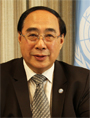
On 1 August 2012, Mr. Wu Hongbo became Under-Secretary-General of DESA, as appointed by UN Secretary General Ban Ki Moon.
In this capacity, Mr. Wu is responsible for a number of tasks, including:
managing the Department and its divisions;
advising the Secretary-General on issues related to social, economic and sustainable development;
establishing key partnerships with governments, UN agencies and civil society organizations;
convening the Executive Committee on Economic and Social Affairs, which is the UN’s network for joint initiatives on development;
and overseeing the Development Account of the United Nations regular budget, which funds programmes implemented by ten different entities in the UN Secretariat.
"This first month has been very exciting," said Mr. Lenni Montiel, who was recently appointed as Assistant Secretary-General for Economic Development in UN D...
In December 2007, the General Assembly proclaimed the Second United Nations Decade for the Eradication of Poverty (2008-2017) reiterating that eradicating poverty was the greatest global challenge facing the world and a core requirement for sustainable development, especially for developing countries. The proclamation recalls the outcomes of the World Summit for Social Development and the twenty-fourth special session of the General Assembly.
On 22 December 2004, the General Assembly adopted Resolution A/RES/59/174 for a Second International Decade, which commenced on 1 January 2005. The Under-Secretary-General for Economic and Social Affairs, Mr. José Antonio Ocampo was appointed Coordinator for the Second Decade.
The Role of Cooperatives in Sustainable Development for All
Nairobi, Kenya 8-10 December 2014
UNDESA DSPD Focal Point on Cooperatives is organizing an Expert Group Meeting (EGM) and Capacity-building Workshop on "The Role of Cooperatives in Sustainable Development: Contributions, Challenges and Strategies". The EGM is an opportunity for the exchange of ideas on how cooperatives are helping to build sustainable societies, and also a good occasion for capacity-building of cooperative leaders/trainers in Africa. The results will serve to raise awareness as to how best to leverage the cooperative model as a viable means of sustainable living.
Social Integration and the Rights of Older Persons
Bangkok, 30 September - 2 October 2014
UNDESA DSPD Focal Point on Ageing, the United Nations Economic and Social Commission for Asia and the Pacific (UNESCAP) and the Asia-Pacific Forum of National Human Rights Institutions (APF), with the support of the United Nations Population Fund (UNFPA), HelpAge International and the International Federation of Ageing, are jointly organising a Workshop on the Social Integration and Rights of Older Persons in the Asia-Pacific region, to foster a regional dialogue towards building consensus around promoting social integration and rights of older persons.
At its 52nd session, in February 2014, the Commission for Social Development chose “Rethinking social development in the contemporary world” as the priority theme for the 2015-2016 review and policy cycle. To this end, the Expert Group Meeting on “Rethinking and Strengthening Social Development in the Contemporary World: Progress in Advancing Social Development and Lessons Learned”is bringing together a small number of experts to review progress made in social development and to discuss whether and under which conditions progress has been most significant.
Please click here for more information regarding this meeting.
International EGM: Sexual health and reproductive rights
New York, 15-17 January 2014
The Expert Group Meeting on sexual health and reproductive rights was organized following a decision by the Economic and Social Council, authorizing a three day international expert group meeting. The results of the meeting was reported to the UN Permanent Forum on Indigenous Issues at its thirteenth session in May 2014.
UNDESA DSPD and UNESCO will organize an Expert Group Meeting at UNESCO Headquarters, Paris, under the theme “Youth Civic Engagement: enabling youth participation in political, social and economic life.” The meeting will bring together experts and representatives of youth organizations, academia, representatives of Member States, United Nations entities, and intergovernmental organizations to discuss the ways in which youth civic engagement can be an enabler for political, social and economic participation, as well as to examine current opportunities and challenges affecting such potential.
THE WORLD YOUTH REPORT explores the situation of young migrants from the perspective of young migrants themselves. The report highlights some of the concerns, challenges and successes experienced by young migrants based on their own lives and told in their own voices. Experiences during the different phases of migration are examined including preparation, journey and transit, challenges faced in the destination, as well as awareness and engagement of young people on migration issues.
Young people are crucial stakeholders in the pursuit of successful migrations outcomes. However, too often their voices go unheard. As such, the World Youth Report aims to explore youth migration issues primarily through the words of young people themselves around the world. To this effect, the Report was developed through a range of participatory consultations designed to draw on the perspectives of young people on how migration affects them. These consultative sessions included a five-week e-consultation process, a survey on youth migration and development, a call for visual art illustrating the daily life experiences of young migrants as well as youth initiatives on migration and development, and a Google+ Hangout to identify sustainable solutions for addressing youth migration challenges.
Recognizing the diversity of youth migrants is important for understanding the impact of migration on the human development of young men and women as well as on their countries of origin and destination. It is also essential for designing specific interventions that address their unique vulnerabilities and enable them to realize their hopes and aspirations.
International migration has increased steadily over the years and now stands at some 232 million international migrants worldwide, of whom some 30 per cent are aged under 29 years. Young people attest to a variety of reasons for migrating including personal and socio-economic circumstances, such as job and educational prospects as well as the political situation in their country of origin. A smaller, although significant, number of young people are forced to migrate, as a result of natural or man-made circumstances; and in 2013, 15 million international migrants were refugees.
The impacts of youth migration are mixed. When young people migrate, they tend to improve both their own financial situation and the economic circumstances of their families through the income they earn and the remittances they send home, while destination countries benefit from greater economic efficiency. Gender equity can also be reinforced as young women’s decision making authority within families and society can be increased. However, countries of origin can suffer from negative impacts of human capital flight, or brain drain, notably of health and education professionals. At the same time, youth left behind by migrant parents may miss parental guidance in their formative years, but can gain increased capacity in assuming greater responsibility for their household and greater family resources from remittances if spent on education, health care and other basic needs.
The process of migration itself brings different challenges and experiences and can affect overall outcomes for young people. Prior to migration, young people may be excited at the prospect of leaving home and discovering a new place, while they also face challenges. Participants in online consultations most often cited the difficulty of obtaining accurate information about their intended destination. Similarly, practicalities such as obtaining the necessary documents and arranging travel and accommodation can be complicated, expensive and time consuming. Without accurate information, young people can fall vulnerable to abuse and exploitation. To ease the preparatory stage, young people recommended the development of tools to help those thinking of migration to assess their readiness and to facilitate decision-making and planning, including peer-to-peer initiatives, pre-departure orientation programmes and awareness-raising campaigns.
“I faced unique challenges migrating as a young person. I was vulnerable to any situation at that time. People took advantage of me.”
In their journey from country of origin to their final destination, some international migrants spend time in a transit country. Although careful planning may reduce travel risks, evidence suggests that the transit journey can be the most dangerous part of the migration process; as many migrants have limited social networks and support they can be vulnerable to threats that could affect their well-being and ability to reach a destination country. A number of participants affirmed that support at this stage helped their transit, they highlighted assistance ranging from strangers in the transit country translating labels in shops, to provision of emergency health-care services, and help from diaspora communities and friends and family back home.
“The most [valuable] support my wife and I received . . . was care and concern.”
Once they reach their destination country, the experiences of migrant youth vary greatly depending on migration motives, gender and migration status. Recent arrivals often experience culture shock and loneliness. They also have to cope with finding accommodation, employment, deal with transport and may have to overcome communication barriers. In the longer term, they may face stereotyping and discrimination at work and in society at large. These challenges may interfere with their social and economic integration and limit their opportunities for development. Social networks and establishing connections in new places helps newcomers settle in, while maintaining ties with their countries of origin eases their transition and provides emotional continuity. Young migrants lacking access to such support systems tend to experience slower or less effective integration and are more likely to be subjected to abuse and exploitation.
Looking at work and life experiences in the destination, moderately or highly skilled youth with higher levels of education, knowledge of the working language(s), and some work experience have a better chance of securing a decent job after migrating. While young migrants in irregular situations, those seeking a job for the first-time, as well as those from poorer economic backgrounds with fewer skills and lower educational attainment are more likely to work in dirty, difficult and dangerous conditions. Young migrants in irregular situations can face additional vulnerabilities including in access to health care which they may avoid using for fear of arrest and deportation. These challenges are intensified at times of economic downturn when young immigrants are more likely than others to lose their jobs.
“These youth migrants work under harsh conditions in destination countries. There’s often a thin line between the victims of legal migration and the victims of irregular migration.”
Overall, migration outcomes vary widely. While youth are especially vulnerable to the risks and dangers associated with migration, their capacity as agents of social change and development should not be underestimated. Some young migrants return to their country of origin, either voluntarily or involuntarily, whereas others remain in the destination. Whatever they decide, young people typically find that the migration experience has transformed them.
Continuing the journey forward
Recognizing the valuable knowledge that young migrants and youth affected by migration possess, Governments and development partners in a number of countries engage young people in developing national planning strategies and policies. At the same time, a number of national youth commissions, youth-led organizations and other youth civil society networks have been directly involved in official decision-making structures at the highest levels. However, engagement remains exceptional and many young people, particularly the most vulnerable, lack knowledge of how to participate in relevant networks. An increased commitment among young people, youth-led organizations and greater political will of decision makers at all levels are needed for meaningful youth participation in migration and development policy planning. Promoting awareness of young people and to enable their full engagement in migration-centred initiatives can facilitate their experience and enable them to assume ownership of their contribution to development.
The World Youth Report is a biennially recurring flagship publication of the United Nations Department of Economic and Social Affairs (see Resolution E/2007/26). The report is available at
The UN Permanent Forum on Indigenous Issues meets for 10 days each year, at UN Headquarters in New York. According to the ECOSOC resolution that established the Forum (E/2000/22), the Forum may also meet at the UN Office in Geneva or at such other place that the Forum may decide.
It is a high-level advisory body that deals with indigenous issues related to economic and social development, culture, environment, education, health and human rights.
In addition to these six areas, each session has thematically focused on a specific issue. During the Forum's first six sessions, a specific theme was discussed each year. Since 2008, the Forum has adopted a bi-annual working method of one year with a specific theme and the next year focussing on review of implementation.
First Session 12 to 24 May 2002 - United Nations Headquarters, New York
Second Session 11 to 23 May 2003 - United Nations Headquarters, New York Special Theme: Indigenous Children and Youth
Third Session 10 to 21 May 2004 - United Nations Headquarters, New York Special Theme: Indigenous Women
Fourth Session 16 to 27 May 2005 - United Nations Headquarters, New York Special Theme: Millennium Development Goals and Indigenous Peoples with a focus on Goal 1 to Eradicate Poverty and Extreme Hunger, and Goal 2 to achieve universal primary education
Fifth Session 15 to 26 May 2006 - United Nations Headquarters, New York Special Theme: The Millennium Development Goals and indigenous peoples: Re-defining the Millennium Development Goals"
Sixth Session 14 to 25 May 2007 - United Nations Headquarters, New York Special Theme: Territories, Lands and Natural Resources
Seventh Session 21 April - 2 May, 2008 - United Nations Headquarters, New York Special Theme: Climate change, bio-cultural diversity and livelihoods: the stewardship role of indigenous peoples and new challenges"
Eighth Session 18-29 May, 2009 - United Nations Headquarters, New York Review year
Ninth Session 19-30 April 2010 - UN Headquarters, New York Special Theme: Indigenous peoples: development with culture and identity; articles 3 and 32 of the United Nations Declaration on the Rights of Indigenous Peoples
Tenth Session 16-27 May 2011 - UN Headquarters, New York Review year
Eleventh Session 7-18 May 2012 - UN Headquarters, New York Special Theme: The Doctrine of Discovery: its enduring impact on indigenous peoples and the right to redress for past conquests (articles 28 and 37 of the United Nations Declaration on the Rights of Indigenous Peoples)
Twelfth Session 20-31 May 2013 - UN Headquarters, New York Review year
Thirteenth Session 12-23 May 2014 - UN Headquarters, New York Special Theme: “Principles of good governance consistent with the United Nations Declaration on the Rights of Indigenous Peoples: articles 3 to 6 and 46”
Fourteenth Session 20 April - 1 May 2015 - UN Headquarters, New York Review year
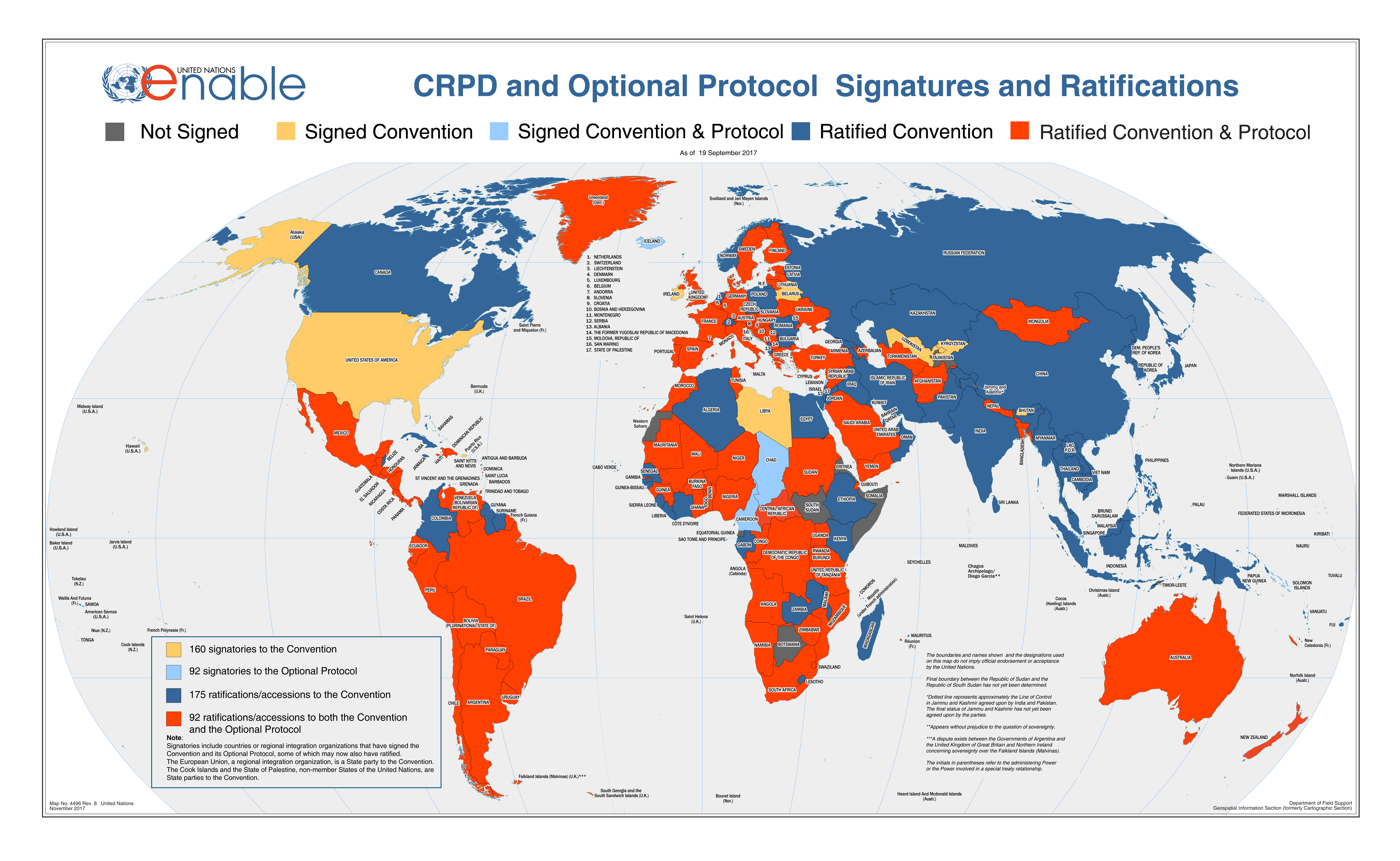
The Convention on the Rights of Persons with Disabilities and its Optional Protocol (A/RES/61/106) was adopted on 13 December 2006 at the United Nations Headquarters in New York, and was opened for signature on 30 March 2007. There were 82 signatories to the Convention, 44 signatories to the Optional Protocol, and 1 ratification of the Convention. This is the highest number of signatories in history to a UN Convention on its opening day. It is the first comprehensive human rights treaty of the 21st century and is the first human rights convention to be open for signature by regional integration organizations. The Convention entered into force on 3May 2008.
The Convention follows decades of work by the United Nations to change attitudes and approaches to persons with disabilities. It takes to a new height the movement from viewing persons with disabilities as "objects" of charity, medical treatment and social protection towards viewing persons with disabilities as "subjects" with rights, who are capable of claiming those rights and making decisions for their lives based on their free and informed consent as well as being active members of society.
The Convention is intended as a human rights instrument with an explicit, social development dimension. It adopts a broad categorization of persons with disabilities and reaffirms that all persons with all types of disabilities must enjoy all human rights and fundamental freedoms. It clarifies and qualifies how all categories of rights apply to persons with disabilities and identifies areas where adaptations have to be made for persons with disabilities to effectively exercise their rights and areas where their rights have been violated, and where protection of rights must be reinforced.
The Convention was negotiated during eight sessions of an Ad Hoc Committee of the General Assembly from 2002 to 2006, making it the fastest negotiated human rights treaty.
Read the complete text of the Convention on the Rights of Persons with Disabilities:
Convention: English [HTML] - Optional Protocol: English [HTML]
* These non-official versions of the Convention are provided by other sources and are for informational purposes only; they do not constitute endorsement of, or an approval by, the United Nations of any of the text or products, services, or opinions of the organization or individual. The United Nations bears no responsibility for the accuracy, legality or content of their statements and opinions.
Youth Flash April 2015 Focus: This issue of Youth Flash features the article "The one minute video that took me to the United Nations" written by Melissa Dessavre, an International Relations student in Mexico. She describes how a one minute video contest entry led to her involvement in the fifty-ninth session of the Commission on the Status of Women (CSW), held at the UN Headquarters in New York on 9-20 March 2015. Her involvement included listening to and learning from the discussions presented at the Commission on the subject of gender equality and the empowerment of women around the world. Melissa aims to continue engaging youth about this topic when she returns to her home country of Mexico.
You can participate in several intergovernmental meetings at the United Nations. How? Learn more
Inter-Agency Network on Youth
The United Nations Inter-Agency Network on Youth Development (IANYD) is a network consisting of UN entities, represented at the headquarters level, whose work is relevant to youth. The aim of the Network is to increase the effectiveness of UN work in youth development. Learn more
The World Summit for Social Development in Copenhagen in 1995 defined an inclusive society as “a society for all’, in which every individual, each with rights and responsibilities, has an active role to play (United Nations, 1995, para 66).
Such an inclusive society is equipped with mechanisms which accommodate diversity, and facilitate/enable people’s active participation in their political, economic and social lives. As such, it over-rides differences of race, gender, class, generation, and geography, and ensures equal opportunities for all to achieve full potential in life, regardless of origin. Such a society fosters, at the same time, emanates from well-being of each individual, mutual trust, sense of belonging and inter-connectedness.
Our mandates
The Focal Point onAgeing is the focal point within the United Nations system on matters related to ageing. As the focal point, its primary action is to facilitate and promote the Madrid International Plan of Action on Ageing, including designing guidelines for policy development and implementation; advocating means to mainstream ageing issues into development agendas; engaging in dialogue with civil society and the private sector; and information exchange.
The Focal Point on Youth aims to build an awareness of the global situation of young people, as well as promote their rights and aspirations. The Focal Point also works towards greater participation of young people in decision-making as a means of achieving peace and development. The mandate of the Focal Point on Youth is predominantly based on the World Programme of Action for Youth.
The Focal Point on the Family aims at promoting the realization of the objectives of the International Year of the Family (1994) through the integration of a family perspective into policy-making at the national, regional and international levels.
The primary activities of the Focal Point on the Family are to:
provide substantive servicing in the areas of family and family policy to United Nations intergovernmental bodies, particularly the General Assembly, Commission for Social Development and the Economic and Social Council;
promote the realization of the objectives of the International Year of the Family;
promote the integration of a family perspective into policy-making at the national, regional and international levels;
exchange expertise and experiences, disseminate information and support networking on family issues;
support family research and diagnostic studies;
encourage and support coordination on family policies and programmes within national governments and within the United Nations system;
provide technical assistance and capacity-building support to developing country Governments, at their request, in the area of the family; and
liaise and dialogue with Governments, civil society and the private sector on family issues.
To get content containing either thought or leadership enter:
To get content containing both thought and leadership enter:
To get content containing the expression thought leadership enter:
You can enter several keywords and you can refine them whenever you want. Our suggestion engine uses more signals but entering a few keywords here will rapidly give you great content to curate.


 Your new post is loading...