United Nations, UNGA, UNDESA, UNDSPD, ECOSOC, UNSDN, UNNGLS,
4.1K views | +2 today
Follow
 
Scooped by KROTOASA RESEARCH-INTENSIVE INSTITUTE (KRII)
onto United Nations, UNGA, UNDESA, UNDSPD, ECOSOC, UNSDN, UNNGLS,
May 4, 2015 11:44 AM
Scoop.it!

Diaries from the field | UN Reporters in their own words

Diaries from the field | UN Reporters in their own words | United Nations, UNGA, UNDESA, UNDSPD, ECOSOC, UNSDN, UNNGLS, | Scoop.it
Detroit – water not flowing
19 Jan 2015 05:29 pm | Posted by Francis Mead

by Francis Mead

Motown = Motor City = famous artists = cars = shut-off water supplies = UN = human rights.

Huh? Detroit combines all of the above. 


Two UN human rights reporters – officially they're called "Special Rapporteurs" – visited the Michigan city recently, after local groups appealed to them for help. Why? Because the city, bankrupt and desperately in need of revenue, had decided to cut people's water supplies off in an attempt to force them to pay their bills. Almost half the city's residences were in arrears. The Special Rapporteurs said that it’s a human rights violation to cut water supplies to someone who can’t afford to pay – and they pointed out that some countries have simply made it illegal to cut off anyone’s water for any reason – on public health grounds.

The story got international attention – and we (myself, cameraman Antonio Tibaldi, and drone photographer Parker Gyokeres) went to make a film about what it all meant.

We filmed with Rochelle McCaskill who'd had her water cut off. She's struggling with lupus and simply can't keep up with the bills, because her disability benefits aren't enough to pay the rent AND the water bill.

Essentially, this is a film about urban poverty in a wealthy Western country – not unheard of, of course in many other industrialized countries. But Detroit is an extreme example of urban deterioration. Known as the Motor City, because of its association with the giants of the automobile industry – Ford, Chrysler, General Motors – its revenues have plummeted as the industry contracted under international competition. Then, after major rioting in the 1960s, there was a massive flight of middle class families out of the city. The city's population has gone down from nearly two million to 700,000 now. Fewer people mean it's harder and more costly to maintain services – which then become more expensive and less affordable. A horrible spiral, that's left some of the very poor in an impossible situation.

Detroit's mayor has put in place repayment plans and is raising money to help the very poor – but some criticize the repayment plans as too inflexible – and the extra money hasn't reached people like Rochelle McCaskill. Thousands are still being cut off.

So life is hard, very hard for Rochelle and her family.

But we found an unexpected link which completed the chain back from water, human rights, and the UN – all the way back to Motown. Because Rochelle's uncle composed the famous hit song "What becomes of the Brokenhearted" while she was literally sitting on his knee! She paints to the music – and while she does, she finds the peace of mind the song talks about.

A short extract from the film. (Full fim here.)


Filed under Uncategorized.
Preserving the Forests in the Solomon Islands
19 Jan 2015 05:11 pm | Posted by Gill Fickling

by Gill Fickling

Eight pm on a Friday evening.  My skype pings with an incoming message.  It's my cameraman/fixer, Wade Fairley, in the Solomon Islands where I'm due to be joining him the following Monday to shoot two stories for "21st Century".  There's been a tragedy.  The small boat we were to travel in the next week to a remote island in the Western Province to cover a story on sustainable logging has gone down in a storm.  Five of the seven people on board have been drowned, including employees of the non-governmental organisation we were to have worked with and the boat's captain.  Boat-travel in the Solomon Islands is essential but hazardous.  These small vessels with outboard motors often sail heavily overloaded risking storms, high winds and dangerous currents.   But with few roads across the almost 1000 islands that make up the country and the price of air-travel exorbitant, voyaging by sea is usually the only option for locals.
This was a devastating catastrophe for the local people on the island of Vella Lavella, where we were to have filmed one of the few communities in the country who engage in sustainable timber production.  And we now needed a new story – fast!

Furious activity, largely by Wade, during the next 24 hours, the real threat of cancellation spurring us on, resulted in an alternative story and the shoot was saved.    But after a 30 hour flight to Honiara, the capital, followed the next day by an bumpy hop in a small plane to another island in the Western Province, we then needed to board the same type of boat as recently sank to take us to the community of Zaira, on the "ocean" side of the island of Vangunu.   The captain warned that the swell was rising and the winds were increasing, so we needed to leave as soon as possible.  With six of us on board, our camera equipment safely stored in waterproof bags and covered in a plastic sheet, we set off – firstly across the tranquil turquoise waters of the Marovo Lagoon, and then out into the open sea.  I have probably never been more terrified!   The waves dwarfing our small vessel were 3 metres high – walls of water alongside us, many of them breaking on the top – the sky grey and foreboding, and the wind howling.  We clung on to the wooden slats across the tossing boat which served as benches for two and a half hours, drenched with sea spray.  Whenever the boat rose to the top of a wave, I eyed the rocky shore and calculated which part I thought I could swim to when we capsized.   But, thanks to the impressive proficiency of the captain, we didn't – although the sea was too rough to land at our destination so we went on further to a sheltered bay and then hiked two hours the next day, along the beach and through the forest to reach the village of Zaira.  Eight local men helped us carry all the gear!
Arriving eventually in Zaira was like stepping into paradise!  Not only were we alive, but we had walked into a time-warp – no electricity, no running water, no phone network, no shops but an abundance of warm hospitality and a pristine environment of wooden huts with palm-leaf roofs surrounded by one of the few swathes of virgin forest in the region, untouched by commercial loggers.

For the next five days, we lived in a village house, eating what they ate and bathing in the local river as they did.  We filmed how they harvested just what they needed from the forest – individual hardwood trees to build the roof of their new church; "maria" nuts, similar to Brazil nuts, which form a staple of their diet – each family knows which tree is theirs to harvest; and root vegetables planted in forest clearings.   But not only does the forest provide for most of their needs, the villagers are now involved in a new scheme to help finance its future; the development of eco-tourism.  Through the protection of their forest and sustainable management of its resources, they hope to attract visitors, charmed by the simplicity of the life-style and beauty of the surroundings.  This kind of venture, which combines forest management with the provision of livelihoods for small communities, is heralded by the UN Forum on Forests, with whose support this film was being made.   UN Television is producing four films for UNFF this year to showcase similar examples of sustainable forest financing around the world (see link to film from Trinidad and Tobago – "Saving the Turtles" on how forests contribute to the preservation of Leatherback Turtles and livelihoods for local people).
Leaving Zaira was a challenge – both physically, as the boat had to be launched off a platform of rocks, dodging the breaking waves and nearby reef – and emotionally.   With a huge respect for these people, who tackle these hazardous boat-rides as though jumping in a cab to the supermarket, it had been a privilege for me to share their life-style in this, one of the most remote corners of the globe I had ever visited.   And now I felt sad to leave this place where nature both provides and is respected, where deadlines are non-existent and the pace of daily-life allows time for people to be nice to each other!   As their chief, remarkable 74 year-old Green Jino, who has systematically resisted economically-attractive offers from loggers to sell his people's land and future, says:
"Our children, our children's children, where will they go if we destroy the land?  I will never sell the land because people are important and land is important for the future."
See "21st Century" feature from the Solomon Islands – "The Wood for the Trees".

Filed under Uncategorized.
Akhtar’s Story
20 Mar 2014 04:17 pm | Posted by Francis Mead

by GILL FICKLING

When I first met Akhtar in 2009, he was dirty, hungry, disillusioned and scared.   He was then living in a squalid camp of flimsy cardboard boxes in Greece's western port city, Patras, along with 1600 other Afghan boys and men who, like him, had come with hope of finding a new life in Europe.

Destitute without food or the right to earn a living, hounded by the authorities and unable to either leave the country, or to legally stay, Akhtar, like those around him, had reached a dead end.   He told me "This is like living like animals … I think I've come to the wrong place". 

I was in Greece with cameraman, Sebastian Rich, to shoot a story for "21st Century" on Europe's migration issue, and, in this case, Greece's inability to cope with the influx of asylum hopefuls.  Akhtar's was the human face of this "problem".  The film, called "Dead End", was distributed in our series in 2009.  It would be four years before I would meet him again, when I shot a follow-up film with him, a long way from where we first met.

Amidst the sea of desperation in Greece, Akhtar stood out because of his gentleness, humility and intelligence.  Fluent in 5 languages, including English which he learnt while growing up in a UN Refugee Agency camp in Pakistan,  Akhtar had been threatened by the Taliban on his return to Afghanistan, which led him to believe his life was in danger.  Using family savings, he fled, paying traffickers to bring him on a hazardous, 2-month journey across Iran and Turkey, to Europe – where he hoped to find safety.  He also hoped to be allowed to study, to get a good job and to support his widowed mother in Afghanistan and his younger siblings' education. 

Akhtar was then just 18 – the same age as my daughter – and I was deeply touched by his courage and determination, and the burden of responsibility he carried at such a young age.   

But he never dreamed that his welcome to Europe would be such a cold one.  Desperate to get out of the impossible situation in Greece, each day, he would head down to the port where, with dozens of other boys, he tried to smuggle himself underneath trucks waiting to board the ferry to Italy.   Most boys were apprehended and turned back – but some died trying, crushed in their hiding places when rear wheels were lifted.

This was the start of what would turn out to be a long journey for Akhtar. 

When I left Greece, we kept in touch by email and the occasional phone call as he made his way from one European country to another, trying to find one that would accept him. But he always tried to evade the authorities which, by European law, would be obliged to send him back to Greece, his first country of entry into Europe.  Apprehended and detained in locked Detention Centers in Hungary and in Austria, he miraculously managed to escape both times once it became clear that he would be sent back to Greece.   Finally, after two years on the road fleeing from one country to the next, he arrived in Luxembourg in northern Europe where, he had heard, young asylum-seekers had a chance of being granted asylum.  It was his last hope.  At first, he believed he had a chance –  the Luxembourg authorities provided him with housing and the chance to go back to school.  He waited anxiously as his asylum application was reviewed.    But to both his and his lawyer's dismay, all his applications were rejected on the grounds that his life was not believed to be in danger in Afghanistan.  He was at this stage when I arranged to meet him again, in 2012, to film the follow-up on his story with UNTV cameraman Bernard Vansiliette.   The previous years had taken their toll – he was cleaner than when I first met him, but his spirit and hope were diminished.  He could not understand why he wasn't being given a chance – he felt he had so much to offer, and just wanted to live like a decent citizen in Europe.  Even the Luxembourg Minister for Immigration, who we interviewed, agreed that the immigration system needed to be addressed to avoid situation's like Akhtar's. 

But in December 2013, I received some good news from Akhtar.   It seemed the Luxembourg authorities had awarded him temporary leave of stay in the country in order to finish his studies.  He was thrilled, filled with plans of studying for a Bachelor's degree at university after he has graduated from high-school.   During the four years I've known Akhtar, the only thing he has ever asked from me is books for his studies; I hope that through that small gesture, and by highlighting his story in the international media, we may have in some way contributed to this happy ending.

See the film of his 4 year journey, called Akthar's Story, distributed to broadcasters in 2013


Filed under Uncategorized.
The Women Shepherds of Somaliland
7 Jan 2014 06:20 pm | Posted by Francis Mead

by Francis Mead

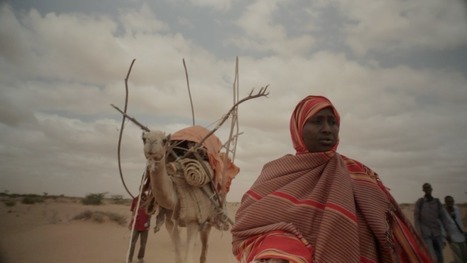
We won’t forget Beerato. It’s a village in central Somaliland. Dust, sheep, goats, camels – and bold women, insisting on changing their lives – and knowing how to party – dancing, singing and clapping in the Sufi style. Cameraman Antonio Tibaldi and I arrived in a UN four-by-four. We had to bring eight armed guards in two more vehicles with us – UN rules – since there’s a danger of kidnapping.


We travelled with Amina Souleiman, a Somali woman who gained political asylum in the UK during Somalia’s civil war in the 90s. She now spends half her year helping women in her homeland stand up for their rights. The UN Democracy Fund is financing her project. In my opinion it’s a remarkable initiative, though each step forward has to be patient and small, and is met by resistance. We met Sahra – an impressive, highly intelligent woman, a shepherd with no formal education and one of the leading lights in the village. Sahra is one of Amina’s protegés.


Water is a central concern year round – and Beerato, when drought isn’t severe, is a major watering hole for the surrounding villages. We watched and filmed as camel herds and flocks of sheep and goats were brought in, lining up to take their turn, almost like aircraft taxiing on a runway. The semi-nomadic families here move their flocks and herds to new pastures several times each year:


Amina Souleiman (left, standing) with a woman and children from the village.

Life in Beerato is precarious. By the traditional division of labour, women look after sheep and goats, while men look after the camels. If women lose their flock to drought (which happens not infrequently) they effectively lose their right to graze the tribal lands and are often forced into exile to the capital Hargeisa. Then almost the only option is to labour in the markets. In the city, life is brutally tough, money is hard to come by, and home is usually a displaced persons’ camp or a shanty town.

Amina, Sahra and the village women are determined this won’t happen to them. Holding regular women’s circles, they are asserting their rights with the male village elders, and arguing for access to school and land. Already, they have installed five women teachers in the village school for the first time. Next they plan to build a hospital (money will have to be raised internationally by Amina). The hospital will provide jobs and improved health – many mothers die in childbirth. But there’s opposition all along the way – it took weeks of persistent requests before the women finally got the keys to the school office and generator.

Antonio and I were both inspired by Amina’s enthusiasm and determination – and her ability to bridge the huge cultural gap between two white Western guys with cameras, and rural women in a small village. She had the capacity to know and communicate fluently between both worlds. Antonio, who’s a film director in his own right when he’s not working for the UN, was also very struck by Sahra:


Fatima, already widowed, was forced by drought to leave her village for the city:


The full film can be seen here on the UN’s site.

A slightly longer version of the film here.

(Sufi dancing near the end of the film)


Filed under Uncategorized.
Risking Life and Limb in Afghanistan
14 Oct 2013 01:06 pm | Posted by Mary Ferreira

by Mary Ferreira and Haris Kakar

Recently I had the pleasure of working with and mentoring a young journalist from Afghanistan, Haris Kakar, a participant in the Reham al-Farra Memorial Journalists Fellowship Programme which ran for 5-weeks this year – one week in Geneva and four weeks in New York.

A total of 11 journalists (Radio/Internet/Print/TV) had the chance to work with UN staff and follow coverage of important events. At the end of the fellowship, each journalist had to finalize a project in their field of work. Haris, a print journalist, chose to write an article about humanitarian aid workers in Afghanistan who risk everything to help the needy. Elizabeth Scaffidi from SCD assisted in the editing process. Here’s Haris’ story…

“United Nations, New York – For 30 years Mohammad Nabi has been delivering aid to his vulnerable countrymen and women in central Afghanistan, risking his life to help others get "better health and education".


As the security situation deteriorates, the conflict in the central Asian nation rages on. Aid workers across Afghanistan continue to worry about the humanitarian situation as well as their own lives.

Afghanistan faces a crucial moment: expecting to hold second major presidential elections next year as NATO-led International Security Assistance Forces pull out.

Fifty-nine year old Nabi is an aid worker for the Swedish Committee for Afghanistan in the central Wardak province. Forty kilometers from Kabul, Wardak has been a fierce battleground for fighting between Afghan government troops and insurgents.

"We are providing health and education services to people there with a half-million of the population benefiting from our aid", Nabi says.

But delivering educational and health supplies is not an easy task. Gunmen regularly target military and civilian vehicles along the highway. The roadside bombs, frequently used by the rebels as weapon of choice, often kill civilians along the highway, which connects Kabul to southern Kandahar province.

"Our security is a big challenge for us in this province. We are often stopped for hours by different insurgent groups," Nabi adds. He keeps close contact with tribal elders and community leaders for a worst case scenario.

"Tribal elders and villagers mediate our release when they [insurgents] arrest us while delivering aid." he asserts. Although Nabi is well known among Wardak villagers, for precautionary measures he must change his appearance, such as grow a beard, don traditional clothes and even wear a turban to disguise his identity.

"But people make any possible effort to help us and rescue us."

Armed men have frequently beaten Nabi and his colleagues. He has even been tortured, but declines to share that story.

Humanitarian agencies have been targeted by insurgents and extremists in the past. In August, five aid workers of the International Rescue Committee (ICR) were shot dead by unknown gunmen in western Afghanistan.

In May this year, suicide bombers stormed the International Organization for Migration (IOM) in Kabul, killing and injuring several people. Days after an attack on an IOM compound, a suicide bomber killed a guard in an attack on a regional office of the International Committee of Red Crescent in eastern Afghanistan. A senior UN official, who spoke on the condition of anonymity, said aid agencies are continuously under attacks, spreading fear among the agencies and their workers.

Afghanistan is still considered a "high risk area" in the United Nations. Nadir Farhad, a spokesman for UNHCR in Kabul, says the country's security situation has been responsible for the delay in delivering humanitarian aid to Afghans. "It is a tough job to deliver aid to people in Afghanistan," lamented Mr. Farhad.

Andreas Stefansson, Swedish committee country director says being an aid worker in Afghanistan is "a tough and challenging job".
He says that his agency's workers are being arrested, mistaken for government employees by insurgents. For this reason, they rely on councils within local villages to protect their aid workers rather than security forces.

The future of the humanitarian situation is unclear – Mr. Stefansson says it depends on "internal politics and foreign countries contribution to stabilize or destabilize" the country. But Nabi remains committed to helping his people as he delivers textbooks to boys and girls to make a better future. "I am happy with my job despite its risk because I serve my people."

Filed under Disaster.
UN Special Rapporteur visits Uruguay
9 Oct 2013 04:20 pm | Posted by Mary Ferreira

By Mary Ferreira

Montevideo, Uruguay – Covering the visit to Uruguay of the UN Special Rapporteur, Pablo de Greiff, led us to several places in Montevideo including the Supreme Court, the President's office, and the Office of Human Rights.

Pablo met with government officials and members of civil society, including ex-prisoners and relatives of the "detained disappeared". For videographer Joaquim Vieira and me, following the rapporteur as he visited various ministries and offices was quite challenging since we had to travel in a separate vehicle, timing precisely when the rapporteur would arrive at the next location.

We met several ex-prisoners who were eager to share their experiences during that tragic period – 1970s to 1980s – in their nation's history when "Plan Condor" was in operation across several South American countries. They said this was the first time that anyone showed so much interest in their story. We also had opportunities to visit relatives of "the disappeared" who continue to demand the truth some 40 years later.

When asked if he thought that more remains would be found of those who are still listed as "disappeared" and whether the truth would come to light he said, "Some legal initiatives have been taken. There is of course a question of whether each of those initiatives goes far enough to satisfy fully the rights that victims and society have in each of the different areas. But with respect to each of them there has been some legislative and executive action."

Here is a short clip highlighting some special moments with Pablo, victims, and relatives of the "disappeared". The full story will be released later.

Filed under Politics.
Haiti: Street Children live dangerously
29 May 2013 04:12 pm | Posted by Mary Ferreira

by Mary Ferreira

Port-au-Prince, Haiti – The number of children living on the streets of Port-au-Prince alone doubled to 4,000 since the 2010 earthquake says UNICEF. They're everywhere – darting in between cars – trying to survive in a country mired in poverty.

They clean cars to survive. Anyone driving in the Delmas area can spot five to 10 of them at a time working hurriedly to catch the next car. Often most drivers prefer not to have their cars cleaned; others pay some 50 gourdes – just a little more than one US dollar – for a quick job. With that money, street children can barely buy a piece of bread and a plastic packet of water –essential items in the sweltering heat of this Caribbean nation.

We met 16-year-old Jean Leonel who has been a street child since the earthquake struck, killing both of his parents. It's a dangerous life but Jean Leonel believes there's no other choice for him. He said, "Imagine if I go to live with my grandmother, she's old and can no longer work. I have to stay here and work so that I can earn some money to care for her."

His reasoning is one held by most street children who are committed to helping their relatives. For boys like Jean Leonel, they opt to remain on the streets instead of registering at shelters designated for them where they're guaranteed hot meals, regular showers, and decent living. Jean Leonel says it's tough now due to the economic crisis but he continues working the streets of Port-au-Prince hoping that one day he'll be able to return to a normal life. Here's a short clip of Jean Leonel's story.

Filed under Disaster.
Haiti: Youth displaced by Earthquake
29 May 2013 03:30 pm | Posted by Mary Ferreira

by Mary Ferreira

Port-au-Prince, Haiti – An assignment to produce a story about youth and democracy, supported by the United Nations Democracy Fund (UNDEF), following the 2010 earthquake brought me back to Haiti with cameraman, Joaquim Vieira.

I first visited this Caribbean country in 2007 when there was a strict curfew in place for UN Staff. We had been advised to remain indoors after 6 pm.

Now, despite the earthquake, the country appears less tense. Of course, there is still the constant danger of kidnapping – especially for foreigners – so one needs to be vigilant and careful at all times.

This story took us to a place called Saint Marc, some 90 minutes from Port-au-Prince, the capital city. There we saw young people actively involved in sports, culture, and civic duty. They were passionate about the future of their country, encouraging others to participate in the reconstruction and political processes, especially exercising their right to vote.

One young woman, Lovely, travelled back to Martissant, Port-au-Prince, to show us where she lived when the earthquake struck, destroying her home, causing her to lose everything. Martissant is listed as a red zone district by MINUSTAH. A SWAT team from the Jordanian Battalion accompanied us to ensure safety while filming. Here’s a short clip of that coverage.

Filed under Disaster.
Empowering Women in Zimbabwe
2 Jan 2013 07:04 pm | Posted by Mary Ferreira

by Mary Ferreira


Rosemary Marimo is a woman with purpose. She began prospecting for gold in Musowe, Zimbabwe with her husband 20 years ago. Now, 60 years old, she has been running the business alone.

I first met Rosemary when I visited Zimbabwe to produce a feature story on gender equality and women’s empowerment for 21st Century, UNTV’s news magazine series. Still full of life and enthusiastic about her work, Rosemary told me that her husband died 14 years ago, "He got very sick and passed away, and I carried on." For any woman in this southern African country, it's difficult to operate a business because of the lack of collateral. Most of the family's assets are usually registered in the man's name. Rosemary started her business through a bank loan her husband obtained years ago.

When he died, she almost lost everything she said, "I had to call my son back from America after he graduated as an engineer. I told him we must work hard because the bank wanted to take everything away from us." Rosemary's son returned and they managed to pay off the loan. Now he develops new equipment for the mill, which processes ore retrieved from the mine pits.

Today, it's much easier for women to get into the mining sector since the Government introduced the "indigenization" programme in 2010. This programme is geared to increase local ownership of the country's mineral resources. It's also helping to empower women and encourage their participation in this critical economic sector, which earns revenue exceeding two billion US dollars annually.

Now women are more likely to obtain loans from banks because of special measures adopted and offered to female business owners under the indigenisation act says Dr. Olivia Muchena, Minister of Gender Affairs in Zimbabwe, "Through various programmes a good number of our banks are opening windows or special facilities for women."

To further empower women and achieve gender equality, the government is also partnering with the United Nations Development programme, UNDP, to include a gender perspective in all of its economic plans.

Through UNDP's Gender & Economic Policy Management Initiative, GEPMI, some 34 policy makers – men and women – attended a weeklong workshop in late 2012 to learn how to create gender sensitive policies.

Now more than 10% of all mining operations are headed by women, an industry previously dominated by men. Rosemary is now a government consultant helping new women miners avoid the pitfalls she once experienced when she first started her operation.

Watch this short clip of Rosemary’s story.

Filed under Women.
Great Zimbabwe
3 Dec 2012 02:25 pm | Posted by Mary Ferreira

by Mary Ferreira

3 December 2012 – After much flying time, we arrived in Ziimbabwe to film a story on Gender Equality and Women's Empowerment.

As part of the story, a workshop sponsored by UNDP, held in the town of Masvingo some 180 miles from Harare, was also covered. A group of 34 women and men who attended the workshop were fortunate to visit the ruins located minutes from the conference site.

The ruins of Great Zimbabwe represent a unique testimony to the Bantu civilization and the Shona people between the 11th and 15th centuries. The city was built from granite stones, layered to form walls within which huts were erected to house the city's occupants. It's important to note that no cement was used in the construction of the city and the stones were fitted strategically to allow air to penetrate the walls, cooling the entire city. UNESCO recognized these ruins as a cultural heritage site in 1986.

It's been said that the King ruling the city had multiple wives who resided on the opposite side of the walled city. At night he would go to the edge of the mountain and call the name of one of his wives. The chosen wife would respond by cackling, then travel by foot to spend the night with the King.

Here's a short clip of the ruins including a cultural performance by Shona women and men.

Filed under Looking back.

© 2015 Diaries from the field. All Rights Reserved. Log in -

No comment yet.
United Nations, UNGA, UNDESA, UNDSPD, ECOSOC, UNSDN, UNNGLS,
(1) The United Nations is an international organization founded in 1945.  It is currently made up of 193 Member States.  The UN also provides a forum for its members to express their views in the General Assembly, the Security Council, the Economic and Social Council, and other bodies and committees. The UN's Chief Administrative Officer is the Secretary-General. This year, 2015, marks the 70th anniversary of the United Nations. (2) The United Nations Department of Economic and Social Affairs (UNDESA) works closely with governments and stakeholders to help countries around the world meet their economic, social and environmental goals. As the Secretariat entity responsible for the development pillar of the United Nations, our work addresses a range of cross-cutting issues that affect peoples’ lives and livelihoods. UNDESA’s work is guided by the United Nations development agenda. Furthermore, with a focus on equitable participation by all people, the United Nations development agenda has unique, universal legitimacy.  Our vision for human progress goes beyond promoting global agreements and is fundamentally about action. Working closely with governments and other partners, DESA seeks concrete solutions. (3) The Division for Social Policy and Development (DSPD) is part of the Department of Economic and Social Affairs (DESA) of the United Nations Secretariat. The main objective of the Division for Social Policy and Development (DSPD) is to strengthen international cooperation for social development, in the context of the comprehensive and detailed framework of commitments and policies for action by Governments, intergovernmental and nongovernmental organizations provided by the Copenhagen Declaration on Social Development and Programme of Action of the World Summit for Social Development, with particular attention to the three core issues of poverty eradication, employment generation and social integration, in contributing to the creation of an international community that enables the building of secure, just, free and harmonious societies offering opportunities and higher standards of living for all. The Division’s work is vital for the social pillar of sustainable development. (4) The Economic and Social Council (ECOSOC) is the United Nations’ central platform for reflection, debate, and innovative thinking on sustainable development. Mandate - ECOSOC, one of the six main organs of the United Nations established by the UN Charter in 1946, is the principal body for coordination, policy review, policy dialogue and recommendations on economic, social and environmental issues, as well as for implementation of the internationally agreed development goals. ECOSOC serves as the central mechanism for the activities of the United Nations system and its specialized agencies, and supervises the subsidiary and expert bodies in the economic, social and environmental fields. ECOSOC has undergone reforms (A/RES/61/16, A/RES/68/1) in the last decade to strengthen the Council and its working methods, giving special attention to the integrated and coordinated implementation of, and follow-up to, the outcomes of all major United Nations conferences summits in the economic, social, environmental and related fields. Functions - ECOSOC engages a wide variety of stakeholders – policymakers, parliamentarians, academics, major groups, foundations, business sector representatives and 3,200+ registered non-governmental organizations – in a productive dialogue on sustainable development through a programmatic cycle of meetings. (5) UNSDN serves as a unique global portal for social development that: - Provides a one-stop shop that provides information and knowledge on social development; - Provides an interactive platform for stakeholders to share documents, lessons on best practices and develop joint work platforms; - Showcases new and innovative projects in social development; - Promotes capacity-building in developing countries and economies in transition by promoting knowledge and information in the area of social development; - Assists Member States to help achieve the Millennium Development Goals (MDGs). (6) The United Nations Non-Governmental Liaison Service (UN-NGLS) promotes constructive relations between the United Nations and civil society through dynamic partnerships to foster greater coherence around cross-cutting and emerging issues on the UN’s agenda and by facilitating meaningful civil society engagement in UN processes. Drawing on its inter-agency nature and UN system-wide perspective, UN-NGLS provides strategic information, analysis and support to a wide range of constituencies, using its unique convening and networking capacity to strengthen multistakeholder dialogue and alliance-building on core UN issues.
Your new post is loading...
Scooped by KROTOASA RESEARCH-INTENSIVE INSTITUTE (KRII)
March 16, 2025 9:29 AM
Scoop.it!

United Nations SMSE: Global MSMEs Report by the International Council for Small Business (ICSB)

United Nations SMSE: Global MSMEs Report by the International Council for Small Business (ICSB) | United Nations, UNGA, UNDESA, UNDSPD, ECOSOC, UNSDN, UNNGLS, | Scoop.it


We are thrilled to present the 7th edition of the Global MSMEs Report by the International Council for Small Business (ICSB). This year, we highlight the transformative potential of the human-centered approach of MSMEs and their crucial role in solving global challenges, from poverty and inequality to climate change and sustainable development. We also express our deep appreciation to the Republic of Argentina for their pivotal role in supporting the creation of Micro, Small, and Medium-sized Enterprises Day and for their continued collaboration with ICSB.

Resources

UN documents and publications

United Nations Trade and Development (UNCTAD)

International Trade Center (ITC)

International Council for Small Businesses (ICSB)*

Academic Journals*

Journal of Small Business Management

Publishes international research on small business management and entrepreneurship, including small business finance, organization, strategy, and finance.

Journal of the International Council for Small Business

Publishes articles on the growth and sustainability of micro, small, and medium-sized enterprises, including Sustainable Development Goals (SDGs) and policy.

Reports

* The UN is not responsible for the content of external websites.

International Labour Organization (ILO)

United Nations Industrial Development Organization (UNIDO)

World Trade Organization (WTO)

Other websites


No comment yet.
Scooped by KROTOASA RESEARCH-INTENSIVE INSTITUTE (KRII)
May 13, 2015 4:56 AM
Scoop.it!

ECOSOC United Nations Economic and Social Counci : New Permanent Representative of Montenegro Presents Credentials 

ECOSOC United Nations Economic and Social Counci : New Permanent Representative of Montenegro Presents Credentials  | United Nations, UNGA, UNDESA, UNDSPD, ECOSOC, UNSDN, UNNGLS, | Scoop.it
The most comprehensive geo-political news service available on the Internet, covering over 263 countries and regions, all U.S. States and Industries.
No comment yet.
Scooped by KROTOASA RESEARCH-INTENSIVE INSTITUTE (KRII)
May 12, 2015 9:45 AM
Scoop.it!

United Nations Forum on Forests

United Nations Forum on Forests | United Nations, UNGA, UNDESA, UNDSPD, ECOSOC, UNSDN, UNNGLS, | Scoop.it
RT @UNDESA: Approx 1.6 BN ppl depend on forests for food, shelter & income. #UNFF11 continues this wk: http://t.co/tiaLOYoZuT http://t.co/d…
No comment yet.
Scooped by KROTOASA RESEARCH-INTENSIVE INSTITUTE (KRII)
May 10, 2015 9:23 AM
Scoop.it!

UNGA President Hosts Meeting on Strengthening Cooperation between UN, Regional and Sub-Regional Organizations - Sustainable Development Policy & Practice

UNGA President Hosts Meeting on Strengthening Cooperation between UN, Regional and Sub-Regional Organizations - Sustainable Development Policy & Practice | United Nations, UNGA, UNDESA, UNDSPD, ECOSOC, UNSDN, UNNGLS, | Scoop.it
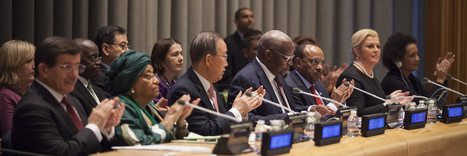
4 May 2015: UN General Assembly (UNGA) President Sam Kutesa convened a high-level thematic debate focusing on strengthening cooperation between the UN, regional and sub-regional organizations. Delegates discussed how to strengthen strategic partnerships, as well as how regional and sub-regional organizations can be engaged and mobilized to play an effective role in the implementation of a transformative post-2015 development agenda. The event resulted in a negotiated declaration on strengthening cooperation between the UN, regional and sub-regional organizations, which was negotiated ahead of the debate and was expected to be adopted by the Assembly on 5 May 2015.

Opening the debate on 4 May 2015, at UN Headquarters in New York, US, Kutesa said strengthening cooperation between the UN and regional and sub-regional organizations has been one his key priorities for the 69th UNGA session, and noted that over 25 regional and sub-regional organizations have established formal “cooperative relationships” with the UN. He called for: building on lessons learned to create even more innovative and flexible partnership arrangements that draw on respective strengths; and to find ways of ensuring predictable and sustainable financing for regional and sub-regional organizations.

UN Secretary-General Ban Ki-moon highlighted a retreat he held during the previous weekend with leaders of a number of regional and sub-regional organizations to look at challenges and strengthen cooperation on peace and security. He remarked that collaboration between the UN and regional partners is richer and more diverse than ever before, as lines of communications have been set up, common strategies have been developed, and joint programmes have been launched. He observed that regional organizations are helping to shape the post-2015 development agenda, and called for their support in “helping the world” reach the Sustainable Development Goals (SDGs).

In a keynote address, Yoweri Museveni, President of Uganda, stressed the need to reform the UN in general and the Security Council in particular, noting that out of the current global population of 7 billion people, the five permanent members of the UN Security Council represent only about 1.9 billion people and “monopolize the responsibility for global security.” He also remarked that regional and sub-regional organizations provide useful fora for policy coordination and harmonization on various ongoing important multilateral processes, such as the post-2015 development agenda and climate change, and are central in coordinating implementation of these processes' outcomes at their appropriate levels.

Fred Mitchell, Minister of Foreign Affairs and Immigration of the Bahamas, representing the Chair of the Caribbean Community (CARICOM), opened a session on how to further enhance the cooperation and strategic partnership between the UN and regional and sub-regional organizations. Referring to the post-2015 negotiations, he called for broader measures of progress to complement gross domestic product (GDP) and for technical capacity and support. He also noted that UNGA resolution 69/265 on cooperation between the UN and CARICOM will be critical for the implementation of the post-2015 development agenda.

Georges Rebelo Chikoti, Minister of Foreign Affairs of Angola and Chair of the International Conference of the Great Lakes Region (ICGRL), outlined the importance of, inter alia: promoting more systematic reporting; conducting joint assessments; predictable and sustainable financing mechanisms; training and capacity building to enhance regional policies, legislations and institutions; and recognizing that lack of economic opportunities is a recipe for political instability.

Annika Soder, Vice Minister and State Secretary of Foreign Affairs of Sweden, said cooperation is more effective when it is based on burden sharing and complementarity. She added that regional mechanisms and frameworks should be recognized in the follow-up framework of the post-2015 development agenda, and noted that reviews should be done at the regional level.

Dieudonné Nzengue, Deputy Minister of Foreign Affairs, Francophony and regional Integration of Gabon, noted the need for local knowledge and stronger cooperation for the post-2015 development agenda. Lamberto Zannier, Ambassador of Italy and Secretary General of the Organization for Security and Cooperation in Europe (OSCE), provided examples of OSCE cooperation with the UN, and remarked that sustainable development and security should have the importance they deserve in the post-2015.

Albert Ramdin, Ambassador and Assistant Secretary-General of the Organization of American States (OAS), highlighted the need for: building institutional capacities; strengthening communication between OAS regional offices and UN regional offices; and agreeing on a monitoring framework for the post-2015.

Alain Le Roy, Secretary-General, European External Action Service, said cooperation should go beyond preventing immediate crisis, and sustainable peace is not possible without sustainable development and respect of human rights. Highlighting the importance of the ongoing intergovernmental discussions related to financing for development, the post-2015 development agenda and climate change, he expressed hope that emerging countries will also join the force in fighting climate change.

A second panel, moderated by Jeffrey Feltman, Under Secretary-General, UN Department of Political Affairs, addressed strengthening UN, regional, and sub-regional cooperation on peace and security, human rights, and development. Erastus Mwencha, Deputy-Chairperson, African Union Commission, said that many of the tools for preventing conflict in the UN Charter are state-based, and so not always effective. He called for tools and mechanisms that are bottom-up, closer to the people that need them, and allow for a more flexible approach.

Molefi Kete Asante, Temple University, discussed how the 1648 Treaty of Westphalia in Europe had introduced the concept of the nation-state, which still governs much of international affairs. He stressed the need for non-European forms of organization to be given more importance in the UN, including sub-regional groups, informal networks of NGOs, and regional organizations. “We must focus on repairing and restoring the acceptability of the local societies,” he concluded.

Peter Van Tuijl, Executive Director, Global Partnership for the Prevention of Armed Conflict (GPPAC), discussed existing mechanisms for creating space for regular consultations with regional and civil society organizations, while Danile Yifru, Director, Peace and Security and Senior Advisor, Intergovernmental Authority on Development, discussed their need to be supported by the international community. Lyazzat Kaltayeva, Association of Women with Disabilities, discussed her work in helping women with disabilities through existing legal structures at the regional and sub-regional level.

The final panel was moderated by Vuk Jeremić, President, Center for International Relations and Sustainable Development, and addressed how to galvanize support of regionals and sub-regionals for the post-2015 development agenda. Alicia Barcena Ibarra, Executive Secretary, UN Economic Commission for Latin America and Caribbean (ECLAC), and Carlos Lopes, Executive Secretary, UN Economic Commission for Africa (UNECA), discussed the importance of national and regional ownership of the agenda, and for it to reflect the priorities of all regions.

David Steven, Senior Fellow and Associate Director, Center on International Cooperation, commented on the “practicalities” of implementation, stressing that making progress on the goals and targets will require truly innovative policies and resources. He emphasized that much progress will need to be made in the first few years to achieve the goals, and underlined the regional dimension of post-2015 action in building political support for the agenda's implementation.

Ali Shahbaz, Sustainable Development Policy Institute, called for the redefinition of the term “organization” to include all individuals and grassroots movements. The SDGs are more than a set of targets, he explained, but “more of a mass consciousness, a movement, and a paradigm shift that is going to be carried on with the momentum of all the people engaged.” Shahbaz also stressed the need for credible, rather than tokenistic, participation of stakeholders.

Throughout the debate, many participants referred to Chapter VIII of the UN Charter on regional arrangements. During a session dedicated to statements and interventions by Member States and stakeholders, states noted the importance of: eliminating extreme poverty; protecting the environment; arms trafficking; combatting trans-national crimes; the role of the UN; the role of the UN Regional Commissions in financing for development; the inclusion of excluded groups; strategies for resource mobilization; partnerships with the private sector; civil society participation; structural transformation; funding for technology transfer; and a global partnership for implementation of the SDGs and targets.

Kutesa gave closing remarks, saying that collective efforts and action are needed to address the world's challenges, and that regional and sub-regional organizations can promote complementarity, burden-sharing, and comparative advantage. He referred to panelists and UN Member States who had called for better communication and coordination between the UN and regional partners.

Finally, Kutesa presented the Political Declaration on Strengthening Cooperation between the UN and Regional and Sub-regional Organizations, which he described as an important step in advancing strategic partnerships in this area. [Programme Webpage] [Event Webpage] [Draft Political Declaration and General Assembly President Letter] [UNGA President Opening Remarks] [UNGA President Closing Remarks] [Remarks of UN Secretary-General] [UN Press Release] [IISD RS Sources] [Adoption of Political Declaration on 5 May]
related meetings:
UNGA High-level Thematic Debate on Strengthening Cooperation between the UN and Regional and Sub-regional Organizations
No comment yet.
Scooped by KROTOASA RESEARCH-INTENSIVE INSTITUTE (KRII)
May 8, 2015 10:31 AM
Scoop.it!

United Nations Photo on Twitter

United Nations Photo on Twitter | United Nations, UNGA, UNDESA, UNDSPD, ECOSOC, UNSDN, UNNGLS, | Scoop.it
Press Conference by @UNDESA on the UN Forum on Forests 11th Session: Messrs Filho, Vira & Buck #UNFF11 pic.twitter.com/UnePcxPvV4
No comment yet.
Scooped by KROTOASA RESEARCH-INTENSIVE INSTITUTE (KRII)
May 6, 2015 7:36 AM
Scoop.it!

President of the UN General Assembly

President of the UN General Assembly | United Nations, UNGA, UNDESA, UNDSPD, ECOSOC, UNSDN, UNNGLS, | Scoop.it
President Kutesa visit to Uganda
Carlee Allen's curator insight, May 17, 2015 12:04 PM

This was a flickr with a lot of pictures about the UN meeting get-together. It included the leaders from countries like Finland all the way to Fiji, and there was ethnic dancing even for a little entertainment break in the middle.


I think that it is really interesting that all the countries get to meet together in one room and talk about real world issues and ways to solve them. The whole idea of it just makes be happy and makes me feel like we have a really unified world.

Scooped by KROTOASA RESEARCH-INTENSIVE INSTITUTE (KRII)
May 6, 2015 7:29 AM
Scoop.it!

General Assembly Meetings Coverage | Meetings Coverage and Press Releases

General Assembly Meetings Coverage | Meetings Coverage and Press Releases | United Nations, UNGA, UNDESA, UNDSPD, ECOSOC, UNSDN, UNNGLS, | Scoop.it


  1. Home
  2. General Assembly
  3. General Assembly Meetings Coverage
General Assembly Meetings Coverage
5 May 2015
GA/11641

The lessons of World War II — on whose ashes the United Nations was founded — must continue to guide the Organization’s work, even as it adapted to meet the evolving challenges of the modern world, delegates commemorating the seventieth anniversary of the end of the war told the General Assembly today.

4 May 2015
GA/11639

In a rapidly changing world, bolstered cooperation between the United Nations and regional and subregional organizations was needed to respond effectively to emerging threats to international peace and security, the General Assembly was told today as it held a high-level thematic debate on the issue.

4 May 2015
GA/AB/4152

The Fifth Committee (Administrative and Budgetary) today opened the second part of its resumed sixty-ninth session dedicated to the United Nations’ peacekeeping operations, whose budget for 2015/16 would reach $8.5 billion.

1 May 2015
GA/PAL/1332

The top Palestinian diplomat at the United Nations this afternoon called on the Organization to include Israel’s army among the parties that committed grave violations against children during armed conflict, and to hold it accountable for attacks last year on United Nations-run schools sheltering civilians in Gaza.

29 April 2015
PI/2126

Transparency, inclusivity, multilingualism and a balance between new media and traditional forms of communications were paramount in the work of the Department of Public Information, Cristina Gallach, Under-Secretary-General for Communications and Public Information of the United Nations, told delegates as the Committee on Information concluded its general debate.

28 April 2015
PI/2124

As large segments of the world’s population relied on traditional media for information on the United Nations and world affairs, delegates warned about the dangers of the digital divide, while hailing the broad reach of new media in disseminating the Organization’s message, as the Committee on Information continued its general debate.

27 April 2015
PI/2123

During a “once-in-a-generation” year which would see the adoption of the new post-2015 development agenda, the United Nations Department of Public Information had a critical role to play in supporting the ever-expanding activities of the Organization, the Committee on Information was told as it opened its thirty‑seventh session today.

24 April 2015
DC/3550

Although the global disarmament and non-proliferation regime had faced a “plethora of obstacles” over a number of years, there was no reason to lose faith, the Chair of the Disarmament Commission told members today, stressing that progress was possible if each State demonstrated the requisite political will.

16 April 2015
GA/11634

Acclaiming peacebuilding as central to the international community’s collective efforts to build sustained international stability, speakers at the General Assembly today urged the ongoing review of the topic to explore ways of maximizing the potential of the Peacebuilding Commission.

8 April 2015
DC/3545

Nuclear disarmament was at a crossroads, with the Korean peninsula a “touch-and-go powder keg” and the oldest and newest nuclear-weapon States in sharp confrontation with each other, the representative of the Democratic People’s Republic of Korea told the Disarmament Commission today, as Member States concluded the general debate of their annual substantive session.

Search
Search for documents and statements


General Assembly Daily Noon Briefing
5 May 2015

The Secretary-General’s Special Envoy for Syria said the first of a series of low-key Geneva-based meetings involving more than 40 Syrian groups, the Government and 20 regional and international actors begins today for an initial five to six weeks.  Despite challenges, said the Envoy, we do not have the luxury not to try.

HighlightsResources
No comment yet.
Scooped by KROTOASA RESEARCH-INTENSIVE INSTITUTE (KRII)
May 6, 2015 7:19 AM
Scoop.it!

Letters | General Assembly of the United Nations

Letters | General Assembly of the United Nations | United Nations, UNGA, UNDESA, UNDSPD, ECOSOC, UNSDN, UNNGLS, | Scoop.it


Letters

All the letters are in .pdf format


May

April

March

February

January

December

November

October

September 2014


No comment yet.
Scooped by KROTOASA RESEARCH-INTENSIVE INSTITUTE (KRII)
May 6, 2015 7:02 AM
Scoop.it!

Calendar #UNGA - General Assembly of the United Nations

Calendar #UNGA - General Assembly of the United Nations | United Nations, UNGA, UNDESA, UNDSPD, ECOSOC, UNSDN, UNNGLS, | Scoop.it


Calendar

Meetings


No comment yet.
Scooped by KROTOASA RESEARCH-INTENSIVE INSTITUTE (KRII)
May 6, 2015 6:46 AM
Scoop.it!

Meetings - #UNGA General Assembly of the United Nations

Meetings - #UNGA General Assembly of the United Nations | United Nations, UNGA, UNDESA, UNDSPD, ECOSOC, UNSDN, UNNGLS, | Scoop.it

Meetings

Back to top


Meetings

69th session (2014)


Meetings of the General Assembly are announced and summarized daily in the Journal of the United Nations.

Webcast


Follow all the General Assembly meetings LIVE and on demand!

Agenda


The Agenda provides background information on the organization of the session. It lists all the items that will be considered by the General Assembly during the session.


Meetings Summaries


All meeting summaries are available on the Meetings Coverage and Press Releases website.

No comment yet.
Scooped by KROTOASA RESEARCH-INTENSIVE INSTITUTE (KRII)
May 6, 2015 5:52 AM
Scoop.it!

Election of the President of the 69th session, H.E. Mr. Sam Kutesa (Uganda) | General Assembly of the United Nations

Election of the President of the 69th session, H.E. Mr. Sam Kutesa (Uganda) | General Assembly of the United Nations | United Nations, UNGA, UNDESA, UNDSPD, ECOSOC, UNSDN, UNNGLS, | Scoop.it
No comment yet.
Scooped by KROTOASA RESEARCH-INTENSIVE INSTITUTE (KRII)
May 6, 2015 5:44 AM
Scoop.it!

High-Level Event on #ClimateChange #UNGA General New York 29 June 2015 #SDGs

High-Level Event on #ClimateChange #UNGA General New York 29 June 2015 #SDGs | United Nations, UNGA, UNDESA, UNDSPD, ECOSOC, UNSDN, UNNGLS, | Scoop.it


High-Level Event on Climate Change New York, 29 June 2015


Background


2015 will be a critical year for the climate change negotiations under the auspices of the United Nations Framework Convention on Climate Change. The international community is expected to deliver a new, ambitious and universally binding agreement in Paris.


The President of the General Assembly will convene a High-Level Event on climate change on 29 June 2015, which intends to provide impetus and political momentum for an ambitious climate agreement, by keeping the issue high on the agenda at the mid-point between COP20 in Lima and COP21 in Paris. It aims also to provide space for showcasing climate action and concrete initiatives, through multi-stakeholder approaches to address climate change.


2015 will also be a decisive year in shaping the post 2015 development agenda and agreeing on a framework for financing for development. The road from Addis Ababa to New York and finally Paris will be central to the global efforts to improve lives, achieve sustainable development and preserve the planet for the present and future generations.


Submit your inputs for the High-level event before 10 May.


Format


The High-level event will consist of:

  • A high-level opening session,
  • Two high-level interactive Panel discussions, and
  • A closing session.


Participation


Member States will be invited to participate at the highest level. Representatives of the UN Agencies, the UNFCCC Secretariat as well as the private sector, civil society, academia and other relevant stakeholders will also be encouraged to attend at the highest level possible.


Outcome


The outcome will be a President’s summary, which will be circulated to all Member States and other stakeholders.


Documents


Links


No comment yet.
Scooped by KROTOASA RESEARCH-INTENSIVE INSTITUTE (KRII)
May 6, 2015 5:33 AM
Scoop.it!

Delivering on and Implementing a Transformative #Post2015 Development Agenda #UNGA

Delivering on and Implementing a Transformative #Post2015 Development Agenda #UNGA | United Nations, UNGA, UNDESA, UNDSPD, ECOSOC, UNSDN, UNNGLS, | Scoop.it


Post-2015


Delivering on and Implementing a Transformative Post-2015 Development Agenda


Theme and priorities of the 69th Session


On June 11, 2014 the President of the 69th Session of the General Assembly, in his Acceptance Speech, chose the theme: “Delivering on and implementing a Transformative Post-2015 Development Agenda,” for the 69th session.


The President of the General Assembly also outlined seven priority areas for the session namely:

  • the post-2015 development agenda;
  • combatting climate change;
  • advancing gender equality and empowerment of women;
  • strengthening cooperation between the UN and regional organizations;
  • peaceful settlement of disputes and peacebuilding;
  • revitalization of the General Assembly and reform of the Security Council;
  • enhancing the role of the UN Alliance of Civilizations.


High-level Event and Thematic Debates


By its resolution 67/297, the General Assembly recognized “the value of holding interactive, inclusive thematic debates on current issues of critical importance to the international community” and “invited the President of the General assembly to continue this practice.


The President will convene high-level thematic debates and events that will focus on the theme and the priorities for the 69th session. The main objective of the high-level thematic debates and event is to enable Member States and stakeholders to have in -depth exchange of views, in an interactive and participatory manner.


These meetings will contribute towards the formulation of the post-2015 development agenda and the mobilization of means for its implementation, while fully recognizing the mandated intergovernmental processes.


Calendar:


Format


The High-level thematic debates and Event will consist of an opening segment, two interactive, multi-stakeholder panel discussions, and a closing segment.

The outcome for each of the debates and event will be a President’s summary.

Member States will be invited to participate at the highest possible level, as well as Observers, UN Agencies, and other stakeholders.


No comment yet.
Scooped by KROTOASA RESEARCH-INTENSIVE INSTITUTE (KRII)
May 14, 2015 9:23 AM
Scoop.it!

Martin Sajdik (ECOSOC), Opening remarks - UN Forum on Forests, High-level segment, Eleventh session, 6th meeting

Martin Sajdik (ECOSOC), Opening remarks - UN Forum on Forests, High-level segment, Eleventh session, 6th meeting | United Nations, UNGA, UNDESA, UNDSPD, ECOSOC, UNSDN, UNNGLS, | Scoop.it
Statement by the President of the Economic and Social Council, H.E. Mr. Martin Sajdik (Austria) on the 6th meeting of United Nations Forum on Forests, Eleventh session.
Theme “The future international arrangement on forests we want”.
No comment yet.
Scooped by KROTOASA RESEARCH-INTENSIVE INSTITUTE (KRII)
May 12, 2015 9:47 AM
Scoop.it!

Forest Forum Heads into Negotiations on Draft Declaration, Resolution Setting Out Elements for Post-2015 Arrangement, Possible Global Fund, Technical Advice Body - South-South News

Forest Forum Heads into Negotiations on Draft Declaration, Resolution Setting Out Elements for Post-2015 Arrangement, Possible Global Fund, Technical Advice Body - South-South News | United Nations, UNGA, UNDESA, UNDSPD, ECOSOC, UNSDN, UNNGLS, | Scoop.it
The Chair of the United Nations Forum on Forests today described the contours of the draft ministerial declaration and draft resolution that the policy body planned to send to the Economic and Social Council for adoption, following the close of its eleventh session on 15 May.


“The declaration and the resolution are complementary outcomes, which, together, set the stage for a strong and effective International Arrangement on Forests beyond 2015”, said Chair Noel Nelson Messone (Gabon). “They should be mutually reinforcing, but distinct outcomes,” he said, telling Member States it was now up to them to engage in negotiations on the drafts and arrive at a successful outcome. The bureau, he added, had worked to address all States’ concerns and had made efforts to build on areas of convergence.

Describing the elements of the draft ministerial declaration, he said its first section outlined a shared vision on the benefits of forests and their contribution to sustainable development. It recognized the Forum’s role in addressing those issues and integrating forests into the post-2015 agenda. The second section outlined ministerial commitments to, among other things, develop a strategic plan for the International Arrangement on Forests from 2017 to 2030, enhance major groups’ participation in that framework and strengthen countries’ monitoring, assessment and reporting.

The third section, he said, was a “call to action” for the parties to the Rio Conventions — especially the Conference of Parties to the United Nations Framework Convention on Climate Change (UNFCCC) – which should consider the Forest Instrument as the integrated reference framework for related climate-change mitigation and adaptation. Likewise, participants in the Conference of the Parties to the Convention on Biological Diversity were called on to strengthen the Forum’s involvement in forest-related work.

Describing the 13-part draft resolution, the Chair explained that section I would extend the International Arrangement on Forests to 2030 and outline the Arrangement’s objectives and define its components. “This is the first time that the components of the [International Arrangement on Forests] are being defined.” Section II would define the future modalities of the Forum — it would remain a Council subsidiary body and still meet biennially, but for one week in the “even years”. It also contained proposals for strengthening the Forum, notably by establishing a committee on implementation and technical advice, which, among other things, would provide guidance on funding.

He said section III dealt with the non-legally binding instrument on forests beyond 2015, by which the Council would extend the Global Objectives on Forests to 2030, rename the Instrument and replace references to the Millennium Development Goals with sustainable development goals. Section IV — catalysing implementation and financing — would have the Council establish either a Global Forest Fund under the Forum’s auspices, or a voluntary strategic trust fund, to support the “upgraded facilitated process” and implementation of a strategic plan.

By section V — monitoring assessment and reporting — the Council would designate the Forum as the primary body to contribute to the follow-up of forest-related sustainable development goals. The Forum secretariat would be requested to submit a quadrennial global publication on implementation of the non-legally binding instrument. The Forum would establish a “global forest indicators partnership”.

Section VI suggested ways to strengthen its secretariat, he said, including through additional responsibilities, while section VII contained proposals for enhancing the Collaborative Partnership on Forests. Section VIII offered ways to strengthen the Forum’s collaboration with regional and subregional organizations. By Section IX, he said, the Council would strengthen major groups’ participation in the Forum, and by section X, decide that the Forum should develop a strategic plan for the 2017 to 2030 period and ensure it was carried out through quadrennial work programmes. The content of that plan would be adopted at a special session in 2016.

Rounding out the resolution, he said, section XI proposed a mid-term review of the International Arrangement on Forests in 2024 and a final review in 2030. Section XII would have the Council establish a body that, for one year, would propose ways to follow up on issues referred to it by the Forum’s eleventh session. It would meet up to three times in 2016. Section XIII addressed the provision of adequate resources for the resolution’s implementation beyond 2015.

Following his remarks, the representatives of Peru and Iran spoke.

The United Nations Forum on Forests will reconvene at 5:15 p.m. on Friday, 8 May, to continue its eleventh session.
No comment yet.
Scooped by KROTOASA RESEARCH-INTENSIVE INSTITUTE (KRII)
May 10, 2015 9:24 AM
Scoop.it!

United Nations Secretary-General Ban Ki-moon's Statements

United Nations Secretary-General Ban Ki-moon's Statements | United Nations, UNGA, UNDESA, UNDSPD, ECOSOC, UNSDN, UNNGLS, | Scoop.it
New York, 4 May 2015

I thank General Assembly President Sam Kutesa for convening this important thematic debate. And I also welcome the participation of H.E. President of the Republic of [Uganda], President [Yoweri] Museveni, for his leadership and taking time to participate in this meeting.

I am very encouraged to welcome so many presidents, so many ministers and senior national officials and heads of regional and subregional organizations here today.

There is a great deal of collective expertise in this room. You have worked on the frontlines of regional cooperation – on economic integration, joint peace activities and more.

Such high-level participation sends a strong message about how much we value cooperation between the United Nations and regional organizations.

I have spoken directly to virtually all of the organizations represented here.

Over the last few days - during the weekend - I hosted a retreat with the leaders of a number of regional and sub-regional organizations to strengthen our cooperation on peace and security.

We took a hard look at the challenges we face – and we renewed our resolve to forge solutions.

We will continue to engage in this strategic dialogue at the highest level – and to take action on the ground that makes a meaningful difference in people’s [lives].

This High Level meeting is another reflection of that commitment, and I am very glad that our retreat over the weekend is now continuing, with the participation of at least twenty heads of regional organizations, and I thank you for your participation again.

Conflict, poverty, violence, exclusion and disasters are grave and growing problems. Too many communities are battered by all of these problems at once.

The international community is supposed to care for our most vulnerable members – but too often we fail.

Look at the tragedy in Syria. The deaths of more than 220,000 people – and the trauma of millions of others – show how far we are from realizing the vision of our Charter.

But in this 70th anniversary of the United Nations, we can still declare that the world is much safer thanks to this Organization.

2015 is a milestone year. We will complete the Millennium Development Goals. We are forging a bold vision for sustainable development, including a set of sustainable development goals. And we are aiming for a new, universal climate agreement.

The United Nations will squarely examine our operations – and how we can improve them. I look forward to the recommendations of the Review of Peace Operations and the Review of the Peacebuilding Architecture. These should aim to help us better confront threats.

Regional partners have [already] improved our effectiveness.

But now we have to do more to answer the cries of millions of people who deserve full dignity and true equality.

No country is immune to global threats – and no one country, no matter how powerful, can respond alone.

The Ebola crisis, the tragedy of migrants dying at sea, the international drug trade, organized crime and the rise of violent extremism all show the urgent need for a collective response.

Millions of lives are at stake.

That is why I am doing everything possible to enable the United Nations, regional and subregional organizations to boost our cooperation, build on our strengths and pool our limited resources.

Very often, in times of crisis, I turn to you, the heads of regional organizations.

I may ask for resources, diplomacy or collective action, depending on the situation. And I always ask for your solidarity in advancing our common values.

With your engagement, we have achieved real results.

The collaboration between the United Nations and our regional partners is richer and more diverse than ever before.

We have set up lines of communications. We have developed common strategies. We have launched joint programmes. Our relationships have gained new dimensions. And this has enhanced our ability to serve the world’s people.

In conflict prevention and mediation, we have shown how working together increases our powers of persuasion to press parties to make peace.

Our stronger partnerships in peacekeeping have bolstered UN support especially to African-led operations on the ground.

Regional organizations are helping to shape the post-2015 development agenda – and I count on them to help the world reach the sustainable development goals.

Our long-standing partnerships have also reinforced collective efforts to defend human rights and uphold the values of the United Nations Charter.

Citizens of the world are more connected, forward-looking and informed than ever before.

We owe it to them to rise to the challenges of our times with open communications, outward focus and our collective commitment to human rights, global progress and lasting peace.

Thank you very much.

Statements on 4 May 2015

New York, 4 May 2015 - Secretary-General's message to the launch of the Global Zero Action Corps [delivered by Ms. Virginia Gamba, Deputy to the High Representative for Disarmament Affairs]
No comment yet.
Scooped by KROTOASA RESEARCH-INTENSIVE INSTITUTE (KRII)
May 8, 2015 10:32 AM
Scoop.it!

India elected to four key subsidiary bodies of UN ECOSOC - Economic Times

India elected to four key subsidiary bodies of UN ECOSOC - Economic Times | United Nations, UNGA, UNDESA, UNDSPD, ECOSOC, UNSDN, UNNGLS, | Scoop.it
UNITED NATIONS: India has been elected to four key subsidiary bodies of the United Nations' agency on economic and social issues, continuing its impressive record of winning elections at the world...
No comment yet.
Scooped by KROTOASA RESEARCH-INTENSIVE INSTITUTE (KRII)
May 7, 2015 8:58 AM
Scoop.it!

UNGA special meeting kicks off to commemorate victims of WWII - Xinhua

UNGA special meeting kicks off to commemorate victims of WWII - Xinhua | United Nations, UNGA, UNDESA, UNDSPD, ECOSOC, UNSDN, UNNGLS, | Scoop.it
UNGA special meeting kicks off to commemorate victims of WWII---UNGA special meeting kicks off to commemorate victims of WWII
No comment yet.
Scooped by KROTOASA RESEARCH-INTENSIVE INSTITUTE (KRII)
May 6, 2015 7:31 AM
Scoop.it!

News Stories | General Assembly of the United Nations

News Stories | General Assembly of the United Nations | United Nations, UNGA, UNDESA, UNDSPD, ECOSOC, UNSDN, UNNGLS, | Scoop.it

News Stories

Honouring victims of World War II, Ban reaffirms UN&#39s founding goals to ensure peace and dignity for all

May 5, 2015, 6:04 pm | Seventy years ago, in 1945, from the ashes of one of humanity's darkest moments, the United Nations was founded to lead the world “out of horror and into peace,” declared Secretary-General Ban Ki-moon today at a tree planting and ceremony to remember the countless victims who lost their lives in the Second World War.

Top UN officials cite strengthening cooperation with regional partners as vital priority

May 4, 2015, 7:15 pm | United Nations Secretary-General Ban K-moon and the General Assembly President Sam Kutesa today drew attention to the importance of the Organization’s cooperation with regional partners to shape a “bold new vision” for a post-2015 development agenda, as well as to tackle the world’s myriad pressing challenges.

UN event addresses gender equality and safety of journalists ahead of World Press Freedom Day

May 1, 2015, 7:41 pm | The United Nations today commemorated World Press Freedom Day 2015 with a moment of silence for journalists killed in the line of duty, and drew attention to the need for greater gender equality in the media and the safety of journalists in the digital age, where protection from surveillance will become increasingly important.

New sustainability agenda must harmonize humanity's relationship with planet – UN Assembly President

April 27, 2015, 11:33 pm | As United Nations Member States prepare to adopt and move toward implementing a new development agenda, the President of the General Assembly said it is critical to ensure that “a harmonious relationship with our planet underpins our quest to achieve sustainable development.”

Nepal: Ban sends his condolences after earthquake hits Kathmandu Valley

April 25, 2015, 5:00 am | The United Nations Secretary-General has sent his deepest condolences to the Government of Nepal and to everyone affected by a 7.8 magnitude earthquake that struck the country on Saturday.

Viewing page 1 of 2|Next Page


No comment yet.
Scooped by KROTOASA RESEARCH-INTENSIVE INSTITUTE (KRII)
May 6, 2015 7:25 AM
Scoop.it!

Newsroom | General Assembly of the United Nations

Newsroom | General Assembly of the United Nations | United Nations, UNGA, UNDESA, UNDSPD, ECOSOC, UNSDN, UNNGLS, | Scoop.it

NewsroomPress Statements/ReadoutsApril

March

February

January 2015

December

November

October

September

No comment yet.
Scooped by KROTOASA RESEARCH-INTENSIVE INSTITUTE (KRII)
May 6, 2015 7:15 AM
Scoop.it!

Statements | General Assembly of the United Nations

Statements | General Assembly of the United Nations | United Nations, UNGA, UNDESA, UNDSPD, ECOSOC, UNSDN, UNNGLS, | Scoop.it


Statements


May

April

March

February 2015

January 2015

December

November

October

September

June

No comment yet.
Scooped by KROTOASA RESEARCH-INTENSIVE INSTITUTE (KRII)
May 6, 2015 6:56 AM
Scoop.it!

The #UNGA Session 69 Team 2014

The #UNGA Session 69 Team 2014 | United Nations, UNGA, UNDESA, UNDSPD, ECOSOC, UNSDN, UNNGLS, | Scoop.it
General Assembly of the United Nations President of the 69th session
Team

Mr. John Leonard MUGERWA
Deputy Chef de Cabinet,
Sustainable Development

Ms. Suvi SEPPALAINEN
Adviser, Post 2015 Development Agenda

Ms. Aqeelah AKBAR
Senior Adviser
Gender Equality and
Empowerment of Women

Mr. Sipho SEAKAMELA
Senior Adviser
Africa, Cooperation between UN and
Regional Organizations

Mr. Robert B. MUGIMBA
Adviser
UN Security Council Reform and General Assembly Revitalization; and First Committee

Mr. Muharrem TURGUT
Adviser
Mediation and Alliance of Civilizations

Mr. Steen Malthe HANSEN
Senior Adviser
Conflict prevention and Peacebuilding

Mr. Steven Nkayivu SSENABULYA
Special Assistant to PGA

Ms. Tala DOWLATSHAHI
Senior Adviser
Partnerships and Outreach

Ms. Li WEN
Adviser
Second Committee

Ms. Juliana Gaspar RUAS
Adviser
Second Committee, Financing for Development

Ms. Melita GABRIC
Senior Adviser
Third Committee

Ms. Santa Mary Laker KINYERA
Adviser
Third Committee

Mr. Mateus Pedro LUEMBA
Adviser
Fourth Committee

Mr. Abdelghani MERABET
Senior Adviser
Fifth Committee and Climate Change

Mr. Noel KAGANDA
Adviser, Sixth Committee

Ms. Ahood ALZAABI
Adviser, Humanitarian issues
Health and Culture

Ms. Fanny LANGELLA
Deputy Spokesperson
Deputy Speechwriter

Ms. Annet KABUYE
Personal Assistant
to the President

Ms. Alicia SANTOMAURO
Administrative Assistant
to the President

Ms. Evelyne OJWANG
Administrative Assistant
to the President
This page
is safe
Bitdefender Antivirus Plus
No comment yet.
Scooped by KROTOASA RESEARCH-INTENSIVE INSTITUTE (KRII)
May 6, 2015 5:54 AM
Scoop.it!

Presidents of the General Assembly | General Assembly of the United Nations

Presidents of the General Assembly | General Assembly of the United Nations | United Nations, UNGA, UNDESA, UNDSPD, ECOSOC, UNSDN, UNNGLS, | Scoop.it


Presidents of the General Assembly


SESSION YEAR NAME COUNTRY


69th 2014 Mr. Sam Kutesa Uganda

68th 2013 Mr. John W. Ashe Antigua and Barbuda

67th 2012 Mr. Vuk Jeremić Serbia

66th 2011 Mr. Nassir Abdulaziz Al-Nasser Qatar

65th 2010 Mr. Joseph Deiss  Switzerland

64th 2009 Dr. Ali Abdussalam Treki Libya (formerly Libyan Arab Jamahiriya)

63rd 2008 Mr. Miguel d’Escoto Brockmann Nicaragua

62nd 2007 Mr. Srgjan Kerim Former Yugoslav Republic of Macedonia10th
emergency
special (resumed twice)
2006Ms. Sheikha Haya Rashed Al KhalifaBahrain

61st 2006 Ms. Sheikha Haya Rashed Al Khalifa Bahrain

60th 2005 Mr.Jan Eliasson Sweden

59th 2004 Mr. Jean Ping Gabonese Republic10th emergency special (resumed)2004Mr. Julian Robert HunteSaint Lucia10th emergency
special (resumed twice)2003Mr. Julian Robert Hunte Saint Lucia

58th 2003 Mr. Julian Robert Hunte Saint Lucia

57th 2002 Mr. Jan Kavan Czech Republic10th emergency special (resumed twice)2002Mr. Han Seung-sooRepublic
of Korea10th emergency special (resumed)2001Mr. Han Seung-soo Republic of Korea

56th 2001 Mr. Han Seung-soo Republic of Korea26th special 2001 Mr. Harri Holkeri Finland 25th special 2001 Mr. Harri Holkeri Finland 10th
emergency special (resumed) 2000 Mr. Harri Holkeri Finland

55th 2000 Mr. Harri Holkeri Finland 24th special 2000 Mr. Theo-Ben Gurirab Namibia 23rd special 2000 Mr. Theo-Ben Gurirab Namibia 22nd special 1999 Mr. Theo-Ben Gurirab Namibia

54th 1999 Mr. Theo-Ben Gurirab Namibia 21st special 1999 Mr. Didier Opertti Uruguay 10th emergency special (resumed)1999 Mr. Didier Opertti Uruguay

53rd 1998 Mr. Didier Opertti Uruguay 20th special1998Mr. Hennadiy
Udovenko
Ukraine10th emergency special (resumed)1998Mr. Hennadiy
Udovenko
Ukraine

52nd 1997 Mr. Hennadiy Udovenko Ukraine 19thspecial1997Mr. Razali Ismail Malaysia10th emergency special (resumed)1997Mr. Razali Ismail Malaysia

51st 1996 Mr. Razali Ismail Malaysia

50th 1995 Prof. Diogo Freitas do Amaral Portugal

49th 1994 Mr. Amara Essy Côte d’Ivoire

48th 1993 Mr. Samuel R. Insanally Guyana

47th 1992 Mr. Stoyan Ganev Bulgaria

46th 1991 Mr. Samir S. Shihabi Saudi Arabia

45th 1990 Mr. Guido de Marco Malta 18th special1990Mr. Joseph Nanven Garba Nigeria 17th special 1990 Mr. Joseph Nanven Garba Nigeria 16th special 1989 Mr. Joseph Nanven Garba Nigeria

44th 1989 Mr. Joseph Nanven Garba Nigeria 43rd 1988 Mr. Dante M. Caputo Argentina 15th special 1988 Mr. Peter Florin German
Democratic Republic

42nd 1987 Mr. Peter Florin German Democratic Republic 14th special 1986 Mr. Humayun Rasheed Choudhury Bangladesh

41st 1986 Mr. Humayun Rasheed Choudhury Bangladesh 13th special 1986 Mr. Jaime de Piniés Spain

40th 1985 Mr. Jaime de Piniés Spain

39th 1984 Mr. Paul J. F. Lusaka Zambia

38th 1983 Mr. Jorge E. Illueca Panama

37th 1982 Mr. Imre Hollai Hungary 12th special 1982 Mr. Ismat T. Kittani IraqNinth emergency special1982 Mr. Ismat T. Kittani IraqSeventh emergency special (resumed)1982 Mr. Ismat T. Kittani Iraq

36th 1981 Mr. Ismat T. Kittani Iraq Eighth emergency special1981Mr. Rüdiger von Wechmar Federal Republic of Germany

35th 1980 Mr. Rüdiger von Wechmar Federal Republic of Germany 11th
special 1980 Mr. Salim A. Salim United Republic of Tanzania Seventh emergency special1980 Mr. Salim A. Salim United
Republic of Tanzania Sixth emergency special 1980 Mr. Salim A. Salim United Republic of Tanzania

34th 1979 Mr. Salim A. Salim United Republic of Tanzania

33rd 1978 Mr. Indalecio Liévano Colombia 10th
special 1978 Mr. Lazar Mojsov Yugoslavia Ninth
special 1978 Mr. Lazar Mojsov YugoslaviaEighth
special 1978 Mr. Lazar Mojsov Yugoslavia

32nd 1977 Mr. Lazar Mojsov Yugoslavia

31st 1976 Mr. H. S. Amerasinghe Sri Lanka

30th1975Mr. Gaston Thorn Luxembourg Seventh special 1975 Mr. Abdelaziz Bouteflika Algeria

29th 1974 Mr. Abdelaziz Bouteflika Algeria Sixth special 1974 Mr. Leopoldo Benítes Ecuador

28th 1973 Mr. Leopoldo Benítes Ecuador

27th 1972 Mr. Stanislaw Trepczynski Poland

26th 1971 Mr. Adam Malik Indonesia

25th 1970 Mr. Edvard Hambro Norway

24th 1969 Miss Angie E. Brooks Liberia

23rd 1968 Mr. Emilio Arenales Catalán Guatemala

22nd 1967 Mr. Corneliu Manescu Romania Fifth emergency special 1967 Mr. Abdul Rahman Pazhwak Afghanistan Fifth special 1967Mr. Abdul Rahman Pazhwak Afghanistan

21st 1966 Mr. Abdul Rahman Pazhwak Afghanistan

20th 1965 Mr. Amintore Fanfani Italy

19th 1964 Mr. Alex Quaison-Sackey Ghana

18th 1963 Mr. Carlos Sosa Rodríguez Venezuela Fourth
special 1963 Sir Muhammad Zafrulla Khan Pakistan

17th 1962 Sir Muhammad  Zafrulla  Khan Pakistan

16th 1961 Mr. Mongi Slim Tunisia Third special 1961 Mr. Frederick Henry Boland Ireland

15th 1960 Mr. Frederick Henry Boland Ireland Fourth
emergency special 1960 Mr. Víctor Andrés Belaúnde Peru

14th 1959 Mr. Víctor Andrés Belaúnde Peru

13th 1958 Mr. Charles Malik Lebanon Third emergency special 1958 Sir Leslie Munro New Zealand

12th 1957 Sir Leslie Munro New Zealand

11th 1956 Prince Wan Waithayakon Thailand Second emergency special 1956 Mr. Rudecindo Ortega Chile First
emergency special 1956 Mr. Rudecindo Ortega Chile

10th 1955 Mr. José Maza Chile

Ninth 1954 Mr. Eelco N. van Kleffens Netherlands

Eighth 1953 Mrs. Vijaya Lakshmi Pandit India

Seventh 1952 Mr. Lester B. Pearson Canada

Sixth 1951 Mr. Luis Padilla Nervo Mexico

Fifth 1950 Mr. Nasrollah Entezam Iran

Fourth 1949 Mr. Carlos P. Rómulo Philippines

Third 1948 Mr. H. V. Evatt Australia Second
special 1948 Mr. José Arce Argentina

Second 1947 Mr. Oswaldo Aranha Brazil First special 1947 Mr. Oswaldo Aranha Brazil

First 1946 Mr. Paul-Henri Spaak Belgium


No comment yet.
Scooped by KROTOASA RESEARCH-INTENSIVE INSTITUTE (KRII)
May 6, 2015 5:48 AM
Scoop.it!

About the President H.E. Mr. Sam Kahamba Kutesa of #UNGA #post2015

About the President H.E. Mr. Sam Kahamba Kutesa of #UNGA #post2015 | United Nations, UNGA, UNDESA, UNDSPD, ECOSOC, UNSDN, UNNGLS, | Scoop.it
About the President
H.E. Mr. Sam Kahamba Kutesa

H.E. Mr. Sam Kutesa

Sam Kahamba Kutesa was elected President of the United Nations General Assembly’s sixty-ninth session on 11 June 2014. At the time of his election, he was serving as Uganda’s Minister for Foreign Affairs, a post he held since 2005.

A lawyer, parliamentarian and businessman, Mr. Kutesa brings to the position wide-ranging experience in international affairs. During his tenure as Foreign Minister, Uganda has hosted high-level meetings of key intergovernmental bodies such as the Commonwealth Heads of Government Summit in 2007, the Council of Ministers of the Organisation of Islamic Cooperation (OIC) in 2008, and the African Union (AU) Heads of State Summit in 2010. Uganda also served its two-year term on the UN Security Council as a non-permanent member, in 2009 and 2010.

At the regional and subregional levels, Mr. Kutesa has hosted top-level gatherings of organizations such as the East African Community (EAC), the Common Market for Eastern and Southern Africa (COMESA) and the International Conference on the Great Lakes Region (ICGLR). From 2011 to 2014, he chaired the ICGLR’s Regional Inter-Ministerial Committee which deals with challenges such as consolidating peace and stability in eastern Democratic Republic of the Congo (DRC), promoting transparency in the exploitation and sale of natural resources, and countering sexual and gender-based violence.

As Foreign Minister, Mr. Kutesa has played a key role in the Inter-Governmental Authority on Development (IGAD), in regional peace processes in the Sudan and South Sudan, and in stabilization efforts in Somalia. Further, during his tenure, the East African Community, to which Uganda belongs, has achieved significant milestones in strengthening regional cooperation and economic integration, establishing a Customs Union in 2005 and a Common Market in 2010, and signing, in 2013, a protocol laying the groundwork for a monetary union in the region by 2023, to increase commerce and boost regional trade.

An elected Member of Parliament for more than three decades, Mr. Kutesa was a member of Uganda’s Constituent Assembly and Chairman of that body’s Political Systems Committee, during which time he contributed to drafting a new Constitution for the country, adopted in 1995. From 2001 through 2005, he served as Minister of State for Finance, Planning and Economic Development, in charge of investment, and from 1996 to 2000, as Minister of State for Planning and Economic Development. He was his country’s Attorney General from 1985 to 1986.

In the private sector, Mr. Kutesa worked as Legal Secretary for the worldwide conglomerate Lonrho East Africa, and served in a consultative capacity on the Uganda Advisory Board of Trade, and on the National Textiles Board. He also practiced law in his country, specializing in corporate law and litigation.

Born in Uganda on 1 February 1949, Mr. Kutesa holds an Honours Degree in Law from Makerere University and is an advocate of the High Court of Uganda, having completed post-graduate studies in legal practice at the Uganda Law Development Centre. He is married with six children.
No comment yet.
Scooped by KROTOASA RESEARCH-INTENSIVE INSTITUTE (KRII)
May 6, 2015 5:36 AM
Scoop.it!

High-Level Thematic Debate on Advancing Gender Equality and Empowerment of Women and Girls for a Transformative Post-2015 Development Agenda | General Assembly of the United Nations

High-Level Thematic Debate on Advancing Gender Equality and Empowerment of Women and Girls for a Transformative Post-2015 Development Agenda | General Assembly of the United Nations | United Nations, UNGA, UNDESA, UNDSPD, ECOSOC, UNSDN, UNNGLS, | Scoop.it


High-Level Thematic Debate on Advancing Gender Equality and Empowerment of Women and Girls for a Transformative Post-2015 Development Agenda New York – March 6, 2015


Introduction


2015 marks twenty years since the adoption of the Beijing Declaration and Platform for Action. Through efforts at the national, regional and global level, there has been steady progress in advancing gender equality. However, as Member States and other stakeholders engage in formulating the Post-2015 Development Agenda, gender inequalities still remain deeply entrenched in many societies. This thematic debate will focus primarily on two aspects of promoting gender equality and empowerment of women that are important for their contribution to sustainable development – women’s economic and political empowerment and their access to quality education.


Format


Opening Session: The opening session will commemorate the 2015 United Nations Observance of International Women’s Day, under the slogan: “Empower women, Empower humanity. Picture it.”


Morning Panel Discussion: Women’s economic and political empowerment, including access to decent work, and control over economic and productive resources and active participation in governance and decision-making.


Afternoon Panel Discussion: Access to quality education and skills development as tools for empowerment of women and girls.


Participation

Member States will be invited to participate at the highest level. Representatives of UN agencies and entities, international financial institutions, regional development banks, the private sector, civil society and other stakeholders will also be invited to attend at the highest level possible.


Outcome

The outcome will be a President’s summary, which will be circulated to all Member States and stakeholders. Participants are invited to make specific expressions of commitment in support of gender equality and women’s empowerment. These could take the form of announcements of legislation, policies, programmes or various other initiatives to be captured in the meeting summary.


Statements


Documents


Links


No comment yet.