Your new post is loading...

|
Scooped by
Prentiss & Carlisle
July 9, 2012 2:12 PM
|
The federal government has settled its suit against Sierra Pacific Industries over who started the 2007 Moonlight Fire, sources reported Thursday, July 5.
The terms of the agreement have not been made public. All parties are expected to sign the agreement by Wednesday, July 11, at which time the terms will be disclosed.
The government sought $700 million in alleged damage to the Plumas and Lassen national forests. Besides suppression, investigation, collection and administration costs, the feds also seek payment for loss of timber, habitat and environmental value as well as costs for rehabilitation and restoration.
The settlement will likely be the largest ever in a case about the origin of a wildfire. Previously, the Storrie Fire settlement, at $102 million, was the richest. Union Pacific settled that case in 2008. The Storrie Fire burned 52,000 acres in the Plumas and Lassen national forests in 2000.
|
|
Scooped by
Prentiss & Carlisle
July 9, 2012 2:03 PM
|
As we hit midfield for 2012 and closed out the second quarter, the timber REIT sector as measured by the Forisk Timber REIT (FTR) Index posted a 12.09% gain relative to 8.31% for the S&P 500 ...
|
|
Scooped by
Prentiss & Carlisle
July 6, 2012 4:32 PM
|
Dennis Moon, of U.S. Trust’s Specialty Asset Management division, says there has been a big uptick in the rush to farm and timberland as investors, who do not need liquid assets, look for places to avoid everything from inflation to a depression. ... Returns on timber and farmland come from two sources: the gross cash generated by the production on the land and the long term appreciation of the land itself. The total long-term return is in the low double digits.
That beats a 10-year Treasury at 1.6%, and without the guaranteed sell-off in treasuries that has to come soon.
... Timber however doesn’t produce any annual income as farmland does. Timber is more of a big payday down the road investment, so you have to be able to live without the income during what Moon described as a 10- to 15-year investment.
|
|
Scooped by
Prentiss & Carlisle
July 5, 2012 8:15 AM
|
CEO John Faraci, long fascinated by the outdoors, has refocused the paper and packaging titan with superb results. ... Once the nation's second-largest landholder after the federal government, International Paper (ticker: IP) no longer owns any timberland. Faraci engineered the biggest part of the divesture, selling some 5.7 million acres in 2006 while retaining long-term harvesting rights.
Though Faraci long has been fascinated by the outdoors—it's what drew him to the company in the first place—he saw that deal as an essential step in reducing debt and sharpening IP's strategic focus.
|
|
Scooped by
Prentiss & Carlisle
July 5, 2012 8:09 AM
|
England's publicly owned forests and woodlands will not be sold off, the environment secretary, Caroline Spelman, said on Wednesday, after the independent panel she appointed recommended it remain in public ownership.
The panel said the sell-off had "greatly undervalued" the benefits that woodlands provide for people, nature and the economy and that investment would repay itself many times over in terms of public benefit. It called for the forests to be held in trust for the nation and for public investment to manage and expand the woods.
|
|
Scooped by
Prentiss & Carlisle
July 5, 2012 7:59 AM
|
California timber companies and other major landowners would pay significantly less money when found liable for wildfire damage under draft legislation that resurfaced Monday in the Capitol.
|
|
Scooped by
Prentiss & Carlisle
July 5, 2012 7:51 AM
|
The Northwest Forest Plan (NWFP) was adopted in 1994 to “protect” the Sacred Owl. Nobody actually knew how many Sacred Owls existed at the time; nor did they know how many had existed in any previous period. Nobody had ever counted them. Instead, they created a model based on nesting habitat. Since Sacred Owls nest in “old growth,” and “old growth” was being reduced by logging, the model inferred that the Sacred Owl population must be declining also.
Based on this model, the powers that be concluded the Sacred Owl must be endangered. Since the Sacred Owl also requires younger stands and clearings for forage, the critical habitat designation was broadened to include most of the public forest lands in the Pacific Northwest. This opened the door for the environmental movement to litigate virtually any timber sale on public lands under the auspices of the Endangered Species Act.
Today, the environmentalists claim the Sacred Owl population is still declining at an alarming rate. So we must set aside even more land as “critical habitat,” sacrificing even more production, jobs, and communities. But, if the Sacred Owl population really is declining so rapidly, eighteen years after the NWFP was put into effect, then clearly the plan is not successful and should be scrapped. Why double down on a failed plan?
|
|
Scooped by
Prentiss & Carlisle
July 3, 2012 9:48 AM
|
The Molpus Woodlands Group, a timberland investment management organization (TIMO) headquartered in Jackson, Mississippi, has announced today, on behalf of Molpus's third co-mingled fund, the successful purchase of a major tract of timberland.
The acreage, consisting of high-quality industrial timberland, is located in northwest and southeast Louisiana and northeast Texas. The timberlands offer a balanced pine plantation age class distribution, as well as strong recreational values. These timberlands are located in one of the stronger timber market regions of the southern United States.
|
|
Scooped by
Prentiss & Carlisle
July 2, 2012 5:32 PM
|
In economics, elasticity is a measure of responsiveness. How does price respond to an increase in demand or an increase in supply? How does demand respond to an increase or decrease in price? ... As you can see, pine pulpwood demand and pricing have experienced ups and downs over the last few years. Most notable is the change during 2011, when demand decreased 2.7% and stumpage prices decreased a whopping 15.8%, over period. Though pine pulpwood prices were relatively inelastic throughout the entire period, they were the most inelastic in 2011.
|
|
Scooped by
Prentiss & Carlisle
July 2, 2012 5:21 PM
|
Plum Creek Timber (NYSE:PCL) has been upgraded by TheStreet Ratings from hold to buy. The company's strengths can be seen in multiple areas, such as its revenue growth and notable return on equity. We feel these strengths outweigh the fact that the company has had somewhat weak growth in earnings per share.
|
|
Scooped by
Prentiss & Carlisle
July 2, 2012 5:10 PM
|
The forestry and timber industries have a major impact on the economic success of the northwoods economy, providing nearly 600 people in the area with jobs in addition to providing wood products that are distributed around the world.
“If you cut a dollar worth of stumpage off of Minnesota-owned land it generates $42 of economic impact to the state of Minnesota,” Pete Aube, manager of the Potlatch Lumber Mill east of Bemidji. ... While the cost of wood has stayed pretty steady over the years, the rising costs of the equipment and the fuel has made the industry struggle. According to a recent study from the Timber Harvest publication, 51 percent of the logging companies in the U.S. are operating at a break-even or profit loss. Associated Contract Loggers and Truckers of Minnesota Executive Director Scott Dane said this is reflected in the state’s logging industry as well.
|
|
Scooped by
Prentiss & Carlisle
June 26, 2012 9:44 PM
|
MWV Land Sales Inc., which owns timber land in Pittsylvania County, has sold nearly 4,000 acres of forest land in the county to a timber investment company in Atlanta.
The company sold nine tracts totaling 3,969.87 acres to Timbervest Partners III Virginia LLC for $5.79 million.
|
|
Scooped by
Prentiss & Carlisle
June 26, 2012 9:33 PM
|
The U.S. Supreme Court will hear an appeal in a case that examines whether sediment running off logging roads is industrial pollution and should be more tightly regulated.
The case could affect thousands of miles of roads. It’s being closely watched by the timber industry, clean water advocates, and politicians in the Northwest.
|
|
|
Scooped by
Prentiss & Carlisle
July 9, 2012 2:09 PM
|
A federal judge has granted a request by several logging industry firms to join Gov. John Kitzhaber and other state officials in defending Oregon’s plan to allow more logging in Coast Range forests.
The lawsuit filed by three environmental groups — Cascadia Wildlands, the Center for Biological Diversity and the Audubon Society of Portland — claims the state’s logging goals in the coastal Elliott, Tillamook and Clatsop state forests illegally harm the habitat of the threatened marbled murrelet, which is protected under the Endangered Species Act. The seabird lays its eggs on the large, mossy branches of mature and old-growth trees.
State officials have said they have a forest management plan to protect the seabird. However, they have voluntarily suspended logging on 10 timber sales until District Judge Ann Aiken rules on the environmentalists’ motion for an injunction.
|
|
Scooped by
Prentiss & Carlisle
July 7, 2012 1:29 PM
|
The Yale grad and co-founder of startup SilviaTerra has developed a new method for taking forest inventories... ... Parisa feeds satellite data from clients’ land into his program, which spits out GPS coordinates for the plots that best represent the forest. He then collects on-the-ground data for those few, choice areas. By comparing the satellite and ground data, Parisa calibrates his program to inventory the entire forest.
|
|
Scooped by
Prentiss & Carlisle
July 6, 2012 4:26 PM
|
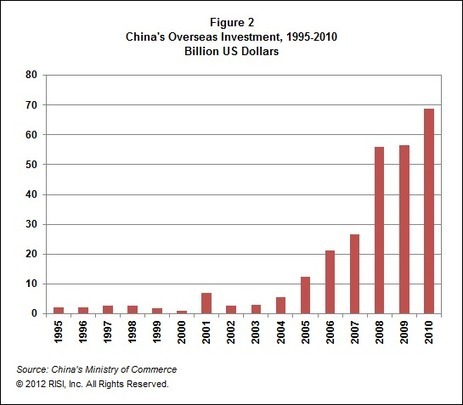
Is expanded investment in forest assets by Chinese state-owned companies an opportunity for or a threat to TIMOs6 involved in international forestry? While some TIMOs may find themselves bidding for assets in competition with Chinese firms, we note that the other owner of Wenita (38%) is the US-based TIMO GMO Renewable Resources. And we know that other TIMOs have been having conversations with Chinese firms to discuss possible collaboration. Whether Chinese state-owned companies will choose to work with established forest asset managers, or try to invest directly, will likely depend on the particular projects, whether processing facilities are to be included, history of the enterprise, and so on. But we have little doubt that Chinese capital will be playing an increasing role in the international timberland investment markets in the next several years. This will add an interesting dynamic to the timberland markets, as Chinese firms are not known for spending much time or money in carefully dissecting potential investments with Western style analysis. Their preferred strategy of "shoot first, aim later" will no doubt lead to a few more failures, but will also lead to some more positive results, especially for those Chinese companies who pair up with the right partners in the right locations.
|
|
Scooped by
Prentiss & Carlisle
July 5, 2012 8:12 AM
|
We have recently upgraded the long-term recommendation for The St. Joe Company ( JOE ), a publicly held real estate company, from Neutral to Outperform, primarily due to its strong future growth prospects.
Based in Jacksonville, Florida, St. Joe is one of the largest real estate developers of Northwest Florida. Over the years, the company has developed successful residential and commercial projects and related infrastructure, which in turn has attracted regional and national businesses to the area that contributed to the regional growth and prosperity.
|
|
Scooped by
Prentiss & Carlisle
July 5, 2012 8:06 AM
|
Some of the world's biggest pension funds said they have been ploughing money into farmland around the world as they seek to diversify portfolios andgenerate stable returns at a time of market volatility
|
|
Scooped by
Prentiss & Carlisle
July 5, 2012 7:54 AM
|
Timber REITs are favored as a medium-to-long-term play on a housing recovery with large, liquid companies that have good balance sheets and pay a dividend.
|
|
Scooped by
Prentiss & Carlisle
July 3, 2012 11:11 AM
|
The Minnesota Court of Appeals decided Monday that a lower court erred when it ruled in favor of timber companies who claimed the state broke promises by capping payments under a forest management program.
The decision essentially dismisses a lawsuit filed last year by three large timber companies who argued the $100,000 annual cap put in place as lawmakers were trying to balance the budget was a breach of contract. ... Sarah Crippen, an attorney for Blandin Paper Co., Potlatch Corp., and Meriwether Land and Timber, said her clients were disappointed with the decision and were reviewing their options.
The case centers on the 2001 Sustainable Forest Incentive Act, which allows owners of forest land to receive annual payments for following certain requirements, such as following a forest management plan or avoiding residential or agricultural use. Enrolled land is required to be in the program for eight years, and there are penalties for early withdrawal or noncompliance.
|
|
Scooped by
Prentiss & Carlisle
July 2, 2012 5:35 PM
|
Recent rosiness reported in US housing markets triggered interest and trading in public timber REITs. Year-to-date, timber REITs and the Forisk Timber REIT (FTR) Index show positive performance (Table 1). However, the results vary by firm and sit below 2012 peaks in March and April and May, replaying a scenario where investors capture profits opportunistically. In sum, equity markets priced in the good news and shareholders shed shares to book the gains.
|
|
Scooped by
Prentiss & Carlisle
July 2, 2012 5:25 PM
|
In a world marked by so many unknowns and potential pitfalls, institutional and pension fund managers need a new way to look at investing — one that starts with the characteristics of the institution and then works up from there. ...
[Editor: This article cites a commercial real estate solution, but could not timberland serve the same purpose?]
|
|
Scooped by
Prentiss & Carlisle
July 2, 2012 5:17 PM
|
We need to leverage our twenty years of experience to boil down the complex list of 100s of possible indicators of sustainability to the top 3, 4, or 5 mandatory and universal building blocks that define good wood. These core components should be measurable, auditable and widely applicable. They should support a vision for the forestry we want to see now and in the future, and the responsible wood products that the marketplace desires. By identifying the cornerstones of sustainable forestry, we will articulate the expertise of our good forest managers and eliminate the confusion in the marketplace.
|
|
Scooped by
Prentiss & Carlisle
July 2, 2012 5:05 PM
|
Ohio Police & Fire Pension Fund committed $50 million to Brookfield Timberlands Fund V and $35 million to private equity fund Advent International GPE VIII. ... The pension fund in January hired its first timberland managers — Forest Investment Associates and Hancock Timber Resource Group — to run $100 million each.
|
|
Scooped by
Prentiss & Carlisle
June 26, 2012 9:35 PM
|
The demand for pulp wood has been strong in the first half of the year and growing ever since the economic downturn, according to Paul Boynton, chairman, president and CEO of Rayonier (NYSE: RYN). ... When the economic downturn became evident Boynton said the company recognized that the value for lumber was going to diminish. As a result the company decided to preserve its timber product and put more emphasis onto the pulp wood business.
|