


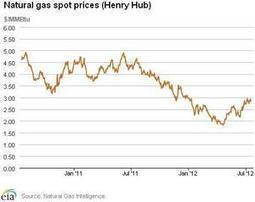

A new report by Wood Resources International shows biomass prices dropped in the U.S. South, Northeast and West during the second quarter of 2012, primarily due to the continued fall of natural gas prices, which reached a 10 year low.

 Your new post is loading...
 Scoop.it! A new report by Wood Resources International shows biomass prices dropped in the U.S. South, Northeast and West during the second quarter of 2012, primarily due to the continued fall of natural gas prices, which reached a 10 year low. 
No comment yet.
Sign up to comment
Scoop.it!

Ohio Police & Fire Pension Fund, Columbus, committed $25 million to Brookfield Brazil Timber Fund II, confirmed spokesman Eric Eramo. The commitment is the $12 billion pension fund's fourth to timber; it created a 3% target allocation to the asset class in March 2010. The fund committed $100 million each to Forest Investment Associates and Hancock Timber Resource Group and $50 million to Brookfield Timber Fund V earlier this year.
Scoop.it!

The woodlands of central Maine, long dominated by logging and papermaking, are in the midst of a painful shift. Timber firms are abandoning the state, selling off vast tracts of pine and spruce. The disruption raises the question of what should come next: a transition to a tourism-based economy, or an all-out effort to bring in new industries.
Scoop.it!
The Forest Products Laboratory in Madison next week will open a $1.7 million nanocellulose pilot plant that will help support the emerging market for wood-derived renewable materials.
Scoop.it!

Foreign holdings in U.S. forests and farmland rose by 6.7% in the last 10 months of 2010, encompassing an area roughly the size of Indiana, according to a new report by the Department of Agriculture. The report, containing the most recent data available, shows that investors from Canada and the Netherlands have almost half of all foreign forest and farmland holdings in the USA. The Canadian holdings reflect heavy investment by timber companies, while the Dutch holdings reflect pension fund investments and long-term agricultural connections in the USA. ... More than half of foreign land holdings are in timber, much of it concentrated in Maine, where roughly 16% of privately owned land has foreign owners or leasers, almost twice that of any other state, the USDA said. ... Nationally, about 24.2 million acres of privately held farm and forest land were owned or leased by companies with foreign investors, up more than 1.5 million acres in the last 10 months of 2010, the report says. The total is up more than 65% since 2004. The growth in 2010 came after a relatively flat period during a global economic slowdown in 2008 and 2009. ... Ten states, mostly farm states in the Midwest, restrict foreign land ownership, according to the National Conference of State Legislatures.
Scoop.it!

When Wilderness Isn’t Wilderness: When the US Forest Service wants to act fast to protect natural resources, it can. But, when it needs to act fast to prevent catastrophic timber loss to pests or fire, it predictably fails to act. June’s double standard example is within the still-burning 297,000 acre Whitewater-Baldy Fire in New Mexico’s Gila Wilderness, Gila National Forest. As the fire burned, biologists used electro-shockers to capture rare Gila trout from streams, then the trout were netted and lifted-out of the Wilderness via helicopter. No Environmental Impact Statement; no appeal period; and no public input for mechanized machinery or fish-snatching in a designated Wilderness. Go figure. Exploding trees — Forest Service Believe It or Not: US Forest Service workers in Montana’s Helena National Forest are using high explosives to fall beetle-killed pine trees that pose danger to scenic highways and recreation sites. An engineering program leader at the USFS Missoula Technology Development Center said the danger of cutting down rotted trees in tough locations is a reason to use explosives. “We just don’t have a whole lot of really good sawyers. The days of going out and doing that activity are long gone in the Forest Service.” Sometimes, fact is stranger than fiction.
Scoop.it!

When asked to explain the difference between a fundamental and technical analyst I could serve up something from Investopedia.com or I could simply say a fundamental analyst will listen to compelling stories and a technical analyst will listen to the markets. One listening tool is the new 52-week high/low list which often reveals the current dominant theme that is driving the markets. A dominant theme is an investment strategy that seems to work in confusing times. ... The obvious dominant theme is the bullish stampede into the yield space but I can’t imagine investors spending the next ten years buying REITS, telecoms, utilities and pipelines unless they believe interest rates will never go up in our generation. This less obvious dominant theme seems to be wood with stocks like Rayonier Inc. (RYN), Weyerhaeuser Co, (WY), Norbord Inc. (NBD). Acadian Timber Corp. (ADN) and West Fraser Timber Co. Ltd. (WFT) close to, or just posting new 52-week highs.
Scoop.it!

Drought conditions in much of the U.S. this year could turn into a boon, rather than a bust, for institutional investors in farmland, timber and agricultural stocks.
Scoop.it!
[Editor] Good overview of activity in the larger real estate investment market
Scoop.it!

Shares of timberland owners Plum Creek Timber Co. Inc. and Weyerhaeuser Co. traded higher on Monday, after an analyst said a proposed sale of 1.9 million acres of timberland is a positive for the two companies. Hancock Timber and Molpus Woodlands announced last week that they would buy the land from Forest Capital Partners. The transaction represents the biggest timberland sale in the U.S. in six years, Citigroup analyst Anthony Pettinari said in a research note. The size of the deal suggests that the market for timberland is showing signs of life, after years of far smaller transactions — and that's a positive for Plum Creek and Weyerhaeuser, Pettinari wrote.
Scoop.it!

The first-to-market business strategy doesn’t reward advanced biofuels or biobased chemical companies because the race to provide drop-in biofuel or renewable chemicals isn’t about brand loyalty or opening a facility first, it’s about a flawless production process.
Scoop.it!

The Board of Phaunos Timber Fund Limited ("Phaunos" or the "Company") is pleased to announce the sale of the Don Chico plantation, part of Phaunos' Pradera Roja investment for US $5.7 million, payable to the Company in cash in US dollars. Don Chico is located in eastern Uruguay and is comprised of approximately 1,567 hectares with over 700 hectares planted in various Eucalyptus species. The Don Chico land was purchased in 2009 for US $2.9 million. Don Chico represents 13% of the Pradera Roja estate of 11,921 hectares. The Pradera Roja investment was valued at US $32.2 million as at 31 December 2011. The portion of this value attributable to Don Chico as at 31 December 2011 was approximately US $4.1 million. ...
Scoop.it!
Editor: Nice article in the latest Forest Products Journal
|
Scoop.it!

The maps of Oregon’s state forests will look different in the not-too-distant future. Whether that means they’ll be managed differently, is another question. The Board of Forestry approved clearly labeling parts of five state forests as what are called “high value conservation areas.” Rob Manning reports that environmentalists and timber advocates are already wondering whether new labels on maps will mean bigger changes on the ground.
Scoop.it!
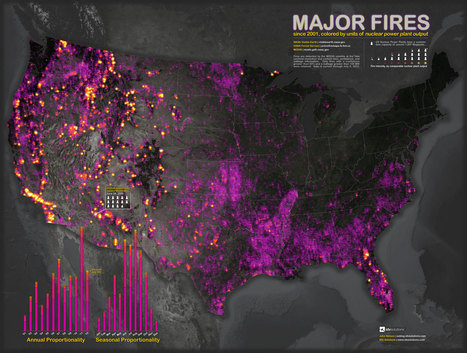
A new map, done up in blazing color, plots more than a decade's worth of the massive fires that have hit the United States, offering a revealing portrait of an increasingly common menace. [Editor: Thanks to Mike Smith at http://www.linkedin.com/in/southem for this story]
Scoop.it!

The benefits of commodity investing have been well-documented in recent years, as this asset class has become a more widely accepted part of every investor’s portfolio. These assets are typically used for their appeal as inflation hedges as well as their low correlation to the overall stock market. When most investors think of these kinds of assets, big-name commodities like gold and silver come to mind, yet their are a number of other options that present equally compelling investment theses. One of those investments is timber, a commodity that has proven its worth over time.
Scoop.it!

Jane Mendillo of Harvard Management Company, which manages Harvard University’s $32 billion endowment, told the gathering of investors at the Delivering Alpha Conference last week that she looks at an increasing world population, and a wealthier middle class in developing countries, and believes that the demand for natural resources such as timber, food, and water will increase in the long term. Therefore, she is bullish on companies that do business in related industries, calling natural resources “our favorite area.”
Scoop.it!

An Alabama buyer paid about $8.5 million for more than 5,800 acres of timberland on the Alabama River north of Mobile in Baldwin and Clarke counties, according to court records. The property is accessible by boat or a dirt road near Carlton, and has 15 miles of frontage on the river, a 3,070-square-foot, cypress-built lodge, a bunkhouse, hot tub, boat dock and helicopter landing pad. Larson McGowin in Mobile represented the sellers, Vesta Timber Co., and Alabama Land Title handled the closing transaction.
Scoop.it!

Potlatch (Nasdaq:PCH) has been upgraded by TheStreet Ratings from hold to buy. Among the primary strengths of the company is its respectable return on equity which we feel is likely to continue. We feel these strengths outweigh the fact that the company has had sub par growth in net income.
Scoop.it!

The U.S. Lumber Coalition is disappointed by today's London Court of International Arbitration (LCIA) ruling that British Columbia's (BC) timber pricing practices do not circumvent the U.S.-Canada Softwood Lumber Agreement (SLA). By selling large volumes of timber for a lower price than should have been charged under the BC Interior timber pricing system grandfathered in the SLA, BC moved Crown timber prices even further from market value - giving back to lumber producers with one hand the export taxes it had collected with the other. In the arbitration, the United States provided a compelling demonstration that the effects of the mountain pine beetle on the suitability of logs for producing lumber could not begin to justify the increase of timber graded and priced as mostly unsuitable for producing lumber in BC. The LCIA did not take issue with this conclusion as a factual matter, but concluded it could not rule against Canada on this basis alone. Rather, the LCIA tribunal found that the United States also had to demonstrate that a particular amount of misgrading could be attributed to each specific BC government action.
Scoop.it!

In the current issue of Wood Bioenergy US (WBUS), Brooks Mendell and Amanda Lang focus on two aspects of regional wood bioenergy markets. First, they review the potential demand for pulpwood and chips by region to address the question “where does wood bioenergy most directly affect timberland investors and forest industry procurement managers at pulp mills and OSB plants?” Second, they evaluate the ability of regional markets to absorb and support new wood bioenergy projects by prioritizing regions with large, established, high-volume pulpwood markets, suppliers and the related infrastructure. The results show how “market depth” helps explain why new wood bioenergy investment and projects migrate to different parts of the United States, especially the US South (see Figure).
Scoop.it!
Forest Capital Partners sold its 1.88 million-acre timberland portfolio on Friday to Hancock Timber Resource Group and Molpus Woodlands Group. ... Hancock Timber is acquiring 573,000 acres in Oregon, 376,000 acres in Louisiana, 264,000 acres in Washington and 138,000 acres in Idaho. Molpus is buying 286,000 acres in Minnesota, 110,000 acres in Louisiana and 138,000 acres in Idaho.
Scoop.it!

Does the export of raw logs to China hurt or help British Columbia’s economy? NDP leader Adrian Dix is rallying for export tariffs on logs, which would put a hard stop on the export of raw logs from B.C. that are being shipped and processed in China instead of here. The concern is that log exports result in a loss of jobs for B.C. residents and dampen overall efforts for sustainable forest management. Last year, about one-third of B.C.’s softwood lumber, worth nearly $1.1 billion, was exported to China. Such protectionist strategies only result in inefficient markets. By trying to force the creation of a few jobs in value-added forestry products, thousands of existing efficient and sustainable jobs in the log exporting sector will be sacrificed.
Scoop.it!
Weyerhaeuser Company has announced its preference for purchasing wood certified under the American Tree Farm System, an independent certification designed for US family forest landowners and recognized by the Sustainable Forestry Initiative. Weyerhaeuser, the U.S.-based lumber producer, pulp and paper manufacturer and home builder, will maintain a priority market for material from certified ATFS farms, declare its support for the system in its wood procurement policy, track its use of the wood, and include the certification as an attribute when using its vendor management plan, which scores wood suppliers on a number of metrics. Weyerhaeuser says it also will offer landowner assistance to encourage tree farm certification and the management of forests to the ATFS Standards of Sustainability.
|




