Your new post is loading...

|
Scooped by
Prentiss & Carlisle
October 4, 2012 12:29 PM
|
There's something to be said for looking outside the box in terms of considering including asset classes in your portfolio. In the past, I've espoused the potential benefits of exposure to water, as one example.
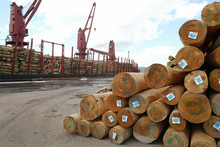
Timber, a positive in portfolio construction, has historically had low correlations with more traditional asset classes, is another outside-the-box item
As an asset class timber has outperformed the S&P 500 over a bevy of time periods, and several challenging market environments, typically with a lower level of risk than equities.
|
|
Scooped by
Prentiss & Carlisle
October 4, 2012 12:25 PM
|
The biggest factor determining the performance of an investment portfolio is, according to a landmark paper produced quite a few years ago now, asset allocation. ... The investment experts at the NZSF have determined that an appropriate asset allocation is 80 per cent in growth assets and 20 per cent in bonds - the rationale being that because NZSF has a very long term investment horizon it can afford to take a long term view and have a higher proportion of its money in higher growth, risky assets and in particular assets that are hard to sell and/or hard to price. ... Looking at NZSFs portfolio some 27.5 per cent is in relatively illiquid sectors like infrastructure, timber, property and other private markets. The downside however is cost - it requires expensive experts to manage these sort of assets. Furthermore, to paraphrase George Orwell, some experts are more expert than others. ... So far the Super Fund has performed relatively well returning 7.4 per cent pa versus 6.8 per cent pa for its benchmark which it calls the "reference portfolio" (RP). The RP is defined as 70 per cent international shares, 5 per cent NZ shares, 5 per cent international property and 20 per cent international bonds. ... Whilst the Super Fund says that its asset allocation is 20 per cent bonds, 80 per cent shares it is important to understand how it gets to these figures. ... The Super Fund has about 28 per cent of its portfolio in alternative assets like infrastructure and timber and when it calculates asset allocation it considers that these assets have some attributes of bonds and some of shares. So for example it reckons that infrastructure is 60 per cent shares and 40 per cent bonds. For timber it assumes that this asset is 70 per cent bonds, 30 per cent shares.
It is important that the public and politicians understand the NZSF's alternative treatment of alternative assets. With the future looking more uncertain than ever it will be interesting to see if NZSF continues to outperform its Reference Portfolio.
|
|
Scooped by
Prentiss & Carlisle
October 4, 2012 12:12 PM
|
Tembec Inc. (TMB) is joining the revival among Canadian forest-product stocks as Chinese demand for bathroom tissue lifts pulp prices and lumber surges on a U.S. housing rebound.
The Montreal-based maker of pulp, softwood, hardwood and pine lumber, rose the most in almost a year yesterday after producers, including Fibria Celulose SA (FIBR3), the world’s largest maker of hardwood pulp, raised prices for the raw material used in paper and tissue.
“Underlying all this are huge increases in Chinese demand for tissue paper that’s goosing demand for hardwood and softwood pulp,” Brian McClay, founder of Brian McClay & Associates Inc., a Montreal-based pulp-industry consultancy, said yesterday by telephone. ... “As China becomes more and more urbanized, tens of millions of people every year are moving into apartments and dwellings with flush toilets and they’re using more bathroom tissue,” McClay said.
Last year China consumed a record 6.74 million metric tons of tissue paper, virtually all of it the bathroom variety, about 19 percent more than in 2010, McClay said. New paper mills will probably increase the country’s capacity to produce tissue this year by about 1.6 million tons, he said. ...
Fibria, based in Sao Paulo, announced price increases effective Oct. 1 for hardwood pulp in Asia, Europe and North America, with the North American price rising to $830 a ton, according to data compiled by RISI, a paper and forest industry information provider based in Bedford, Massachusetts.
Domtar Corp. (UFS) was the first company to announce a $20 price increase for Northern Bleached Softwood Kraft pulp sold in North America and made from spruce, pine and fir sawmill chips, McClay said. Domtar was followed by Canfor Pulp Products Inc., Tembec, Mercer International Inc. (MERC), and others, he added. The price increases, which are not generally made public, don’t guarantee a rise, as some customers may not agree.
... Companies with more exposure to lumber have led the rally in forest stocks this year as the U.S. housing market has rebounded and amid growing Chinese demand for wood building products. West Fraser Timber Co. (WFT) has gained 37 percent, while Western Forest Products Inc. (WEF) has risen 32 percent.
Purchases of new U.S. homes in August held close to a two- year high. Sales dipped 0.3 percent to a 373,000 annual pace following a revised 374,000 rate in July that was higher than previously estimated and the strongest since April 2010, figures from the Commerce Department showed.
Prices for 1,000 board feet of British Columbia benchmark spruce, pine or fir lumber have advanced 12 percent this year, according to data compiled by Bloomberg.
|
|
Scooped by
Prentiss & Carlisle
October 4, 2012 11:49 AM
|
Roxanne Quimby, who co-founded Burt’s Bees natural cosmetics firm and has purchased thousands of acres of forest land in Maine in hopes of establishing a national park in the Millinocket area, is ranked 86th on the list for 2012. The annual list, compiled by the Birmingham, Ala.-based quarterly magazine The Land Report, was released at 6 p.m. Wednesday.
Quimby owns 119,000 acres of land, most of it through Elliotsville Plantation Inc., a nonprofit land conservation foundation. According to the Land Report list, Quimby’s goal is to donate 70,000 acres to the creation of a North Woods national park and 30,000 acres to the state which, unlike the national park land, would be open to hunting, logging, all-terrain vehicles and snowmobiles.
|
|
Scooped by
Prentiss & Carlisle
October 2, 2012 8:38 AM
|
I recently read several articles on Seeking Alpha by Jeff Williams where he uses nine criteria to judge a company's financial health. The criteria are simple and easy to obtain from company financial statements. Companies get a pass or fail on each criterion. Jeff generally uses year end data, so 2010 and 2011 are the most current figures. I thought it would be interesting to use Jeff's method on some of the companies that I generally write about, namely the timber REITs and Pope Resource. This article will analyze Weyerhaeuser (WY) using Jeff's system. ... This would give Weyerhaeuser an average to poor rating based on only passing five of nine tests. However, to be fair, 2010 was not a typical year for WY. 2010 was the year that WY converted to a REIT, so many of the 2010 figures were affected by this one-time event. ... For the past four to five years, the timber business has been in the tank due to the crash in housing. Therefore, any bet on Weyerhaeuser is a bet on the future not the past. At this time, I think this type of analysis unfairly penalizes WY due to the REIT conversion in 2010, however, I still believe it to be useful.
|
|
Scooped by
Prentiss & Carlisle
October 1, 2012 2:13 PM
|
New England’s first torrefied wood facility received its final Maine Department of Environmental Protection permit, clearing the way for construction of a $48 million facility, 25 full-time jobs and possibly the birth of a nationwide industry, officials said Thursday.
A type of microwaved wood pellet that burns as hot as coal without coal’s pollutants, torrefied wood burns about 30 percent hotter than typical wood pellets.
|
|
Scooped by
Prentiss & Carlisle
September 28, 2012 12:00 PM
|
Much of northeast Minnesota -- long a playground for hunters, hikers, snowmobilers and ATV riders -- is in danger of being locked up, as the state's largest private property owner calls the Legislature's bluff over taxes on its forestland.
Stinging from a decision by lawmakers in 2010 to change the state's Sustainable Forestry Incentives Act, Molpus Woodlands Group of Jackson, Miss., has erected about 16 gates across roads in Koochiching and St. Louis counties, promising to seal off most motorized travel on hundreds of miles of snowmobile trails and back roads leading to private cabins and hunting outposts. ... "There's not enough money in growing and selling timber anymore,'' said Craig Halla of International Falls, who manages the lands. "If you have to sell 60,000 cords of aspen a year just to pay your taxes, there's something wrong.''
|
|
Scooped by
Prentiss & Carlisle
September 28, 2012 11:54 AM
|
More than 50 logging trucks, most loaded with timber, caravaned through downtown Duluth this morning.
The loggers are trying to draw attention to their effort to change federal law to allow them to carry heavier loads on interstate highways. Currently they can weigh 90,000 pounds on state roads, but only 80,000 pounds on the freeway.
|
|
Scooped by
Prentiss & Carlisle
September 28, 2012 11:57 AM
|
A number of Chinese buyers are circling Gunns' assets, with Shandong Bohui Paper one of the interested parties for the Bell Bay and Tarpeena sawmills, sources close to the situation said.
The timber company, which is under a $560 million debt load, was placed into administration on Tuesday after losing the support of its banks.
It is understood there have been high-level discussions in the past week with Shandong Bohui Paper around the two mills, which employ 350 workers and have an enterprise value of about $100 million.
|
|
Scooped by
Prentiss & Carlisle
September 24, 2012 4:17 PM
|
Like NFL quarterbacks with respect to winning and losing football games, discount rates get a disproportionate level of credit and criticism with respect to the success and failure of timberland investments and valuations. While simple math tells us that changing discount rates alters significantly the results of any valuation model, basic finance and market analysis remind us that client objectives, timeframes and risk tolerance actually dictate investment strategies when attempting to acquire – and to value – timberland assets. This is especially true when evaluating international timberland investment opportunities.
|
|
Scooped by
Prentiss & Carlisle
September 21, 2012 1:08 PM
|
SUPPOSE you want to buy a table. But you care about orang-utans, indigenous peoples and carbon emissions, so you don’t want it made with illegally harvested logs. Or suppose you run a chain of furniture shops, and you don’t want to go to jail for buying illegal timber. Either way, you face a snag: how to tell if a log is legal?
Enter DoubleHelix Tracking Technologies, a Singapore-based firm that uses DNA testing to pinpoint where a piece of wood is from. “You can’t forge DNA,” says Andrew Lowe, its chief scientist. The firm sells its services to big retailers such as Lowe’s, B&Q and Marks & Spencer. ... DNA tests face two problems. One is the cost: testing $45,000-worth of merbau will set you back $250, says Jonathan Geach, the executive director of DoubleHelix. The second is that accurate global DNA maps exist only for about 20 species of tree, and the tests are no use unless you know what you are looking for.
Neither problem seems insuperable, however. More species can be mapped, and the cost of testing will fall, as surely as a chainsawed tree. That’s bad news for the $30 billion-a-year illegal logging industry, but good for forests.
|
|
Scooped by
Prentiss & Carlisle
September 21, 2012 12:35 PM
|
Almost half of defined benefit pension plan sponsors in Canada intend to increase their allocation to alternative investments, such as real estate, infrastructure, and private investments, as they seek long-term returns that are less connected to public equity markets, according to a survey by RBC Investor Services. ... Canada’s largest pension funds have been making significant investments outside traditional stock and bond portfolios for several years, driven by record low interest rates and volatile stock markets. ... Teachers’ Infrastructure Group manages an international portfolio of about $11-billion involving water and wastewater, electricity distribution, airports, power generation, high-speed rail, port facilities and timberland.
According to the RBC survey, 48% of Canadian pension plans intend to increase their allocation to alternative investments, and that figure rises to 88% for those with more than $1-billion in assets.
“For respondents already holding alternative assets or those looking to invest in them, real estate is the preferred choice,” RBC said, noting that 45% plan to add real estate investments and 34% plan to invest in infrastructure assets.
|
|
Scooped by
Prentiss & Carlisle
September 21, 2012 12:22 PM
|
Jane Mendillo boarded a turboprop plane in Brasília in April and flew deep into the Brazilian countryside. The flight took her over dirt roads running through endless hills and valleys and unimaginably beautiful wilderness. But Mendillo, head of Harvard University’s $32 billion endowment, wasn’t there to sightsee. She was visiting tree plantations and inspecting Harvard’s holdings. ... Harvard’s endowment started buying U.S. forestland in 1997, when Mendillo—then a member of the investment team—recommended the purchases to her then-boss Jack Meyer. Now Mendillo, 54, is trying to remake the endowment after the world’s richest university suffered a $10 billion loss on its investments in 2009, a 27 percent drop that was the worst for any school.
|
|
|
Scooped by
Prentiss & Carlisle
October 4, 2012 11:54 AM
|
Timber has been weak since the Federal Reserve announced its enormous bond buying initiative. Agricultural grains have been even weaker since the peak of drought fears in mid-July. And crude oil? Instead of surging past $100 per barrel, it closed below $88 per barrel on 10/3/12.
The question is simple: If gurus from Jim Rogers to Bill Gross to Kyle Bass believe real assets belong in your portfolio, should you buy them now… when they are down below recent 52-week highs? By the same token, which Real Asset ETFs make the most sense for income generation, capital appreciation and/or inflation protection? ... I believe it is sensible to add Real Asset ETFs to a portfolio. I have been rather outspoken about a preference for natural gas producers via First Trust Revere Natural Gas (FCG). Others may see less political controversy with a position in Guggenheim Global Timber (CUT). Perhaps more importantly, these and other Real Asset ETFs have lower correlations with the broader stock market, making them desirable for genuine diversification and non-correlation.
|
|
Scooped by
Prentiss & Carlisle
October 4, 2012 12:16 PM
|
THE GOVERNMENT’S decision to sell the harvesting rights to Coillte’s forests for 50-80 years was sharply criticised by members of the Oireachtas Committee on Agriculture, Food and the Marine yesterday. ... In the Dáil last week, Minister for Agriculture Simon Coveney said the value of the harvesting rights would not be known until it went to market but the most recent valuation was between €400 million and €600 million.
The Government announced in June that it had made a decision to sell the harvesting rights. It was made as part of its commitment to the troika to realise value from State assets that strategically did not have to be in State ownership.
Coillte is responsible for the management of some 442,000 hectares – or 1.2 million acres – of State forest. It is also responsible for 90 per cent of the supply of logs to the State’s timber industry.
|
|
Scooped by
Prentiss & Carlisle
October 4, 2012 12:05 PM
|
This annually updated list is a gateway into the world of impact investing for investors and their financial advisors, offering an easy way to identify experienced impact investment firms and explore potential investment options. The IA50 is intended to illustrate the breadth of impact investment fund managers operating today.
Happily, there are more than 50 top tier impact investment funds in the world -- which means not all are included in the IA 50. These 50 firms have been selected to demonstrate a wide range of impact investing activities across geographies, sectors and asset classes.
The IA 50 is not an index or an investable platform; rather, it is an information resource to begin research on the impact investing sector.
|
|
Scooped by
Prentiss & Carlisle
October 1, 2012 3:07 PM
|
Lock Haven has enrolled a 5,200-acre parcel of its forested watershed in a fledgling Nature Conservancy program that provides landowners with sustainable forestry certification and revenue from carbon offset markets.
The Clinton County property in north-central Pennsylvania, which contains native brook trout streams in a large swath of contiguous hardwood forest in a ridge and valley landscape, is the second property in the state to enroll in the conservancy's Working Woodlands program. The first was Bethlehem, in Northampton and Lehigh counties near Pennsylvania's eastern border, which agreed April 2011 to protect 22,000 acres of forest in the watershed where it gets its drinking water.
The conservancy program is designed to pay property owners' up-front costs for certification and forest management planning while providing financial benefits from sale of Forest Stewardship Council-certified forest products and carbon offsets. Only forests larger than 250 acres are eligible.
...
|
|
Scooped by
Prentiss & Carlisle
October 1, 2012 2:49 PM
|
Peter Stein, a leader in forests and rural lands conservation and managing director of Lyme Timber Co, was named the Kingsbury Browne Fellow at the Lincoln Institute of Land Policy.
Stein, who previously was senior vice president at the Trust for Public Land, was also named the winner of the Kingsbury Browne Conservation Leadership Award by the Land Trust Alliance in recognition of outstanding leadership, innovation and creativity in land conservation. ... Stein has been providing leadership in the development and structuring of conservation-oriented forestland and rural land purchases and dispositions since joining Lyme Timber in 1990. He also manages the company's conservation advisory business. At the Trust for Public Land, he directed TPL's conservation real estate acquisitions in the Northeast and Midwest. He lectures extensively at graduate schools and professional conferences on conservation investment schemes and strategies...
|
|
Scooped by
Prentiss & Carlisle
September 28, 2012 12:02 PM
|
The majority of statistics about the housing market released in September continued to support the view, nearly universal now, that the housing market has climbed out of the ditch and is on the road to a sustainable recovery. Home prices in July and August continued to show strength.
|
|
Scooped by
Prentiss & Carlisle
September 26, 2012 8:37 AM
|
In a Mother Nature Network opinion editorial, Rolling Stones keyboardist Chuck Leavell offered hearty praise for governors who have recently taken a stand for fairness in forest certification. Leavell, a Georgia resident, cited Peach State Gov. Nathan Deal’s recent executive order that future state building projects are required to “recognize all forest certifications equally” for inspiring the musician’s wonkish praise. ... The move spelled the end of Georgia’s adherence to Leadership in Energy and Environmental Design (LEED) in regards to green building standards. LEED only recognizes one form of certification, the Forest Stewardship Council (FSC), and is promoting monopoly in an area that should be ripe for domestic competition. ... Governor Deal’s executive order has now opened the doors to lands certified by standards “like Sustainable Forestry Initiative and American Tree Farm System” and will result in better utilization of resources native to Georgia.
|
|
Scooped by
Prentiss & Carlisle
September 26, 2012 8:32 AM
|
Four major North American publishers – Time Inc., the National Geographic Society, Macmillan, and Pearson – have joined the Sustainable Forestry Initiative’s (SFI) Forest Partners Program as founding members.
The program creates a way for the publishing industry to support SFI’s certification program for forest and forest products. SFI said the new partners will work collectively with the SFI community to make certification more efficient and accessible by providing resources for activities such as shared consulting expertise, group certification or audit coordination.
[Editor: Thanks to Mike Smith at http://www.southem.com for bringing this to our attention]
|
|
Scooped by
Prentiss & Carlisle
September 24, 2012 4:27 PM
|
One of the largest private property sales in the history of the Tug Hill quietly went down this summer, with no news releases or press conferences.
In August, the Cortland-based Farm East, LLC, sold nearly 28,000 acres of wooded, undeveloped land to Salmon River Timberlands, which is a subsidiary of Woodwise Land Company, LLC. The sale price was more than $12.4 million.
The land, located in the southwest corner of the Tug Hill region, is not all connected and spreads across four counties — Oswego, Jefferson, Lewis and Oneida. The majority of the property (more than 19,300 acres) is located in Oswego County. ... Woodwise, a Scottsville-based business, owns more than 70,000 wooded acres in three states, with the majority of it in New York. According to the company’s website, Woodwise is “a private timberland investment company that actively seeks to purchase high-quality timberlands throughout New York, New Hampshire, Vermont and the rest of the Northeast."
|
|
Scooped by
Prentiss & Carlisle
September 21, 2012 1:10 PM
|
More than one-quarter million acres of private timberlands normally open to fall hunting are off-limits to the public in Jackson and Josephine counties, plagued by extreme fire conditions heading into the fall hunting seasons.
Private timber companies such as Hancock Forest Management and Plum Creek Timber Co. have shuttered motorized and foot access to their lands in southwest Oregon, while others including Lone Rock Timberland are allowing just limited public access, according to the Oregon Department of Forestry.
They are part of nearly 4 million acres of private, industrial forestland in Western Oregon under tight restrictions heading into the region's Saturday, Sept. 29, start of general deer season for rifle hunters.
|
|
Scooped by
Prentiss & Carlisle
September 21, 2012 12:42 PM
|
With the housing market seemingly showing some green shoots, many are growing more optimistic that we have seen the bottom in this important sector. Prices are starting to slowly trend upwards in some markets while home sales levels, while nowhere near their peak, are comfortably above the lows that they experienced during the dark days of 2008-2010.
This trend has been especially welcomed new for ETFs targeting the building and construction industry as these funds have been among the top performing products from a year-to-date look. In fact, the iShares Dow Jones US Home Construction ETF (ITB) is up an impressive 66% since the start of the year, suggesting that at least for those in this industry, the recovery is definitely underway in the housing sector. ... Currently, there are two ETFs tracking the broad timber equity market, the Guggenheim Timber ETF (CUT) and the iShares S&P Global Timber & Forestry Index Fund (WOOD). These funds have both added a little over 12% so far in 2012, nothing to be ashamed of, but obviously nowhere near what investors have seen in some of the key home construction ETFs either. ... Yet, investors should note that while CUT and WOOD both have a focus on the timber industry, there are some slight differences between the two products. While either could make for a good choice to play a timber price boom, we have highlighted some of the key disparities between the two ETFs...
|
|
Scooped by
Prentiss & Carlisle
September 21, 2012 12:27 PM
|
Timber/lumber has long been a staple commodity of the world, providing wood products for everything from the houses we live in to the paper we write on. As an investment, however, timber does not exactly scale the ranks of popularity. When most people think of commodities, assets like gold, natural gas, and crude oil are undoubtedly the first that come to mind. But timber has a compelling investment thesis that has roped in a number of individuals and institutions over the years.
|