Your new post is loading...

|
Scooped by
Prentiss & Carlisle
October 26, 2012 12:05 PM
|
The US real estate recovery is set to continue, spreading nationally, while the mood among industry insiders is one of cautious optimism, according to the 2013 Emerging Trends in Real Estate, released by PwC US and the Urban Land Institute.
More than 70% of respondents expect good to excellent prospects for profitability in 2013, with a rising real estate market helping them to overcome concerns about rising interest rates over the next five years.
Byron Carlock, US real estate practice leader at PwC, said: "The surprise to us is that there is not more optimism. The market is proceeding at a pleasant pace in the right direction."
|
|
Scooped by
Prentiss & Carlisle
October 25, 2012 9:59 AM
|
Fires that devastated large parts of European forestry have been blamed on al-Qaeda by Russia’s security services who accuse the terrorist group of waging “forest jihad.”
Southern European countries including Spain, Portugal, and Greece suffered another summer of ravaging fires, with many fires the work of suspected arsonists. Now, the director of Russia’s Federal Security Service (FSS), Alexander Bortnikov, has blamed al-Qaeda for the fires.
|
|
Scooped by
Prentiss & Carlisle
October 25, 2012 9:18 AM
|
"Tough market conditions for sawn softwood in Europe and signs of improvement in North- America." This is how one could briefly summarize the softwood market at present, based upon the statistical material and discussions from the 2012 International Softwood Conference held in Stockholm on 18 and 19 October 2012. ... The figures presented speak for themselves: - Production of sawn softwood in 2012 will fall by 5.3% in the EOS member countries (and by 3.8% when considering all European ISC countries). For 2013 a further decline is forecast (-1% in EOS, +0.1% in European ISC countries). The European production volume accounts for about 97.6 mio m3.
- North-American production, on the other hand, increases by 7.2% in 2012 (+2.2% in 2013), from 88.9 mio to 90.8 mio m3.
- In the total ISC region, production in 2012 is expected to close at a rate of 1.2% above the 2011 volume.
- Consumption in EOS and European ISC countries is forecast to decrease by 3.4 or 3.5% in 2012. North-American consumption matches the production increase figure (+6.6%).
- Total consumption would close at 155 mio m3, 1,8% above the 2011 volume.
As main reason for the negative development, sector and company representatives pointed to the difficult market situation in many countries, still suffering from weak performance in construction and low consumer confidence, difficulties on export markets caused by political instability and the record high log prices .
|
|
Scooped by
Prentiss & Carlisle
October 23, 2012 3:23 PM
|
In Callan’s Ask the Expert research paper “Investing in Farmland—Looking to Buy the Farm,” Jamie Shen, senior vice president and head of Callan’s Real Assets and Alternative Investments consulting groups, reveals that farmland investing has reached an unprecedented level of interest among institutional investors looking for higher returns on their investments.
Though farmland investing has been around for more than 20 years and Callan has covered the asset class for more than 12 years, it was only within the last 2 years that Shen saw an explosion in client interest.
... Interest in farmland is also up because the asset class is no longer considered a standalone investment or part of a real estate allocation— which usually required a meaningful portfolio allocation of approximately 5%. Now that farmland has been re-categorized to the real assets category (which includes timber, infrastructure, private energy, real estate, commodities and TIPS), a 1% allocation to farmland is considered notable.
|
|
Scooped by
Prentiss & Carlisle
October 22, 2012 6:36 PM
|
On Tuesday night, President Obama and former Massachusetts governor Mitt Romney met at Hofstra University for their second debate of the 2012 election. Since climate change, the environmental elephant in the room, had escaped mention in the previous presidential and vice-presidential debates, I was confident that a fairly esoteric topic like ecosystem protection would get short shrift on stage in Hempstead. Sure enough, when Obama and Romney's question-and-answer exchange with the audience shifted to energy development, the two candidates delicately avoided substantive discussion of a subject that could have important ramifications for our domestic and foreign policy in future years: the conservation of natural capital.
The World Bank defines natural capital as the stock of renewable and non-renewable "gifts of nature" used for production. These gifts include mineral resources and timber, as well as other things like aquifers, wildlife, and wetlands. Until recently, many economists downplayed the importance of natural capital when accounting for societal wealth, and only factored it in when said capital could be chopped down, hacked out of the ground, or harvested from the land or water for sale, in which case it could be grouped under gross domestic product (GDP). However, the past four decades have witnessed a change in how these endowments are valued, with policymakers and their advisers slowly realizing that traditional metrics like GDP failed to account for the services rendered by ecosystems, services that we often benefit from without market transactions taking place.
|
|
Scooped by
Prentiss & Carlisle
October 18, 2012 3:01 PM
|
Housing starts rose a startling 15 percent in September, up from August’s revised (upwardly) 758,000 units to 872,000 units. This is 34.8 percent above September 2011′s 647,000. Single family starts climbed 11 percent to 543,000.
|
|
Scooped by
Prentiss & Carlisle
October 18, 2012 2:59 PM
|
Seeking to leverage its extensive investment in real estate, commercial mortgages and private bonds, MetLife Inc. plans to launch a third-party asset management business that will arrange and manage investments in those areas for other institutional investors, including insurance companies, public and private pension plans and sovereign wealth funds. ... The new organization will be led by MetLife's global head of real estate investments, Robert Merck, and will manage investments for both institutional investors and MetLife. ... "Our goal is to lever our industry-leading real estate platform to become a top five institutional real estate investment manager," Merck said.
[Editor: MetLife has been a major player on the debt side of timberland. Is it now going to become the newest TIMO?]
|
|
Scooped by
Prentiss & Carlisle
October 17, 2012 11:28 PM
|
The price has now been revealed for the sale of future harvesting rights for forests in the south-east of South Australia. The Government said the harvest rights were sold for $670 million, achieving a price above the reserve.
The buyer is a consortium led by US company The Campbell Group, trading in Australia as OneFortyOne Plantations.
The sale of forward timber rotations has attracted protest in the south-east region, amid concern about jobs and the future for the timber industry.
|
|
Scooped by
Prentiss & Carlisle
October 17, 2012 9:10 AM
|
According to a 2011 report published by Bank of America, "Timberland has produced annual returns that have often matched or outpaced the S&P 500 Index over the long term but with notably less risk. Between 1991 and 2010, for instance, timberland's average annual return was 11.16%, versus the index's 9.03%."
Even during bear markets in timber prices, timberland continues to grow - literally - in value. That's because healthy trees grow between 4% and 6%, regardless of what happens to the economy or the stock market at large. And trees grow with little investment, upkeep or expense. ...
So we already know that timberland is better than the stock market as a long-term investment. But how does it stack up against another commodity - like gold ?
Timberland gained an average of 11.16% annually between 1991 and 2010. Gold only averaged 7% gains annually during that same period.
But that's somewhat of an unfair comparison. Gold and timber fulfill vastly different market needs. You don't buy gold for growth. You want to own gold to protect the value of your savings from government inflation or currency crisis.
|
|
Scooped by
Prentiss & Carlisle
October 15, 2012 10:22 AM
|
Increased talk about the use of woody biomass for energy in the U.S. has many people wondering how best to assure that the fuel and feedstock used by wood energy firms is harvested sustainably. The forest products industry—sawmills and pulp mills, in particular—has been down this road for more than 15 years and many have turned to the major forest certification systems available in the U.S., namely the Sustainable Forestry Initiative, the Forest Stewardship Council and the American Tree Farm System. These systems may or may not be the best way to demonstrate the sustainability of feedstock harvesting for the woody biomass energy sector. In the end, your customers’ needs and your company values should drive what you do about forest sustainability.
|
|
Scooped by
Prentiss & Carlisle
October 10, 2012 6:12 PM
|
The governments in Japan and South Korea have announced definite plans to increase their usage of green and low carbon energy alternatives.
South Korea is taking steps to reduce its dependence on imported fossil fuels and instead invest in domestic renewable energy technology, including wind, solar, hydropower, and biomass. The long-term plan is to increase the renewable energy share from less than four percent in 2011 to 6.1 percent in 2020, and then to 11.5 percent in 2030.
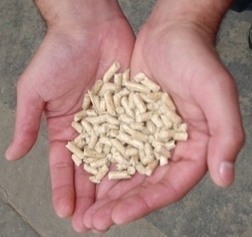
As part of this effort the government has initiated a program, which has included building eight new pellet plants, as well as exploring opportunities to import large volumes of pellets in the future. The goal is to consume five million tons of pellets by 2020, a huge increase from the less than a few hundred thousand tons used in 2011. ... Japan is another Asian country expected to increase importation of energy chips and wood pellets, due in part to the nuclear power plant accident in Fukushima last year. Following the disaster, the Japanese government decided to close down all nuclear plants, at least temporarily. ... In the future, Japan will increasingly rely on renewable energy sources, with biomass likely to be one important supply source. Up until this year, Japan has imported only very limited volumes of wood pellet, primarily from Canada, but it is likely that import volumes of both pellets and energy chips will increase in the coming years.
|
|
Scooped by
Prentiss & Carlisle
October 9, 2012 1:02 PM
|
The familiar saying “you get what you pay for” applies in many circumstances. Under certain conditions, however, this statement can be very misleading. For example, when customers pay a higher price for wood and paper products with “green” labels, they may not actually be getting something that is better for the environment. A combination of misguided policies and organized pressure from environmental activists to elevate one forest certification program over all others is creating confusion in the marketplace. As a result, consumers are paying more for wood and paper products that may fall short of their “green” expectations.
|
|
Scooped by
Prentiss & Carlisle
October 4, 2012 12:41 PM
|
Eighty-year-old Chinese farmer Guo Shuhe receives a state pension equivalent to just US$9 a month, not enough to buy a month’s worth of groceries, but enough it seems, to risk punching a gaping hole in government finances. ... Trapped by rising costs and deficient funding, China spends about 40% of state earnings on pension, compared to under 15% in Japan and the United States, the OECD said. ... China Investment Corp. (CIC), the nation’s $482.2 billion sovereign wealth fund, is continuing the process shifting away from outsourced management and funds-of-funds investment. ... A primary way the fund is becoming a more active investor overseas is through co-investing arrangements with private-equity fund managers, according to a Wall Street Journal report.
One partnership, with Toronto-based Brookfield Asset Management, will focus on acquiring real assets in the Americas, such as timber, to shield CIC assets from inflations. Brookfield and CIC have an existing relationship: In 2010, the sovereign wealth fund, which is the fifth-largest in the world, contributed about $200 million to a $2.5 billion Brookfield fund specializing in real assets from the Americas.
... CIC is also making a strong push towards insourcing asset management. As of December 31, 2011, CIC managed 43% of its assets internally, up from 41% at the same point in 2010. It’s following the lead of a number of other giant sovereign wealth funds, including the Alberta Investment Management Corporation (AIMCo). AIMCo has been beefing up its internal asset management staff, and aggressively developing the infrastructure and IT capabilities to run such an operation.
|
|
|
Scooped by
Prentiss & Carlisle
October 25, 2012 10:27 AM
|
The rating on China Forestry Holdings Co. Ltd. reflects our view that the company's financial strength and business sustainability will remain vulnerable over the next year. The rating also reflects China Forestry's weak and deteriorating liquidity and heightened information risk stemming from alleged accounting irregularities. The company's business risk profile is "vulnerable" and its financial risk profile is "highly leveraged," in our view.
We expect China Forestry's cash balance to continue to diminish over the next six to 12 months because we anticipate that its operating cash flow will be negative. The company's cash balance dropped to Chinese renminbi (RMB) 632 million as of June 30, 2012, from RMB809 million as of Dec. 31, 2011. Nevertheless, we expect China Forestry's cash balance to be sufficient to meet the US$18.5 million interest payment on the company's senior notes that is due in November 2012 and May 2013.
China Forestry faces significant risk in business recovery due to its poor asset quality, limited operational capability, and management uncertainties. The company had material write-offs on its assets, and impairment losses on receivables, prepayments, and inventory. It recorded an operating loss in the first half of 2012 because limited harvesting led to a significant decline in sales. In addition, weakening industry demand in a context of China's slowing economic growth pushed down timber prices.
A downstream wood processing business that China Forestry acquired in April 2012 was loss-making before the acquisition, and the visibility on the entity's turnaround is low, in our view. China Forestry's acting CEO resigned in the first half 2012 and the chairman/founder took over as CEO.
The allegations of accounting irregularities will continue to negatively affect China Forestry even though the company has released its financial statements. This is because China Forestry's new auditor has cited numerous scope limitations in the financial statements and did not express an opinion. We expect China Forestry's access to the capital markets to remain extremely limited. Trading in the company's stock is still suspended.
|
|
Scooped by
Prentiss & Carlisle
October 25, 2012 9:29 AM
|
Researchers are hoping that a first of its kind experiment in Northeastern Minnesota will provide new information on the effects of climate change.
Construction is underway on the $50 million project, called SPRUCE (Spruce and Peatland Responses Under Climatic and Environmental Change). The project is located in the Marcell Experimental Forest, north of Grand Rapids.
... Once up and running, the experiment will slowly heat 12 to 16 transparent chambers, which will be about 30 feet tall and 40 feet in diameter. The scientists will slowly heat the chambers to various temperatures, measuring how the entire ecosystem, from soil to treetops, responds to elevated temperatures and carbon dioxide levels.
"This tower resides in the center of those chambers and represents the means by which we can document how warm our little plot of ecosystem has become," said Oak Ridge National Laboratory researcher, Paul Hanson, of a large tower, waiting to be placed in the area where the chambers will eventually be.
|
|
Scooped by
Prentiss & Carlisle
October 23, 2012 3:55 PM
|
A recent report by the governor-appointed Alaska Timber Jobs Task Force calls for the construction of more logging roads, the expansion and extension of state forests and the transfer of 2 million acres from federal to state hands. The report was released on Oct. 16. ... The task force reported that it believes insufficient timber volume is the main impediment to timber job creation in Southeast Alaska. The report blames uncertainty and cost associated with the National Environmental Policy Act and the Tongass Exemption to the 2001 Roadless Area Conservation Rule. ... The nine-member task force is made up of industry stakeholders, representatives for state government agencies and Southeast residents.
|
|
Scooped by
Prentiss & Carlisle
October 22, 2012 6:44 PM
|
|
|
Scooped by
Prentiss & Carlisle
October 22, 2012 6:15 PM
|
Timberland management company Potlatch Corp. said Monday that its third-quarter net income fell 27 percent due to rising costs and a deferred timber harvest during the quarter.
The Spokane, Wash., company said it lumber prices to bottom out in October or November before starting to rise again in December as buyers get ready for an improving housing market in 2013. Potlatch expects housing starts to continue to increase next year, bringing firmer log and lumber prices.
|
|
Scooped by
Prentiss & Carlisle
October 22, 2012 6:29 PM
|
Two Northland legislators say they’ve brokered a tentative agreement with Minnesota’s largest private landowner to maintain public access to the company’s land for hunters and snowmobilers through next spring.
In the wake of a change in Minnesota tax law for forested land, Mississippi-based Molpus Woodlands Group had put up “Keep Out” signs on access roads across much of the thousands of acres of land it owns in northern St. Louis County. The move came after the state Legislature cut a tax break the company received for conducting sustainable forestry and allowing public access from more than $2 million to $100,000.
Rep. David Dill, DFL-Crane Lake, and Sen. Tom Bakk, DFL-Cook, said in a news release Thursday that they “have reached a tentative agreement with Molpus … that will provide for public access to Molpus land for the duration of 2012 and continuing through the close of the 2013 legislative session.” ... Molpus became owners of 286,000 acres of Minnesota forest in July when it purchased the land from Forest Capital Partners, which more than a decade ago had acquired the land holdings of Boise Cascade Co. Molpus is operated as a land investment company to return profits to investors from timber sales and other revenue off the land.
|
|
Scooped by
Prentiss & Carlisle
October 18, 2012 2:49 PM
|
Boosted by new acquisitions and property appreciation, the top real estate money managers' total worldwide assets under management increased to $811 billion in the year ended June 30.
[Editor: By this survey, timberland represented just 3.5% of the investable real estate universe. Among the top 100 real estate managers were seven TIMO's: Hancock, Campbell Group, Forest Investment Associates, Global Forest Partners, Regions Timberland Group, Molpus Woodlands Group, and Timberland Investment Resources. P&I missed some that should have made the list, e.g. The Forestland Group and GMO.]
|
|
Scooped by
Prentiss & Carlisle
October 17, 2012 10:51 AM
|
Going forward, when traders yell "Timberrrrrr!" it just may mean the diametrical opposite of what said announcement has traditionally implied. At least according to the latest just released 7 year forecast of various asset class returns as per Jeremy Grantham's GMO.
In it, the $100 billion asset manager sees Timber returning an annualized 6.5% over the next 7 years (as of September 2012), outperforming virtually every other asset class tracked by GMO, with Emerging Market stocks (supposedly Africa is envisioned here, as China's debt encumbrance is almost maxed out) second at 6.1%, and International Large stocks in third place.
Those who hope to retire with their holdings of US Large Cap firms may want to reconsider, following a 0.0% return in 7 years, underperforming such simple things as cash which GMO sees as returning 0.1% (arguably this implies modest to quite modest deflation in the future). The worst of the worst? US and International bonds, with Inflation Linked bonds underperforming virtually everything with a -2.7% return.
|
|
Scooped by
Prentiss & Carlisle
October 15, 2012 10:25 AM
|
The timber industry is headed into some promising times. It is simultaneously experiencing the cessation of negative events and the start of positive ones.
Negative Events
· The housing crisis is ending and domestic home production is once again on the rise. · Excess supply and the resultant price declines from forced harvesting due to the Canadian pine beetle epidemic are nearly concluded.
Positive Events
· The sustaining Chinese economy combined with its paucity of forests creates excellent export potential. · High oil prices increase the viability of biomass for heating and electricity. · Increasing options for revenue as entitlements and conservation efforts become more prevalent.
While the industry is looking strong, we must look closer at the individual companies to ascertain which is in position to benefit the most in the upswing of the cycle.
|
|
Scooped by
Prentiss & Carlisle
October 11, 2012 9:54 AM
|
Year-to-date and over the past ten years, publicly-traded timberland-owning firms (timber REITs) outpaced the S&P 500, while private timberland investments led even timber REITs for the ten year investment period.
|
|
Scooped by
Prentiss & Carlisle
October 9, 2012 1:04 PM
|
When rental rates go down, most REITs lose revenue. For timber REITs, however, it is simply deferred. During times in which demand for logs and other timber products is low, timber REITs can refrain from cutting the trees which continue to grow and gain value. Upon demand (and higher prices) returning, the now larger trees can be cut, sold, and replanted. So, while a timber company's on-paper earnings may decline significantly during recessions, the actual rate of value production remains fairly constant, just deferred. There are a couple exceptions to this which are explained below...
|
|
Scooped by
Prentiss & Carlisle
October 9, 2012 12:57 PM
|
The largest fire of several burning in northwestern Minnesota continues to burn over 24,700 acres.
According to our Partners at Minnesota Public Radio, The North Minnie fire near Red Lake threatens private land, timber resources, a major power line and a few private hunting cabins in Beltrami Island State Forest.
|