Teaching Visual Communication in a Business Communication Course
14.8K views | +0 today
 
Scoop.it!

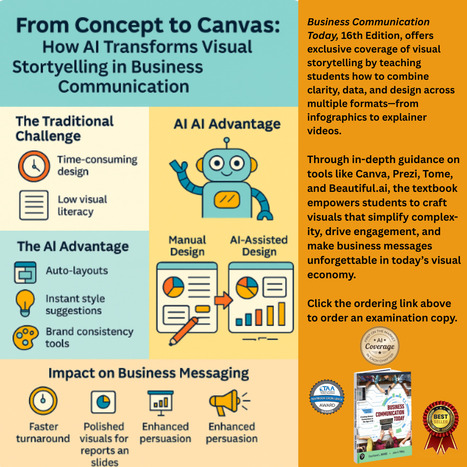
How AI Transforms Visual Storytelliing

How AI Transforms Visual Storytelliing | Teaching Visual Communication in a Business Communication Course | Scoop.it

Order an examination copy. 

No comment yet.
Teaching Visual Communication in a Business Communication Course

Teaching visual communication in a business communication course: an online magazine by Bovee and Thill, authors of the leading textbooks in business communication and business writing, published by Pearson, featuring resources about visual communication, data visualization, graphic design, photography, and presentations. For more information about Bovee and Thill's texts and their coverage of visual communication, visit https://blog.businesscommunicationnetwork.com. For instructor examination copies, go to https://blog.businesscommunicationnetwork.com/texts/. To find your local sales representative, go to https://www.pearson.com/en-us/help-and-support/contact-us/find-a-rep. To contact the authors, use this form: https://businesscommunicationnetwork.com/contact-us/. To get a free Comprehensive Guide to Business Communication Instructional Resources, visit https://blog.businesscommunicationnetwork.com/resources/. Subscribe to a free weekly newsletter of new posts to all 11 of Bovee and Thill's Online Magazines: https://sco.lt/8kgeVV.

Your new post is loading...
Scoop.it!

What Is Truth in a Post-Photography World?

What Is Truth in a Post-Photography World? | Teaching Visual Communication in a Business Communication Course | Scoop.it
Deepfakes rose from 500k files in 2023 to 8 million by 2025. While C2PA offers cryptographic signing for cameras and video, metadata stripping on social platforms undermines verification at scale, leaving real and fake footage indistinguishable.
Bovee & Thill's Online Business Communication Magazines's insight:

Alex Cooke lays out arithmetic that should worry anyone who teaches visual communication. Deepfake files circulating globally went from roughly 500,000 in 2023 to more than 8 million in 2025. In March 2026 a political committee ran a minute-long ad of a Senate candidate speaking words he never said on camera, with "AI Generated" shrinking into the corner of the frame. The same month, synthetic clips of missile strikes on Tel Aviv went viral, and real footage from the same conflict was widely dismissed as fake.


The photography industry's answer is C2PA, the standard that lets a camera cryptographically sign an image and carry a tamper-evident record of every edit. Cooke's case is that the standard is real and still won't fix this. Most social platforms strip the metadata during upload, so a signed file loses its manifest the moment it reaches an audience. Signing also lives at the high end. Canon's entry-level bodies, Nikon's Z5 and Z30, and Sony's a6000 series don't support it, while most of the world's photographs come from phones. Nikon added signing to the Z6 III in August 2025, found a vulnerability, revoked the certificates, and hadn't restored the service as of early 2026.


Students are about to spend careers producing images for employers who will be held responsible for them. Walk them through what a Content Credential actually proves, which is what tool made a file and who signed it, and what it doesn't prove, which is whether the scene in front of the lens was real. That gap is where the interesting business communication questions live.

No comment yet.
Scoop.it!

The AI Revolution in Visual Creativity

The AI Revolution in Visual Creativity | Teaching Visual Communication in a Business Communication Course | Scoop.it

Order an examination copy.

No comment yet.
Scoop.it!

Visual Communication Reimagined: How AI Is Transforming Business Communication

Imagine teaching a visual communication chapter that truly prepares students for today's AI-powered workplace. Chapter 9 of Business Communication Today, 16th Edition, by Bovee and Thill, delivers exactly that – and here's what makes it revolutionary.

Your students will master practical skills through our carefully crafted learning activities, exercises, and cases. From creating AI-generated marketing materials to producing professional videos, every activity builds real-world competence while reinforcing fundamental principles.

This isn't just a chapter – it's a transformation in how we teach visual communication. Don't be left behind with this revolutionary approach to teaching visual communication and AI in business communication.


Business Communication Today, 16th Edition, by Bovee and Thill, deliver exactly what students need to succeed in our AI-enhanced world. That's the promise of Chapter 9.

Unlock our powerful new approach to guiding your students toward success. Order an examination copy today using the handy link above this video and just imagine the possibilities you and your students can experience with this exciting new edition. Order an examination copy today! Prefer contacting your local Pearson Rep to request examination copies?If so, use this Rep Locator.

No comment yet.
Scoop.it!

How AI Transforms Visual Storytelliing

How AI Transforms Visual Storytelliing | Teaching Visual Communication in a Business Communication Course | Scoop.it

Order an examination copy. 

No comment yet.
Scoop.it!

Using Image Generators in Business Communication

Using Image Generators in Business Communication | Teaching Visual Communication in a Business Communication Course | Scoop.it

Order an examination copy of this text.

No comment yet.
Scoop.it!

AI Image Generation Today

AI Image Generation Today | Teaching Visual Communication in a Business Communication Course | Scoop.it

Today, AI image generation capabilities have advanced significantly. Leading models like DALL-E 3, Midjourney, and Stable Diffusion continue to produce increasingly realistic and creative images from text prompts. These systems can generate a wide array of styles, from photorealistic scenes to abstract art, and have become valuable tools for artists, designers, and content creators.

Recent improvements focus on enhancing image quality, increasing resolution, and providing better control over specific elements within generated images. Some models now offer features like outpainting (extending images beyond their original borders) and inpainting (selectively modifying parts of an image).

The integration of AI image generation into popular software and platforms has accelerated its adoption. Many graphic design tools, social media apps, and content creation platforms now incorporate some form of AI image generation, making the technology accessible to a broader audience.

Ethical and legal concerns surrounding AI-generated images persist, particularly regarding copyright issues, potential misuse for creating deepfakes, and the impact on human artists and photographers. Efforts to address these concerns include developing better detection methods for AI-generated images and establishing clearer guidelines for their use and attribution.

Research continues in areas such as multimodal AI, which combines text, image, and sometimes audio understanding to create more context-aware and sophisticated image generation systems. There's also ongoing work to reduce computational requirements, making high-quality AI image generation more efficient and accessible on consumer-grade hardware.

While AI image generation has made remarkable strides, it still has limitations. Complex scenes, consistent text rendering, and accurate human anatomy remain challenging in some cases. However, the rapid pace of development suggests further improvements will occur in the near future.

See the brochure for Excellence in Business Communication, 14th Edition: https://lnkd.in/eCSg9rv6. Video: https://lnkd.in/eJE9K28f. How Does Your Text Compare? https://lnkd.in/et2Mvp9v. To request examination copies of Bovee and Thill's award-winning business communication textbooks (instructors only), visit https://lnkd.in/bvxGGmT.

No comment yet.
Scoop.it!

Follow This Chart to Know If You Can Use an Image from the Internet

Follow This Chart to Know If You Can Use an Image from the Internet | Teaching Visual Communication in a Business Communication Course | Scoop.it

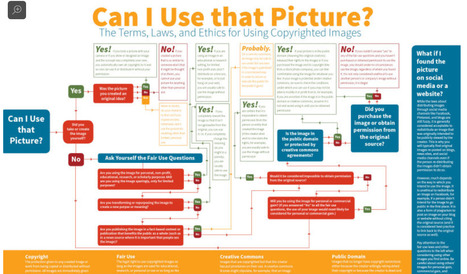
"When you find a picture online that would be perfect for your project, it's hard to know whether you're allowed to use it. Follow this flow chart to know for sure and avoid getting yourself in any trouble."

Bovee & Thill's Online Business Communication Magazines's insight:


"This chart comes from Curtis Newbold, The Visual Communication Guy, and explains copyright, fair use, creative commons, and public domain. We've talked about legal use of online photos before, but this chart lays out all of that information in an easy-to-consult format."

Scoop.it!

How AI Image Generation Is Transforming Business Communication

How AI Image Generation Is Transforming Business Communication | Teaching Visual Communication in a Business Communication Course | Scoop.it
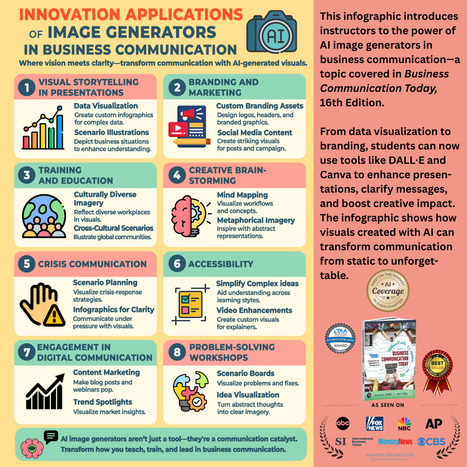
AI image generation transforms business communication education, helping instructors engage students with visuals, enhance learning, and spark creativity
No comment yet.
Scoop.it!

How Text-to-Image AI Generates Images Out of Thin Air Works

How Text-to-Image AI Generates Images Out of Thin Air Works | Teaching Visual Communication in a Business Communication Course | Scoop.it
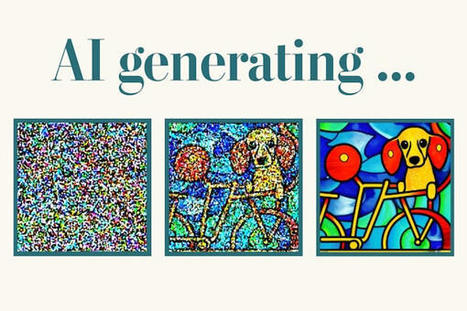
AI image generators like DALL-E, Lensa and stable diffusion create pictures and photos by interpreting and pairing text and images.
No comment yet.
Scoop.it!

Visualizations That Really Work

Visualizations That Really Work | Teaching Visual Communication in a Business Communication Course | Scoop.it

Not long ago, the ability to create smart data visualizations (or dataviz) was a nice-to-have skill for design- and data-minded managers. But now it’s a must-have skill for all managers, because it’s often the only way to make sense of the work they do."

No comment yet.
Scoop.it!

Do Your Visuals Tell the Truth? (Instructor Version)

Visual media have become a central element in business communication, and all business professionals have a responsibility to apply ethical decision making to the visuals they create, whether it’s a simple bar graph, a photo, a technical diagram, or the design of a web page.

No comment yet.
Scoop.it!

This Quiz Tests How Well You See Color

This Quiz Tests How Well You See Color | Teaching Visual Communication in a Business Communication Course | Scoop.it

Click here to take the test!


Bovee & Thill's Online Business Communication Magazines's insight:

"Whether you claim color blindness or visual perfection, chances are you’re literally not seeing the full picture.


Now the folks at X-Rite, an organization specializing in the technology and science of color, and owner of the popular Pantone color system, are offering you the chance to actually test your “color IQ” online." . . .

No comment yet.
Scoop.it!

Google’s Six Rules for Great Data Visualization

Google’s Six Rules for Great Data Visualization | Teaching Visual Communication in a Business Communication Course | Scoop.it

"Google decided to publicize these best practices and encourage others to adopt them—anyone from app developers to everyday people who are left wondering why their PowerPoint chart are not effective.

No comment yet.
Scoop.it!

Six Sneaky Charts, Maps, and Graphs That Fool Readers

Six Sneaky Charts, Maps, and Graphs That Fool Readers | Teaching Visual Communication in a Business Communication Course | Scoop.it
In a media landscape overrun with slick data visualizations, students must develop the skills to scrutinize what’s presented to them as fact—or risk being led astray.
Bovee & Thill's Online Business Communication Magazines's insight:

Alexander Gardner moved a dead soldier's body and added a rifle that wasn't the soldier's own before he made "Home of a Rebel Sharpshooter" in 1863. Paige Tutt and Youki Terada open with that photograph because it makes the point faster than a lecture does. Visuals have been staged and reframed for as long as there have been visuals. Santiago Lyon of the Content Authenticity Initiative puts it plainly in the piece. Pictures can lie, and they do lie.


Then they put six charts in front of you. A Chevy reliability graph starts its y-axis at 95 percent, so a three-point gap reads like a landslide. A Reuters chart of Florida gun deaths runs its vertical axis upside down, which turns a rise into what looks like a decline; the designer was after the look of dripping blood rather than deception, which is a lesson in itself about how a visual choice carries meaning its maker never intended. A 2022 White House chart slips an odd value of 5.5 into its intervals and the final bar swells. The article cites a 2026 study in which strong students were fooled by design choices this subtle.


Alberto Cairo, who holds the Knight Chair in Visual Journalism at the University of Miami and wrote How Charts Lie, explains why the tricks land. We associate numbers and charts with science and reason, so we drop our guard. Sarah Leo, a visual data journalist at The Economist whose team turns out roughly 40 charts a week, names the discipline that keeps them honest. The chart has to be fair, and you can't exaggerate or cherry-pick. Hand students a chart, ask them to find the manipulation before they read the caption, then ask them to rebuild the same data honestly. Students who have reconstructed a misleading chart with their own hands stop trusting charts automatically, which is the habit you want them carrying into a job where someone will eventually hand them a graph designed to win an argument.

No comment yet.
Scoop.it!

The $5 Billion Problem: Why Business Graduates Can't Visualize Data

The $5 Billion Problem: Why Business Graduates Can't Visualize Data | Teaching Visual Communication in a Business Communication Course | Scoop.it
And Why Most Business Communication Textbooks Aren't Solving It
Bovee & Thill's Online Business Communication Magazines's insight:

Visual communication has become a core career skill, yet many business graduates struggle because instruction often treats visualization as secondary rather than foundational.


While Gen Z students bring strong platform-based visual fluency, they lack the professional judgment needed for ethical, strategic business visualization—gaps that AI tools now amplify rather than solve.


The article argues that effective business communication curricula must integrate visual literacy and AI instruction throughout, not as add-ons, and must help students bridge consumer design habits to workplace decision-making. It positions Business Communication Today as distinctive for combining deep visual communication coverage with AI integration and robust instructor support that makes real-world teaching and learning outcomes achievable.

No comment yet.
Scoop.it!

Order Examination Copies of Bovee & Thill Textbooks

Order Examination Copies of Bovee & Thill Textbooks | Teaching Visual Communication in a Business Communication Course | Scoop.it

Bovee and Thill are the recognized leaders in the field of digital communication, social media, and technology--including mobile communication and artificial intelligence, and were the first authors to cover these topics. They continue to be far ahead of all other texts with heir cutting-edge coverage.


Video: The New Fundamentals in Business Communication


Visit this page today to conveniently order examination copies of Bovee and Thill business communication textbooks.

Prefer contacting your local Pearson Rep to request examination copies? If so, use this Rep Locator.


No comment yet.
Scoop.it!

Inspiring Visual Communication Examples to Try Right Now

Inspiring Visual Communication Examples to Try Right Now | Teaching Visual Communication in a Business Communication Course | Scoop.it

Learn how to use visuals to captivate, persuade, and stand out—with real examples of powerful visuals."

No comment yet.
Scoop.it!

Top Ten Trends in Visual Communication for Business

Top Ten Trends in Visual Communication for Business | Teaching Visual Communication in a Business Communication Course | Scoop.it

Here are ten trends in visual communication for business:


1. Infographics: Relaying complex data and information through visually attractive and intuitive infographics to convey messaging more efficiently.


2. Motion Graphics: The use of animated videos with accompanying graphics to create a dynamic visual storytelling format that grabs and maintains consumer attention.


3. Virtual Reality (VR): The application of VRs visual methods for delivering immersive experiences to customers, training and practicing the most effective courses of action in unique scenarios.


4. Social Media Storytelling: The use of a series of images conveying a cohesive story with a visually attractive aesthetic layout designed for social media consumption without necessarily being a blue-chip product image.


5. Interactive Design: Websites, online tools, and digital material created as digital assets to create a fuller, richer user experience for site visitors or customers to enhance brand consistency awareness.


6. Big Data Visualization: Dashboards with graphics, charts, and other visually appealing representations of large collections of data, providing aid to businesses to understand their data through the power of visualization.


7. Minimalism: The trend towards visual simplicity over complex and intricate designs, favoring clarity and straightforward messaging.


8. Augmented Reality (AR): Increasing customer engagement via AR-powered visuals showcasing products and services for potential customers to take a more detailed look before purchase.


9. User-Generated Content: Incorporating visuals created by customers available from social media, product reviews and other authentic sources to diversify content, and enhance credibility.


10. Gamification: The use of game design and game principles in visual communication as a way to make content more engaging and interactive and improve consumer engagement.


These are ten of the most common trends in visual communication for business, and staying updated on the latest advancements helps you better engage audiences and achieve your objectives in a dynamic and consumer-friendly way.


No comment yet.
Scoop.it!

Visual Storytelling in Business Communication

Visual Storytelling in Business Communication | Teaching Visual Communication in a Business Communication Course | Scoop.it

Order an examination copy of this text.

No comment yet.
Scoop.it!

55 Visual Communication Examples

55 Visual Communication Examples | Teaching Visual Communication in a Business Communication Course | Scoop.it
Visual communication means the transfer of information to a person in a format that can be read or viewed. Such formats include physical objects and models, charts, cards, tables, photos, videos, drawings, and diagrams. Today,
No comment yet.
Scoop.it!

How AI Will Impact Graphic Design in the Future

How AI Will Impact Graphic Design in the Future | Teaching Visual Communication in a Business Communication Course | Scoop.it
Explore the impact of AI in the graphic design field. Learn how artificial intelligence will revolutionize creativity and efficiency, opening the door to bigger opportunities.
No comment yet.
Scoop.it!

7 Data Presentation Tips: Think, Focus, Simplify, Calibrate, Visualize

7 Data Presentation Tips: Think, Focus, Simplify, Calibrate, Visualize | Teaching Visual Communication in a Business Communication Course | Scoop.it

Big data's big promises are left in a big dust pile because we don't optimize the last mile: Data presentation. Learn from eight real-world how-to examples."

No comment yet.
Scoop.it!

Visual Communication: 7 Tips for Using It to Maximum Effect

Visual Communication: 7 Tips for Using It to Maximum Effect | Teaching Visual Communication in a Business Communication Course | Scoop.it

What is Visual Communication? This is our detailed guide that covers everything you need to know as well as tips with how to use it effectively.

No comment yet.
Scoop.it!

The Best Visual Search Engines You Can Use On Your Browser

The Best Visual Search Engines You Can Use On Your Browser | Teaching Visual Communication in a Business Communication Course | Scoop.it

Visual search has been picking up some steam over the past year, with the technology being improved to provide more users with the best search results. Along with voice search, this technology has seen more usage thanks to the emergence of quality apps available on mobile devices."

No comment yet.
Scoop.it!

18 Influential Typefaces and the Design History Behind Them

18 Influential Typefaces and the Design History Behind Them | Teaching Visual Communication in a Business Communication Course | Scoop.it
We introduce 18 influential typefaces and the design history behind them. You may be surprised at how many you recognize.
No comment yet.