Your new post is loading...

|
Scooped by
Loïc Lepiniec
January 8, 2019 3:33 AM
|
INRA is recruiting research scientists Calendar
- Opening date for applications: 31 January 2019
- Deadline for applications: 4 March 2019
- Pre-selections: April-May 2019
- Final selections: June-July 2019
- Starting date for appointments: from 1st of September 2019
You will be able to download on this page full details of the positions available when applications open on 31 January 2019.
Whatever scientific discipline they have been trained in, researchers depend on laboratory and field activities. Involved in scientific networks, they respond to environmental, economic and social issues. In striving for excellence, they discover and create concrete applications, useful for society. Personal research and collective projects overlap to advance knowledge and to contribute to innovation, whether it means producing sustainably, preserving the environment or improving human nutrition.
Each year, INRA organises open competitions to recruit research scientists (CRCN). The recruitment campaign is generally aimed at young researchers who have recently obtained their PhD. Candidates are recruited on the basis of their scientific competence which they will put to the service of INRA's major research axes by responding to a research topic. Candidates must have published articles on the results of their PhD.
Positions are open in a wide range of scientific disciplines such as: Agronomy, sylviculture and livestock research - Cell, reproductive and developmental biology - Biology of organisms - Molecular biology - Ecology - Economics - Genetics - Process engineering - Genomics and other -omics, Geosciences, Informatics and artificial intelligence - Neurosciences and behavioural sciences - Nutrition - Probabilities and statistics - Operational research and decision support - Medical and veterinary sciences - Sociology.
For information purposes, you can consult the 2018 Guide for Applicants.
Contact us
If you have any questions, please contact us at concours_chercheurs@inra.fr
|
|
Scooped by
Loïc Lepiniec
January 5, 2019 4:31 AM
|
Plant life cycles alternate between haploid gametophytes and diploid sporophytes. While regulatory factors determining male and female sexual morphologies have been identified for sporophytic reproductive organs, such as stamens and pistils of angiosperms, those regulating sex‐specific traits in the haploid gametophytes that produce male and female gametes and hence are central to plant sexual reproduction are poorly understood. Here, we identified a MYB‐type transcription factor, MpFGMYB, as a key regulator of female sexual differentiation in the haploid‐dominant dioicous liverwort, Marchantia polymorpha. MpFGMYB is specifically expressed in females and its loss resulted in female‐to‐male sex conversion. Strikingly, MpFGMYB expression is suppressed in males by a cis‐acting antisense gene SUF at the same locus, and loss‐of‐function suf mutations resulted in male‐to‐female sex conversion. Thus, the bidirectional transcription module at the MpFGMYB/SUF locus acts as a toggle between female and male sexual differentiation in M. polymorpha gametophytes. Arabidopsis thaliana MpFGMYB orthologs are known to be expressed in embryo sacs and promote their development. Thus, phylogenetically related MYB transcription factors regulate female gametophyte development across land plants.
|
|
Scooped by
Loïc Lepiniec
January 3, 2019 7:16 AM
|
The lander carries a 3kg (6.6lb) container with potato and arabidopsis plant seeds - as well as silkworm eggs - to perform biological studies. The "lunar mini biosphere" experiment was designed by 28 Chinese universities.
Ethylene regulates climacteric fruit ripening, and EIN3-LIKE1 (EIL1) plays an important role in this process. In apple (Malus domestica), fruit coloration is accompanied by ethylene release during fruit ripening, but the molecular mechanism that underlies these two physiological processes is unknown. In this study, we found that ethylene treatment markedly induced fruit coloration as well as the expression of MdMYB1, a positive regulator of anthocyanin biosynthesis and fruit coloration. In addition, we found that MdEIL1 directly bound to the promoter of MdMYB1 and transcriptionally activated its expression, which resulted in anthocyanin biosynthesis and fruit coloration. Furthermore, MdMYB1 interacted with the promoter of ETHYLENE RESPONSE FACTOR3, a key regulator of ethylene biosynthesis, thereby providing a positive feedback for ethylene biosynthesis regulation. Overall, our findings provide insight into a mechanism involving the synergistic interaction of the ethylene signal with the MdMYB1 transcription factor to regulate ethylene biosynthesis and fruit coloration in apple.
Via Christophe Jacquet
|
|
Scooped by
Loïc Lepiniec
December 4, 2018 9:12 AM
|
One hundred years ago this month, shortly after the guns of the First World War fell silent, a German-speaking Scottish lawyer-turned-politician sent an 80-page report to his prime minister. In it was an idea whose echo still shapes the way in which many nations fund research — an idea arguably as important to the soul of modern science as the secular state is to modern democracy.
That idea has come to be called the Haldane principle, after its proponent, Richard Burdon Haldane. This principle says that scientists should mostly be left alone to decide which research projects should receive government funding1–3. (It is not to be confused with the rule about speciation, formulated by evolutionary biologist J. B. S. Haldane.) In many nations, the Haldane principle is near-totemic — regarded as the scholar’s last defence against more powerful interests.
|
|
Scooped by
Loïc Lepiniec
December 2, 2018 1:18 PM
|
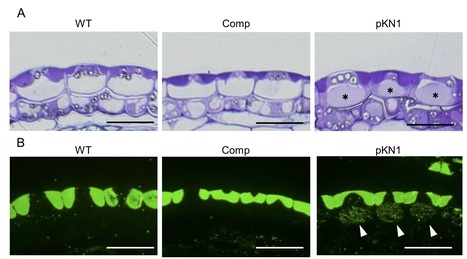
The adaptor protein (AP) complexes play crucial roles in vesicle formation in post-Golgi trafficking. Land plants have five types of AP complexes (AP-1 to AP-5), each of which consists of two large subunits, one medium subunit and one small subunit. Here, we show that the Arabidopsis AP-1 complex mediates the polarized secretion and accumulation of a pectic polysaccharide called mucilage in seed coat cells. Previously, a loss-of-function mutant of AP1M2, the medium subunit of AP-1, has been shown to display deleterious growth defects because of defective cytokinesis. To investigate the function of AP-1 in interphase, we generated transgenic Arabidopsis plantsexpressing AP1M2-GFP (green fluorescent protein) under the control of the cytokinesis-specific KNOLLE (KN) promoter in the ap1m2 background. These transgenic plants, designated pKN lines, successfully rescued the cytokinesis defect and dwarf phenotype of ap1m2. pKN lines showed reduced mucilage extrusion from the seed coat. Furthermore, abnormal accumulation of mucilage was found in the vacuoles of the outermost integument cells of pKN lines. During seed development, the accumulation of AP1M2-GFP was greatly reduced in the integument cells of pKN lines. These results suggest that trans-Golgi network (TGN)-localized AP-1 is involved in the trafficking of mucilage components to the outer surface of seed coat cells. Our study highlights an evolutionarily conserved function of AP-1 in polarized sorting in eukaryotic cells.
|
|
Scooped by
Loïc Lepiniec
November 1, 2018 5:35 PM
|
The evolution of fruit colour in plants is intriguing. Citrus fruit has repeatedly gained or lost the ability to synthesize anthocyanins. Chinese box orange, a primitive citrus, can accumulate anthocyanins both in its fruits and its leaves. Wild citrus can accumulate anthocyanins in its leaves. In contrast, most cultivated citrus have lost the ability to accumulate anthocyanins. We characterized a novel MYB regulatory gene, Ruby2, which is adjacent to Ruby1, a known anthocyanin activator of citrus. Different Ruby2 alleles can have opposite effects on the regulation of anthocyanin biosynthesis. AbRuby2Full encodes an anthocyanin activator that mainly functions in the pigmented leaves of Chinese box orange. CgRuby2Short was identified in purple pummelo and encodes an anthocyanin repressor. CgRuby2Short has lost the ability to activate anthocyanin biosynthesis. However, it retains the ability to interact with the same partner, CgbHLH1, as CgRuby1, thus acting as a passive competitor in the regulatory complex. Further investigation in different citrus species indicated that the Ruby2–Ruby1 cluster exhibits subfunctionalization among primitive, wild and cultivated citrus. Our study elucidates the regulatory mechanism and evolutionary history of the Ruby2–Ruby1 cluster in citrus, which are unique and different from that found in Arabidopsis, grape or petunia.
|
|
Rescooped by
Loïc Lepiniec
from Plants and Microbes
October 30, 2018 3:23 AM
|
The Plant Genome Editing Database currently provides information about plants that have been generated using the CRISPR/Cas9 technology in order to study economically important traits. Users begin by either choosing the species they are interested in and browsing the list of genes that carry mutations or searching the database using specific gene identifiers (e.g., Solyc05g053230). Information provided includes the transformation experiment, the name of the transformed plant variety, the DNA construct used including the guide RNA sequence and primers used to characterize resulting mutations, and details about the mutant plant line including the altered sequence, whether it is heterozygous or homozygous, and any phenotypes that have been observed. Users are encouraged to make information available about their own CRISPR-generated plant lines and details are provided about how data can be submitted for inclusion in the database.
Via Kamoun Lab @ TSL
|
|
Scooped by
Loïc Lepiniec
October 12, 2018 5:28 AM
|
Highlights
Plants produce a huge array of metabolites in spatiotemporal- and/or environment-dependent manner, which not only make it a challenge to understand plant metabolic diversity but also render plants ideal models for identifying metabolites and dissecting metabolic pathways.
In addition to reverse genetic approaches, forward genetic-based approaches combining genome sequences with population genetics provide clues for understanding biological mechanisms.
Genomic evolution provides the genetic basis for metabolic diversity, including gene duplication, gene loss, transposon insertion, and the evolution of substrate preference. Selective events during crop domestication and improvement have also played a vital role in the evolution of metabolism.
Analysis of the metabolome in genetically diverse populations can also facilitate the dissection of phenotypic traits, and will eventually lead to metabolite-assisted breeding of crops.
|
|
Rescooped by
Loïc Lepiniec
from lignocellulosic biomass
October 4, 2018 1:41 AM
|
A wild tomato species is domesticated by targeted CRISPR–Cas9 editing of just six genes.
Via Herman Höfte
|
|
Rescooped by
Loïc Lepiniec
from Plant-Microbe Symbiosis
September 29, 2018 3:13 AM
|
Molecular tools adapted from bacterial CRISPR (Clustered Regulatory Interspaced Short Palindromic Repeats) systems for adaptive immunity have become widely used for plant genome engineering, both to investigate gene functions and to engineer desirable traits. A number of different Cas (CRISPR-associated) nucleases are now used but, as most studies performed to date have engineered different targets using a variety of plant species and molecular tools, it has been difficult to draw conclusions about the comparative performance of different nucleases. Due to the time and effort required to regenerate engineered plants, efficiency is critical. In addition, there have been several reports of mutations at sequences with less than perfect identity to the target. While in some plant species it is possible to remove these so-called 'off-targets' by backcrossing to a parental line, the specificity of genome engineering tools is important when targeting specific members of closely-related gene families, especially when recent paralogues are co-located in the genome and unlikely to segregate. Specificity is also important for species that take years to reach sexual maturity or that are clonally propagated. Here, we directly compare the efficiency and specificity of Cas nucleases from different bacterial species together with engineered variants of Cas9. We find that the nucleotide content correlates with efficiency and that Cas9 from Staphylococcus aureus is comparatively most efficient at inducing mutations. We also demonstrate that 'high-fidelity' variants of Cas9 can reduce off-target mutations in plants. We present these molecular tools as standardised DNA parts to facilitate their re-use.
Via Jean-Michel Ané
|
|
Scooped by
Loïc Lepiniec
September 18, 2018 2:29 AM
|
Grain size and weight are directly associated with grain yield in crops. However, the molecular mechanisms that set final grain size and weight remain largely unknown. Here, we characterize two large grain mutants, large grain8‐1 (large8‐1) and large grain8‐2 (large8‐2). LARGE8 encodes the mitogen‐activated protein kinase phosphatase1 (OsMKP1). Loss of function mutations in OsMKP1 results in large grains, while overexpression of OsMKP1 leads to small grains. OsMKP1 determines grain size by restricting cell proliferation in grain hulls. OsMKP1 directly interacts with and deactivates the mitogen‐activated protein kinase 6 (OsMAPK6). Taken together, we identify OsMKP1 as a crucial factor that influences grain size by deactivating OsMAPK6, indicating that the reversible phosphorylation of OsMAPK6 plays important roles in determining grain size in rice.
|
|
Scooped by
Loïc Lepiniec
September 11, 2018 9:29 AM
|
Plants differ from animals in their capability to easily regenerate fertile adult individuals from terminally differentiated cells. This unique developmental plasticity is commonly observed in nature, where many species can reproduce asexually through the ectopic initiation of organogenic or embryogenic developmental programs. While organ-specific epigenetic marks are not passed on during sexual reproduction, the fate of epigenetic marks during asexual reproduction and the implications for clonal progeny remain unclear. Here we report that organ-specific epigenetic imprints in Arabidopsis thaliana can be partially maintained during asexual propagation from somatic cells in which a zygotic program is artificially induced. The altered marks are inherited even over multiple rounds of sexual reproduction, becoming fixed in hybrids and resulting in heritable molecular and physiological phenotypes that depend on the identity of the founder tissue. Consequently, clonal plants display distinct interactions with beneficial and pathogenic microorganisms. Our results demonstrate how novel phenotypic variation in plants can be unlocked through altered inheritance of epigenetic marks upon asexual propagation.
|
|
|
Scooped by
Loïc Lepiniec
January 5, 2019 4:20 PM
|
Despite well‐established roles of microRNAs in plant development, little has been addressed to understand their effects in seeds especially on lipid metabolism. In this study, we showed that overexpressing microRNA167A (miR167OE) in camelina (Camelina sativa) under a seed‐specific promoter changed fatty acid composition and increased seed size. Specifically, the miR167OE seeds had a lower α‐linolenic acid with a concomitantly higher linoleic acid content than the wild type. This decreased level of fatty acid desaturation corresponded to a decreased transcriptional expression of the camelina fatty acid dsesaturase3 (CsFAD3) in developing seeds. MiR167 targeted the transcription factor auxin response factor (CsARF8) in camelina, as had been reported previously in Arabidopsis. Chromatin immunoprecipitation experiments combined with transcriptome analysis indicated that CsARF8 bound to promoters of camelina bZIP67 and ABI3 genes. These transcription factors directly or through the ABI3‐bZIP12 pathway regulate CsFAD3 expression and affect the α‐linolenic acid accumulation. In addition to decipher the miR167A‐CsARF8 mediated transcriptional cascade for CsFAD3 suppression, transcriptome analysis was conducted to implicate mechanisms that regulate seed size in camelina. Expression levels of many genes were altered in miR167OE, including orthologs that have previously been identified to affect seed size in other plants. Most notably, genes for seed coat development such as suberin and lignin biosynthesis were down‐regulated. This study provides valuable insights on regulatory mechanism of fatty acid metabolism and seed size determination, and suggests possible approaches to improve these important traits in camelina.
|
|
Scooped by
Loïc Lepiniec
January 3, 2019 3:25 PM
|
In some of our most useful crops (such as rice and wheat), photosynthesis produces toxic by-products that reduce its efficiency. Photorespiration deals with these by-products, converting them into metabolically useful components, but at the cost of energy lost. South et al. constructed a metabolic pathway in transgenic tobacco plants that more efficiently recaptures the unproductive by-products of photosynthesis with less energy lost (see the Perspective by Eisenhut and Weber). In field trials, these transgenic tobacco plants were ∼40% more productive than wild-type tobacco plants.
|
|
Rescooped by
Loïc Lepiniec
from lignocellulosic biomass
December 6, 2018 3:13 AM
|
Non-transgenic genome editing in regenerable protoplasts, cell-wall free plant cells, could revolutionize crop improvement because it reduces regulatory and technical complexity. But, plant tissue culture is known to engender frequent unwanted variation. To evaluate the contribution of genome instability to this phenomenon, we analyzed large scale copy number changes in potatoes regenerated from protoplasts by comparison of Illumina read depth. While a control set of plants that had been propagated by cuttings displayed no changes, the protoplast regenerants were affected by pervasive aneuploidy. In addition, certain chromosomes displayed segmental deletions and duplications ranging from one to many. Resampling the same plant found different dosage profiles in different leaves, indicating frequent persistence of instability.
Via Herman Höfte
|
|
Rescooped by
Loïc Lepiniec
from Publications @IJPB
December 4, 2018 2:10 AM
|
FUSCA3 (FUS3) is a master regulator of seed development important in establishing and maintaining embryonic identity whose expression is tightly regulated at genetic and epigenetic levels. Despite this prominent role, the control of FUS3 expression remains poorly understood. Promoter and functional complementation analyses provided insight into the regulation of FUS3. W-boxes present in the promoter proximal to the start of transcription are recognised by WRKY type-1 factors which are necessary for the activation of FUS3 expression. The RY motif, binding site of B3 factors, is important for the activation of FUS3 in the embryo proper but not in the suspensor. The loss of a negative regulatory region (NRS) leads to preferential expression of FUS3 in the vasculature of vegetative tissues. Since the NRS includes the RY motif, mechanisms of activation and repression target adjacent or overlapping regions. These findings discriminate the regulation of FUS3 from that of LEAFY COTYLEDON2 by the control exerted by WRKY factors and by the presence of the RY motif, yet also confirm conservation of certain regulatory elements thereby implicating potential regulation by BASIC PENTACYSTEINE (BPC) factors and POLYCOMB REPRESSIVE COMPLEX2 (PRC2).
Via Institute Jean-Pierre Bourgin
|
|
Scooped by
Loïc Lepiniec
November 7, 2018 3:25 PM
|
18 mai 1939 - 3 novembre 2018
L'Académie des sciences a le profond regret de faire part du décès de Roland Douce, survenu le 3 novembre 2018, à l'âge de soixante-dix-neuf ans. Il avait été élu correspondant de l’Académie le 11 juin 1990, puis membre le 28 octobre 1996, dans la section de Biologie intégrative.
Spécialiste de la biologie végétale, Roland Douce a consacré ses travaux au métabolisme de la cellule végétale. Il a conduit à une vision nouvelle de la dynamique et de l'incroyable flexibilité du métabolisme de la cellule végétale. Ses travaux ont été récompensés par la médaille d'argent du CNRS en 1982.
Professeur à l'université Joseph Fourier de Grenoble, Roland Douce a été directeur de la recherche à l’École normale supérieure de Lyon de 1995 à 1998 et directeur de l'Institut de biologie structurale de Grenoble de 2002 à 2004.
Il a été conseiller scientifique auprès d’établissements publics (CEA en 1979, INRA en 1990) et industriels (Établissements Rhône Poulenc Agrochimie en 1982).
Roland Douce était membre de la National Academy of Sciences et Fellow de l’American Society of Physiology and Molecular Biology of Plants. Il était officier de la Légion d'honneur et commandeur de l'Ordre national du mérite.
|
|
Scooped by
Loïc Lepiniec
November 1, 2018 4:51 AM
|
I am a plant molecular biologist and appreciate the awesome potential of both CRISPR and genetic engineering technologies. But I don’t believe that pits me against the goals of organic agriculture. In fact, biotechnology can help meet these goals. And while rehashing the arguments about genetic engineering seems counterproductive, genome editing may draw both sides to the table for a healthy conversation. To understand why, it’s worth digging into the differences between genome editing with CRISPR and genetic engineering.
|
|
Rescooped by
Loïc Lepiniec
from lignocellulosic biomass
October 13, 2018 3:11 AM
|
A global model finds that the environmental impacts of the food system could increase by 60–90% by 2050, and that dietary changes, improvements in technologies and management, and reductions in food loss and waste will all be needed to mitigate these impacts.
Via Herman Höfte
|
|
Scooped by
Loïc Lepiniec
October 4, 2018 2:49 AM
|
|
|
Rescooped by
Loïc Lepiniec
from lignocellulosic biomass
October 4, 2018 1:40 AM
|
A better-tasting tomato highlights problems with Europe’s outdated approach to gene editing.
Via Herman Höfte
|
|
Scooped by
Loïc Lepiniec
September 28, 2018 2:47 AM
|
Development of the cereal endosperm involves cell differentiation processes that enable nutrient uptake from the maternal plant, accumulation of storage products and their utilization during germination. However, little is known about the regulatory mechanisms that link cell differentiation processes with those controlling storage product synthesis and deposition, including the activation of zein genes by the maize (Zea mays) bZIP transcription factor Opaque-2 (O2). Here, we mapped in vivo binding sites of O2 in B73 endosperm, and compared the results with genes differentially expressed in B73 and B73o2. We identified 186 putative direct O2 targets and 1,677 indirect targets, encoding a broad set of gene functionalities. Examination of the temporal expression patterns of O2 targets revealed at least two distinct modes of O2-mediated gene activation. Two O2-activated genes, bZIP17 and NAKED ENDOSPERM2 (NKD2), encode transcription factors, which can in turn co-activate other O2-network genes with O2. NKD2 (with its paralog NKD1) was previously shown to be involved in regulation of aleurone development. Collectively, our results provide insights into the complexity of the O2-regulated network and its role in regulation of endosperm cell differentiation and function.
|
|
Scooped by
Loïc Lepiniec
September 18, 2018 2:28 AM
|
Plant somatic cells can be reprogrammed by in vitro tissue culture methods, and massive genome‐wide chromatin remodeling occurs, particularly during callus formation. Since callus tissue resembles root primordium, conversion of tissue identity is essentially required when leaf explants are used. Consistent with the fact that the differentiation state is defined by chromatin structure, which permits limited gene profiles, epigenetic changes underlie cellular reprogramming for changes to tissue identity. Although a histone methylation process suppressing leaf identity during leaf‐to‐callus transition has been demonstrated, the epigenetic factor involved in activation of root identity remains elusive. Here, we report that JUMONJI C DOMAIN‐CONTAINING PROTEIN 30 (JMJ30) stimulates callus formation by promoting expression of a subset of LATERAL ORGAN BOUNDARIES‐DOMAIN (LBD) genes that establish root primordia. The JMJ30 protein binds to promoters of the LBD16 and LBD29 genes along with AUXIN RESPONSE FACTOR 7 (ARF7) and ARF19 and activates LBD expression. Consistently, the JMJ30‐deficient mutant displays reduced callus formation with low LBD transcript levels. The ARF–JMJ30 complex catalyzes the removal of methyl groups from H3K9me3, especially at the LBD16 and LBD29 loci to activate their expression during leaf‐to‐callus transition. Moreover, the ARF–JMJ30 complex further recruits ARABIDOPSIS TRITHORAX‐RELATED 2 (ATXR2), which promotes deposition of H3K36me3 at the LBD16 and LBD29 promoters, and the tripartite complex ensures stable LBD activation during callus formation. These results indicate that the coordinated epigenetic modifications promote callus formation by establishing root primordium identity.
|