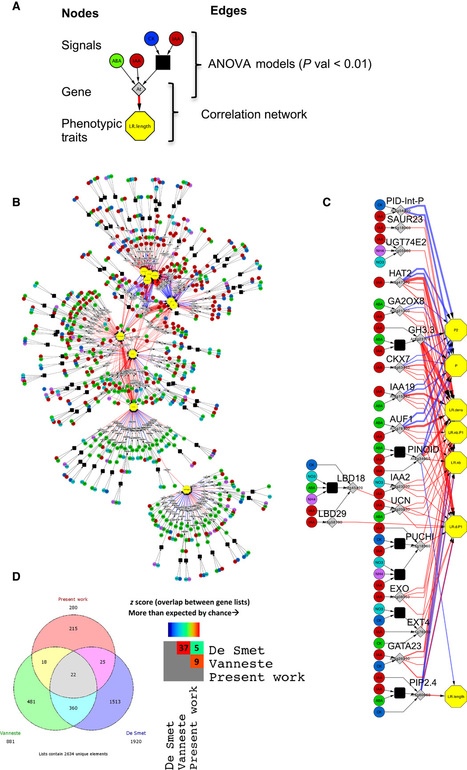
Both intrinsic factors, such as hormones, and extrinsic factors, such as water and nutrient availability, shape plant development. Ristova et al . evaluated the short-term transcriptional responses and the long-term developmental responses of Arabidopsis thaliana roots to the nitrogen-containing nutrients nitrate and ammonium and the hormones auxin, cytokinin, and abscisic acid. The authors identified genes that were stimulated or inhibited in response to each single factor and to all possible combinations of these three hormones and two nitrogen sources. By combining these transcriptomic data with quantification of changes in root architecture after each treatment, the authors built a multivariate network model of the interaction between nitrogen and hormones that may predict changes in the architecture response of the Arabidopsis root. These data will be useful for future studies on the molecular mechanisms that mediate these interactions and may help identify combinations of nutrients and hormones that improve plant growth under specific environmental conditions.
Although the origin of the eukaryotic cell has long been recognized as the single most profound change in cellular organization during the evolution of life on earth, this transition remains poorly understood.
Via Neelima Sinha
The discovery of introns four decades ago was one of the most unexpected findings in molecular biology. Introns are sequences interrupting genes that must be removed as part of messenger RNA production. Genome sequencing projects have shown that most eukaryotic genes contain at least one intron, and frequently many. Comparison of these genomes reveals a history of long evolutionary periods during which few introns were gained, punctuated by episodes of rapid, extensive gain. However, although several detailed mechanisms for such episodic intron generation have been proposed, none has been empirically supported on a genomic scale. Here we show how short, non-autonomous DNA transposons independently generated hundreds to thousands of introns in the prasinophyte Micromonas pusilla and the pelagophyte Aureococcus anophagefferens. Each transposon carries one splice site. The other splice site is co-opted from the gene sequence that is duplicated upon transposon insertion, allowing perfect splicing out of the RNA. The distributions of sequences that can be co-opted are biased with respect to codons, and phasing of transposon-generated introns is similarly biased. These transposons insert between pre-existing nucleosomes, so that multiple nearby insertions generate nucleosome-sized intervening segments. Thus, transposon insertion and sequence co-option may explain the intron phase biases and prevalence of nucleosome-sized exons observed in eukaryotes. Overall, the two independent examples of proliferating elements illustrate a general DNA transposon mechanism that can plausibly account for episodes of rapid, extensive intron gain during eukaryotic evolution.
The advent and growth of synthetic biology has demonstrated its potential as a promising avenue of research to address many societal needs. However, plant synthetic biology efforts have been hampered by a dearth of DNA part libraries, versatile transformation vectors and efficient assembly strategies. Here, we describe a versatile system (named jStack) utilizing yeast homologous recombination to efficiently assemble DNA into plant transformation vectors. We demonstrate how this method can facilitate pathway engineering of molecules of pharmaceutical interest, production of potential biofuels and shuffling of disease-resistance traits between crop species. Our approach provides a powerful alternative to conventional strategies for stacking genes and traits to address many impending environmental and agricultural challenges.
Seed development is an important event in plant life cycle that has interested humankind since ages, especially in crops of economic importance. Pigeonpea is an important grain legume of the semi-arid tropics, used mainly for its protein rich seeds. In order to understand the transcriptional programming during the pod and seed development, RNA-seq data was generated from embryo sac from the day of anthesis (0 DAA), seed and pod wall (5, 10, 20 and 30 DAA) of pigeonpea variety “Asha” (ICPL 87119) using Illumina HiSeq 2500. About 684 million sequencing reads have been generated from nine samples, which resulted in the identification of 27,441 expressed genes after sequence analysis. These genes have been studied for their differentially expression, co-expression, temporal and spatial gene expression. We have also used the RNA-seq data to identify important seed-specific transcription factors, biological processes and associated pathways during seed development process in pigeonpea. The comprehensive gene expression study from flowering to mature pod development in pigeonpea would be crucial in identifying candidate genes involved in seed traits directly or indirectly related to yield and quality. The dataset will serve as an important resource for gene discovery and deciphering the molecular mechanisms underlying various seed related traits.
Seeds respond to multiple different environmental stimuli that regulate germination. Nitrate stimulates germination in many plants but how it does so remains unclear. Here we show that the Arabidopsis NIN-like protein 8 (NLP8) is essential for nitrate-promoted seed germination. Seed germination in nlp8 loss-of-function mutants does not respond to nitrate. NLP8 functions even in a nitrate reductase-deficient mutant background, and the requirement for NLP8 is conserved among Arabidopsis accessions. NLP8 reduces abscisic acid levels in a nitrate-dependent manner and directly binds to the promoter of CYP707A2, encoding an abscisic acid catabolic enzyme. Genetic analysis shows that NLP8-mediated promotion of seed germination by nitrate requires CYP707A2. Finally, we show that NLP8 localizes to nuclei and unlike NLP7, does not appear to be activated by nitrate-dependent nuclear retention of NLP7, suggesting that seeds have a unique mechanism for nitrate signalling.
"Primary seed dormancy is an important adaptive plant trait whereby seed germination is blocked under conditions that would otherwise be favorable for germination. This trait is found in newly produced mature seeds of many species, but not all. Once produced, dry seeds undergo an aging time period, called dry after-ripening, during which they lose primary dormancy and gradually acquire the capacity to germinate when exposed to favorable germination conditions. Primary seed dormancy has been extensively studied not only for its scientific interest but also for its ecological, phenological, and agricultural importance. Nevertheless, the mechanisms underlying primary seed dormancy and its regulation during after-ripening remain poorly understood. Here we review the principal developmental stages where primary dormancy is established and regulated prior to and during seed after-ripening, where it is progressively lost. We attempt to identify and summarize what is known about the molecular and genetic mechanisms intervening over time in each of these stages"
Arabidopsis FORGETTER1 mediates stress-induced chromatin memory through nucleosome remodeling | Environmentally-mediated gene induction is extended beyond the duration of an external cue by sustaining a nucleosome-depleted chromatin structure.
Etat (officiel) des grandes masses de financement Multipliée par 2 depuis 1983, la dépense intérieure de recherche et développement expérimental (DIRD) représente 2,24 % du PIB en 2013, soit 47,5 M…
Regulation of gene expression depends on specific cis-regulatory sequences located in the gene promoter regions. These DNA sequences are recognized by transcription factors (TFs) in a sequence-specific manner, and their identification could help to elucidate the regulatory networks that underlie plant physiological responses to developmental programs or to environmental adaptation. Here we review recent advances in high throughput methodologies for the identification of plant TF binding sites. Several approaches offer a map of the TF binding locations in vivo and of the dynamics of the gene regulatory networks. As an alternative, high throughput in vitro methods provide comprehensive determination of the DNA sequences recognized by TFs. These advances are helping to decipher the regulatory lexicon and to elucidate transcriptional network hierarchies in plants in response to internal or external cues. This article is part of a Special Issue entitled: Plant Gene Regulatory Mechanisms and Networks, edited by Dr. Erich Grotewold and Dr. Nathan Springer.
Mammalian genomes are pervasively transcribed to produce thousands of long non-coding RNAs (lncRNAs). A few of these lncRNAs have been shown to recruit regulatory complexes through RNA–protein interactions to influence the expression of nearby genes, and it has been suggested that many other lncRNAs can also act as local regulators. Such local functions could explain the observation that lncRNA expression is often correlated with the expression of nearby genes. However, these correlations have been challenging to dissect and could alternatively result from processes that are not mediated by the lncRNA transcripts themselves. For example, some gene promoters have been proposed to have dual functions as enhancers, and the process of transcription itself may contribute to gene regulation by recruiting activating factors or remodelling nucleosomes. Here we use genetic manipulation in mouse cell lines to dissect 12 genomic loci that produce lncRNAs and find that 5 of these loci influence the expression of a neighbouring gene in cis. Notably, none of these effects requires the specific lncRNA transcripts themselves and instead involves general processes associated with their production, including enhancer-like activity of gene promoters, the process of transcription, and the splicing of the transcript. Furthermore, such effects are not limited to lncRNA loci: we find that four out of six protein-coding loci also influence the expression of a neighbour. These results demonstrate that cross-talk among neighbouring genes is a prevalent phenomenon that can involve multiple mechanisms and cis-regulatory signals, including a role for RNA splice sites. These mechanisms may explain the function and evolution of some genomic loci that produce lncRNAs and broadly contribute to the regulation of both coding and non-coding genes.
Overexpression of FUS3 driven by an estradiol-inducible promoter increased oil contents in Arabidopsis seedlings up to 6% of dry weight; more than 50-fold over controls. Eicosenoic acid, a characteristic fatty acid of Arabidopsis seed oil, accumulated to over 20% of fatty acids in cotyledons and leaves. These large increases depended on added sucrose, although without sucrose TAG increased three- to four-fold. Inducing the expression of FUS3 in tobacco BY2 cells also increased TAG accumulation, and co-expression of FUS3 and diacylglycerol acyltransferase 1 (DGAT1) further increased TAG levels to 4% of dry weight. BY2 cell growth was not altered by FUS3 expression, although Arabidopsis seedling development was impaired, consistent with the ability of FUS3 to induce embryo characteristics in non-seed tissues. Microarrays of Arabidopsis seedlings revealed that FUS3 overexpression increased the expression of a higher proportion of genes involved in TAG biosynthesis than genes involved in fatty acid biosynthesis or other lipid pathways. Together these results provide additional insights into FUS3 functions in TAG metabolism and suggest complementary strategies for engineering vegetative oil accumulation.
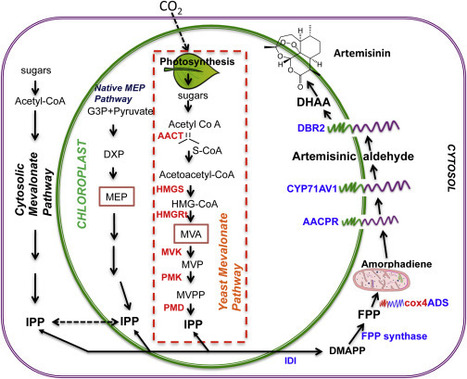
A high level of artemisinin biosynthesis was achieved in tobacco by harnessing three cellular compartments and employing a dual transformation approach. Oral delivery of whole intact plant cells, expressing the life-saving drug, reduced the parasitemia in murine models. Such novel synergistic approaches should facilitate low-cost production and delivery of artemisinin and other drugs through metabolic engineering of edible plants.
First announcement Dear members, The triennial ISSS Conference will be held from 10-14 September 2017 at the Monterey Plaza Hotel, Monterey California. See also the UcDavis website. Information on registration and other details will follow in due course. Regards, Peter Toorop, Secretary
Abstract: Transcription is a fundamental and dynamic step in the regulation of gene expression, but the characteristics of plant transcription are poorly understood. We adapted the global nuclear run-on sequencing (GRO-seq) and 5′GRO-seq methods for plants and provide a plant version of the next-generation sequencing software HOMER (homer.ucsd.edu/homer/plants) to facilitate data analysis. Mapping nascent transcripts in Arabidopsis thaliana seedlings enabled identification of known and novel transcripts and precisely mapped their start sites, revealing distinct characteristics in plant transcription. Our modified method to map engaged RNA polymerases and nascent transcripts in primary tissues paves the way for comparative and response studies.
"Besides the deposition of storage reserves, seed maturation is characterized by the acquisition of functional traits including germination, desiccation tolerance, dormancy, and longevity. After seed filling, seed longevity increases up to 30-fold, concomitant with desiccation that brings the embryo to a quiescent state. The period that we define as late maturation phase can represent 10–78% of total seed development time, yet it remains overlooked. Its importance is underscored by the fact that in the seed production chain, the stage of maturity at harvest is the primary factor that influences seed longevity and seedling establishment. This review describes the major events and regulatory pathways underlying the acquisition of seed longevity, focusing on key indicators of maturity such as chlorophyll degradation, accumulation of raffinose family oligosaccharides, late embryogenesis abundant proteins, and heat shock proteins. We discuss how these markers are correlated with or contribute to seed longevity, and highlight questions that merit further attention. We present evidence suggesting that molecular players involved in biotic defence also have a regulatory role in seed longevity. We also explore how the concept of plasticity can help understand the acquisition of longevity."
Filmed April 2016. In his talk “The Future of Human Genomics and Synthetic Biology,” Church discussed the exponentially fast pace of emerging . Georg
Via Gerd Moe-Behrens
To get content containing either thought or leadership enter:
To get content containing both thought and leadership enter:
To get content containing the expression thought leadership enter:
You can enter several keywords and you can refine them whenever you want. Our suggestion engine uses more signals but entering a few keywords here will rapidly give you great content to curate.


 Your new post is loading...