Your new post is loading...

|
Rescooped by
Loïc Lepiniec
from Microbiome and plant immunity
September 22, 2016 1:55 AM
|
Aggressive fungal pathogens such as Botrytis and Verticillium spp. cause severe crop losses worldwide. We recently discovered that Botrytis cinerea delivers small RNAs (Bc–sRNAs) into plant cells to silence host immunity genes. Such sRNA effectors are mostly produced by Botrytis cinerea Dicer-like protein 1 (Bc-DCL1) and Bc-DCL2. Here we show that expressing sRNAs that target Bc-DCL1 and Bc-DCL2 in Arabidopsis and tomato silences Bc-DCL genes and attenuates fungal pathogenicity and growth, exemplifying bidirectional cross-kingdom RNAi and sRNA trafficking between plants and fungi. This strategy can be adapted to simultaneously control multiple fungal diseases. We also show that Botrytis can take up external sRNAs and double-stranded RNAs (dsRNAs). Applying sRNAs or dsRNAs that target Botrytis DCL1 and DCL2 genes on the surface of fruits, vegetables and flowers significantly inhibits grey mould disease. Such pathogen gene-targeting RNAs represent a new generation of environmentally friendly fungicides.
Via Giannis Stringlis
|
|
Scooped by
Loïc Lepiniec
September 20, 2016 4:49 PM
|
New approaches to create site-specific gene replacements and insertions in plants have been developed based on intron-targeting CRISPR/Cas9.
|
|
Scooped by
Loïc Lepiniec
September 19, 2016 2:04 AM
|
Monsanto no longer controls one of the biggest innovations in the history of agriculture.
|
|
Rescooped by
Loïc Lepiniec
from The Plant Cell
September 16, 2016 11:55 AM
|
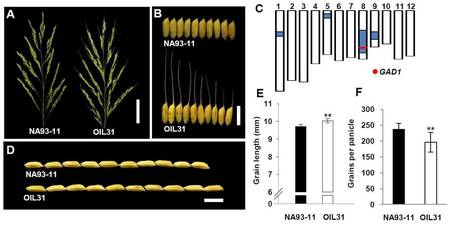
GAD1 Encodes a Secreted Peptide That Regulates Grain Number, Grain Length and Awn Development in Rice Domestication Jing Jin, Lei Hua, Zuofeng Zhu, Lubin Tan, Xinhui Zhao, Weifeng Zhang, Fengxia Liu, Yongcai Fu, Hongwei Cai, Xianyou Sun, Ping Gu, Daoxin Xie, and Chuanqing Sun Plant Cell 2016 tpc.16.00379; Advance Publication September 15, 2016; doi:10.1105/tpc.16.00379 OPEN
Via Mary Williams
|
|
Scooped by
Loïc Lepiniec
September 15, 2016 5:15 PM
|
From domestication and breeding to the genetic engineering of crops, plants provide food, fuel, fibers, and feedstocks for our civilization. New research and discoveries aim to reduce the inputs needed to grow crops and to develop plants for environmental and sustainability applications. Faced with population growth and changing climate, the next wave of innovation in plant biology integrates technologies and approaches that span from molecular to ecosystem scales. Recent efforts to engineer plants for better nitrogen and phosphorus use, enhanced carbon fixation, and environmental remediation and to understand plant-microbiome interactions showcase exciting future directions for translational plant biology. These advances promise new strategies for the reduction of inputs to limit environmental impacts and improve agricultural sustainability.
|
|
Scooped by
Loïc Lepiniec
September 15, 2016 2:23 AM
|
The antagonistic crosstalk between gibberellic acid (GA) and abscisic acid (ABA) plays a pivotal role in the modulation of seed germination. However, the molecular mechanism of such phytohormone interaction remains largely elusive. Here we show that three Arabidopsis NUCLEAR FACTOR-Y C (NF-YC) homologues NF-YC3, NF-YC4 and NF-YC9 redundantly modulate GA- and ABA-mediated seed germination. These NF-YCs interact with the DELLA protein RGL2, a key repressor of GA signalling. The NF-YC–RGL2 module targets ABI5, a gene encoding a core component of ABA signalling, via specific CCAAT elements and collectively regulates a set of GA- and ABA-responsive genes, thus controlling germination. These results suggest that the NF-YC–RGL2–ABI5 module integrates GA and ABA signalling pathways during seed germination.
|
|
Scooped by
Loïc Lepiniec
September 14, 2016 2:52 AM
|
Seed development in angiosperms demands the tightly coordinated development of three genetically distinct structures. The embryo is surrounded by the endosperm, which is in turn enclosed within the maternally derived seed coat. In Arabidopsis , final seed size is determined by early expansion of the coenocytic endosperm, which then cellularises and subsequently undergoes developmental programmed cell death, breaking down as the embryo grows. Endosperm breakdown requires the endosperm-specific basic helix-loop-helix transcription factor ZHOUPI. However, to date, the mechanism underlying the Arabidopsis endosperm breakdown process has not been elucidated. Here, we provide evidence that ZHOUPI does not induce the developmental programmed cell death of the endosperm directly. Instead ZHOUPI indirectly triggers cell death by regulating the expression of cell wall-modifying enzymes, thus altering the physical properties of the endosperm to condition a mechanical environment permitting the compression of the cellularised endosperm by the developing embryo.
|
|
Scooped by
Loïc Lepiniec
September 14, 2016 2:51 AM
|
Plant aerial epidermal tissues, like animal epithelia, act as load-bearing layers and hence play pivotal roles in development. The presence of tension in the epidermis has morphogenetic implications for organ shapes but it also constantly threatens the integrity of this tissue. Here, we explore the multi-scale relationship between tension and cell adhesion in the plant epidermis, and we examine how tensile stress perception may act as a regulatory input to preserve epidermal tissue integrity and thus normal morphogenesis. From this, we identify parallels between plant epidermal and animal epithelial tissues and highlight a list of unexplored questions for future research.
|
|
Scooped by
Loïc Lepiniec
September 14, 2016 2:26 AM
|
Although many transcription factors involved in cell wall morphogenesis have been identified and studied, it is still unknown how genetic and molecular regulation of cell wall biosynthesis are integrated into developmental programs. We demonstrate by molecular genetic studies that SEEDSTICK (STK), a transcription factor controlling ovule and seed integument identity, directly regulates PMEI6 and other genes involved in the biogenesis of the cellulose-pectin matrix of the cell wall. Based on atomic force microscopy (AFM), immunocytochemistry and chemical analyses we propose that structural modifications of the cell wall matrix in the stk mutant contribute to defects in mucilage release and seed germination under water-stress conditions. Our studies reveal a molecular network controlled by STK that regulates cell wall properties of the seed coat, demonstrating that developmental regulators controlling organ identity also coordinate specific aspects of cell wall characteristics.
|
|
Scooped by
Loïc Lepiniec
September 13, 2016 2:33 AM
|
|
|
Scooped by
Loïc Lepiniec
September 13, 2016 2:12 AM
|
|
|
Scooped by
Loïc Lepiniec
September 13, 2016 2:10 AM
|
|
|
Scooped by
Loïc Lepiniec
September 13, 2016 2:08 AM
|
|
|
|
Scooped by
Loïc Lepiniec
September 21, 2016 2:05 AM
|
|
|
Scooped by
Loïc Lepiniec
September 19, 2016 2:06 AM
|
Big shifts in where research and development in food and agriculture is carried out will shape future global food production, write Philip G.
|
|
Rescooped by
Loïc Lepiniec
from TAL effector science
September 19, 2016 1:57 AM
|
(via T. Schreiber, thx) Zhu et al, 2016 Designer nucleases allow the creation of new plant genotypes by introducing precisely-targeted double-strand breaks that are resolved by endogenous repair pathways. The major nuclease technologies are meganucleases, zinc-finger nucleases, transcription activator-like effector nucleases, and the CRISPR/Cas9 system. Each comprises a promiscuous endonuclease guided by protein–DNA or RNA–DNA interactions. A great deal is known about the principles of designer nucleases but much remains to be learned about their detailed behavioral characteristics in different plant species. The outcome of genome engineering reflects the intrinsic properties of each nuclease and target genome, causing variations in efficiency, accuracy, and mutation structure. In this article, we critically discuss the activities of designer nucleases in different cereals representing a broad range of genome characteristics.
Via dromius
|
|
Scooped by
Loïc Lepiniec
September 16, 2016 2:22 AM
|
|
|
Scooped by
Loïc Lepiniec
September 15, 2016 5:04 PM
|
Contents 16 SEPTEMBER 2016
VOL 353, ISSUE 6305
Special Issue
Plant Translational Biology
NEWS
The new harvest
|
|
Scooped by
Loïc Lepiniec
September 14, 2016 2:53 AM
|
Seed dispersal is an essential trait that enables colonization of new favorable habitats, ensuring species survival. In plants with dehiscent fruits, such as Arabidopsis , seed dispersal depends on two processes: the separation of the fruit valves that protect the seeds (fruit dehiscence) and the detachment of the seeds from the funiculus connecting them to the mother plant (seed abscission). The key factors required to establish a proper lignin pattern for fruit dehiscence are SHATTERPROOF 1 and 2 (SHP1 and SHP2). Here, we demonstrate that the SHP-related gene SEEDSTICK ( STK ) is a key factor required to establish the proper lignin pattern in the seed abscission zone but in an opposite way. We show that STK acts as a repressor of lignin deposition in the seed abscission zone through the direct repression of HECATE3 , whereas the SHP proteins promote lignin deposition in the valve margins by activating INDEHISCENT. The interaction of STK with the SEUSS co-repressor determines the difference in the way STK and SHP proteins control the lignification patterns. Despite this difference in the molecular control of lignification during seed abscission and fruit dehiscence, we show that the genetic networks regulating these two developmental pathways are highly conserved.
|
|
Scooped by
Loïc Lepiniec
September 14, 2016 2:52 AM
|
In Arabidopsis , rapid expansion of the coenocytic endosperm after fertilisation has been proposed to drive early seed growth, which is in turn constrained by the seed coat. This hypothesis implies physical heterogeneity between the endosperm and seed coat compartments during early seed development, which to date has not been demonstrated. Here, we combine tissue indentation with modelling to show that the physical properties of the developing seed are consistent with the hypothesis that elevated endosperm-derived turgor pressure drives early seed expansion. We provide evidence that whole-seed turgor is generated by the endosperm at early developmental stages. Furthermore, we show that endosperm cellularisation and seed growth arrest are associated with a drop in endosperm turgor pressure. Finally, we demonstrate that this decrease is perturbed when the function of POLYCOMB REPRESSIVE COMPLEX 2 is lost, suggesting that turgor pressure changes could be a target of genomic imprinting. Our results indicate a developmental role for changes in endosperm turgor pressure in the Arabidopsis seed.
|
|
Scooped by
Loïc Lepiniec
September 14, 2016 2:41 AM
|
|
|
Scooped by
Loïc Lepiniec
September 13, 2016 4:18 PM
|
Research Assistant in Molecular Seed Physiology (SeedAdapt)
|
|
Scooped by
Loïc Lepiniec
September 13, 2016 2:13 AM
|
|
|
Scooped by
Loïc Lepiniec
September 13, 2016 2:11 AM
|
Studies of the biogeographic distribution of seed oil content in plants are fundamental to understanding the mechanisms of adaptive evolution in plants as seed oil is the primary energy source needed
|
|
Scooped by
Loïc Lepiniec
September 13, 2016 2:09 AM
|
Epidermal cell differentiation is a paramount and conserved process among plants. In Arabidopsis, a ternary complex formed by MYB, bHLH transcription factors and TTG1 modulates unicellular trichome mo
|