Your new post is loading...
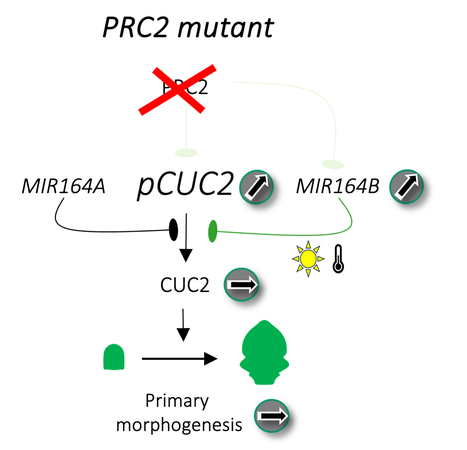
Une propriété fondamentale des organismes vivants est leur robustesse, c’est-à-dire leur capacité à maintenir un développement stable malgré des perturbations, par exemple génétiques. Les récents travaux publiés dans The Plant Cell et réalisés par une équipe de l’Institut Jean-Pierre Bourgin – IJPB (INRAE/AgroParisTech/UPSaclay, Versailles), en collaboration avec une équipe du RDP (Lyon), a mis en évidence un nouveau mécanisme contribuant à la robustesse du développement des plantes suite à une perturbation épigénétique majeure. Le POLYCOMB REPRESSIVE COMPLEX2 (PRC2) est un régulateur épigénétique majeur. La mutation de composants de ce complexe conduit à la dérépression d’une multitude de gènes et des phénotypes développementaux importants chez la plante modèle Arabidopsis thaliana. Parmi les gènes dont la répression transcriptionnelle est ainsi diminuée se trouve CUC2, un gène contrôlant la morphologie foliaire. Mais de façon inattendue, la dérégulation transcriptionnelle de CUC2 n’entraîne pas une augmentation de la quantité de protéine CUC2 ni de changement morphologique des jeunes feuilles. Ce paradoxe s'explique par la découverte qu’en réponse à la perturbation épigénétique, un « mécanisme de secours » impliquant un microARN est activé et inhibe l’excès d’ARNm produit, empêchant une surproduction de la protéine CUC2 et assurant la robustesse du développement. Cette voie de secours est activée sous différentes conditions environnementales même si elles induisent des morphologies foliaires contrastées. Ces travaux révèlent un nouveau mécanisme génétique contribuant à la robustesse du développement des plantes. Ils mettent également en évidence une coordination entre la régulation transcriptionnelle et post-transcriptionnelle de l’expression des gènes. -> Contact : patrick.laufs@inrae.fr
Via Life Sciences UPSaclay

|
Scooped by
Saclay Plant Sciences
November 4, 2024 2:46 PM
|
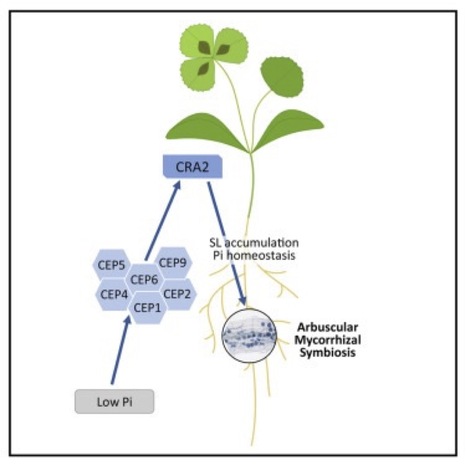
C-terminally encoded peptides (CEPs) are small secreted signaling peptides that promote nitrogen-fixing root nodulation symbiosis in legumes depending on soil mineral nitrogen availability. In the Medicago truncatula model legume plant, their action is mediated by the leucine-rich repeat receptor-like protein kinase COMPACT ROOT ARCHITECTURE 2 (CRA2). Like most land plants, under inorganic phosphate limitation, M. truncatula establishes another root endosymbiotic interaction with arbuscular fungi, the arbuscular mycorrhizal symbiosis (AMS). Because this interaction is beneficial for the plant but has a high energetic cost, it is tightly controlled by host plants to limit fungal infections mainly depending on phosphate availability. In a study published in Current Biology by the F. Frugier team at IPS2, in collaboration with Nicolas Frey-dit-Frei at the LRSV (Toulouse), we showed that the expression of a subset of CEP-encoding genes is enhanced in the low-phosphate conditions. In addition, overexpression of one of these low-phosphate-induced CEP gene, MtCEP1, previously shown to promote the nitrogen-fixing root nodulation symbiosis, enhances AMS from the initial entry point of the fungi. Conversely, a loss-of-function mutation of the CRA2 receptor required for mediating CEP peptide action decreases the endomycorrhizal interaction from the same initial fungal entry stage. Transcriptomic analyses revealed that the cra2 mutant is negatively affected in the regulation of key phosphate transport and response genes as well as in the biosynthesis of strigolactone hormones that are required for establishing AMS. Accordingly, strigolactone contents were drastically decreased in cra2 mutant roots. Overall, we showed that the CEP/CRA2 pathway promotes both root nodulation and AMS in legume plants, depending on soil mineral nutrient availability. Contact: florian.frugier@universite-paris-saclay.fr
|
|
Scooped by
Saclay Plant Sciences
October 22, 2024 10:14 AM
|
|
|
Rescooped by
Saclay Plant Sciences
from I2BC Paris-Saclay
October 19, 2024 3:14 PM
|
Plant Science Day October 17th
|
|
Rescooped by
Saclay Plant Sciences
from News Doctoral School
October 15, 2024 9:22 AM
|
Portrait Chloe SOULARD - 1st Year @IJPB
Hi! I’m Chloé Soulard, and I just started my thesis at IJPB (Institut Jean-Pierre Bourgin) this September. My work will be supervised by Fabien Nogué (IJPB), Alexandre de Saint-Germain (IJPB) and Julie Mallet (ANSES). I will be working on strigolactones, a diverse family of hormones (over 30 molecules) with a variety of associated phenotypes. I will try to figure out the evolutionary advantages of this diversity together with the specific roles of different subsets of those molecules. To do this, I’ll be creating mutants in the strigolactone biosynthesis pathway using CRISPR-Cas9 in Pisum sativum. I’ll also assess the potential risks of using NGT1 pea mutants, especially with the ongoing changes in European legislation around these plants. Prior to this, I studied at the University of Compiègne. I started with a Bachelor in Humanities and Technology (I couldn’t decide between humanities and other sciences!) and then completed a diploma in Biological Engineering. My last internship was at IJPB, where I worked on CRISPR-Cas9 optimization. After that, I spent a year at IJPB as an engineer, working on gene editing in pea and bean. When I’m not in the lab, I love sewing clothes, volunteering, cinema, going out and reading!
Via Doctoral School of Plant Sciences
|
|
Scooped by
Saclay Plant Sciences
October 10, 2024 10:14 AM
|
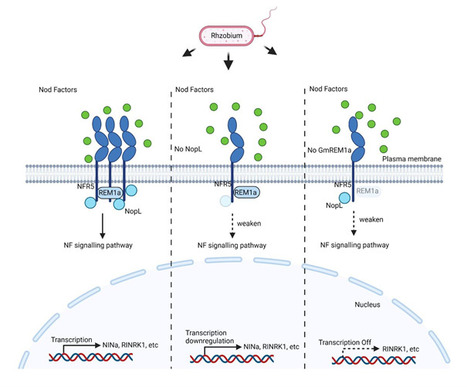
The establishment of symbiotic interactions between leguminous plants and rhizobia requires complex cellular programming activated by rhizobium Nod factors (NFs) as well as type III effector (T3E)-mediated symbiotic signaling. However, the mechanisms by which different signals jointly regulate symbiotic interactions are still unclear. In a study published in Nature communication, Pr. Dawei Xin ( Northeast Agricultural University, Harbin, Chine) and P. Ratet ( SYMUNITY, IPS2) teams have described a mechanism of cross-communication between the T3SS NopL effector and the NFs produced by Sinorhizobium fredii during its symbiotic interaction with soybean ( Glycine max). NopL physically interacts with the G. max Remorin 1a (GmREM1a) and the NFs receptor NFR5 (GmNFR5) proteins, and promotes the recruitment of GmNFR5 by GmREM1a. Furthermore, NopL and NFs influence the expression of GmRINRK1, a receptor-like kinase ortholog of the Lotus japonicus RINRK1 receptor, to mediate NFs signaling. Taken together, our work indicates that S. fredii NopL can interact with NFs signaling cascade components to promote the symbiotic interaction in soybean.
|
|
Rescooped by
Saclay Plant Sciences
from SEED-DREAM Lab info
October 4, 2024 12:05 PM
|
"The European Food Safety Authority (EFSA) has confirmed that Category 1 NGT plants present no additional hazards compared to those produced through conventional breeding. Euroseeds welcomed the findings, calling discriminatory regulations for NGT-derived plants unjustified and contrary to scientific evidence. In a report presented to the EU Parliament’s Envi Committee, EFSA concluded that genetic modifications in NGT plants align with those found in conventionally bred plants, justifying their equivalence. The report aligns with previous assessments from EFSA and other European bodies."
Via Loïc Lepiniec
|
|
Rescooped by
Saclay Plant Sciences
from News Doctoral School
October 2, 2024 4:49 PM
|
Welcome the new PhD students!
|
|
Scooped by
Saclay Plant Sciences
October 1, 2024 8:23 AM
|
"Depuis plusieurs années, le réseau Sciences des Plantes de Saclay accueillent des groupes scolaires dans des laboratoires de recherche de l’Université Paris Saclay, dans le cadre du programme Des Plantes et des Hommes. Ces visites incitent les adolescents à réfléchir à l’importance des plantes dans l’histoire de l’humanité et au rôle de la génétique dans cette histoire, au passé, mais aussi comme levier de la transition agroécologique actuelle. Elles sont l’occasion pour les élèves de participer à un atelier interactif et de rencontrer des chercheurs en biologie des plantes. Cette année, l’équipe qui anime ce programme pédagogique s’est invitée à la Fête de l’Humanité ! Durant deux jours, Pierre (chercheur, IJPB), Morgane (médiatrice scientifique), et Maëla (en thèse à GQE-Le-Moulon) ont expliqué avec conviction les processus génétiques déjà à l’œuvre lors de la domestication des plantes et les enjeux modernes pour la sélection de nouvelles variétés, adaptées à l’agroécologie. Des discussions passionnantes et de belles rencontres !"
|
|
Scooped by
Saclay Plant Sciences
September 27, 2024 9:19 AM
|
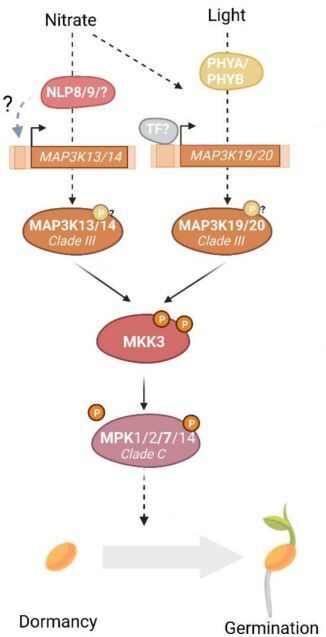
Sarah Regnard from the Stress Signaling group at IPS2 just published her thesis work in PNAS, where she identified and characterized a signaling module belonging to MKK3 cascades and crucial for modulating secondary dormancy in plant seeds. Secondary dormancy is a condition where free seeds, after being exposed to unfavorable environmental conditions, enter a state of dormancy preventing germination. For farmers, this adaptive mechanism means potential delays in crop culture establishment, reduced uniformity in seedling growth, and ultimately, lower agricultural yields and increased management costs. In this original research, conducted in collaboration with Professor Naoto Kawakami's group at Meiji University (Japan) as wells as the groups of Anne Krapp (IJPB, France) and Marc Blondel (UBO, France), Sarah Regnard established how Arabidopsis seeds sense nitrate and light—two signals long known to promote seed germination and able to break secondary dormancy. Additionally, the study highlights the complexity and variety of the phosphorylation-dependent signaling cascade in plants. Symmetrically, a few weeks earlier, Naoto Kawakami's group, also in the context of our Franco-Japanese collaboration, had published a study in the same journal, showing the role of this module in the lifting of primary seed dormancy by temperature and after-ripening. Contact: jean.colcombet@inrae.fr
AAP Innovation pédagogique de la GS Biosphera
L'objectif de formation et enseignement de la GS Biosphera est de soutenir des actions ayant au moins une des caractéristiques suivantes : - Favoriser l’attractivité des formations
- Promouvoir la formation par la recherche
- Innover au niveau pédagogique, technologique et/ou thématique
- Favoriser l'ouverture vers des partenaires nationaux/internationaux et/ou vers le secteur privé.
- Formulaire : ICI
- Date de clôture : vendredi 8 novembre 2024
Contact : sophie.timlin@universite-paris-saclay.fr / sophie.timlin@agroparistech.fr
Via Life Sciences UPSaclay
|
|
Scooped by
Saclay Plant Sciences
September 20, 2024 6:34 AM
|
Diatoms are a major class of phytoplankton, standing at the crossroads of several evolutionary lineages. They represent the most species-rich class of microalgae and are distributed worldwide, from tropical and subtropical regions to polar ecosystems. Thus, the diversity of diatom lifestyles and survival strategies can likely be attributed to their exceptional ability to adapt to diverse environments. Light is the primary source of energy for photosynthetic organisms but also a key source of information on the surrounding environment. It is well established that diatoms have developed highly effective systems for optimizing light harvesting and energy generation from photosynthesis. Yet, little is known on the role of light sensing in the acclimation mechanisms, which synergistically control diatom cell growth and distribution within the ecological oceanic provinces they inhabit. To address these questions, we are performing integrated analyses of diverse but highly interconnected light-driven processes. By developing genomic and genetic resources for Phaeodactylum tricornutum, currently the most established experimental model for diatom molecular research, and by integrating genome-enabled and (eco)physiology approaches, we started to unveil new molecular players of diatom photoregulation. They include key regulators of photosynthesis and plastid photoprotection, photoreceptor variants, and a long-sought circadian clock controlling diatom responses to periodic light:dark cycles. Comparative functional investigations in diverse species and the analysis of the distribution of light regulators in the marine environment support hypothesis that light-driven processes are key players of diatom persistence. Providing new perspectives on how photoregulators evolved, diversified and act in aquatic environments strongly structured by light, these studies also highlight that integration of laboratory and environmental studies are both timely and essential to understand the life of algae in complex ecosystems.
|
|
Scooped by
Saclay Plant Sciences
September 13, 2024 12:56 PM
|
"Understanding plant responses to individual stresses does not mean that we understand real-world situations, where stresses usually combine and interact. These interactions arise at different levels, from stress exposure to the molecular networks of the stress response. Here, we built an in-depth multiomic description of plant responses to mild water (W) and nitrogen (N) limitations, either individually or combined, among 5 genetically different Arabidopsis (Arabidopsis thaliana) accessions. We highlight the different dynamics in stress response through integrative traits such as rosette growth and the physiological status of the plants. We also used transcriptomic and metabolomic profiling during a stage when the plant response was stabilized to determine the wide diversity in stress-induced changes among accessions, highlighting the limited reality of a “universal” stress response. The main effect of the W × N interaction was an attenuation of the N-deficiency syndrome when combined with mild drought, but to a variable extent depending on the accession. Other traits subject to W × N interactions are often accession specific. Multiomic analyses identified a subset of transcript–metabolite clusters that are critical to stress responses but essentially variable according to the genotype factor. Including intraspecific diversity in our descriptions of plant stress response places our findings in perspective."
|
|
|
Scooped by
Saclay Plant Sciences
November 7, 2024 2:17 AM
|
We are pleased to announce that the "PLant science in the ANThropocene" (PLANT) workshop will take place March 24th to April 4th 2025 at University Paris-Saclay. It will address key challenges from basic sciences to socio-economic and environmental aspects including climate change. Applications for researchers (postdoc level and above) to participate have opened today, see
https://eng-saclay-plant-sciences.hub.inrae.fr/events/workshop-institut-pascal
The deadline for applying is December 17th.
The "PLant science in the ANThropocene" (PLANT) workshop will run from March 24 to April 4, 2025 at the Institut Pascal of the University Paris-Saclay (campus about 25 km south of Paris).
This 2-week workshop will address key challenges for the international Plant Science community, from basic sciences to socio-economic and environmental aspects including climate change. It will gather about 60 international scientists. The attendance will mix high stature senior scientists, together with numerous younger ones.
The program will focus on three themes:
- Theme I: "Frontiers in Plant Science fundamental research" (March 24-25-26)
- Theme II: “Feeding the planet: roles for Plant Science and associated socio-economic challenges" (March 27-28-31 and April 1)
- Theme III: "Plants as factories: from chemical compounds to mitigating climate change” (April 2-3-4)
Mornings will consist mainly of presentations by about 20 senior scientists, who will provide their vision of how to rise to those challenges, while the afternoon sessions will be devoted principally to brainstorming across generations on selected topics. This workshop will thus require input from all participants, the goals being the emergence of consensus community opinions and the specification of paths to success for several major challenges, be they at the level of training the next generation, guiding deciders of public policies, or connecting with the wider public on the importance of plant sciences in the Anthropocene. All these challenges are of high complexity and depend on several disciplines. Thus, beyond plant biologists and geneticists, some participants will come from agronomy, ecology, social and environmental sciences, economics, and also from chemical, physical and computational sciences.
Syntheses in the form of opinion papers will be drafted for publication.
APPLICATIONS ARE OPEN FOR PARTICIPATION IN THIS WORKSHOP
Applications deadline: Tuesday December 17, midnight
To know more and apply : https://indico.ijclab.in2p3.fr/event/10763/
Admission is restricted because of capacity constraints and the need to have the brainstorming sessions be effective. There are no registration fees and lunches and coffee breaks will be provided.
Participants must hold a PhD
|
|
Rescooped by
Saclay Plant Sciences
from I2BC Paris-Saclay
October 29, 2024 5:47 AM
|
Novel, tightly structurally related N-myristoyltransferase inhibitors display equally potent yet distinct inhibitory mechanisms
Peptides fitting the optimal human NMT Gly-myristoylation recognition pattern act as potent inhibitors. Lys-myristoylation-based inhibitors from these peptides were designed. Each series’ inhibitory properties are unique, relying on distinct interactions. N-myristoyltransferases (NMTs) catalyze essential acylations of N-terminal alpha or epsilon amino groups of glycines or lysines. Here, we reveal that peptides tightly fitting the optimal glycine recognition pattern of human NMTs are potent prodrugs relying on a single-turnover mechanism. Sequence scanning of the inhibitory potency of the series closely reflects NMT glycine substrate specificity rules, with the lead inhibitor blocking myristoylation by NMTs of various species. We further redesigned the series based on the recently recognized lysine-myristoylation mechanism by taking advantage of (i) the optimal peptide chassis and (ii) lysine side chain mimicry with unnatural enantiomers. Unlike the lead series, the inhibitory properties of the new compounds rely on the protonated state of the side chain amine, which stabilizes a salt bridge with the catalytic base at the active site. Our study provides the basis for designing first-in-class NMT inhibitors tailored for infectious diseases and alternative active site targeting. More information: https://www-cell-com.insb.bib.cnrs.fr/structure/abstract/S0969-2126(24)00318-6?_returnURL=https%3A%2F%2Flinkinghub.elsevier.com%2Fretrieve%2Fpii%2FS0969212624003186%3Fshowall%3Dtrue Contact: Thierry Meinnel thierry.meinnel@i2bc.paris-saclay.fr
Via I2BC Paris-Saclay
|
|
Rescooped by
Saclay Plant Sciences
from Biodiversité
October 21, 2024 6:47 AM
|
Après avoir adopté en 2022 une feuille de route destinée à "stopper et inverser" d'ici à 2030 la destruction des terres, des océans et des espèces vivantes, les 196 pays de la Convention pour la diversité biologique doivent entretenir la dynamique.
Via DocBiodiv
|
|
Scooped by
Saclay Plant Sciences
October 18, 2024 10:48 AM
|
Innate immune receptors provide plants with sufficient recognition specificities to maintain resistance against rapidly evolving pathogens. Understanding the rules of plant innate receptor evolution can produce new bioengineering approaches to genetic resistance in crops. Availability of plant pan-genomes, including those of Arabidopsis, Brachypodium, soybean and maize, allowed us to identify subsets of receptors that are highly variable in nature. With updated computational approaches, we are able to predict and rationally modify receptor ligand binding sites. Newly engineered receptors require appropriate control of receptor activation, which we are achieving through a combination of protein engineering and transcriptional regulation. We foresee application of synthetic biology combined with genome editing to become a sustainable solution to disease resistance and can be adapted across different crops.
|
|
Scooped by
Saclay Plant Sciences
October 14, 2024 2:55 AM
|
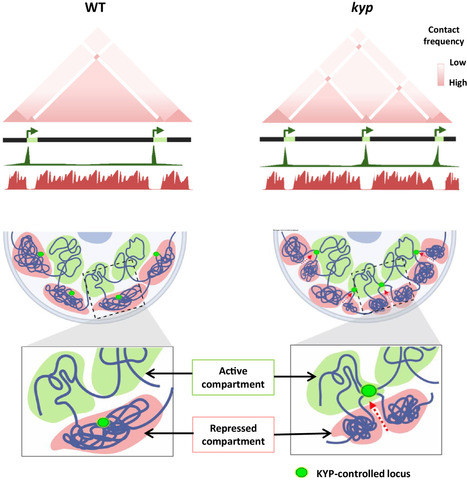
In recent years, the exploration of genome three-dimensional (3D) conformation has yielded profound insights into the regulation of gene expression and cellular functions in both animals and plants. While animals exhibit a characteristic genome topology defined by topologically associating domains (TADs), plants display similar features with a more diverse conformation across species. Employing advanced high-throughput sequencing and microscopy techniques, we investigated the landscape of 26 histone modifications and RNA polymerase II distribution in tomato (Solanum lycopersicum). Our study unveiled a rich and nuanced epigenetic landscape, shedding light on distinct chromatin states associated with heterochromatin formation and gene silencing. Moreover, we elucidated the intricate interplay between these chromatin states and the overall topology of the genome. Employing a genetic approach, we delved into the role of the histone modification H3K9ac in genome topology. Notably, our investigation revealed that the ectopic deposition of this chromatin mark triggered a reorganization of the 3D chromatin structure, defining different TAD-like borders. Our work emphasizes the critical role of H3K9ac in shaping the topology of the tomato genome, providing valuable insights into the epigenetic landscape of this agriculturally significant crop species.
|
|
Scooped by
Saclay Plant Sciences
October 8, 2024 8:49 AM
|
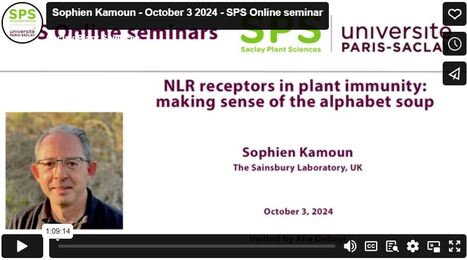
https://www.tsl.ac.uk/about/people/sophien-kamoun
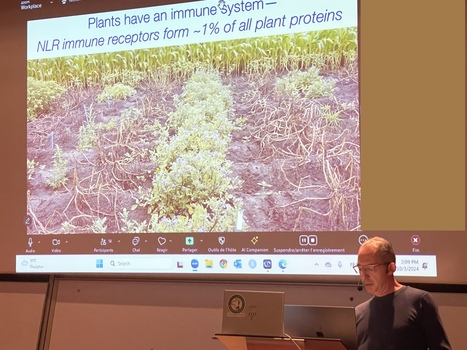
Plants coordinately use cell-surface and intracellular immune receptors to perceive pathogens and mount an immune response. Intracellular events of pathogen recognition are largely mediated by immune receptors of the nucleotide binding and leucine rich-repeat (NLR) classes. Upon pathogen perception, NLRs trigger a potent broad-spectrum immune reaction, usually accompanied by a form of programmed cell death termed the hypersensitive response. Some plant NLRs act as multifunctional singleton receptors which combine pathogen detection and immune signaling. However, NLRs can also function in higher order pairs and networks of functionally specialized interconnected receptors. I will cover the basic aspects of plant NLR biology with an emphasis on NLR networks. I will highlight some of the recent advances in NLR structure, function, and activation and discuss emerging topics such as modulator NLRs, pathogen suppression of NLRs, and NLR bioengineering. Multi-disciplinary approaches are required to disentangle how these NLR immune receptor pairs and networks function and evolve. Answering these questions holds the potential to deepen our understanding of the plant immune system and unlock a new era of disease resistance breeding.
Contreras, M.P., Luedke, D., Pai, H., Toghani, A., and Kamoun, S. 2023. NLR receptors in plant immunity: making sense of the alphabet soup
https://www.embopress.org/doi/full/10.15252/embr.202357495
|
|
Scooped by
Saclay Plant Sciences
October 3, 2024 12:41 PM
|
|
|
Scooped by
Saclay Plant Sciences
October 2, 2024 4:50 AM
|
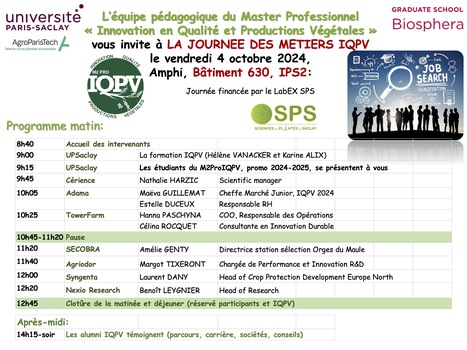
LA JOURNEE DES METIERS IQPV (Master Professionnel « Innovation en Qualité et Productions Végétales ») le vendredi 4 octobre 2024, Amphi, Bâtiment 630, IPS2:
L’équipe pédagogique du Master Professionnel, « Innovation en Qualité et Productions Végétales » vous invite à LA JOURNEE DES METIERS IQPV, le vendredi 4 octobre 2024, Amphi, Bâtiment 630, IPS2, avec le soutien de SPS
|
|
Scooped by
Saclay Plant Sciences
September 30, 2024 9:08 AM
|
Le réseau Sciences Plantes de Saclay participera une fois encore au Village des Sciences organisé par La Diagonale Paris-Saclay. Nous accueillerons des classes de primaire et de collège le vendredi 4 octobre et le grand-public pourra venir à notre rencontre les samedi 5 et dimanche 6 octobre. Programme Programme complet du Village des Sciences Paris-Saclay : https://www.universite-paris-saclay.fr/fete-de-la-science-du-4-au-14-octobre-2024-initiez-vous-a-la-recherche/ Programme complet des activités INRAE (en particulier en Île-de-France) : https://www.inrae.fr/fete-de-la-science Programme SPS : Des Plantes et des Hommes
Jouez (quiz, jeu de cartes) et découvrez comment les humains ont utilisé la diversité naturelle pour domestiquer et sélectionner les plantes que nous cultivons aujourd’hui. D’où viennent-elles ? Pourquoi sont-elles adaptées à nos usages ? Seront-elles les mêmes à l’avenir ?
Vendredi 4 octobre (scolaires) / Samedi 5 octobre (grand public) - 14h>18h / Dimanche 6 octobre (grand public) - 11h>18h Guttation, les perles des feuilles
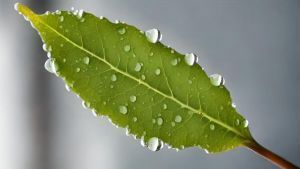
Dans la nature au petit matin, on peut observer des gouttes d’eau perler sur le bord des feuilles. C’est ce qu’on appelle la guttation, un phénomène facilement confondu avec la rosée. Qu’est-ce qu’est ? A quoi ça sert ? Quel en est le responsable ? A travers une expérience, percez le mystère de ces « perles » de feuilles !
Vendredi 4 octobre (scolaires) / Samedi 5 octobre (grand public) - 14h>18h / Dimanche 6 octobre (grand public) - 11h>18h Le bénéfice des fautes d’orthographe pour s’adapter à l’environnement
La diversité génétique inter et intra espèces définit la répartition géographique des plantes dans le monde. Certaines sont capables de s’adapter à des environnements différents, d’autres non. Comment l’expliquer, quelle est la source de cette diversité ? Mimer la synthèse d’un brin d’ADN permettra d’illustrer les mécanismes cellulaires qui génèrent cette diversité et ses conséquences sur la capacité des plantes à s’adapter.
Samedi 5 octobre (grand public) - 14h>18h Les huiles du bout du monde
Saurez-vous reconnaitre les huiles du bout du monde ? Odeurs, couleurs, textures, origines seront autant d'éléments pour vous guider dans ce voyage dépaysant. Les huiles végétales et leurs fabuleuses propriétés chimiques sont pleines de ressources : alimentation, cosmétique, chimie verte !
Dimanche 6 octobre (grand public) - 11h>18h La plante face aux changements climatiques
Les plantes sont à la base des chaines trophiques et de l’alimentation humaine. Elles sont adaptées aux conditions climatiques locales et leur répartition géographique est affectée par le changement climatique. Par ailleurs, l’élévation du CO2 atmosphérique booste leur photosynthèse mais cet effet est contrebalancé par la détérioration des conditions de vie. Quelles conséquences pour l’agriculture ?
Vendredi 4 octobre (scolaires) Localisation École normale supérieure Paris-Saclay
4, avenue des Sciences
91190 Gif-sur-Yvette
https://ens-paris-saclay.fr/lecole/venir-lecole
Ouverture de l’AAP "Recherche transverse" de la GS Biosphera
Biosphera a pour ambition de concrétiser une dynamique scientifique propice au décloisonnement disciplinaire, aux émergences d’idées et aux échanges. Des projets inter-équipes reliés à un ou plusieurs des huit programmes thématiques de la GS seront financés pour un montant maximum de 10 k€. Des projets inter-équipes ancrés dans les enjeux transverses sur la biodiversité, la bioéconomie ou la santé globale pourront être financés pour un montant maximum de 40 k€. - Formulaire : ICI
- Date de clôture : vendredi 8 novembre 2024
Contact : alexandre.henry1@universite-paris-saclay.fr / alexander.henry@agroparistech.fr
Via Life Sciences UPSaclay
|
|
Scooped by
Saclay Plant Sciences
September 25, 2024 8:37 AM
|
http://www.ibpc.fr/UMR7141/en/home/
Diatoms are a major class of phytoplankton, standing at the crossroads of several evolutionary lineages. They represent the most species-rich class of microalgae and are distributed worldwide, from tropical and subtropical regions to polar ecosystems. Thus, the diversity of diatom lifestyles and survival strategies can likely be attributed to their exceptional ability to adapt to diverse environments.
Light is the primary source of energy for photosynthetic organisms but also a key source of information on the surrounding environment. It is well established that diatoms have developed highly effective systems for optimizing light harvesting and energy generation from photosynthesis. Yet, little is known on the role of light sensing in the acclimation mechanisms, which synergistically control diatom cell growth and distribution within the ecological oceanic provinces they inhabit. To address these questions, we are performing integrated analyses of diverse but highly interconnected light-driven processes. By developing genomic and genetic resources for Phaeodactylum tricornutum, currently the most established experimental model for diatom molecular research, and by integrating genome-enabled and (eco)physiology approaches, we started to unveil new molecular players of diatom photoregulation. They include key regulators of photosynthesis and plastid photoprotection, photoreceptor variants, and a long-sought circadian clock controlling diatom responses to periodic light:dark cycles. Comparative functional investigations in diverse species and the analysis of the distribution of light regulators in the marine environment support hypothesis that light-driven processes are key players of diatom persistence. Providing new perspectives on how photoregulators evolved, diversified and act in aquatic environments strongly structured by light, these studies also highlight that integration of laboratory and environmental studies are both timely and essential to understand the life of algae in complex ecosystems.
|
|
Scooped by
Saclay Plant Sciences
September 17, 2024 3:18 AM
|
25/09/2024 À 14H30
ANIMATEUR(S) : Alain GOJONJean-François BRIATGilles LEMAIREPhilippe GATE Jérôme CHAVE (Académie des Sciences)Christophe MAUREL (Académie des Sciences)
Séance commune avec l'Académie des Sciences
(elle se tiendra dans la salle des séances de l'Académie d'agriculture)
Les racines jouent un rôle central dans des aspects cruciaux du fonctionnement des plantes au sein de l’ensemble des écosystèmes. Elles assurent l’acquisition de l’eau et des minéraux qui sont des déterminants majeurs de la productivité agricole. Elles sont également la principale voie d’entrée du carbone dans les sols, conditionnant ainsi la richesse organique de ces derniers. En étant le siège préférentiel des interactions entre plantes et microorganismes elles ont un impact majeur sur la dynamique de la vie dans les sols. Les racines sont par conséquent au cœur des grands enjeux liés au changement climatique que sont le maintien de la fertilité des sols, la gestion des ressources en eau, le stockage continental du carbone ou la sauvegarde de la biodiversité.
Le fonctionnement des racines est fortement impacté par des facteurs environnementaux liés au changement climatique (sècheresse, inondation, chaleur, élévation du CO2 atmosphérique), mais l’extraordinaire capacité d’adaptation de ces organes leur permet de jouer un rôle clef dans l’acclimatation des plantes à ces contraintes. La plasticité fonctionnelle et développementale des racines est souvent spectaculaire, et pourrait être à la base de stratégies d’amélioration des plantes ou de gestion des agroécosystèmes. Cependant, les mécanismes sous-tendant cette plasticité sont encore mal compris, notamment en ce qui concerne la remarquable capacité de développement post-embryonnaire des racines ou la complexité de leur partenariat avec les microorganismes du sol. Ainsi, il est important de renforcer le dialogue interdisciplinaire, et donc inter-académique, sur ces aspects pour montrer comment la plasticité structurale et fonctionnelle des racines de plantes peut être un front de science en biologie, agronomie ou écologie et une source de solutions aux nouvelles contraintes que le changement climatique impose aux agroécosystèmes.
La séance illustrera divers aspects de la capacité d’adaptation des systèmes racinaires, notamment en réponse à de très grandes variations de la disponibilité en eau du sol. Elle s’attachera également à montrer comment les études sur les systèmes racinaires améliorent notre compréhension multidisciplinaire de l’impact du changement climatique sur le monde végétal, aussi bien au niveau du fonctionnement des plantes prises individuellement qu’au niveau de la dynamique des espèces dans les écosystèmes.
Pour suivre la séance en direct, connectez-vous sur notre chaîne YouTube à partir de 14h30 :
https://www.youtube.com/channel/UCxERz8wtBBH9VXfgJOfVODA
|