Your new post is loading...

|
Scooped by
Saclay Plant Sciences
March 31, 7:50 AM
|
Today’s research, plants of tomorrow This international symposium is organized by the Saclay Plant Sciences (SPS) network, one of the largest plant science communities in Europe. In the face of rapid and significant climate change, advancing our knowledge in plant sciences has never been more crucial. The research being conducted in our laboratories today will make it possible to develop tools, cultivars, and agricultural practices that will help adapt our lifestyles and production systems to these environmental challenges in the near future. The International SPS Symposium will gather international researchers from various areas of plant sciences to show the diversity of plant research, share new insights and promote collaborations. The sessions will focus on the following topics: 1) Nutrition and metabolism, 2) Environmental interactions, 3) Developmental and cell biology, 4) Genome wide analysis and 5) Agronomic traits and breeding tools. Renowned international and SPS speakers will present their latest findings. Additionally, approximately twenty talks will be selected based on submitted abstracts. Two poster sessions (featuring flash-talks) will also provide attendees with the opportunity to present their work and foster new collaborations.
|
|
Scooped by
Saclay Plant Sciences
March 31, 3:36 AM
|
|
|
Scooped by
Saclay Plant Sciences
March 23, 5:22 AM
|
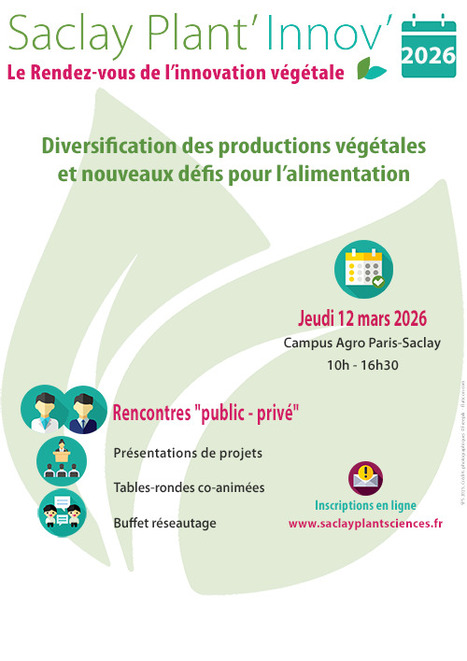
Le 12 mars dernier a eu lieu la journée Saclay Plant’ Innov’, consacrée au thème « Diversification des productions végétales et nouveaux défis pour l’alimentation ». Organisé par le réseau Saclay Plant Sciences (SPS), l’UMR SayFood - Paris-Saclay Food and Bioproduct Engineering et l’UMR Physiologie de la Nutrition et du Comportement Alimentaire (PNCA) et bénéficiant d’un partenariat avec les Carnot Plant2Pro, 3BCar et Qualiment, cet événement a réuni environ 65 chercheur.euse.s (y compris quelques doctorant.e.s) et représentant.e.s d’entreprises privées. Son objectif était de favoriser les échanges et faire émerger de nouvelles collaborations.
|
|
Scooped by
Saclay Plant Sciences
February 16, 2:27 AM
|
Loïc Lepiniec is an agricultural engineer who became a biologist. He is now a research director at INRAE, where he heads up the SeedDream team at the Jean-Pierre Bourgin Institute (IJPB – Université Paris-Saclay/INRAE/AgroParisTech). A specialist in seed biology and the regulatory networks that govern their development, he has contributed to the structuring of plant sciences in France. He has also been involved in the creation of the Paris-Saclay campus, from the establishment of laboratories of excellence (LabEx) and their communities to recent institutional developments.
|
|
Scooped by
Saclay Plant Sciences
February 7, 8:04 AM
|
The world faces energy shortages as fossil fuels are phased out. Research can’t go on as normal. working at a research institute that Why am I doing science? As a scientist focuses on food security, I’m acutely aware of the accelerating ecological and climatic breakdown that is occurring around us. What part should scientists play in such a fragile world? For many years, like most of my peers, I thought that science was part of the solution. More knowledge and innovation would allow societies to adapt to and mitigate environmental damage. That belief began to crack in 2018, when I discovered the work of Jean-Marc Jancovici, an energy and climate specialist. His message is clear: our world is built on abundant energy, around 80% of which has come from fossil fuels over the past 50 years. Because supplies are limited, energy consumption will peak in decades — sooner if humans attempt to limit climate change. To keep global warming below 1.5 °C by 2100, the use of fossil fuels must fall by 5–8% each year — a pace that is too fast for low-carbon energy to keep up with. Restricted energy supplies will shrink economies and force people to make hard choices — whether to travel less, live in a smaller home or do more labour manually. ....
|
|
Scooped by
Saclay Plant Sciences
February 3, 3:59 AM
|
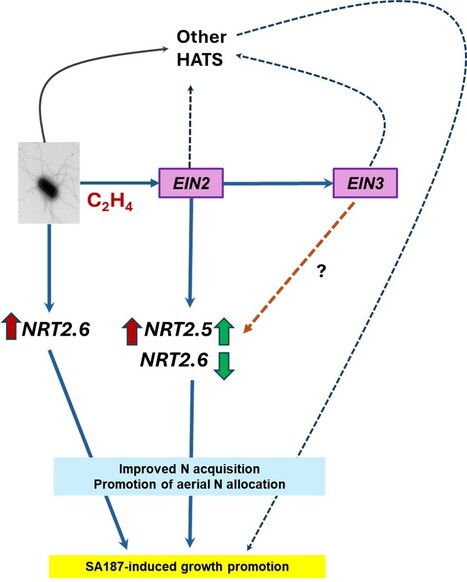
A bacteria beneficial in low nitrogen IPS2 SPS Developing alternatives to synthetic nitrogen fertilizers is a key challenge for reconciling agricultural productivity with reducing detrimental environmental impacts. In a study published in New Phytologist, scientists from the Institute of Plant Sciences-Paris Saclay (IPS2) demonstrated that Enterobacter sp. SA187, a non-nitrogen-fixing endophytic bacterium already known to enhance plant tolerance to various environmental stresses, can improve plant growth under low nitrogen conditions. Using the model plant Arabidopsis thaliana, they showed that this bacterium strongly stimulates growth when the plant has access to very low levels of nitrate. This improvement is based on increased absorption and internal redistribution of nitrate, associated with an increased expression of genes encoding the high-affinity nitrate transporters NRT2.5 and NRT2.6. Using transcriptomic and genetic approaches, the study also reveals that this process is largely mediated by the activation of the phytohormone ethylene signaling pathway. This work sheds new lights on how beneficial microorganisms can reprogram the transcriptome and plant development to optimize nitrogen use. It opens promising avenues for the development of more sustainable agricultural strategies based on microbial inputs to reduce the use of synthetic nitrogen fertilizers.
|
|
Scooped by
Saclay Plant Sciences
January 8, 5:06 AM
|
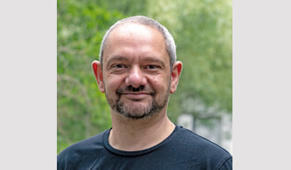
Being a molecular biologist and biochemist by training, William began his academic journey at the University Paris-Saclay (Master IQPV, IPS2), and then worked in the agronomic industry (development of new cultivars, fertilization plans, precision agriculture, and monitoring of vegetable crops), mostly in Canada. He then transitioned to academic research, by completing a Ph.D. and a postdoctoral fellowship in Montreal. Today, William, within the CCARS team, studies plant responses to environmental constraints. His work aims to identify levers for optimizing plant performance through a better understanding of stress response mechanisms, with the goal of supporting the development of sustainable agriculture in the face of current and future climate and food challenges. His research interests focus on the regulation of gene expression, chloroplast-associated signaling processes, and reactive oxygen species homeostasis. By combining functional genomics, molecular biology, and biochemistry approaches, he studies responses to abiotic stresses, mostly in Arabidopsis thaliana and wheat. His previous work has notably focused on the role of C1-2i zinc finger transcription factors as well as 2-Cys peroxiredoxins in drought tolerance. Welcome to William in the CCARS team!
The Saclay Plant Sciences Graduate School of Research (SPS) wishes you a Happy New Year 2026
Via Loïc Lepiniec
Le prix Rozén Linné de Botanique est décerné à Catherine Bellini en reconnaissance de ses travaux de recherches et de son investissement pour la promotion de la recherche internationale. Ces prix sont décernés tous les trois ans à deux chercheurs méritants en botanique et zoologie résidant en Suède Les missions de longue durée et les mises à disposition constituent à INRAE des dispositifs de mobilité stratégiques favorisant le développement de collaborations scientifiques au sein de laboratoires partenaires, tant en France qu’à l’étranger. Ces dispositifs représentent un levier majeur pour l’établissement et la consolidation de partenariats de recherche pérennes, notamment dans le cadre de projets de coopérations internationales. C’est dans ce contexte que Catherine Bellini a pu étendre ses activités de recherche au sein d’un laboratoire « hors les murs » mis en place dès 2005 entre l’Umeå Plant Science Centre -UPSC et INRAE. Directrice de recherche INRAE à l’Institut Jean-Pierre Bourgin - Sciences du Végétal - IJPB (INRAE/AgroParisTech/UPSaclay, Versailles) et professeure à l'UPSC (Université d'Umeå, Suède), Catherine Bellini conduit des recherches sur deux domaines différents. A l’UPSC, son équipe étudie le développement des racines adventives, une étape clé et limitante dans la propagation végétative d'espèces d'arbres économiquement importantes. A l’IJPB, dans l'équipe "Carbone, allocation, transport, signalisation" CATS dirigée par Sylvie Dinant, elle s'intéresse au transport du sucre et à l'allocation du carbone, ainsi qu’à leur rôle dans le développement des plantes et leur interaction avec l'environnement. Lire la suite de l’Actu IJPB -> Contact : catherine.bellini@umu.se / catherine.bellini@inrae.fr
Via Life Sciences UPSaclay
|
|
Scooped by
Saclay Plant Sciences
December 12, 2025 11:00 AM
|
This project focuses on transposable elements (TEs) in the plant genome, sometimes called “jumping genes,” which are DNA sequences capable of changing position and multiplying within the genome. Long considered as "junk DNA", TEs are now recognized as essential drivers of evolution, occupying a significant portion of the genomes of most organisms. Until now, research has primarily focused on the mechanisms associated with their mobilization, their impact in terms of genetic mutations, and the epigenetic mechanisms that keep them under control. However, TEs are not simply repetitive sequences: they encode specialized proteins that catalyze their movement and interact with the cellular environment. The nature of these interactions and their impact on the ability of TEs to propagate remain however largely unknown. The "HosTEome" project aims to better understand how the proteins encoded by TEs and those of their host genomes influence each other, and how these relationships contribute, in the long term, to shaping the structure and evolution of genomes. To this end, the project will use approaches ranging from proteomics, interactomics, epigenomics, bioinformatics, and artificial intelligence-guided genomics, to explore these interactions and their large-scale diversification during eukaryotic evolution.
|
|
Scooped by
Saclay Plant Sciences
December 6, 2025 3:28 PM
|
Raphaël Mercier receives the prestigious VinFuture prize for his work on crops that seed their own clones -
|
|
Scooped by
Saclay Plant Sciences
November 27, 2025 3:51 PM
|
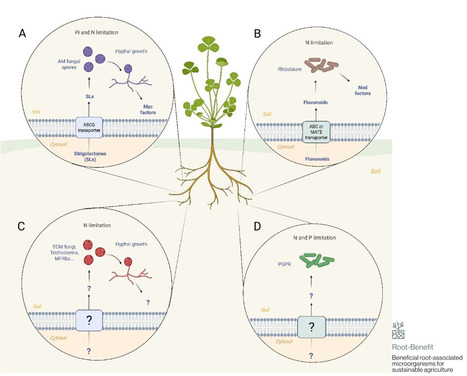
A review on molecular mechanisms of beneficial plant-microbe interactions IPS2 SPS In the frame of the COST Action “ROOT-BENEFIT” (CA22142) from the European Cooperation in Science and Technology, Florian Frugier from IPS2 coordinated the writing of a European collaborative review, published in Plant Communications, summarizing our current knowledge on the molecular mechanisms controlling different beneficial plant root-microbe interactions, namely arbuscular mycorrhiza, the rhizobium-legume symbiosis, ectomycorrhiza, as well as fungal and bacterial endophytic associations. The authors notably highlight what are the main shared mechanisms, as well as the knowledge gaps, with a special focus on the signaling pathways required for microbes to be recognized as beneficial, the metabolic pathways that provide nutritional benefits to the plant, and the regulatory pathways modulating the extent of the symbiosis establishment depending on soil nutrient availability and plant needs. By summarizing this knowledge, this review aims to promote the move from an intensive chemically-synthesized fertilizers- and pesticides-based agriculture towards the use of plant-microbe beneficial interactions in the frame of a more sustainable agriculture.
|
|
Scooped by
Saclay Plant Sciences
November 26, 2025 7:51 AM
|
Transcriptome analysis is widely used in research projects. By providing a comprehensive view of an organism’s gene activity, transcriptomics enables the exploration and identification of mechanisms underlying the observed phenotypes. This approach can be applied to any sample (tissue or species); however, its use is often limited to relatively simple experimental designs. There are likely two reasons for this. First, the vast amount of data generated requires complex and expert analysis. Some believe that artificial intelligence and neural networks can overcome this barrier, but these approaches require a high number of measures to identify explanatory and predictive structures among the tens of thousands of transcripts analyzed in each sample. Second, agroecological challenges require field analyses under much more complex and heterogeneous conditions (multiple species, multiple factors) than those found in laboratory settings. This again necessitates the analysis of a very large number of samples. To bring the power and sensitivity of transcriptomics to these major challenges, it must be made widely accessible and its costs drastically reduced. The POPS transcriptomic platform offers a high-throughput plant transcriptome screening service (several hundred samples per project) at a very low cost, thanks to BRB-Seq technology ((Bulk RNA barcoding and sequencing) that allows the reduction of reaction volumes and the automation of all steps (RNA extraction, library preparation, quantification, and multiplexing). Contacts:
|
|
|
Scooped by
Saclay Plant Sciences
March 31, 5:21 AM
|
Goldy C, Moulin S, Shimizu Y, Cerutti G, Bayle V, Grison M, Jaillais Y, Bouchez D, Boutté Y, Pastuglia M, Andrey P, Caillaud M. The actin cytoskeleton is required to maintain plant cell division orientation against cellular geometry. Science Advances. 2026; 12(8). doi:10.1126/sciadv.aeb8498 López‐Malvar A, Santiago R, Butrón A, Malvar RA, Gesteiro N. Optimizing genomic predictions in maize using a diversity panel and a multiparental population. The Plant Genome. 2026; 19(1). doi: 10.1002/tpg2.70206 Rabeau C, Wagner A, Lapalu N, Jiquel A, Faure S, Fudal I. Conserved ‘Late’ Effector Genes From Leptosphaeria maculans Inducing Gene‐For‐Gene Quantitative Resistance in Brassica napus Semi‐Winter Genotypes. Molecular Plant Pathology. 2026; 27(3). doi: 10.1111/mpp.70224 Sil P, Martin OC, Samal A. A systematic evaluation of simple threshold-based Boolean rules for modeling gene regulatory networks. Journal of Statistical Mechanics Theory and Experiment. 2026. doi: 10.1088/1742-5468/ae4588 Wojcik A, Belcram H, Rousselet A, Bouët M, Brault M, Serin P, Desprez A, Rincent R, Peil A, Henry K, Marchal C, Lacombe T, Glémin S, Alix K, Gérard PR, Manicacci D, Vigouroux Y, Dogimont C, Tenaillon MI. Evolution of crop phenotypic spaces through domestication. New Phytologist. 2026. doi: 10.1111/nph.71031
|
|
Scooped by
Saclay Plant Sciences
March 25, 2:18 PM
|
Starting next academic year, the M2 in Plant Sciences @Paris-Saclay, will introduce a new, innovative teaching unit for its Research track: the “Laboratory Rotations”. This teaching unit includes two two-week internships conducted within research teams, including those of the SPS network. These internships allow students to become familiar with the design and execution of experiments, refine their technical skills, discover new research topics, and expand their scientific network. The “Laboratory rotations” embody the “training in and through research” approach, an innovative pedagogical method that teachers are gradually integrating into all SPS master’s programs, and which SPS strongly supports. This teaching unit has already proven successful in another SPS master’s program, the international M1 in Plant and Microbial Molecular Biology (PMB), established in 2023. This master, which has served as an excellent testing ground for pedagogical innovation, will merge with the M1 in Plant Sciences from the 2026-2027 academic year. We interviewed Hoc Nguyen and Jacob Van Buskirk, international students in the M1 PMB program, who recently completed their lab rotations: Hoc Nguyen “The lab rotations were fun, exciting, and intellectually satisfying, playing an important role in my academic development by allowing me to observe how scientists think, solve problems, and conduct independent research. I had the chance to meet many kind and interesting people while experiencing different working environments, which increased my exposure to diverse teams and created opportunities for networking and potential future positions. What I enjoyed most was analyzing results and interpret them. I find the process of making sense of the data both rewarding and stimulating. The most exciting part was discussing these interpretations with my supervisors, as their perspectives often revealed blind spots or flaws in my reasoning, helping me sharpen my critical thinking skills.” Jacob Van Buskirk “The lab rotations offered me an enriching introduction to the research environment, particularly suiting my hands-on learning style. My rotation at IPS2, focused on dry lab work, was extraordinarily helpful; I gained invaluable skills by processing the full pipeline of ChIP-seq, RNA-seq, and Hi-C data, a resource I will rely on well into the future. Equally impactful was my time at IJPB, where I made strong connections and felt deeply involved with the institution. Receiving such guidance from both teams was illuminating, reminding me why I chose this career path.”
|
|
Scooped by
Saclay Plant Sciences
February 19, 4:57 PM
|
Bienvenue à Pol Vendrell Mir à IPS2 SPS! Pol Vendrell Mir est chercheur CNRS à l’Institut des Sciences des Plantes de Paris-Saclay – IPS2 (CNRS/INRAE/UEVE/UPSaclay, Gif-sur-Yvette). Après des études en Biotechnologie à l’Université Autonome de Barcelone, il a effectué un master et un doctorat au sein du groupe Structure et Évolution du Génome des Plantes, dirigé par Josep M. Casacuberta i Suñer, au Centre de Recherche en Agrigénomique (CRAG, Barcelone). Sa thèse portait sur l’impact des éléments génétiques mobiles, incluant les transposons et les virus, dans l’organisme modèle Physcomitrium patens. Lors de son postdoctorat dans le groupe de Génomique et Epigénomique Quantitative des Plantes à IPS2, dirigé par Leandro Quadrana, il a étudié comment la mobilisation des transposons contribue à la variation génétique et aux réponses adaptatives possibles à l’environnement chez Arabidopsis thaliana. Il a développé des techniques de haute précision pour détecter des insertions rares, analyser leur dynamique dans de grandes populations et déterminer comment les facteurs génétiques, épigénétiques, développementaux et environnementaux régulent l’activité des transposons. Ses travaux actuels visent à comprendre comment les éléments génétiques mobiles, les modifications épigénétiques et les mécanismes de réparation de l’ADN interagissent pour façonner la formation, la distribution et l’impact fonctionnel des variants structuraux dans les génomes végétaux.
|
|
Scooped by
Saclay Plant Sciences
February 15, 11:29 AM
|
Ingénieur agronome devenu biologiste, Loïc Lepiniec est directeur de recherche INRAE, responsable de l’équipe SeedDream au sein de l’Institut Jean-Pierre Bourgin (IJPB – Université Paris-Saclay/INRAE/AgroParisTech). Spécialiste de la biologie des semences et des réseaux de régulation qui gouvernent leur développement, il a contribué à la structuration des sciences du végétal en France. Il a également accompagné la construction du campus Paris-Saclay, de la création des laboratoires d’excellences (LabEx) et leurs communautés, jusqu’aux évolutions institutionnelles récentes.
|
|
Scooped by
Saclay Plant Sciences
February 5, 2:25 PM
|
Signaling peptides and endosymbioses In the heterogeneous and fluctuating environments in which plants grow, they must efficiently acquire essential nutrients to sustain growth and development. Root endosymbioses, including nitrogen-fixing nodulation and arbuscular endomycorrhization, allow plants to cope with limitations of soil mineral nutrients, such as nitrogen and phosphorus. In a review published in Trends in Plant Sciences by the F. Frugier’s SILEG team, researchers summarized our current knowledge on secreted signaling peptides that recently emerged as key regulators of these two evolutionary-related endosymbioses. This includes the C-TERMINALLY ENCODED PEPTIDES (CEPs) and the CLAVATA3 / EMBRYO SURROUNDING REGION-RELATED (CLE) peptides. By putting into perspective the intricate relationships between these signaling peptides and nutrient dynamics, this review highlights their potential as targets to better coordinate and prioritize plant nutrition in limiting environments.
|
|
Scooped by
Saclay Plant Sciences
January 9, 10:45 AM
|
Through a genetic screen, the researchers showed that the LUMINIDEPENDENS (LD) protein is involved in the response to replicative stress. Analysis of its targets, performed by combining chromatin immunoprecipitation and spike-in normalized transcriptomic approaches, reveals that LD acts as a negative regulator of transcription at the genome level. The study of its protein partners, performed in collaboration with the group of Geert De Jaeger (VIB, Gent), suggests that LD modulates transcription through various mechanisms, including histone modification, RNA polymerase II phosphorylation, and its recruitment to chromatin by the Mediator complex. LD thus appears to act as a global regulator of transcription, whose role in the response to replicative stress could be explained by a reduction in transcription-replication conflicts, which are major sources of replicative stress and genomic instability.
|
|
Scooped by
Saclay Plant Sciences
January 4, 5:09 AM
|
Le réseau Sciences des Plantes de Saclay (SPS) et les unités de recherche SayFood et PNCA vous invitent à la prochaine journée des rendez-vous de l’innovation, sur le thème de la diversification des productions végétales et des nouveaux défis pour l’alimentation. Cette journée a pour but de favoriser les échanges entre les équipes de recherche du réseau SPS, des unités SayFood et PCNA et des partenaires du secteur privé pour faire émerger de nouveaux projets innovants. Les produits végétaux sont une source majeure de macro et micronutriments pour l’alimentation humaine. Leur rôle dans la diversification des sources protéiques suscite un intérêt croissant dans le contexte de la transition agroécologique, notamment en vue de substituer certains produits alimentaires d’origine animale. Cette dynamique implique une évolution et une adaptation des systèmes de cultures, avec un regain d’intérêt pour les espèces végétales riches en protéines et en lipides. Cette diversification s’accompagne d’une attention particulière portée aux qualités nutritionnelle et organoleptique, à la biodisponibilité et la bioaccessibilité de certains nutriments ainsi qu'aux propriétés technologiques de ces produits. Elle génère également de nouvelles contraintes sur les procédés de transformation, de fractionnement et de purification, ainsi que sur la valorisation des coproduits. Cette évolution nécessaire des productions végétales répond aussi aux attentes des consommateurs en matière de santé et d’alimentation, mais également aux questions d'éthique. Une meilleure compréhension de ces différents leviers, de la production à la consommation, est primordiale pour accélérer les transitions agroécologiques et alimentaires.
Dans le cadre de l'Objet Interdisciplinaire METABIODIVEX de l'Université Paris-Saclay, une journée scientifique autour des deux thématiques Biocatalyse et Valorisation de la Biomasse est organisée vendredi 16 janvier 2026 dans l'amphithéâtre de l'ICSN à Gif-sur-Yvette. La matinée sera dédiée à la Biocatalyse et aux Enzymes en Action et l'après-midi aux Approches de Valorisation de la Biomasse. Pour chacune de ces thématiques, deux conférences plénières sont programmées. Ces conférences encadreront 4 FlashComm de jeunes chercheurs du périmètre Paris-Saclay. Des communications d'acteurs industriels et des acteurs de la valorisation des résultats scientifiques sont également programmées En fin de journée, des tables rondes seront organisées afin de pouvoir échanger autour de ces deux thématiques. Cette journée scientifique gratuite est ouverte à toute personne présentant un intérêt pour l’une de ces deux thématiques. Le programme de cette journée scientifique et les inscriptions sont disponibles sur le site de SciencesConf à l’adresse : https://metabiodivex26.sciencesconf.org/ Deux FlashComm pour chacune de deux thématiques sont proposées. N’hésitez pas à postuler en écrivant aux organisateurs (erwan.poupon@universite-paris-saclay.fr / aurelien.alix@universite-paris-saclay.fr / jean-francois.betzer@cnrs.fr). L'Institut de Chimie des Substances Naturelles (ICSN) est situé sur le campus CNRS au 1 avenue de la Terrasse à Gif-sur-Yvette. L'amphithéâtre est situé au 1er étage du bâtiment 27. L'ICSN est facilement accessible à pied depuis la gare du RER B Gif-sur-Yvette. Pour plus d'informations sur l'accès au campus CNRS et à l'ICSN, rendez-vous sur la page Informations Générales / Accès.
Via Life Sciences UPSaclay
Dans une étude publiée dans PNAS, l’équipe Dynamique des Chromosomes de l’Institut des Sciences des Plantes de Paris-Saclay - IPS2 (CNRS/INRAE/UEVE/UPSaclay, Gif-sur-Yvette) met en évidence l’existence d’un mécanisme global de répression de la transcription chez la plante modèle Arabidopsis thaliana. À l’aide d’un crible génétique, les chercheurs ont montré que la protéine LUMINIDEPENDENS (LD) intervient dans la réponse au stress réplicatif. L’analyse de ses cibles, réalisée par immunoprécipitation de la chromatine et des approches transcriptomiques normalisées par spike-in, révèlent que LD agit comme un régulateur négatif de la transcription à l’échelle du génome. L’étude de ses partenaires protéiques suggère que LD module la transcription par divers mécanismes, notamment la modification des histones, la phosphorylation de l’ARN polymérase II ou encore son recrutement sur la chromatine par le complexe Mediator. Ainsi, LD apparaît comme un régulateur global de la transcription, dont le rôle dans la réponse au stress réplicatif pourrait s’expliquer par une réduction des conflits transcription-réplication, sources majeures de stress réplicatif et d’instabilité génomique. -> Contact : cecile.raynaud@universite-paris-saclay.fr
Via Life Sciences UPSaclay
|
|
Scooped by
Saclay Plant Sciences
December 6, 2025 4:27 PM
|
ICS2026 PARIS FRANCE
Strigolactones are plant signalling molecules that regulate endogenous developmental processes and are secreted by the roots of many mono-and dicotyledonous plants into the rhizosphere.
There, strigolactones can induce the germination of seeds of the root-parasitic broomrapes and witchweeds. SLs have also been shown to stimulate the symbiotic interaction with arbuscular mycorrhizal fungi which directly benefits the host plants’ growth and development through the acquisition of phosphate and other mineral nutrients from the soil.
In addition to these functions in the rhizosphere, SLs are a novel class of plant hormones regulating plant growth and development, including root and shoot architecture.
An increasing number of scientists is working on the biological roles of the strigolactones and the mechanisms involved, as well as on their (bio)synthesis and perception/downstream signalling.
In this 4th International Congress on Strigolactones we intend to bring together these scientists to exchange ideas and knowledge and to increase the solidarity and collaboration in the strigolactone community.
The congress will be organized in FIAP: https://www.fiap.paris/en/
The FIAP is an international center for meetings and accommodations located in the heart of Paris in the 14th arrondissement.
|
|
Scooped by
Saclay Plant Sciences
December 6, 2025 12:27 PM
|
Jean-François Morot-Gaudry (1943–2024): A Life Devoted to Plant Science, Leadership, and Humanity
|
|
Scooped by
Saclay Plant Sciences
November 26, 2025 2:53 PM
|
This Summer school is organized by the Saclay Plant Sciences (SPS) network, one of the largest European plant sciences communities. scRNAseq approaches have revolutionized the way biologists approach their research subjects, by making it possible to dissect molecular mechanisms at the single-cell level. But although technological developments have recently made these approaches more accessible, their expensive use still requires significant technical training, including the good conception of experimental designs, the preparation of samples as well as their bioinformatics analyses. In addition, different protocols and various bioinformatics and statistical analyzes are available, and it can be difficult to choose the most relevant ones for the biological question at hand. Over five days, the SPS Summer School 2026 will cover all the stages of a scRNAseq project in plants. Through a combination of lectures and practical work, the many specific features of plant models will be highlighted by experts from the Saclay Plant Sciences network (CNRS and INRAE), the ViB in Ghent and the Pasteur Institute. After this international school, participants will:
– Have an overview of the different scRNAseq technologies and understand their pros and cons.
– Be able to design experiments depending on the biological question.
– Be trained on sample preparation techniques for single cell and single nuclei
– Understand the different steps of bioinformatics and statistical analysis
– Have a better biological interpretation of results
– Have facilitated exchanges with technology platforms, bioinformaticians, and biostatisticians in order to successfully complete their scRNAseq project The summer school will bring together outstanding and enthusiastic young scientists (PhD students and post-docs) from all over the world in order to exchange knowledge and ideas. It is limited to a small group of participants (20 maximum) to privilege informal interactions and scientific discussions Application deadline: March 12, 2026 (midnight)
Answers will be sent mid-April at the latest.
|