
A powerful gene-editing technology is the biggest game changer to hit biology since PCR. But with its huge potential come pressing concerns.
Get Started for FREE
Sign up with Facebook Sign up with X
I don't have a Facebook or a X account


|
Scooped by
Saclay Plant Sciences
onto Plant Sciences June 3, 2015 3:29 PM
|
 Scoop.it!
A powerful gene-editing technology is the biggest game changer to hit biology since PCR. But with its huge potential come pressing concerns.

 Your new post is loading...
 Your new post is loading...
Your new post is loading...
Scoop.it!
Journée scientifique de l’OI METABIODIVEX Biocatalyse - Biomasse - Vendredi 16 janvier 2026 à l'ICSN
Dans le cadre de l'Objet Interdisciplinaire METABIODIVEX de l'Université Paris-Saclay, une journée scientifique autour des deux thématiques Biocatalyse et Valorisation de la Biomasse est organisée vendredi 16 janvier 2026 dans l'amphithéâtre de l'ICSN à Gif-sur-Yvette.
La matinée sera dédiée à la Biocatalyse et aux Enzymes en Action et l'après-midi aux Approches de Valorisation de la Biomasse. Pour chacune de ces thématiques, deux conférences plénières sont programmées. Ces conférences encadreront 4 FlashComm de jeunes chercheurs du périmètre Paris-Saclay. Des communications d'acteurs industriels et des acteurs de la valorisation des résultats scientifiques sont également programmées
En fin de journée, des tables rondes seront organisées afin de pouvoir échanger autour de ces deux thématiques.
Cette journée scientifique gratuite est ouverte à toute personne présentant un intérêt pour l’une de ces deux thématiques.
Le programme de cette journée scientifique et les inscriptions sont disponibles sur le site de SciencesConf à l’adresse : https://metabiodivex26.sciencesconf.org/
Deux FlashComm pour chacune de deux thématiques sont proposées. N’hésitez pas à postuler en écrivant aux organisateurs (erwan.poupon@universite-paris-saclay.fr / aurelien.alix@universite-paris-saclay.fr / jean-francois.betzer@cnrs.fr).
L'Institut de Chimie des Substances Naturelles (ICSN) est situé sur le campus CNRS au 1 avenue de la Terrasse à Gif-sur-Yvette. L'amphithéâtre est situé au 1er étage du bâtiment 27. L'ICSN est facilement accessible à pied depuis la gare du RER B Gif-sur-Yvette.
Pour plus d'informations sur l'accès au campus CNRS et à l'ICSN, rendez-vous sur la page Informations Générales / Accès. Via Life Sciences UPSaclay
Scoop.it!

Dans une étude publiée dans PNAS, l’équipe Dynamique des Chromosomes de l’Institut des Sciences des Plantes de Paris-Saclay - IPS2 (CNRS/INRAE/UEVE/UPSaclay, Gif-sur-Yvette) met en évidence l’existence d’un mécanisme global de répression de la transcription chez la plante modèle Arabidopsis thaliana.
À l’aide d’un crible génétique, les chercheurs ont montré que la protéine LUMINIDEPENDENS (LD) intervient dans la réponse au stress réplicatif. L’analyse de ses cibles, réalisée par immunoprécipitation de la chromatine et des approches transcriptomiques normalisées par spike-in, révèlent que LD agit comme un régulateur négatif de la transcription à l’échelle du génome.
L’étude de ses partenaires protéiques suggère que LD module la transcription par divers mécanismes, notamment la modification des histones, la phosphorylation de l’ARN polymérase II ou encore son recrutement sur la chromatine par le complexe Mediator.
Ainsi, LD apparaît comme un régulateur global de la transcription, dont le rôle dans la réponse au stress réplicatif pourrait s’expliquer par une réduction des conflits transcription-réplication, sources majeures de stress réplicatif et d’instabilité génomique.
-> Contact : cecile.raynaud@universite-paris-saclay.fr Via Life Sciences UPSaclay
Scoop.it!
ICS2026 PARIS FRANCE
Scoop.it!
|
|
|
Scooped by
Saclay Plant Sciences
November 26, 2:53 PM
|
Scoop.it!

This Summer school is organized by the Saclay Plant Sciences (SPS) network, one of the largest European plant sciences communities.
scRNAseq approaches have revolutionized the way biologists approach their research subjects, by making it possible to dissect molecular mechanisms at the single-cell level. But although technological developments have recently made these approaches more accessible, their expensive use still requires significant technical training, including the good conception of experimental designs, the preparation of samples as well as their bioinformatics analyses. In addition, different protocols and various bioinformatics and statistical analyzes are available, and it can be difficult to choose the most relevant ones for the biological question at hand.
Over five days, the SPS Summer School 2026 will cover all the stages of a scRNAseq project in plants. Through a combination of lectures and practical work, the many specific features of plant models will be highlighted by experts from the Saclay Plant Sciences network (CNRS and INRAE), the ViB in Ghent and the Pasteur Institute.
After this international school, participants will:
– Have an overview of the different scRNAseq technologies and understand their pros and cons.
– Be able to design experiments depending on the biological question.
– Be trained on sample preparation techniques for single cell and single nuclei
– Understand the different steps of bioinformatics and statistical analysis
– Have a better biological interpretation of results
– Have facilitated exchanges with technology platforms, bioinformaticians, and biostatisticians in order to successfully complete their scRNAseq project
The summer school will bring together outstanding and enthusiastic young scientists (PhD students and post-docs) from all over the world in order to exchange knowledge and ideas. It is limited to a small group of participants (20 maximum) to privilege informal interactions and scientific discussions
Application deadline: March 12, 2026 (midnight)
Answers will be sent mid-April at the latest.
|
|
Scooped by
Saclay Plant Sciences
November 24, 10:02 AM
|
Scoop.it!

|
|
Scooped by
Saclay Plant Sciences
November 14, 7:20 AM
|
Scoop.it!

Surprisingly, differences in phenotypes and gene expression are observed between genetically identical individuals grown in the same environment. While we now have a good knowledge of the source and consequences of transcriptional differences observed between cells, in particular for unicellular organisms, it is still very scarce when it comes to variability between multicellular organisms. Using plants as a model we analysed the establishment, maintenance and consequences of inter-individual transcriptional variability. We showed, for a gene of interest, that differences in expression between plants are established in young seedlings and maintained over several days. Our results also indicate that these differences in expression can explain phenotypic variability between plants such as for the root growth. Finally, using a genome-wide approach, we found a co-expression in seedlings for our gene of interest, involved in nitrate nutrition, and genes involved in photosynthesis. All in all, our study suggests that a global coordination of the genes involved in the carbon/nitrate balance in plants is established in young seedlings, with differences between plants, and then maintained over time.
|
|
Scooped by
Saclay Plant Sciences
October 9, 2:28 AM
|
Scoop.it!

International Master in Plant Sciences track of the
Biology AgroSciences master degree
https://www.master-sciences-du-vegetal.fr/eng
We are delighted to share that the International Master in Plant Sciences track of the Biology
AgroSciences Master degree will soon be launching (September 2026). Fully taught in English
(First and second year) and embedded in the Saclay Plant Sciences Excellence Network, this
program will train a new generation of talented students to tackle the most pressing challenges in
plant research — from climate resilience to sustainable agriculture.
|
|
Scooped by
Saclay Plant Sciences
September 30, 4:37 AM
|
Scoop.it!
Chemical interactions between plants and their environment: from the molecule to the field
23-25 September 2026 - IJPB, INRAE Ile-de-France - Versailles-Saclay
The IJPB is organising the 3rd edition of its international symposium. Following the editions in 2018 and 2024, this event will take place in Versailles from 23 to 25 September 2026. Save the date!
The IJPB Symposium 2026 is dedicated to "Chemical interactions between plants and their environment: from the molecule to the field", a booming research field in which IJPB develops integrative approaches bridging plant metabolism and its effect on biotic/abiotic interactions and vice versa.
The symposium will comprise an opening lecture and four thematic sessions, each involving an international and an IJPB keynote speaker, as well as presentations from participants selected from submitted abstracts. The themes of each session are as follows:
1 - Identification/analysis of chemical signals involved in plant response to their environment
2 - Molecular and cellular mechanisms of chemical responses to biotic and abiotic stress: Perception and transduction of chemical signals
3 - Integration of chemical interactions in ecological communities and agroecosystems
4 - Agroecological innovations derived from the study of how plants interact with their environment
This exciting meeting aims to foster collaborations and facilitate knowledge exchange among participants by bringing together renowned specialists in the field and a high level of interdisciplinary.
The symposium will also feature a workshop on plant specialized metabolite analysis, conducted in collaboration with the Chemistry/Metabolism platform PO-Chem, and a tour of the Plant Facilities PO-Plants and the Phenoscope PO-Pheno, all three of which are part of the Plant Observatory (PO) of the IJPB.
Ahead of the symposium, the ENVIE Network will hold its 5th plenary edition in Versailles from 21 to 23 September 2026, organised as part of a MULTISTRESS satellite workshop.
We look forward to meeting you in Versailles! Further information will be available by November 2025.
In connection with the research developed at the Institute Jean-Pierre Bourgin for Plant Sciences.
|
|
Rescooped by
Saclay Plant Sciences
from Life Sciences Université Paris-Saclay
September 10, 2:45 AM
|
Scoop.it!
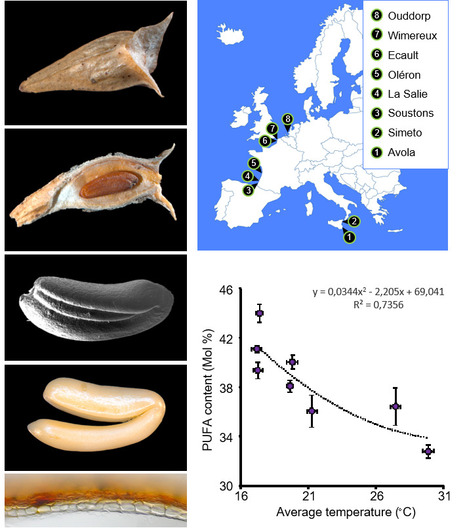
Dans une étude publiée dans Journal of Experimental Botany, des chercheurs de l’Institut Jean-Pierre Bourgin - Sciences du Végétal - IJPB (INRAE/AgroParisTech/UPSaclay, Versailles), de l’Institute for Agriculture and Forestry Systems in the Mediterranean (Catania, Italie) et des Royal Botanic Gardens - Kew, (Ardingly, Angleterre) ont étudié la biosynthèse de l’huile dans la graine de Cakile maritima, une espèce halophyte sauvage de la famille des Brassicacées.
En analysant indépendamment les deux tissus zygotiques de la graine, l'embryon et l'albumen, il a été démontré que l'embryon est le principal site d'accumulation de l’huile. Il est à noter que la composition en acides gras de l’huile diffère considérablement entre les tissus zygotiques. La moitié des acides gras de l'albumen sont des monoinsaturés de type oméga-7, qui sont largement absents de l'embryon. En revanche, l'embryon présente une induction plus forte des voies de biosynthèse des acides gras de type oméga-9 et polyinsaturés, ce qui reflète une régulation spécifique des gènes du métabolisme des acides gras dans chaque tissu. En outre, les graines collectées dans différentes niches écologiques le long d'un gradient latitudinal révèlent que la température environnementale affecte la composition en acides gras de l’huile, en particulier la proportion d'acides gras polyinsaturés dans l'embryon.
Ces résultats soulignent la diversité métabolique et le potentiel d'adaptation de C. maritima, dont la teneur en huile élevée des graines, associée à la capacité de la plante à prospérer dans des environnements salins avec un minimum d'apports, sont autant de caractéristiques particulièrement intéressantes dans une optique de diversification des cultures oléagineuses.
-> Contact : sebastien.baud@inrae.fr
|
|
Rescooped by
Saclay Plant Sciences
from Life Sciences Université Paris-Saclay
September 10, 2:44 AM
|
Scoop.it!

Dans une étude parue dans mSystems, des scientifiques de l’Institut Jean-Pierre Bourgin - Sciences du Végétal - IJPB (INRAE/AgroParisTech/UPSaclay, Versailles) ont étudié un monde encore méconnu : la « spermosphère ». Cette interface entre la graine en germination et l’environnement comporte une large diversité chimique et microbienne, directement façonnée par les molécules issues des métabolismes central et spécialisé que la graine libère dès l’imbibition.
En travaillant sur un panel de diversité génétique du haricot commun (Phaseolus vulgaris L.), les chercheurs ont analysé à la fois les métabolites libérés par les graines et les communautés de micro-organismes de la spermosphère. Ils ont découvert des métabolites exsudés par la graine, dont des acides aminés et dipeptides, des flavonoïdes et des terpènes, chacun pouvant influencer les micro-organismes qui s’installent autour de la graine. Ainsi, ils ont pu caractériser des dizaines de familles de bactéries et de champignons. Comme une véritable architecte, la graine crée donc son propre environnement, en fonction de son identité génétique et de son environnement de production. Ces échanges métaboliques entre la graine en germination et sa cohorte microbienne sont essentiels car ils contribuent à la santé et à la qualité physiologique de la future plante.
Cette découverte change notre regard. Les résultats révèlent que la graine ne subit pas passivement son environnement, mais contribue activement à façonner la communauté microbienne qui l’entoure. Ces travaux ouvrent la voie à de nouvelles stratégies de sélection variétale et au développement de traitements bio-inspirés pour améliorer la vigueur des semences. Ils participent également à l’émergence de pratiques agricoles plus durables, en misant sur la compréhension fine des alliances invisibles entre graines, molécules et microbes.
-> Contact : massimiliano.corso@inrae.fr / loic.rajjou@agroparistech.fr / chandrodhay.saccaram@inrae.fr
|
|
Rescooped by
Saclay Plant Sciences
from Life Sciences Université Paris-Saclay
September 8, 2:09 AM
|
Scoop.it!

La reproduction sexuée est une source majeure de diversité génétique, au cours de laquelle les chromosomes homologues (parentaux) sont alternativement associés (fécondation), puis séparés (méiose). Pour que la séparation des chromosomes en méiose soit équilibrée, les chromosomes doivent se reconnaître et s’associer en paires (bivalents). Toute perturbation de cette association peut provoquer des problèmes de stérilité ou des anomalies chromosomiques majeures. La formation des bivalents s’accompagne d’une dynamique chromosomique caractéristique, impliquant leur ancrage à l’enveloppe nucléaire et des mouvements intenses au sein du nucléoplasme.
Dans une étude publiée dans Nature Plants, des scientifiques de l’Institut Jean-Pierre Bourgin - Sciences du Végétal - IJPB (INRAE/AgroParisTech/UPSaclay, Versailles) ont identifié chez Arabidopsis thaliana, le complexe protéique transmembranaire qui permet cet accrochage des chromosomes à l’enveloppe nucléaire. Ce complexe est composé de plusieurs protéines de l’enveloppe nucléaire (protéines à domaines SUN constitutives et une protéine à domaine KASH spécifique de la méiose) ainsi que d’une kinésine méiotique, susceptible d’établir un lien avec les microtubules. L’absence de chacune de ces protéines aboutit à des défauts d’attachement des chromosomes à l’enveloppe nucléaire, à une absence complète de mouvement des chromosomes, à des défauts de formation des bivalents et à une stérilité marquée des plantes. Ces défauts ont été associés à des altérations profondes de la recombinaison méiotique, caractérisées par une distribution anormale des événements de recombinaison au sein du génome.
Ces résultats représentent les premières données sur le mécanisme gouvernant la dynamique des chromosomes pendant la prophase méiotique des plantes. Ils ouvrent la voie à de nouvelles investigations qui devront élucider les régulations moléculaires précises de ce processus et déterminer dans quelle mesure ces mécanismes sont conservés entre espèces.
Légende Figure : Attachement défectueux des télomères dans les mutants du complexe LINC méiotique. Les télomères sont représentés par des sphères roses (lorsqu’ils sont localisés à l’enveloppe nucléaire) ou bleues (lorsqu’ils se trouvent dans le nucléoplasme). Panneau du haut : méiocytes d’A. thaliana avec immunolocalisation des axes chromosomiques (en vert et violet). Panneau central : télomères. Panneau du bas : télomères, enveloppe nucléaire (grande sphère transparente) et nucléole (petite sphère).
-> Contact : mathilde.grelon@inrae.fr
|
|
Scooped by
Saclay Plant Sciences
August 20, 5:09 AM
|
Scoop.it!

Legume plants form specific organs on their root system, the nitrogen-fixing nodules, thanks to a symbiotic interaction with soil bacteria collectively named rhizobia. Rhizobia however do not only induce the formation of these nodule organs, but also modulate root system architecture. In a new study published in Current Biology by the F. Frugier SILEG team, we identified in the Medicago truncatula model legume a previously unnoticed increase of the root stele diameter occurring upon rhizobium inoculation. This symbiotic root response, similarly observed in another crop legume, pea, occurs rapidly and locally after rhizobium inoculation, leading to an increased number of vascular cells. Interestingly, this root stele diameter symbiotic response requires Tracheary Element Differentiation Inhibitory Factor (TDIF) signaling peptides, and notably the MtCLE37 TDIF-encoding gene which expression is increased during nodulation, thus being referred to as symbiotic nodulation TDIF (sTDIF). Indeed, a cle37/stdif mutant is not responsive to rhizobium regarding its root stele diameter increase, and has a reduced nodule number. Combined transcriptomic and metabolomic analyses revealed that stdif has a defective primary metabolism, notably affecting carbohydrate/sugar accumulation in both roots and nodules. Remarkably, a sucrose or a malate exogenous treatment is able to rescue the rhizobium-induced stele diameter symbiotic response in stdif. This metabolic deregulation is thus instrumental in explaining the altered symbiotic response of the mutant. Overall, this study highlights a novel function of TDIF signaling peptides in legumes plants, which beyond regulating stele development, also modulate the root primary metabolism adaptations required for symbiotic nodule development.
Contact: florian.frugier@cnrs.fr
|
|
Rescooped by
Saclay Plant Sciences
from Life Sciences Université Paris-Saclay
December 22, 3:32 AM
|
Scoop.it!

Le prix Rozén Linné de Botanique est décerné à Catherine Bellini en reconnaissance de ses travaux de recherches et de son investissement pour la promotion de la recherche internationale. Ces prix sont décernés tous les trois ans à deux chercheurs méritants en botanique et zoologie résidant en Suède
Les missions de longue durée et les mises à disposition constituent à INRAE des dispositifs de mobilité stratégiques favorisant le développement de collaborations scientifiques au sein de laboratoires partenaires, tant en France qu’à l’étranger. Ces dispositifs représentent un levier majeur pour l’établissement et la consolidation de partenariats de recherche pérennes, notamment dans le cadre de projets de coopérations internationales. C’est dans ce contexte que Catherine Bellini a pu étendre ses activités de recherche au sein d’un laboratoire « hors les murs » mis en place dès 2005 entre l’Umeå Plant Science Centre -UPSC et INRAE.
Directrice de recherche INRAE à l’Institut Jean-Pierre Bourgin - Sciences du Végétal - IJPB (INRAE/AgroParisTech/UPSaclay, Versailles) et professeure à l'UPSC (Université d'Umeå, Suède), Catherine Bellini conduit des recherches sur deux domaines différents. A l’UPSC, son équipe étudie le développement des racines adventives, une étape clé et limitante dans la propagation végétative d'espèces d'arbres économiquement importantes. A l’IJPB, dans l'équipe "Carbone, allocation, transport, signalisation" CATS dirigée par Sylvie Dinant, elle s'intéresse au transport du sucre et à l'allocation du carbone, ainsi qu’à leur rôle dans le développement des plantes et leur interaction avec l'environnement.
-> Contact : catherine.bellini@umu.se / catherine.bellini@inrae.fr
|
|
Scooped by
Saclay Plant Sciences
December 12, 11:00 AM
|
Scoop.it!

|
|
Scooped by
Saclay Plant Sciences
December 6, 3:28 PM
|
Scoop.it!
Raphaël Mercier receives the prestigious VinFuture prize for his work on crops that seed their own clones -
|
|
Scooped by
Saclay Plant Sciences
November 27, 3:51 PM
|
Scoop.it!
|
|
Scooped by
Saclay Plant Sciences
November 26, 7:51 AM
|
Scoop.it!

|
|
Scooped by
Saclay Plant Sciences
November 24, 9:55 AM
|
Scoop.it!
|
|
Scooped by
Saclay Plant Sciences
October 13, 9:30 AM
|
Scoop.it!


COMMUNIQUE DE PRESSE - Sophie Nicklaus est officiellement nommée directrice scientifique Alimentation et Santé pour 4 ans, par Philippe Mauguin, président-directeur général d’INRAE, après consultation de son conseil d’administration ce 13 octobre. Désormais membre du collège de direction de l’institut, Sophie Nicklaus était depuis avril 2024 directrice scientifique adjointe Alimentation et Bioéconomie auprès de Monique Axelos qui fera valoir ses droits à la retraite à la fin de l’année. Face aux enjeux de sécurité et souveraineté alimentaire, de durabilité et de coût de l’alimentation et aux défis de santé publique et d’innovation, INRAE a choisi de cibler les missions de la nouvelle directrice scientifique sur les domaines de l’alimentation et de la santé, afin de contribuer à l’alimentation de demain, une alimentation saine, durable et accessible à tous. Une direction scientifique dédiée à la bioéconomie, préfigurée par Monique Axelos, sera mise en place à la fin de l’année.
Félicitations Sophie !
|
|
Rescooped by
Saclay Plant Sciences
from Plant and Seed Biology
September 30, 8:46 AM
|
Scoop.it!

"Flavonoid metabolites dye many plant organs such as flowers, fruits, seeds, leaves or tubers. Over the past 150 years, tracking flavonoid-related colour changes in plants has shaped the foundation of many modern biology questions. This includes ground-breaking discoveries such as Gregor Mendel’s law of inheritance (using white and purple pea flowers), Barbara McClintock’s identification of transposable elements (through her research on variably coloured maize kernels) or Carolyn Napoli’s description of co-suppression (based on her observations of altered and novel flower colouration in petunia). In recent decades, the intricate, diverse and finely tuned flavonoid pathway has been unravelled and the understanding of this pathway across various plant species owes much to the characterization of mutants disrupted in the biosynthesis, transport and storage of flavonoids that similarly displayed modified flower and seed pigmentation (Winkel-Shirley 2001; Koes et al. 2005; Lepiniec et al. 2006). The model plant A. thaliana provided a wealth of such mutants (transparent testa mutants, tt) exhibiting altered seedcoat colours (Fig. 1) (Koornneef 1990; Shirley et al. 1992; Lepiniec et al. 2006). Their characterization enabled researchers to associate genes or loci with flavonoid-related functions. However, although their visual and non-lethal phenotypes were easy to identify and offered insight into the disrupted gene functions, further investigation was required to confirm these functions. Beyond colour, to fully unravel this pathway, it has become essential to individually characterize the seed flavonoids, determine their spatial and temporal distribution, and their diversity. This laid the groundwork for validating locus functions, characterizing novel gene roles, and identifying as well as quantifying flavonoid accumulation in other plants".

We are delighted to be part of this collection celebrating celebrating Planta Centennial: "Revisiting Key Research Published in Planta's First 100 Years"
|
|
Rescooped by
Saclay Plant Sciences
from Plant and Seed Biology
September 15, 4:43 AM
|
Scoop.it!

One of MASC’s major goals is to strengthen international cooperation. Through the combined efforts promoted by MASC, more progress in Arabidopsis research is achieved and redundancy is reduced. Since 1990, Arabidopsis researchers and representatives from community projects and resources regularly report their progress and reccommend future directions in Arabidopsis research. Since 2002 the annual Multinational Arabidopsis Steering Committee (MASC) report is compiled by MASC chairs and coordinator and published at the International Conference on Arabidopsis Research (ICAR).
|
|
Rescooped by
Saclay Plant Sciences
from Life Sciences Université Paris-Saclay
September 10, 2:45 AM
|
Scoop.it!

Dans une étude publiée dans The Plant Journal, l’équipe « Facteurs de Transcription et Architecture » de l’Institut Jean-Pierre Bourgin - Sciences du Végétal - IJPB (INRAE/AgroParisTech/UPSaclay, Versailles) s’est intéressée aux réseaux génétiques contrôlant le développement des plantes et à leur reconfiguration. La manière dont ces réseaux peuvent être modulés entre différents organes au sein d’un même organisme, en particulier pour les gènes pléiotropes exerçant plusieurs fonctions, reste encore mal comprise.
Pour explorer cette question, l’équipe a étudié, par des approches génétiques et d’analyse d’expression des gènes, les interactions entre les facteurs de transcriptions NGATHA-LIKE (NGAL), CUP-SHAPED COTYLEDON (CUC) et le cytochrome P450 KLUH dans différents organes de la plante modèle Arabidopsis thaliana. Ils montrent ainsi que le module de régulation NGAL/CUC/KLUH est remanié de manière organe-spécifique. Par exemple, la régulation de la croissance dans les pétales dépend majoritairement de l’action des NGAL sur KLUH, tandis que dans les feuilles caulinaires, les gènes CUC et KLUH fonctionnent parallèlement en aval des NGAL. De façon intéressante, ces différences de dialogue génétique s’expliquent en partie par les patrons d’expression spatiale distincts des gènes CUC, KLUH et NGAL dans chaque organe, reflétant des contraintes ou des dynamiques développementales spécifiques.
Ce travail met ainsi en lumière une modulation et une reconfiguration des différents réseaux génétiques associés au module NGAL/CUC/KLUH. Cette flexibilité des réseaux de régulation facilite la pléiotropie génétique et contribue à l’innovation évolutive et à la robustesse développementale chez la plante.
-> Contact : patrick.laufs@inrae.fr
|
|
Rescooped by
Saclay Plant Sciences
from Life Sciences Université Paris-Saclay
September 10, 2:43 AM
|
Scoop.it!
|
|
Rescooped by
Saclay Plant Sciences
from Plant and Seed Biology
August 21, 7:25 AM
|
Scoop.it!

Seed development in Arabidopsis thaliana is largely controlled by a set of transcription factors (TFs) called LAFL, including LEAFY COTYLEDON 2 (LEC2). In this study, we investigated the structure/function relationships of the protein LEC2 outside the well-described B3 DNA-binding domain. The results presented here unveil the presence of transcription activation domains (ADs) within the unstructured ends of the protein that are conserved in eudicots. Expression in both yeast and moss protoplasts of deleted and mutated versions of LEC2 confirmed the transcriptional activity of these ADs. Surprisingly, the expression of LEC2 variants lacking their ADs restored a wild-type seed phenotype in lec2 mutant, showing that these ADs are not essential for LEC2 function in seed development. Moreover, ZmAFL2/ZmABI19, a maize B3 factor related to LEC2 but deprived of N-ter AD, can also complement lec2 seed phenotype and induce abnormal vegetative development when overexpressed in Arabidopsis, supporting this observation. This work suggests that LEC2 can act both as a classical transcriptional activator or without transactivation activity, probably through its interaction with the pioneer factor LEC1. Taken together, the results provide important insights into the function of the LAFL master regulators during seed development, from cell differentiation to storage accumulation in seed.






