Your new post is loading...

|
Scooped by
mhryu@live.com
September 25, 12:21 AM
|
Plasmid construction underpins molecular biology and synthetic biology, yet validation is often limited to the inserted fragment rather than the whole plasmid, and around a third of laboratory-made plasmids carry sequence errors that can affect function. Sanger sequencing scales poorly across whole plasmids, while short-read approaches cannot resolve the repeated DNA parts, such as promoters, that are common in synthetic constructs. We present PICARD-seq, a rapid nanopore-based protocol that uses off-the-shelf Tn5 rapid barcoding reagents and a MinION to sequence pools of whole plasmids in under a day, and we systematically benchmark the computational pipelines available for analysing the resulting data. Using a curated set of 25 plasmids of known sequence spanning 3.0-20.6 kbp, including various dilution series and repetitive multi-part constructs, we ran five independent replicates of each pipeline. The ONT EPI2ME Clone Validation workflow was fast (13-18 min) but stochastic, varying between replicates for both plasmids assembled and what sequence was returned; Canu outperformed the default Flye assembler, and reducing the minimum coverage parameter from 60x to 20x substantially improved assembly of large, repetitive, and dilute samples. The ensemble assembler Autocycler was slower (81-111 min) but gave the highest and most consistent rate of recovering the expected sequence. Complementary read mapping with minimap2 distinguished genuine sequence differences from assembly artefacts. Applying PICARD-seq to problematic plasmids revealed backbone concatemers, a misincorporated promoter part, and a mixed population of rearranged molecules in a repetitive construct. PICARD-seq makes routine whole-plasmid validation practical and affordable for individual laboratories.
|
|
Scooped by
mhryu@live.com
September 24, 11:36 PM
|
CRISPR/Cas technology has been transformative for genome editing, enabling the precise integration of large DNA fragments—a capability essential for advanced genome (re)writing in plants, such as for trait stacking and pathway engineering. However, several new RNA-guided systems derived from transposable elements (TEs) have shown promise for plant genome editing, thereby enriching the toolkit available for plant engineering. This review comprehensively analyzes these emerging TE-based editors, including OMEGA nucleases (TnpB, IscB, Fanzor), CRISPR-associated transposases (CASTs), and R2 retrotransposon–derived systems. We detail their distinct architectures, evolutionary origins, and unique advantages over traditional Cas9, such as their compact size, simplified guide RNAs, and staggered DNA cleavage. We critically evaluate their nascent applications in plant models, highlighting ongoing challenges in editing efficiency, delivery, and specificity. Notably, CASTs and R2 retrotransposon–derived systems show particular promise for programmable large-fragment DNA integration, offering potential solutions for next-generation plant genome writing applications. We also examine the critical link between genome editing and plant regeneration, discussing phytohormonal and morphogenic regulators (e.g., BBM, WUS), and innovative tissue-culture-free methods, such as Cut-Dip-Budding. By comparing their merits and limitations, we position these systems not as replacements but as complementary tools within an expanding genome-editing toolkit. Integrating optimized TE-based editors with robust regeneration strategies is poised to unlock new frontiers in plant synthetic biology and crop improvement.
|
|
Scooped by
mhryu@live.com
September 24, 11:21 PM
|
Division of labor is commonly associated with cooperative behavior, yet one of its most extreme forms occurs during bacterial warfare, where a subset of cells undergoes suicidal lysis to release toxins. Why bacteria divide labor among a few cells rather than producing toxin uniformly remains unknown. Here, we combine timelapse microscopy and simulations, to understand the division of labor during bacterial warfare using bacteriocin (colicin) production by the gut bacterium E. coli as a model system. At the single-cell level, we find that lytic toxin production is a tightly regulated event: only cells that commit to lysis produce significant toxin and then lysis only occurs once a large amount of toxin has been made. This high threshold ensures each sacrifice delivers a large dose, which is released in a rapid burst from a lysing cell. While such burst-like release appears to provide no advantage over uniform labor in well-mixed conditions, we show it becomes extremely effective in spatially structured populations where the rapid release of toxin by one cell can generate lethal concentrations locally and eliminate competitors. Finally, we explain why the lysing fraction remains so small. While an increase in the producing cells increases toxin levels, it also increases the probability of local patch extinctions. The division of labor during bacterial warfare, therefore, enables powerful localized killing while safeguarding the population from self-destruction.
|
|
Scooped by
mhryu@live.com
September 24, 10:44 PM
|
Microbial metabolism in extreme environments has long been shrouded in profound mystery. Distinct from the direct assimilation of exogenous organic carbon, microorganisms predominantly exploit inorganic nitrogen substrates as their primary nitrogen sources. As a critical nitrogen assimilation pathway, assimilatory nitrite reduction plays a vital role in microbial nitrogen acquisition, especially in extreme environments with poor nutrient availability. In this study, we identified the coexistence of two isoforms of NADH-dependent nitrite reductase in single genomes. NIR-α and NIR-β, named based on their phylogenetic relationships, exhibit significant differences in protein sequence, genomic context and evolutionary relationship, a phenomenon that has rarely been reported before. They also show distinct expression patterns, which may allow bacteria to achieve efficient nitrogen conversion in nutrient-poor environments. This finding calls for a revision of the conventional model of nitrogen cycling gene combinations inferred from common model microorganisms and holds numerous implications for how we understand and study the environmental adaptation mechanisms of extremophiles.
|
|
Scooped by
mhryu@live.com
September 24, 4:18 PM
|
Proximity labeling (PL) proteomics, primarily powered by engineered biotin ligases such as BioID and TurboID, has emerged as a transformative approach for mapping protein association networks and subcellular proteomes in living cells. By covalently biotinylating proteins within a nanometer-scale radius of a bait protein, PL captures transient, weak, and spatially restricted associations that often escape conventional affinity-based methods. However, applying PL in plants introduces distinctive challenges, including rigid cell walls that can limit biotin penetration, tissue-specific variation in substrate accessibility, enzyme temperature sensitivity, and the difficulty of removing excess free biotin after labeling. Here, we outline best practices for designing and implementing biotin ligase-based PL experiments in plant systems, drawing on experience across multiple species. We discuss key considerations, including enzyme selection, expression system design, fusion protein validation, biotin delivery strategies, protein extraction and enrichment, and mass spectrometry–based analysis. We also highlight emerging quantitative and conditional PL approaches that enable dynamic comparison of proxiomes across developmental stages, environmental conditions, and genetic backgrounds. Throughout, we emphasize the importance of rigorous controls, careful terminology, and orthogonal validation to ensure biologically meaningful interpretation of PL datasets. These guidelines aim to standardize experimental design and interpretation, facilitating reproducible and biologically meaningful PL studies in plant systems.
|
|
Scooped by
mhryu@live.com
September 24, 12:21 PM
|
Protein language models (PLMs) have transformed our ability to learn from evolutionary sequence space, but protein engineering ultimately asks a different question: not what evolution selected, but what we should build next. Zero-shot likelihoods therefore provide useful, but not universal, measures of fitness and can misalign with engineering objectives. Experimental supervision redirects these priors towards properties of interest, enabling target-specific prediction and closed-loop optimization. PLMs thereby complement structure-based design: structural methods provide geometric control, while PLMs integrate experimental feedback to optimize functional and developability properties. Realizing this potential requires evaluation beyond retrospective predictive accuracy, towards extrapolation, multi-objective optimization, and prospective experimental success. We argue for recurring competitions combining scalable predictive benchmarks with prospective experimental challenges. Ultimately, progress should be measured not by predicting existing experiments, but by enabling successful new ones.
|
|
Scooped by
mhryu@live.com
September 24, 12:07 PM
|
Cellular selection has emerged as a powerful approach for high throughput de novo discovery of bioactive cyclic peptides (CPs). This strategy coexpresses genetically encoded CP libraries with the target of interest in cells and uses customizable selection systems to link desired CP activities to a selectable phenotype to directly identify functional inhibitors. Cellular selections have yielded many CP inhibitors against a diverse range of therapeutic targets and have been continuously empowered by expansions in the CP diversity and selection repertoire. In this review, we summarize studies on cellular selection using genetically encoded CP libraries and discuss opportunities for future application of this technology.
|
|
Scooped by
mhryu@live.com
September 24, 1:55 AM
|
L-form bacteria are wall-deficient variants that proliferate without an intact cell wall and independently of the canonical cell division machinery. Despite increasing insights into how L-forms survive and proliferate without a cell wall, fundamental questions regarding how cell cycle processes, including DNA and RNA synthesis, are coordinated in the wall-less state remain poorly understood. Here, we demonstrate that fluorescence-activated cell sorting (FACS) provides a robust approach for quantitative analysis of Escherichia coli L-forms. Flow cytometry revealed two reversible subpopulations differing in intracellular nucleic acid content, which rapidly re-established their heterogeneous distribution following sorting. Remarkably, cells with initially low nucleic acid content underwent a synchronized, population-wide increase in nucleic acid synthesis within 24 hours, a phenomenon that was independently confirmed by time-lapse fluorescence microscopy. Analysis of liquid cultures stained with SYTO and DAPI dyes showed that this transient increase occurred during early exponential growth and was driven predominantly by RNA rather than DNA synthesis. Consistent with observations in walled E. coli, RNA levels peaked before declining as cultures transitioned towards nutrient limitation. Together, these findings establish FACS as a powerful tool for studying L-form biology and reveal that, despite the absence of an intact cell wall and canonical cell division, L-forms retain coordinated, population-wide regulation of nucleic acid synthesis.
|
|
Scooped by
mhryu@live.com
September 24, 1:35 AM
|
Efficient transcription factor (TF) screening is essential for the rational optimization of industrial microbial strains. Here, we present an absorbance-activated laccase-based biosensor (AALB) platform designed for rapid functional screening of TFs in Trichoderma reesei. By using laccase as a reporter, the AALB platform offers a robust and cost-effective screening system for TF functional evaluation. The secreted heterologous laccase also complements T. reesei’s native cellulolytic machinery, expanding its enzymatic repertoire for lignocellulosic biomass deconstruction. The core of the AALB platform is a Pcbh1-regulated laccase expression cassette, enabling sensitive and efficient selection of TF variants based on absorbance readouts. To further improve sensitivity, we introduced a quadruple repeat of the cis-element-dense segment in the cbh1 promoter and integrated a high-activity heterologous laccase at the SLP1 site of the T. reesei genome. Following a miniaturized 2 day pre-culture in 24-well plates, the AALB platform enables TF variant ranking within 30 min of absorbance readout in 200 μL 96-well reactions, reducing the need for extended shake-flask fermentation and separate downstream enzymatic or molecular assays during the initial screen. Using AALB, we successfully identified TF variants with robust transcriptional regulation. The screening results were validated through transcript quantification of laccase and XYR1 and extracellular laccase activity assays. Notably, the XYR1 mutation XYR1_V821F, selected via AALB, significantly increased laccase transcript levels compared to PoLAC-SLP1 chassis control, with laccase activity reaching 17.74 ± 0.76 IU/mLa 2.7-fold improvement. Further characterization of the AALB-selected XYR1_V821F strain showed increased extracellular laccase activity together with increased xylanase and filter paper activities, with extracellular xylanase and filter paper activities increased by 2.7- and 1.9-fold, respectively, and enhanced rice straw hydrolysis under the tested fermentation and hydrolysis conditions. The AALB platform provides valuable insights into the synthetic biology and metabolic engineering of T. reesei, facilitating the development of industrial strains for lignocellulosic biomass processing and enzyme production.
|
|
Scooped by
mhryu@live.com
September 24, 1:27 AM
|
The recombinant expression of integral membrane proteins is notoriously challenging. One way to address this challenge is via computational genotype-to-phenotype models that determine how particular sequence features correlate with protein expression levels. However, the potential of such approaches is yet to be fully realized, at least partly because so few expression datasets are available. Here, we study the sequence-to-expression relationships of a variant library originally derived from combinatorial computational design. The controlled sequence diversity of this library makes this new dataset directly compatible with lightweight off-the-shelf bioinformatic tools. The expression phenotype of the entire library was first assessed in the widely used recombinant host E. coli. We selected a relatively small and balanced dataset of 2055 protein sequences assigned to binary classes of either “high” or “low” expression and used these sequences to train a sequence-to-expression classifier using supervised machine learning. This trained model was then used to infer the expression of >10,000 unmeasured sequences, and experimental validation of these predictions for 12 test variants achieved a 100% success rate. Using tools from explainable AI, we identified specific sequence positions and substitutions that are most important in dictating cellular expression levels. This analysis was validated by model-guided protein engineering that achieved an 8-fold increase in the purification yield of a poorly expressing variant. Our results show that computational protein design in tandem with supervised learning leads to effective models for the discovery of protein variants with improved expression phenotypes and can decode the molecular basis of membrane protein expression.
|
|
Scooped by
mhryu@live.com
September 24, 1:17 AM
|
Bacteriophages represent a largely untapped reservoir of regulatory elements that can expand the genetic toolbox for engineering non-model hosts. Using ONT-cappable-sequencing, we mapped full-length primary transcripts across five Pseudomonas phages and identified 232 transcription start sites (TSSs) and 176 transcription termination sites (TTSs), including 38 intrinsic factor-independent terminators. Motif discovery revealed 59 σ70-like promoters in KIL5, 37 in KIL3b, and unique phage-encoded RNA polymerase (RNAP) promoter motifs for KNP, ϕ2, and pphageB21, enabling discrimination between host- and phage-dependent transcriptional control. To validate these identifications, a subset of ten promoters and five terminators was quantitatively characterized in vivo in Pseudomonas fluorescens strain GL-S-306, showing promoter activities spanning a large dynamic range and terminator efficiencies allowing complete transcriptional termination. These data establish the first experimentally validated, phage-derived library of promoters and terminators for P. fluorescens and Pseudomonas syringae, providing chassis-specific regulatory parts that enable more finetuned gene-expression than current cross-species SynBio tools. Our results position phage transcriptomics as a scalable strategy for mining regulatory elements tailored to non-model bacterial hosts, while also supporting phage design and engineering efforts and accelerating the development of new synthetic biology platforms.
|
|
Scooped by
mhryu@live.com
September 24, 12:22 AM
|
Plant intracellular immune receptors are widely deployed in breeding to protect crops from disease. In addition to nucleotide-binding leucine-rich repeat receptors (NLRs), tandem kinase proteins (TKPs) have recently emerged as an important family of immune receptors within staple cereal food crops, but how TKPs recognize effectors and whether they are amenable to engineering is essentially unknown. Here, we show that the barley and wheat TKPs Rmo2 and Rwt7 recognize different blast fungus effectors via their integrated HMA domains using different protein interfaces with nanomolar binding affinity. Structural analysis pinpointed interface residues that dictate effector recognition and enabled engineering of dual-specificity TKPs. These results establish integrated HMA domains as programmable modules within TKPs for designing new specificities in plant immunity for diseases relevant to global agriculture.
|
|
Scooped by
mhryu@live.com
September 23, 5:12 PM
|
Data curation-the process of collecting, cleaning, and joining raw datasets for unified analysis-is a time-consuming yet crucial part of any data science project. With the emergence of powerful agentic coding tools, it is tempting to "vibe curate"-i.e., to prompt AI agents to perform data curation operations and blindly trust their outputs in order to finish work more quickly. However, this can exacerbate two key challenges that already plague manual data curation workflows: reproducibility-the ability to trace the exact set of modifications applied to raw datasets-and verifiability-the ability to audit changes and confirm that data is processed properly. To address these issues, we introduce Scrub Data, a framework that enables the use of AI agents in data curation workflows while transparently maintaining both reproducibility and verifiability. The framework involves an interactive data curation loop between a user and an AI agent, backed by a data provenance graph that tracks and versions all dataset updates. The data graph requires that all updates are formatted as self-contained executable steps, allowing any version of a dataset to be reconstructed from raw data by playing forward the transformations stored in the graph. This workflow takes place within a lightweight web application that is designed to be modified by users and agents in real-time to create custom visualization tools for identifying data curation needs and verifying outcomes. We demonstrate the usefulness of the framework with a real data curation use case from animal movement ecology. Starting with 89M raw GPS coordinates, we use the framework to curate a benchmark dataset of 2.5M coordinates to be used for machine learning or statistical analysis. The framework is available for use and extension at https://github.com/justinkay/scrubdata.
|
|
|
Scooped by
mhryu@live.com
September 24, 11:39 PM
|
Accurate and fast prediction of protein binding sites remains essential for understanding molecular interactions and facilitating protein engineering. Here, we present SurfGraphPro, a geometric deep learning approach that bridges protein language models with surface-based structural representations for a rapid binding interface prediction. Our method operates on coarse-graphed triangulated protein surfaces, utilizing solvent-excluded surface meshes downsampled into amino acid residue centered patches. Unlike existing approaches that rely on extensive physicochemical feature engineering, we leverage evolutionary information directly from protein language model embeddings, eliminating the need for computationally expensive multiple sequence alignments and hand-crafted features. This integration achieves on average 18-28 times speedup for proteins of 100 to a few 1000s of amino acids over current state-of-the-art surface-based model while maintaining comparable accuracy on diverse binding interfaces, including challenging antibody-antigen complexes. To our knowledge, this represents the first approach to integrate protein language model embeddings with coarse geometric surface representations for binding site prediction, demonstrating that learned evolutionary features coupled with geometric transformers can replace traditional feature engineering without sacrificing performance.
|
|
Scooped by
mhryu@live.com
September 24, 11:23 PM
|
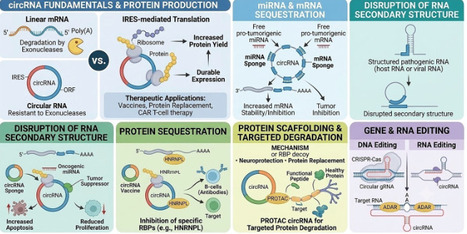
Circular RNAs (circRNAs) have emerged as a promising class of therapeutic molecules distinguished by their covalently closed topology, which provides exceptional exonuclease resistance, prolonged intracellular stability, and sustained protein expression. These properties, combined with reduced innate immunogenicity and capacity for cap-independent translation, position circRNAs as attractive candidates for vaccines, oncology therapeutics, and treatments for genetic and neurological disorders. Parallel advances in chemical biology have significantly expanded the synthetic toolkit for generating circRNAs, complementing traditional enzymatic ligation and ribozyme-based approaches with efficient chemical, chemoenzymatic, and bioorthogonal circularization strategies that enable scalable production and incorporation of diverse chemical modifications. This review integrates the biological roles of circRNAs with a comparative analysis of emerging synthetic methods, highlighting their mechanistic principles, advantages, and limitations. Advances in delivery platforms and multi-omics validation further strengthen the translational potential of engineered circRNAs as next-generation RNA therapeutics.
|
|
Scooped by
mhryu@live.com
September 24, 10:57 PM
|
Reliable constitutive promoters for non-model bacteria are lacking, resulting in a bottleneck for genetic tool development. Existing computational promoter predictors are trained on model Gammaproteobacteria and degrade on phylogenetically distant or compositionally atypical genomes. Here we present ProFinder, a computational method that integrates three biologically informed criteria for promoter prediction: a conserved 98-gene constitutive marker panel, an empirically derived intergenic search window, and a 72-motif σ70 motif catalogue built from diverse lineages. From an input bacterial assembly, ProFinder returns a ranked shortlist of putative constitutive promoters. It matches the precision of full-genome classifiers and is more robust to GC extremes. Applied to 56,742 bacterial genomes spanning 149 phyla, ProFinder returned candidate promoters for 99.76%, delivering a pan-bacterial catalogue of pre-computed constitutive promoter parts to accelerate chassis development across the bacterial tree. https://plabase.cs.uni-tuebingen.de/profinder/
|
|
Scooped by
mhryu@live.com
September 24, 4:34 PM
|
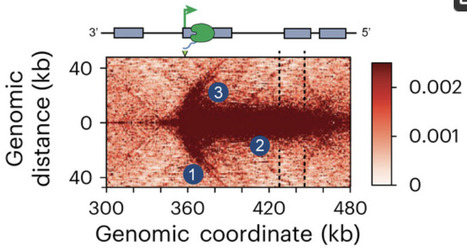
Recent high-resolution (≈500 bp) Hi-C experiments reported contact maps with unusual patterns around highly expressed bacterial DNA loci. These patterns, described as “arched stripes” and “bundled domains”, extend over nearly 100 kbp. We performed Brownian Dynamics simulations with a specially designed coarse-grained model to rationalize these findings. The main feature of the model is that it takes explicitly into account the waves of positive (respectively, negative) supercoiling generated by the translocating polymerase downstream (respectively, upstream) of its position. Contact maps computed from the simulations also display the arched stripe and bundled domain patterns for above-threshold values of the rate of twist injection. Computed DNA conformations indicate that these patterns reflect an extraordinarily entangled DNA geometry, which involves both plectonemic and toroidal supercoiling, with some DNA segments experiencing both of them simultaneously. Moreover, DNA segments located on each side of the polymerase systematically wind around tracts located on the other side, which is a purely out-of-equilibrium effect driven by the continuous injection of twist. The present work therefore reveals that repeated transcription of a DNA locus systematically brings into contact DNA segments separated by several tens of kbp, which may eventually contribute to allosteric modulation and long-range communication.
|
|
Scooped by
mhryu@live.com
September 24, 3:42 PM
|
Despite the significant progress made in recent years, current AI-driven protein engineering methods often suffer from iterative experimental validation, limited success rates, modest improvements, and/or high computational costs. Moreover, their utility for evolving plant proteins remains unexplored. Here we present unZipro, an efficient, scalable, and generalizable framework for zero-shot, in silico protein evolution. unZipro integrates a compact, pre-trained inverse folding model with meta-learning to derive family-specific fitness landscapes. We demonstrate unZipro’s ability to directly identify high-activity variants from minimal libraries (∼10 candidates) with an average success rate of 61% across nine diverse proteins, achieving up to a 28-fold increase in the gene-editing activity of T5E-CasΦ2 fusion variants. Leveraging unZipro, we developed state-of-the-art plant gene-editing nucleases, superior firefly luciferase variants, enhanced rice transcription factors, and barley-derived antiviral proteins with elevated potency. Overall, unZipro represents a new paradigm for cost-effective, widely accessible, and transformative protein engineering in biology, biotechnology, and agriculture.
|
|
Scooped by
mhryu@live.com
September 24, 12:12 PM
|
TnpB nucleases, the evolutionary progenitors of CRISPR-associated Cas12 enzymes, are transposon-encoded, RNA-guided endonucleases found throughout bacteria. Independent of the trajectory towards adaptive immunity, TnpB nucleases have also recurrently given rise to TnpB-like nuclease-dead repressors (TldRs), a family of programmable RNA-guided transcription factors, though the physiological roles of most TldR clades remain unclear. Recently, we identified a TldR clade associated with bacterial ABC transporter operons, but this clade has not been characterized in any native host, leaving the biological significance of its predicted regulatory function unknown. Here, we demonstrate direct in vivo repression of the oligopeptide permease (opp) binding protein OppA in Enterococcus faecalis, implicating TldR in shaping the substrate repertoire of bacterial peptide import machinery. Phylogenetic and comparative genomic analyses reveal that bacterial genomes typically encode multiple, structurally conserved but functionally diversified OppA paralogs, suggesting that TldR-mediated repression could enable selective tuning of transporter composition. To define the structural basis of this regulatory specificity, we used cryo–electron microscopy to capture an oppF-associated TldR in multiple functional states, revealing a conserved bilobed architecture and a TAM recognition mechanism inherited from TnpB ancestors. Together, these findings define the structural, genetic, and evolutionary basis of a widespread RNA-guided regulatory system domesticated from mobile genetic elements to tune peptide transport in bacteria.
|
|
Scooped by
mhryu@live.com
September 24, 12:00 PM
|
Engineered bacteria and engineered probiotics are emerging living therapeutic platforms for intestinal diseases, supported by advances in synthetic biology, genetic engineering, and microbiome technologies. This study aimed to characterize the research landscape, knowledge structure, research hotspots, and emerging trends of engineered bacteria and engineered probiotics for intestinal disease therapy using bibliometric and knowledge mapping approaches. Publications were retrieved from the Web of Science Core Collection and Scopus databases. 499 publications published between 2015 and 2026 were included. The search was completed on July 3, 2026. R, Python, VOSviewer, and CiteSpace were used to analyze annual publication trends, country/region, institution, author and journal distributions, keyword co-occurrence and bursts, co-cited references, and research frontiers. Keyword analysis identified inflammatory bowel disease, gut microbiota, probiotics, engineered bacteria, engineered probiotics, synthetic biology, intestinal barrier, drug delivery, colorectal cancer, and immunotherapy as major research hotspots. Co-cited reference and timeline analyses indicated a shift in research attention from conventional probiotic-mediated anti-inflammatory effects, mucosal immune regulation, and intestinal barrier protection toward bacterial chassis selection, enhanced colonization, self-regulated genetic circuits, probiotic-based biomaterials, sustained-release delivery systems, and engineered bacteria-mediated antitumor therapy. The bibliometric evidence indicates that recent research attention is increasingly focused on programmable living therapeutic strategies. Environmental sensing, local therapeutic delivery, sustained activity, and multifunctional design features are capabilities reported in the underlying literature and represented among the emerging themes identified in this analysis, rather than therapeutic performance directly established by the bibliometric data. Future research should further address biosafety, genetic stability, spatiotemporal controllability, intestinal colonization, delivery efficiency, and clinical translation.
|
|
Scooped by
mhryu@live.com
September 24, 1:48 AM
|
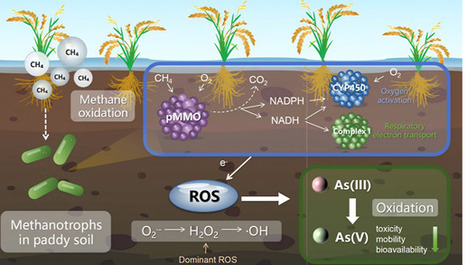
Reactive oxygen species (ROS) are increasingly recognized as important oxidants in soil redox processes, with microbially produced ROS contributing broadly to elemental transformations. Given the active methane oxidation in paddy soils, methanotrophs have considerable potential to generate ROS yet their role in As(III) oxidation remains unclear. Here, we identify methanotroph-derived ROS as an important yet previously overlooked pathway for As(III) oxidation in paddy soils. Soil microcosm experiments and pure culture experiments revealed that methane oxidation enhanced ROS-mediated As(III) oxidation, with H2O2 identified as the dominant ROS. Inhibitor assays and functional gene analyses indicated that oxygen activation and respiratory electron transfer were closely associated with ROS generation during methane oxidation. These findings reveal methanotroph-derived ROS as a distinct route contributing to As(III) oxidation beyond dedicated arsenite oxidases. By revealing an overlooked connection between methane metabolism and arsenic transformation, this work expands our understanding of arsenic biogeochemistry and provides a conceptual basis for the coordinated mitigation of methane emissions and arsenic toxicity in agroecosystems.
|
|
Scooped by
mhryu@live.com
September 24, 1:31 AM
|
While bacterial sensor histidine kinases (SHKs) are widespread as natural molecular biosensors, tools for high-throughput characterization of SHK signaling phenotypes are limited, hindering widespread implementation of bacterial-based sensing. Here, we developed a synthetic two-component signaling system that reports chimeric SHK signaling through a standardized fluorescence readout. With this synthetic system, we screened a library of chimeric DcuS/EnvZ SHKs to characterize sequence-function relationships within the DcuS sensory and transmembrane domains. We quantified the effects of 1173 mutations on signaling outputs in the presence of fumarate, a native DcuS ligand, as well as aspartate for which DcuS has minimal affinity for. We identified eleven positions across the DcuS domains which significantly alter aspartate responsiveness and additionally reported a role for cytoplasmic N-terminal residues in determining SHK signaling outputs. In future studies, this framework will expedite design of biosensors for novel ligands by enabling high-throughput screening of mutagenized libraries of natural SHKs.
|
|
Scooped by
mhryu@live.com
September 24, 1:21 AM
|
The timely identification of drug-resistant pathogens and rapid differentiation of antibacterial mechanisms are critical in combating the escalating crisis of antimicrobial resistance. However, traditional broth culturing methods are inherently time-consuming and lack single-cell sensitivity. In this study, we reported a highly responsive biosensing platform based on single-entity impact electrochemistry (SIE) to rapidly differentiate bacterial activity at the single bacterium level. This method utilized p-benzoquinone (BQ) and BQ-K3Fe(CN)6 as redox mediators that were continuously reduced by the bacterial respiratory chain. Upon the collision of an individual bacterium with the ultramicroelectrode, these mediators were re-oxidized, generating transient current spikes that serve as a direct indicator of cellular viability. By tracking these distinct electrochemical signals, we successfully discriminated the responses of E. coli to three antibacterial agents. Specifically, the heavy metal stress induced by Pb2+ exposure resulted in a progressive decline in collision spike amplitude, with the total transferred charge decreasing from (7.51 ± 0.48) × 10–2 pC to (2.50 ± 0.14) × 10–2 pC per bacterium. The bacteriostatic effect of doxycycline yielded negligible immediate signal change due to its protein synthesis inhibition mechanism. In contrast, the membrane-disrupting effect of polymyxin B triggered a rapid cessation of collision signals alongside an increase in total current amplitude due to the leakage of intracellular redox contents. Based on these unique electrochemical signatures, we successfully identified polymyxin B-resistant E. coli mutants and achieved rapid validation of alternative antibiotics against this drug-resistant strain. This work expanded the analytical capabilities of SIE, offering a highly efficient platform for bacterial phenotypic screening and drug resistance monitoring.
|
|
Scooped by
mhryu@live.com
September 24, 12:36 AM
|
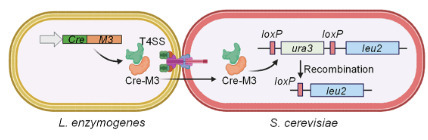
Interkingdom competition between bacteria and fungi in nutrient-limited environments drives microbial community dynamics, yet the molecular mechanisms enabling bacterial dominance during bacterial-fungal interaction remain poorly characterized. This study reveals a paradigm-shifting role for bacterial type IV secretion system (T4SS) by demonstrating that a specialized bacterial-killing T4SS (T4SSBK) in Lysobacter enzymogenes serves as a universal cross-kingdom antifungal weapon. Combining genetic, biochemical, and bioinformatical approaches, we show that T4SSBK mediates direct contact-dependent suppression of phylogenetically diverse fungi—including unicellular yeasts and filamentous species—through delivery of a conserved deoxyribonuclease effector, LtdD. Structural characterization reveals that LtdD homologs are evolutionarily conserved across T4SSBK-harboring bacterial lineages, suggesting widespread ecological deployment of this antifungal strategy. These findings overturn the classical dogma of T4SSBK as an antibacterial apparatus and establish it as a multifunctional microbial combat system capable of trans-kingdom interference. By elucidating a DNA-targeting mechanism of fungal growth inhibition, our work not only redefines the ecological role of T4SSBK in microbial warfare but also provides a molecular blueprint for engineering DNA-based antifungal therapies.
|
|
Scooped by
mhryu@live.com
September 24, 12:14 AM
|
Despite sharing nearly identical enzymes, strains of the same microbial species display wide variability of growth rates when growing on the same nutrients. Here, we show that such growth rate variability can emerge as a consequence of evolutionary adaptation to different patterns of environmental fluctuations. We develop a mathematical model combining cellular proteome allocation with eco-evolutionary dynamics in fluctuating environments. We find that different patterns of environmental fluctuations select for distinct growth profiles. Slow-growing strains repeatedly outcompete fast-growers when evolved in rapidly changing environments. In a range of environments with asymmetric nutrient availability, evolution reproducibly leads to the robust diversification of two coexisting strains. We develop a theoretical framework based on adaptive dynamics which quantitatively predicts these evolutionary outcomes and explains them in terms of the growth-lag tradeoff that all cells face. Finally, we show that the model can reproduce several patterns in growth-rate data from closely-related strains. Our results highlight that bacterial growth rates can rapidly adapt to their recent environmental history by proteome allocation alone, in ways that often oppose expectations based on nutrient quality.
|