 Your new post is loading...

|
Scooped by
mhryu@live.com
September 26, 11:01 AM
|
Decolorization remains a major challenge in the treatment of dye-containing wastewater. Here, we engineered E. coli with a chromosomally integrated minimal Psl polysaccharide synthesis operon, pslA-G, to create a Psl biofilm-based living bioflocculant enabling autonomous dye capture, sedimentation, and controllable recovery. The engineered bioflocculant exhibited rapid self-flocculation, achieving approximately 85% sedimentation within 8 h. The bioflocculant mediated the removal of Reactive Red 24, Acid Orange 7, and Congo red in a dye-dependent manner, achieving its highest removal efficiency of approximately 90% for Congo red. Importantly, dye-loaded aggregates could be disassembled via PslG-triggered Psl polysaccharide hydrolysis, enabling controlled dye release. This work establishes a proof-of-concept living bioflocculation approach that integrates capture, sedimentation, and recovery for potential dye wastewater treatment.
|
|
Scooped by
mhryu@live.com
September 26, 10:37 AM
|
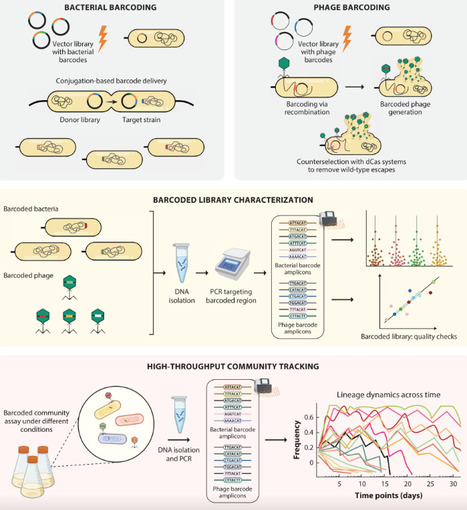
Bacteriophages, viruses that parasitize bacteria, hold tremendous potential as antimicrobial agents, microbiome modulators, and industrial biocontrol tools; yet clinical and environmental applications remain frustratingly inconsistent. Decades of research on isolated phage-bacteria pairs have revealed fundamental mechanisms governing infection specificity, coevolutionary arms races, and resistance trade-offs. These foundational studies, however, do not help predict outcomes when phages encounter multi-species assemblages characteristic of natural ecosystems. In this review, we integrate recent advances examining how interaction complexity shapes phage efficacy across four scales, gradually from simple phage-bacteria pairs to phage-bacterial communities. At every scale, emergent properties arise from complex interactions. Dissecting these dynamics requires technologies that can track multiple lineages simultaneously. DNA barcoding, which inserts unique genetic identifiers into bacterial and phage genomes, offers a promising solution. While barcoding all members in a synthetic community is unrealistic, we propose that even foundational reference sets of barcoded phage-bacteria pairs would enable systematic investigation of resistance evolution, competitive interactions, and functional outcomes in realistic contexts. Bridging laboratory insights and field performance demands integrating genetic engineering, high-throughput tracking, functional profiling, and predictive modeling into a coordinated research framework.
|
|
Scooped by
mhryu@live.com
September 25, 4:33 PM
|
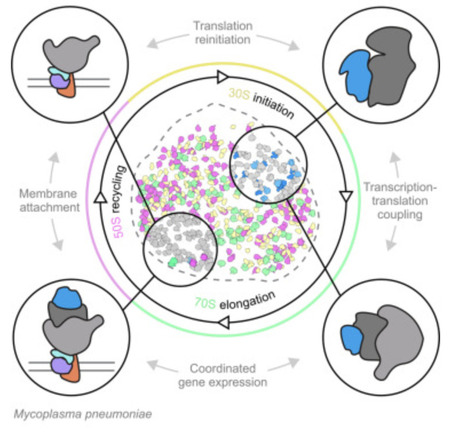
Translation is a central process in gene expression. Its regulation is complex, depends on factors that include cell state and the subcellular environment, and is subject to modulation via crosstalk to processes such as transcription or translocation. Here, we used cryo-electron tomography of native and antibiotic-perturbed Mycoplasma pneumoniae cells to resolve 140 maps that recapitulate bacterial translation during the initiation, elongation, and recycling phases. We visualized multiple transcription-translation complexes, allowing us to propose a threading-based translation reinitiation mechanism and to provide structural evidence for a long-hypothesized supercomplex that coordinates transcription, translation, and membrane attachment. We resolved abundant membrane-associated large ribosomal subunits and suggest that dissociation from membranes depends on the conditional initiation of new translation, consistent with a potentially conserved mechanism in mammalian cells. This work visualizes the multilayered control of bacterial translation and demonstrates the power of in-cell structural biology to investigate regulatory circuits in gene expression.
|
|
Scooped by
mhryu@live.com
September 25, 4:20 PM
|
A major goal in bottom-up synthetic biology is the construction of multicellular synthetic systems capable of coordinated and robust collective behaviours. However, robustness is often limited by noise and variability arising from increased molecular complexity. Whilst communication has been implemented in synthetic multi-cellular systems, the ability for communication to suppress cell free gene expression variability in populations of synthetic cells remain unexplored. To address this, we encapsulated the Lux and Las quorum sensing gene circuits in lipid vesicles under cell-free conditions to test the effect of communication on reducing cell-free gene expression variability across the population. Our results show that communication, limiting expression resources, and membrane surface effects can reduce gene expression variability. Resource limited Gillespie simulations for transcription and translation show that communication-mediated coupling reduces population-level expression noise under constrained and excess resource conditions. Together, our work provides simple strategies to reduce gene expression variability and thereby improve robustness in synthetic multicellular systems, an important criteria for the future applications of synthetic cells.
|
|
Scooped by
mhryu@live.com
September 25, 3:25 PM
|
Bacteria adapt to changing environments to ensure survival. Responding to new environmental conditions and internal states through regulation of gene expression is a fundamental biological process. One group of regulators of gene expression is regulatory RNAs. Among their many functions, there is a group of relatively short RNA molecules (‘small RNAs’, sRNAs) which typically modulate gene expression by base-pairing to a cognate target RNA or by directly binding to a protein, leading to a regulatory output. Although regulatory sRNAs have been studied in great detail in many medically important bacteria, we know much less about them in the World Health Organization priority pathogen Acinetobacter baumannii. In this review, I outline our current understanding and highlight recent progress of sRNA-mediated gene regulation in A. baumannii and provide an outlook for future areas to study.
|
|
Scooped by
mhryu@live.com
September 25, 3:18 PM
|
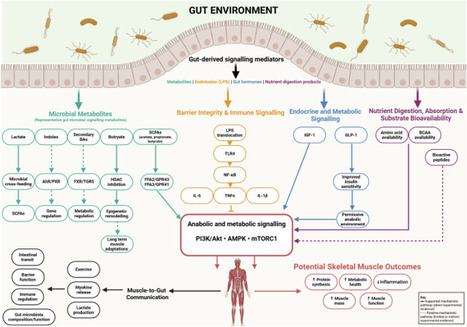
Skeletal muscle has a profound influence on metabolic health, functional capacity and resilience across the lifespan. Beyond dietary protein and physical activity, the gut microbiome may have the capacity to impact skeletal muscle mass and function through the bidirectional network termed the gut-muscle axis (GMA). Fermented protein foods (FPFs) are protein rich matrices transformed by microbial activity that integrate modified protein structures, bioactive peptides, and live microorganisms, or components thereof, which could modulate skeletal muscle physiology. Here, we review mechanistic, preclinical and human evidence concerning the potential of FPFs to influence skeletal muscle health through GMA modulation. Although emerging human studies suggest favourable effects on metabolic regulation, inflammatory pathways and gut microbial ecology, direct evidence that FPFs impact muscle protein synthesis, muscle mass or function remains limited. Furthermore, the literature is characterised by considerable heterogeneity in interventions and outcome measures. Studies integrating comprehensive microbiome characterisation, multi-omics approaches and direct skeletal muscle phenotyping are needed to determine whether FPFs confer advantages over conventional protein foods or more established microbiome targeted strategies such as probiotic supplementation. Such studies will be essential to elucidate their role in targeted nutritional strategies for ageing, metabolic disease, muscle atrophy, and physical performance.
|
|
Scooped by
mhryu@live.com
September 25, 2:08 PM
|
Genes function within dense networks of interactions, where phenotypes often depend on the relative expression levels rather than loss or gain of function. Most genetic interactions in Saccharomyces cerevisiae have been identified using deletions or overexpression, leaving dosage-dependent interactions underexplored. Progress in this area requires transcriptional control systems that enable simultaneous, precise regulation of multiple genes with minimal cross-talk. Here, we expand the recently developed Well-tempered Controller (WTC846), a TetR-repressible system that provides precise, graded control of gene expression in response to anhydrotetracycline. We extend this framework to two orthogonal repressor-inducer pairs: LexA-hER/β-estradiol and LacI/IPTG, establishing three compatible transcriptional controllers. We demonstrate robust, tunable regulation of endogenous genes spanning low to high expression levels. We achieve simultaneous, graded, and precise double and triple gene control, validating known dosage-dependent interactions within the anaphase signaling network and uncovering additional phenotypes. These orthogonal controllers provide a versatile toolkit for dissecting dosage-sensitive gene-gene interactions and facilitate systematic exploration of complex genetic networks in yeast.
|
|
Scooped by
mhryu@live.com
September 25, 1:34 AM
|
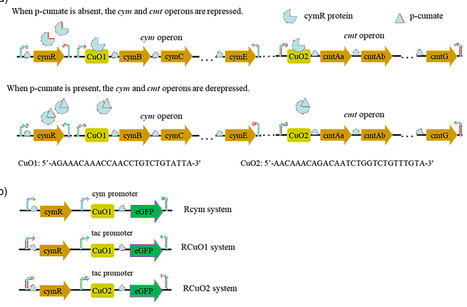
In this study, we developed two novel cumate-inducible expression systems by engineering distinct cumate-responsive operators, CuO1 and CuO2, respectively derived from the cym and cmt operons in P. putida KT2440. We assessed the expression strength of the constructed systems and optimized inducer concentrations using eGFP fluorescence intensity as a reporter. Through systematic promoter optimization, operator architecture optimization, and quantitative benchmarking, we achieved substantial improvements in system performance. Finally, we applied the optimized system to bio-transform limonene into perillyl alcohol via a heterologous cytochrome P450 to achieve an increase in the production. Cumate-inducible expression system R2CuO1 demonstrated superior gene expression strength than the IPTG-inducible system Ilac. We successfully implemented our optimized cumate-responsive platform for perillyl alcohol bio-production from limonene, achieving a titer of 40.93 mg·L⁻¹, 2.1 times higher than that of the conventional lac expression system.
|
|
Scooped by
mhryu@live.com
September 25, 1:14 AM
|
Ribosome hibernation is a conserved bacterial stress-response mechanism that promotes translational shutdown and enhances survival under adverse conditions, contributing to persistence and tolerance to ribosome-targeting antibiotics. Here, we report high-resolution cryo-electron microscopy (cryo-EM) structures (2.5–2.8 Å) of hibernating 70S ribosomes from four clinically important ESKAPE pathogens: Pseudomonas aeruginosa, Enterobacter hormaechei, Klebsiella quasipneumoniae, and Acinetobacter baumannii. Structural analyses identified the bound hibernation factors as HPF in P. aeruginosa and E. hormaechei, and YfiA in K. quasipneumoniae and A. baumannii. Despite sequence divergence, HPF and YfiA adopt a conserved fold and occupy the same ribosomal binding site, interacting primarily with 16S rRNA and ribosomal proteins uS7 and uS9 and occupying the A- and P-sites while extending toward the E-site. Comparative analyses revealed a conserved core interaction network, including contacts with functionally important modified 16S rRNA nucleotides, alongside species-specific adaptations that preserve overall ribosome-binding architecture. Analysis of hibernating ribosome populations uncovered substantial heterogeneity in E-site tRNA occupancy, bS21 association, and mRNA binding among species, suggesting that these features are species-dependent rather than determined solely by the identity of the hibernation factor. Together, these structures provide a comprehensive comparative view of HPF- and YfiA-mediated ribosome hibernation across major Gram-negative pathogens, revealing conserved molecular principles and species-specific adaptations that expand our understanding of bacterial translational dormancy and establish a structural framework for future antibacterial strategies targeting ribosome hibernation. Cryo-EM structures of hibernating ribosomes from four Gram-negative pathogens reveal HPF/YfiA-mediated translation inhibition and species-specific features.
|
|
Scooped by
mhryu@live.com
September 25, 12:59 AM
|
The history of cheesemaking is deeply intertwined with the evolution of microbial communities, from spontaneous fermentation to modern, standardized practices. The rapid technological changes of the last century likely induced profound alterations in cheese microbial communities, yet this remains largely underexplored. Using shotgun metagenomics and 16S rRNA amplicon sequencing, we examined microbial community changes in Raclette du Valais, a traditional Swiss cheese, using preserved wheels from 1875 to 2017 from the same Alpine dairy. Our results reveal that significant differences in microbial community composition coincide with changes in production practices. The oldest cheese harbored a distinct bacterial community, dominated by Lactiplantibacillus paraplantarum, Streptococcus thermophilus, Pseudolactococcus laudensis, and gut-associated taxa. Antibiotic-resistance genes mirrored historical antibiotic use, lactic acid bacteria domestication predated the studied period, and bacteriophage genera from 1875 were already comparable to those of modern cheese factories. These findings highlight how human practices have shaped cheese microbiomes over time.
|
|
Scooped by
mhryu@live.com
September 25, 12:53 AM
|
Functional redundancy is a key biological concept that offers critical insights into microbial ecosystem stability and responses to environmental perturbations. Existing methods to quantify redundancy typically rely on gene annotations as functional units, limiting their ability to capture complex or partially characterised traits and making analyses from metagenomic data—often fragmented or incomplete—challenging. Here, we present miFRED (microbial Functional REDundancy), an accessible computational approach to quantify functional redundancy of microbial phenotypes and communities based on phenotypic rather than genetic annotations. Leveraging 86 machine-learning-predicted phenotypes as functional units, miFRED bridges the genotype–phenotype gap and enables interpretable and accurate assessment of redundancy at both community and single phenotype levels, as demonstrated on simulated communities. As case studies, miFRED was applied to over 300 metagenomic samples from anaerobic systems, to a longitudinal dataset of a gut microbiome subject to antibiotic treatment and 100 marine and soil metagenomes. Across these applications, miFRED elucidated relationships between redundancy, community structure and functional organisation. Comparison to gene annotation-based analyses highlighted the improved interpretability of phenotype-based redundancy estimates, which allowed clearer resolution of functional changes associated with microbiome perturbation and recovery in the human gut dataset. In anaerobic digestion communities, analyses considering environmental conditions uncovered changes in redundancy, complexity and functional profiles with rising temperatures, with more extreme conditions favouring simpler, more redundant communities and shifts in redundant functions. Using phenotype-based functional units, miFRED provides a practical and general framework for consistent functional redundancy analyses across environments and metagenomic datasets. By interpreting redundancy patterns in the context of community organisation and environmental factors, it enables exploration of microbial functional landscapes across environmental conditions in both natural and engineered ecosystems.
|
|
Scooped by
mhryu@live.com
September 25, 12:35 AM
|
Förster resonance energy transfer (FRET) is commonly used to monitor protein-protein interactions in situ. The high spatiotemporal resolution and facile implementation inside complex molecular environments have spearheaded FRET's widespread adoption in biosensing. Despite these advantages, current FRET biosensors are largely restricted to the detection of the presence/absence of individual inputs and are thus unable to sense several multiplexable inputs simultaneously within complex milieu of biological environments. In this work, we introduce a generalizable strategy to construct genetically encoded protein-based FRET biosensors capable of recognizing multiple inputs following Boolean logic-type (YES/OR/AND) operations. These topologically specified FRET sensors powerfully expand the input capacity in sensing protein-protein interactions while providing a user-programmable platform for monitoring heterogeneous biological activities both in vitro and in living cells.
|
|
Scooped by
mhryu@live.com
September 25, 12:24 AM
|
Bacterial cultures entering stationary phase (SP) undergo complex physiological alterations, helping the cells to survive when medium resources are exhausted. The onset of various stress responses underlying SP physiology is generally believed to be due to reactions of individual cells to the environmental cues such as starvation, toxic metabolites, etc. The SP physiological state makes bacteria unsuitable for the replication of most bacteriophages; however, some phages are able to infect and multiply in them. We investigated E, coli phage DH23 growth in SP cultures of E. coli MG1655 infected at different hours post inoculation (ages). Under our conditions the cells enter SP at about 6 h, but the phage replication was possible till 11h and then dropped abruptly by 13h of culture aging, indicating an abrupt physiological change to deeper dormancy during SP. The onset of this phage-inhibiting middle-SP dormancy (MSPD) turned out to be mediated by intercellular communication mediated by the middle-SP signal particles (MSP) which are larger than 100 kDa and contain both RNA and DNA. These MSP are inactivated by RNAse or by DNAse, enabling phage growth in 14h-old cultures and lifts the tolerance of such cultures to kanamycin. Moreover, the RNAse or DNAse treatment makes 24h culture spent media suitable for additional cell growth, and cultures initiated in fresh LB supplemented with RNAse reach an OD600 about 1.5 times higher compared to the untreated control. This indicates that MSP signaling influences cell physiology well before the MSPD onset and helps the population cease growth pre-emptively to save about 1/3 of medium resources to support the viability during SP.
|
|
|
Scooped by
mhryu@live.com
September 26, 10:57 AM
|
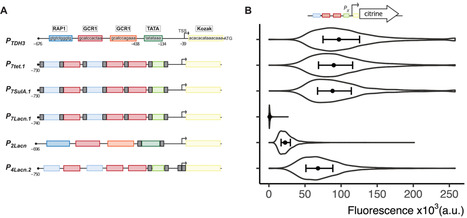
Yeasts serve as premier eukaryotic hosts for microbial cell factories, enabling the production of recombinant proteins, biofuels, and high-value natural products. Precise transcriptional control is paramount for balancing complex metabolic pathways and maximizing target product yields. Promoters, as the key regulatory elements governing transcription initiation, have thus become a focal point of metabolic and synthetic biology engineering. This review surveys promoter architecture, function, and engineering in yeast. It outlines promoter structure, from core elements to upstream regulatory sequences, and reviews current and emerging strategies for discovery, optimization, and de novo design, including random mutagenesis, combinatorial assembly, rational design based on transcription factor binding sites, intron-mediated enhancement, cross-species approaches. Importantly, this review highlights the rapidly growing role of machine learning (ML) and artificial intelligence (AI) in promoter engineering, from predictive modeling of promoter strength to in silico generation of synthetic variants. Special emphasis is placed on synthetic promoter engineering to yield tunable and inducible toolkits. The review also highlights applications in yeast cell factories, such as metabolic pathway optimization, dynamic regulation, high-throughput strain screening, and recombinant protein production. By summarizing these recent advances, it serves as a practical resource for researchers aiming to achieve precise metabolic control and improve bioproduction outcomes in yeast.
|
|
Scooped by
mhryu@live.com
September 25, 4:35 PM
|
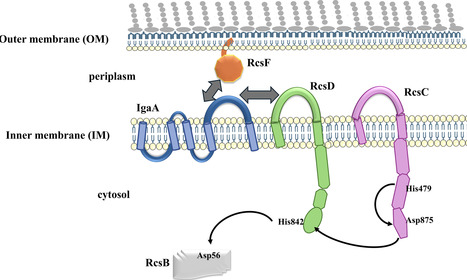
Two-component systems (TCS) formed of sensor histidine kinases (HK) and response regulators (RR) are the primary prokaryotic signal transduction pathways. In Enterobacteriaceae, some TCS evolved architectural complexity, by integrating auxiliary proteins into the HK– RR dyad. The Regulator of Capsule Synthesis (Rcs), a conserved phosphorelay system in Enterobacteriaceae, recruits several auxiliary proteins, including an outer membrane lipoprotein, RcsF, which senses cell envelope threats and transduces the signal to downstream components. A second auxiliary protein located in the inner membrane, RcsD, transfers the phosphoryl group from the hybrid histidine kinase RcsC to the response regulator RcsB. RcsD is formed of a large periplasmic domain (Asn43-Asn308) sandwiched between two transmembrane helices and a cytosolic domain. For RcsD, the role and evolutionary benefit of maintaining a large periplasmic domain while the main phosphostransfer reaction occurs in the cytosol is not clear. Here, we show that RcsF and RcsD exhibit strong co-evolutionary coupling independent of host speciation (partial Mantel r = 0.950, p < 0.0001). Structure-guided docking and 500-ns molecular dynamics simulations predicted a stable interaction between RcsF and RcsD (MM-GBSA ΔG ≈ –95 kcal/mol), suggesting their functional coupling. Functional assays in Escherichia coli K12 MG1655 revealed that RcsD periplasmic domain represses basal Rcs activity in unstressed cells (~5-fold derepression) yet is essential for stress-induced activation (1.9–2.5-fold). Overexpression of rcsF beyond the chromosomal level induces Rcs signal activation only when the RcsD periplasmic domain is present. These findings demonstrate how co-evolution of an auxiliary protein generates novel regulatory function in the Rcs phosphorelay and provide insights into the role of RcsD periplasmic domain in stress signal transduction.
|
|
Scooped by
mhryu@live.com
September 25, 4:28 PM
|
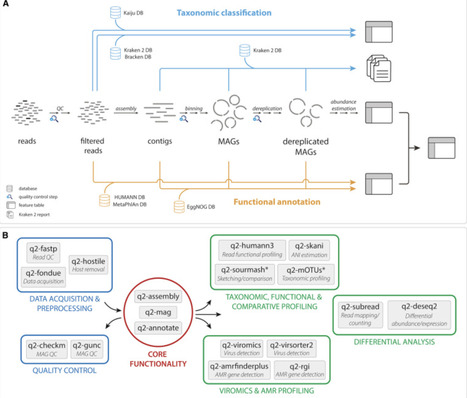
Metagenome sequencing has revolutionized functional microbiome analysis across diverse ecosystems but is fraught with technical hurdles. We introduce MOSHPIT (MOdular SHotgun metagenome Pipelines with Integrated provenance Tracking; https://moshpit.qiime2.org)—software built on the QIIME 2/rachis framework (Q2F) that integrates best-in-class CAMI II- and LEMMI-validated metagenome tools with robust provenance tracking and multiple user interfaces—enabling streamlined, reproducible metagenome analysis for all expertise levels. By building on Q2F, MOSHPIT enhances scalability, interoperability, and reproducibility in complex workflows, democratizing and accelerating discovery at the frontiers of metagenomics.
|
|
Scooped by
mhryu@live.com
September 25, 4:14 PM
|
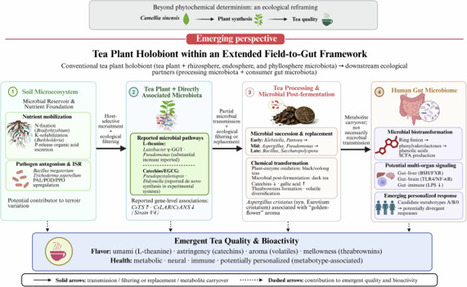
Across cultivation, processing, and consumption, tea quality and bioactivity are shaped by plant-microbiota interactions. This review develops a field-to-gut framework centered on the tea plant holobiont and downstream microbial partners. Within that frame, rhizosphere and endophytic microbiota are examined as regulators of flavor precursors, host metabolism, and defense. Processing microbiota are considered for remodeling tea chemistry and gut microbiota for bioactivating tea compounds, with microbial transmission, ecological replacement, and metabolite carryover distinguished and translational directions identified in microbiome-guided cultivation, controlled fermentation, and metabotype-informed nutrition.
|
|
Scooped by
mhryu@live.com
September 25, 3:19 PM
|
FAIDR-Desi is a non-technical user interface for design of intrinsically disordered regions (IDRs) based on greedy optimization of sequence features (simple sequence statistics correlated with IDR function, including amino acid composition, residue patterning and short linear interaction motifs), using more features (127) than other IDR design approaches. FAIDR-Desi can be used to design synthetic IDR mimics to establish feature sufficiency for function, or to knock out features to show necessity for function, exemplified with experiments on the yeast Cox15 mitochondrial targeting signal.
|
|
Scooped by
mhryu@live.com
September 25, 2:55 PM
|
Protein synthesis forms the very basis of life. Cells rely on a sophisticated machinery of factors for the translation of an RNA template into a correct amino acid sequence. We owe a lot of our understanding of this process to specific small-molecule modulators. Since the discovery of antibiotics inhibiting bacterial protein synthesis, small molecules have served as probes to dissect the translation apparatus and as medications to fight disease. Advances in sequencing-based techniques and structural methods now provide for a highly detailed mechanistic understanding. Recent evidence shows that many translation modulators act in an RNA- or a peptide-sequence-selective manner. These molecules present exciting opportunities to better understand the translation machinery and provide new venues to modulate the expression of certain protein subpopulations. In this Review, we summarize recent findings on sequence-selective translation modulators, with emphasis on eukaryotes, the techniques that enabled their discovery, and offer an outlook into their potential applications. Small-molecule modulators of protein synthesis are invaluable tools for dissecting the translation apparatus. This Review summarizes the mechanisms of molecules that disrupt translation in an amino acid or mRNA sequence-dependent manner, with focus on eukaryotic systems. It discusses relevant techniques used in their characterization and offers perspectives into their potential applications.
|
|
Scooped by
mhryu@live.com
September 25, 2:02 PM
|
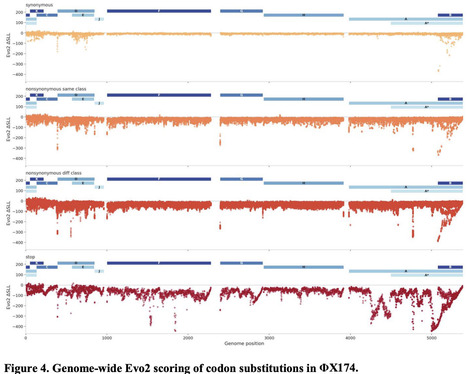
Reliable biological prediction by AI is most likely to emerge first in the simplest systems with rich datasets and the fastest opportunities for testing and refinement. Phages with small genomes are an ideal testbed. Decades of experimental work have created an unusually information-rich literature benchmark that sits largely outside the sequence repositories typically used to train genome language models (GLMs). Recent work has shown that GLMs such as Evo2 can generate viable whole bacteriophage genomes, demonstrating that genome-scale biological design is possible. The next question is more mechanistic: can such models correctly predict the effects of simple, local sequence changes? Here, we evaluated Evo2 against experimental mutation data from two model phages: the single-stranded RNA phage MS2 and the single-stranded DNA phage ΦX174. We first addressed whether Evo2 sequence log-likelihood scores could distinguish viable from nonviable mutations, and then whether models trained on Evo2 embeddings were predictive of function. Across both phages, Evo2 captured expected sequence-level constraints: stop codons were generally penalized, synonymous substitutions had higher likelihood than nonsynonymous substitutions. Evo2 distinguished among synonymous codons in ways only weakly explained by host codon usage. However, for MS2, these capabilities did not translate into robust biological predictions. Specifically, Evo2 ΔSLL failed to distinguish functional from nonfunctional mutations in the lysis gene, an overlapping viral region that appears to be a particularly hard test case. In ΦX174, performance was stronger but still modest, and much of the apparent signal could be explained by simple covariates such as nonsense mutations, genomic position, and nucleotide distance from the reference. Together, these results introduce phages as a tractable proving ground for stress-testing GLMs against experimentally grounded genotype-to-phenotype tasks. More broadly, they provide a durable framework for identifying what data and model ingredients are required for biologically reliable prediction.
|
|
Scooped by
mhryu@live.com
September 25, 1:15 AM
|
Fungal bio-leaching, as a green and sustainable technology for metal recovery, demonstrates unique advantages in addressing growing global metal demand and utilizing secondary resources. This review systematically summarizes recent progress and technological advances in fungal bioleaching for metal recovery. Fungi solubilize metals through three core mechanisms, acidolysis, complexolysis, and redoxolysis, mediated by organic acids (citric, oxalic, gluconic), while cell wall functional groups enable biosorption. Most frequently used genera in modern bioleaching (Aspergillus, Penicillium, Trichoderma) have achieved remarkable recoveries from e-waste (Cu, Li, Co up to 100%), rare earth elements (consortia up to 76%), tailings, and spent catalysts. Optimization of key parameters (pH, temperature, pulp density) and application of intelligent strategies (response surface methodology, machine learning) have further enhanced leaching efficiency. Strain engineering and synthetic biology offer new avenues for constructing hyper-efficient strains. Despite remaining bottlenecks such as slow kinetics and scale-up difficulties, fungal bioleaching holds broad industrial prospects for advancing the circular metal economy and the green metallurgical transition.
|
|
Scooped by
mhryu@live.com
September 25, 1:06 AM
|
Current recycling technologies address less than 10% of global plastic waste, necessitating alternative valorization routes. Biological upcycling via enzymatic depolymerization combined with microbial conversion of the resulting monomers offers a promising pathway to transform mixed-plastic waste into valuable alternatives. In this research article, we employed a single engineered Pseudomonas putida KT2440 for simultaneous co-utilization of five plastic monomers including ethylene glycol, terephthalate, adipate, 1,4-butanediol, and l-lactic acid, which can be derived from enzymatic hydrolysis of polyethylene terephthalate (PET), poly(butylene adipate-co-terephthalate) (PBAT), polyester polyurethanes (PUs), and polylactic acid. Continuous fermentation over 21 days with alternating mixed-monomer feeds achieved steady-state growth and complete substrate depletion, yielding adaptive mutations that informed iterative strain improvement. Further engineering enabled the biosynthesis of (R)-3-hydroxybutyrate (R-3HB), and 0.70 g l−1 R-3HB was produced directly from enzymatic hydrolysates of blended PET, PBAT, and thermoplastic PU. These results establish a viable bio-based approach for upcycling realistic mixed plastics into value-added bioproducts.
|
|
Scooped by
mhryu@live.com
September 25, 12:57 AM
|
Plasmids are central drivers of antimicrobial resistance (AMR) dissemination, yet their modular, recombinogenic genomes defy concepts of relatedness derived from bacterial chromosomes. Long-read sequencing now routinely yields complete plasmid sequences, exposing a key gap: we can reconstruct plasmids but lack agreed principles for comparing them. In response, diverse clustering tools have emerged that emphasise different signals, such as marker genes, whole-sequence similarity, gene content, backbone structure, or explicit rearrangement events. Each encodes a distinct notion of plasmid distance. This review organises these tools into conceptual families, highlights how their assumptions shape surveillance outputs, and proposes hierarchical, multitool strategies and clearer models of plasmid evolution as the basis for scalable and interpretable plasmid-based AMR surveillance.
|
|
Scooped by
mhryu@live.com
September 25, 12:48 AM
|
Glucoamylase is essential for industrial starch saccharification, but the limited thermostability and near-neutral pH tolerance of fungal glucoamylases necessitate cooling and acidification of liquefied starch. Here, we developed an artificial intelligence-guided strategy to simultaneously improve the thermostability, pH tolerance, and catalytic activity of glucoamylase from Penicillium oxalicum (PoGA). Two property-specific machine-learning models, CASPE-T and CASPE-A, identified substitutions associated with thermostability and pH tolerance, respectively. Experimental screening identified beneficial substitutions in 11 of 21 CASPE-T and 12 of 22 CASPE-A candidates. Folding-energy-guided recombination integrated the two traits while maintaining structural compatibility. The optimal variant, PoGA T513E/Q305N, exhibited 2.21-fold higher specific activity than the wild type, with half-life extended from 22.3 to 57.9 min at 60 degrees C and from 16.6 to 64.7 min at pH 8.0. Molecular dynamics simulations attributed these improvements to reinforcement of high-occupancy hydrogen-bonding networks, suppression of conformational fluctuations in the linker and carbohydrate-binding module, enhanced long-range dynamic coordination, and preservation of a compact catalytic architecture. At 60 degrees C and pH 6.5 without acidification, PoGA T513E/Q305N produced 219.9 g/L glucose and achieved 89.1% starch conversion, 31.4% higher than the wild type. This work provides an efficient framework for multi-objective enzyme engineering and sustainable starch biorefining.
|
|
Scooped by
mhryu@live.com
September 25, 12:30 AM
|
Recent advances in deep learning-based structure prediction, including AlphaFold3 and the open-source Boltz model family, have extended biomolecular modeling to joint prediction of protein-ligand, protein-nucleic acid, and multi-chain complexes with binding-affinity estimation. Boltz-2 is among the most feature-complete of these open models, but its practical use requires a local CUDA-capable GPU, command-line execution, and manually authored YAML configuration files, limiting accessibility for researchers without dedicated computational infrastructure. We developed Boltz2-Notebook, a Colab-native interface comprising four integrated stages - automated environment setup, interactive parameter-to-YAML generation, execution management, and automated confidence and affinity visualization - together with a manifest-driven batch mode for multi-target screening. All modelling capabilities are inherited unmodified from Boltz-2; Boltz2-Notebook's contributions are limited to accessibility, input construction, and workflow automation. Independent of the software, we curated a benchmark of 317 protein-ligand pairs (122 proteins, 277 ligands) from BindingDB and predicted binding affinity in triplicate using the Boltz-2 command-line engine on high-performance computing infrastructure. Predicted and experimental pIC50 values showed moderate correlation (Pearson r = 0.609 [95% CI 0.540-0.675]; Spearman ρ = 0.625; R2 = 0.371; MAE = 0.968 pIC50 units), with high triplicate reproducibility (pairwise r = 0.97) but a systematic compression of the predicted affinity range and no measurable relationship between Boltz-2's self-reported confidence metrics and prediction accuracy. Boltz2-Notebook is freely available as open-source software and provides external, reproducible evidence - including a specific confidence-calibration limitation - relevant to interpreting Boltz-2 affinity predictions responsibly.
|















aggregation, 2st,