 Your new post is loading...

|
Scooped by
mhryu@live.com
November 27, 3:05 PM
|
The rapid growth of predicted RNA structure databases demands fast and sensitive structural search methods. Sequence-based approaches lose sensitivity for divergent homologues, whereas exhaustive coordinate alignment is computationally expensive. Analogous to Foldseek’s 3Di representation, we introduce RFoldSearch and 3Dr, a learned 80-state structural alphabet encoding local RNA tertiary environments. RFoldSearch combines indexed prefiltering, structure-aware token alignment and optional coordinate-based reranking. On held-out RNAsolo 2.0 queries, RFoldSearch retained 81–89% of the family-level sensitivity of exhaustive coordinate aligners and outperformed RiboSeek (RS-20) and BLASTN. On a single CPU core, RFoldSearch searched 531,888 predicted structures in 0.31 s per query, 20-fold faster than RiboSeek with its RS-20 alphabet while using 7.7-fold less peak memory. Searches of predicted-structure databases demonstrated its ability to recover structurally similar RNAs with limited detectable sequence similarity, complementing profile-based sequence search. Recurrent 3Dr words captured conserved local RNA geometries, including fragments corresponding to known RNA 3D motifs. RFoldSearch is available as open-source software, a web server and a REST API.
|
|
Scooped by
mhryu@live.com
November 27, 2:50 PM
|
Enzymes do not operate as static structures, but continuously sample an ensemble of conformational sub-states with distinct catalytic activities. Yet whether evolution can exploit the transitions between sub-states to improve activity remains largely unexplored. Here, we dissect an evolutionary trajectory of β-lactamase OXA-48 toward enhanced ceftazidime hydrolysis. OXA-48 is well suited for studying sub-state evolution, as equilibria between sub-states can be directly interrogated through substrate-induced inactivation and binding kinetics. Steady-state and pre-steady-state kinetic analyses reveal that evolution perturbed the conformational equilibrium and gradually shifted the rate-limiting step from substrate binding through sub-state interconversion to the chemical step. Kinetics with the native substrate meropenem, confirmed coexisting sub-states with markedly different reactivity to ceftazidime, demonstrating that remodeling the conformational landscape introduced a catalytic trade-off rooted in an incompatibility between the native and evolved sub-state populations. Hydrogen/deuterium exchange mass spectrometry independently corroborated these coexisting sub-states, while molecular dynamics simulations traced the activity trade-off to increased active-site flexibility around the catalytic base. Together, our findings establish sub-state interconversion as a direct target of evolutionary selection, shaping functional divergence and offering distinct strategies for enzyme engineering and drug design. Here the authors uncover how evolution accelerates interconversion between conformational states in an antibiotic-resistance enzyme, boosting function and inducing a trade-off relevant to future drug design.
|
|
Scooped by
mhryu@live.com
November 27, 2:25 PM
|
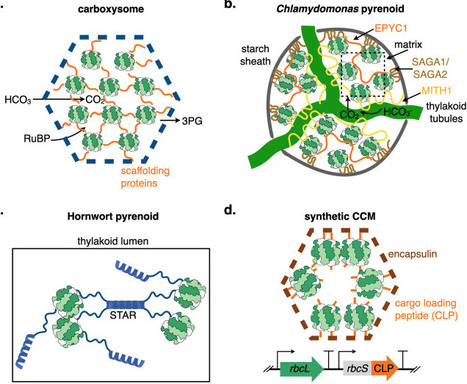
Ribulose 1,5-bisphosphate carboxylase/oxygenase (Rubisco) is a key enzyme in photosynthesis and a major engineering target to enhance photosynthetic productivity and increase crop yields. Rubisco fixes atmospheric CO2 into biomass but suffers from slow carboxylation rates and promiscuous oxygenation activity. We discuss recent progress in Rubisco-centric efforts to improve plant photosynthesis via directed evolution of Rubisco and introducing CO2-concentrating mechanisms (CCMs) into plants. We examine innovations in Rubisco selection platforms and technological advances that accelerate sequence space exploration and directed evolution. Furthermore, we summarize progress in efforts to transplant naturally occurring and construct synthetic CCMs to increase Rubisco efficiency in C3 plants.
|
|
Scooped by
mhryu@live.com
November 27, 2:06 PM
|
Episomal plasmids allow rapid strain construction with low clonal variability in many yeasts. Mitotic instability and the lack of selection strategies compatible with industrial production processes, however, limited the applicability of this technology in Komagataella phaffii. By employing adapted promoter variants for adjusting TPI1 selection marker levels and a heterologous autonomously replicating sequence from Candida boidinii, reliable selection and versatility in selection media were achieved with a range of episomal plasmids in a Δtpi1 host strain. In lab-scale fed-batch bioprocesses, the engineered episomal vector utilizing a crippled GAP promoter applied in a mutated host strain with truncated Aly2p demonstrated 5-fold elevated eGFP levels and plasmid copy numbers, as well as robust plasmid retention. This episomal plasmid system bridges target protein engineering and production, thereby accelerating the process from gene to protein and proposing a general switch from traditional genomic integration to plasmid-based expression for future developments employing K. phaffii.
|
|
Scooped by
mhryu@live.com
November 27, 1:40 PM
|
Programmable design of RNA sequences with defined functions remains a central challenge in biology. Despite recent advances, existing RNA generative models lack robust controllable design capabilities and are constrained by short context windows, limiting their capacity to model the complex evolutionary manifold of full-length transcripts. Here we introduce EVA (Evolutionary Versatile Architect), a long-context generative RNA foundation model trained on over 114 million full-length RNA sequences spanning the full breadth of evolutionary diversity. By integrating a mixture-of-experts architecture with an 8,192-token context window, EVA learns a unified, evolution-consistent representation of the RNA sequence space that captures both global transcript structure and fine-grained functional elements. EVA establishes a unified framework for a broad spectrum of RNA design tasks within a single architecture, ranging from mutational fitness prediction to context-aware sequence engineering. We demonstrate EVA’s versatility through de novo design and targeted optimization of diverse RNA classes, including transfers RNAs, aptamers and CRISPR guide RNAs, as well as messenger RNA and circular RNA therapeutics. In wet-lab assays, our best designed aptamers improve both fluorescence intensity and binding affinity by roughly twofold over the positive control. In systematic evaluations, EVA achieves state-of-the-art performance across seven of nine established benchmarks, generating sequences with more than tenfold lower Kullback–Leibler divergence to natural RNA secondary-structure feature distributions than the previous open-source RNA generator. Huang, Lv, Gao and colleagues investigate RNA scaling laws and introduce EVA, a long-context RNA foundation model for function prediction and diverse RNA design, supported by experimental validation.
|
|
Scooped by
mhryu@live.com
November 27, 1:16 PM
|
Owing to their high protein secretion capacity and low cultivation costs, filamentous fungi, including Aspergillus oryzae, are widely used for the bioproduction of valuable compounds. To date, molecular biology tools for basic biology and biotechnology have been developed for filamentous fungi; however, many of these methods have relied on regulatory systems dependent on the host cell’s metabolism. For a more accurate understanding of biological processes and the precise design of bioproduction, there is a need for tunable, metabolism-independent gene expression control systems. Results A versatile drug-inducible gene expression system was established for filamentous fungi. The artificial transcription factor XEV consists of the LexA DNA-binding domain from E. coli, the ligand-binding domain of the human estrogen receptor, and the VP16 activation domain. XEV was introduced into A. oryzae to express genes downstream of the synthetic promoter containing four lexO repeat sequences and the CYC1 core promoter. Under the control of the synthetic promoter, the β-glucuronidase reporter gene uidA showed strict β-estradiol-dependent induction with no detectable expression under basal conditions. Notably, induction levels were similar to those from the strong endogenous α-amylase gene promoter, whereas expression remained unaffected by the major carbon sources. The transcription factor AmyR is a master regulator of amylolytic genes and was expressed in this system. Consequently, β-estradiol-dependent regulation of AmyR led to a dose-dependent increase in the production of multiple amylolytic enzymes, suggesting that the XEV system can precisely regulate the targeted gene network. Furthermore, by expressing XEV under an enhanced promoter, the overall induction level increased along with gene expression at low inducer concentrations. In addition, replacing the CYC1 core promoter downstream of lexO with a potent core promoter derived from A. oryzae further enhanced the induction level. This system also functioned in Aspergillus nidulans, suggesting that it could be applied to other species as well. This study established an inducible expression platform that offers low leakage, tunable induction, and a wide dynamic range. This provides a highly useful tool for synthetic biology and industrial applications in filamentous fungi.
|
|
Scooped by
mhryu@live.com
November 27, 12:57 PM
|
Advances in genome editing, pathway reconstruction and site-resolved analysis have broadened plant glycoengineering, but transfer to new proteins and production settings remains unevenly tested. This critical narrative review examines N-glycan occupancy and processing, plant-associated O-glycosylation and reconstructed mammalian-type pathways in land plants and plant cell cultures. We distinguish host glycomes from measurements of purified products and individual sites, and compare structural outcomes with biological function and repeated production. Removal of selected core residues is supported across products and hosts, whereas occupancy, terminal extension and glycan retention remain sensitive to substrate accessibility, pathway organization and production format. Different objectives also require different glycans: matching a mammalian profile, modulating effector activity, prolonging circulation and promoting cellular uptake cannot be treated as interchangeable improvements. Manufacturing evidence distinguishes inherited edits and consistent glycan profiles from recovery of intact, active protein. Mechanistic research, technology development and product development require evidence matched to their different aims. Reliable comparisons therefore require product-resolved measurements, matched comparators and explicit quantification denominators. Gaps remain in coordinated N- and O-glycan control, direct comparisons across unrelated proteins and hosts, and validation of complex pathways over independent production runs. We propose an iterative decision and evaluation framework with separate entry routes for supported and uncertain glycan-function relationships. It guides candidate interventions and product-specific tests without predicting an unknown protein’s optimal glycoform. Shared reporting practices, complementary benchmark proteins and independently tested mechanistic models could make engineering more predictive while defining where product-specific revalidation remains necessary.
|
|
Scooped by
mhryu@live.com
November 26, 11:17 PM
|
Alfalfa biomass contains significant carbohydrate fractions underutilized in animal feed. This research optimized the enzymatic hydrolysis of Alfalfa biomass and evaluated single-cell protein (SCP) production using Candida utilis and Komagataella pastoris. Hydrolysis kinetics in this study showed biphasic sugar release, with enzymatic optimization increasing monomeric sugar yield from 18.5% to a maximum of 33.0% (a 78% relative increase) at 22 mg protein/g biomass enzyme loading. C. utilis demonstrated superior metabolic versatility, consuming 23% more total sugars than K. pastoris, with particularly enhanced pentose utilization showing 45% greater xylose consumption. K. pastoris achieved 51% faster growth rates than C. utilis, while both yeasts produced comparable protein yields per unit sugar consumed. SCP production enriched protein content 2.1-fold compared to raw Alfalfa biomass, reaching approximately 40% crude protein. Essential amino acid profiling (tryptophan excluded) showed that fermentation substantially improved several essential amino acids relative to FAO/WHO reference values, particularly lysine, threonine, and methionine; however, methionine + cysteine remained below the FAO reference ratio in both yeasts (K. pastoris: 0.99; C. utilis: 0.87), indicating that sulfur-containing amino acids remain a limiting factor despite overall nutritional improvement. The integrated bioprocess achieved 27.6% carbohydrate-to-biomass conversion efficiency and 11.3% carbohydrate-to-protein conversion efficiency based on measured monomeric sugars (oligosaccharide utilization during fermentation was not independently quantified). This work demonstrates a promising lab-scale strategy for alfalfa valorization through enzymatic hydrolysis and yeast fermentation, yielding a nutritionally improved protein product; techno-economic analysis, feeding trials, and scale-up studies are required before cost-effectiveness or industrial readiness can be established.
|
|
Scooped by
mhryu@live.com
November 26, 11:09 PM
|
Acidophilic non-conventional yeasts (NCYs) thrive at low pH and are promising hosts for organic acid production, but their use is limited by the availability of genetic engineering tools. Here, we optimized a chemical transformation protocol for efficient DNA delivery into six NCYs, including M. bulderi, S. bombicola, S. batistae, K. aerobia, K. naganishii and Y. lipolytica. We also developed Pan/ARS-containing expression vectors compatible with YeastFab for one-pot assembly of standardised promoters, open reading frames and terminators. As a proof of concept, we engineered M. bulderi, S. bombicola and S. batistae to produce lactic acid. We combined codon-optimised ldh genes from B. megaterium and L. helveticus with regulatory elements from S. cerevisiae or M. bulderi and introduced the resulting constructs into the hosts on episomal vectors. Lactic acid titres varied substantially across hosts and constructs. The highest titre, approximately 6.4 g/L, was achieved in S. batistae expressing the B. megaterium ldh gene under the control of S. cerevisiae regulatory elements. For targeted genome engineering, we developed a CREEPY-derived CRISPR-Cas9 system that supports multiplex gRNA assembly and achieved over 94% gene deletion efficiency in S. bombicola. In Starmerella species, Aro10p contributes to the conversion of pyruvate to acetaldehyde, potentially diverting carbon away from lactic acid production. Deleting ARO10 in S. bombicola increased lactic acid production through both endogenous and exogenous ldh pathways, with titres reaching up to 6 g/L. S. bombicola was unable to grow on lactate as the sole carbon source, whereas S. batistae utilised both D-lactate and L-lactate. This suggests that S. bombicola may offer a production advantage by limiting lactate reassimilation. Together, these genetic tools and metabolic engineering strategies expand the engineering capabilities of acidophilic NCYs and lay the groundwork for developing these yeasts as low-pH cell factories for the sustainable production of organic acids and other bio-based chemicals.
|
|
Scooped by
mhryu@live.com
November 26, 10:54 PM
|
In a recent study published in Nature, Schiffers et al. reported that replacing N1-methylpseudouridine (m¹Ψ) with N4-acetylcytidine (ac⁴C) in the coding sequence of synthetic mRNA increases protein output while preserving translational fidelity, because ac⁴C permits smooth ribosome elongation, whereas m¹Ψ slows elongation, inducing ribosome collisions and promoting +1 ribosomal frameshifting. Importantly, ac⁴C achieves high protein output without the increased generation of aberrant frameshift-derived products observed with m¹Ψ, highlighting ac⁴C as a promising translational alternative to m¹Ψ for mRNA therapeutics in which product fidelity and homogeneity are critical, such as protein-replacement and in vivo gene-editing applications.
|
|
Scooped by
mhryu@live.com
November 26, 3:21 PM
|
Lactic acid bacteria can exhibit exquisite host-specificity. Over 60 years of research, a variety of lactic acid bacterial genes have been identified as playing a role in adhesion to glycosylated host surfaces. 𝛽-solenoid domains, known from starch-degrading pectate lyases, have emerged as adhesins that might confer ligand-specific binding for certain host-symbiont pairs, particularly in insects, with implications for mammalian-lactic acid bacterial associations.
|
|
Scooped by
mhryu@live.com
November 26, 3:16 PM
|
The clinical translation of engineered probiotics for inflammatory bowel disease (IBD) is hindered by limited intestinal retention and insufficient inflammation-responsive precision. This study utilizes a surface display strategy to construct an adhesion-enhanced E. coli Nissle 1917 chassis. By presenting a truncated SpaC adhesin derived from Lactobacillus rhamnosus GG via the ice nucleation protein system, the engineered strain achieves enhanced mucosal anchoring and prolonged intestinal retention. To achieve an autonomous response, the probiotic platform integrates a calprotectin-responsive ykgMO promoter to drive a CAT-SOD-GPx tripartite fusion system (TFS) and secretion of human trefoil factor 3 (TFF3). In the TFS, CAT and SOD mediate ROS scavenging, whereas GPx is proposed to serve as a non-catalytic structural-support component associated with improved folding and soluble expression. Combined with pH-responsive Eudragit L100-55 micro-encapsulation to ensure gastric survival, this programmable system effectively alleviates inflammation, restores epithelial barrier integrity, and reverses oxidative damage in both prophylactic and therapeutic murine colitis models. Furthermore, the platform remodels the gut microbiota by suppressing opportunistic pathobionts such as Escherichia-Shigella while simultaneously promoting the resurgence of beneficial taxa, including Lachnospiraceae. Together, this biomarker-responsive strategy offers a versatile and programmable framework for the precision management of IBD during acute flare-ups.
|
|
Scooped by
mhryu@live.com
November 26, 3:03 PM
|
Microbial community Genome-scale Metabolic Models (Co-GEMs) capture cross-feeding interactions and provide insights into community-level metabolic activities. Enzyme-constrained GEMs (ecGEMs) incorporate enzyme abundance and kinetics to enable physiological simulations of species growth and cellular metabolism. However, an efficient framework for reconstructing microbial ecGEMs and integrating their metabolic exchange capabilities at the microbial community level is lacking. Therefore, we developed the ENzyme-constrained COmmunity REporter-metabolite pipeline (ENCORE), an integrated framework that reconstructs ecGEMs from metagenomic sequences and generates community-level microbe–metabolite interaction networks based on potential cross-feeding relationships. ENCORE identifies reporter metabolites reflecting microbial metabolic potential by incorporating microbial abundance profiles and mandatory exchange reactions. Gut metagenomic and blood metabolomic data of Parkinson’s disease (PD) patients recruited from 2 Turkish cohorts were used for pipeline assessment and key metabolite discovery. The feasibility of ENCORE was assessed in 23 mild-to-moderate PD patients following 84 d of combined metabolic activators administration. ENCORE prioritized L-serine, the major combined metabolic activators compound, as a reporter metabolite, and 45% of the model metabolite-clinical metabolomics pairs showed concordant alterations. Its utility was further assessed in a larger cohort of 26 mild and 18 moderate PD patients to investigate microbiome-driven metabolic changes during PD progression. Identified reporter metabolites were significantly enriched in multiple metabolic pathways, most of which were involved in carbon metabolism. Collectively, ENCORE characterizes microbial metabolic potential and prioritizes key metabolites and associated taxa across perturbations and disease conditions. With further validation and refinement, it may complement clinical metabolomics and support studies of microbe-driven metabolism.
|
|
|
Scooped by
mhryu@live.com
November 27, 3:01 PM
|
Most plants form mutualistic interactions, known as arbuscular mycorrhiza (AM), with soil fungi (Glomeromycota), whereby the fungus improves the plant’s access to mineral nutrients, usually phosphorus and nitrogen, while receiving reduced carbon from the host in return. This exchange reshapes plant nutritional status and may be associated with adjustments in the host plant’s water status, ion homeostasis, redox balance, and immune responses under various abiotic and biotic stresses. These effects, however, vary with the plant-fungus combination and environmental context. Key steps in signaling dialog and arbuscule development, together with transport pathways at the exchange interface, have recently been identified. Yet how AMF symbiosis contributes to stress tolerance, and why benefits observed in controlled studies do not always carry over to fields, remain less clear. Herein, this review traces the AM partnership from recognition and root colonization to arbuscule formation and resource transfer, with evidence on plant stress responses and agricultural performance. By distinguishing causal evidence from physiological correlations, it clarifies what the partnership can reliably provide and where further experiments are needed.
|
|
Scooped by
mhryu@live.com
November 27, 2:35 PM
|
Plants continuously experience temperature fluctuations that shape their physiology, development, and survival. Yet, how plants sense and adapt to elevated temperatures at the molecular level remains only partially understood. Here, we uncover a sequence-encoded mechanism by which plant proteins directly sense temperature through condensation. Focusing on prion-like low-complexity domains (PLCDs) in Arabidopsis thaliana, we combine cellular imaging, quantitative biophysics, and coarse-grained molecular dynamics simulations to show that numerous PLCDs undergo reversible lower critical solution temperature (LCST)-type phase transitions. We find that PLCDs that are sufficient and necessary for condensation confer thermoresponsive variability to full-length proteins. Sequence analysis and simulations reveal that thermoresponsiveness is encoded in compositional heuristics, with sufficient PLCDs enriched in aliphatic and aromatic residues, enabling accurate prediction and rational tuning of condensation thresholds. Engineered variants with altered sequence composition exhibit predictable shifts in thermoresponsive condensation, confirming a direct, sequence-level encoding of temperature sensitivity. Our findings establish LCST-driven phase transitions as common amongst plant PLCD-containing proteins and provide a molecular framework for designing synthetic biomolecules with programmable temperature responses. Molecular temperature sensing is not fully understood. Here, the authors show that many Arabidopsis prion-like low-complexity domain-containing proteins undergo phase transitions which might act as temperature sensors.
|
|
Scooped by
mhryu@live.com
November 27, 2:19 PM
|
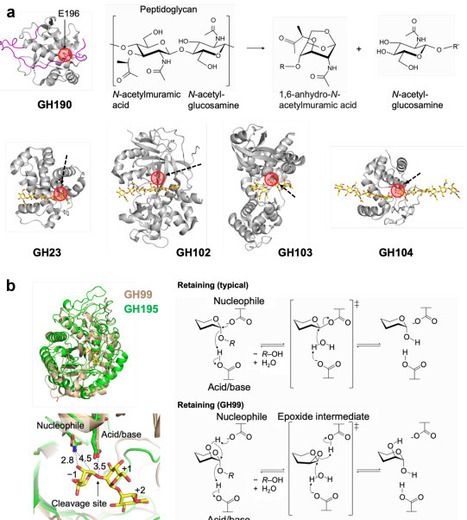
The immense structural complexity of glycans suggests that the diversity of carbohydrate-active enzymes discovered to date represents only the tip of the iceberg. Recent structural and functional studies have uncovered a previously unrecognized diversity among carbohydrate-active enzymes, including new phylogenetic groups, transglycosylation modes, unique proton relay networks in reaction mechanisms and enzymes catalyzing new reactions. This review highlights these recent advances, focusing primarily on discoveries within glycoside hydrolase families while also covering other categories. These findings not only broaden our understanding of enzymatic strategies for glycan synthesis and degradation but also provide a basis for tailored reaction platforms in the upcoming era of enzyme design.
|
|
Scooped by
mhryu@live.com
November 27, 2:02 PM
|
Artificial intelligence is reshaping protein engineering, yet progress remains constrained by the limited availability of scalable, normalized sequence-activity datasets and experimental benchmarks. Reported here is Evolution by Sequencing (EvoSeq), a sequencing-based profiling platform for genome-editing enzymes that links each variant to a reporter sequence change, enabling activity and variant sequence to be quantified together by next-generation sequencing. Representative sequencing-assisted workflows either require separate functional assays or were performed in bacteria. EvoSeq performs sequence-activity profiling in eukaryotic yeast system with reduced background by up to 95-fold compared to bacterial system, positioning EvoSeq as a pooled eukaryotic alternative to workflows that require separate functional assays and to approaches demonstrated primarily in bacteria. Application to adenine base editor evolution identifies variants with 1.4-fold higher on-target activity at a HBG gene target and threefold lower off-target editing at PCSK9 after mRNA-lipid nanoparticle validation in HepG2 cells. An intron-embedded homologous-recombination recording strategy further enables direct evolution of the large Cas12i nuclease CasY7 and supports active learning, increasing the hit rate of model-nominated mutational windows compared with manual selection. EvoSeq therefore provides an experimental benchmarking method for AI-guided protein-design algorithms and AI-compatible sequence-activity profiling platform for engineering genome editors in eukaryotic cells.
|
|
Scooped by
mhryu@live.com
November 27, 1:17 PM
|
Generating proteins with the full diversity and complexity of functions found in nature is a grand challenge in protein design. Here we present protein diffusion transformer (ProDiT), a multimodal diffusion model that unifies sequence and structure modelling paradigms to enable the generation of proteins with computationally predicted functions at scale. Trained on sequences, three-dimensional structures and annotations for 128 million proteins across the evolutionary landscape, ProDiT generates diverse, novel proteins that are computationally predicted to preserve known active- and binding-site motifs and can be conditioned on a wide range of molecular functions, spanning 463 Gene Ontology terms. We introduce a diffusion sampling protocol to design proteins with multiple functional states, and illustrate this protocol by computationally scaffolding enzymatic active sites from carbonic anhydrase and lysozyme such that they are predicted to be deactivated by a calcium effector. Our results showcase the capacity of ProDiT to satisfy design specifications inaccessible to existing generative models, thereby expanding the protein design toolkit. Jing et al. present ProDiT, a multimodal diffusion model that generates diverse, functionally conditioned proteins, including multistate proteins, expanding capabilities beyond existing generative protein design methods.
|
|
Scooped by
mhryu@live.com
November 27, 1:06 PM
|
Bacteriophages, historically recognized as natural bacterial predators, are currently being redefined as programmable and versatile nanocarriers in the era of precision medicine. This review traces the evolution of phages from biological antibacterial agents to modular platforms of drug delivery. We firstly map the global research landscape, representing how the field has evolved from simple infection control to complex bio-nanotechnology applications. Next, we dissect the core multidimensional engineering strategies, including capsid surface display, genomic reprogramming, and chemical conjugation, which endow phages with capabilities for active tumor targeting, microenvironment-responsive release, and diverse cargo loading, ranging from small molecules to CRISPR-Cas systems. Finally, we discuss the emerging role of artificial intelligence (AI) in addressing longstanding challenges in phage design and application. We highlight how deep learning architectures are facilitating the development from labor-intensive empirical screening to data-driven rational design, specifically in predicting phage-host interactions and optimizing non-immunogenic vectors. Finally, we discuss the current translation challenges, including manufacturing standardization (CMC) and regulatory frameworks. Under the guidance of new technologies, we are committed to integrating synthetic biology and AI guided design to guide the path of future phage based nanomedicines for the treatment of multidrug-resistant infections and targeted disease treatment strategies.
|
|
Scooped by
mhryu@live.com
November 26, 11:36 PM
|
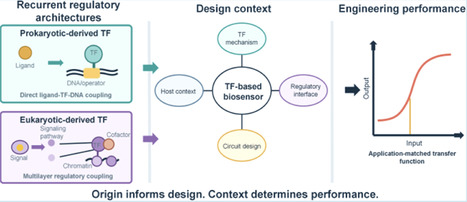
Transcription factor (TF)-based biosensors are foundational tools in synthetic biology, enabling cells to sense molecular cues, process information, and execute programmable responses. Yet, their engineering behavior is not determined by ligand recognition alone; it emerges from the interplay between TF architecture, regulatory mechanism, evolutionary origin, host context, and circuit design. Prokaryotic TFs typically employ compact regulatory architectures that directly couple ligand sensing to transcriptional control, facilitating modular and streamlined biosensor construction. In contrast, eukaryotic TFs function within chromatin-, cofactor-, and signaling-dependent regulatory environments that support richer signal integration but introduce greater context dependence and engineering complexity. In this review, we present a comparative framework for understanding TF-based biosensors across prokaryotic and eukaryotic systems. We examine how differences in regulatory architecture shape signal processing, portability, orthogonality, and host compatibility and highlight emerging cross-domain strategies that combine regulatory components from distinct biological systems. We further discuss how TF engineering, adaptive regulatory circuits, cybergenetics, and artificial intelligence-assisted design are expanding biosensor functionality and design space. By linking evolutionary origin and regulatory architecture to engineering performance, this review establishes a framework for rational TF selection and circuit design and outlines opportunities for developing more predictable, portable, and programmable biosensing systems.
|
|
Scooped by
mhryu@live.com
November 26, 11:13 PM
|
Protein-glycan recognition controls immune responses, host-pathogen adhesion, cell signalling and the functional organization of the glycocalyx. Computational models can predict protein binding to monosaccharides or short oligosaccharides, but predicting binding to structurally diverse intact glycans remains challenging. Here we present GlycoBind, a general toolkit that accepts a protein structure in Protein Data Bank (PDB) format and an International Union of Pure and Applied Chemistry (IUPAC)-condensed glycan, and returns a binding score without requiring a protein-glycan complex or a docking pose. GlycoBind adopts the frozen residue-state representation of DeepGlycanSite, a carbohydrate-binding-site predictor, and combines this protein representation with frozen GlycanGT graph representations through a compact trainable classifier. Across five protein-grouped holdouts, GlycoBind achieved a mean area under the receiver operating characteristic curve (AUROC) of 0.767. On six external glycan-array datasets after exact protein and glycan cleaning for both models, GlycoBind showed higher aggregate binding-strength ranking performance and stronger recovery of high-intensity binding pairs than the existing models. By prioritizing high-intensity pairs for experimental follow-up, GlycoBind may support mechanistic studies of protein-glycan recognition and the rational development of glycan-targeted therapeutics.
|
|
Scooped by
mhryu@live.com
November 26, 11:03 PM
|
Engineering intracellular microbes to function as synthetic organelles, or quasiorganelles, opens new avenues for controlling mammalian cell fates and function through programmable and quantitative interkingdom communication. Here, we develop a bioluminescent reporter platform to quantify the magnitude, kinetics, persistence, and spatial distribution of transcriptional regulation in mammalian host cells directed by quasiorganelles. Using an attenuated, flavin-auxotrophic Listeria monocytogenes chassis (LINQ1) engineered to deliver synthetic transcription factors, we demonstrate approximately 100-fold activation of mammalian reporter genes, with distinct kinetics and dynamics for the tetracycline transactivator and Gal4 systems. In transgenic reporter mice, LINQ1 induced approximately 25-fold reporter activation across multiple organs, with activity persisting beyond three weeks in some animals. In mice bearing triple-negative breast tumors, LINQ1 activated intratumoral transcription and, incidentally, transiently suppressed tumor growth, although responses diminished with repeated administration. These findings establish a quantitative foundation for engineering interkingdom communication in vivo to advance a new paradigm in which programmable microbial systems function as synthetic organelles to direct mammalian cell fates and function for therapeutic benefit.
|
|
Scooped by
mhryu@live.com
November 26, 4:26 PM
|
Microbial mutualisms, in which species exchange resources through cross-feeding, are common in nature. Yet the stability of mutualistic interactions is debated, and cross-feeding communities are vulnerable to cheaters that benefit from the excretions of others but reduce or cease their own excretion of resources, which can lead to community collapse. Here, we demonstrate with a mathematical model that in addition to decreased excretion, increased reliance on cross-fed resources can also lead to community collapse. In a two-species model of bacteria that metabolizes lactose and provides yeast with galactose, in exchange for amino acids from yeast, we show that the set of excretion and reliance parameters that maximizes biomass is adjacent to a region of community collapse in the phase diagram. By expanding the model to include multiple bacterial auxotrophs competing for lactose and either separate or overlapping amino acids, we also demonstrate that a trade-off between reliance and excretion can enable coexistence within the bacterial mutualist guild. Finally, we show that intraguild coexistence of bacteria favors yeast, increasing biodiversity but decreasing total community biomass. Our results argue that the question of cheaters should be paired with analysis of reliance on mutualistic exchange, and that both of these parameters modulate biodiversity and the stability of mutualisms to collapse.
|
|
Scooped by
mhryu@live.com
November 26, 3:19 PM
|
DNA methylation is a conserved and important epigenetic gene regulatory mechanism in eukaryotes. Despite its essential functions, the methylation patterns and underlying mechanism have diversified substantially across kingdoms and even within species. Individual-level studies in single genetic backgrounds have revealed pervasive DNA methylation variation across cells and tissues. Recent advances in high throughput sequencing and epigenome profiling technologies have rapidly expanded studies of methylation variation across experimental and natural populations. This population-scale approach helps disentangle genetic from “pure” epigenetic effects, quantify methylation stability and plasticity in natural contexts, and link epigenetic states to complex traits and environments. Here, we summarize recent studies, primarily from the last two years, on population-scale DNA methylation in plants, with a focus on the factors that shape the methylation dynamics and its contribution to phenotypic diversity, plasticity, and adaptation. Specifically, we discuss the major drivers of populational methylation variation, including genetic mutations, stochastic epimutations, and environmental stimuli. We also discuss the functional consequences of DNA methylation variation, with emphasis on its roles in environmental adaptation, domestication, and agronomic traits. Collectively, these studies underscore DNA methylation variation as an important source of plant diversity and plasticity, providing a foundation for future research into the role of epigenetic dynamics in plant evolution and phenotypic diversity.
|
|
Scooped by
mhryu@live.com
November 26, 3:08 PM
|
Plants rely on a sophisticated innate immune system to perceive pathogen-derived molecules and infection-associated perturbations. At the cell surface, pattern-recognition receptors (PRRs) detect conserved microbial molecules and extracellular effectors, whereas intracellular nucleotide-binding leucine-rich repeat receptors (NLRs) recognize pathogen effectors either directly or through effector-induced changes in host proteins. Rather than functioning as two strictly independent tiers, cell-surface and intracellular immune receptors form an interconnected surveillance network with overlapping and mutually reinforcing signaling outputs. These responses include Ca2+ signaling, reactive oxygen species production, mitogen-activated protein kinase cascades, transcriptional reprogramming, phytohormone signaling, and, in some cases, hypersensitive cell death. This review examines the molecular principles underlying pathogen recognition by PRRs and NLRs, with particular emphasis on direct and indirect effector recognition, integrated domains, paired NLRs, sensor–helper networks, receptor activation, resistosome formation, and EDS1-dependent signaling. We further discuss how interactions between cell-surface and intracellular receptor systems shape immune signaling and highlight unresolved questions concerning effector delivery, receptor activation, and coordination of immune outputs. Collectively, these advances support an integrated receptor-network model of plant immunity in which distinct surveillance systems cooperate to detect infection and coordinate defense.
|













1str, ml pipeline, Each of the 12,248 computationally designed membrane proteins (same protein scaffold, same fold, same function — but with computationally chosen amino acid substitutions at 54 specific surface positions, further recombined by PCR shuffling) was genetically encoded and synthesized commercially as an oligo pool. cloned upstream of the open reading frame for GFP. The resulting library was expressed in recombinant bacteria, and after flow cytometry analysis, fluorescence-activated cell sorting (FACS) was used to isolate “Dim” and “Bright” cell populations.