 Your new post is loading...

|
Scooped by
mhryu@live.com
September 28, 2:27 PM
|
The type VI secretion system (T6SS) is a large macromolecular complex crucial for inter-bacterial competition. Its expression and localization are tightly regulated, with the anti-bacterial H1-T6SS in Pseudomonas aeruginosa assembling in response to membrane damage. While several proteins are known to regulate this response, the mechanism remains unknown. Here, we use biochemical approaches to show formation of a complex between the membrane lipoprotein TagQ and the periplasmic protein TagR. Furthermore, Co-IP and in silico modeling indicates TagQ/R complex interactions with PpkA, likely dimerizing the kinase to initiate a phosphorylation cascade leading to H1-T6SS assembly. Mass spectrometry analysis of phosphorylated proteins in P. aeruginosa shows that PpkA does not have any targets outside of the previously reported Fha1, suggesting the sensor module acts exclusively to regulate T6SS assembly. Our work reveals the functional basis of the TagQR-PpkA signaling pathway and links membrane damage to localized H1-T6SS assembly, which is critical for efficient retaliation during inter-bacterial interactions. The H1-T6SS of Pseudomonas aeruginosa assembles in response to membrane damage. Here, the authors show that this response mechanism is regulated by the formation of a complex between the membrane lipoprotein TagQ and the periplasmic protein TagR.
|
|
Scooped by
mhryu@live.com
September 28, 1:48 PM
|
Many tumors release lactate as a major metabolic product and signalling molecule. Here we use lactate flux as an endogenous trigger for covalent hydrogel formation. Phenol-functionalised alginate remains soluble until cell-derived lactate is oxidised by lactate oxidase; the generated hydrogen peroxide is used by horseradish peroxidase to crosslink phenols and form a matrix at metabolically active sites. Hydrogels form within minutes and reach storage moduli from approximately 10 Pa to 5 kPa. In tumor-spheroid models, including a patient-derived glioblastoma spheroid model, local lactate production generates spatially confined gelation that extended up to around 1 mm from the spheroid surface. Nano-indentation and fluorescence correlation spectroscopy reveal radial stiffness and polymer-density gradients, while proteome profiling and imaging indicate reduced proliferative signalling and increased markers associated with migration and matrix remodelling. These findings establish metabolite-gated hydrogelation as a strategy to couple cellular metabolism to covalent matrix assembly, mechanics and transport, providing a bio-synthetic platform for modelling cell–matrix reciprocity and tumor confinement. Synthetic hydrogels are widely used to mimic key extracellular matrix functions, but their biochemical and mechanical properties are typically predefined, requiring cells to adapt to a fixed environment. Here, the authors introduce a phenol-functionalized alginate hydrogel that undergoes in situ crosslinking in response to lactate secreted by cells. By coupling material formation to cellular metabolism, this system generates local mechanical gradients around metabolically active cells and spheroids, enabling dynamic, self-regulated matrix remodelling driven by metabolic fluxes.
|
|
Scooped by
mhryu@live.com
September 28, 10:57 AM
|
Enzyme turnover number (𝑘cat) is a central kinetic parameter for biocatalysis, but experimental determination is low-throughput and existing computational methods inadequately model enzyme–reaction interplay. Here, we introduced MCKcat, a deep learning framework that integrates multi-scale convolutional feature extraction and cross-attention to enable deep, reciprocal fusion of enzyme sequence and reaction fingerprint representations for accurate 𝑘cat prediction. We constructed MCKcat-DB, a large-scale dataset comprising 33 396 enzyme-reaction-based 𝑘cat data points, covering both wild-type enzymes and a large number of mutants. MCKcat demonstrated competitive performance across diverse prediction scenarios on two benchmarks. A two-step strategy was developed to engineer Bacillus aryabhattai laccase with synergistically improved thermostability and catalytic activity. Rational design generated 217 candidate thermostable mutants, followed by MCKcat-based screening that identified 20 hits. Validation showed 15 mutants (75% positive rate) exhibited simultaneous enhancements in both thermostability and 𝑘cat. A user-friendly web server was provided to facilitate broad adoption. MCKcat establishes a robust, generalizable strategy for data-driven 𝑘cat prediction and artificial intelligence-assisted enzyme engineering.
|
|
Scooped by
mhryu@live.com
September 28, 10:52 AM
|
Improving the functional benefits of arbuscular mycorrhizal fungi (AMF) is considered an important part of developing more sustainable and resilient crop production systems. However, the outcomes of AMF symbioses vary substantially depending on environmental conditions, soil fertility, fungal community composition, and host genotype. Even among varieties of the same crop species, responses to AMF colonization can differ considerably, yet methods for quantifying functional plant–AMF interactions remain labor-intensive and often fail to capture symbiotic efficiency directly. Here, we propose that ergothioneine (EGT), a sulfur-containing antioxidant amino acid whose accumulation in plants appears to be strongly influenced by AMF-associated pathways, may serve as an integrated biochemical indicator of functional AMF-mediated nutrient exchange. We hypothesize that variation in plant EGT accumulation between crop varieties reflects differences in the regulation and functional performance of plant–AMF interactions, possibly including symbiotic signalling, carbon allocation, nutrient exchange efficiency, and/or rhizosphere microbial dynamics. We present new results showing differences in grain EGT concentration among five spring wheat varieties, supporting the possibility that host genotype influences AMF-associated EGT accumulation. We discuss potential mechanisms underlying these differences, evaluate alternative explanations, and outline experimental approaches for testing the relationship between EGT accumulation and functional plant–AMF interactions. If validated, EGT quantification could provide a scalable and straightforward approach for identifying crop genotypes with enhanced responsiveness to AMF-mediated nutrient acquisition, with potential applications in breeding and management strategies for low-input and ecologically sustainable agriculture.
|
|
Scooped by
mhryu@live.com
September 28, 10:38 AM
|
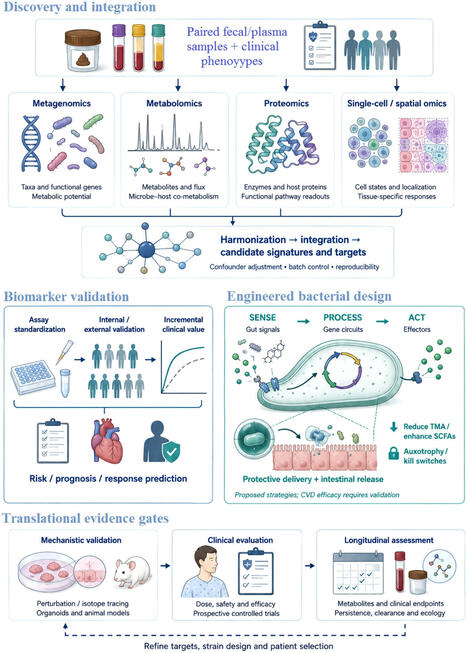
Despite rapid growth in gut–heart axis research, clinical translation remains limited. This review addresses that gap by critically synthesizing recent evidence on microbiota-derived metabolites, biomarkers, multi-omics workflows, and engineered bacterial interventions in cardiovascular disease (CVD). We examine how TMAO, short-chain fatty acids, bile acids, indole derivatives, and phenylacetylglutamine exert context-dependent cardiovascular effects, and why functional microbial gene markers and integrated biomarker panels may outperform single-taxon signatures. We then evaluate multi-omics strategies, metagenomics, metabolomics, proteomics, single-cell and spatial omics, and bioinformatics integration, for causal inference and biomarker validation. Finally, we assess engineered bacterial delivery systems, including gene circuit design, colonization control, biocontainment, and safety, and outline short-, medium-, and long-term milestones for clinical translation, cost-effectiveness, and intellectual property. The key takeaway is that precision microbiome medicine in CVD will require standardized assays, prospective validation, robust regulatory pathways, and equitable commercialization. By linking mechanistic insights with translational requirements, this review provides a framework for developing microbiome-targeted diagnostics and therapeutics in CVD.
|
|
Scooped by
mhryu@live.com
September 27, 2:01 PM
|
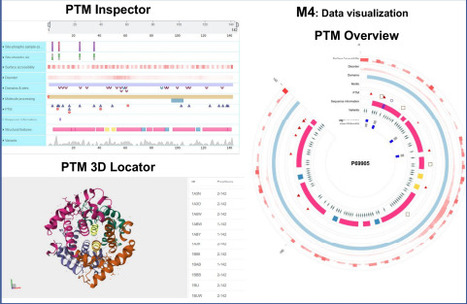
Deciphering the functions of post-translational modifications (PTM) is a critical bridge connecting large-scale modification proteomics data to mechanistic studies. However, most existing tools for visualizing PTM omics data are limited to site catalogs or single-dimensional feature displays. They lack the capability to simultaneously map user-derived differential modification sites onto multi-dimensional contexts, including protein three-dimensional (3D) structure, evolutionary conservation, functional sites, and disease associations. This limitation makes it difficult for researchers to rapidly assess the biological importance of candidate sites from among a vast number of differentially modified sites. Here, we present PTMExplorer, an interactive platform for the multi-dimensional visualization of protein PTMs. PTMExplorer comprises three core modules: PTM Inspector, built upon ProtVista, provides a multi-track, sequence-feature integrated view incorporating intrinsically disordered region (IDR) prediction (via flDPnn), surface accessibility calculation (via FreeSASA), and UniProt functional annotations; PTM 3D Locator, leveraging the Nightingale/Mol* engine, anchors modification sites onto AlphaFold/Protein Data Bank (PDB) 3D structures through residue mapping via PDBe-SIFTS; and PTM Overview, utilizing the R circlize package, presents a panoramic polar circos plot illustrating modification distribution and inter-group differential regulation. Additionally, three major disease-associated modification databases (PTMD, qPTM, and PhosCancer) are integrated as PTM-Disease Nexus, enabling co-localization comparison between user-defined differential sites and reported disease-related sites. PTMExplorer currently supports eight model organisms, accepts user-uploaded differential analysis results, and provides multi-dimensional annotations and various visualization options (https://www.bioladder.cn/PTMExplorer/). Using a multi-omics dataset from hepatocellular carcinoma (18 patients, 9 modification types) as a case study, we demonstrate the practical utility of PTMExplorer in screening potential biomarkers, revealing multi-modification coordination mechanisms, and distinguishing between absolute and relative quantification patterns.
|
|
Scooped by
mhryu@live.com
September 26, 1:47 PM
|
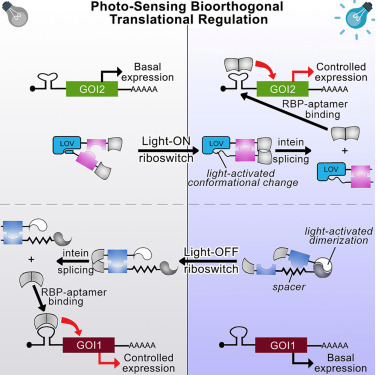
Photoriboswitches are invaluable tools for synthetic biology because they provide direct, precise, and on-demand control of translation. While most existing photoriboswitches are predominantly one-directional, this study presents a bidirectional photoriboswitch platform capable of mimicking the orthogonal RNA-binding protein-mediated up-/downregulation of multiple mRNAs. Inspired by intein-based split protein reconstitution and light-induced protein dimerization, we first engineered a Light-OFF system that uses photodimerization to block intein reconstitution. We then validated that this Light-OFF system can function orthogonally with a Light-ON system that reconstitutes a different split intein pair under light. Together, a bidirectional photoriboswitch is generated, which senses light to orthogonally reconstitute RNA-binding proteins to tune the translation of their respective target mRNAs. We have demonstrated that the photoriboswitch produces bidirectional translation regulation. Importantly, the functional modules of the photoriboswitch can be easily altered to adapt for different purposes, allowing the bidirectional photoriboswitch to serve as a versatile tool for translation regulation.
|
|
Scooped by
mhryu@live.com
September 26, 1:40 PM
|
The antibiotic pipeline is in crisis, even though microbial natural products, account for most approved antibacterial drugs and retain vast, untapped biosynthetic potential. Genuinely new scaffolds are rare because discovery remains constrained to a narrow set of cultivable taxa and expressed biosynthetic gene clusters, while most microbial chemistry persists as “dark matter” in uncultured organisms and silent clusters. Each bottleneck is both a discovery and a biotechnology challenge: a predicted cluster must be expressed, its product isolated, and its biosynthesis engineered to workable titres before any hit can realistically progress. This review links the major obstacles in the contemporary pipeline including limited ecological sampling, silent and cryptic clusters, access to uncultured bacteria, inefficient metabolome mining, weak genome–metabolome integration, and incomplete target identification, to the technologies best suited to address them, drawing on recent case studies of integrated workflows rather than single-platform approaches. By evaluating these strategies for both discovery power and bioprocess tractability, we outline a practical framework for turning microbial dark matter into producible, mechanistically understood antibiotic leads.
|
|
Scooped by
mhryu@live.com
September 26, 1:24 PM
|
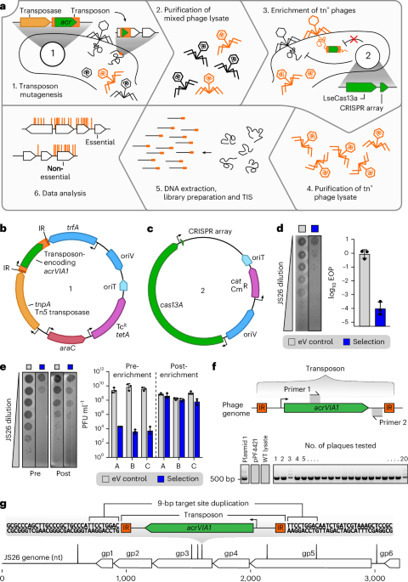
Phages are important drivers of bacterial evolution and have potential as antimicrobials. However, incomplete understanding of phage biology and our inability to rapidly engineer them with new genetic cargo hinder progress towards phage-based therapies. Here we develop an unbiased, genome-wide mutational tool for phages. This approach, phage Tn-seq, uses Tn5 transposon mutagenesis using anti-CRISPR-based selection and deep-sequencing. Phage Tn-seq was successful across diverse phages, including a nucleus-forming jumbo phage and enabled gene essentiality assignment consistent with phage structural proteomics and core gene conservation. In addition, insertion biases allowed prediction of transcriptional direction and early injected and highly expressed regions. We exploit transposons to deliver new cargo to phages within a few days and created an orthogonal artificial intelligence-designed Acr transposon system to generate phage double mutants. Transposon insertion was also achieved in phages with hypermodified DNA. Phage Tn-seq is a versatile tool to advance our understanding and application of phages. Phage Tn-seq uses Tn5 transposon mutagenesis with anti-CRISPR-based selection and deep sequencing as a method to generate unbiased, genome-wide mutations across diverse phages
|
|
Scooped by
mhryu@live.com
September 26, 12:34 PM
|
Diverse chemicals biosynthesis demand distinct precursor acetyl-CoA and energy inputs, yet strategies balancing carbon atom economy and energy generation for varied products remain scarce. Here, we design an autonomous hybrid energy-carbon balancing apparatus (ATHENA) to establish a paradigm for redox-driven, dynamically adaptive regulation of carbon conservation and energy synthesis in E. coli. ATHENA features modularization of acetyl-CoA and NADH synthesis pathways for carbon conservation and energy generation, paired with NADH-responsive positive and negative genetic circuits constructed using the BsRex sensor and antisense RNA. This system enables intracellular redox state-dependent rational metabolic flux allocation to balance carbon atom economy and energy generation. Ultimately, ATHENA significantly improves yields and titers of five products with differential acetyl-CoA and energy demands. In the 5-L bioreactor, acetate yield markedly exceeds its native theoretical yield, while that of mevalonate nearly approaches this theoretical upper limit. This work provides a universal strategy for constructing high carbon-yield microbial chassis cells. Metabolic engineering strategies that balance carbon atom economy and energy generation remain scarce. Here the authors engineer E. coli with an NADH-responsive genetic circuit to regulate carbon-conserving and energy-generating modules, improving yields and titres of diverse products.
|
|
Scooped by
mhryu@live.com
September 26, 12:24 PM
|
Nitrification is a key process in the global nitrogen cycle, yet the physiological characterization of nitrifiers remains limited due to their low culturability. Although culture-independent approaches have provided important ecological insights, they do not fully resolve the physiological properties of nitrifying microorganisms. Here, we show that common gelling agents (agar, agarose, and gellan gum) contain toxic substances that inhibit the growth of diverse nitrifying microorganisms as well as some heterotrophic bacteria. These inhibitory substances appear to be generated during autoclaving and act via mechanisms distinct from previously reported hydrogen peroxide. Removal of these inhibitory factors using a simple washing strategy enables colony formation in recalcitrant nitrifiers, including Nitrososphaera (ammonia-oxidizing archaea) and Nitrospira (nitrite-oxidizing bacteria). Application of this approach to environmental samples enabled the isolation of multiple difficult-to-culture nitrifying strains, including ammonia-oxidizing and nitrite-oxidizing microorganisms. Together, these findings demonstrate that the limited culturability of nitrifiers on solid medium is largely driven by gelling agent–derived inhibitory substances and can be overcome by a simple and broadly applicable strategy.
|
|
Scooped by
mhryu@live.com
September 26, 11:36 AM
|
Selective DNA delivery to specific members of assembled bacterial communities remains challenging. Bacterial conjugation enables efficient DNA delivery, but transfer to non-target recipients limits its specificity within mixed communities. Here, we repurpose plasmid entry exclusion (Eex) as a recipient-side gate to control conjugative DNA delivery. We demonstrate selective plasmid delivery to Eex-negative recipients within populations containing both Eex-expressing and Eex-negative cells. This recipient selectivity was maintained at increased cell densities and during prolonged mating. By combining RP4-type and F-type conjugation systems with their corresponding exclusion modules, we further directed DNA delivery from distinct donors to defined recipient populations. RP4-derived Eex also functioned in environmental bacteria, including Pseudomonas putida and Sphingobium japonicum, enabling recipient-specific exclusion within a multispecies mixture. Furthermore, repeated cycles of Eex-guided conjugation and selection altered community composition after assembly. These results establish entry exclusion as a recipient-side strategy for selective conjugative DNA delivery and, when combined with selection, for controlling the composition of assembled bacterial communities.
|
|
Scooped by
mhryu@live.com
September 26, 11:24 AM
|
Fungal biotechnology has emerged as a promising platform for the development of sustainable biocomposites, leveraging the intrinsic ability of fungi to transform complex polymeric substrates into structurally integrated materials. This review critically evaluates mycelium-based biocomposites (MBCs), with particular emphasis on the relationships between fungal biosynthesis, substrate transformation, processing strategies, and resulting material properties. Key biochemical components, including chitin, chitosan, and β-glucans, are examined in terms of their molecular structures, biosynthetic pathways, and contributions to composite performance. The chemical modification of polymeric substrates during fungal colonization, including enzymatic degradation, substrate remodelling, and interfacial bonding mechanisms, is critically discussed. The review further examines chemical functionalization, hybrid reinforcement, and densification strategies for tailoring mechanical performance, thermal insulation, fire resistance, and durability, highlighting recent advances in processing-driven material optimization. Applications in packaging, construction, insulation, environmental remediation, and functional materials are critically reviewed alongside sustainability considerations, including biodegradability, circularity, and life-cycle impacts. Finally, current challenges and future research directions are discussed, emphasising the integration of synthetic biology, advanced materials chemistry, and digital bio-fabrication to enable scalable, high-performance, and multifunctional MBCs.
|
|
|
Scooped by
mhryu@live.com
September 28, 1:52 PM
|
Although lipid nanoparticles are clinically validated for RNA delivery, their potency often declines as transcript size increases. Here we report a large-cargo-informed lipid discovery strategy that incorporates mRNA size into ionizable lipid screening. A combinatorial library of 384 lipids was screened using a 5.7-kb ABE–NanoLuc reporter mRNA, identifying large-cargo-optimized lipids led by LC-1. Following intravenous, intrathecal and intratracheal administration, LC-1 achieved up to 79% Cas9-mediated knockout in liver and 48% and 27% in brain and lung, up to fourfold higher than LP-01 and ALC-0315, and produced higher ABE-mediated reporter correction across all three routes. LC-1 supported base editing of PCSK9, CFTRR55X and Ube3a-ATS. Mechanistic studies showed that, unlike the benchmarks, LC-1 forms stronger lipid–RNA interactions and retains an ordered, fusogenic inverted-hexagonal structure and pH-responsive membrane disruption as mRNA size increases, rather than becoming disordered. These findings establish cargo size as a key design parameter for ionizable lipid discovery. Lipid nanoparticles are improved by including RNA cargo size in the design process.
|
|
Scooped by
mhryu@live.com
September 28, 11:52 AM
|
Aspergillus species combine eukaryotic protein processing, efficient secretion, and established industrial fermentation, making them important hosts for enzymes, food proteins, and natural products. However, heterologous production is jointly determined by genetic architecture, expression regulation, protein processing and secretion, host physiology, and cultivation conditions rather than by promoter strength alone. This review examines the construction of programmable expression systems in Aspergillus, with emphasis on host selection, DNA maintenance and genome integration, gene dosage and regulatory elements, multigene expression, secretion engineering, and chassis optimization. We further discuss standardized genetic parts and landing sites, quantitative evaluation, high-throughput screening, and product-oriented strain design. Collectively, these advances support a transition from empirical construct-and-screen approaches toward expression systems with more defined genetic structures, tunable outputs, improved production stability, and greater reproducibility and predictability under production-relevant conditions.
|
|
Scooped by
mhryu@live.com
September 28, 10:53 AM
|
The challenges associated with the escalating global population and climate change in crop production and food security are substantial. This underscores the necessity for improvements in crop nutrition, yield, and resilience to environmental stresses. Plant metabolic pathways directly influence growth, nutrient accumulation, and stress responses, rendering them prime targets for crop enhancement. Advances in plant synthetic biology and gene editing are facilitating more precise modifications of genes, regulatory elements, and metabolic pathways. This review highlights the primary technologies used in plant metabolic engineering and focuses on representative examples of their implementation for crop improvement, including but not limited to CRISPR-Cas systems, multiplex genome editing, knock-in and knock-out strategies, CRISPR-mediated gene regulation (CRISPRi/CRISPRa), base editing, prime editing, RNA targeting technologies, synthetic promoters, and gene stacking strategies. Furthermore, the emerging role of artificial intelligence in the design and optimization of metabolic pathways and genome editing tools will be briefly discussed.
|
|
Scooped by
mhryu@live.com
September 28, 10:46 AM
|
Wood, being one of the most abundant materials on Earth, is a hierarchically structured lignocellulosic biocomposite that has evolved to resist decomposition by other organisms. While lignin is thought to have evolved in the Devonian (~ 400–390 Ma), leading to the deposition of vast coal reserves in the Carboniferous (~ 360–299 Ma), a diverse group of fungi evolved around that time to precisely break through this barrier and use it as carbon source. The emerging “wood-degrading fungi” since then play a fundamental role in global nutrient cycling, carbon flow, and material turnover. The significance of wood-degrading fungi lies both in their applicability thanks to their enzyme systems, transporters, and metabolites, and in their being threats to forests, wood products, and health. This duality is similar, albeit maybe less known to the public, than the one in the food industry, where fungi have both useful applications (e.g., in food coloring, food fermentation, and as protein sources) and risks (e.g., through mycotoxins). Moreover, studies on fungal colonization and substrate attack in connection with fungal degradation in the built environment have expanded our mechanistic understanding of their natural behavior. In the present mini-review, we provide an overview of the mechanisms by which fungi degrade wood and discuss both the threats to living trees and wood products associated with wood-degrading fungi as well as their potential for added value in the bioeconomy. We furthermore aim to highlight important macroscopic and microscopic aspects to provide an integrative view of the mechanisms involved, including data retrieved by genomic and literature meta-analyses. This mini-review integrates insights from the literature with exploratory analyses of diverse databases to provide a holistic view of wood-degrading fungi, supporting future perspectives and a multidimensional understanding of these organisms.
|
|
Scooped by
mhryu@live.com
September 27, 2:16 PM
|
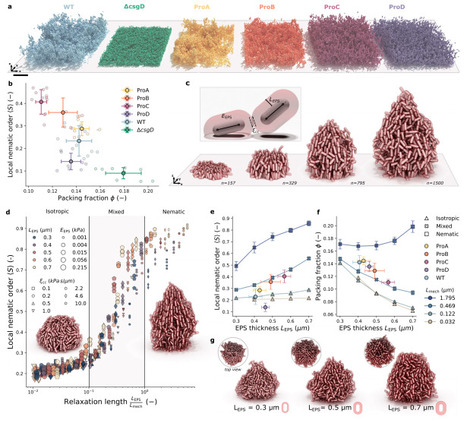
Biofilms are structured microbial communities whose extracellular matrix is widely regarded as a basis of their protection against antimicrobial compounds. Yet how matrix production by individual bacteria gives rise to collective architecture and antimicrobial protection remains poorly understood. Here, we systematically varied expression of the master biofilm regulator csgD in Salmonella enterica and found that increasing matrix production reorganizes biofilms from dense, isotropic packings into sparse, nematically aligned communities by altering cell-cell interactions. By combining experimentally measured biofilm architectures with reaction-diffusion modeling, we show that these structural changes produce distinct patterns of antimicrobial killing, ranging from preferential killing near the liquid-biofilm interface to more uniform killing throughout the community. Consequently, increasing matrix production unexpectedly reduces antimicrobial survival by shifting the biofilm into different transport regimes, while strain-specific physiological differences further modulate antimicrobial depletion. Rather than acting as a passive barrier, EPS therefore shapes antimicrobial susceptibility by reorganizing biofilm architecture and its transport properties. EPS thus provides a physical link between molecular regulation, collective architecture and antimicrobial survival, providing a quantitative framework for understanding how cellular matrix production generates emergent biofilm function.
|
|
Scooped by
mhryu@live.com
September 27, 11:54 AM
|
Type V CRISPR-Cas12 systems evolved from transposon-encoded TnpB proteins, with type V-U4 nucleases (Cas12n) as evolutionary intermediates linking TnpB to larger type V effectors. Despite their compact size, most Cas12n orthologs, including Corynebacterium glutamicum Cas12n (CgCas12n), exhibit low genome-editing activity in mammalian cells. Here, we engineered CgCas12n using an arginine enrichment strategy, generating a variant with approximately 60-fold enhanced editing efficiency. Concurrently, we optimized the sgRNA scaffold to reduce its size without compromising activity. These improvements were combined to establish an enhanced CgCas12n system (eCgCas12n) that enables efficient mammalian genome editing. We further adapted this system for base editing by constructing a cytosine base editor (eCgCas12n-CBE) that mediates efficient C-to-T conversion. As proof of concept, eCgCas12n-CBE introduced a premature stop codon into the Dmd gene, reducing dystrophin expression and impairing myogenic differentiation. AAV9-mediated delivery of eCgCas12n-CBE into mouse skeletal muscle demonstrated its in vivo editing capability. Collectively, this work establishes a robust engineering strategy to enhance compact Cas12n nucleases and provides an efficient genome- and base-editing platform for functional genetic studies.
|
|
Scooped by
mhryu@live.com
September 26, 1:44 PM
|
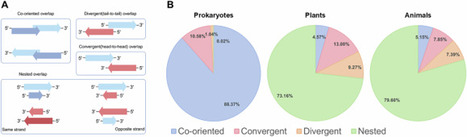
Overlapping genes are widely distributed across the genomes of nearly all living organisms. Although thousands of overlapping genes have been identified and studied in several species, a comprehensive annotation of these genes is lacking, and the forces shaping their evolution remain poorly understood. Here, we present a comparative analysis of overlapping genes in 253 prokaryotic genomes, 115 plant genomes, and 111 animal genomes. We find that co-oriented overlapping genes predominate in prokaryotes, whereas nested overlapping genes are the most common type in eukaryotes. In prokaryotes, overlapping genes are significantly shorter than non-overlapping genes, and 69% of co-oriented overlaps occur in translational phase 2. The number of overlapping genes is strongly correlated with genome size in prokaryotes but not in eukaryotes. We estimated the rates at which overlapping genes are gained and lost over evolutionary time and found that loss of overlapping orthologs is the highest rate in eukaryotes, whereas the highest rate in prokaryotes is the gain of overlapping genes from adjacent genes. Expression analyses revealed that, compared with neighboring genes, nested genes exhibit lower expression levels, altered expression correlations, and higher tissue-specific expression patterns in selected eukaryotic species. Based on these patterns, we propose distinct models to explain the evolutionary pressures acting on overlapping genes in prokaryotes and eukaryotes. Together, our findings provide new insights into the evolution of overlapping genes.
|
|
Scooped by
mhryu@live.com
September 26, 1:28 PM
|
Adaptive laboratory evolution (ALE) is a powerful strategy for exploring functional solution spaces, yet its pace is fundamentally constrained by low spontaneous mutation rates. Here, we present a broadly applicable genetic device that accelerates genome diversification in Gram-negative bacteria through the transient action of a dual base editor (ACBE3). This construct combines cytidine and adenosine deaminase activities with a single-stranded DNA-binding module, enabling efficient genome-wide mutagenesis without reliance on host-specific replication or repair systems. The expression of ACBE3 increased mutation rates by up to four orders of magnitude in E. coli and Pseudomonas putida, outperforming classical random mutagenesis approaches such as UV irradiation and chemical treatment. Whole-genome sequencing revealed extensive and uniformly distributed mutations, predominantly consistent with deamination signatures, as well as a broader spectrum of nucleotide changes and small indels. The system displayed strong orthogonality, functioning across diverse bacterial taxa. As a proof of concept, coupling ACBE3-mediated diversification with selective growth conditions enabled the rapid evolution of Acinetobacter calcoaceticus P320, yielding mutant strains with enhanced growth on n-dodecane within only a few induction cycles. This approach decouples diversification from selection, enabling the controlled exploration of adaptive landscapes at unprecedented speeds. While high mutational loads impose cellular burdens and require tight regulatory control, the platform offers a versatile route to accelerate microbial evolution at both single-strain and community levels. Our results thus document dual base editing as a powerful framework for fostering evolution in microbial biotechnology.
|
|
Scooped by
mhryu@live.com
September 26, 12:49 PM
|
Microbial CO₂ assimilation provides a strategy for sustainable biomanufacturing. However, CO₂ reduction requires substantial energy input, while native energy systems are tightly regulated and extensively consumed by endogenous metabolism, limiting assimilation efficiency. Here, we design and construct an orthogonal energy system in E. coli, achieving an intracellular NUDH concentration exceeding 7.0 mM and an NUDH/NUD⁺ ratio above 55. Subsequently, we design a CO₂-formate-acetyl-CoA-pyruvate-malate pathway and reprogram key enzymes for NUDH-dependent operation. Integration of the OES-driven CAM* pathway with a rationally rewired native electron transport chain supports growth of the engineered E. coli on CO₂ and methanol, with a doubling time of 8.6 ± 0.3 h and a maximum OD₆₀₀ of 37.5 ± 5.8. Moreover, the platform extends CO₂ assimilation to biosynthesis of multiple chemicals from distinct CAM* pathway nodes, including mevalonate, lactate, 2,3-butanediol, and succinate. Together, these results establish a framework for reprogramming microbial energy metabolism and expanding one-carbon biotransformation. Microbial CO₂ reduction requires substantial energy input which limits assimilation efficiency. Here the authors create a dedicated reducing-power supply for CO₂ assimilation in E. coli and couple this with methanol oxidation to support the production of four chemicals from distinct metabolic nodes.
|
|
Scooped by
mhryu@live.com
September 26, 12:27 PM
|
Carbohydrate-active enzymes (CAZymes) drive the turnover of polysaccharides in the oceans. However, the scale of diversity in polysaccharide utilization and genome organization strategies has yet to be characterized, particularly in marine ecosystems. In this paper, we introduce mpcgcdb.com as an interactive web catalog for marine CAZyme gene clusters, their associated metagenome-assembled genomes, and relevant enzyme families found in marine metagenomic samples. This database contains nearly 290,000 marine CAZyme gene clusters from more than 22,000 genomes, enabling user-initiated exploratory visualizations for genome organization networks and enzyme phylogeny. This tool will assist researchers in developing hypotheses about gene function, connecting species to metabolic niches, and identifying gaps where future work is needed to understand different pathways in marine glycan cycling.
|
|
Scooped by
mhryu@live.com
September 26, 12:18 PM
|
Maintaining microbially mediated phosphorus mobilization under intensive nitrogen fertilization is difficult in acidified paddy soils. Using a decade-long field experiment in a rice–oilseed rape rotation, we compared an ordered manure-substitution series, in which manure input increased while mineral nitrogen input decreased, with a mineral nitrogen dose gradient. Increasing mineral nitrogen input was associated with lower diversity and lower absolute abundance of the phoD-harboring bacterial guild and a marked shift in community composition. Across the manure-substitution series, soil pH increased from 5.94 to 6.62, potential alkaline phosphatase activity increased by up to 158%, and Olsen-extractable phosphorus increased by up to 182%. The diversity, composition, and absolute abundance of the phoD guild changed progressively across the same series. Distance-based redundancy analysis identified soil pH as the strongest measured marginal correlate of community composition, whereas variation partitioning indicated that the effects of pH, carbon, and phosphorus were largely shared. An exploratory structural equation model was consistent with conditional associations of both community composition and absolute gene abundance with alkaline phosphatase activity, which was, in turn, associated with Olsen-extractable phosphorus. The highest observed means for gene abundance, grain yield, and grain phosphorus removal occurred in the intermediate manure treatment, whereas treatment-level copper and zinc concentrations increased towards the highest-manure treatment. Together, these findings indicate that manure substitution can counteract mineral nitrogen-associated deterioration of the phoD guild and support microbial phosphorus mobilization, although the agronomic and metal responses require confirmation across sites and seasons.
|
|
Scooped by
mhryu@live.com
September 26, 11:30 AM
|
Programmable genome editing has advanced from nucleases through base and prime editors, yielding an increasingly precise and versatile editing toolkit that is nonetheless best suited to small, localized changes. Efficient, site-specific writing of kilobase-scale DNA, including whole genes, regulatory elements, and multi-component cassettes, remains a central unmet goal, with implications for dissecting regulatory logic, building physiologically accurate disease models, and engineering mutation- and gene-agnostic therapies. Here, we review recent advances in programmable large-DNA writing in the human genome across four mechanistic categories: recombinase-, prime editing-, transposase-, and retrotransposon-mediated technologies. Across these platforms, high catalytic activity and precise control over the integration site have tended to trade off against one another, a tension further compounded by declining efficiency from immortalized lines to primary cells to in vivo models. We also discuss the key limitations facing efficient ex vivo and in vivo large-DNA writing applications, and consider how current and future advances in biomolecule evolution and delivery systems can help address these challenges.
|













methods: Membrane damage was mimicked chemically with 4 agents, either mixed into the molten agarose pads for live-cell imaging or added to cultures immediately before lysis for the pulldowns: polymyxin B at 20 µg/ml, which binds lipid A, displaces the divalent cations bridging LPS, and then inserts into and lyses both membranes; polymyxin B nonapeptide at 40 µg/ml, the truncated form lacking the acyl tail, which retains LPS binding and outer membrane permeabilization but cannot lyse the inner membrane, so it isolates outer membrane damage; EDTA at 2 mM, which chelates the Mg²⁺ and Ca²⁺ crosslinking adjacent LPS molecules and destabilizes the outer leaflet without any peptide insertion; and melittin at 40 µg/ml, an amphipathic pore-forming peptide acting at the outer membrane. All four induced firing in live cells, and all but melittin increased TagQR complex yield.