


The phototrophic alpha‐proteobacterium, Rhodopseudomonas palustris, is a model for studies of regulatory and physiological parameters that control the activity of nitrogenase. This enzyme produces the energy‐rich compound H2, in addition to converting N2 gas to NH3. Nitrogenase is an ATP‐requiring enzyme that uses large amounts of reducing power, but the electron transfer pathway to nitrogenase in R. palustris was incompletely known. Here we show that the ferredoxin, Fer1, is the primary but not sole electron carrier protein encoded by R. palustris that serves as an electron donor to nitrogenase. A flavodoxin, FldA, is also an important electron donor, especially under iron limitation. We present a model where the electron bifurcating complex, FixABCX, can reduce both ferredoxin and flavodoxin to transfer electrons to nitrogenase, and we present bioinformatic evidence that FixABCX and Fer1 form a conserved electron transfer pathway to nitrogenase in nitrogen‐fixing Proteobacteria. These results may be useful in the design of strategies to reroute electrons generated during metabolism of organic compounds to nitrogenase to achieve maximal activity. This article is protected by copyright. All rights reserved.

RMH
97.3K views |
+33 today
 Your new post is loading... Your new post is loading...
 Scoop.it!
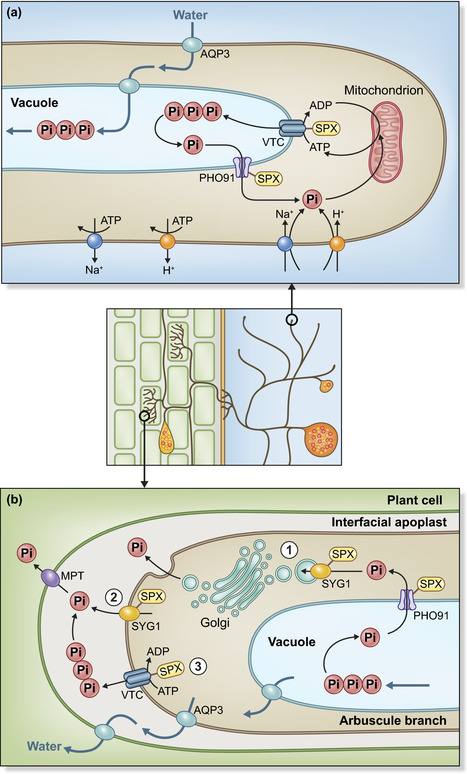
Arbuscular mycorrhizal fungi form symbiotic associations with most land plants and deliver mineral nutrients, in particular phosphate, to the host. Therefore, understanding the mecha- nisms of phosphate acquisition and delivery in the fungi is critical for full appreciation of the mutualism in this association. Here, we provide updates on physical, chemical, and biological strategies of the fungi for phosphate acquisition, including interactions with phosphate- solubilizing bacteria, and those on the regulatory mechanisms of phosphate homeostasis based on resurveys of published genome sequences and a transcriptome with reference to the latest findings in a model fungus. For the mechanisms underlying phosphate translocation and export to the host, which are major research frontiers in this field, not only recent advances but also testable hypotheses are proposed. Lastly, we briefly discuss applicability of the latest tools to gene silencing in the fungi, which will be breakthrough techniques for comprehensive understanding of the molecular basis of fungal phosphate metabolism. 
Scoop.it!
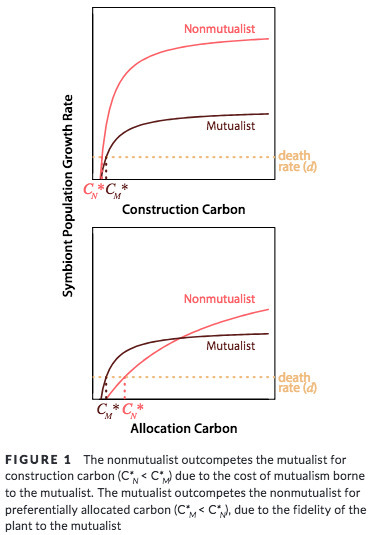
Plants engage in multiple root symbioses that offer varying degrees of benefit. We asked how variation in partner quality persists using a resource‐ratio model of population growth. We considered the plant's ability to preferentially allocate carbon to mutualists and competition for plant carbon between mutualist and nonmutualist symbionts. We treated carbon as two nutritionally interchangeable, but temporally separated, resources—carbon allocated indiscriminately for the construction of the symbiosis, and carbon preferentially allocated to the mutualist after symbiosis establishment and assessment. This approach demonstrated that coexistence of mutualists and nonmutualists is possible when fidelity of the plant to the mutualist and the cost of mutualism mediate resource competition. Furthermore, it allowed us to trace symbiont population dynamics given varying degrees of carbon allocation. Specifically, coexistence occurs at intermediate levels of preferential allocation. Our findings are consistent with previous empirical studies as well the application of biological market theory to plantroot symbioses.
Scoop.it!

Synthetic biologists are building organisms that can satisfy our material needs in a cleaner, greener way. James Mitchell Crow explains.
Scoop.it!
Sociomicrobiology of bacteria is a recent field of research and it involves the study of communication and cooperative behavior of bacteria. Cell-to-cell communication between bacteria, usually referred to as quorum sensing, was initially described as a means by which bacteria achieve signaling in microbial communities to coordinate gene expression within a population. Quorum sensing, mediated by homoserine lactones in many cases, involves small molecules produced by bacteria. This chapter summarizes signal molecules, including homoserine lactones and a variety of compounds, involved in quorum sensing in microorganisms, with emphasis on the chemistry of the signal molecules.
Scoop.it!
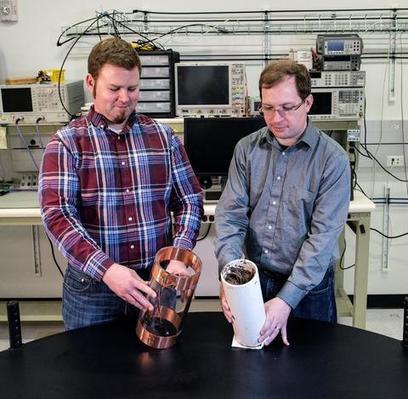
NIST scientists Karl Stupic and Joshua Biller are playing a key role, supported by the Advanced Research Projects Agency–Energy (ARPA-E) under a program called ROOTS, for Rhizosphere Observations Optimizing Terrestrial Sequestration. The project, Magnetic Resonance Imaging for Root Growth(link is external), is led by Texas A&M University with partners at the Athinoula A. Martinos Center for Biomedical Imaging in Boston, Massachusetts, and ABQMR, Inc., an Albuquerque, New Mexico, research and development firm specializing in magnetic resonance technologies.
Scoop.it!
Tuning gene expression variability and multi-gene regulation by dynamic transcription factor controlMany natural transcription factors are regulated in a pulsatile fashion, but it remains unknown whether synthetic gene expression systems can benefit from such dynamic regulation. Using a fast-acting, light-responsive transcription factor in Saccharomyces cerevisiae, we show that dynamic pulsatile signals reduce cell-to-cell variability in gene expression. We then show that by encoding such signals into a single input, expression mean and variability can be precisely and independently tuned. Further, we construct a light-responsive promoter library and demonstrate how pulsatile signaling also enables graded multi-gene regulation at fixed expression ratios, despite differences in promoter dose-response characteristics. Pulsatile regulation can thus lead to highly beneficial functional behaviors in synthetic biological systems, which previously required laborious optimization of genetic parts or complex construction of synthetic gene networks.
Scoop.it!

Biological systems have evolved efficient sensing and decision‐making mechanisms to maximize fitness in changing molecular environments. Synthetic biologists have exploited these capabilities to engineer control on information and energy processing in living cells. While engineered organisms pose important technological and ethical challenges, de novo assembly of non‐living biomolecular devices could offer promising avenues toward various real‐world applications. However, assembling biochemical parts into functional information processing systems has remained challenging due to extensive multidimensional parameter spaces that must be sampled comprehensively in order to identify robust, specification compliant molecular implementations. We introduce a systematic methodology based on automated computational design and microfluidics enabling the programming of synthetic cell‐like microreactors embedding biochemical logic circuits, or protosensors , to perform accurate biosensing and biocomputing operations in vitro according to temporal logic specifications. We show that proof‐of‐concept protosensors integrating diagnostic algorithms detect specific patterns of biomarkers in human clinical samples. Protosensors may enable novel approaches to medicine and represent a step toward autonomous micromachines capable of precise interfacing of human physiology or other complex biological environments, ecosystems, or industrial bioprocesses.
Scoop.it!
From
pubs

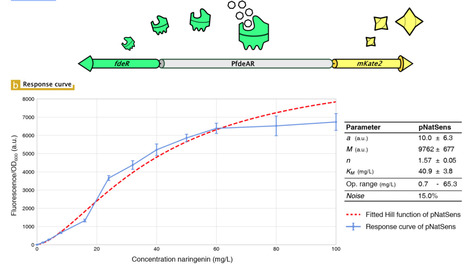
In this contribution, a natural LysR-type naringenin-responsive biosensor for flavonoids circuit is developed and characterised with Escherichia coli as host organism. Subsequently, this biosensor is dissected into a clearly defined detector and effector module without loss of functionality and the influence of the expression levels of both modules on the biosensor response characteristics is investigated. Two collections of ten unique synthetic biosensors each are generated. Each collection demonstrates a unique diversity of response curve characteristics spanning a 128-fold change in dynamic and 2.5-fold change in operational ranges and 3-fold change in levels of Noise, fit for a wide range of applications, such as adaptive laboratory evolution, dynamic pathway control and high-throughput screening methods. The established biosensor engineering concepts, and the developed biosensor collections themselves, are of use for the future development and customisation of biosensors in general, for the multitude of biosensor applications and as a compelling alternative for the commonly used LacI-, TetR- and AraC-based inducible circuits.
mhryu@live.com's insight:
H. seropedicae uses this LysR-type transcriptional regulatory circuit to initiate transcription of the fdeA gene, the first gene of the fde operon responsible for naringenin degradation, in response to the detection of naringenin by FdeR
Scoop.it!
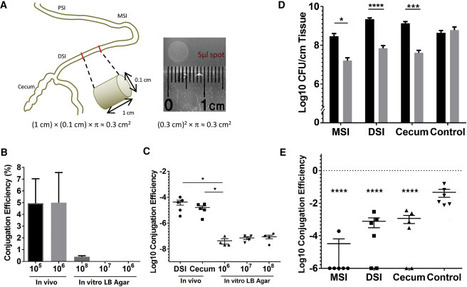
Vibrio cholerae is the causative agent of the diarrheal disease cholera. Although many V. cholerae virulence factors have been studied, the role of interbacterial interactions within the host gut and their influence on colonization are poorly understood. Here, we utilized the conjugative properties of a Vibrio-specific plasmid to serve as a quantifiable genetic marker for direct contact among V. cholerae cells in the infant rabbit model for cholera. In conjunction, we also quantified contact-dependent type 6 secretion system (T6SS)-mediated killing of co-infecting V. choleraestrains. Tracking these interbacterial interactions revealed that most contact-dependent cell-cell interactions among V. cholerae occur in specific intestinal microenvironments, notably the distal small intestine and cecum, and that the T6SS confers a competitive advantage within the middle small intestine. These results support a model for V. cholerae gut colonization, which includes microenvironments where critical microbial-host and bacterial-bacterial interactions occur to facilitate colonization by this pathogen.
Scoop.it!

Many actinobacteria live in close association with eukaryotes such as fungi, insects, animals and plants. Plant-associated actinobacteria display (endo)symbiotic, saprophytic or pathogenic life styles, and can make up a substantial part of the endophytic community. Here, we characterised endophytic actinobacteria isolated from root tissue of Arabidopsis thaliana(Arabidopsis) plants grown in soil from a natural ecosystem. Many of these actinobacteria belong to the family of Streptomycetaceae with Streptomyces olivochromogenes and Streptomyces clavifer as well represented species. When seeds of Arabidopsis were inoculated with spores of Streptomyces strain coa1, which shows high similarity to S. olivochromogenes,roots were colonised intercellularly and, unexpectedly, also intracellularly. Subsequent exposure of endophytic isolates to plant hormones typically found in root and shoot tissues of Arabidopsis led to altered antibiotic production against Escherichia coli and Bacillus subtilis. Taken together, our work reveals remarkable colonization patterns of endophytic streptomycetes with specific traits that may allow a competitive advantage inside root tissue.
Scoop.it!
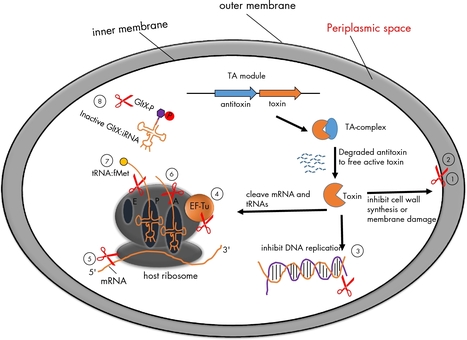
Toxin–antitoxin systems (TAs) are ubiquitous among bacteria and play a crucial role in the dissemination and evolution of antibiotic resistance, such as maintaining multi-resistant plasmids and inducing persistence formation. Generally, activities of the toxins are neutralised by their conjugate antitoxins. In contrast, antitoxins are more liable to degrade under specific conditions such as stress, and free active toxins interfere with essential cellular processes including replication, translation and cell-wall synthesis. TAs have also been shown to be responsible for plasmid maintenance, stress management, bacterial persistence and biofilm formation. We discuss here the recent findings of these multifaceted TAs (type I–VI) and in particular examine the role of TAs in augmenting the dissemination and maintenance of multi-drug resistance in bacteria.
Scoop.it!
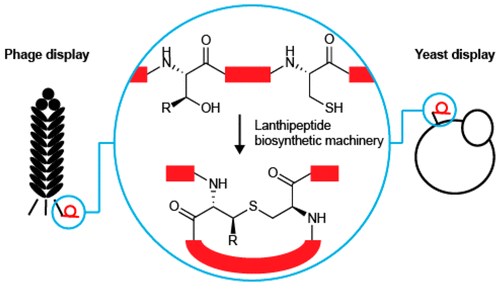
Peptide display has enabled identification and optimization of ligands to many targets. These ligands are usually linear or disulfide-containing peptides that are vulnerable to proteolysis or reduction. We report yeast surface and phage display of lanthipeptides, macrocyclic ribosomally synthesized and post-translationally modified peptides (RiPPs). Lanthipeptides contain multiple thioether cross-links that bestow their biological activities. We developed C-terminal yeast display of the class II lanthipeptides lacticin 481 and haloduracin β, and randomization of the C-ring of the former was used to select tight binders to αvβ3 integrin. This represents the first examples of bacterial RiPP production in Saccharomyces cerevisiae for identification of variants with new biological activities. We also report N-terminal phage display of the class I lanthipeptide nisin and randomization of its A- and B-rings to enrich binders to a small molecule, lipid II. The successful display and randomization of both class I and II lanthipeptides demonstrates the versatility and potential of RiPP display.
|
Scoop.it!
- Effects of Strigolactones on Plant Roots - Root Exudates Dominate the Colonization of Pathogen and Plant Growth-Promoting Rhizobacteria - Root–Microbe Interactions: Understanding and Exploitation of Microbiome
Scoop.it!

The propagation of pure cultures of arbuscular mycorrhizal fungal (AMF) is an essential requirement for their large‐scale agricultural application and commercialization as biofertilizers. The present study aimed to propagate AMF using the single‐spore inoculation technique and compare their propagation ability with the known reference spores. Arbuscular mycorrhizal fungal spores were collected from salt‐affected Saemangeum reclaimed soil in South Korea. The technique involved inoculation of sorghum‐sudangrass (Sorghum bicolor L.) seedlings with single, healthy spores on filter paper followed by the transfer of successfully colonized seedlings to 1‐kg capacity pots containing sterilized soil. After the first plant cycle, the contents were transferred to 2·5‐kg capacity pots containing sterilized soil. Among the 150 inoculated seedlings, only 27 seedlings were colonized by AMF spores. After 240 days, among the 27 seedlings, five inoculants resulted in the production of over 500 spores. The 18S rDNA sequencing of spores revealed that the spores produced through single‐spore inoculation method belonged to Gigaspora margarita, Claroideoglomus lamellosum and Funneliformis mosseae. Furthermore, indigenous spore F. mosseae M–1 reported a higher spore count than the reference spores. The AMF spores produced using the single‐spore inoculation technique may serve as potential bio‐inoculants with an advantage of being more readily adopted by farmers due to the lack of requirement of a skilled technique in spore propagation. The results of the current study describe the feasible and cost‐effective method to mass produce AMF spores for large‐scale application. The AMF spores obtained from this method can effectively colonize plant roots and may be easily introduced to the new environment.
Scoop.it!

We report the engineering of mScarlet, a truly monomeric red fluorescent protein with record brightness, quantum yield (70%) and fluorescence lifetime (3.9 ns). We developed mScarlet starting with a consensus synthetic template and using improved spectroscopic screening techniques; mScarlet's crystal structure reveals a planar and rigidified chromophore. mScarlet outperforms existing red fluorescent proteins as a fusion tag, and it is especially useful as a Förster resonance energy transfer (FRET) acceptor in ratiometric imaging.
Scoop.it!
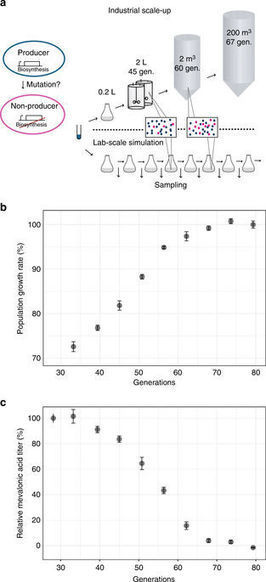
A transition toward sustainable bio-based chemical production is important for green growth. However, productivity and yield frequently decrease as large-scale microbial fermentation progresses, commonly ascribed to phenotypic variation. Yet, given the high metabolic burden and toxicities, evolutionary processes may also constrain bio-based production. We experimentally simulate large-scale fermentation with mevalonic acid-producing Escherichia coli. By tracking growth rate and production, we uncover how populations fully sacrifice production to gain fitness within 70 generations. Using ultra-deep (>1000×) time-lapse sequencing of the pathway populations, we identify multiple recurring intra-pathway genetic error modes. This genetic heterogeneity is only detected using deep-sequencing and new population-level bioinformatics, suggesting that the problem is underestimated. A quantitative model explains the population dynamics based on enrichment of spontaneous mutant cells. We validate our model by tuning production load and escape rate of the production host and apply multiple orthogonal strategies for postponing genetically driven production declines.
mhryu@live.com's insight:
sommer 3st - genetic stability over long-term cultures. - most of production escapes over long-term culture is due to IS insertion. use MDS42 (IS-free) and IS-free but lower titer. - also add an essential gene to the end of the operon to prevent polar effect by IS insertion.
Scoop.it!

The Rfam database is a collection of RNA families in which each family is represented by a multiple sequence alignment, a consensus secondary structure, and a covariance model. In this paper we introduce Rfam release 13.0, which switches to a new genome-centric approach that annotates a non-redundant set of reference genomes with RNA families. We describe new web interface features including faceted text search and R-scape secondary structure visualizations. We discuss a new literature curation workflow and a pipeline for building families based on RNAcentral. There are 236 new families in release 13.0, bringing the total number of families to 2687. The Rfam website is http://rfam.org.
Scoop.it!
From
link
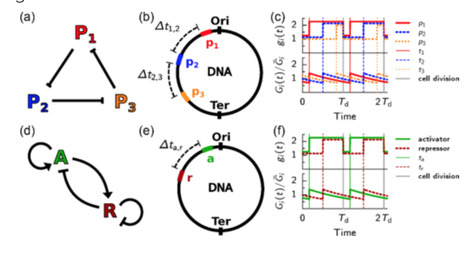
Synthetic biology sets out to implement new functions in cells, and to develop a deeper understanding of biological design principles. Elowitz and Leibler [Nature (London) 403, 335 (2000)] showed that by rational design of the reaction network, and using existing biological components, they could create a network that exhibits periodic gene expression, dubbed the repressilator. More recently, Stricker et al. [Nature (London) 456, 516 (2008)] presented another synthetic oscillator, called the dual-feedback oscillator, which is more stable. Detailed studies have been carried out to determine how the stability of these oscillators is affected by the intrinsic noise of the interactions between the components and the stochastic expression of their genes. However, as all biological oscillators reside in growing and dividing cells, an important question is how these oscillators are perturbed by the cell cycle. In previous work we showed that the periodic doubling of the gene copy numbers due to DNA replication can couple not only natural, circadian oscillators to the cell cycle [Paijmans et al., Proc. Natl. Acad. Sci. (USA) 113, 4063 (2016)], but also these synthetic oscillators. Here we expand this study. We find that the strength of the locking between oscillators depends not only on the positions of the genes on the chromosome, but also on the noise in the timing of gene replication: noise tends to weaken the coupling. Yet, even in the limit of high levels of noise in the replication times of the genes, both synthetic oscillators show clear signatures of locking to the cell cycle. This work enhances our understanding of the design of robust biological oscillators inside growing and diving cells.
Scoop.it!
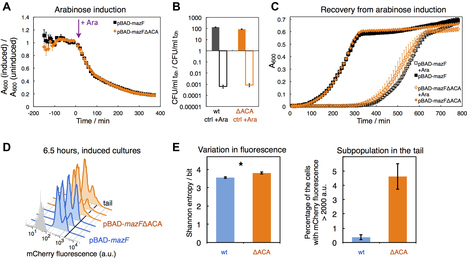
The MazF toxin sequence-specifically cleaves single-stranded RNA upon various stressful conditions, and it is activated as a part of the mazEF toxin–antitoxin module in Escherichia coli. Although autoregulation of mazEF expression through the MazE antitoxin-dependent transcriptional repression has been biochemically characterized, less is known about post-transcriptional autoregulation, as well as how both of these autoregulatory features affect growth of single cells during conditions that promote MazF production. Here, we demonstrate post-transcriptional autoregulation of mazF expression dynamics by MazF cleaving its own transcript. Single-cell analyses of bacterial populations during ectopic MazF production indicated that two-level autoregulation of mazEF expression influences cell-to-cell growth rate heterogeneity. The increase in growth rate heterogeneity is governed by the MazE antitoxin, and tuned by the MazF-dependent mazF mRNA cleavage. Also, both autoregulatory features grant rapid exit from the stress caused by mazF overexpression. Time-lapse microscopy revealed that MazF-mediated cleavage of mazFmRNA leads to increased temporal variability in length of individual cells during ectopic mazF overexpression, as explained by a stochastic model indicating that mazEF mRNA cleavage underlies temporal fluctuations in MazF levels during stress.
Scoop.it!

Many living organisms make use of diverse amyloid proteins as functional building blocks to fulfill a variety of physiological applications. This fact, along with the intrinsic self-assembly and outstanding material properties of amyloids, has prompted a significant amount of research in the synthetic design of functional amyloids to form diverse nanoarchitectures, molecular materials and hybrid or composite materials. In particular, a new research paradigm has recently been advanced that uses synthetic biology to harness functional amyloids with cells as living materials or functional devices. Here we outline important progress in the synthetic design of functional amyloids, in the context of both non-living and living systems. We propose several important tools and underline emerging techniques and principles that might be useful in advancing the future synthetic design of functional amyloids.
Scoop.it!
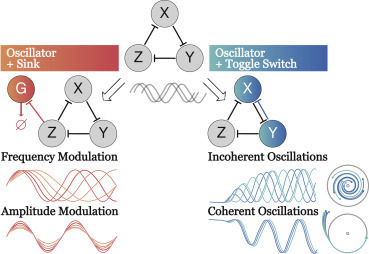
Oscillators have captured the attention of synthetic biologists since the inception of the field. However, realistic implementations of synthetic oscillators have been plagued by imprecise control over amplitude and frequency and asynchrony between cells. A series of elegant studies have addressed these challenges—for instance, by eliminating genetic and external sources of variability (Potvin-Trottier et al., 2016) or using quorum signals to orchestrate cell synchrony (Danino et al., 2010); however, these approaches can add burden and complexity or reduce tunability in exchange for synchrony. In this issue of Cell Systems, two modeling papers by Tomazou et al. (2018) and Perez-Carrasco et al. (2018) improve upon the design of classic synthetic oscillators to address these limitations (Figure 1). These circuit designs have the potential to usher in a new wave of experiments where oscillators can be used to precisely probe dynamic properties of biochemical networks and recapitulate the degree of biological control that has evolved in natural systems.
Scoop.it!
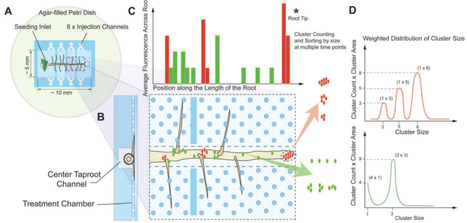
Plant–microbe interactions underpin processes related to soil ecology, plant function, and global carbon cycling. However, quantifying the spatial dynamics of these interactions has proven challenging in natural systems. Currently, microfluidic platforms are at the forefront of innovation for culturing, imaging, and manipulating plants in controlled environments. Using a microfluidic platform to culture plants with beneficial bacteria, visualization and quantification of the spatial dynamics of these interactions during the early stages of plant development is possible. For two plant growth–promoting bacterial isolates, the population of bacterial cells reaches a coverage density of 1–2% of the root's surface at the end of a 4 d observation period regardless of bacterial species or inoculum concentration. The two bacterial species form distinct associations with root tissue through a mechanism that appears to be independent of the presence of the other bacterial species, despite evidence for their competition. Root development changes associated with these bacterial treatments depend on the initial concentrations and species of the bacterial population present. This microfluidic approach provides context for understanding plant–microbe interactions during the early stages of plant development and can be used to generate new hypotheses about physical and biochemical exchanges between plants and their associated microbial communities.
Scoop.it!
From
mbio
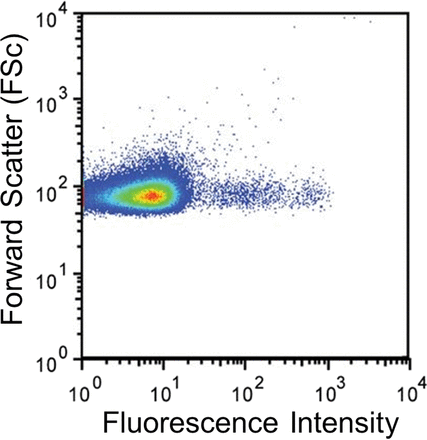
Bacterial multidrug resistance (MDR) efflux pumps are an important mechanism of antibiotic resistance and are required for many pathogens to cause infection. They are also being harnessed to improve microbial biotechnological processes, including biofuel production. Therefore, scientists of many specialties must be able to accurately measure efflux activity. However, myriad methodologies have been described and the most appropriate method is not always clear. Within the scientific literature, many methods are misused or data arising are misinterpreted. The methods for measuring efflux activity can be split into two groups, (i) those that directly measure efflux and (ii) those that measure the intracellular accumulation of a substrate, which is then used to infer efflux activity. Here, we review the methods for measuring efflux and explore the most recent advances in this field, including single-cell or cell-free technologies and mass spectrometry, that are being used to provide more detailed information about efflux pump activity.
Scoop.it!
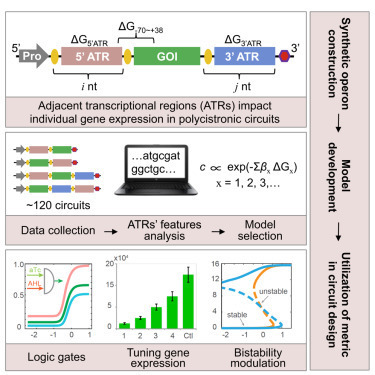
Polycistronic architecture is common for synthetic gene circuits, however, it remains unknown how expression of one gene is affected by the presence of other genes/noncoding regions in the operon, termed adjacent transcriptional regions (ATR). Here, we constructed synthetic operons with a reporter gene flanked by different ATRs, and we found that ATRs with high GC content, small size, and low folding energy lead to high gene expression. Based on these results, we built a model of gene expression and generated a metric that takes into account ATRs. We used the metric to design and construct logic gates with low basal expression and high sensitivity and nonlinearity. Furthermore, we rationally designed synthetic 5′ATRs with different GC content and sizes to tune protein expression levels over a 300-fold range and used these to build synthetic toggle switches with varying basal expression and degrees of bistability. Our comprehensive model and gene expression metric could facilitate the future engineering of more complex synthetic gene circuits.
|





harwood cs