Your new post is loading...

|
Scooped by
mhryu@live.com
Today, 12:17 PM
|
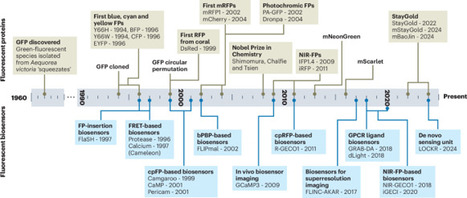
Since the discovery and application of green fluorescent protein for use as an optical tag, fluorescent proteins (FPs) have changed the way we observe biological signals and processes. FP and fluorescent biosensor design has continued to advance, facilitated by new technologies and developments in chemistry, physics, engineering and screening technologies. We summarize some of the recent developments in FP engineering, focusing on insights that have led to improved photostability or longer wavelengths, among other improvements, highlighting mScarlet as a case study. We also discuss the engineering of new fluorescent biosensors, focusing on the ways in which screening, quantitative imaging, spatial resolution and multiplexing have been improved in recent years. Finally, we conclude with a perspective on what the future holds for the next generation of FPs and biosensors. This Review summarizes recent developments in fluorescent protein technology, including the engineering of fluorescent biosensors.
|
|
Scooped by
mhryu@live.com
Today, 11:52 AM
|
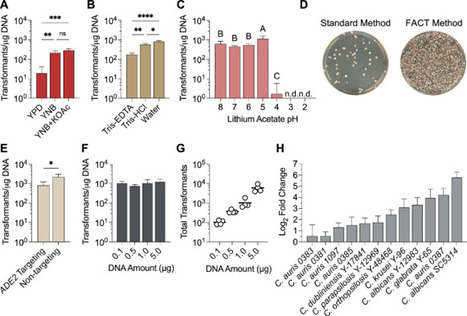
Candida species are fungal pathogens whose rapidly increasing antifungal resistance poses a substantial public health challenge. High-throughput CRISPR-based screening could accelerate antifungal target discovery, yet its application in Candida has been limited by low DNA transformation efficiency. Chemical transformation exposes cells to environmental stresses to permit DNA uptake, but the physiological constraints on transformability remain poorly defined. Here, we show that genetic transformability in C. albicans is governed by the cellular capacity to withstand and recover from transformation-induced stress. By systematically manipulating preculture conditions and transformation chemistry to modulate cellular stress tolerance, we developed a fungal advanced chemical transformation (FACT) method. The FACT method improves transformation efficiency over 100-fold across diverse Candida species and enables robust pooled CRISPR screening. Systems-level proteomic and physiological analyses reveal that nutrient limitation and optimized lithium acetate formulations prime cells for tolerance to transformation stress, with transformation efficiency strongly correlating with the expression of oxidative stress response proteins. This work overcomes a critical barrier to high‑throughput functional genomics and provides a mechanistic blueprint for enabling genetic manipulation of recalcitrant fungi.
|
|
Scooped by
mhryu@live.com
October 16, 3:05 PM
|
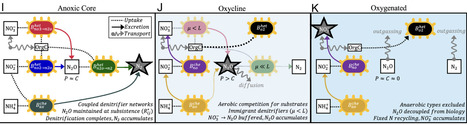
Oxygen minimum zones (OMZs) are marine hotspots for cycling and emission of the powerful greenhouse gas nitrous oxide (N2O). Steep redox gradients host diverse microbial communities that produce and consume N2O, generating a characteristic vertical distribution, with low concentrations in anoxic cores and supersaturated accumulation in surrounding oxyclines. Although the accumulation is commonly attributed to stronger O2 inhibition of N2O consumption than production, this differential inhibition is not consistently observed, suggesting that interactions among nitrogen-cycling metabolisms may provide additional mechanisms. To evaluate the ecological controls on the N2O profile, we embed a trait-based ecosystem model into an eddy-resolving simulation of the Eastern Tropical South Pacific OMZ. In this framework, redox energetics, metabolite exchange, competition, and grazing structure microbial growth, setting emergent niches of microbial functional types, particularly aerobic ammonia oxidizers and diverse anaerobic denitrifiers that mediate N2O cycling. In the anoxic core, cross-feeding tightly couples denitrifiers that produce and consume N2O, maintaining low concentrations. As O2 increases in the oxycline, competition with aerobic metabolisms and intensified grazing gradually exclude denitrifiers. However, because they draw on more abundant substrates, N2O-producing denitrifiers persist to higher O2 than N2O consumers, reflecting the vulnerability of populations dependent on intermediate metabolites. This ecological decoupling drives N2O accumulation and captures the characteristic double-peaked vertical structure without imposing physiological O2 intolerance thresholds. More broadly, by revealing how niche partitioning and producer–consumer coupling shape other features of OMZ biogeochemistry, these results provide a basis for projecting future shifts in marine nitrogen loss and N2O emissions.
|
|
Scooped by
mhryu@live.com
October 16, 3:00 PM
|
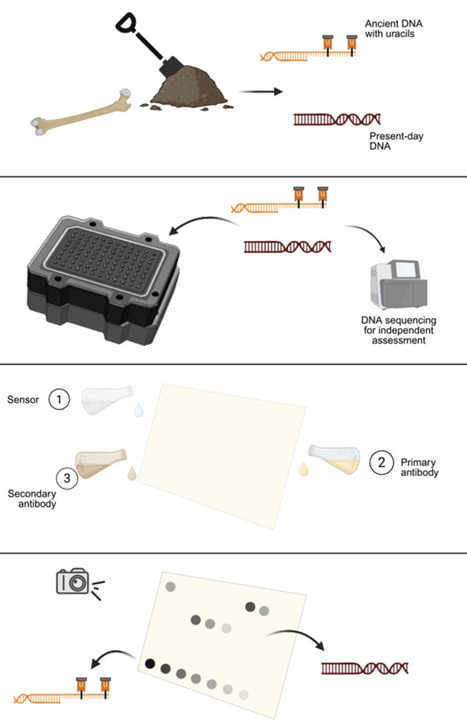
Paleogenetic studies provide invaluable insights into past populations. However, the success of ancient DNA retrieval remains difficult to predict. Ancient DNA workflows are time consuming and costly, motivating methods to assess preservation at an early stage. One defining molecular feature of ancient DNA is the accumulation of uracil residues through postmortem cytosine deamination. Here, we leverage a uracil-DNA-specific labeling assay, originally developed for modern DNA, to evaluate whether extracts contain ancient DNA molecules. The assay, which requires only two days to complete, quantifies uracil residues using a uracil-DNA-binding protein and antibody-based labeling. After demonstrating reliable immobilization of short DNA fragments, we applied the assay to twenty archaeological samples spanning diverse contexts. Extracts with the highest inferred uracil contents were more likely to contain ancient DNA, whereas the lowest-ranked extracts were consistently negative. This assay may facilitate early prioritization of promising extracts and deprioritization of samples unlikely to yield informative sequencing data.
|
|
Scooped by
mhryu@live.com
October 16, 2:52 PM
|
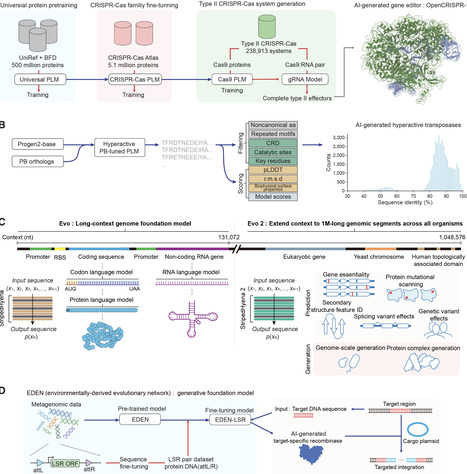
Since the discovery of the CRISPR-Cas system, genome-editing technologies have advanced rapidly, and the field has expanded substantially. In parallel, artificial intelligence (AI) has progressed at an unprecedented pace and is transforming genetic engineering. Early AI applications primarily addressed predictive tasks, including guide RNA (gRNA) activity, off-target effects, and editing outcomes for CRISPR-Cas nucleases, base editors, and prime editors. Recently, transformer-based protein language models (PLMs) and generative AI have expanded the role of AI beyond prediction to direct molecular design. Thus, AI-driven frameworks can now evolve genome-editing proteins, design molecular architectures, and generate de novo genome-editing enzymes. This review discusses how AI is reshaping genome engineering, from gRNA activity prediction to the design of next-generation editors.
|
|
Scooped by
mhryu@live.com
October 16, 2:32 PM
|
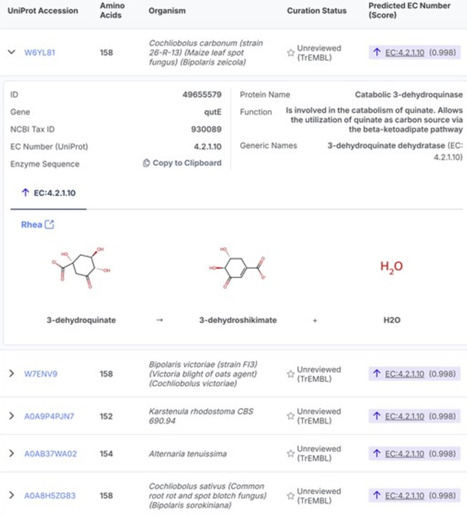
Enzyme function annotation is critical for decoding biological systems and enabling rational enzyme design. However, experimentally characterized enzyme functions remain available for only a small fraction of known protein sequences, resulting in a widening gap between rapidly expanding sequence space and reliable functional assignments. Recent advances in artificial intelligence (AI) have accelerated enzyme function annotation by facilitating accurate and high-throughput prediction from protein sequences. Here, we present CLEAN Database (CLEAN DB), a comprehensive resource encompassing >55 million enzyme function annotations across 1 098 305 strains, predicted by the CLEAN AI model. The database features an intuitive web interface that enables users to efficiently search, explore, and download enzyme function data through flexible query options. Additionally, powered by a protein language model, CLEAN DB supports mutation effect prediction through interactive heatmaps, structural overlays, and tabular data visualizations. We anticipate that CLEAN DB will serve as a valuable platform for advancing enzyme discovery and applications in synthetic biology, metabolic engineering, enzyme engineering, retrosynthesis, and drug discovery. The database is freely available at https://cleandb.platform.moleculemaker.org/.
|
|
Scooped by
mhryu@live.com
October 16, 1:51 AM
|
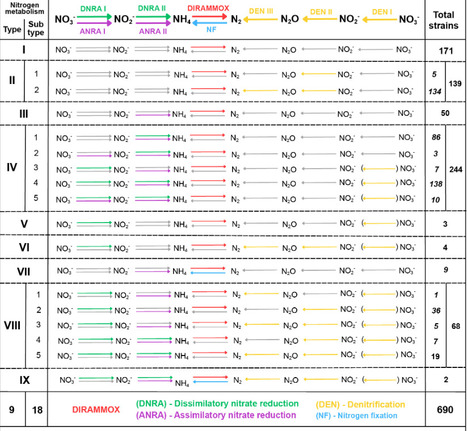
Our knowledge of the nitrogen cycle has been advanced by the discovery of anammox bacteria, ammonia-oxidizing archaea, and comammox bacteria, along with their high diversity. Direct ammonia oxidation (dirammox), a recently discovered heterotrophic nitrification pathway, converts ammonium and organic nitrogen directly to N2 through the DnfABC multienzyme system, further expanding our understanding of the nitrogen cycle. However, the taxonomic distribution, prevalence, and nitrogen metabolic potential of microorganisms encoding dirammox genes remain poorly understood. Here, large-scale genome mining identified complete dnfABC gene clusters in 690 genomes representing 3 phyla and 26 genera. The dnfABC cluster showed a striking bimodal prevalence: it was nearly ubiquitous in Alcaligenes, Delftia, and Microvirgula but occurred sporadically in most other genera. These microorganisms were recovered from diverse environments, particularly organic nitrogen-rich habitats. Comparative analyses of DnfABC phylogeny, gene cluster organization, GC content, and flanking mobile genetic elements indicate that the dnfABC cluster is conserved within several core genera, whereas its sporadic distribution in other lineages suggests that horizontal gene transfer may have contributed to its dissemination. The dnfABC cluster co-occurs with genes associated with assimilatory nitrate/nitrite reduction to ammonium, dissimilatory nitrate/nitrite reduction to ammonium, denitrification, and/or nitrogen fixation, but not with marker genes for nitrification or anammox, indicating diverse nitrogen metabolic potential among potential dirammox microorganisms. Functional assays further showed that diverse dnfABC clusters consistently conferred ammonium- and glutamine-oxidizing activities in Escherichia coli, despite exhibiting low activities in their native hosts. These results suggest that dirammox is a broadly distributed, metabolically flexible, and tightly regulated pathway and may represent an overlooked route of nitrogen transformation in organic-rich habitats.
|
|
Scooped by
mhryu@live.com
October 16, 1:33 AM
|
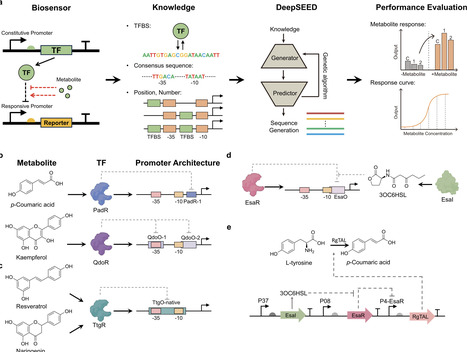
Transcription factor-based biosensors are essential for the scalable bioproduction of plant natural products. However, a major bottleneck in developing high-performance biosensors is the engineering of responsive promoters due to the vast sequence space and poorly understood sequence–function relationships. Here, we extend our previously published DeepSEED framework into an artificial intelligence-driven pipeline for efficient and extensible biosensor-responsive promoter optimization. This strategy integrates deep learning with domain-specific biological expertise. By fixing core promoter elements, varying the number and position of transcription factor binding sites (TFBSs) to define promoter backbones, and subsequently optimizing the flanking sequences, we enable the de novo design of promoters. We systematically apply this strategy to optimize a panel of biosensors across different transcription factors and regulatory modes, including four metabolite-responsive biosensors and a quorum-sensing-based environmental sensor. The resulting biosensors exhibit diverse dynamic behaviors with markedly improved sensitivity, expanded dynamic range, and increased maximum output. For instance, the optimized naringenin biosensor demonstrates a 32-fold broader dynamic range and a 27-fold higher maximum output compared to its parent. To illustrate its utility in metabolic engineering, we employed a DeepSEED-designed promoter to dynamically regulate a p-coumaric acid biosynthesis pathway, boosting production by 117.0%. Our work extends the previously published DeepSEED framework into a powerful pipeline for biosensor optimization and delivers a portfolio of high-performance regulatory elements, addressing a critical need and facilitating the development of more intelligent and productive metabolic engineering systems.
|
|
Scooped by
mhryu@live.com
October 16, 1:22 AM
|
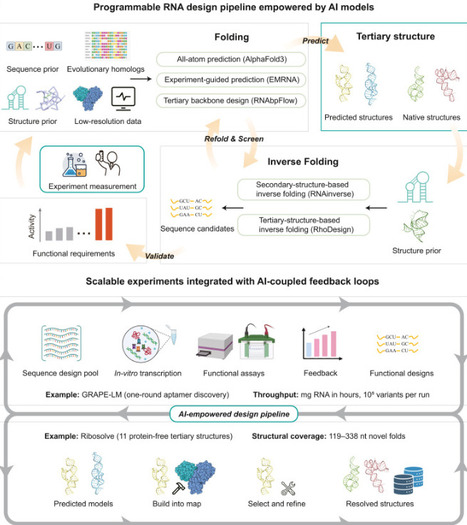
Functional RNA design is central to synthetic biology and RNA therapeutics. Recent AI advances leverage tertiary structure to interpret function and guide sequence generation, replacing traditional trial-and-error workflows. Experimental methods assisted by AI models continuously expand the structural data foundation and ultimately enable scalable and programmable RNA design.
|
|
Scooped by
mhryu@live.com
October 16, 1:15 AM
|
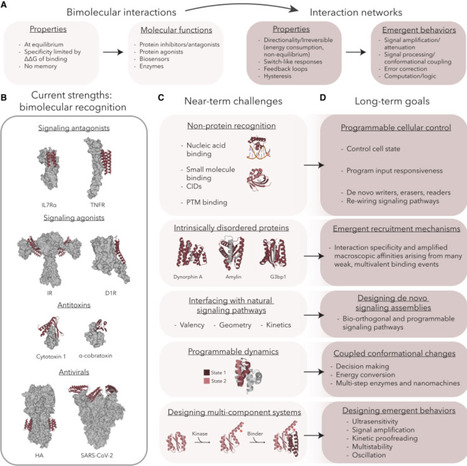
Driven by advances in artificial intelligence, de novo protein design can now generate diverse molecular functions from the ground up, achieving remarkable success in engineering binders against many macromolecular targets. Here, we provide a perspective on how de novo design can progress beyond bimolecular interactions toward the bottom-up construction of protein reaction networks. We highlight how programmable, modular, and controllable de novo components can drive complex, emergent biological behaviors. Overcoming current challenges—including designable protein dynamics, multi-step functionalities, and non-equilibrium systems—is essential for this transition. With continued foundational method improvements, the field is poised to pioneer precise protein perturbations for systems-level insight and to engineer emergent cellular behaviors like signal amplification, decision-making, and error correction de novo to fundamentally advance synthetic biology, biotechnology, and medicine.
|
|
Scooped by
mhryu@live.com
October 16, 1:10 AM
|
A weakness in glycobiology research is the insufficient integration of approaches used to connect glycan structure to function. From glycogene knockouts to understanding glycan structures, dynamics, and interactions, to determining whether a single glycan structure underlies a specific cellular function, no single approach provides sufficient information to establish these relationships. We argue that resolving glycan structure–function relationships requires the integration of complementary approaches spanning genetics, analytical glycomics, glycoengineering, structural biology, and computational modelling. The field stands at a transition point: from cataloguing glycan structures to understanding their diverse roles in regulating the biology of health and disease. Such an integrated approach will be critical for translating structural glycan information into mechanistic insights and, ultimately, informed glycoengineering and therapeutic design.
|
|
Scooped by
mhryu@live.com
October 16, 12:49 AM
|
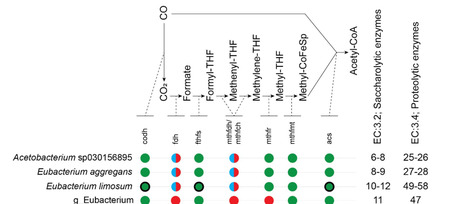
Syngas conversion to carboxylic acids can be achieved through the combined actions of acetogens and chain elongators. Mixed cultures enriched with these functional groups can serve as robust and resilient catalysts for bio-based production, but developing efficient and stable communities remains challenging. In this study, we aimed to enrich a mixed microbial culture for efficient syngas-driven chain elongation using carbon monoxide (CO) and acetate as substrates. Three strategies were employed: (i) conventional enrichment using anaerobic sludge only, (ii) sludge augmentation with known syngas fermenters (Clostridium autoethanogenum, Clostridium carboxidivorans, Eubacterium limosum, and Acetobacterium wieringae) to enhance carboxydotrophic activity, and (iii) sludge augmentation with chain elongator Clostridium kluyveri to stimulate chain elongation. Enrichments were performed in batch cultures with stepwise increases in CO partial pressure across successive transfers until a 100% CO (170 kPa) headspace was reached. Ultimately, all enrichments grew under a 100% CO headspace, simultaneously utilizing CO and acetate, with butyrate as main product. 16S rRNA gene and metagenomic analyses revealed that Eubacterium became predominant. Several genera (Aminobacterium, Anaerotignum, Oscillibacter, and Proteiniphilum) not known to ferment CO, were also enriched. Based on physiological and metagenomic analyses, we hypothesize that Eubacterium consumes CO and acetate, producing butyrate and extracellular polymeric substance (EPS)-like material. Metagenomic data further suggests that components derived from this EPS-like material may serve as substrate for the other enriched genera. This study demonstrates that augmentation can steer mixed microbial communities toward targeted product formation and highlights the critical role of initial culture conditions in shaping community composition and functionality.
|
|
Scooped by
mhryu@live.com
October 16, 12:44 AM
|
Klebsiella pneumoniae is an increasingly important opportunistic pathogen worldwide, particularly due to the emergence and spread of hypervirulent K. pneumoniae (hvKP), a clinically significant pathotype first identified in Taiwan. This study aimed to molecularly identify hvKP isolates screened for coexisting virulence determinants and evaluate the association between specific virulence genes and hypervirulence. Clinical specimens were collected from hospitalized patients, and K. pneumoniae isolates were identified phenotypically using microscopic culture characteristics and biochemical assays and genotypically confirmed by PCR targeting the khe gene. Hypermucoviscosity regulators prmpA and prmpA2, siderophore-encoding genes iucA and iroN, and other virulence-associated genes including wzi, magA, wzyK2, wabG, and peg-344 were investigated. Eighty-two capsulated non-motile K. pneumoniae isolates were confirmed with prmpA and prmpA2 detected in 42 and 29 isolates, respectively, whereas iucA was identified in 31 isolates and iroN in 6 isolates only. Based on the molecular criteria, 34 isolates were classified as hvKP and 48 as classical K. pneumoniae (cKP). A strong association was observed between the peg-344 gene and hypervirulence (p = 0.0001), whereas hypermucoviscosity showed a weaker correlation. However, low-speed sedimentation assay (LSSA) analysis demonstrated a significant relationship between the hypermucoviscous phenotype and genotypic hypervirulence (p = 0.041). These findings highlight the molecular determinants of hvKP and identify peg-344 as the gene most strongly associated with hypervirulence; however, its moderate sensitivity (58.8%) and absence in over 40% of hvKP isolates indicate that it is better suited as a supportive confirmatory marker than a standalone diagnostic biomarker for hvKP
|
|
|
Scooped by
mhryu@live.com
Today, 12:01 PM
|
A decade has passed since the initial description of cytosine base editors in 2016. This new class of gene editors, utilizing DNA damage intermediates beyond double-stranded DNA breaks, fundamentally shifted the paradigm of gene editing from stochastic disruption to precise chemical correction. Since then, the field has rapidly matured, with the development of optimized base editors with improved editing efficiency, targeting scope, precision and specificity, as well as the subsequent generation of adenine base editors and prime editors. Base editors have not only become widely used research tools but have served as foundational platforms for biotechnology companies developing human therapies. Today, base editors are being deployed in trials for a diverse list of indications including sickle cell disease, alpha-1 antitrypsin deficiency, inborn errors of metabolism, leukaemias and cardiovascular indications. This Review critically examines the ‘bench-to-bedside’ trajectory of base editors, detailing their mechanistic evolution and expanding role in treating human disease. Base editing, a gene editing technology capable of installing point mutations with high efficiency and precision, was first reported a decade ago. This Review examines the evolution of base editors and their road to clinical translation, highlighting key advances, ongoing challenges and the current clinical trial landscape.
|
|
Scooped by
mhryu@live.com
Today, 11:09 AM
|
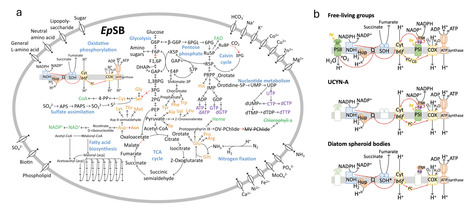
Nitrogen-fixing cyanobacteria are important sources of bioavailable nitrogen on Earth. Some nitrogen-fixing cyanobacteria are endosymbionts of algae, and recently one of them, UCYN-A2, was shown to be an early-stage organelle (nitroplast) of haptophytes. These biological associations are important models for studying co-evolution and organellogenesis. Endosymbioses between Rhopalodiaceae diatoms and nitrogen-fixing cyanobacteria (spheroid bodies, SBs) are widespread in marine and freshwater ecosystems, but their adaptation and evolution remain unclear. We found that the genomes and metabolic characteristics of marine and freshwater SBs are remarkably similar. Purifying selection pressures dominated SB diversification both within marine and freshwater habitats and across habitat boundaries. The metabolic characteristics and genome reduction of SBs are substantially different from UCYN-A, suggesting different evolutionary journeys for the endosymbionts influenced by different hosts. We estimated that the marine SBs diversified ~185 Mya (95% highest posterior density (HPD): 340-88 Mya), which was within a prolonged oligotrophic period in the ocean, during which UCYN-A also diversified. The freshwater SBs diversified from the marine SBs ~137 Mya (95% HPD: 258-66 Mya) and further diversified ~80 Mya (95% HPD: 157-31 Mya), when sea level was increasing. Our study reveals the genetic and metabolic underpinnings characterizing the nitrogen-fixing cyanobacterial endosymbionts of Rhopalodiaceae diatoms.
|
|
Scooped by
mhryu@live.com
October 16, 3:02 PM
|
De novo peptide sequencing from tandem mass spectra is essential for characterizing unknown proteins, identifying novel post-translational modifications, and analyzing samples without reference databases. While recent deep learning models have improved the predicted peptide accuracy, they typically select the predicted peptide sequence based solely on sequence-level decoding scores. Very often, high scores are assigned to peptides without the direct support from the observed mass spectrum. We present ScopeNovo, a de novo peptide sequencing method that improves predicted peptide accuracy by using spectrum-spectrum similarity between the input spectrum and the “representative” spectrum corresponding to the predicted peptide sequence. ScopeNovo generates multiple candidate peptides using an existing peptide de novo sequencing learning model and reranks candidates based on spectrum-spectrum similarity. To test our method, we use π-PrimeNovo as the base learning model. Experimental results on the standard nine-species benchmark datasets and show that ScopeNovo can substantially improve the prediction accuracy. We designed two settings, where Setting 1 is for well-annotated species, and Setting 2 is for species that are not well annotated. For Setting 1, ScopeNovo improves the average peptide accuracies of π-PrimeNovo over the nine species by 6.1% and 4.0% on and , respectively. For Setting 2, ScopeNovo can still improve the peptide accuracy of π-PrimeNovo over the nine species by 3.4% and 1.9% on the and benchmark datasets, respectively. Compared to the best known method, RankNovo, the peptide accuracies over the nine species on and of our method for Setting 1 are 0.711 and 0.737, where the peptide accuracies for RankNovo are 0.687 and 0.682. Even for Setting 2, the peptide accuracies of our method are comparable to those of RankNovo.
|
|
Scooped by
mhryu@live.com
October 16, 2:57 PM
|
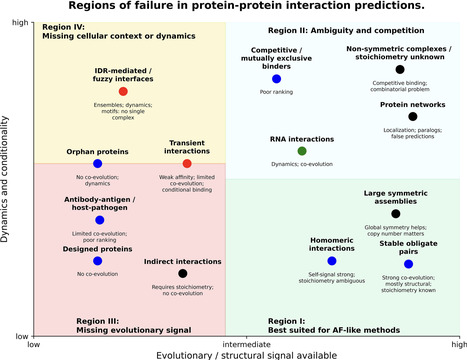
Since the introduction of AlphaFold2, AI-driven methods have greatly advanced protein structure and complex prediction. However, the performance varies strongly across interaction classes. The performance drops when dynamics are important and when interactions lack a strong co-evolutionary history. We propose to organize these limitations into distinct regions: interactions that are largely tractable by current methods; interactions in which structural compatibility is ambiguous due to competition, paralogy, or stoichiometry; interactions that lack sufficient co-evolutionary signal; and interactions whose biological relevance depends on cellular context, dynamics, or disorder. These limitations define distinct categories of interaction prediction challenges, each requiring different computational and experimental approaches. Future progress will require methods that rely less on multiple sequence alignments, better distinguish interaction strength and specificity, and move beyond static structure prediction toward modeling interaction landscapes in their cellular contexts.
|
|
Scooped by
mhryu@live.com
October 16, 2:36 PM
|
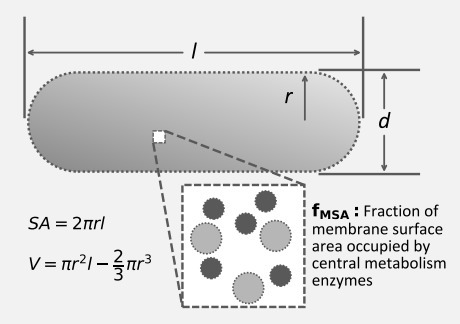
The physical dimensions of bacterial cells are finite, tightly regulated, and constrain phenotype based on cell surface area to volume ratios. Additionally, bacterial membranes have limited capacity to host proteins, constraining enzymatic potential per area. We combine these biophysical properties into an aggregate parameter termed specific membrane surface area (sMSA, nm2 gcdw−1) which is readily integrated into systems biology analyses including constraint-based stoichiometric models. sMSA-based analyses have remarkable agency to predict and interpret bacterial phenotypes including maximum growth rate, respiration efficiency, and potential for maintenance energy generation. The presented E. coli research 1) quantitatively recreates the membrane proteome from central metabolism as a function of growth rate, 2) demonstrates that the maximum growth rate of both aerobic and anaerobic E. coli cultures abides by similar cell biology constraints including a Pareto tradeoff between simultaneous synthesis of biomass macromolecules and generation of maintenance energy, 3) quantifies the areal capacity of E. coli membranes to dissipate Gibbs energy during enthalpic and entropic dominated metabolisms, and 4) presents evidence that sMSA theory could permit isogenic populations to host multiple concurrent phenotypes with equivalent fitness metrics.The results support our sMSA theory, based on cell geometry and membrane enzyme capacity, as a substantial driver of metabolism in both oxic and anoxic environments.
|
|
Scooped by
mhryu@live.com
October 16, 2:24 PM
|
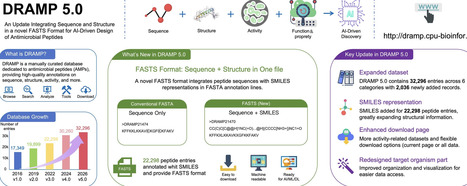
Antimicrobial peptides (AMP) represent promising candidates for combating multidrug-resistant bacterial infections; however, their clinical translation has been hampered by inherent limitations, including poor proteolytic and serum stability, unfavorable pharmacokinetic profiles, and cytotoxicity or hemolytic effects. In recent years, artificial intelligence (AI)-driven peptide design has emerged as a transformative strategy to accelerate AMP discovery and optimization by navigating vast sequence spaces and predicting multi-objective properties. Nevertheless, existing AMP databases predominantly catalog sequence and activity information, with insufficient annotation of non-natural amino acid and chemical modifications. In this update, the Data Repository of Antimicrobial Peptides (DRAMP) introduces a novel FASTS format, which incorporates SMILES representations into FASTA annotation lines, enabling the simultaneous storage of sequence and structural information within a single text file. This unified format allows accurate representation of peptides containing non-natural residues and chemical modifications, facilitates structure-aware sequence analysis, and supports AI/ML-based peptide prediction and design. DRAMP 5.0 currently contains 32,296 entries (2,036 newly added). In addition, 22,298 peptide sequences have been annotated in the newly proposed FASTS format. The updated DRAMP provides an enhanced resource for AMP research, cheminformatics, and AI-driven peptide discovery, and remains freely available at https://dramp.cpu-bioinfor.org/.
|
|
Scooped by
mhryu@live.com
October 16, 1:48 AM
|
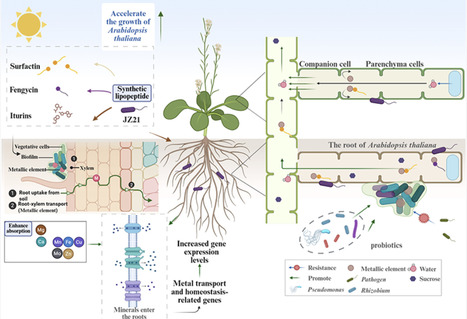
The plant-beneficial bacterium Bacillus velezensis and related Bacillus species are increasingly recognized as important contributors to plant growth and health, yet the ecological functions of their secondary metabolites in situ remain poorly understood. Here, we investigated how lipopeptides produced by Bacillus species influence plant performance and root-associated microbial communities. Using Arabidopsis thaliana as a model host, we show that bacterial lipopeptides produced during root colonization promote plant growth by enhancing the uptake of essential mineral elements, including magnesium, calcium, iron, and zinc. Transcriptomic analyses revealed that lipopeptides upregulated host genes involved in metal transport and homeostasis in roots, while downregulating negative regulators of metal uptake. The lipopeptide production reshaped the composition of root-associated bacterial communities by increasing the relative abundance of putatively beneficial taxa and altering overall rhizosphere community structure. Functional genes indicated that lipopeptide enrichment was associated with microbial pathways related to metal transport, nutrient acquisition, and stress adaptation, suggesting that lipopeptides modulate both plant and microbial traits relevant to nutrient cycling. These results provide new insight into the ecological roles of B. velezensis-derived metabolites in plant-associated microbiomes and highlight lipopeptides as promising targets for harnessing beneficial plant–microbe interactions in sustainable agriculture.
|
|
Scooped by
mhryu@live.com
October 16, 1:30 AM
|
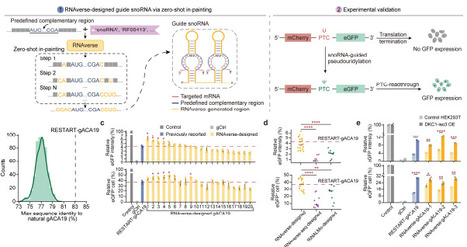
RNA engineering is bottlenecked by the tight coupling among sequence, structure, and function, leaving the field reliant on heuristics or screening. We introduce RNAverse, a multimodal generative model that learns a conditionable design grammar from RNA sequences, experimental structural probing profiles, and functional annotations. Beyond setting a new state of the art across 16 predictive modeling tasks, RNAverse inverts into generative design across four distinct RNA classes through three regimes, requiring experimental testing of no more than 20 candidates per-task. Zero-shot in-painting generates snoRNAs that promote premature termination codon (PTC) readthrough, and chimeric aptazymes for ligand-controlled gene regulation, exceeding rational design or large-scale screens. In both settings, RNAverse outperforms family-adapted sequence-only baselines. Fine-tuned in-painting extends to an unseen functional class, yielding IGFBP3-binding aptamers with picomolar affinity that outperform SELEX winners. Iterative optimization engineers 5′ UTRs that outperform clinical benchmarks, enhancing protein production in cell-based assays for both the Zolgensma gene therapy and the BNT162b2 COVID-19 vaccine, and boosting antibody responses to BNT162b2 in mice. Together, these results establish multimodal generative learning as a route from predictive RNA modeling to programmable specification of functional RNAs.
|
|
Scooped by
mhryu@live.com
October 16, 1:18 AM
|
Rare earth elements (REE) are increasingly mobilized from mine residues and other industrial sources, creating a need for rapid screening of chemically complex waters where conventional ICP-based analysis is impractical on site. Here, we evaluate a lanthanide-gated enzymatic switch biosensor, for matrix-aware monitoring of mine-influenced waters. We quantified REE-dependent activation and systematic interference from co-occurring metals and anions typical of mine waters, and defined operating windows that preserve lanthanide responsiveness. REE activation was readily detectable at ~100 nM, whereas inhibition emerged in the low-micromolar range and became pronounced near ~10 µM for key interferents, corresponding to a practical tolerance of roughly 1:100 (REE:inhibiting element). Inhibition was strongest for AlIII, FeIII, GaIII, ZnII, and SnII. Combined machine learning, molecular dynamics, and density functional theory analyses indicate distinct inhibition modes, including coordination of FeIII, ZnII, and SnII at the LanM EF4 hand loop and favorable binding of [Al(OH)4]-/[Ga(OH)4]- near the TEM-1 substrate-recognition region. Consistent with these predictions, citrate reduced inhibition from hydrolysing metals, especially AlIII and SnII. Together, these findings define matrix-dependent operating envelopes, mechanistic design rules, and practical mitigation strategies for deploying REE biosensors in chemically complex waters.
|
|
Scooped by
mhryu@live.com
October 16, 1:12 AM
|
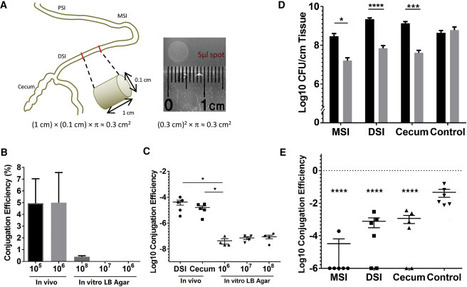
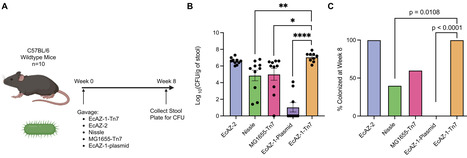
Native bacteria are strains isolated from the host and often require greater development and optimization of genetic manipulation tools than lab-adapted strains. We have previously shown that the native murine E, coli strain EcAZ-1, which colonizes the conventional mouse gut long term, is genetically tractable, and the engineered strain can elicit physiological effects while residing in the mouse gut. Given the interest in using EcAZ-1 and other native E. coli as a chassis for heterologous gene expression in the mouse gut, researchers need more efficient tools to rapidly and reliably introduce heterologous gene expression into the strain. Here, we demonstrate that a gene expression cassette can be integrated into the EcAZ-1 genome with high efficiency using the site-specific Tn7 transposon. Furthermore, we demonstrate that EcAZ-1 modified to express sfGFP using this method stably engrafts in the gut of conventional mouse. Taken together, Tn7-mediated integration is an effective method for stably introducing genetic cassettes into the native murine strain EcAZ-1 for expression in the mouse gut.
|
|
Scooped by
mhryu@live.com
October 16, 1:07 AM
|
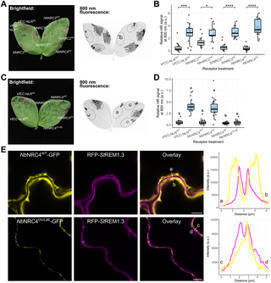
Agrobacterium-mediated transient expression has revolutionised plant research, enabling numerous landmark discoveries across diverse areas of plant biology. Yet this powerful approach remains largely confined to solanaceous species, leaving most economically important crop families without a comparable rapid assay platform. Here, we show that an engineered Rhizobium rhizogenes strain, AS109, mediates efficient transient expression across diverse dicot species spanning multiple taxonomic families, consistently outperforming commonly used laboratory agrobacterial strains. Leveraging the broad host range of AS109, we establish a suite of functional assays in faba bean (Vicia faba), including protein localization, RNA interference-mediated gene silencing, cell-surface elicitor recognition screens, nucleotide-binding leucine-rich repeat receptor (NLR) activation, and infection cell biology at the host-pathogen interface. We further demonstrate that both singleton NLRs and sensor-helper NLR pairs from Solanaceae retain effector recognition and cell death activity when transferred into faba bean, establishing a rapid platform for evaluating cross-family transferability of disease-resistance genes. AS109 thus provides an accessible and versatile chassis for functional genomics in non-model crops, bridging the widening gap between hypothesis generation and experimental validation across diverse plant species.
|
|
Scooped by
mhryu@live.com
October 16, 12:45 AM
|
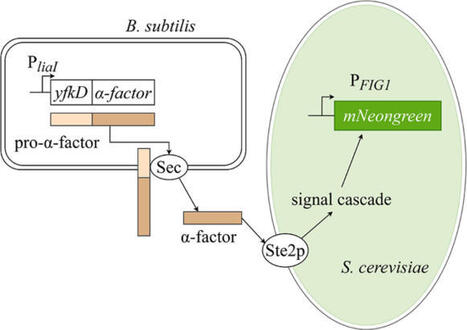
Microbial communities found in nature are complex and thrive in harmony, consisting of organisms derived from several kingdoms. Hence, they need to be able to communicate by quorum-sensing molecules to co-exist in close proximity. Being able to engineer artificial inter-kingdom communication for biotechnological approaches, such as degradation of complex biomaterials in one fermenter using controlled signaling between microorganisms, would be beneficial. Therefore, we wanted to establish a proof of principle by enabling the Gram-positive bacterium Bacillus subtilis to communicate in a controlled manner with the eukaryotic yeast Saccharomyces cerevisiae by exploiting the yeast’s pheromone system. We genetically modified B. subtilis to heterologously produce the α-pheromone after bacitracin induction, which in turn would activate the production of the green fluorescent protein mNeongreen upon pheromone recognition by S. cerevisiae. Co-cultivation in modified growth medium and induction of pheromone expression was successful and repeatable. Yeast activation and production of mNeongreen was visible not only by analysis but also by epifluorescence microscopy of the co-culture. This study successfully demonstrated controlled interkingdom signaling between microorganisms by leveraging their native communication systems.
|