Your new post is loading...

|
Scooped by
mhryu@live.com
Today, 12:32 AM
|
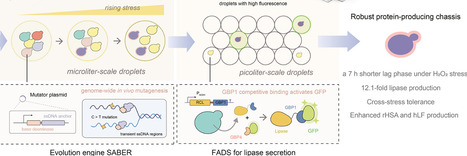
The intrinsic trade-off between product synthesis and cell growth consistently thwarts rational efforts to engineer high-performance chassis cells for industrial biomanufacturing. Here, we developed a multi-scale droplet microfluidics-integrated evolution engineering strategy tailored for Komagataella phaffii to reconcile high-level protein production with physiological robustness. To overcome the low spontaneous mutation rate that limits phenotypic co-evolution, we established SABER (Single-stranded DNA Anchor-assisted Base Editing platfoRm), an in vivo mutagenesis system for accelerating genome diversification. This evolution engine was coupled with microliter-scale droplets for automated, parallel adaptive evolution of >100 populations under gradient stress conditions, and with picoliter-scale droplets that linked lipase secretion to fluorescence for high-throughput screening of over 105 variants. This strategy compressed the evolutionary trajectory into days and generated “win-win” candidates with enhanced stress tolerance and lipase secretion, among which strain HD showed a 7 h reduction in the stress-induced lag phase and a 12.1-fold increase in lipase production. Moreover, strain HD demonstrated broad cross-protection to diverse stressors and enhanced productivity for multiple recombinant proteins, including human serum albumin and human lactoferrin. Transcriptomic analysis further elucidated the mechanisms underlying this “win-win” phenotype, highlighting key adaptations in redox regulation, genetic homeostasis, and reinforced membrane-associated nutrient uptake. Collectively, this work establishes a powerful evolution-based strategy to resolve the trade-off between growth and production in microbial cell engineering, thereby advancing the development of robust chassis for high-efficiency biomanufacturing.
|
|
Scooped by
mhryu@live.com
October 19, 11:35 PM
|
Plant RNA virus-based expression vectors are emerging as modular biological chassis for rapid, scalable, and sustainable production of recombinant proteins in plants. From a chemical and biological engineering perspective, these systems integrate upstream vector design, host selection, inoculation strategy, intracellular amplification, product accumulation, and downstream recovery into a flexible biomanufacturing workflow. Compared with stable transformation, RNA viral platforms shorten development timelines, enable high-copy amplification, and support deployment in whole plants, plant tissues, cell cultures, and specialized secretion systems. The studies reviewed here show that Potyviridae, Virgaviridae, Alphaflexiviridae, Tombusviridae, Bromoviridae, Secoviridae/Comoviridae, and emerging Kitaviridae-derived systems have been engineered to produce reporters, vaccine antigens, virus-like particles, antibodies, nanobodies, enzymes, therapeutic proteins, metabolic enzymes, genome-editing components, and agronomic regulators. Reported outputs span qualitative accumulation to process-relevant yields, including approximately 5 g/kg fresh biomass, 3-5 mg/g fresh weight, 30 -80% of total soluble protein, and hundreds of mg/kg fresh tissue, depending on vector architecture, host chassis, insert properties, and delivery mode. We discuss these platforms as bioengineering systems rather than only virological tools, emphasizing manufacturing speed, process scalability, product classes, yield determinants, purification and quality-control challenges, biosafety, and opportunities for synthetic biology, computer-aided vector optimization, and sustainable plant-based production.
|
|
Scooped by
mhryu@live.com
October 19, 11:29 PM
|
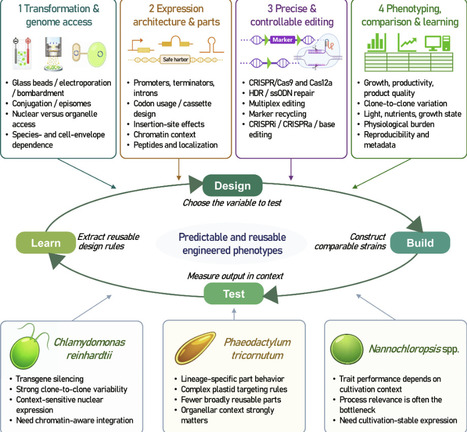
Microalgae have long been considered promising platforms for producing biochemicals and supporting environmental applications. Realizing this potential will require turning microalgal species into predictable and reusable engineering platforms. However, it remains challenging to engineer such evolutionarily diverse, compartmentalized photosynthetic eukaryotes in a predictable way, because their behavior depends strongly on organelle organization, gene-expression context, and cultivation conditions. Here, we focus on 3 well-developed but functionally distinct chassis. Chlamydomonas reinhardtii provides the strongest genetic and cell-biological foundation among green microalgae; Phaeodactylum tricornutum serves as the main diatom system for genome engineering and systems-level pathway analysis; and Nannochloropsis spp., especially N. oceanica and N. gaditana, are more production-oriented and are particularly important for lipid engineering. We assess these chassis from the perspective of practical engineerability, including transformation and genome access, expression design, precise editing and regulatory control, and iterative design–build–test–learn workflows. We then discuss 4 representative trait areas: photosynthetic productivity and stress tolerance, storage lipids and omega-3 fatty acids, terpenoids and carotenoids, and pollutant removal. Despite substantial progress, the field is still limited by unstable transgene expression, weak portability of genetic parts, incomplete understanding of intracellular pathway organization, and poor agreement between laboratory phenotypes and process performance. Progress will require genetic design to be evaluated together with chassis physiology, cultivation performance, product recovery, and deployment-specific biosafety.
|
|
Scooped by
mhryu@live.com
October 19, 11:23 PM
|
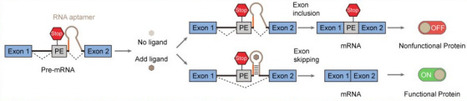
Precise, multiplexed gene regulation in mammalian cells remains constrained by a heavy reliance on heterologous protein regulators, whose associated immunogenicity and strict cargo-size limits impede clinical translation. Here, we introduce SpliceRACER (Splice-based Riboswitch Array for Combinatorial Expression Regulation), a multiplexed RNA switch platform that achieves scalable, orthogonal, and combinatorial control of gene expression in mammalian cells through alternative splicing, eliminating the need for exogenous protein co-expression. SpliceRACER independently orchestrates three orthogonal channels to regulate fluorescent reporter outputs, yielding 27 discrete combinatorial expression states, vastly exceeding the capacity of conventional binary gene switches. Furthermore, we engineered three generalizable strategies to effectively suppress the basal leakage inherent to synthetic riboswitches, thereby enabling tight OFF-state control of the potent pyroptotic effector GSDMD-NT for precise cell-death induction. This work offers broad utility in synthetic biology and therapeutic applications.
|
|
Scooped by
mhryu@live.com
October 19, 5:06 PM
|
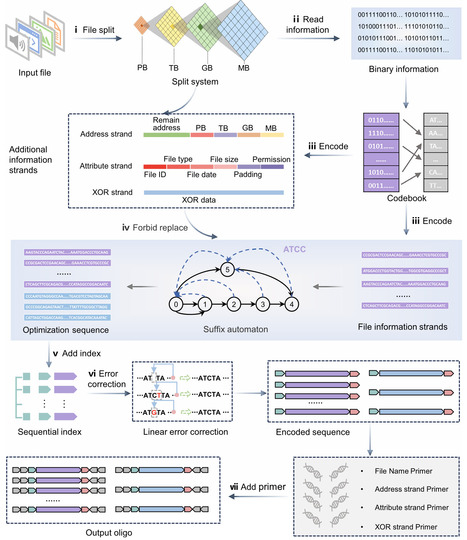
The exponential growth of global data volume is driving an urgent need for novel storage medium. Deoxyribonucleic Acid (DNA), nature’s genetic repository, presents a transformative solution with data storage density and lifespan orders of magnitude higher than conventional media. However, scaling DNA storage has been hindered by the complexity of codec algorithms, the generation of biochemically problematic sequences, and the absence of robust architecture for large-scale data. We present DNA-SaM, a system integrating highly efficient encoding, stringent biochemical constraint checks, and a storage unit distribution paradigm facilitated by a two-tiered indexing architecture. DNA-SaM demonstrates linear encoding time complexity and substantially reduced encoding time compared with representative approaches by in silico analysis. Critically, it proactively excludes sequences such as homopolymer runs, tandem repeats, and potential promoter motifs that could interfere with downstream biochemical processes, showing improved compatibility with in vitro and in vivo applications. It is further validated by practical data storage both in vitro and in vivo with a 100% success rate. On the basis of its encoding scheme and sequence design space, DNA-SaM could theoretically store data exceeding 270 petabytes (PB), marking an advancement in the scalability of DNA-based data storage. Scaling DNA storage is limited by complex codecs, biochemically problematic sequences, and insufficient architecture for large-scale data. Here, the authors present DNA-SaM, integrating efficient encoding, biochemical checks, and a storage unit distribution with a two-tiered indexing architecture.
|
|
Scooped by
mhryu@live.com
October 19, 4:12 PM
|
Studying protein binding sites helps explain ligand recognition and selectivity, informing drug development and repurposing. Here, we combine protein language model embeddings with network analysis to investigate how local recognition environments organize across scales. We represented 121,673 non-redundant, experimentally identified binding sites using ProtT5 embeddings of ligand-contacting residues and constructed a mutual nearest-neighbor network. Embedding proximity was associated with local structural similarity, supporting the structural relevance of network relationships. Globally, the network exhibited ligand-related organization. At the mesoscopic scale, communities revealed heterogeneous landscapes within established protein classifications, with InterPro categories ranging from compact neighborhoods to dispersed recognition environments. Focusing on kinases, a major class of drug targets, we found that communities within individual proteins distinguished separate binding regions and resolved recurrent residue-defined microenvironments within broad structural classes. Local similarities also connected sites in proteins with low sequence identity and non-overlapping InterPro annotations, suggesting shared recognition features across distant proteins. Together, these results show how network organization captures both diversification within protein categories and local similarities across their boundaries. This multiscale framework complements conventional protein classifications and provides a basis for prioritizing structural and biochemical investigations of ligand cross-reactivity, selectivity, and repurposing opportunities.
|
|
Scooped by
mhryu@live.com
October 19, 3:29 PM
|
Metal ions are among the most common enzymatic cofactors, yet metal utilization remains poorly mapped. Here, we present N-Zinclopedia, an atlas of predicted transition metal-binding sites and candidate metalloenzymes across protein fold space. N-Zinclopedia catalogs protein sites compatible with transition metal coordination, identified using ZincSight screening of protein structure model databases. We focused on previously uncharacterized domains and proteins, screening for transition metal-binding sites within over a million of these, spanning both poorly annotated and canonical folds. We also classified the predicted sites, using MAHOMES-II, as candidate catalytic or non-catalytic metal-binding sites. Experimental characterization of a previously unknown zinc binding site confirms that ZincSight can determine previously un-annotated zinc binding. N-Zinclopedia significantly expands the known landscape of metal utilization, providing numerous predictions that await experimental examination. N-Zinclopedia is available at: https://bentallab.github.io/nzinclopedia.
|
|
Scooped by
mhryu@live.com
October 19, 2:57 PM
|
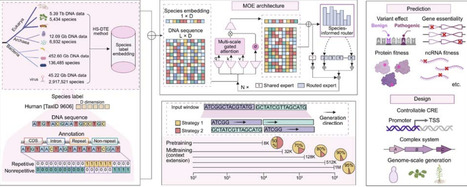
Genome foundation models hold great potential for advancing biological research, but modeling diverse complex genomes and generating controllable genome-scale sequences remain challenging. We present DeepD, a phylogeny-informed sparse mixture-of-experts model operating at single-nucleotide resolution over a 1-million-token context while reducing active computation. Pretrained on unselected whole-genome sequences across all domains of life, DeepD learns genic and intergenic sequence features and supports broad sequence-to-function prediction across species. DeepD performs well in human protein fitness and disease variants effect prediction, such as BRCA1 and BRCA2, with particular strength in regulatory regions, such as promoter and transcription-factor binding sites. Expert routing captures exon-intron boundaries, transposable elements, and distal cis-regulatory elements. DeepD also generates experimentally validated core promoters with specified transcriptional strengths. Finally, the Context-Anchor-Body strategy enables generation of complete yeast chromosome sequences and megabase-scale Arabidopsis segments, preserving gene structure and order while introducing variations within natural ranges. Together, DeepD is an efficient genome foundation model that unifies accurate sequence-to-function prediction with controllable genome-scale generation, advancing predictive and generative design of complex genomes.
|
|
Scooped by
mhryu@live.com
October 19, 2:47 PM
|
Artificial photosynthetic cells are nature-inspired systems that reproduce photosynthetic functions within cell/cell-mimetic compartments. Unlike discrete photocatalytic platforms, they integrate light harvesting, charge separation, multistep catalysis, selective transport, and compartmentalization to convert isolated photochemical reactions into coordinated cell-like functions. Driven by needs in carbon-neutral manufacturing, sustainable solar conversion, and precision medicine, the field is advancing from simple photocatalytic vesicles toward integrated and increasingly synthetic-cell platforms. In this review, we systematically elaborate on the rational design principles and emergent functional landscapes of artificial photosynthetic cells from a bioinspired perspective. We first decode the fundamental operational logic of natural photosynthesis, serving as a design blueprint. We then summarize the core construction modules of artificial photosynthetic cells, including cell-mimetic chassis, high-performance light-harvesting engines, multi-level catalytic networks, and precise interfacial engineering strategies. Furthermore, we categorize assembly paradigms into three mainstream branches: semi-artificial biohybrid systems, bottom-up reconstituted synthetic systems, and fully abiotic photosynthetic mimics. We further highlight a series of current and prospective functionalities, ranging from solar-driven CO2 fixation and high-value chemical synthesis to in situ biomedical drug generation, as well as primitive life-like characteristics including intercellular communication, motility, and compartment division. Finally, we pinpoint the key technical bottlenecks, common pitfalls and outline opportunities enabled by the deep integration of synthetic biology, functional materials chemistry, and systematic bioengineering.
|
|
Scooped by
mhryu@live.com
October 19, 2:28 PM
|
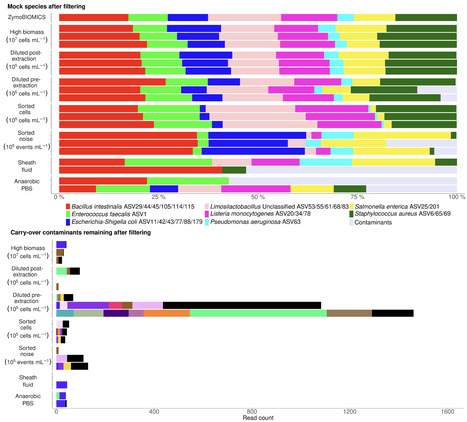
Fluorescence-activated cell sorting (FACS) followed by metataxonomics is commonly used to probe the composition of microbial subpopulations with a functionality of interest. Metataxonomic analysis of sorted low-microbial-biomass samples is prone to contamination and bias introduced during sorting and DNA extraction. To improve metataxonomic accuracy, the DNA yield obtained by the DNeasy PowerSoil Pro kit was first maximized. FACS-sequencing using the optimized DNA extraction method distorted the composition of sorted microbiota by introducing sheath fluid contaminants, termed the FACSome. Since FACSome contaminants were experiment-specific, a standardized, applicable in silico decontamination method was developed to characterize and remove FACSome contamination in PacBio and Illumina metataxonomic sequencing data based on carefully selected controls. The optimized DNA extraction and decontamination methods were validated in soil, water, feces, saliva, gut reactor, and mock microbial communities. Metataxonomic profiles of non-selectively sorted and unsorted samples derived from these ecosystems did not perfectly match due to relic DNA depletion during FACS. Effective (97%) relic DNA depletion was confirmed with a spike-in experiment and is desirable since naturally present relic DNA can interfere with function-driven FACS-sequencing. A nuclease-based digest further enhanced relic DNA depletion. Since FACS depleted relic DNA, the preservation of intact cells prior to sorting is essential for activity- or viability-targeted FACS. Intact cells were best preserved during long-term −80°C storage of fecal samples that were not amended with glycerol-1× Tris-EDTA cryoprotectant.
|
|
Scooped by
mhryu@live.com
October 19, 1:48 PM
|
Physical intuition about how enzyme structure and dynamics shape function has guided successful engineering efforts, yet a systematic approach is still lacking for translating these qualitative and abstract ‘thoughts’ into quantitative, actionable principles for enzyme design. Here we introduce MutexaGPT, an open-access, multi-agent large language model platform that translates enzyme engineering intuition to physics-based simulations and thus variant designs. Through a web-interface, MutexaGPT takes plain-English, intuition-driven requests as input and leverages large language model agents to elicit missing information, construct physics-based models, configure and execute high-throughput molecular modeling workflows, and convert the results into actionable design proposals, such as smart mutation libraries. We demonstrate the utility of MutexaGPT in two protein engineering tasks: (1) engineering halide methyltransferase toward bulkier substrates and (2) engineering bidomain amylase for enhanced activity at lower temperature. These results establish MutexaGPT as an intuition-to-design translator that integrates human creativity with high-throughput molecular modeling to democratize physics-guided, intuition-driven enzyme engineering. MutexaGPT turns plain-language enzyme-engineering intuitions into lead mutation designs through AI agent-orchestrated high-throughput molecular modeling, yielding experimentally validated improvements in enzyme specificity and cold activity.
|
|
Scooped by
mhryu@live.com
October 19, 1:31 PM
|
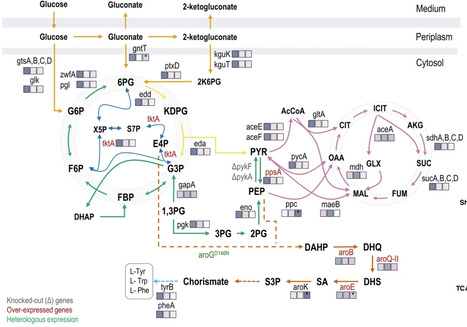
The shikimate pathway is a central metabolic route for the biosynthesis of high-value aromatic compounds. Traditional metabolic engineering strategies have largely focused on overexpressing pathway-specific genes, enhancing precursor supply, or introducing feedback-resistant variants of 3-deoxy-D-arabino-heptulosonate 7-phosphate (DAHP) synthase to increase pathway flux. However, how these distinct strategies differentially affect flux distribution and the accumulation of key intermediates, specifically 3-dehydroshikimate (DHS) and shikimic acid (SA), remains largely unexplored in Pseudomonas putida (P. putida). Here, we systematically assess the effects of commonly applied engineering strategies on DHS and SA production using distinct SA pathway modules. The results show that overexpression of transketolase I (tktA), phosphoenolpyruvate synthase (ppsA), and SA pathway genes (aroE, aroB, aroQ-II), together with heterologous expression of feedback-resistant aroG, in a genome-edited P. putida EM42 strain harboring pykA/pykF deletions and a hexR knockout, yielded approximately 71 mg L⁻1 shikimic acid, corresponding to a > 284-fold increase relative to the wild-type EM42. Notably, the findings reveal that following the relief of precursor constraints, the achievable maximum titer is unaffected by the particular DAHP synthase isoform utilized. Furthermore, the standalone overexpression of ppsA and tktA yielded SA and DHS levels comparable to those achieved with the additional expression of the aforementioned pathway genes. However, despite this phenotypic convergence in titers, comparative transcriptomic analysis revealed that the genetic route taken to reach these levels is associated with markedly distinct transcriptional configurations of the host metabolic network. In the same genetic background, amplification of ppsA-tktA alone is associated with an increased transcriptional investment in the biosynthesis of essential cofactors and metabolic precursors, whereas overexpression of the SA pathway is accompanied by enrichment of protocatechuate catabolic genes, consistent with the intrinsic aromatic funneling capacity of P. putida under conditions of elevated shikimate pathway flux. These results demonstrate that evaluating engineering success solely based on final product yields obscures substantial differences in underlying metabolic states. Accordingly, we propose that tailored engineering strategies guided by key pathway intermediates are critical for the rational optimization of P. putida as an efficient cell factory.
|
|
Scooped by
mhryu@live.com
October 19, 1:22 PM
|
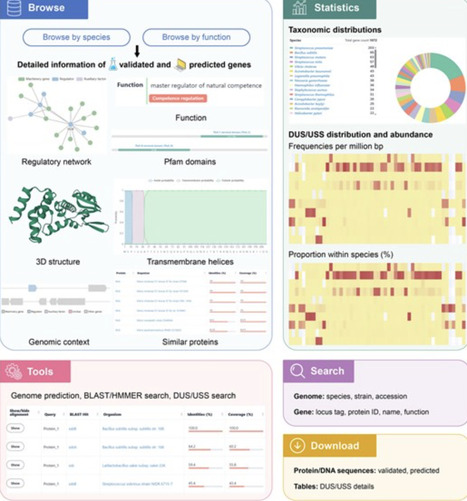
Natural transformation, genetically controlled by specialized machinery and regulatory genes, drives evolution and adaptation in prokaryotes. This process facilitates the spread of clinical traits such as antibiotic resistance. The DNA uptake specificity is mediated by conserved motifs found in certain naturally transformable species. Despite its evolutionary and clinical significance, dedicated resources for natural transformation have been lacking. Here, we present the Natural Transformation DataBase (NTDB) (https://bioinfo-mml.sjtu.edu.cn/NTDB/), which compiles information on machinery and regulatory genes associated with natural transformation in prokaryotes. NTDB integrated experimentally validated data on 118 naturally transformable species, 1072 transformation-associated genes, and 10 DNA uptake motifs identified through literature mining. Homology-based search identified 420 600 machinery genes and 246 164 regulatory genes across 12 310 prokaryotic strains, with comprehensive protein annotations. In addition, the distribution and abundance of DNA uptake motifs in Neisseriaceae and Pasteurellaceae species were quantified. Furthermore, NTDB offers online tools to predict natural transformation-associated genes and DNA uptake motifs via an interactive web interface. NTDB intends to facilitate mechanistic studies of natural transformation machinery and competence regulation.
|
|
|
Scooped by
mhryu@live.com
October 19, 11:45 PM
|
Microbial thermal adaptation is commonly characterized using the minimum (Tmin), optimum (Topt), and maximum (Tmax) temperatures that define the thermal growth range of microorganisms; with Topt been frequently used to compare microbial thermal characteristics. Although previous studies have shown that Tmin and Topt reflect distinct aspects of microbial thermal physiology, the generality and quantitative limits of this relationship across microbial diversity have not been systematically evaluated. Here, we constructed a dataset of 14,023 microbial growth-temperature records to examine the relationships among Tmin, Topt, and Tmax. While Topt showed strong overall correlations with both Tmax (r = 0.910, R2 = 0.827, Padj < 0.05) and Tmin (r = 0.793, R2 = 0.628, Padj < 0.05), the strength of these relationships varied markedly across the temperature spectrum. Within the lower-temperature range, the association between Topt and Tmin became weak and statistically insignificant (r = 0.106, Padj = 0.200). Furthermore, within 10–30 °C Topt range, microorganisms sharing similar Topt values frequently exhibited substantially different Tmin values, indicating considerable variation in their capacity for growth at low temperatures despite comparable Topt. These findings demonstrate that Topt and Tmin provide complementary rather than interchangeable information about microbial thermal characteristics, and Topt alone is insufficient to predict lower thermal growth limits. Our study provides the most comprehensive quantitative assessment to date of the relationship between microbial cardinal growth temperatures, defining the limitations of using Topt to predict lower thermal growth limits and highlighting the importance of explicitly reporting Tmin in ecological, evolutionary and taxonomic studies.
|
|
Scooped by
mhryu@live.com
October 19, 11:33 PM
|
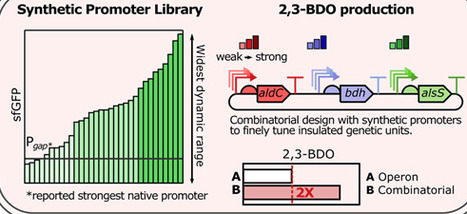
The limited availability of reliable genetic tools has hindered the engineering of Zymomonas mobilis, a promising bacterium for the sustainable bioproduction of commodity chemicals. Here, we present a synthetic promoter library that enables high-resolution control of gene expression in Z. mobilis. We constructed and characterized 29 promoters spanning the broadest dynamic range reported for this organism to date, and 25 were identified with expression levels higher than the previously reported strongest native constitutive promoter, Pgap, including some up to 15-fold higher. Additionally, a set of strong heterologous and synthetic transcriptional terminators that effectively insulate genetic cassettes was validated in Z. mobilis. Promoters were stable under both aerobic and anaerobic conditions, highlighting their robustness in industrially relevant conditions. Surprisingly, all of the promoters identified contained non-canonical promoter element sequences that adhered poorly to the proposed consensus sequences. The promoter library and terminators were integrated into the Type IIS-based, hierarchical start−stop assembly system, facilitating high-throughput construction of multi-cistronic designs. We demonstrate their utility through the rapid construction, testing, and optimization of a 2,3-butanediol biosynthetic pathway. This resource substantially expands the accessible expression space for metabolic engineering in Z. mobilis, supporting precise tuning of multi-step pathways and genetic circuits.
|
|
Scooped by
mhryu@live.com
October 19, 11:27 PM
|
Nitrogen availability is one of the main factors limiting crop productivity, and the low nitrogen use efficiency (NUE) of crops imposes significant economic and environmental costs. Research on NUE has traditionally focused on improving nitrogen uptake and assimilation; however, the efficient redistribution of assimilated nitrogen within the plant is equally important for growth, yield, and crop quality. Amino acids are the main form in which reduced nitrogen is transported over long distances. Their movement between source and sink tissues depends on a diverse group of membrane transporters belonging to the Amino Acid/Auxin Permeases (AAAP), Amino Acid/Polyamine/Choline transporters (APC), and Usually Multiple Acids Move In and Out Transporters (UMAMIT) families. These transporters mediate amino acid uptake, export, vascular loading and unloading, intracellular transport, and redistribution to developing organs, thereby influencing plant growth, reproductive development and the composition of harvested products. Recent work in cereals, legumes and horticultural crops has shown that modifying amino acid transport can alter biomass production, grain filling, seed protein content, fruit quality, and NUE. In this review, we summarize current knowledge of plant amino acid transporters, from their molecular and physiological functions to their roles in crop yield, nutritional quality and NUE. We also discuss how advances in genome editing, exploitation of natural genetic variation, high-throughput phenotyping and systems biology may facilitate the development of crops with more efficient nitrogen use and improved agricultural sustainability.
|
|
Scooped by
mhryu@live.com
October 19, 11:20 PM
|
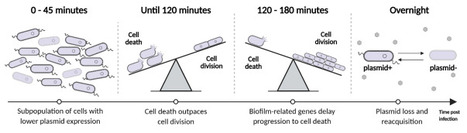
Bacterial defenses against DNA phages are well documented, yet responses to RNA phages remain largely unexplored. Here, we characterize the population dynamics and host responses of E. coli infected by the lytic RNA phage MS2 across multiple timescales, using bulk and single-cell transcriptomics, fluorescence microscopy, whole-genome sequencing, and genetic perturbations. Despite rapid viral takeover and extensive cell death, the bacterial population subsequently rebounds, revealing an unusual state in which host proliferation persists under intense phage pressure. Early in infection, heterogeneous subpopulations are evident, including one with low or undetectable viral transcript levels, low expression of the F-plasmid genes encoding the F-pilus (the MS2 receptor), and a distinct metabolic state. Strikingly, the rebounding population carries MS2 RNA in the great majority of cells, with evidence for active viral replication and continued cell division despite high viral loads. This rebound coincides with strong induction of biofilm-associated genes, including the pga operon, which synthesizes the biofilm-matrix exopolysaccharide PNAG. Deletion of pgaA causes earlier population decline and reduced population survival, indicating that pga-dependent matrix production delays viral lysis. Over longer timescales, phage-exposed populations show heterogeneous F-plasmid prevalence and plasmid-wide expression, consistent with dynamic cycling between plasmid-bearing and plasmid-free states: MS2 selects against F-plasmid-bearing cells, whereas conjugation may restore plasmid carriage. We propose that the biofilm-associated matrix delays viral lysis relative to continued cell division, long enough for rare F-plasmid-free daughter cells to arise and expand. Our results suggest that bacterial survival is determined by a dynamic race between viral lysis and host-cell division.
|
|
Scooped by
mhryu@live.com
October 19, 4:25 PM
|
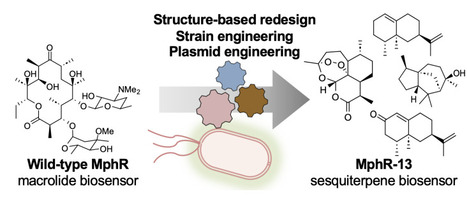
Terpenes are a large, diverse class of natural products used as flavors, fragrances, pharmaceuticals, and more, yet obtaining them often requires either large quantities of biomass or complex chemical reactions. Directed evolution of key enzymes and pathways could improve biosynthetic yields, but most sesquiterpenes lack high-throughput screening methods to search large libraries of variants. To alleviate this bottleneck, we developed the first reported genetically encoded sensor to detect four highly valuable sesquiterpenes: valencene, nootkatone, artemisinin, and cedrol. Starting with the macrolide transcription factor biosensor MphR, we screened a panel of mutants against the four sesquiterpenes, including MphR-13 (T17N/V18I/K21L/S106L/H147L/P161L), which readily detected all four sesquiterpenes. Computational modeling showed that the mutations reduced the size of the ligand-binding pocket compared with the wild type, which positively correlated with the biosensor's fluorescence output. Additionally, swapping the fluorescence reporter improved the sensor's response 15-20-fold, yielding a generalist sesquiterpene biosensor that can be further developed and applied to the directed evolution of sesquiterpene biosynthesis.
|
|
Scooped by
mhryu@live.com
October 19, 3:51 PM
|
Western blot densitometry, histological image quantification and relative qPCR analysis require choices about regions, backgrounds, thresholds, normalization and statistical comparisons. WispLab connects these operations in three open-source browser workbenches with Chinese and English interfaces, visible parameters and downloadable results. Routine quantitative processing runs locally; an optional external vision service in the Western blot tool is a separate data-transfer pathway. We assessed selected operations using separately implemented references and constructed inputs. For four public Western blot panels containing 21 measured lanes, local-background net signals and reference-lane ratios matched a Python reference at the recorded precision. A six-lane synthetic 16-bit design, duplicated in two files, yielded identical net signals in 12 measurements. Histology verification distinguished successful processing of 35 images from an H-DAB area comparison on eight images and ten regions. After correcting region matching and aligning preprocessing in the reference, positive-area fractions differed by at most 0.152 percentage points. qPCR verification used a public 60-well export and a constructed example; a fresh run of the fixed source version passed 422 specified checks after correction of a deep-tail defect in Dunnett-adjusted probabilities. These tests establish numerical agreement for specified inputs and methods, rather than biological accuracy, clinical validity or superiority over existing software. Source archives, comparison records and reproducible plotting scripts document the supported claims and the remaining validation gaps.
|
|
Scooped by
mhryu@live.com
October 19, 3:11 PM
|
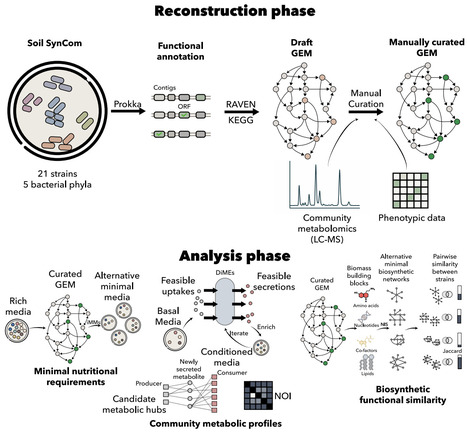
Microbial communities drive essential ecosystem processes, yet community-level behavior often deviates from predictions based on single-species studies. This mismatch reflects the context-dependent nature of nutrient dependencies, metabolic interactions, and resource availability in complex environments. Here, we present a mechanistic, species-resolved framework to dissect metabolism and nutrient exchange in a defined 21-member soil synthetic community spanning five bacterial phyla. For each isolate, we reconstructed and manually curated thermodynamically constrained genome-scale metabolic models, reconciling predictions with growth phenotypes across rich and minimal media. We mapped minimal nutrient requirements, cataloged environment-specific uptake and secretion profiles, and compared metabolic pathways to identify potential competitive and cooperative interactions. Using community-scale metabolomics, we assigned putative producers and consumers for detected metabolites and revealed medium-dependent shifts in niche overlap. This approach exposes metabolic strategies that govern community function and resilience, offering a predictive basis for understanding and manipulating microbiomes. Our findings highlight how species-level metabolic maps can clarify why microbial interventions succeed or fail and guide targeted manipulations in soil ecosystems.
|
|
Scooped by
mhryu@live.com
October 19, 2:51 PM
|
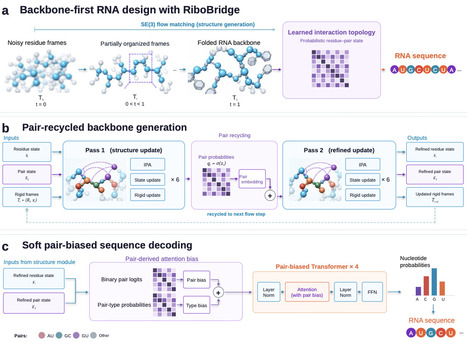
Designing ribonucleic acid (RNA) molecules with prescribed structures and functions is central to RNA engineering. Backbone-first approaches generate three-dimensional geometry before assigning a nucleotide sequence, yet leave open how that geometry should be represented for downstream sequence design. Here we introduce RiboBridge, which infers a probabilistic residue-pair state from backbone geometry, recycles binary pair probabilities through a second pass and transfers binary and typed signals as soft attention biases for sequence decoding. On 550 generated backbones, pair-type decoding achieved joint refolding validity of 0.451 versus 0.335 for an architecture-matched topology-free decoder. On a matched 110-backbone intervention cohort, replacing aligned pair states with exact-length donors matched on pair-state statistics reduced joint validity from 0.464 to 0.214, showing backbone alignment matters. Pair-confidence ranking enriched the joint-validity rate from 0.451 overall to 0.596 among the top 248 before external refolding, with the same ranking signal transferring to independently generated RFDpoly and RNA-FrameFlow backbones. On 53 experimentally determined backbones, pair-coupled decoding improved secondary-structure agreement relative to residue-wise argmax. These results support a learned relational interface between sequence-free backbone generation and sequence design.
|
|
Scooped by
mhryu@live.com
October 19, 2:33 PM
|
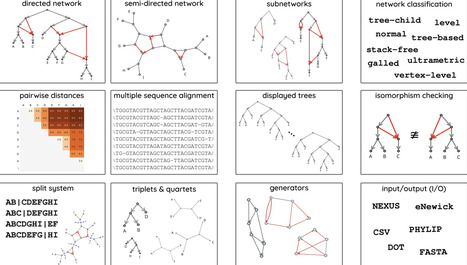
Reticulate evolutionary processes (events in which lineages merge, such as hybridization, recombination, and horizontal gene transfer) are widespread across nature but cannot be represented by phylogenetic trees alone. Phylogenetic networks have therefore become an important modelling tool, yet existing software is typically tied to specific inference paradigms and provides limited support for working with multiple network representations in a unified and programmable environment. PhyloZoo is an open-source Python framework that lowers the barrier to developing practical, easy-to-use software for phylogenetic network analysis. It provides data structures and algorithms covering the main representations used in the field, together with dedicated visualization tools and robust I/O for all major phylogenetic file formats. A particular emphasis lies on semi-directed phylogenetic networks, which explicitly represent root uncertainty and have so far received limited support in existing software. By offering a shared, scalable foundation for developing interoperable tools and a combinatorial layer that supports computational proofs and theoretical exploration, PhyloZoo enables reproducible workflows for applied, methodological, and theoretical studies of reticulate evolution.
|
|
Scooped by
mhryu@live.com
October 19, 1:55 PM
|
Bacteria employ diverse defense strategies against phage infection, yet mechanisms directly targeting viral proteins remain scarcely documented. In this study, we characterize two bacterial defense systems: TFAD1 featuring a serine protease and TFAD2 featuring a Ser/Thr kinase. We show that TFAD1 and TFAD2 act on phage long tail fiber proteins via protein degradation and phosphorylation, respectively. Intriguingly, both systems allow complete phage replication cycles but generate non-infective progeny—a mechanism distinct from classical abortive infection (Abi), which we term “passive Abi”. Our findings expand the paradigm of bacterial immunity by unveiling protease- and kinase-mediated incapacitation of phage structural proteins, offering insights into the molecular arms race between bacteria and phages. Cheng et al. characterize two bacterial anti-phage systems that act via either protease-mediated cleavage or kinase-dependent phosphorylation to target phage tail-fiber proteins, establishing the concept passive abortive infection.
|
|
Scooped by
mhryu@live.com
October 19, 1:35 PM
|
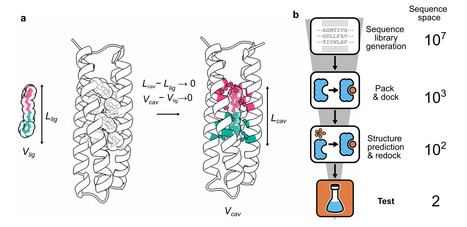
Driven by deep-learning methods, computational protein design can now rapidly generate de novo structures, opening new frontiers for creating proteins that bind small molecules tightly and specifically, although achieving predictable and tunable binding remains challenging. Here we address this with a rapid physics-based computational method to generate isosteric and chemically complementary binding pockets for small-molecule targets in de novo designed proteins. We test this experimentally by constructing and characterizing binding proteins for several synthetic and natural chromophores. By evaluating only single-digit numbers of designs, the pipeline delivers stable proteins with pre-organised binding sites in apo structures confirmed by X-ray crystallography, which bind the targets with micromolar affinities or better. To illustrate the scope and applications of this approach, we incorporate selective and coupled chromophore-binding sites in a two-domain de novo protein enabling controlled energy transfer between the two sites, and we develop a small de novo binding protein that can be used in live mammalian cells to visualise sub-cellular structures. Here the authors present RASSCCoL, a rapid physics-based method for designing small-molecule-binding proteins. It yields robust binders for a range of fluorophores to enable controlled energy transfer and live-cell imaging.
|
|
Scooped by
mhryu@live.com
October 19, 1:24 PM
|
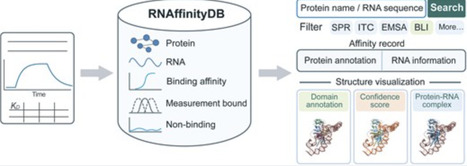
RNA–protein interactions modulate RNA function and direct RNA fate in cells. Over the past several decades, experimental studies have yielded a substantial but fragmented record of binding affinity measurements for defined RNA–protein pairs, obscuring a unified view of how sequence determinants shape binding strength. Here, we present RNAffinityDB, a curated database of experimental RNA–protein binding affinities. Its curation framework anchors each measurement to one defined protein construct and one single-stranded RNA with a defined sequence of canonical ribonucleotides. The current release comprises 10 ,016 construct-resolved records from 1,055 source publications, covering 3,057 protein constructs and 4,638 RNA sequences. The database preserves affinity values and measurement boundaries as reported, together with non-binding observations. The web interface enables direct retrieval by protein identity or RNA sequence and semantic queries on biological function, with records linked to UniProt annotations and interactive visualizations of AlphaFold 3-predicted complex structures. RNAffinityDB supports systematic analysis of sequence-affinity relationships and the downstream development of RNA–protein affinity models. RNAffinityDB is freely available at https://www.ultrarnalab.com/RNAffinityDB.php.
|