 Your new post is loading...

|
Scooped by
mhryu@live.com
March 19, 2018 1:10 AM
|
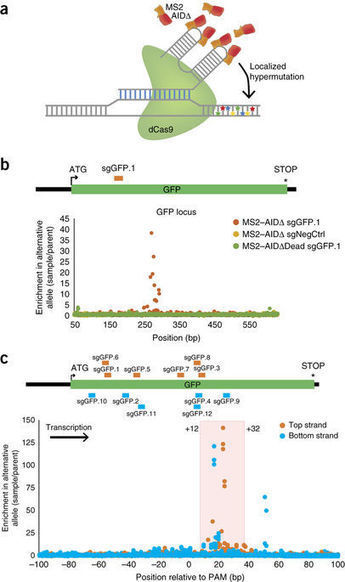
Engineering and study of protein function by directed evolution has been limited by the technical requirement to use global mutagenesis or introduce DNA libraries. Here, we develop CRISPR-X, a strategy to repurpose the somatic hypermutation machinery for protein engineering in situ. Using catalytically inactive dCas9 to recruit variants of cytidine deaminase (AID) with MS2-modified sgRNAs, we can specifically mutagenize endogenous targets with limited off-target damage. This generates diverse libraries of localized point mutations and can target multiple genomic locations simultaneously. We mutagenize GFP and select for spectrum-shifted variants, including EGFP. Additionally, we mutate the target of the cancer therapeutic bortezomib, PSMB5, and identify known and novel mutations that confer bortezomib resistance. Finally, using a hyperactive AID variant, we mutagenize loci both upstream and downstream of transcriptional start sites. These experiments illustrate a powerful approach to create complex libraries of genetic variants in native context, which is broadly applicable to investigate and improve protein function.
|
|
Scooped by
mhryu@live.com
March 18, 2018 11:33 PM
|
Geological storage of CO2 is a fast-developing technology that can mitigate rising carbon emissions. However, there are environmental concerns with the long-term storage and implications of a leak from a carbon capture storage (CCS) site. Traditional monitoring lacks clear protocols and relies heavily on physical methods. Here, we discuss the potential of biotechnology, focusing on microbes with a natural ability to utilize and assimilate CO2 through different metabolic pathways. We propose the use of natural microbial communities for CCS monitoring and CO2 utilization, and, with examples, demonstrate how synthetic biology may maximize CO2 uptake within and above storage sites. An integrated physical and biological approach, combined with metagenomics data and biotechnological advances, will enhance CO2 sequestration and prevent large-scale leakages.
|
|
Scooped by
mhryu@live.com
March 18, 2018 11:01 PM
|
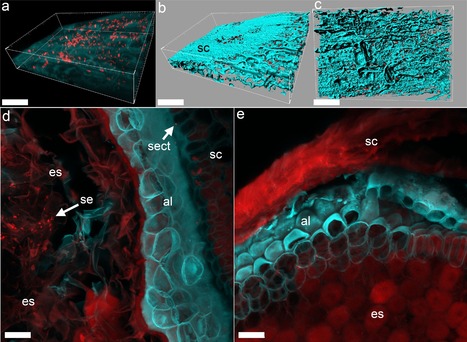
The importance of the plant microbiome for host fitness has led to the concept of the “plant holobiont”. Seeds are reservoirs and vectors for beneficial microbes, which are very intimate partners of higher plants with the potential to connect plant generations. In this study, the endophytic seed microbiota of numerous barley samples, representing different cultivars, geographical sites and harvest years, was investigated. Cultivation–dependent and −independent analyses, microscopy, functional plate assays, greenhouse assays and functional prediction were used, with the aim of assessing the composition, stability and function of the barley seed endophytic bacterial microbiota. Associations were consistently detected in the seed endosphere with Paenibacillus, Pantoea and Pseudomonas spp., which were able to colonize the root with a notable rhizocompetence after seed germination. In greenhouse assays, enrichment with these bacteria promoted barley growth, improved mineral nutrition and induced resistance against the fungal pathogen Blumeria graminis. It was demonstrated that barley, an important crop plant, was consistently associated with beneficial bacteria inside the seeds. The results have relevant implications for plant microbiome ecology and for the holobiont concept, as well as opening up new possibilities for research and application of seed endophytes as bioinoculants in sustainable agriculture.
|
|
Scooped by
mhryu@live.com
March 18, 2018 10:50 AM
|
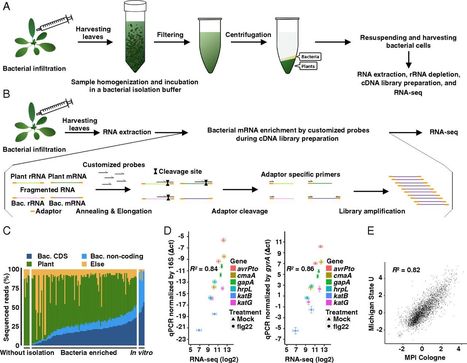
Plant pathogens can cause serious diseases that impact global agriculture. The plant innate immunity, when fully activated, can halt pathogen growth in plants. Despite extensive studies into the molecular and genetic bases of plant immunity against pathogens, the influence of plant immunity in global pathogen metabolism to restrict pathogen growth is poorly understood. Here, we developed RNA sequencing pipelines for analyzing bacterial transcriptomes in planta and determined high-resolution transcriptome patterns of the foliar bacterial pathogen Pseudomonas syringae in Arabidopsis thaliana with a total of 27 combinations of plant immunity mutants and bacterial strains. Bacterial transcriptomes were analyzed at 6 h post infection to capture early effects of plant immunity on bacterial processes and to avoid secondary effects caused by different bacterial population densities in planta . We identified specific “immune-responsive” bacterial genes and processes, including those that are activated in susceptible plants and suppressed by plant immune activation. Expression patterns of immune-responsive bacterial genes at the early time point were tightly linked to later bacterial growth levels in different host genotypes. Moreover, we found that a bacterial iron acquisition pathway is commonly suppressed by multiple plant immune-signaling pathways. Overexpression of a P. syringae sigma factor gene involved in iron regulation and other processes partially countered bacterial growth restriction during the plant immune response triggered by AvrRpt2. Collectively, this study defines the effects of plant immunity on the transcriptome of a bacterial pathogen and sheds light on the enigmatic mechanisms of bacterial growth inhibition during the plant immune response.
|
|
Scooped by
mhryu@live.com
March 16, 2018 12:11 AM
|
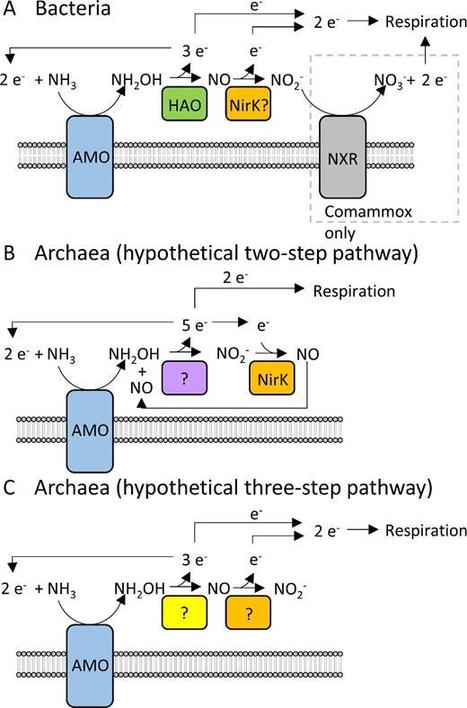
Ammonia oxidation is a fundamental core process in the global biogeochemical nitrogen cycle. Oxidation of ammonia (NH3) to nitrite (NO2−) is the first and rate-limiting step in nitrification and is carried out by distinct groups of microorganisms. Ammonia oxidation is essential for nutrient turnover in most terrestrial, aquatic and engineered ecosystems and plays a major role, both directly and indirectly, in greenhouse gas production and environmental damage. Although ammonia oxidation has been studied for over a century, this research field has been galvanised in the past decade by the surprising discoveries of novel ammonia oxidising microorganisms. This review reflects on the ammonia oxidation research to date and discusses the major gaps remaining in our knowledge of the biology of ammonia oxidation.
|
|
Scooped by
mhryu@live.com
March 14, 2018 11:38 PM
|
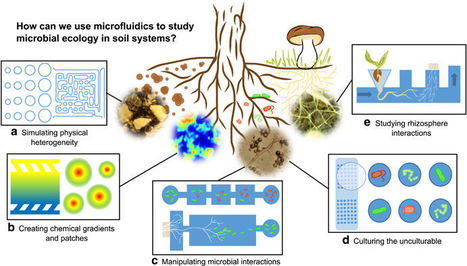
Microfluidic platforms have the potential to address four major challenges in studying soil systems, namely (1) their enormous spatio-temporal heterogeneity, (2) the lack of current methods to mimic soil realistically at the appropriate scale, (3) the difficulties in studying interactions among soil microbes and (4) the lack of optical access in real soil systems. We discuss these issues in turn, highlighting important advances driving the transfer of this technology to soil systems, but also identify potential challenges.
|
|
Scooped by
mhryu@live.com
March 14, 2018 9:03 AM
|
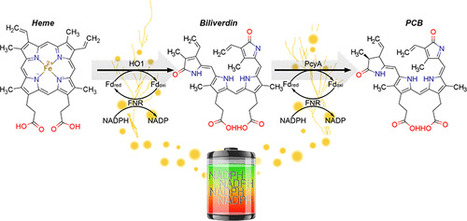
Transplanting metabolic reactions from one species into another has many uses as a research tool with applications ranging from optogenetics to crop production. Ferredoxin (Fd), the enzyme that most often supplies electrons to these reactions, is often overlooked when transplanting enzymes from one species to another because most cells already contain endogenous Fd. However, we have shown that the production of chromophores used in Phytochrome B (PhyB) optogenetics is greatly enhanced in mammalian cells by expressing bacterial and plant Fds with ferredoxin-NADP+ reductases (FNR). We delineated the rate limiting factors and found that the main metabolic precursor, heme, was not the primary limiting factor for producing either the cyanobacterial or plant chromophores, phycocyanobilin or phytochromobilin, respectively. In fact, Fd is limiting, followed by Fd+FNR and finally heme. Using these findings, we optimized the PCB production system and combined it with a tissue penetrating red/far-red sensing PhyB optogenetic gene switch in animal cells. We further characterized this system in several mammalian cell lines using red and far-red light. Importantly, we found that the light-switchable gene system remains active for several hours upon illumination, even with a short light pulse, and requires very small amounts of light for maximal activation. Boosting chromophore production by matching metabolic pathways with specific ferredoxin systems will enable the unparalleled use of the many PhyB optogenetic tools and has broader implications for optimizing synthetic metabolic pathways.
|
|
Scooped by
mhryu@live.com
March 14, 2018 2:06 AM
|
We are in the midst of a major shift in how we think about treating disease and the regeneration of damaged tissues. Although small-molecule and protein therapeutics are the dominant forms of treatment today, we are now at the point where we can engineer our own body's cells to detect and treat disease. Using the cutting-edge tools of synthetic biology, we may one day be able to build smart therapeutic cells that reside in the body for life, poised to respond to diseases that would otherwise thwart our natural immune system. My colleagues and I envision cell therapies that act as microscopic “physicians,” capable of detecting, diagnosing, and directly eradicating disease via a multifaceted mechanism that is difficult to resist and circumvent. This therapeutic vision contrasts with more traditional drug therapies, which often require chronic administration and generally target individual disease mechanisms that are easily bypassed, resulting in disease recurrence.
|
|
Scooped by
mhryu@live.com
March 13, 2018 11:01 PM
|
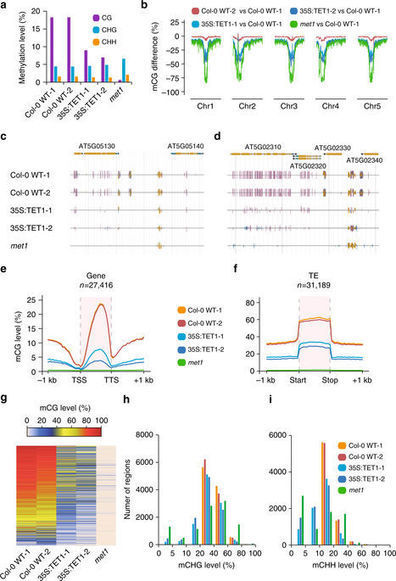
epimutagenesis introduces random methylation variation via the introduction of a transgeneepimutagenesis introduces random methylation variation via the introduction of a transgeneDNA methylation in the promoters of plant genes sometimes leads to transcriptional repression, and the loss of DNA methylation in methyltransferase mutants results in altered gene expression and severe developmental defects. However, many cases of naturally occurring DNA methylation variations have been reported, whereby altered expression of differentially methylated genes is responsible for agronomically important traits. The ability to manipulate plant methylomes to generate epigenetically distinct individuals could be invaluable for breeding and research purposes. Here, we describe “epimutagenesis,” a method to rapidly generate DNA methylation variation through random demethylation of the Arabidopsis thaliana genome. This method involves the expression of a human ten–eleven translocation (TET) enzyme, and results in widespread hypomethylation that can be inherited to subsequent generations, mimicking mutants in the maintenance of DNA methyltransferase met1. Application of epimutagenesis to agriculturally significant plants may result in differential expression of alleles normally silenced by DNA methylation, uncovering previously hidden phenotypic variations.
|
|
Scooped by
mhryu@live.com
March 12, 2018 1:12 AM
|
Homeostasis of the gut microbiota critically influences host health and aging. Developing genetically engineered probiotics holds great promise as a new therapeutic paradigm to promote healthy aging. Here, through screening 3,983 Escherichia coli mutants, we discovered that 29 bacterial genes, when deleted, increase longevity in the host Caenorhabditis elegans. A dozen of these bacterial mutants also protect the host from age-related progression of tumor growth and amyloid-beta accumulation. Mechanistically, we discovered that five bacterial mutants promote longevity through increased secretion of the polysaccharide colanic acid (CA), which regulates mitochondrial dynamics and unfolded protein response (UPRmt) in the host. Purified CA polymers are sufficient to promote longevity via ATFS-1, the host UPRmt-responsive transcription factor. Furthermore, the mitochondrial changes and longevity effects induced by CA are conserved across different species. Together, our results identified molecular targets for developing pro-longevity microbes and a bacterial metabolite acting on host mitochondria to promote longevity.
|
|
Scooped by
mhryu@live.com
March 12, 2018 12:16 AM
|
Plants have evolved a complex immune system to protect themselves against phytopathogens. A major class of plant immune receptors called nucleotide-binding domain and leucine-rich repeat-containing proteins (NLRs) is ubiquitous in plants and is widely used for crop disease protection, making these proteins critical contributors to global food security. Until recently, NLRs were thought to be conserved in their modular architecture and functional features. Investigation of their biochemical, functional and structural properties has revealed fascinating mechanisms that enable these proteins to perceive a wide range of pathogens. Here, I review recent insights demonstrating that NLRs are more mechanistically and structurally diverse than previously thought. I also discuss how these findings provide exciting future prospects to improve plant disease resistance.
|
|
Scooped by
mhryu@live.com
March 10, 2018 2:00 PM
|
Covering: 2010 up to 2017
Life on Earth is characterized by a remarkable abundance of symbiotic and highly refined relationships among life forms. Defined as any kind of close, long-term association between two organisms, symbioses can be mutualistic, commensalistic or parasitic. Historically speaking, selective pressures have shaped symbioses in which one organism (typically a bacterium or fungus) generates bioactive small molecules that impact the host (and possibly other symbionts); the symbiosis is driven fundamentally by the genetic machineries available to the small molecule producer. The human microbiome is now integral to the most recent chapter in animal–microbe symbiosis studies and plant–microbe symbioses have significantly advanced our understanding of natural products biosynthesis; this also is the case for studies of fungal–microbe symbioses. However, much less is known about microbe–microbe systems involving interspecies interactions. Microbe-derived small molecules (i.e. antibiotics and quorum sensing molecules, etc.) have been shown to regulate transcription in microbes within the same environmental niche, suggesting interspecies interactions whereas, intraspecies interactions, such as those that exploit autoinducing small molecules, also modulate gene expression based on environmental cues. We, and others, contend that symbioses provide almost unlimited opportunities for the discovery of new bioactive compounds whose activities and applications have been evolutionarily optimized. Particularly intriguing is the possibility that environmental effectors can guide laboratory expression of secondary metabolites from “orphan”, or silent, biosynthetic gene clusters (BGCs). Notably, many of the studies summarized here result from advances in “omics” technologies and highlight how symbioses have given rise to new anti-bacterial and antifungal natural products now being discovered.
|
|
Scooped by
mhryu@live.com
March 9, 2018 3:36 PM
|
The molybdenum nitrogenase is responsible for most biological nitrogen fixation, a prokaryotic metabolic process that determines the global biogeochemical cycles of nitrogen and carbon. Here we describe the trafficking of molybdenum for nitrogen fixation in the model diazotrophic bacterium Azotobacter vinelandii. The genes and proteins involved in molybdenum uptake, homeostasis, storage, regulation, and nitrogenase cofactor biosynthesis are reviewed. Molybdenum biochemistry in A. vinelandii reveals unexpected mechanisms and a new role for iron-sulfur clusters in the sequestration and delivery of molybdenum.
|
|
|
Scooped by
mhryu@live.com
March 18, 2018 11:37 PM
|
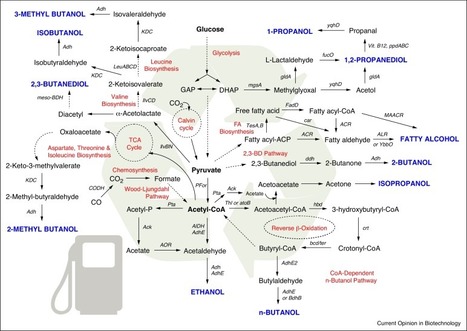
Bioengineering and synthetic biology approaches have revolutionised the field of biotechnology, enabling the introduction of non-native and de novo pathways for biofuels production. This ‘retooling’ of microorganisms is also applied to the utilisation of mixed carbon components derived from lignocellulosic biomass, a major technical barrier for the development of economically viable fermentations. This review will discuss recent advances in microorganism engineering for efficient production of alcohols from waste biomass. These advances span the introduction of new pathways to alcohols, host modifications for more cost-effective utilisation of lignocellulosic waste and modifications of existing pathways for generating new fuel additives.
|
|
Scooped by
mhryu@live.com
March 18, 2018 11:26 PM
|
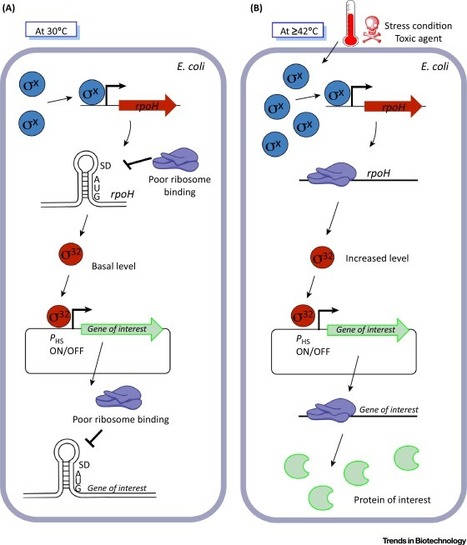
The Escherichia coli heat shock response (HSR) is a complex mechanism triggered by heat shock and by a variety of other growth-impairing stresses. We explore here the potential use of the E. coli HSR mechanism in synthetic biology approaches. Several components of the regulatory mechanism (such as heat shock promoters, proteins, and RNA thermosensors) can be extremely valuable in the creation of a toolbox of well-characterized biological parts to construct biosensors or microbial cell factories with applications in the environment, industry, or healthcare. In the future, these systems can be used for instance to detect a pollutant in water, to regulate and optimize the production of a compound with industrial relevance, or to administer a therapeutic agent in vivo.
|
|
Scooped by
mhryu@live.com
March 18, 2018 10:33 PM
|
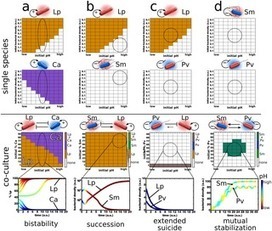
Microbes typically live alongside many other species in complex communities. These microbial communities are very important for us because they also live in and on our bodies and can determine our health and well-being. The composition and function of these communities, such as who is part of such a community and who is excluded, are decided by the interactions between the microbes. These microbial interactions can be driven by many different factors such as resource competition or toxin production. Although these factors are all different, the interactions are typically mediated through the environment; the microbes modify the environment, and they and other microbes have to live in this new environment. We show here that by understanding how microbes change and react to the environment, it is possible to understand and even predict their interactions. We believe that this way of thinking about microbial interactions will lead to a better understanding of more complex communities that are so important for our well-being.
|
|
Scooped by
mhryu@live.com
March 16, 2018 9:57 AM
|
Digested genome sequencing, or Digenome-seq, is an in vitro assay that has become increasingly popular since its introduction in 2015. It has a simple two-step protocol: in vitro Cas9 cleavage followed by next-gen sequencing. Two newer methods, CIRCLE-Seq and SITE-Seq, are slightly more complex but are also more sensitive, as they enrich for nuclease-cleaved genomic DNA before sequencing. Researchers are continuing to improve the accuracy and throughput of these methods. “I think in the long term, in vitro is going to be the way to go, but that’s an evolving space right now,” says Joung.
|
|
Scooped by
mhryu@live.com
March 15, 2018 11:59 PM
|
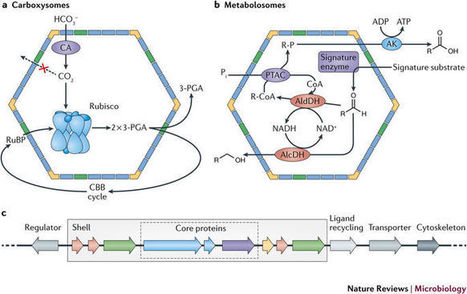
*Bacterial microcompartments are functional analogues of the lipid-bound organelles of eukaryotes. They enclose chemical reactions that benefit from being separated from the cytosol. The delimiting membrane of bacterial microcompartments consists entirely of protein, and its components are highly conserved in sequence and structure. Bacterial microcompartments are found in a wide variety of bacterial species (at least 19 established phyla). They are easily identified in genomes by their tendency to colocalize the associated genes into a large gene cluster called a superlocus. Carboxysomes (CO2-fixing organelles) were the first type of bacterial microcompartment to be identified, but recently, many more have been discovered and characterized; they are involved in catabolizing a variety of nutrients and enable cells to grow in otherwise unavailable niches. The shell and cargo of bacterial microcompartments self-assemble using different pathways; some build the shell around a cargo aggregate, whereas others assemble the shell and cargo concomitantly. There are proteins that facilitate cargo aggregation and small encapsulation peptides that specifically associate proteins to the lumen of the shell. Bacterial microcompartments are linked to the pathogenesis of certain bacteria because they confer a growth advantage. For example, the human gut is enriched in propanediol and ethanolamine, initial substrates of specific bacterial microcompartments. The knowledge gained from understanding the native functions has led to substantial progress in modifying the shell for bioengineering purposes. Bacterial microcompartment shells can be produced recombinantly, and shell proteins and cores have been engineered to adopt new functions.
|
|
Scooped by
mhryu@live.com
March 14, 2018 11:26 PM
|
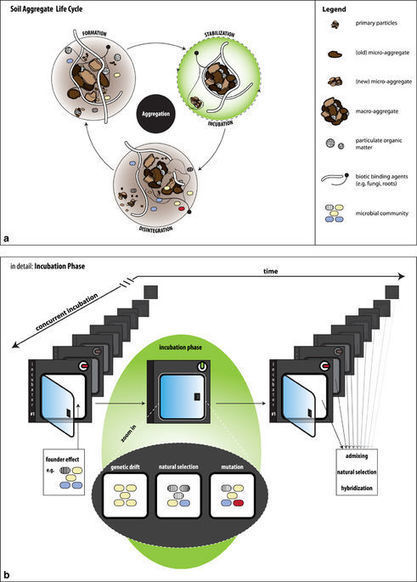
Soil aggregation, a key component of soil structure, has mostly been examined from the perspective of soil management and the mediation of ecosystem processes such as soil carbon storage. However, soil aggregation is also a major factor to consider in terms of the fine-scale organization of the soil microbiome. For example, the physico-chemical conditions inside of aggregates usually differ from the conditions prevalent in the bulk soil and aggregates therefore increase the spatial heterogeneity of the soil. In addition, aggregates can provide a refuge for microbes against predation since their interior is not accessible to many predators. Soil aggregates are thus clearly important for microbial community ecology in soils and for microbially driven biogeochemistry, and soil microbial ecologists are increasingly appreciating these aspects of soil aggregation. Soil aggregates have, however, so far been neglected when it comes to evolutionary considerations and we here propose that the process of soil aggregation should be considered as an important driver of evolution in the soil microbial community.
|
|
Scooped by
mhryu@live.com
March 14, 2018 2:10 AM
|
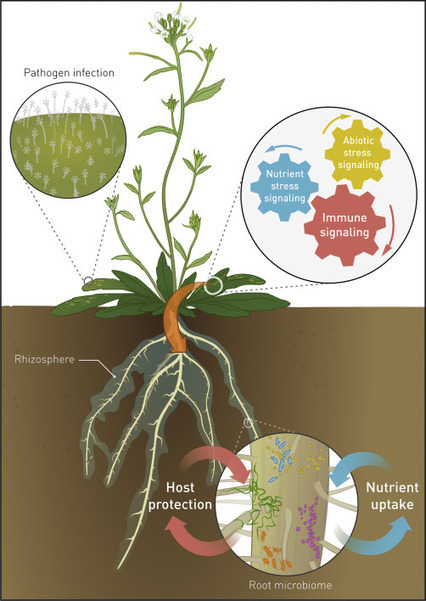
The rhizosphere microbiome extends the functional repertoire of plants beyond imagination. Exciting developments in high-throughput molecular analyses of the plant microbiome pinpointed enhanced nutrient uptake, improvement of root architecture, and protection of the host against biotic and abiotic stress as key functions of the microbiome. Currently, the life processes that shaped the co-evolution between plant hosts and their beneficial microbiota members gradually come to surface. It appears that plants evolved adaptive strategies by which they utilize root-associated microbiota to optimize both nutrient acquisition and immunity. Knowledge on the mechanisms and plant genetic pathways involved provides great potential for sustainable microbiome-based improvements of our future crops.
|
|
Scooped by
mhryu@live.com
March 14, 2018 1:15 AM
|
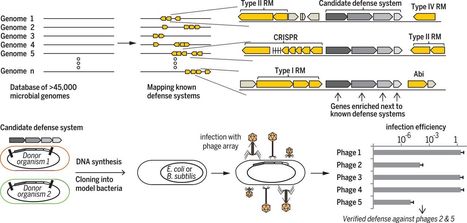
The arms race between bacteria and phages led to the development of sophisticated antiphage defense systems, including CRISPR-Cas and restriction-modification systems. Evidence suggests that known and unknown defense systems are located in “defense islands” in microbial genomes. Here, we comprehensively characterized the bacterial defensive arsenal by examining gene families that are clustered next to known defense genes in prokaryotic genomes. Candidate defense systems were systematically engineered and validated in model bacteria for their antiphage activities. We report nine previously unknown antiphage systems and one antiplasmid system that are widespread in microbes and strongly protect against foreign invaders. These include systems that adopted components of the bacterial flagella and condensin complexes. Our data also suggest a common, ancient ancestry of innate immunity components shared between animals, plants, and bacteria.
|
|
Scooped by
mhryu@live.com
March 12, 2018 1:44 AM
|
Iron limits marine production across one third of the surface ocean. The chemical form of iron in these regions is unknown, but it is well established that molecular speciation affects microbial competition for iron uptake. Here we show that the abundance and identity of siderophores, strong iron-binding compounds secreted by microbes to enhance iron uptake, changes across iron-replete and iron-deficient regions of the South Pacific Ocean. In low-iron regions, amphiphilic siderophores are particularly abundant, suggesting a microbial strategy designed to minimize diffusive loss of metabolically expensive compounds while facilitating iron acquisition. Phylogenetic analysis further suggests that the ability to produce amphiphilic siderophores has been transferred across multiple bacterial lineages, suggesting a possible mechanism of adaptation.
|
|
Scooped by
mhryu@live.com
March 12, 2018 12:41 AM
|
Argonaute proteins constitute a highly diverse family of nucleic acid-guided proteins. They were first discovered in eukaryotes as key proteins in RNA interference systems, but homologous prokaryotic Argonaute proteins (pAgos) have also been found in archaea and bacteria. In this Progress article, we focus on long pAgo variants, a class of pAgos that are involved in nucleic acid-guided host defence against invading nucleic acids, and discuss the potential of pAgos in genome editing.
|
|
Scooped by
mhryu@live.com
March 12, 2018 12:11 AM
|
Plants have evolved a complex immune system to protect themselves against phytopathogens. A major class of plant immune receptors called nucleotide-binding domain and leucine-rich repeat-containing proteins (NLRs) is ubiquitous in plants and is widely used for crop disease protection, making these proteins critical contributors to global food security. Until recently, NLRs were thought to be conserved in their modular architecture and functional features. Investigation of their biochemical, functional and structural properties has revealed fascinating mechanisms that enable these proteins to perceive a wide range of pathogens. Here, I review recent insights demonstrating that NLRs are more mechanistically and structurally diverse than previously thought. I also discuss how these findings provide exciting future prospects to improve plant disease resistance.
|
|
Scooped by
mhryu@live.com
March 9, 2018 4:05 PM
|
Descriptions of the changeable, striking colors associated with secreted natural products date back well over a century. These molecules can serve as extracellular electron shuttles (EESs) that permit microbes to access substrates at a distance. In this review, we argue that the colorful world of EESs has been too long neglected. Rather than simply serving as a diagnostic attribute of a particular microbial strain, redox-active natural products likely play fundamental, underappreciated roles in the biology of their producers, particularly those that inhabit biofilms. Here, we describe the chemical diversity and potential distribution of EES producers and users, discuss the costs associated with their biosynthesis, and critically evaluate strategies for their economical usage. We hope this review will inspire efforts to identify and explore the importance of EES cycling by a wide range of microorganisms so that their contributions to shaping microbial communities can be better assessed and exploited.
|














also check 'targeted Aid-mediated mutagenesis (tAm) enables efficient genomic diversification in mammalian cells'