

The molybdenum nitrogenase is responsible for most biological nitrogen fixation, a prokaryotic metabolic process that determines the global biogeochemical cycles of nitrogen and carbon. Here we describe the trafficking of molybdenum for nitrogen fixation in the model diazotrophic bacterium Azotobacter vinelandii. The genes and proteins involved in molybdenum uptake, homeostasis, storage, regulation, and nitrogenase cofactor biosynthesis are reviewed. Molybdenum biochemistry in A. vinelandii reveals unexpected mechanisms and a new role for iron-sulfur clusters in the sequestration and delivery of molybdenum.

RMH
106.1K views |
+58 today

 Your new post is loading...
 Scoop.it! The limited availability of experimentally validated genomic integration sites constrains genome engineering in Corynebacterium glutamicum. Additionally, a standardized, modular approach that enables rapid genomic modifications for multiple genomic insertions is currently lacking. Here, we combined Modular Cloning (MoClo) with an all-in-one CRISPR/Cas12a system to identify and validate genomic integration loci for standardized genome editing in C. glutamicum. Seven intergenic regions were confirmed as reliable sites, exhibiting editing efficiencies of up to 45% for insertion of a 1.1 kb transcriptional unit enabling functional mNeonGreen expression. MoClo-based vector design enabled rapid assembly of genetic modules for targeted genomic integration. This framework facilitated the integration of three copies of a 2.5 kb biosynthetic cassette and five copies of a 1.5 kb biosynthetic cassette for plasmid-free production of raspberry ketone and noreugenin, respectively. This work establishes an easy-to-use, standardized, and modular system for genomic integration in C. glutamicum to accelerate strain development for biotechnological applications.
mhryu@live.com's insight:
genetic part 
Scoop.it!

Microbial bioherbicides, serving as sustainable alternatives to chemical herbicides, have garnered increasing attention in global agriculture in recent years. Their active metabolites offer unique molecular scaffolds and novel modes of action, providing invaluable leads for the discovery of green herbicides. This review covers the isolation and structural characterization of secondary metabolites derived from microorganisms from 2000 to 2025. The chemical structures, herbicidal activities, and potential mechanisms of action of microbial secondary metabolites are systematically and comprehensively reviewed. The advantages, limitations, and future development of microbe-derived herbicides are also analyzed and discussed. This review aims to provide new molecular templates for scientists working on the creation of novel green herbicides, as well as inspiration for researchers focusing on the potential application of natural products in weed biological control.
Scoop.it!

From
pubs

Accurately predicting protein thermostability and identifying mutations with favorable stability effects remain major challenges in protein engineering. Existing approaches often treat stability-related prediction as a single learning problem, despite the distinct biological scales underlying optimal growth temperature (OGT)-associated thermal adaptation and mutation-induced changes in unfolding free energy (ΔΔG). Although protein language models (PLMs) have substantially improved sequence-based prediction, downstream representations derived from globally pooled PLM embeddings may obscure localized mutation-associated signals and dilute residue-interaction patterns. Here, we present ProSpect-Stab, an interaction-aware deep learning framework that extracts implicit residue dependency signals directly from transformer attention maps without requiring experimental three-dimensional structures. ProSpect-Stab integrates a dual-branch OGT-associated temperature-threshold classifier with a difference-aware Siamese regressor for mutation-level ΔΔG prediction. On the >60 °C OGT-associated classification task, the full dual-branch classifier achieved an average precision (AP) of 0.7909 under the controlled frozen-backbone evaluation; however, sequence-only and capacity-matched sequence-only controls achieved comparable AP values of 0.7909 and 0.7924, respectively. For the primary mutation-level ΔΔG evaluation, the microscopic rational design module achieved a root mean squared error (RMSE) of 1.553, a Pearson correlation of 0.358, and a Spearman correlation of 0.380 under protein-grouped five-fold cross-validation on S669. When applied without retraining or calibration to 4778 curated single-mutant records from FireProtDB with experimentally measured mutation-induced changes in melting temperature (ΔTm), the model showed a modest cross-property association (Pearson r = 0.217; Spearman ρ = 0.274). Overall, ProSpect-Stab provides a sequence-based framework for OGT-associated protein screening and mutation-level ΔΔG prediction without requiring experimental three-dimensional structures as model inputs.
mhryu@live.com's insight:
thermo, input: the WT sequence and the mutant sequence with one aa substitution. Sequences are limited to 512 tokens, and one substitution is scored at a time. Output: a predicted change in unfolding free energy (ΔΔG, kcal/mol). Under the dataset's convention, a positive value means a favorable effect on stability.
Scoop.it!

Antimicrobial resistance (AMR) is among the most pressing global health challenges, with resistant infections projected to drive a substantial rise in mortality over the coming decades. Bacteriophages, viruses that infect and kill bacteria, offer an alternative to conventional antibiotics. With a century-long history as standalone antibacterial agents, phage therapy has remained in continuous clinical use in Georgia and Russia, where phage preparations are administered routinely. Elsewhere, however, clinical practice came to rely almost exclusively on antibiotics, and phages were largely absent from routine care. The rise of AMR has since driven a resurgence of interest in phage therapy, with compassionate-use cases demonstrating efficacy against otherwise untreatable infections. This wave of renewed optimism has spurred a corresponding expansion in phage biology research, which is now generating the fundamental knowledge needed to meet regulatory requirements and move phage therapy from anecdotal use toward established clinical practice. This review examines the biological, regulatory, and clinical bottlenecks limiting broader implementation of phage therapy and highlights recent advances in phage-antibiotic combinations, engineering, and computational approaches that may help overcome them.
Scoop.it!

Targeted protein degradation is a powerful strategy for manipulating protein abundance and function, but developing protein-based degraders typically requires laborious screening and optimization of target-specific binders. Recent advances in de novo protein design offer a promising route to accelerate degrader development, although computationally designed binders often exhibit variable binding activity and require extensive experimental validation. Here, we developed a rapid screening platform that couples cell-free protein synthesis (CFPS) with enzyme-linked immunosorbent assays (ELISA) to identify functional miniprotein binders directly from computational designs. Using β-catenin as a model target, we screened 93 de novo designed minibinders for expression and binding activity in less than three days, identifying six candidates with half-maximal effective concentrations below 500 nM. Two lead minibinders exhibited binding affinities of 299 and 335 nM and, without further affinity maturation, were fused to an engineered E3 ubiquitin ligase to generate functional protein degraders. These constructs reduced cytosolic β-catenin levels by approximately 80% and 60%, respectively, and suppressed β-catenin-dependent transcriptional activity in mammalian cells. These findings demonstrate that moderate-affinity, computationally designed minibinders can support effective targeted protein degradation without iterative binder optimization. More broadly, our integrated design and screening workflow provides a rapid and accessible approach for converting de novo protein binders into functional intracellular degraders.
mhryu@live.com's insight:
2st. hts
Scoop.it!
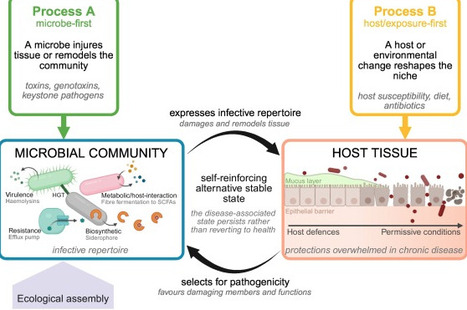
Chronic human diseases are increasingly linked to functional, not merely taxonomic, alterations of the microbiome. Beyond dysbiosis, disease-associated communities are shaped by mobile, ecologically selected functions including virulence, resistance, biosynthetic, and metabolic/host-interaction pathways that together form an infective repertoire. We frame chronic disease through infective competence: the conditional capacity of a microbial community to assemble and express an infective repertoire under permissive host and ecological conditions. Chronic disease is then not the result of a single pathogen but a self-reinforcing state between the microbial community and the host that persists as an alternative stable state. We outline how infective repertoires are assembled, mobilised, and expressed, how this state is entered, and what is needed to move from association towards community-level causation.
Scoop.it!

Starships are giant cargo-mobilizing mobile elements within the fungal subphylum Pezizomycotina that harbor diverse gene content, including genes for virulence and heavy metal resistance. Although Starship elements carry a vast array of cargo genes, the overall composition and function of this cargo remain largely uncharacterized for most elements. While existing bioinformatic tools have been designed for the identification of these elements, a gap remains in tools for characterizing their gene content while accounting for its specific characteristics. To address the gap in gene content analysis of Starships, we present StarCrew, a bash- based pipeline designed for systematically characterizing the cargo gene diversity and turnover within Starship elements. We demonstrate that StarCrew robustly handles datasets of varying diversity, providing the capacity to cluster elements based on collinear regions, identify nested insertion events, perform element classification, and highlight overrepresented genes within a dataset. Additionally, StarCrew serves as a diagnostic tool to flag elements requiring boundary curation. We found that the accuracy of the pipeline was sensitive to the quality of input gene models and the precision of initial element boundaries delineation. Demonstrating its utility, we identified a putative pseudokinase as a new conserved protein distributed across Starships. StarCrew provides a practical and versatile resource for the continuous exploration of Starship gene content, designed to adapt alongside our expanding understanding of these mobile elements. Finally, we propose a complementary system to group elements with potential shared beneficial traits, based on collinear blocks, called Functional Constellations.
mhryu@live.com's insight:
m-2st, do not search for direct repeats, terminal inverted repeats or insertion target sites.
Scoop.it!

Transcriptional regulation of biosynthetic gene clusters (BGCs) controls secondary metabolite production, yet the regulatory elements governing BGC expression remain largely uncharacterised and unmapped across BGC diversity. We present a comparative-genomic pipeline that partitions genes within each BiG-FAM BGC family into clusters of orthologous genes and discovers motifs conserved in their upstream regions. Applied to 994 families (>660,000 BGCs), it recovered characterized operators, including the EctR1 operator of ectoine clusters and both Fur and IdeR iron boxes within one siderophore family, each confined to its regulator lineage. Profiling BGC-encoded proteins against curated TF families mapped pathway-specific regulators across 921 families, revealing LysR in every biosynthetic class and LytTR as RiPP-restricted. Sequence similarity networks of 20 regulator families, combined with motif clustering, resolved TF subfamilies whose motifs match characterised binding sites. The resource prioritizes candidate TF binding-site pairs for experimental testing. Availability and Implementation: The BGC-TFBS web resource is freely available at https://bgc-tfbs.sites.er.kcl.ac.uk/ The Motif-Miner pipeline (https://github.com/sysbiomelab/Motif-Miner; https://doi.org/10.5281/zenodo.23067090) and the web resource code (https://github.com/sysbiomelab/BGC-TFBS; https://doi.org/10.5281/zenodo.23066946) are open source. Data are archived at https://doi.org/10.5281/zenodo.22766286.
mhryu@live.com's insight:
2st, predict candidate transcription regulator
Scoop.it!

Biosynthesis of complex natural products in engineered microbial hosts is frequently constrained by unstable oxidation-prone intermediates that disrupt metabolic balance and lower carbon flux efficiency. In the synthesis pathways of polyphenolic compounds, redox-sensitive nodes often function as bottlenecks due to intermediate accumulation and spontaneous oxidation under aerobic conditions. In this study, the oxygen-dependent degradation of L-3,4-dihydroxyphenylalanine (L-DOPA), a redox-sensitive intermediate in curcumin biosynthesis, was characterized, and a hierarchical strategy was implemented to stabilize oxidation-prone nodes while rebalancing intracellular carbon and electron fluxes. Adaptive evolution improved host robustness, respiratory chain modulation redistributed reducing equivalents under oxygen limitation, and directed evolution of 4-hydroxyphenylacetate 3-monooxygenase (HpaB) rebalanced intermediate distribution and enhanced productive hydroxylation. Combined with multistage pH–DO control, these strategies markedly improved carbon utilization efficiency and curcumin biosynthesis. In 5 L fed-batch fermentation, curcumin production reached 1075.2 mg/L, the highest reported titer for single-strain de novo curcumin biosynthesis. Extension of this framework to caffeic acid production increased the titer by approximately 69.1% and reduced A400-associated browning, supporting transferability to another oxidation-prone phenolic product. This study demonstrates the effectiveness of flux protection in curcumin biosynthesis and supports the potential transferability of this framework to related HpaB-dependent phenylpropanoid pathways.
mhryu@live.com's insight:
meng
Scoop.it!

Retrons are a major form of antiphage defense in bacteria, but how they provide defense remains incompletely understood. The most common retron effector is a predicted nucleoside 2'-deoxyribosyltransferase (NDT). Here, we demonstrated that the NDT of retron-Eco9 is, in fact, a protein histidine ADP-ribosyltransferase that associates with the bacterial ribosome through an interaction with the stalk proteins bL7/bL12. Through this interaction, the effector ADP-ribosylates translation release factors RF1 and RF2 adjacent to the conserved GGQ motifs that catalyze peptidyl-tRNA ester bond hydrolysis, resulting in increased stop codon readthrough and frameshifting. Using ribosome profiling, cryoEM, and in vitro reconstitution assays, we demonstrate that the modification of RF1 and RF2 severely disrupts translation in cells, leading to collided ribosomes at the 3' ends of transcripts, aberrant termination, and increased ribosome rescue. These disruptions to translation ultimately prevent phage replication and abort an infection. Although many defense systems block translation by degrading tRNA or mRNA, our results now demonstrate how post-translational modification of translation factors can also provide potent defense, while also revealing histidine ADP-ribosyltransferase activity as the biochemical basis of the largest class of retrons.
mhryu@live.com's insight:
laub mt
Scoop.it!

Argonaute (AGO) family proteins associate with small RNAs (sRNAs) to form complexes that direct sequence-specific regulation of target RNAs. Recent studies in Caenorhabditis elegans, Drosophila melanogaster, and human cell lines have systematically characterized the repertoire of sRNA associations and targets for individual AGOs in these organisms; however, the lack of an accessible, searchable platform limits efficient comparison of the specificity and redundancy of Argonaute functions. Here, we present Argonomics Explorer (AE), an interactive database suite that integrates publicly available sRNA sequencing datasets to enable systematic interrogation of AGO-sRNA and AGO-target interactions across common model systems. AE combines independent AGO-IP datasets, AGO mutant-derived sRNA profiles, and systematic analyses to provide a cross-validated framework for examining AGO-RNA interactions. This database empowers users to query specific AGOs, transcripts, or sRNAs, and to compare associated sRNAs or targets across AGOs. Specifically, we recapitulate findings that certain microRNA (miRNA) star strands are uniquely loaded onto AGO-2 but not AGO-1 in flies. In addition, we report a preferential association of most members of the mir-35 family with the worm Argonaute ALG-2 and the association of the oncogenic oncomiR-1 miRNA superfamily with human AGO2. Such applications illustrate how the AE framework facilitates investigations into AGO specificity, redundancy, and the broader regulatory networks that shape gene expression. The Argonomics Explorer suite is freely available at https://cosbi10.ee.ncku.edu.tw/AE/.
Scoop.it!

Microalgae could produce proteins ranging from industrial enzymes and feed additives to orally delivered biologics, but each product requires strains whose output is consistent. Nuclear transgene expression remains difficult to predict across independent strains, so development depends on screening for rare clones. We frame this as an engineering problem with four coupled bottlenecks and derive five testable design principles: host-matched sequence design, functional intron architecture, delivery–locus decoupling, genomic landing site validation, and distribution-based performance assessment. Because products tolerate different levels of variance, we work from the product to the strain, arguing that development should shift from finding the best clone to engineering strains whose performance distribution is predictable, and we set out the evidence needed to test this.
Scoop.it!

Most plants form mutualistic interactions, known as arbuscular mycorrhiza (AM), with soil fungi (Glomeromycota), whereby the fungus improves the plant’s access to mineral nutrients, usually phosphorus and nitrogen, while receiving reduced carbon from the host in return. This exchange reshapes plant nutritional status and may be associated with adjustments in the host plant’s water status, ion homeostasis, redox balance, and immune responses under various abiotic and biotic stresses. These effects, however, vary with the plant-fungus combination and environmental context. Key steps in signaling dialog and arbuscule development, together with transport pathways at the exchange interface, have recently been identified. Yet how AMF symbiosis contributes to stress tolerance, and why benefits observed in controlled studies do not always carry over to fields, remain less clear. Herein, this review traces the AM partnership from recognition and root colonization to arbuscule formation and resource transfer, with evidence on plant stress responses and agricultural performance. By distinguishing causal evidence from physiological correlations, it clarifies what the partnership can reliably provide and where further experiments are needed.
|
Scoop.it!

Rifampicin is among the most clinically important antibiotics in use today, yet resistance to it remains a global health burden. Although a growing body of work has illuminated the molecular basis of rifampicin resistance, predominantly mutations in the rpoB gene, the relevant data are dispersed across heterogeneous databases with different taxonomic scopes and curation standards, making cross-species comparison difficult. To address this, we developed RIFRMap (Rifampicin Resistance Mutation Map), an R Shiny web application that consolidates rpoB resistance mutation data from multiple sources. The current version comprises 1586 records covering 394 mutations across 81 bacterial species. Every position is mapped to the E. coli MG1655 reference sequence so that organisms and datasets can be compared directly. The application provides interactive filtering and visualization modules that help users to explore mutation distributions, identify resistance hotspots, and assess consistency across datasets of rifampicin resistance. By unifying disparate resources into an interactive visual platform, RIFRMap provides researchers, clinicians, and educators with a means to conduct comparative analyses and investigate the global molecular landscape of rifampicin resistance.
Scoop.it!

From
pubs
The growing recognition of RNA as a therapeutic target has driven demand for computational tools that efficiently identify RNA-binding small molecules. We introduce RNALigVS, a cross-platform software and web server for rapid, structure-based virtual screening of RNA-binding ligands. RNALigVS identifies RNA-binding pockets from experimentally determined RNA–ligand complex structures or user-defined binding-site information, computes interaction descriptors, predicts ligand-binding probabilities, and ranks candidate molecules through an intuitive graphical interface. The platform supports both online and local use, accepts standard RNA structure and ligand file formats, and offers interactive three-dimensional visualization, ligand ranking, and drug-likeness analysis. Evaluation with 244 experimentally validated RNA–ligand complexes showed strong predictive performance, achieving a Pearson correlation coefficient of −0.90 on an independent test set. The negative correlation is expected, as higher predicted interaction probabilities correspond to more negative experimental binding free energies, indicating stronger RNA–ligand interactions. In large-scale virtual screening against a DrugBank-derived library of 14,615 compounds across 10 RNA targets, RNALigVS significantly improved ligand discrimination (ROC AUC = 0.71) while significantly reducing computational time compared with existing RNA-targeted virtual screening methods. RNALigVS is freely accessible as a web server (https://vsrnalig.streamlit.app/), and the source code is openly available on GitHub (https://github.com/Computational-biolab/RNALigVS) for local installation and execution, providing an accessible, efficient, and interpretable platform for RNA-targeted virtual screening and drug discovery.
Scoop.it!

This review summarizes current progress in biotechnological approaches to enhance rare earth element (REE) phytomining through sustainable, plant-based recovery systems. REEs are critical components of modern technologies, including renewable energy systems, electronics, and advanced materials. However, their extraction is largely dependent on conventional mining practices that are energy-intensive, environmentally damaging, and constrained by geopolitical factors. The relatively low natural abundance and uneven global distribution of REEs further intensify supply challenges. As a sustainable alternative, phytomining has attracted significant research interest as a green strategy that uses plants to extract metals from soils, low-grade ores, and mine wastes. Certain plant species have been identified as REE hyperaccumulators capable of absorbing and concentrating these elements from their surrounding environment. The natural efficiency of REEs uptake, translocation, and accumulation in plants remains limited by low bioavailability, lack of specialized transport mechanisms, and lower biomass production. In addition, the biology underlying plant uptake of REEs remains poorly understood. Recent advances in plant synthetic biology and genome engineering could offer promising opportunities to overcome these limitations through genetic engineering. This review highlights current progress in biotechnological strategies to improve REE phytomining using sustainable plant-based recovery systems.
mhryu@live.com's insight:
bioleaching
Scoop.it!

Many bacteria use Type VI secretion systems (T6SS) to deliver toxic effector proteins into bacterial or fungal cells during inter-microbial competition. However, few antifungal effectors have been described and how T6SS-delivered effectors reach their site-of-action in target cells remains poorly understood. Here, we combine structural and in vivo approaches to show that Rhs2 from Serratia marcescens is a dual-kingdom T6SS-dependent DNase effector which hijacks distinct, essential target cell functions in order to reach its site-of-action in bacterial and fungal cells. In bacterial cells, the Rhs2 toxin domain (Rhs2CT) interacts specifically with the elongation factor EF-Tu, and, in sibling cells, interacts with the cognate immunity protein in an unusual manner. Interaction with EF-Tu is essential for T6SS-mediated intoxication of bacterial cells by Rhs2, but not for DNase activity or intoxication of fungal cells, implying it facilitates entry of Rhs2CT across the inner membrane to the cytoplasm. In contrast, in fungal cells, Rhs2CT accumulates in the nucleus in an importin-α-dependent manner. Our findings reveal how a single effector domain can act against targets with distinct cellular architectures.
Scoop.it!
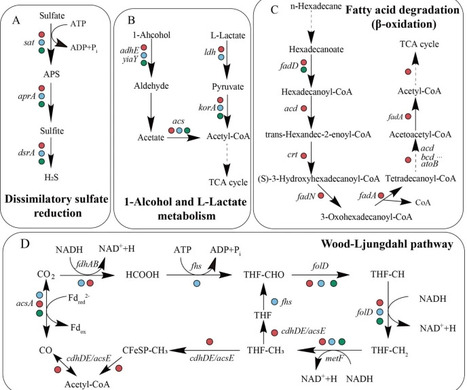
In reservoir microbiome, sulfate-reducing bacteria (SRB) dominate the biogeochemical cycling of sulfur elements. As the main biological source of hydrogen sulfide (H₂S) in oil reservoirs, SRB also cause substantial economic losses in oil reservoirs. Effective souring control requires a deeper understanding of SRB activity, especially the highly efficient H₂S-producing strains. However, current studies have largely emphasized community-level analysis, leaving the role of key SRB species and their interactions with other functional microorganisms poorly resolved. Firstly, integrated metagenomic and culture-based analyses of the original samples from Chengbei Oilfield revealed temperature as the key factor shaping SRB structure, and the highest H₂S production rates were observed under high-temperature conditions (60 °C). Within the SRB community, we proposed that highly active—rather than abundant—SRB were the primary drivers of biogenic H₂S production. Although Desulfofundulus and Desulfotomaculum represented only 3.13% and 6.41% of the community, respectively, their presence strongly correlated with H₂S accumulation (p < 0.05). In contrast, the highly abundant Desulfovibrio (46.20%) showed no significant correlation. Further analysis using metabolic modeling revealed syntrophic interactions between SRB (including Desulfofundulus and Desulfotomaculum) and hydrocarbon-degraders, highlighting microbial cooperation as an accelerator of souring. The subsequent isolation of Desulfofundulus sp. 13 T and Desulfotomaculum sp. 45–6 showed distinct metabolic strategies for sulfide production, governed by their inherent metabolic capacities and substrate preferences: Desulfofundulus sp. 13 T was regarded as the key species, which could degrade n-hexadecane (67.79% in 10 days) and crude oil, producing > 1000 ppm H₂S in 3 days, but less than in lactate medium (> 2000 ppm/24 h); Desulfotomaculum sp. 45–6 demonstrated limited alkane degradation and could produce < 1000 ppm H₂S only supplemented with methanol or lactate. Their respective roles and contribution to ecosystem functions, particularly H₂S production, is not equivalent. Our findings establish that metabolic activity, not relative abundance, is the key predictor of the environmental impact of SRB. This study provides a mechanistic understanding of reservoir souring by identifying metabolically dominant taxa and synergistic interactions within microbial communities, offering a trait-based framework for developing targeted souring management strategies.
Scoop.it!

Fungi are important pathogens and biotechnology resources, but lack a broadly applicable fungal DNA language model. Models trained on diverse fungal genomes can support functional interpretation of genomic variants and a broad range of genomic tasks. We introduce FunDLM, a family of four DNA language models pre-trained on 426 fungal reference assemblies spanning 217 genera and 14.3 Gb of sequence. Without task-specific training, FunDLM-Medium-1024bp distinguished phenotype-associated missense variants of Saccharomyces cerevisiae from synonymous controls with an area under the receiver operating characteristic curve (AUROC) of 0.875. It performed comparably to Evo 2, a generalist model with about 15 times more parameters, and better than Nucleotide Transformer v3. The model also recognized mutations that disrupt start codons or introduce premature stop codons in S. cerevisiae and the blast fungus Pyricularia oryzae. Its scores for missense variants, computed from DNA alone, correlated with those of protein language models in S. cerevisiae and two Fusarium species (Pearson correlation 0.57-0.75). After fine-tuning, FunDLM-Small-1024bp identified supernumerary chromosome sequences in four Pyricularia isolates not used for training (average precision 0.884), and FunDLM-Medium-1024bp recognized centromeres on a chromosome withheld from training (AUROC 0.908). Fine-tuned models also predicted three histone modifications in an isolate and on chromosomes not used for training (AUROC 0.910-0.996). FunDLM provides reusable sequence representations for assessing functional impacts of fungal variants as well as annotation of genomic and epigenomic features. The released models, data, code, and benchmarks support applications across fungal species.
mhryu@live.com's insight:
m-2st, Input: a window of up to 1,024 bp around a single nucleotide change (511 upstream, 512 downstream). The model masks the position and compares the probability of the new base with the reference base. Output: a score where more negative means the change is less expected. It ranks missense changes, start codon losses and premature stop codons. Use: prioritizing candidate harmful variants from resequencing data when no protein model or labels exist. In yeast, phenotype associated missense variants were separated from synonymous ones with AUROC 0.875, on par with Evo 2.
Scoop.it!

Loop-mediated isothermal amplification (LAMP) is widely used for rapid molecular diagnostics, yet its complex concatemeric products remain poorly characterised, limiting assay validation and contamination detection. Here, we introduce LAMPdecomposer, a computational framework that combines a generalisable model of LAMP product formation with nanopore read decomposition to resolve individual amplification products. We predict 48 product sequences arising through four molecular mechanisms and validate their occurrence across 420,797 reads from 11 primer sets. Nearly all predicted products were recovered, revealing conserved patterns of product abundance and preferential amplification pathways. The library explained 52.2% of reads within its defined length range, with limited additional coverage from substantially longer reads. LAMPdecomposer also identified products originating from other primer sets at single-read resolution, revealing cross-contamination in positive samples and negative controls. By linking predicted amplification mechanisms to experimentally observed products, LAMPdecomposer provides a framework for investigating LAMP amplification and improving molecular diagnostic quality control.
Scoop.it!

The therapeutic application of in vitro transcribed (IVT) messenger RNA (mRNA) is constrained by double-stranded RNA (dsRNA) impurities generated by wild-type (WT) T7 RNA polymerase (RNAP). These impurities trigger innate immune responses via RIG-I and MDA5, suppressing protein translation. Conventional polymerase engineering often trades dsRNA reduction for lower transcription processivity. Here, we report engineered T7 RNAP variants that limit this trade-off. Physicochemical profiling identified variant G3, which suppresses high-molecular-weight aggregates and 3′-loopback hairpins while preserving full catalytic yield, high capping efficiency, and sequence processivity. In primary dendritic cells, N1-methylpseudouridine (N1psU)-modified mRNA produced by G3 yielded up to a three-fold increase in protein expression compared to WT T7, without inducing CD86 maturation. Systemic in vivo delivery in mice confirmed superior therapeutic expression and completely abrogated pro-inflammatory cytokine release. Functional knockouts confirmed that G3-transcribed mRNA evades cytosolic RIG-I/MDA5-mediated translational suppression by selectively eliminating inflammatory dsRNA byproducts. Together, G3 offers a superior, scalable manufacturing solution for advanced mRNA therapeutics.
mhryu@live.com's insight:
the five mutant t7 RNAP labelled as Ginkgo mutants
Scoop.it!
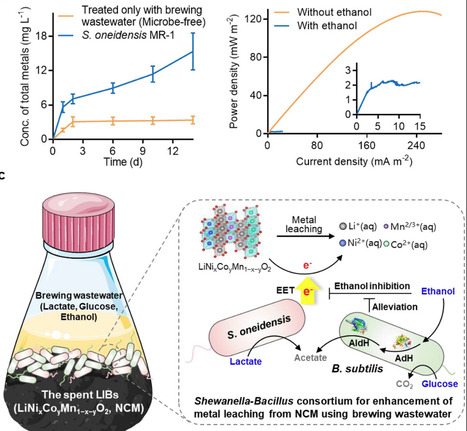
The rapid proliferation of lithium-ion batteries (LIBs) underscores the need for recycling, yet existing methods are costly, inefficient, and environmentally challenging. This work developed a spent LIBs recycling approach using brewing wastewater and designed a microbial consortium as a biocatalyst for facilitating metal oxide leaching. The Shewanella oneidensis reduces spent LIBs cathode LiNixCoyMn1-x-yO2 (NCM) via extracellular electron transfer (EET) by feeding with brewing wastewater's organics, and the Bacillus subtilis removes residual ethanol to eliminate inhibition on EET. The catalytic performance is further enhanced via boosting EET, increasing metal oxide leaching, which, however, impairs cell viability. To bolster resistance, the global transcriptional factor IrrE is introduced, achieving a leached metal ion concentration of 102.4 mg L−1, 30.12 times higher than in brewing wastewater. Cellular electrophysiology analyses reveal that S. oneidensis utilizes c-type cytochromes MtrC and OmcA, and riboflavin to transfer electrons to NCM. This study proposes a sustainable “treating waste with waste” technology for recycling spent LIBs.
mhryu@live.com's insight:
bioleaching, 1str, S. oneidensis reduced NCM via EET using lactate, the primary organic matter in brewing wastewater, as an electron donor, and the engineered B. subtilis 168 removed residual ethanol in brewing wastewater via an Adh-AldH dual enzyme cascade reaction to eliminate the ethanol inhibition on EET of S. oneidensis.
Scoop.it!

Publication-quality phylogenetic figures are central to evolutionary biology and phylogenomics. Scientific workflows are now entering the AI agent era, where AI agents already automate many routine analytical and plotting tasks. Preparing phylogenetic figures, however, still requires heavy manual work due to three bottlenecks. First, existing tree viewers and plotting packages were not built for AI agents and lack both a Model Context Protocol (MCP) server and a domain agent skill for structured, verifiable editing. Second, the standard figures of a phylogenomic paper (multi-support phylograms, fossil-calibrated chronograms, cytonuclear tanglegrams, and gene-tree cloudograms with discordance pies) cannot be made in one program, forcing files across a dozen separate tools. Third, raw plots suffer from a "last-mile" problem: support values overlap short branches, while clade grouping, nested labels, branch coloring, and geologic backgrounds take hours of manual cleanup in vector editors. We present PhyloRender, an open-source package that addresses all three bottlenecks by combining a browser workbench, a built-in MCP server, and a domain Agent Skill on one rendering engine across all four figure types. It places crowded node labels with leader lines, thickens full-support branches, aligns multi-tier clade brackets, draws International Commission on Stratigraphy (ICS) timescales, and splits tall trees into two panels without altering input topologies, branch lengths, supports, ages, or taxon names. Demonstrated on published Sapindaceae phylogenomic datasets (up to 176 taxa and 86 gene trees), PhyloRender generated publication-ready figures across all four modes with zero label overlaps (https://github.com/Jhe1004/PhyloRender).
mhryu@live.com's insight:
software phylogenetic tree
Scoop.it!

A virtual organism is a computational model, mechanistic or learned from data, that predicts how a living system grows, adapts and responds to genetic edits, drugs and environments. As a first step toward such a model, we are building a virtual E. coli, and here we present its first version, E. coli version 1.0, written for K-12 MG1655 in the L++ programming language. The model writes the cell as a biologist reads it, in one cell definition that compiles to 33,246 species and 41,649 reactions over 4,484 gene loci. Every gene's transcription, translation and decay are written out, for 4,196 of the 4,374 transcribed genes with the gene's own nucleotide and residue counts from the genome sequence, so the proteins that give E. coli its identity and functions, from metabolic enzymes to the machinery that replicates, divides and builds the cell, are each made from their own gene, with the promoter constants of 2,016 genes set toward measured protein abundances. The code wires 360 of 377 essential-gene candidates into processes that growth needs, among them all 293 that at least two genome-wide screens call essential; 177 of the 360 are read by gates and slowdowns written from those screens' calls, so for them the model's requirement follows the screens by construction. Twenty-eight two-component systems are written, and on development versions the two built from measured constants, for osmolarity and phosphate, reproduce the direction of their responses and the promoter order their constants were set to give. In a modified rich medium the cell divides every 1,100 to 1,400 s, at a pace set by a replication rate chosen to fit a 20-minute cycle. Of 95 metabolite pools measured in glucose minimal medium, 78 start within tenfold of measurement, 82 lie within it over t=1,000 to 3,000 s and 65 over t=10,000 to 20,000 s, and the model states where it does not yet match, among them 31 pools held at fixed values. Because the organism is code, a deletion, a retuned promoter or an added module is an edit, so one model serves both to understand the cell and to design its variants, and we hope to extend it toward a complete virtual E. coli together with scientists who bring their expertise and measurements.
Scoop.it!

The rapid growth of predicted RNA structure databases demands fast and sensitive structural search methods. Sequence-based approaches lose sensitivity for divergent homologues, whereas exhaustive coordinate alignment is computationally expensive. Analogous to Foldseek’s 3Di representation, we introduce RFoldSearch and 3Dr, a learned 80-state structural alphabet encoding local RNA tertiary environments. RFoldSearch combines indexed prefiltering, structure-aware token alignment and optional coordinate-based reranking. On held-out RNAsolo 2.0 queries, RFoldSearch retained 81–89% of the family-level sensitivity of exhaustive coordinate aligners and outperformed RiboSeek (RS-20) and BLASTN. On a single CPU core, RFoldSearch searched 531,888 predicted structures in 0.31 s per query, 20-fold faster than RiboSeek with its RS-20 alphabet while using 7.7-fold less peak memory. Searches of predicted-structure databases demonstrated its ability to recover structurally similar RNAs with limited detectable sequence similarity, complementing profile-based sequence search. Recurrent 3Dr words captured conserved local RNA geometries, including fragments corresponding to known RNA 3D motifs. RFoldSearch is available as open-source software, a web server and a REST API.
|





rubio